Downloaded 574 times
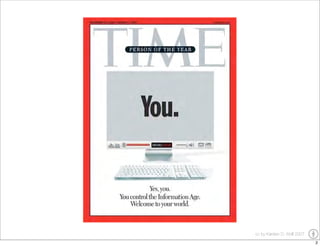
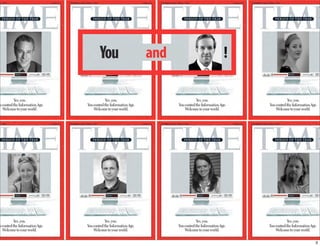

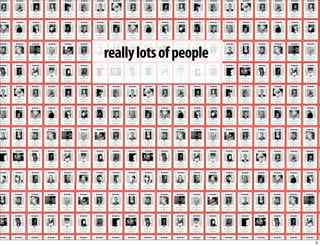

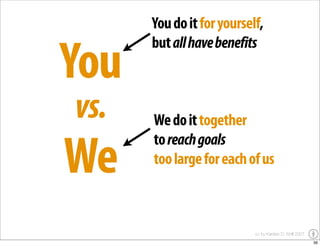
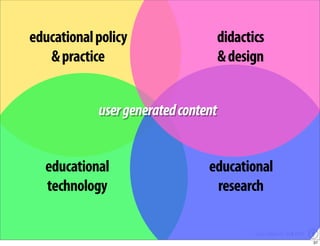
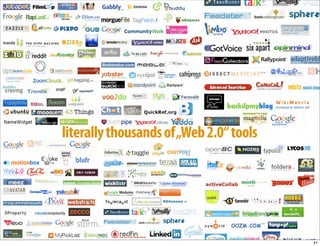
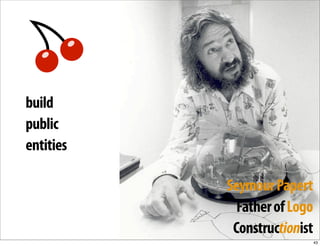
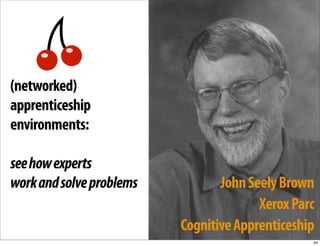
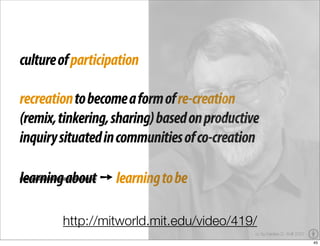

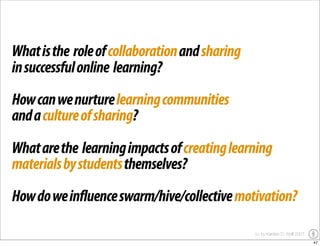
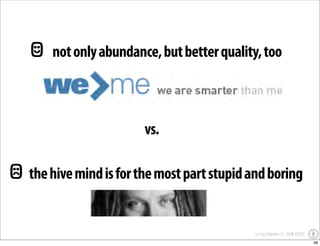
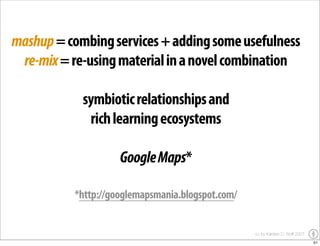
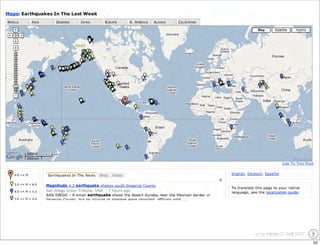
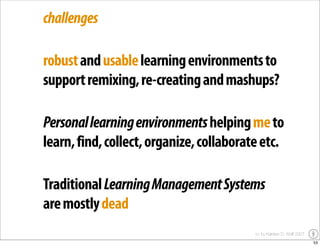

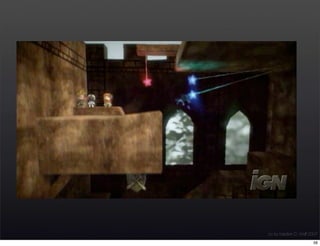


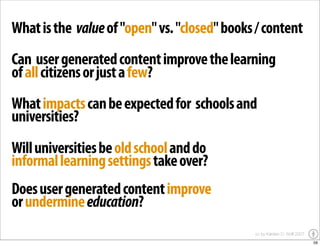

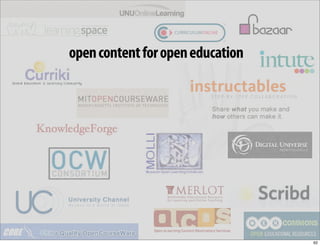
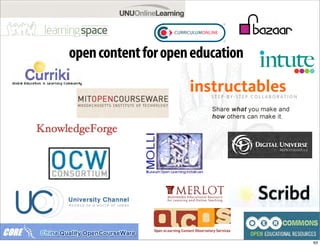

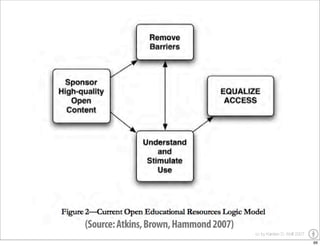
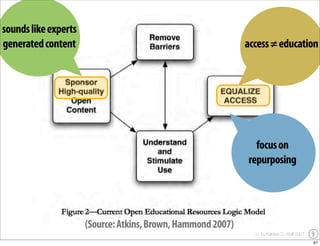

Keynote at ITK07 in Finland. Abstract: Time Magazine has voted You as the person of the year.In this case, You means all the users of online services such as YouTube, mySpace, Blogger, Wikipedia or Flickr, which provide software services for user generated content. While the first generation of the Web in the early 1990s enabled more people to publish to a potential large audience than the old media, a mass adoption has been hindered by the technical complexity and the sheer costs to do so. Today a next wave of online services allow technical laymen to publish media rich content on the Web for free, and millions of people are creating their own content. But is this content relevant to education? User generated content has been the focus of progressive education approaches since the 19th century, just to be recently rediscovered and used in the constructivist educational technology movement since the 1970s, probably starting with Seymour Paperts seminal work on Logo. Despite all the work on cognitive tools, collaborative inquiry, writing hypertexts and anchored instruction since then, these approaches have yet to find their way into the educational mainstream. This presentation focusses on the potential of user generated content on education from three points of view: (1) Educational policy and practice Education has always been a matter of power, or as Schleiermacher pointed out, Education is about the question, what the old generation wants from the young generation. Therefore formal education has always been a very top-down approach, not unlikely the "old" mass-media approach with a few senders and mass reception. User generated content breaks with this hierarchical model. New questions emerge, such as effects on power balances, impacts on democracy, formal vs. informal settings, learning culture, privacy, subjectivism, and legal issues. One of the questions which will be discussed in more detail is the value of "open" vs. "closed" books and other learning content. Can user generated content improve the learning of all citizens? What needs to be taken into account? What impacts can be expected for schools and universities? (2) Educational technology The current state of web technology and user interfaces has developed tremendously in the last two years, resulting in a much more interactive and collaborative Web, often labeled as "Web 2.0". Also the use of mobile web access has grown starkly. But most of the applications focus either on information organization and sharing, entertainment, shopping or business applications. What are the potentials for using and combining these new services for education? Are there new ways to support online learning? Will they benefit the creation of open repositiories for learning content? (3) Pedagogics and Educational research As stated above, pedagogical theory is quite ready for the next generation of the Web and user generated content. A multitude of questions need to be answered, though. For example, is user generated content dependend on You or on We? More specifically: what is the role of collaboration and sharing to create a culture of online learning? How can we support learning communities? What are the learning impacts of creating learning materials?


