Understanding Risk Forum 2016
Venice, Italy May 20, 2016
Heather Leson
Reduce Risk with Digital Preparedness
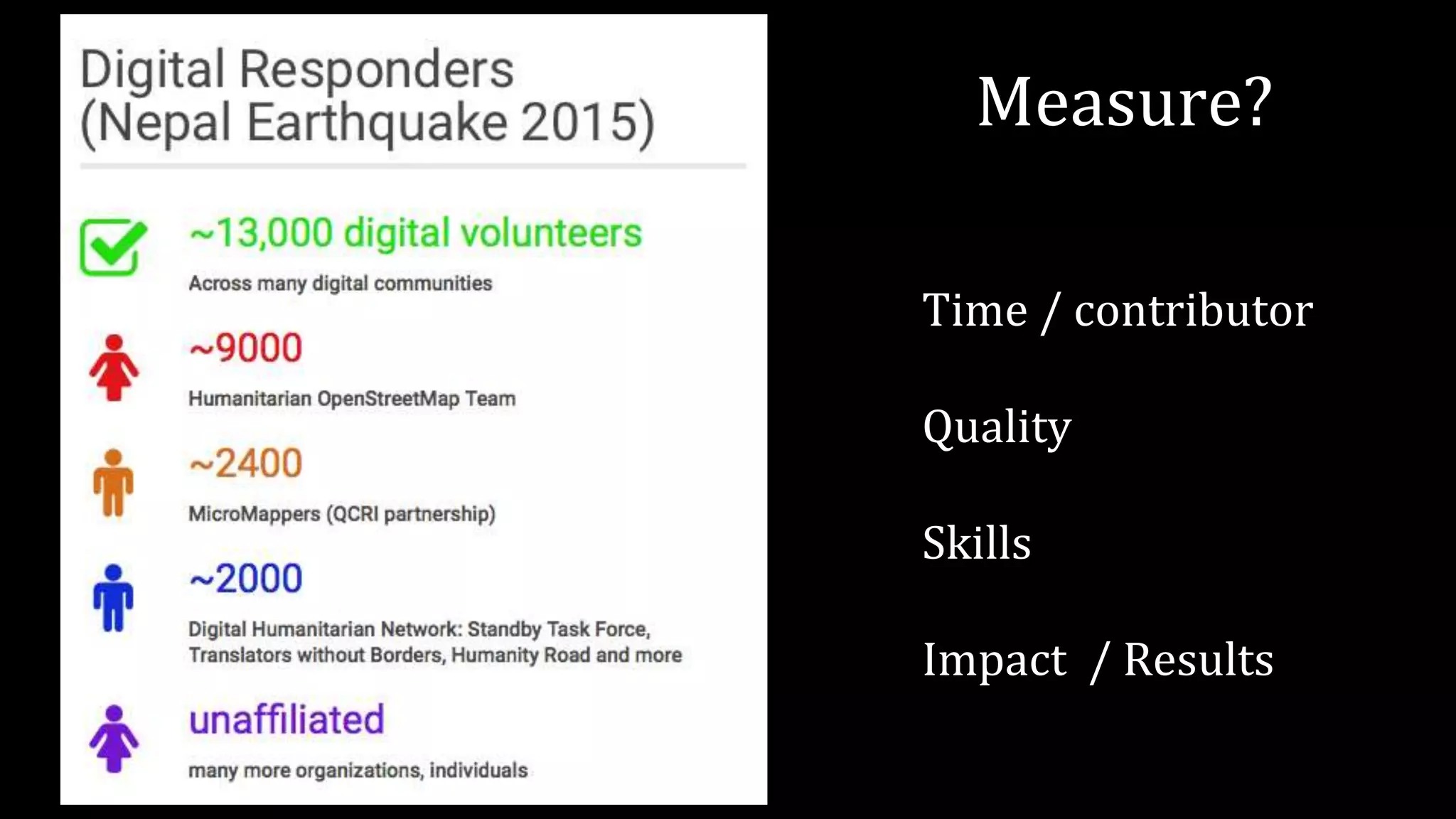
Measure?
Time / contributor
Quality
Skills
Impact / Results
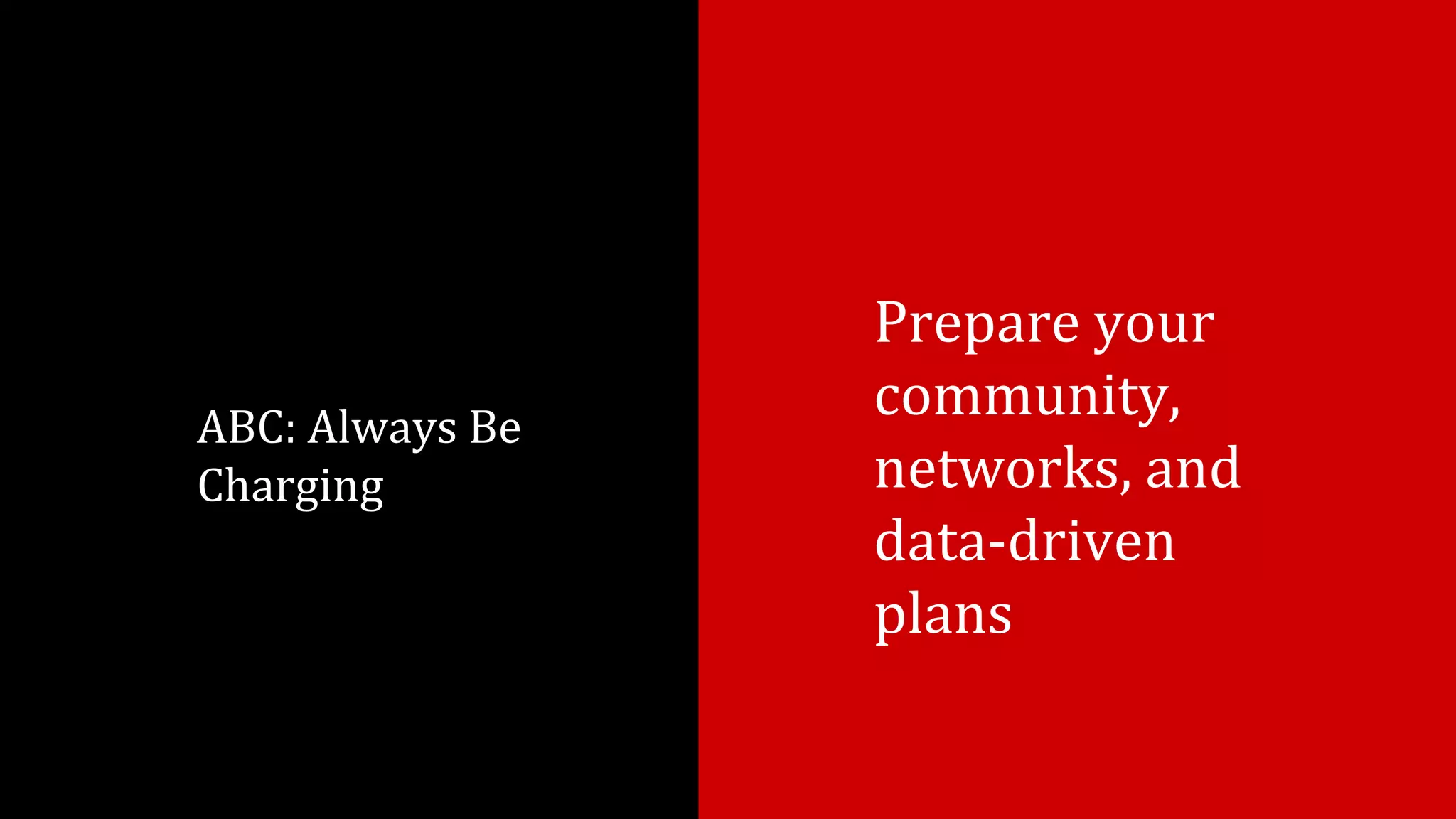
ABC: Always Be
Charging
Prepare your
community,
networks, and
data-driven
plans
Thank You!
See you at the HOT Summit
https://summit.hotosm.org/
@heatherleson
Textontechs.com

Reduce Risk with Digital Preparedness

Editor's Notes

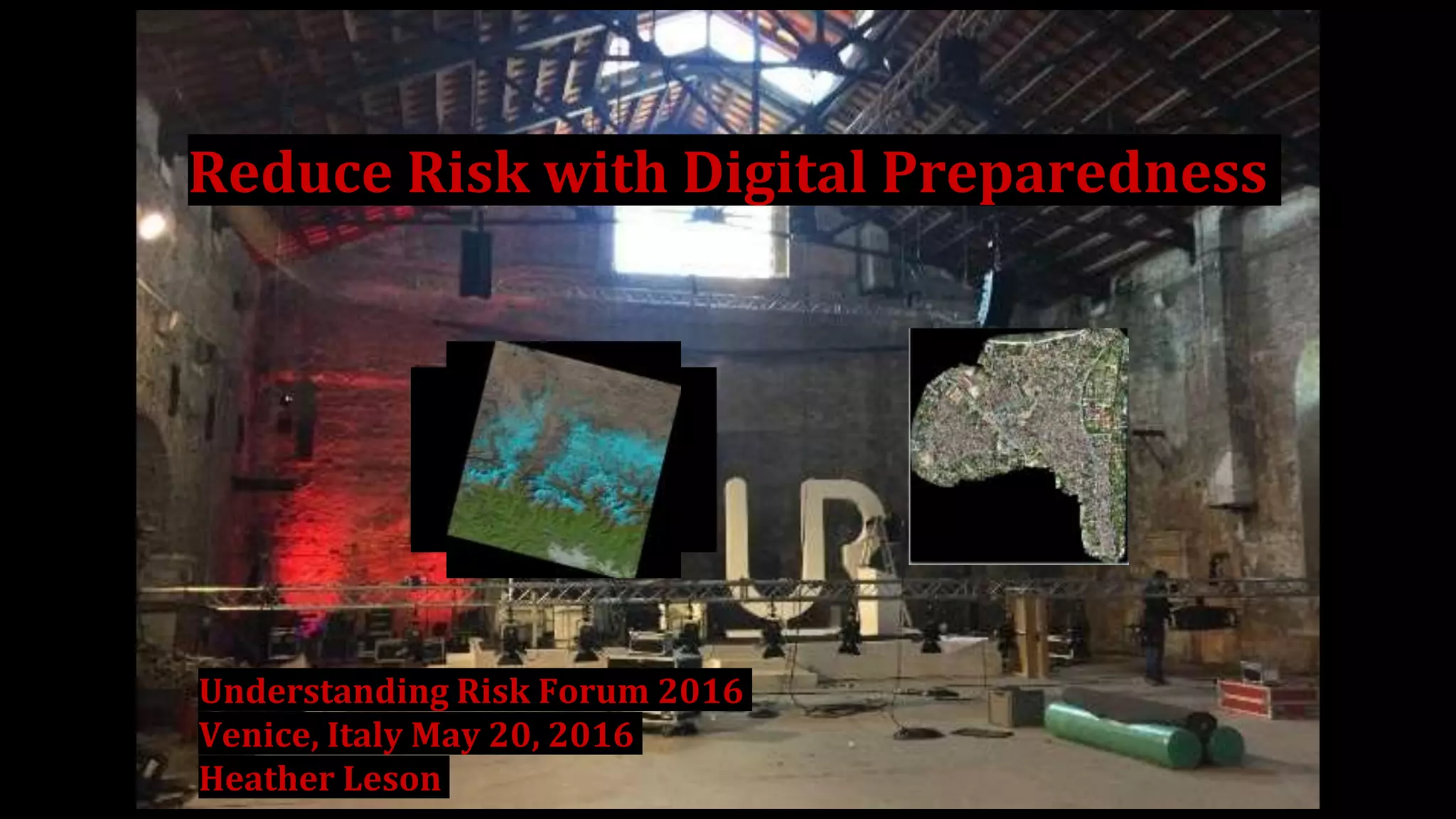
  • #2 Presented at https://understandrisk.org/event-session/bridging-the-divide/ Digital preparedness and response is growing. One of Dr. Chung-Ping (Joesph) Yang’s students said ‘I could walk in the data and could understand my country, my history and how I could help”. This is the power of connecting risk needs, education with openstreetmap communities. Here is his webpage http://www.csie.ncku.edu.tw/ncku_csie/depmember/teacherdetail/id/21?lang=en These satellite and aerial imageries are from two very different parts of the world. The image on the left is from Nepal and is satellite imagery. The image on the right is aerial imagery from Tanzania. How can we connect companies, NGOs and Civil Society more. Risk reduction needs digital responders and programmes to be successful. Kathmandu Living Labs demonstrated this. Ramani Huria in Tanzania also shows the potential to connect civic leaders, students, digital communities like Humanitarian OpenStreetMap Team and INGO programmes like the World Bank’s work in Tanzania. (photo credit: Understanding Risk Forum Newsletter, May 17, 2016) Images from OpenAerial map. (Image 1 (Right) : Msanani, Tanzania Open Data Initiative, OpenAerialMap, 2015-04-17) (Image 2 (left) Nepal, Astro Digital 2015-11-12, Landsat 8, (OAM LC81420402014316LGN00_bands_432.TIF) See more images from OpenAerialMap - http://openaerialmap.org/
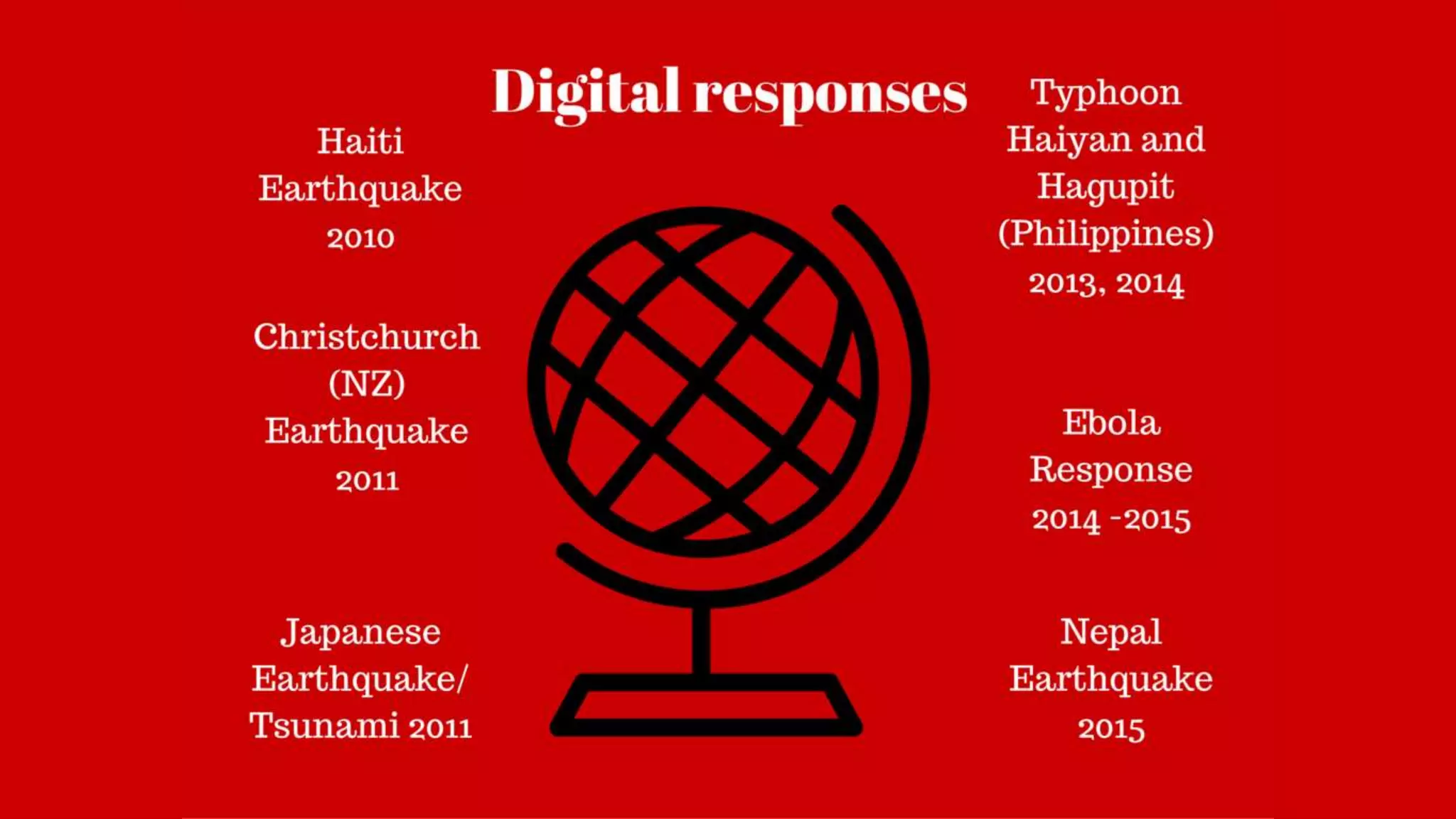
  • #3 LEARNING OVER TIME AND DISASTERS: There were many other digital activations for disaster, conflict, international development and community building but these are some of the seminal turning points. Eg. See HOT’s full activation list http://wiki.openstreetmap.org/wiki/Humanitarian_OSM_Team (Created with Canva)
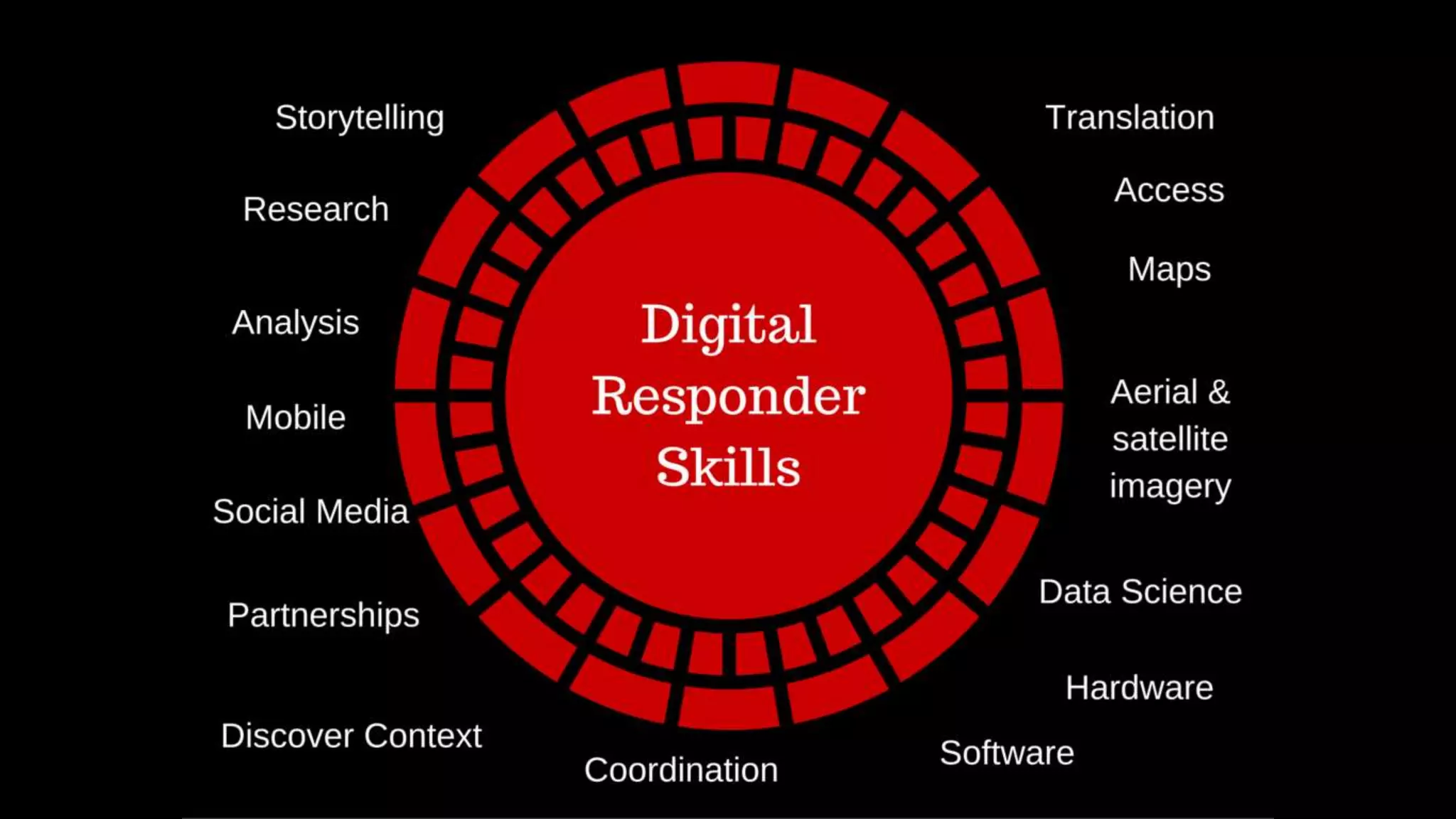
  • #4 SKILLS AND TRAINING DEMONSTRATED: Allies at Mozilla Foundation aim to “teach the web”. Their framework is complimentary. https://teach.mozilla.org/web-literacy My goal with these is to demonstrate the type of skills that Digital Humanitarians or Digital Responders use. There are many organizations, partnerships, networks and individuals. Many of these skills you see in programmes and projects. How does anyone even start to learn. Where is the ‘introduction course? Some of these core skills have manuals and whole communities around. We could keep recruiting and training. But how can we scale this in a sustainable way. Many of the groups are stretched. UN OCHA recently released the a ‘Guidance for building a local Digital Responders Network’ http://blog.veritythink.com/post/140679788344/you-can-do-it-too-guidance-for-developing-a-local
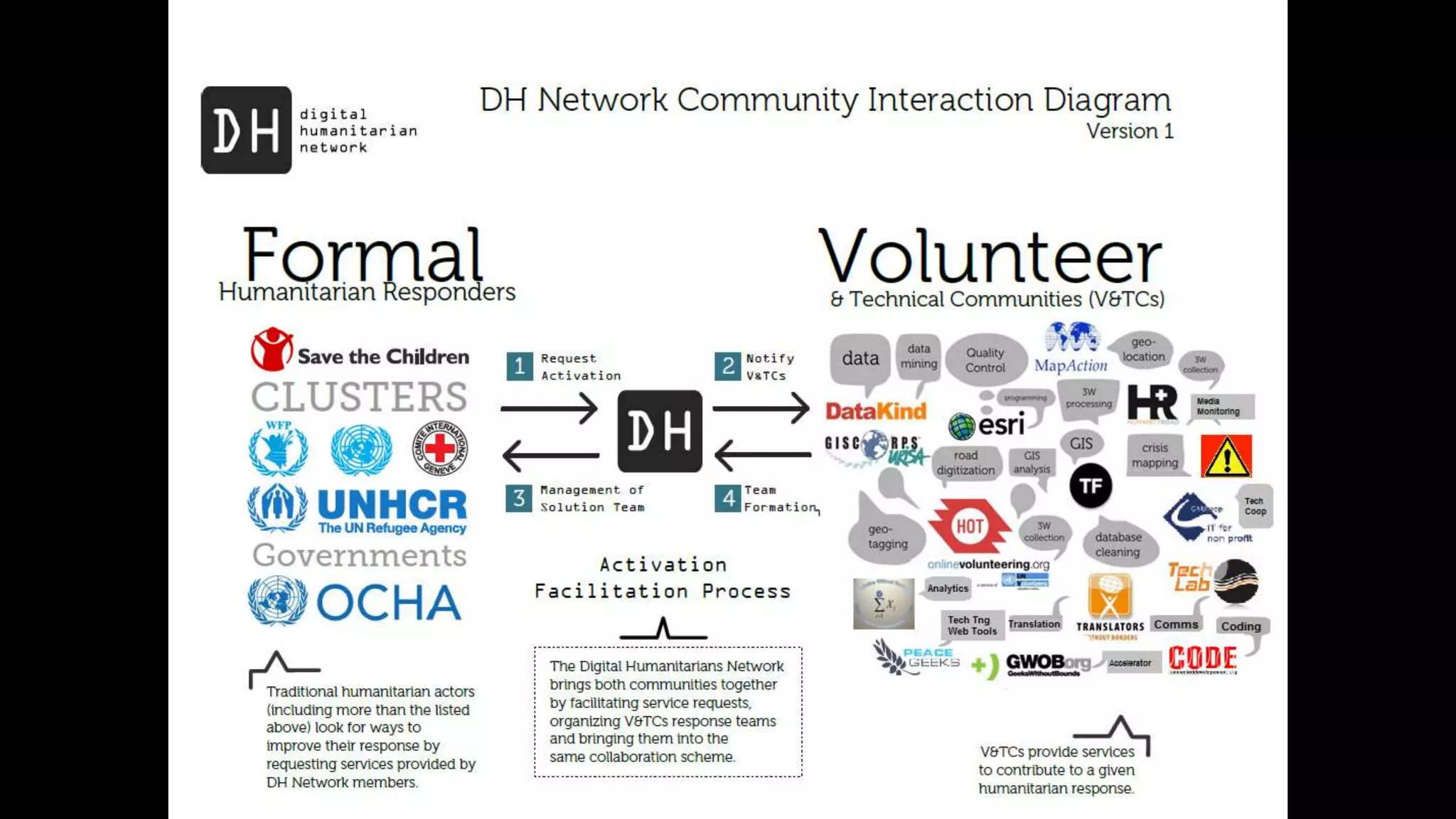
  • #5 FRAMEWORKS, PARTNERSHIPS: DHN Is one but there are others - civic tech communities, labs, hubs, civil society groups, software companies and more.
  • #6 RESULTS OF PARTICIPATION : 9000 HOT, 450 SBTF, 2800 MM, TWB 60. SBTF also had volunteers from UNV https://www.onlinevolunteering.org/en/vol/resources/newsletter_june_2015.html (Created with Infogram)
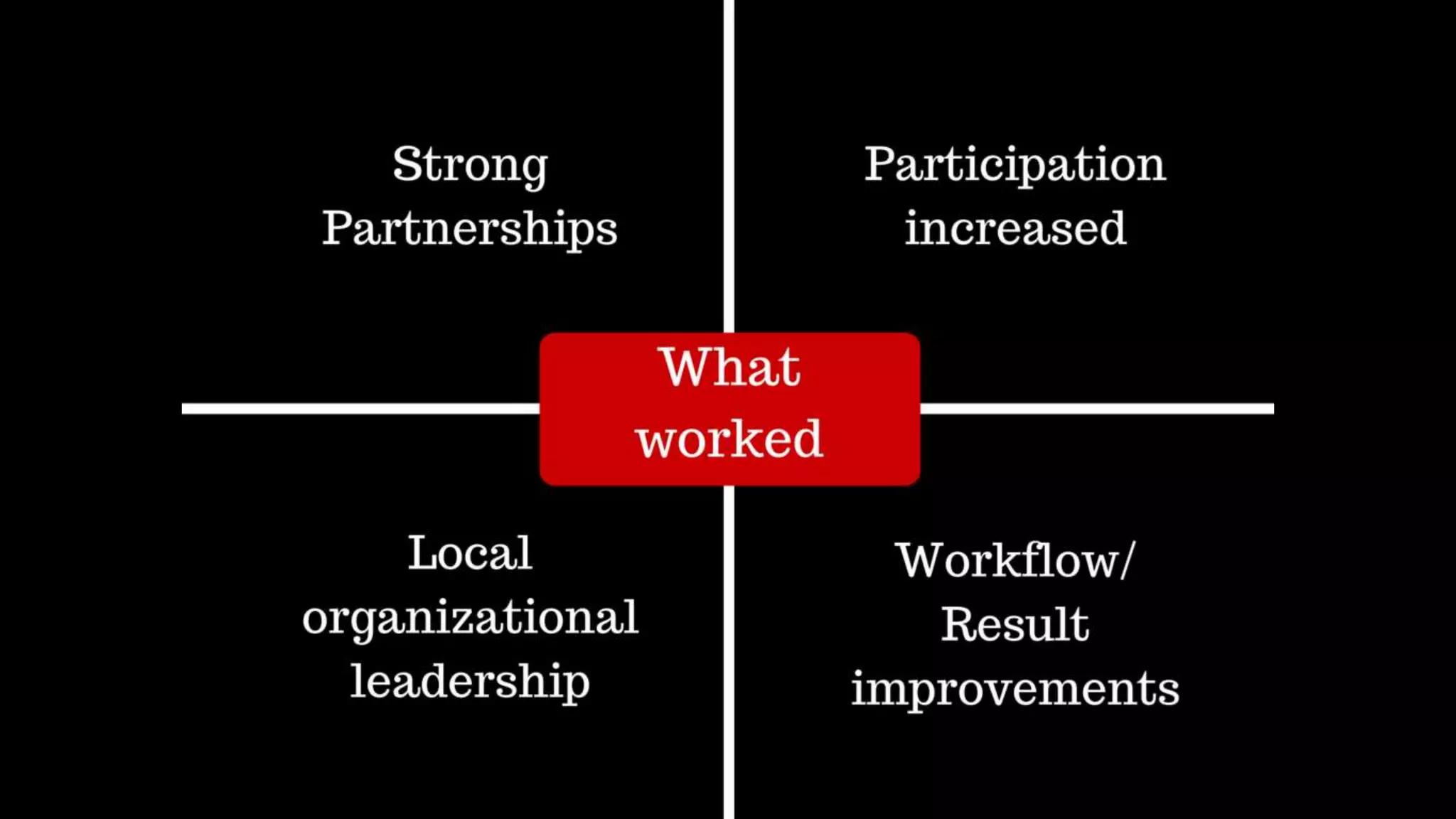
  • #7 WHAT WAS DELIVERED - What worked https://www.weforum.org/agenda/2016/04/how-is-social-media-helping-disaster-response/ and http://civicus.org/thedatashift/learning-zone/community-essay/citizen-generated-data-maps/ (Created with Canva)
  • #8 Change and Impact do not happen overnight. This year’s theme is building evidence for action. Often I feel like programmes are setup reverse “Building Action for Evidence”. This is why programmes that invest in long term efforts like Kathmandu Living Labs can really see benefits after months and years of work. https://understandrisk.org/ur2016-program/ Denis Carriere is an OSM member from Canada. He is with the Canadian Forces. he visited KLL during the emergency and encouraged official use of OSM. It is a long road to open. In Canada there is an emergency forest fire. He is one of a community working to get OSM up to date once imagery is available. This is the possibility where ever you live and work. The Alberta government created an app to help citizens be calm about their locations and homes. How could this method digital plus human care be used elsewhere (consider diaspora communities) http://www.cbc.ca/beta/news/canada/edmonton/fort-mcmurray-damage-satellite-1.3583052
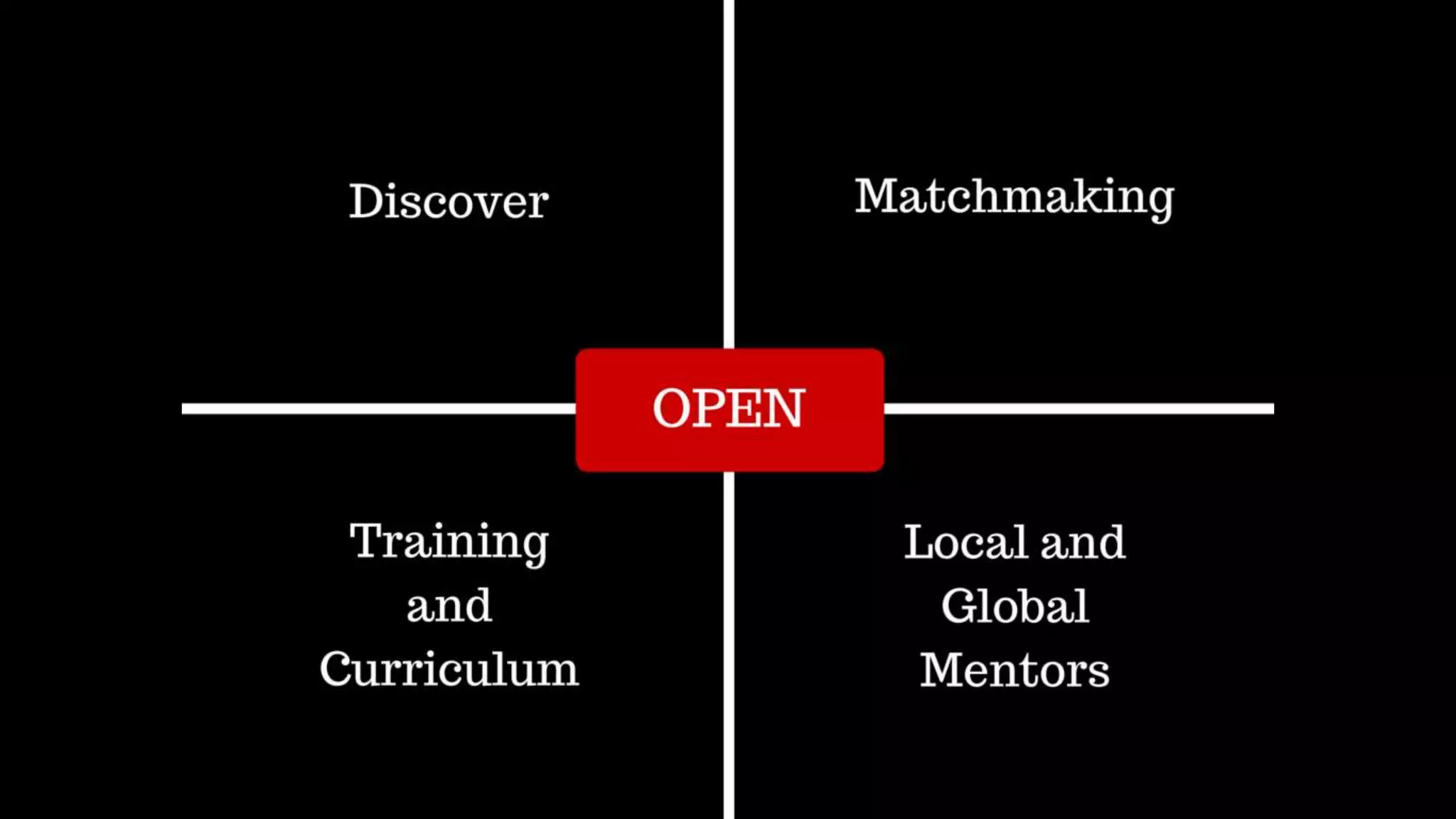
  • #9 HOW CAN VOLUNTEERS GET ENGAGED/WHAT NEEDS WORK - How can we make an open api for volunteering (cross multiple org/platforms. Eg linked in,social coding for good etc. A hipmunk aggregator for volunteers. Consider is digital volunteer front page focused on the user not just the orgs? How can we surface tasks to be done that are scoped for skills, time and goals with thanks? What does an open github curriculum look like? How can we match more experienced digital skilled folks with others? In HOT we are having some questions around validation. New folks need mentorship and ‘peer’ situations. What is the online version of missing maps or other collaborative contributions? (See soon to be released paper - A quality comparison between expert and crowdsourced data in emergency mapping for a potential service integration: The Nepal Earthquake case- Agata Elia, Simone Balbo) (Created with Canva) Example of a digital skills marketplace by Matt Stempeck - https://civic.mit.edu/blog/mstem/introducing-the-participatory-aid-marketplace Humanitarian Conceirge http://blog.veritythink.com/post/50009571891/humanitarian-concierge
  • #10 Thanks. Affiliations: I’m in my 4th term as a Board Member at Humanitarian OpenStreetMap Team. (Past-President). My employer is Qatar Computing Research Institute, where I create Programs for local and global innovation. For Understanding Risk, I participated on my own budget and annual leave to support Digital Humanitarians. About me: http://textontechs.com/bio/