Economics for your Classroom from 
Ed Dolan’s Econ Blog 
Short-Term Unemployment 
Falls Below Pre-Recession Low 
as Jobs Surge 
Dec. 7, 2014 
Terms of Use: These slides are provided under Creative Commons License Attribution—Share Alike 3.0 . You are free 
to use these slides as a resource for your economics classes together with whatever textbook you are using. If you like 
the slides, you may also want to take a look at my textbook, Introduction to Economics, from BVT Publishing.
Payroll Jobs Surge in November 
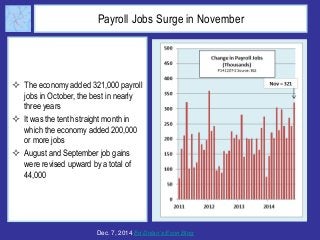
 The economy added 321,000 payroll 
jobs in October, the best in nearly 
three years 
 It was the tenth straight month in 
which the economy added 200,000 
or more jobs 
 August and September job gains 
were revised upward by a total of 
44,000 
Dec. 7, 2014 Ed Dolan’s Econ Blog
Yearly Job Gains Strongest in Eight Years 
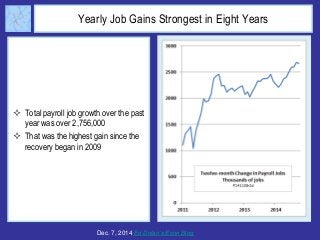
 Total payroll job growth over the past 
year was over 2,756,000 
 That was the highest gain since the 
recovery began in 2009 
Dec. 7, 2014 Ed Dolan’s Econ Blog
Unemployment Rate Remains at 5.8 Percent 
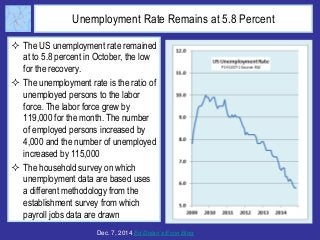
 The US unemployment rate remained 
at to 5.8 percent in October, the low 
for the recovery. 
 The unemployment rate is the ratio of 
unemployed persons to the labor 
force. The labor force grew by 
119,000 for the month. The number 
of employed persons increased by 
4,000 and the number of unemployed 
increased by 115,000 
 The household survey on which 
unemployment data are based uses 
a different methodology from the 
establishment survey from which 
payroll jobs data are drawn 
Dec. 7, 2014 Ed Dolan’s Econ Blog
Broad vs. Standard Unemployment Rate 
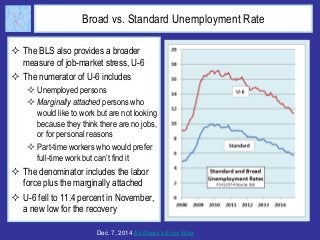
 The BLS also provides a broader 
measure of job-market stress, U-6 
 The numerator of U-6 includes 
 Unemployed persons 
 Marginally attached persons who 
would like to work but are not looking 
because they think there are no jobs, 
or for personal reasons 
 Part-time workers who would prefer 
full-time work but can’t find it 
 The denominator includes the labor 
force plus the marginally attached 
 U-6 fell to 11.4 percent in November, 
a new low for the recovery 
Dec. 7, 2014 Ed Dolan’s Econ Blog
Involuntary Part-Time Work Falls 
 The percentage of the labor force 
working part time for economic 
reasons (involuntary part-time 
work) decreased to 4.4 percent in 
November, continuing its general 
downward trend 
 Involuntary part-time work 
remains high by historical 
standards 
Dec. 7, 2014 Ed Dolan’s Econ Blog
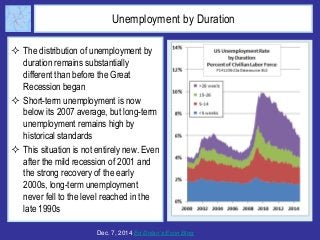
Unemployment by Duration 
 The distribution of unemployment by 
duration remains substantially 
different than before the Great 
Recession began 
 Short-term unemployment is now 
below its 2007 average, but long-term 
unemployment remains high by 
historical standards 
 This situation is not entirely new. Even 
after the mild recession of 2001 and 
the strong recovery of the early 
2000s, long-term unemployment 
never fell to the level reached in the 
late 1990s 
Dec. 7, 2014 Ed Dolan’s Econ Blog
The Bottom Line: Prospects Look Good for Q4 
 The favorable jobs report for November 
suggested that the economy is 
continuing to grow strongly in the fourth 
quarter after solid growth in the second 
and third quarters 
 The first official estimate of GDP for the 
fourth quarter will not be released until 
late January 
Dec. 7, 2014 Ed Dolan’s Econ Blog
For more slideshows and commentary, follow Ed Dolan’s Econ Blog 
Like this slideshow? 
Follow @DolanEcon on Twitter 
Click here to learn more about Ed Dolan’s Econ texts

Short-Term Unemployment Falls Below Pre-Recession Low as Jobs Surge

  • 1.
    Economics for yourClassroom from Ed Dolan’s Econ Blog Short-Term Unemployment Falls Below Pre-Recession Low as Jobs Surge Dec. 7, 2014 Terms of Use: These slides are provided under Creative Commons License Attribution—Share Alike 3.0 . You are free to use these slides as a resource for your economics classes together with whatever textbook you are using. If you like the slides, you may also want to take a look at my textbook, Introduction to Economics, from BVT Publishing.
  • 2.
    Payroll Jobs Surgein November  The economy added 321,000 payroll jobs in October, the best in nearly three years  It was the tenth straight month in which the economy added 200,000 or more jobs  August and September job gains were revised upward by a total of 44,000 Dec. 7, 2014 Ed Dolan’s Econ Blog
  • 3.
    Yearly Job GainsStrongest in Eight Years  Total payroll job growth over the past year was over 2,756,000  That was the highest gain since the recovery began in 2009 Dec. 7, 2014 Ed Dolan’s Econ Blog
  • 4.
    Unemployment Rate Remainsat 5.8 Percent  The US unemployment rate remained at to 5.8 percent in October, the low for the recovery.  The unemployment rate is the ratio of unemployed persons to the labor force. The labor force grew by 119,000 for the month. The number of employed persons increased by 4,000 and the number of unemployed increased by 115,000  The household survey on which unemployment data are based uses a different methodology from the establishment survey from which payroll jobs data are drawn Dec. 7, 2014 Ed Dolan’s Econ Blog
  • 5.
    Broad vs. StandardUnemployment Rate  The BLS also provides a broader measure of job-market stress, U-6  The numerator of U-6 includes  Unemployed persons  Marginally attached persons who would like to work but are not looking because they think there are no jobs, or for personal reasons  Part-time workers who would prefer full-time work but can’t find it  The denominator includes the labor force plus the marginally attached  U-6 fell to 11.4 percent in November, a new low for the recovery Dec. 7, 2014 Ed Dolan’s Econ Blog
  • 6.
    Involuntary Part-Time WorkFalls  The percentage of the labor force working part time for economic reasons (involuntary part-time work) decreased to 4.4 percent in November, continuing its general downward trend  Involuntary part-time work remains high by historical standards Dec. 7, 2014 Ed Dolan’s Econ Blog
  • 7.
    Unemployment by Duration  The distribution of unemployment by duration remains substantially different than before the Great Recession began  Short-term unemployment is now below its 2007 average, but long-term unemployment remains high by historical standards  This situation is not entirely new. Even after the mild recession of 2001 and the strong recovery of the early 2000s, long-term unemployment never fell to the level reached in the late 1990s Dec. 7, 2014 Ed Dolan’s Econ Blog
  • 8.
    The Bottom Line:Prospects Look Good for Q4  The favorable jobs report for November suggested that the economy is continuing to grow strongly in the fourth quarter after solid growth in the second and third quarters  The first official estimate of GDP for the fourth quarter will not be released until late January Dec. 7, 2014 Ed Dolan’s Econ Blog
  • 9.
    For more slideshowsand commentary, follow Ed Dolan’s Econ Blog Like this slideshow? Follow @DolanEcon on Twitter Click here to learn more about Ed Dolan’s Econ texts