Slideshow transcript
Slide 1: Give Your Site A Boost With Memcache Ben Ramsey July 23, 2008
Slide 2: Why cache? 2
Slide 3: To make it faster. 3
Slide 4: “A cache is a collection of data duplicating original values stored elsewhere or computed earlier, where the original data is expensive to fetch (owing to longer access time) or to compute, compared to the cost of reading the cache. In other words, a cache is a temporary storage area where frequently accessed data can be stored for rapid access.” 4 — Wikipedia
Slide 5: Why cache? You want to reduce the number of retrieval queries made to the database You want to reduce the number of external requests (retrieving data from other web services) You want to cut down on filesystem access 5
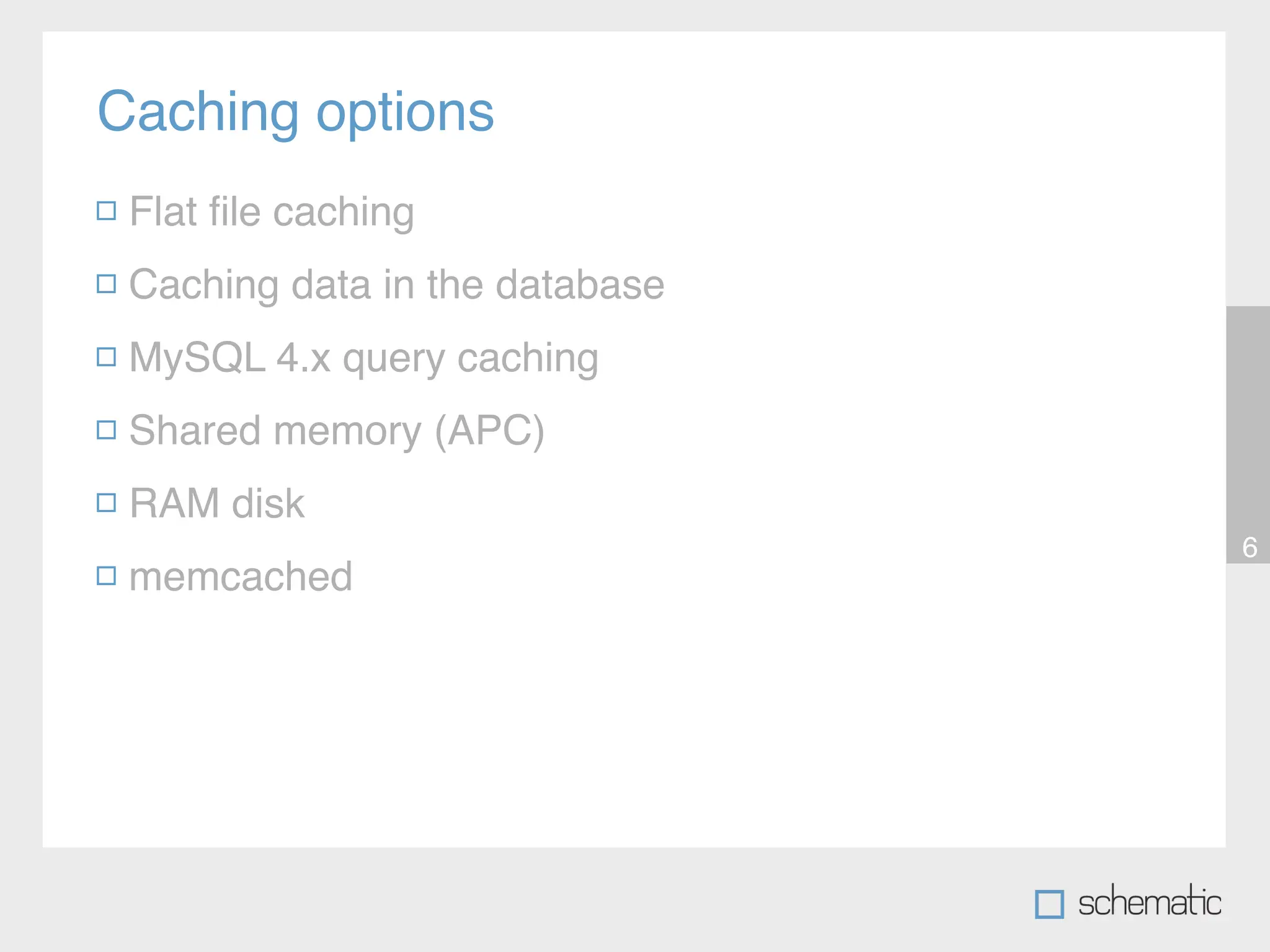
Slide 6: Caching options Flat file caching Caching data in the database MySQL 4.x query caching Shared memory (APC) RAM disk 6 memcached
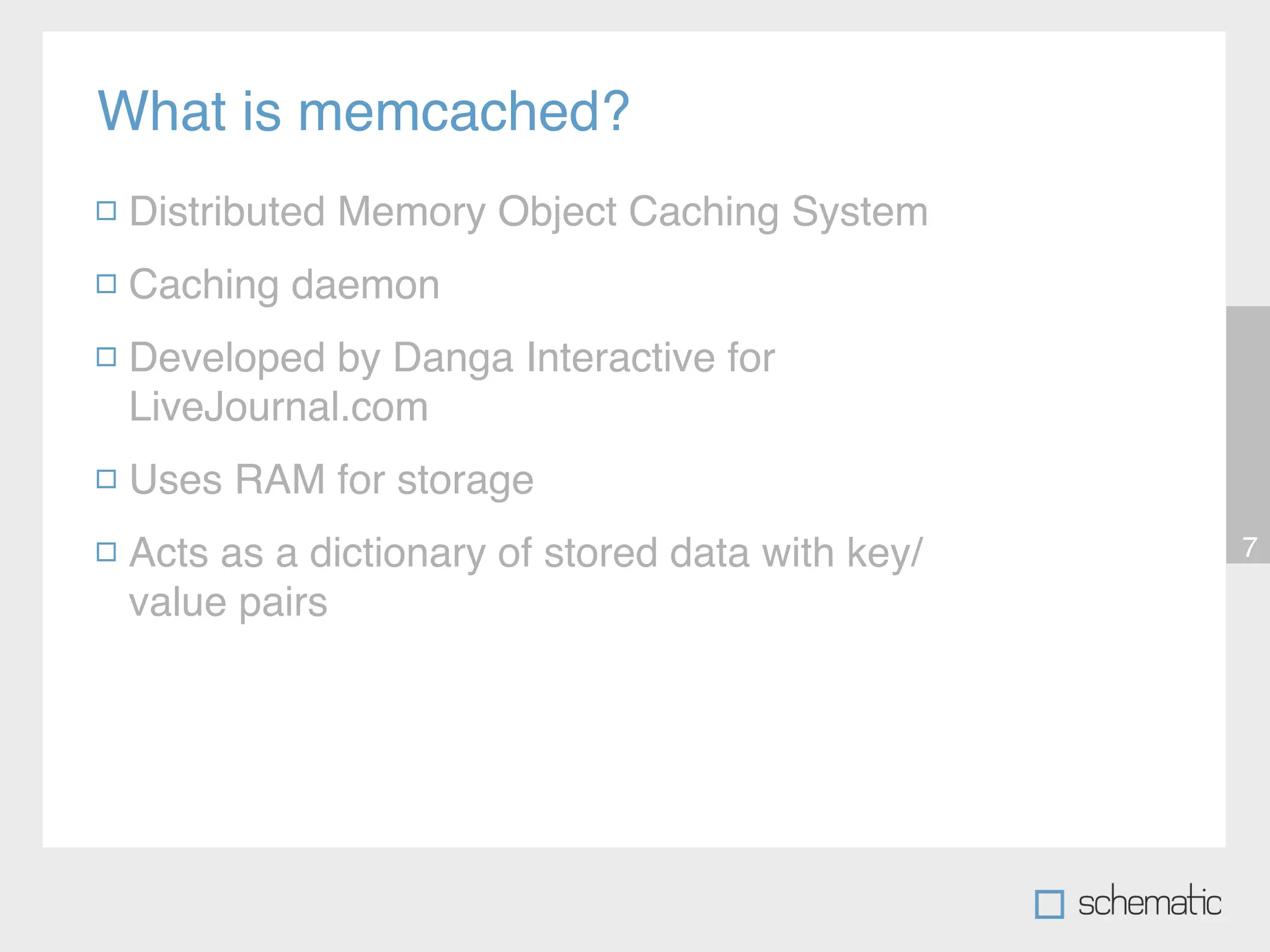
Slide 7: What is memcached? Distributed Memory Object Caching System Caching daemon Developed by Danga Interactive for LiveJournal.com Uses RAM for storage Acts as a dictionary of stored data with key/ 7 value pairs
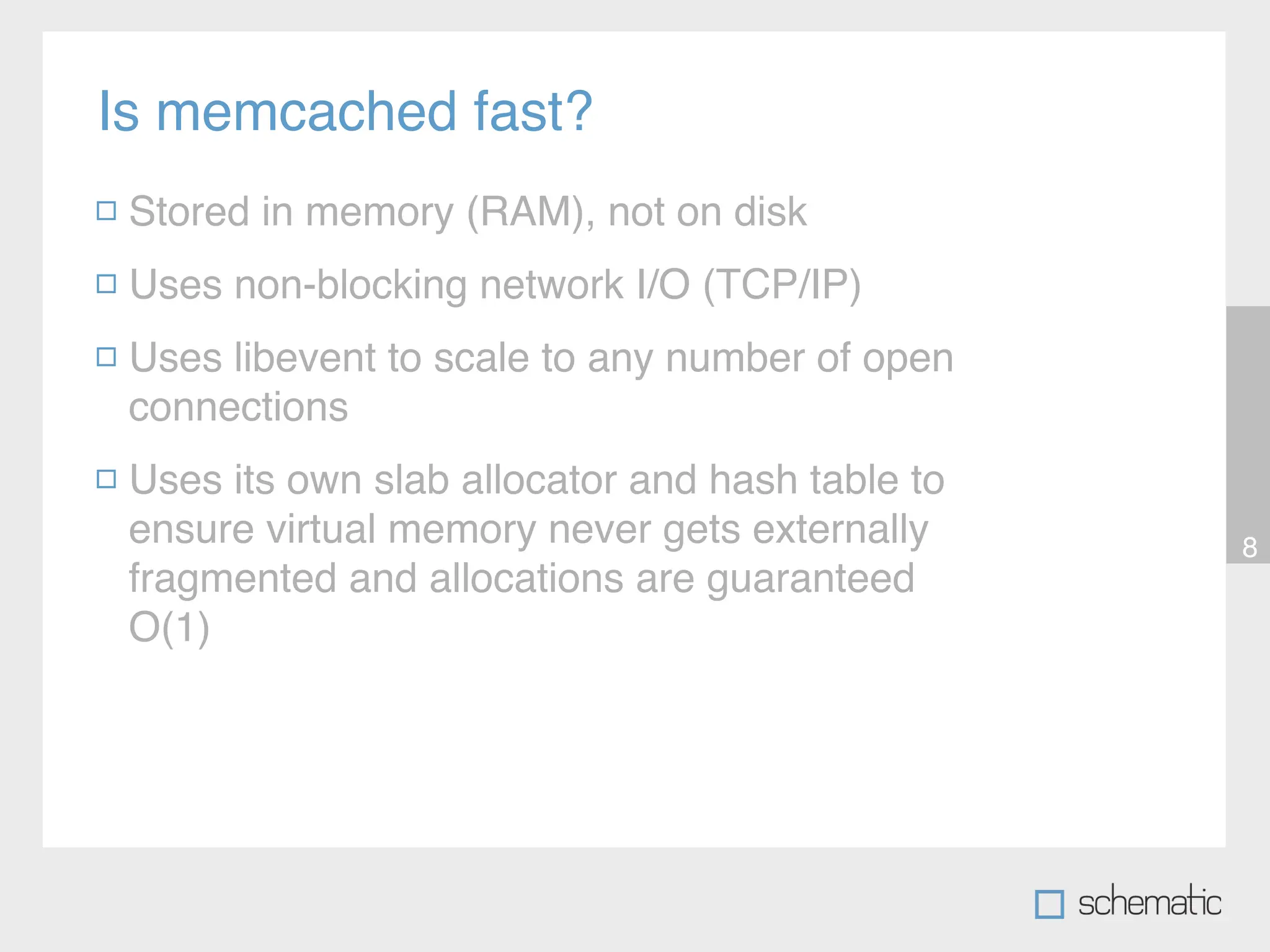
Slide 8: Is memcached fast? Stored in memory (RAM), not on disk Uses non-blocking network I/O (TCP/IP) Uses libevent to scale to any number of open connections Uses its own slab allocator and hash table to ensure virtual memory never gets externally 8 fragmented and allocations are guaranteed O(1)
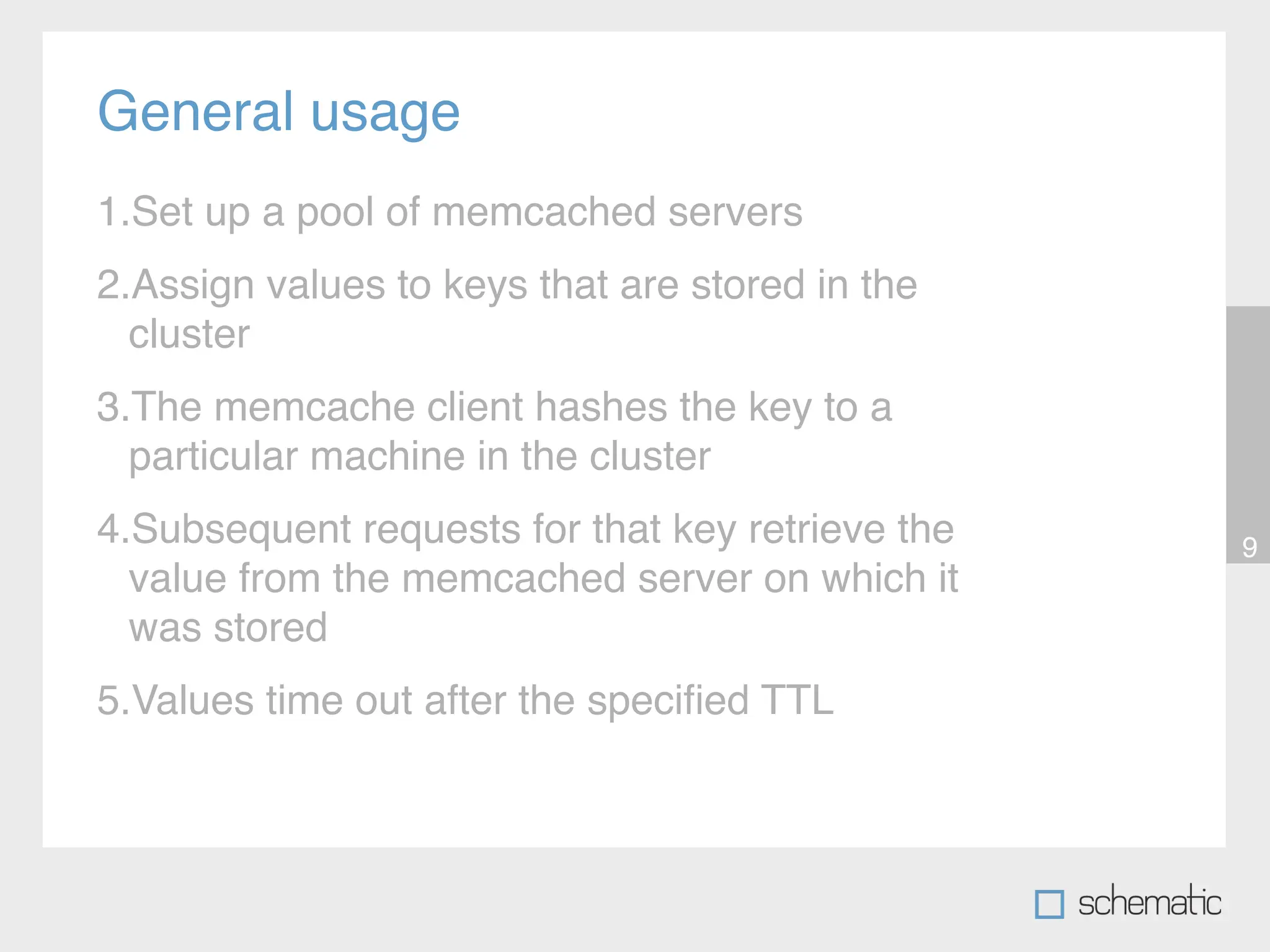
Slide 9: General usage 1.Set up a pool of memcached servers 2.Assign values to keys that are stored in the cluster 3.The memcache client hashes the key to a particular machine in the cluster 4.Subsequent requests for that key retrieve the 9 value from the memcached server on which it was stored 5.Values time out after the specified TTL
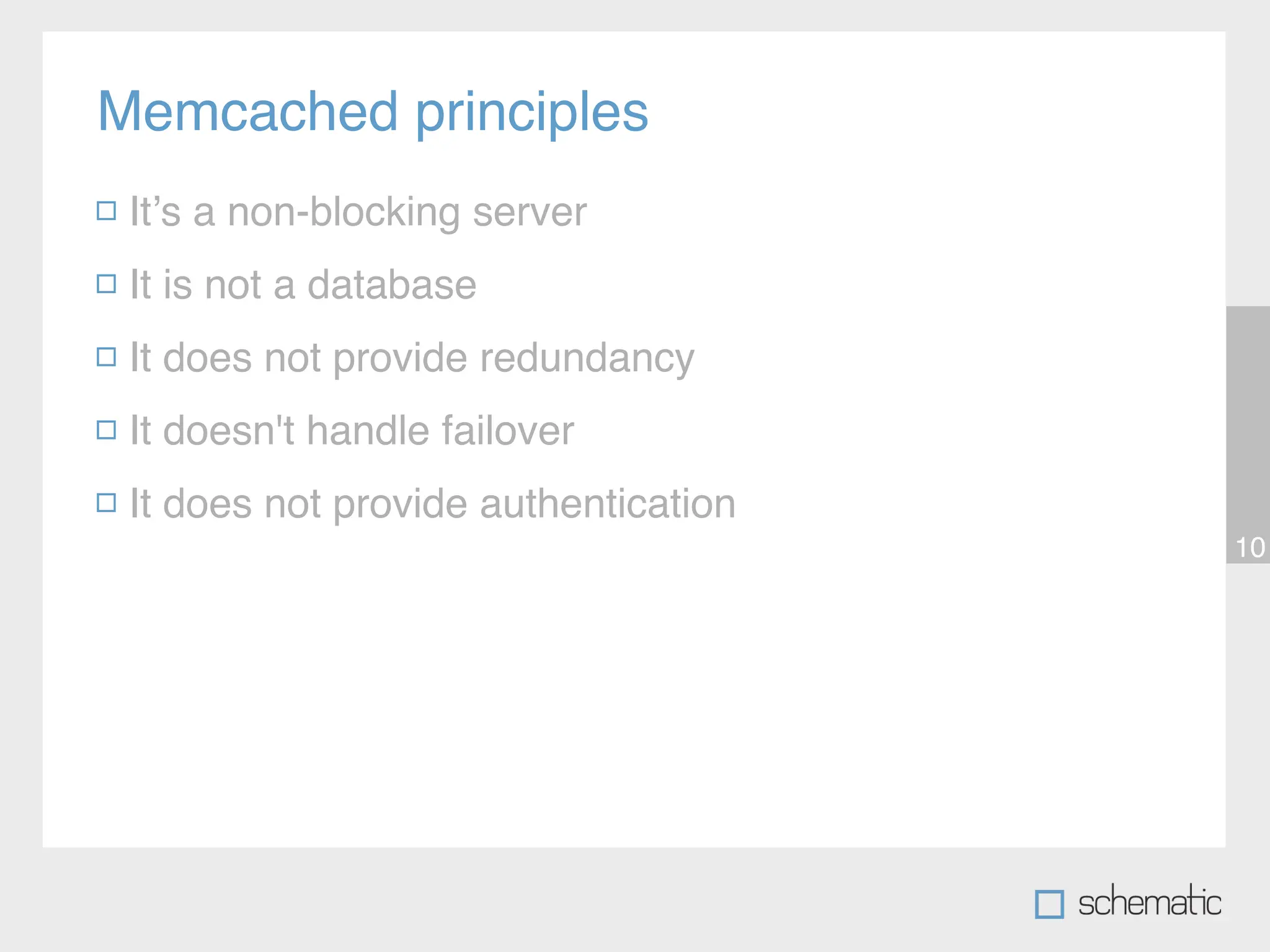
Slide 10: Memcached principles It’s a non-blocking server It is not a database It does not provide redundancy It doesn't handle failover It does not provide authentication 10
Slide 11: Memcached principles Data is not replicated across the cluster Works great on a small and local-area network A single value cannot contain more than 1MB of data Keys are strings limited to 250 characters 11
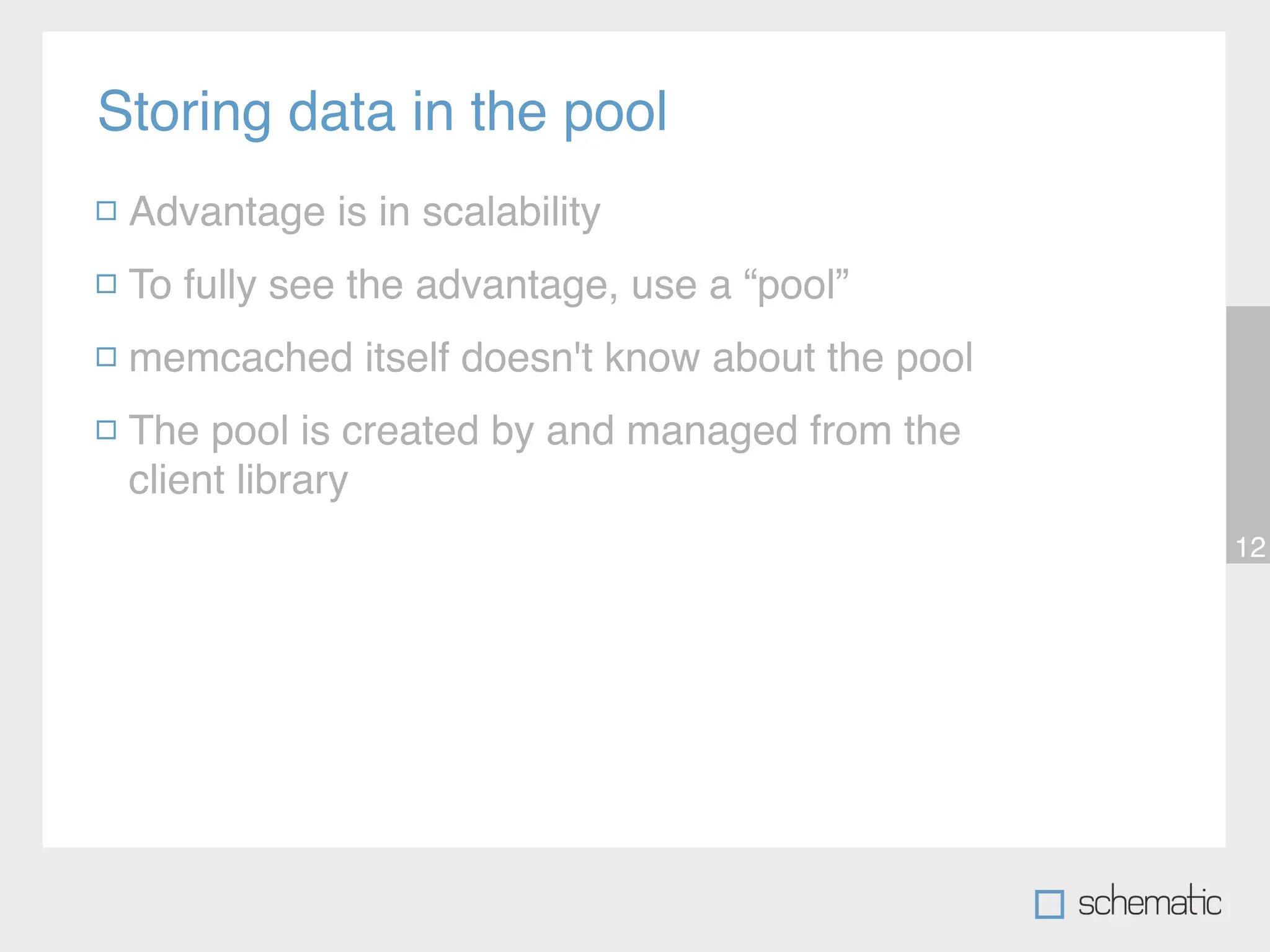
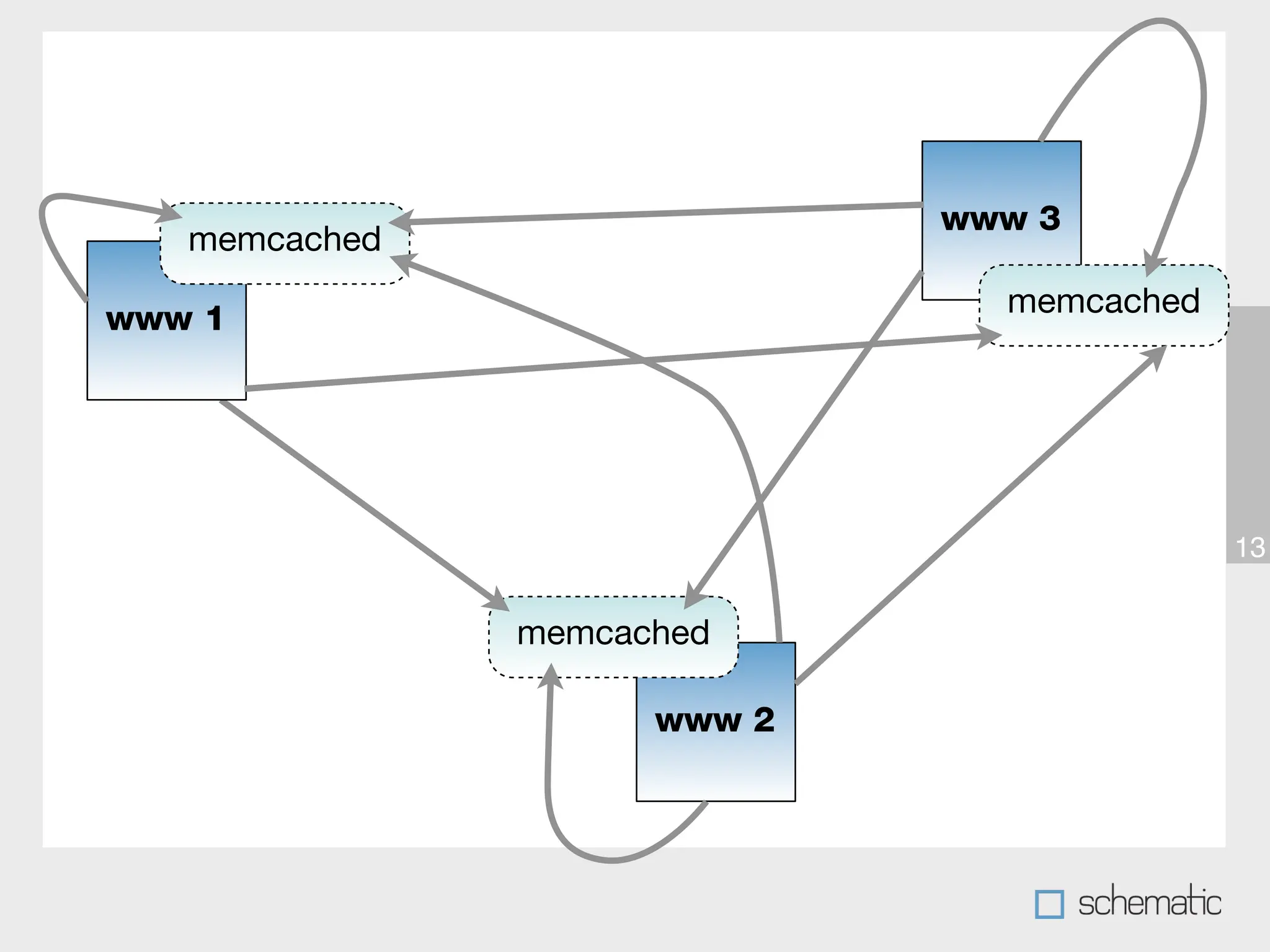
Slide 12: Storing data in the pool Advantage is in scalability To fully see the advantage, use a “pool” memcached itself doesn't know about the pool The pool is created by and managed from the client library 12
Slide 13: www 3 memcached memcached www 1 13 memcached www 2
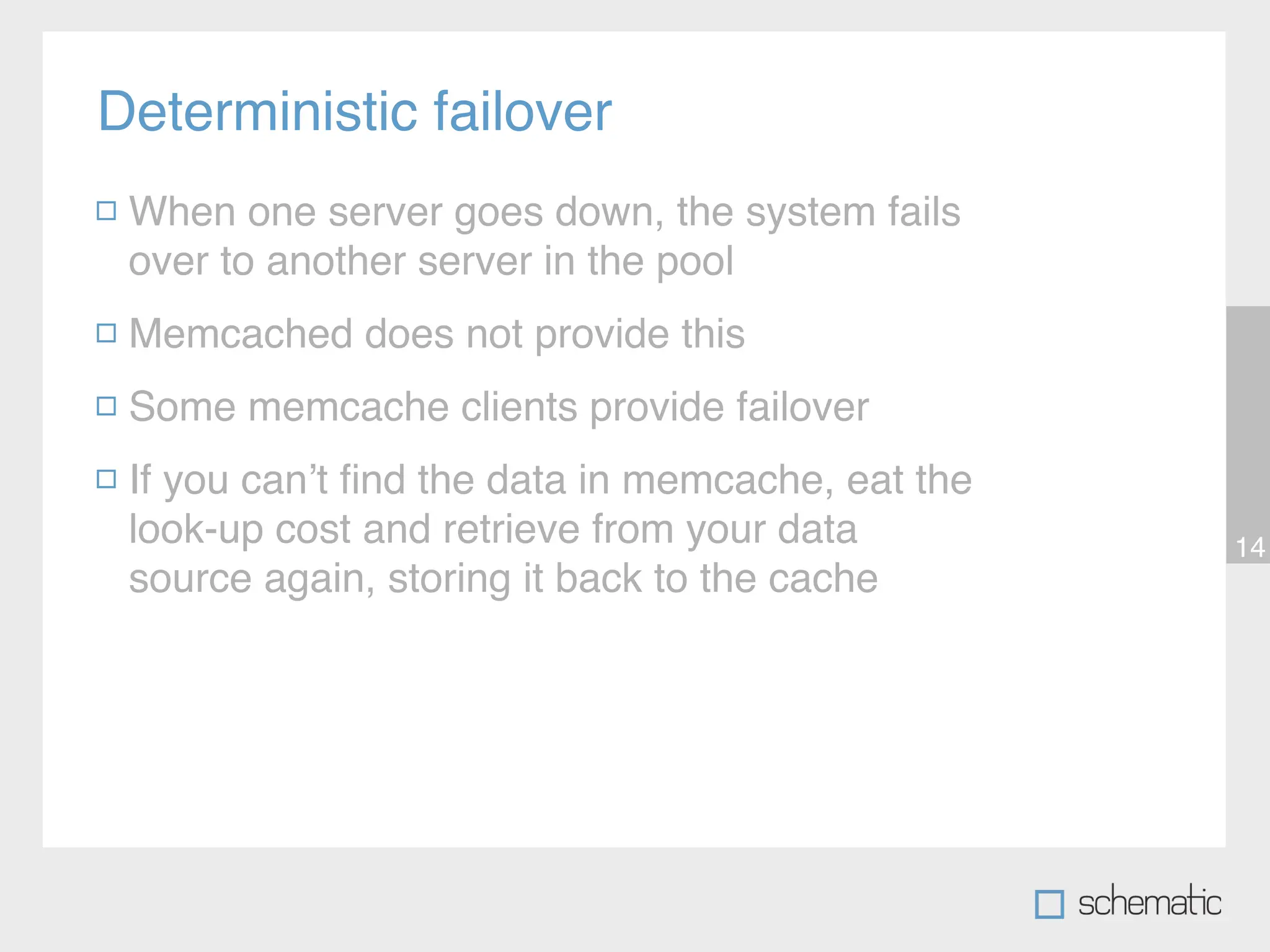
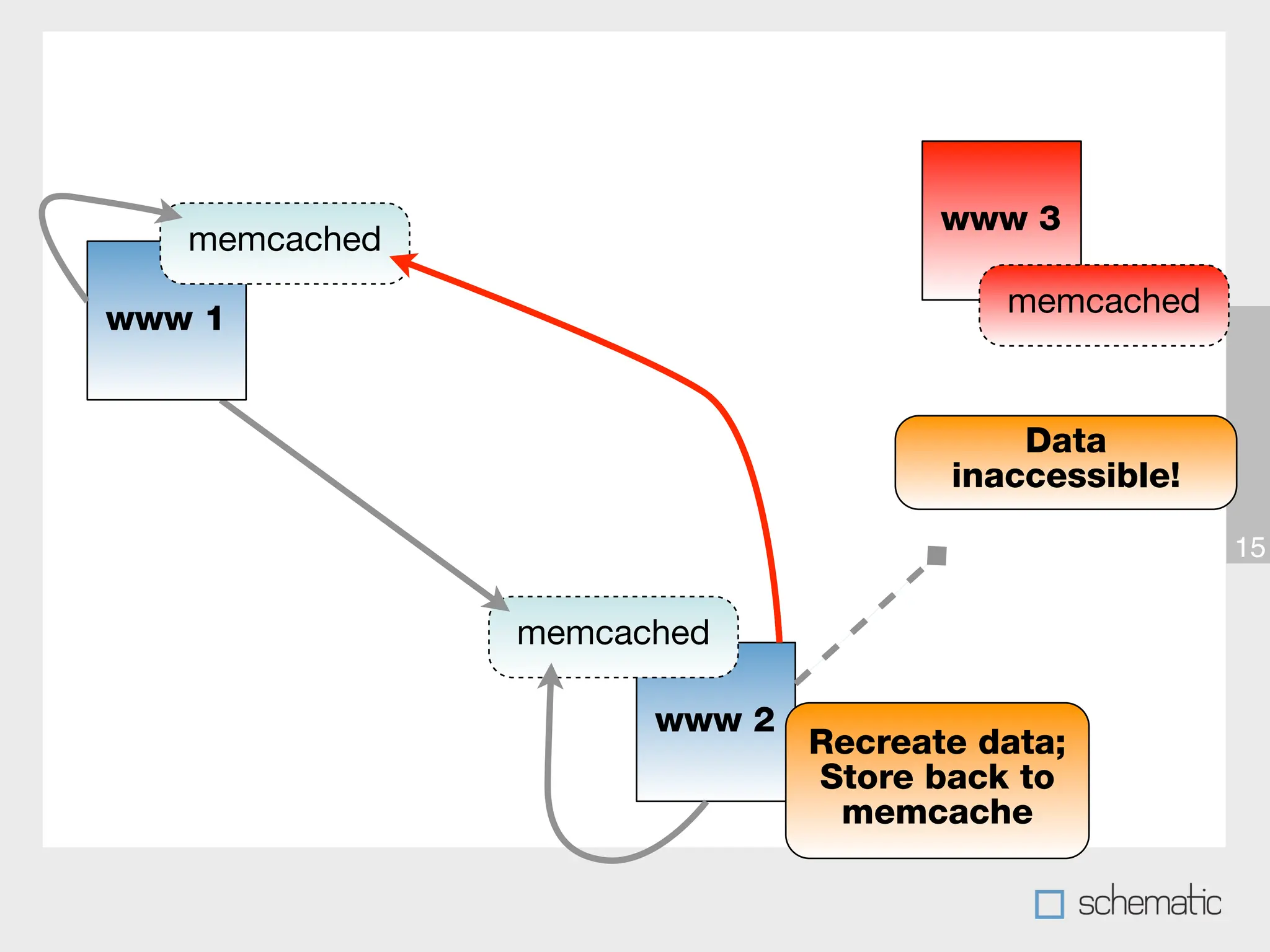
Slide 14: Deterministic failover When one server goes down, the system fails over to another server in the pool Memcached does not provide this Some memcache clients provide failover If you can’t find the data in memcache, eat the look-up cost and retrieve from your data 14 source again, storing it back to the cache
Slide 15: www 3 memcached memcached www 1 Data inaccessible! 15 memcached www 2 Recreate data; Store back to memcache
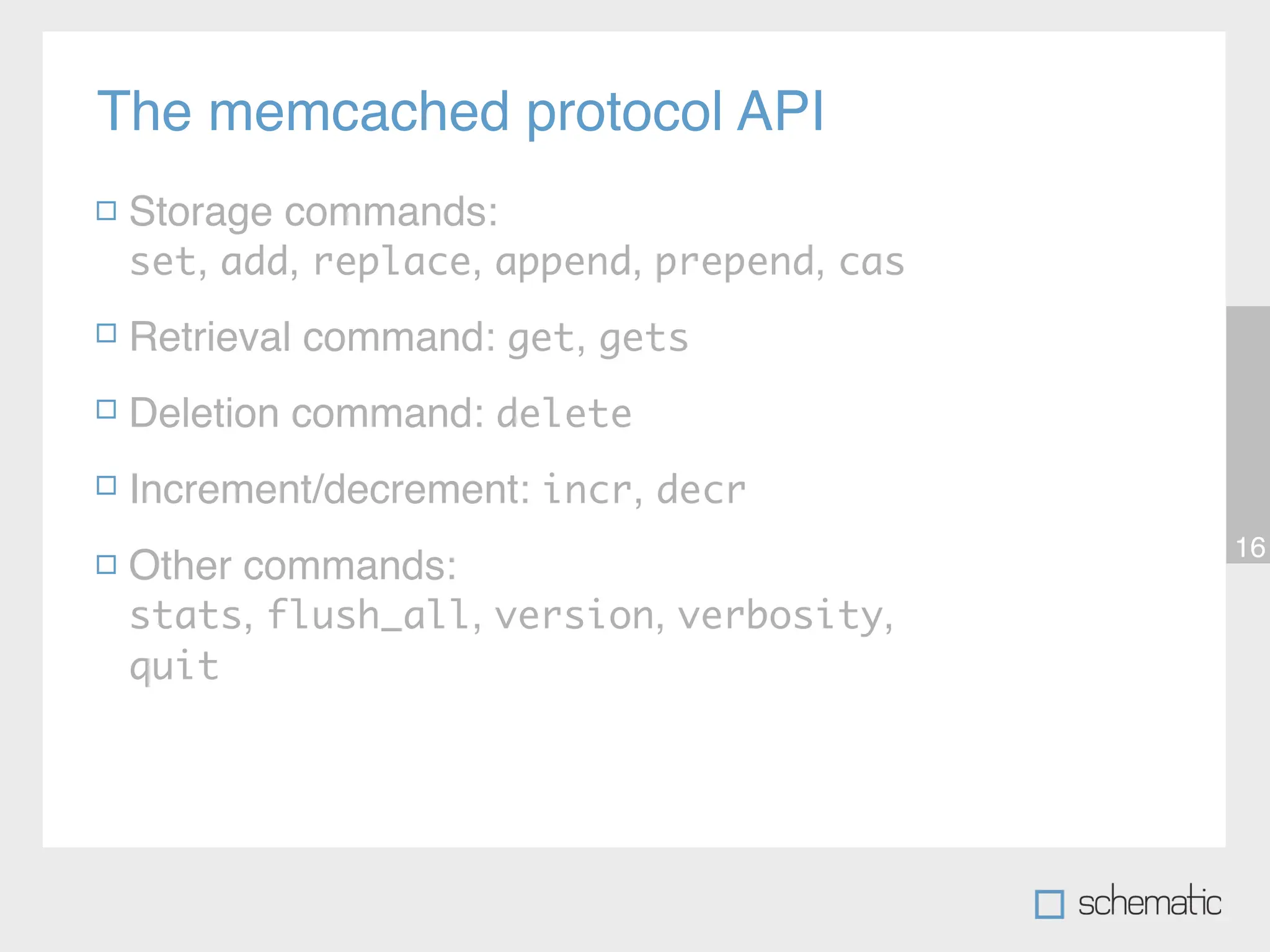
Slide 16: The memcached protocol API Storage commands: set, add, replace, append, prepend, cas Retrieval command: get, gets Deletion command: delete Increment/decrement: incr, decr 16 Other commands: stats, flush_all, version, verbosity, quit
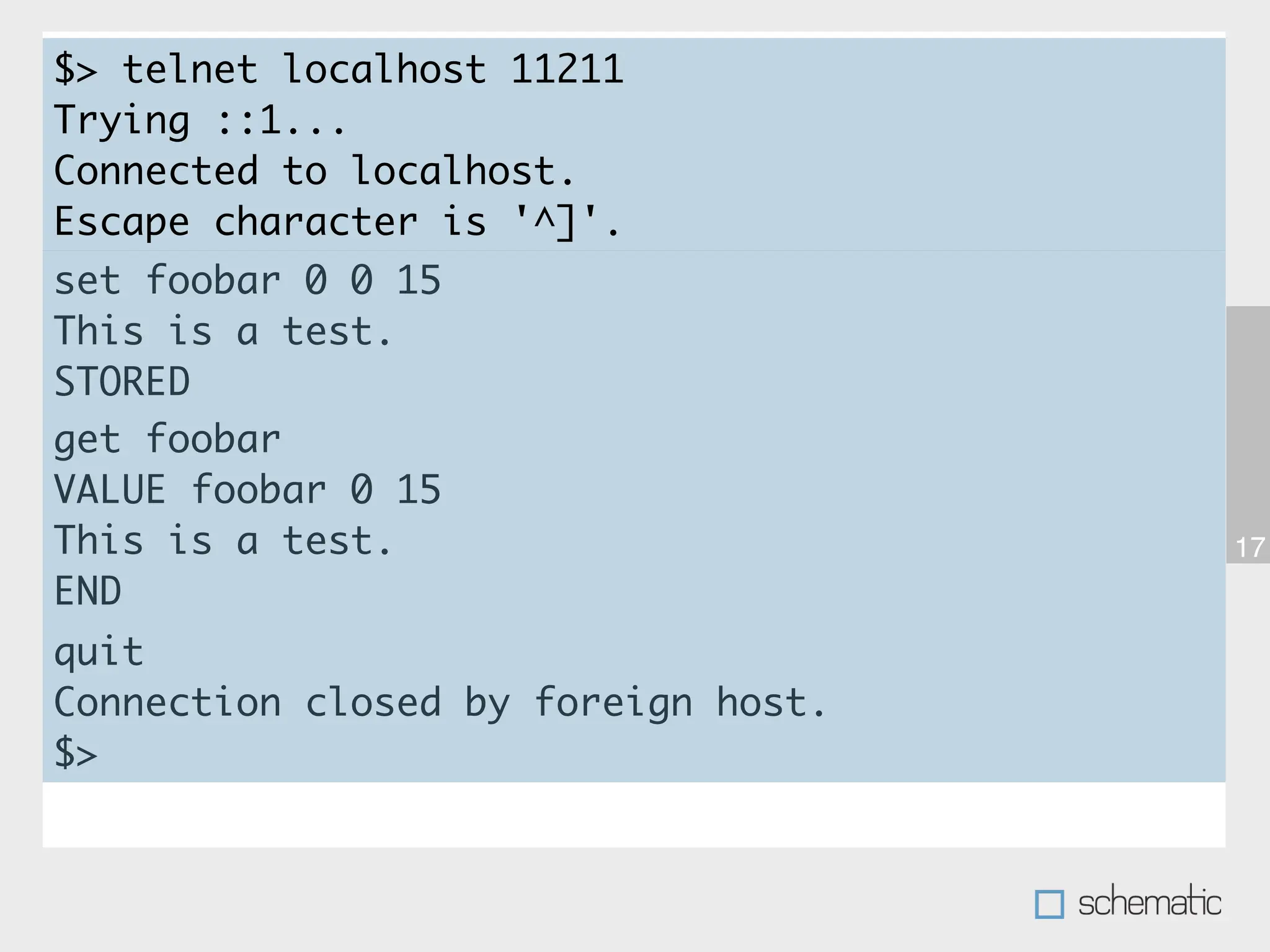
Slide 17: $> telnet localhost 11211 Trying ::1... Connected to localhost. Escape character is '^]'. set foobar 0 0 15 This is a test. STORED get foobar VALUE foobar 0 15 This is a test. 17 END quit Connection closed by foreign host. $>
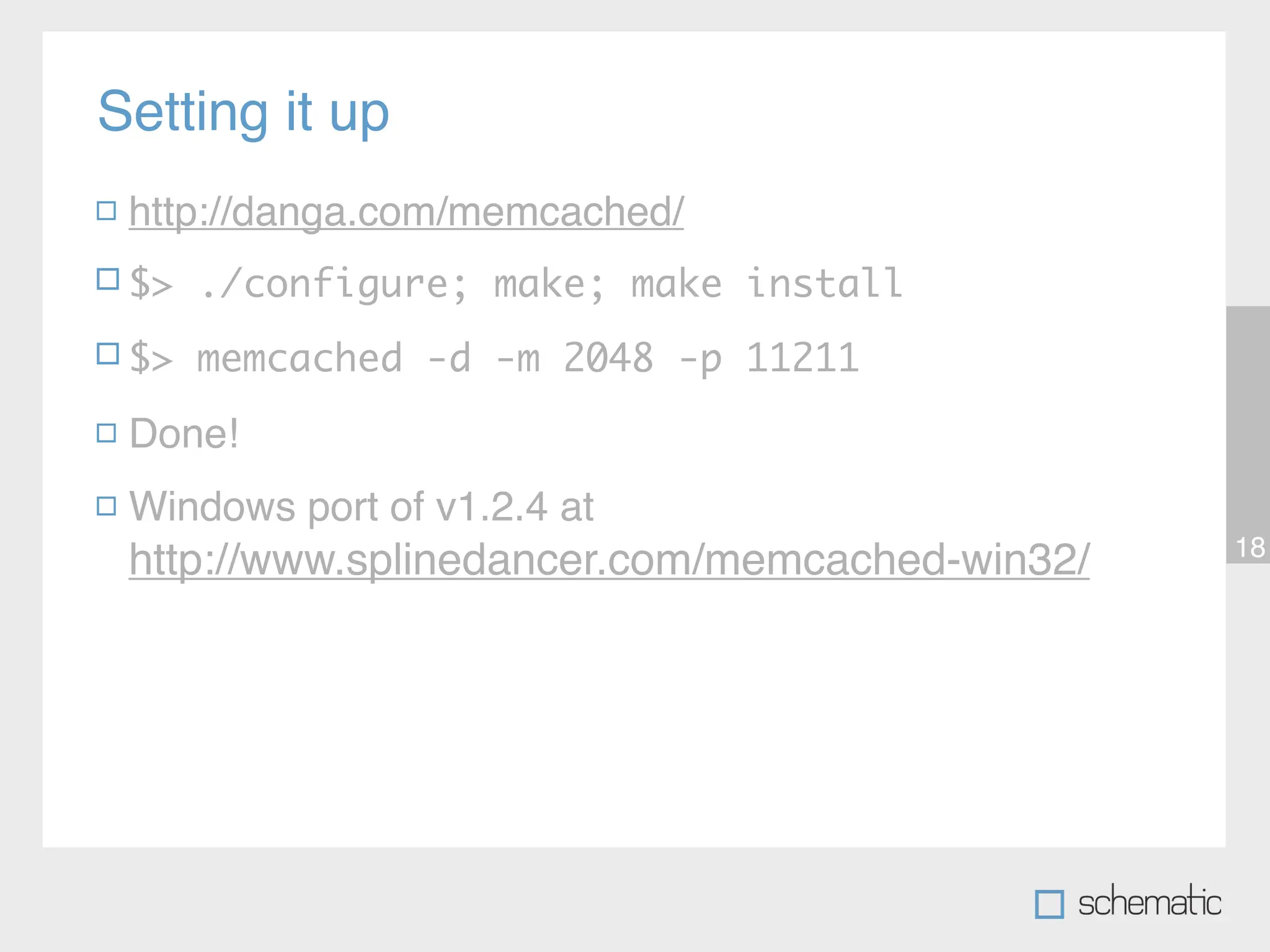
Slide 18: Setting it up http://danga.com/memcached/ $> ./configure; make; make install $> memcached -d -m 2048 -p 11211 Done! Windows port of v1.2.4 at 18 http://www.splinedancer.com/memcached-win32/
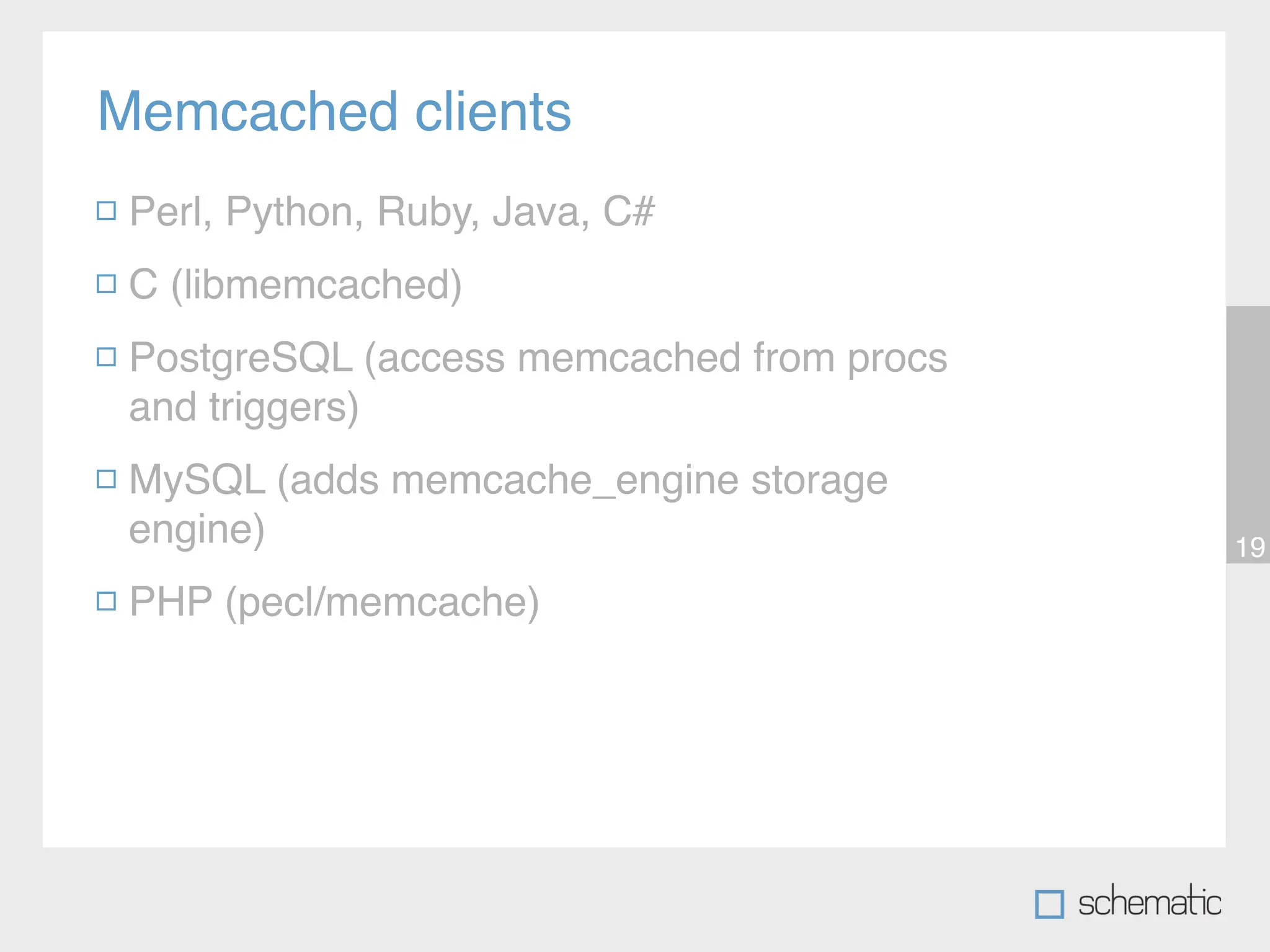
Slide 19: Memcached clients Perl, Python, Ruby, Java, C# C (libmemcached) PostgreSQL (access memcached from procs and triggers) MySQL (adds memcache_engine storage engine) 19 PHP (pecl/memcache)
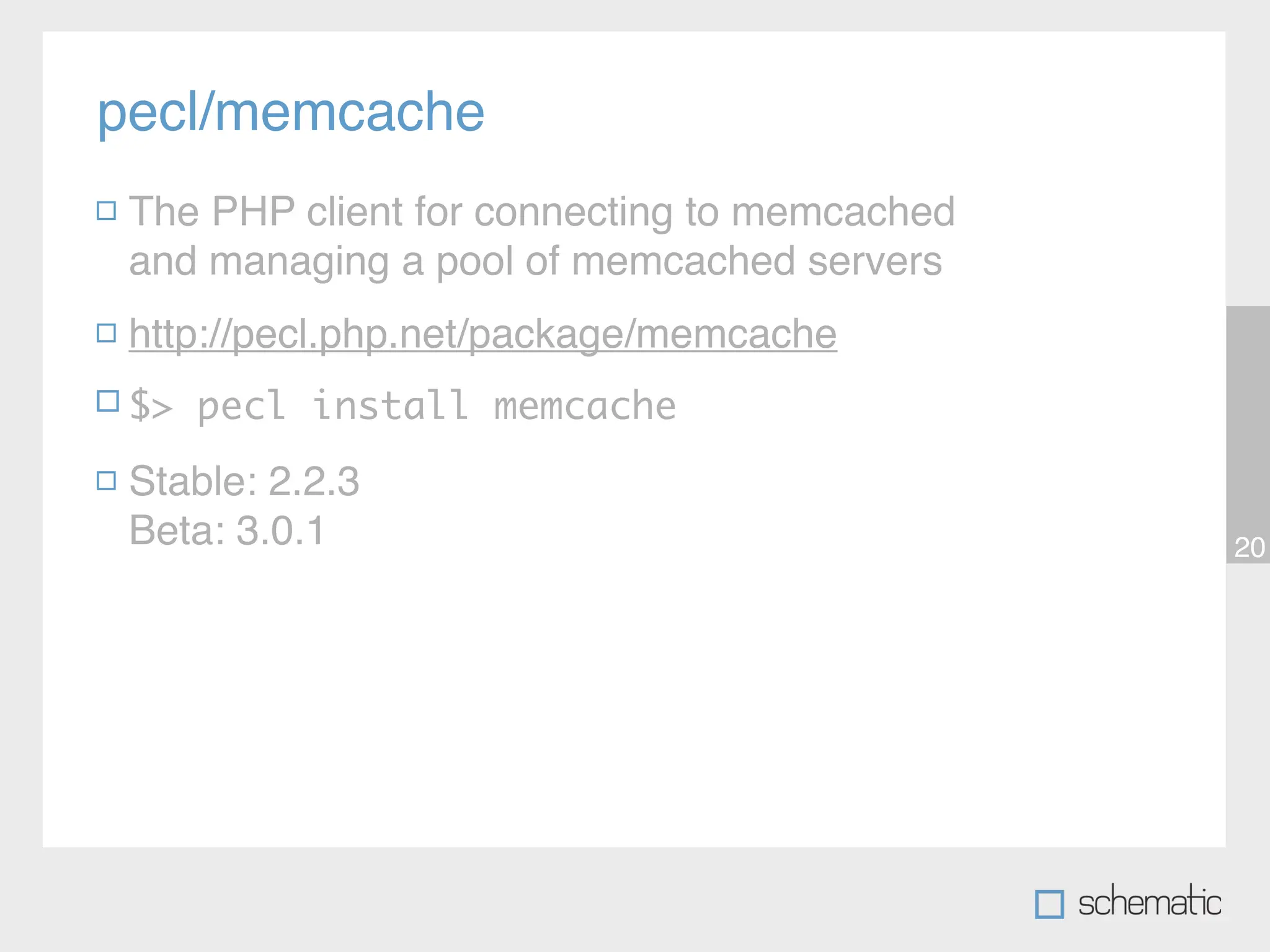
Slide 20: pecl/memcache The PHP client for connecting to memcached and managing a pool of memcached servers http://pecl.php.net/package/memcache $> pecl install memcache Stable: 2.2.3 Beta: 3.0.1 20
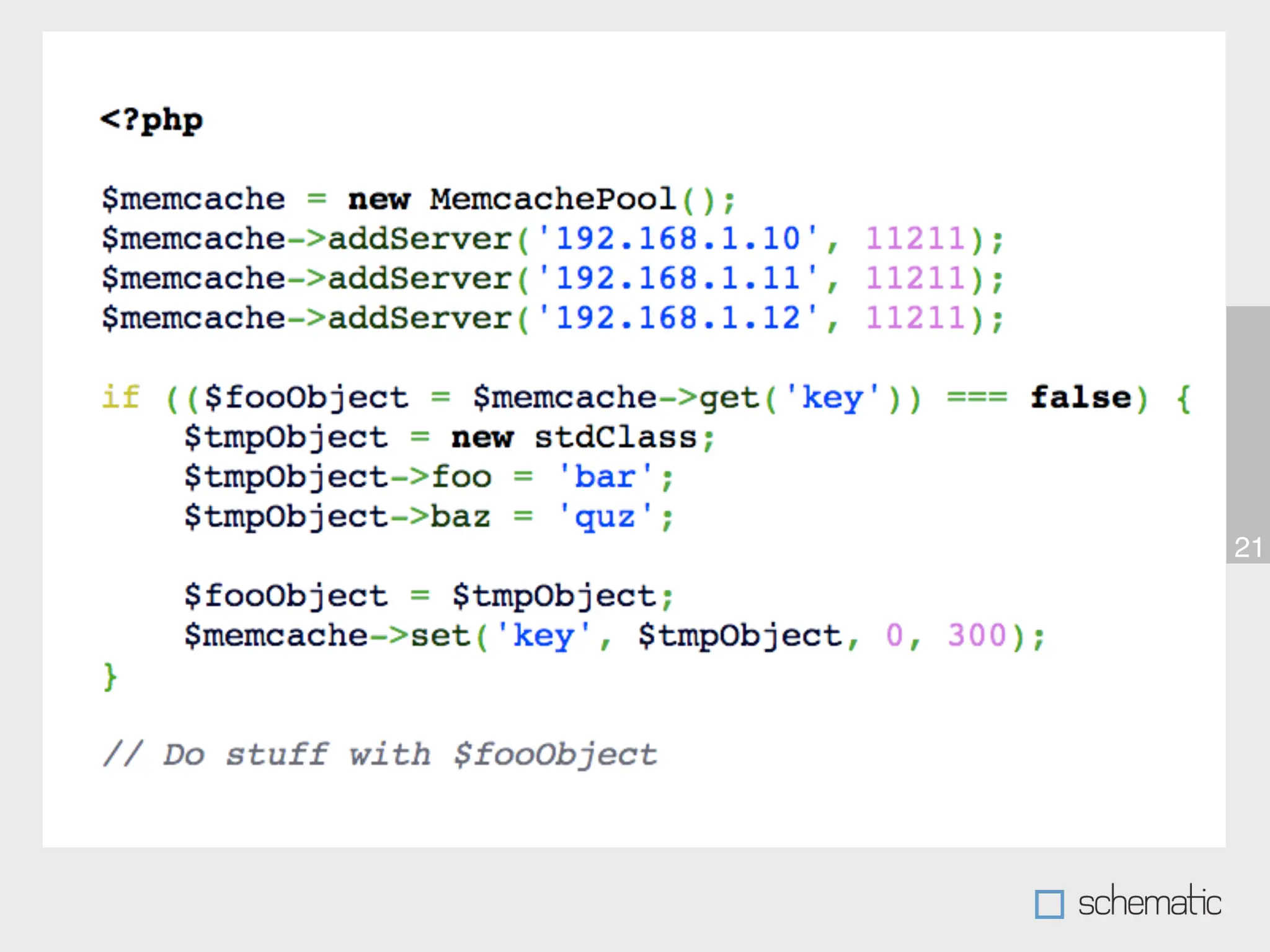
Slide 21: 21
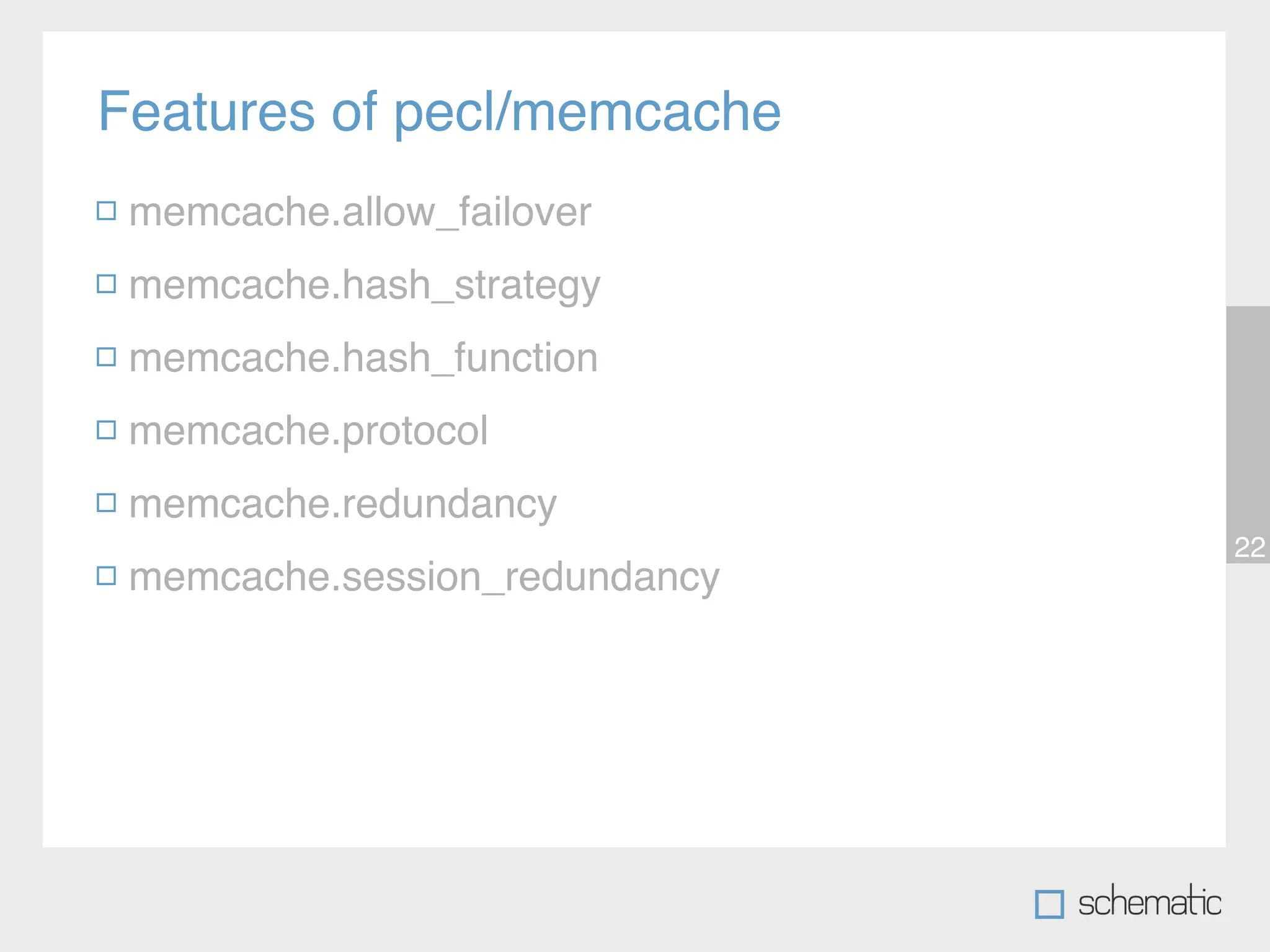
Slide 22: Features of pecl/memcache memcache.allow_failover memcache.hash_strategy memcache.hash_function memcache.protocol memcache.redundancy 22 memcache.session_redundancy
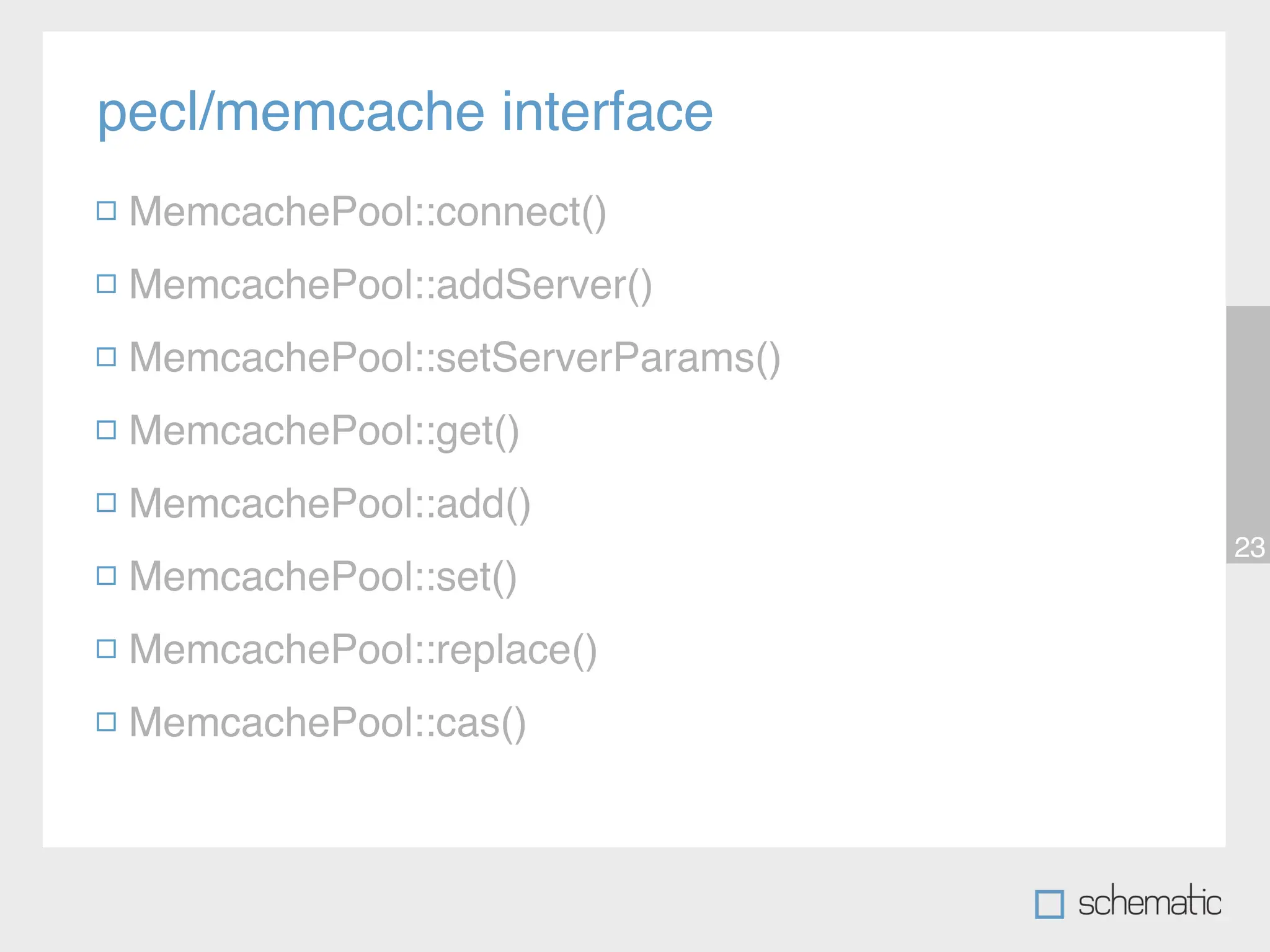
Slide 23: pecl/memcache interface MemcachePool::connect() MemcachePool::addServer() MemcachePool::setServerParams() MemcachePool::get() MemcachePool::add() 23 MemcachePool::set() MemcachePool::replace() MemcachePool::cas()
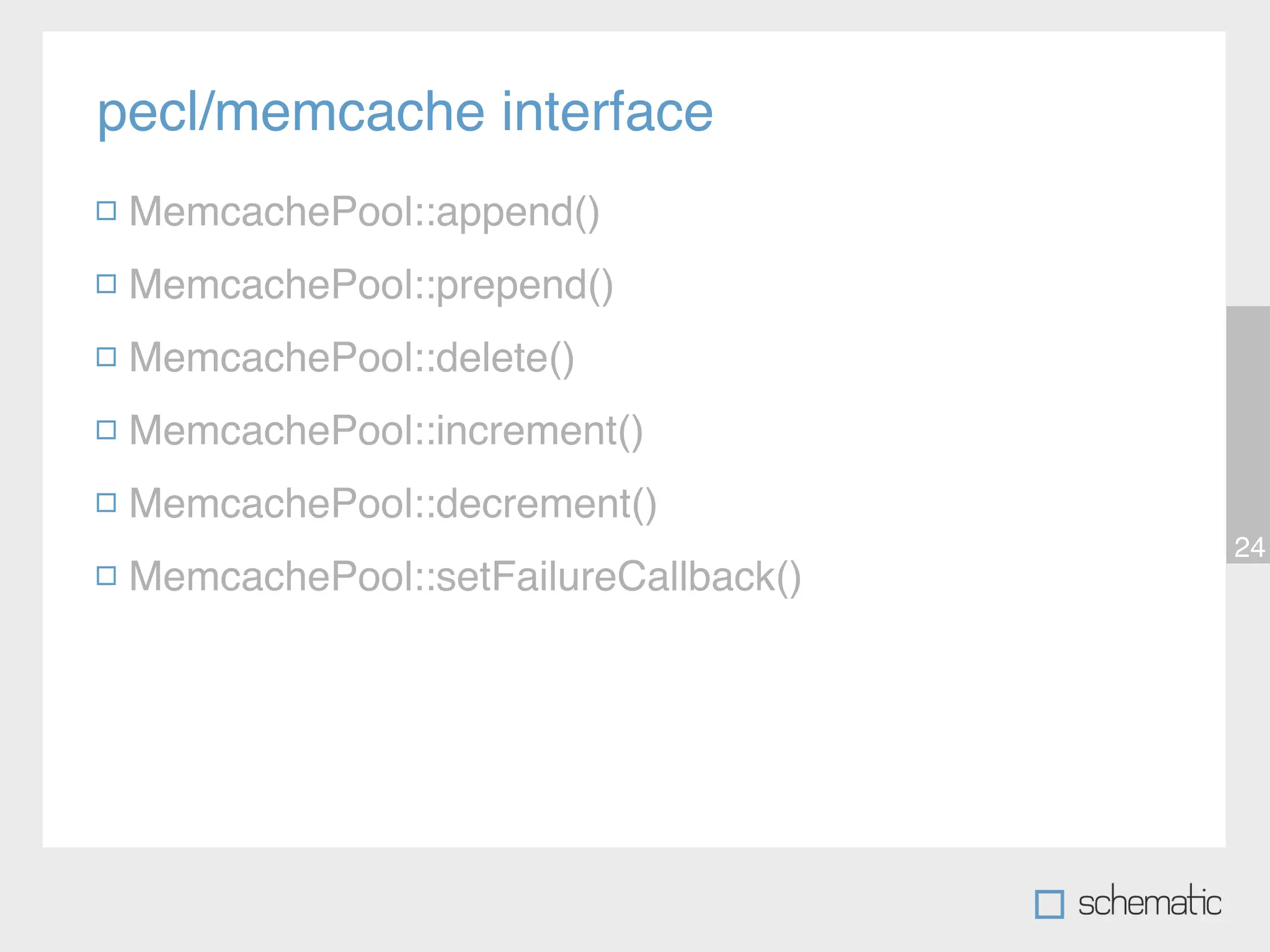
Slide 24: pecl/memcache interface MemcachePool::append() MemcachePool::prepend() MemcachePool::delete() MemcachePool::increment() MemcachePool::decrement() 24 MemcachePool::setFailureCallback()
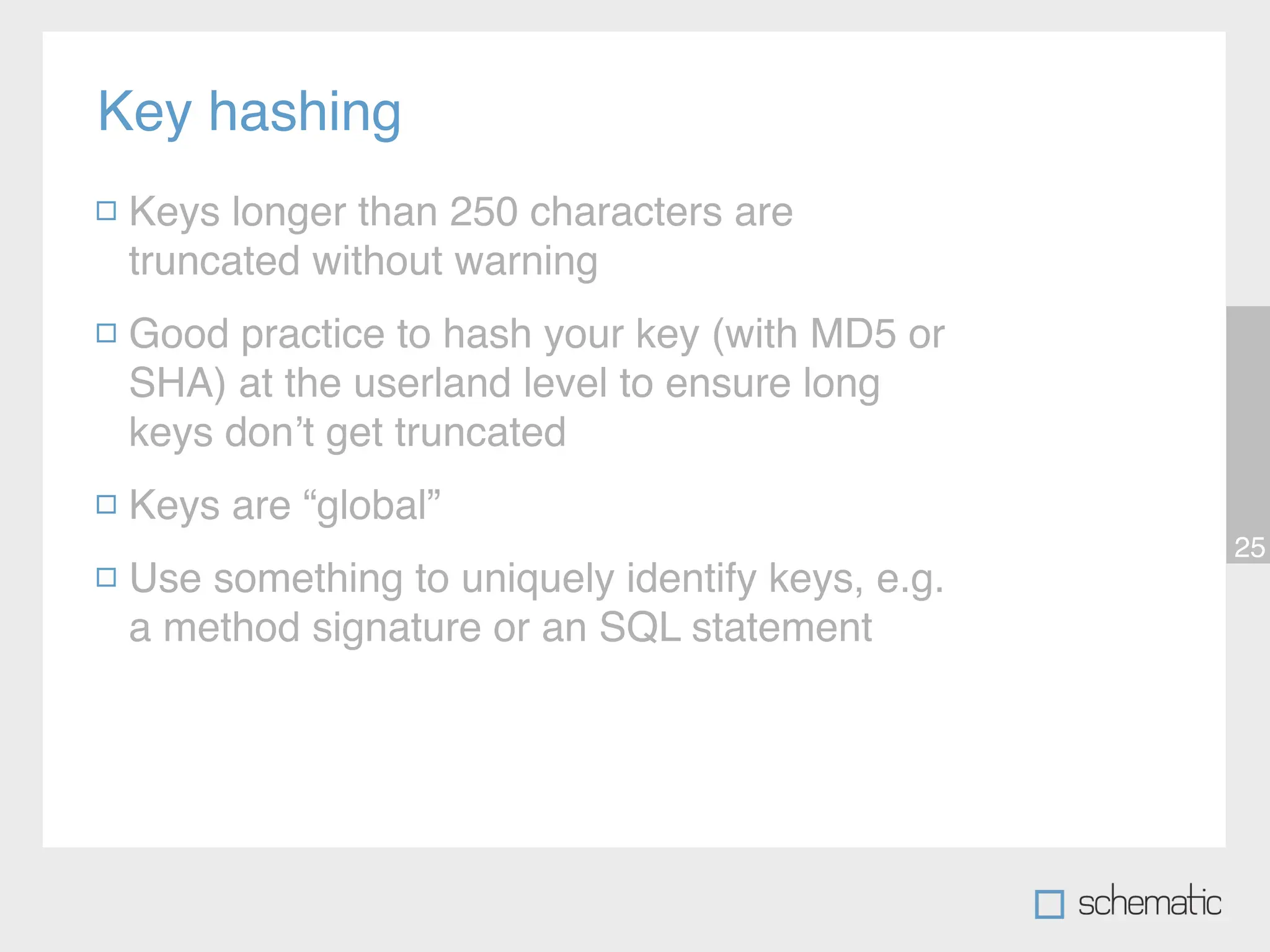
Slide 25: Key hashing Keys longer than 250 characters are truncated without warning Good practice to hash your key (with MD5 or SHA) at the userland level to ensure long keys don’t get truncated Keys are “global” 25 Use something to uniquely identify keys, e.g. a method signature or an SQL statement
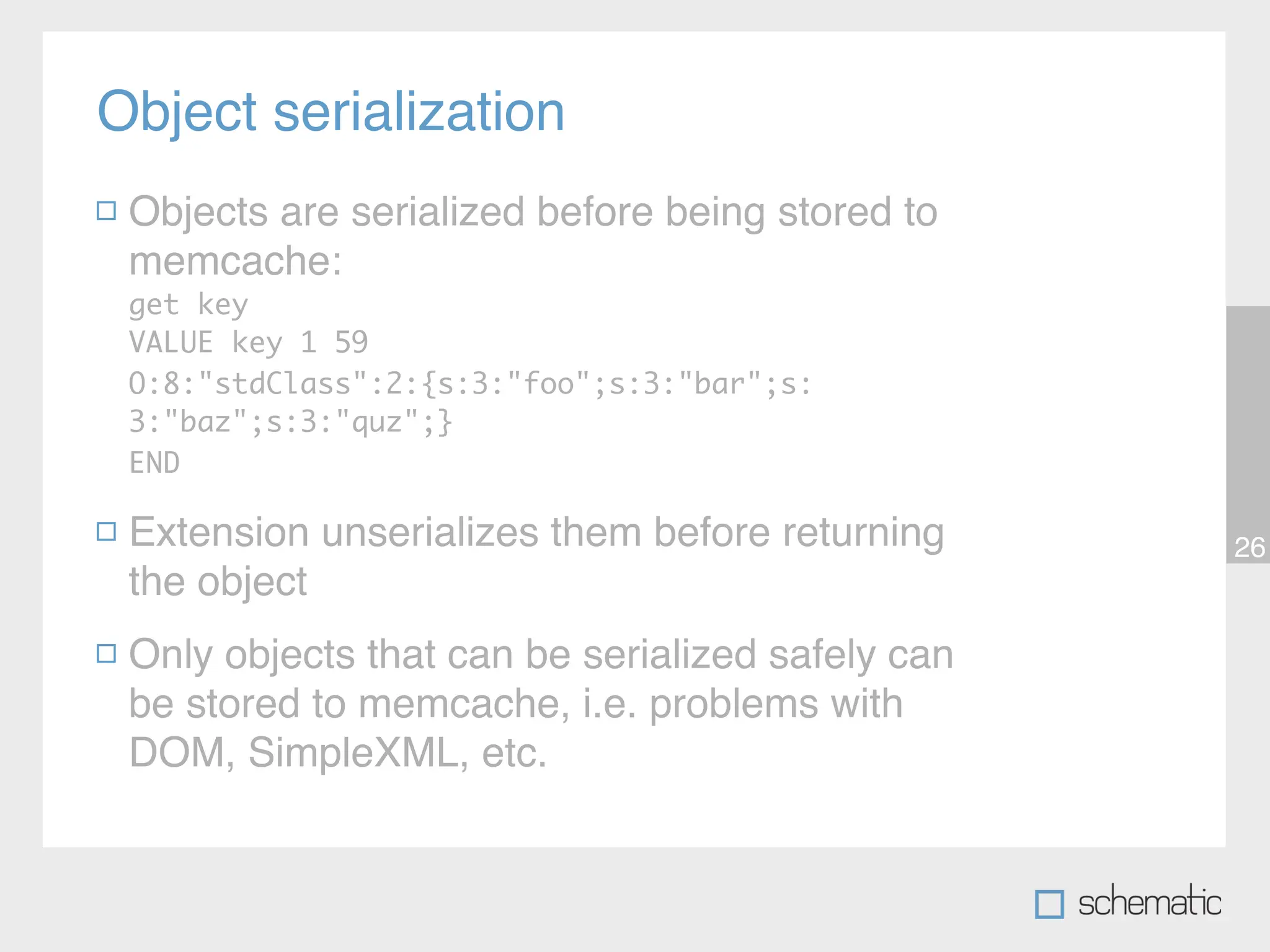
Slide 26: Object serialization Objects are serialized before being stored to memcache: get key VALUE key 1 59 O:8:"stdClass":2:{s:3:"foo";s:3:"bar";s: 3:"baz";s:3:"quz";} END Extension unserializes them before returning 26 the object Only objects that can be serialized safely can be stored to memcache, i.e. problems with DOM, SimpleXML, etc.
Slide 27: Redundancy and failover memcache.redundancy & memcache.session_redundancy Implement redundancy at the userland level? Again, memcache is not a database 27
Slide 28: Extending MemcachePool Implement global values vs. page-specific values Ensure a single instance of the MemcachePool object Do complex key hashing, if you so choose Set a default expiration for all your data 28 Add all of your servers upon object instantiation
Slide 29: Database techniques Create a wrapper for mysql_query() that checks the cache first and returns an array of database results Extend PDO to store results to the cache and get them when you execute a statement 29
Slide 30: Database techniques For large datasets, run a scheduled query once an hour and store it to the cache Please note: memcached can store arrays, objects, etc., but it cannot store a resource, which some database functions (e.g. mysql_query()) return 30
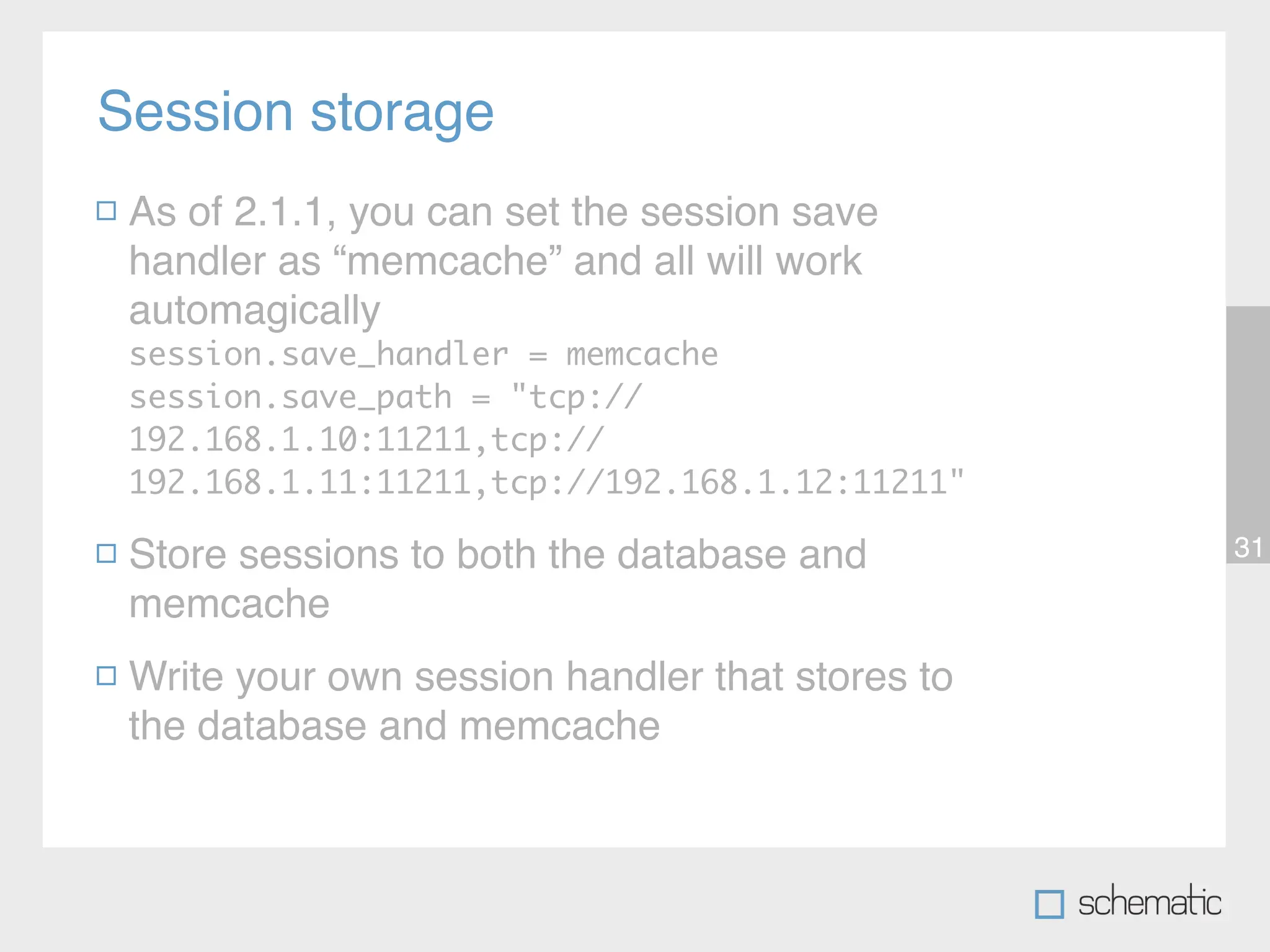
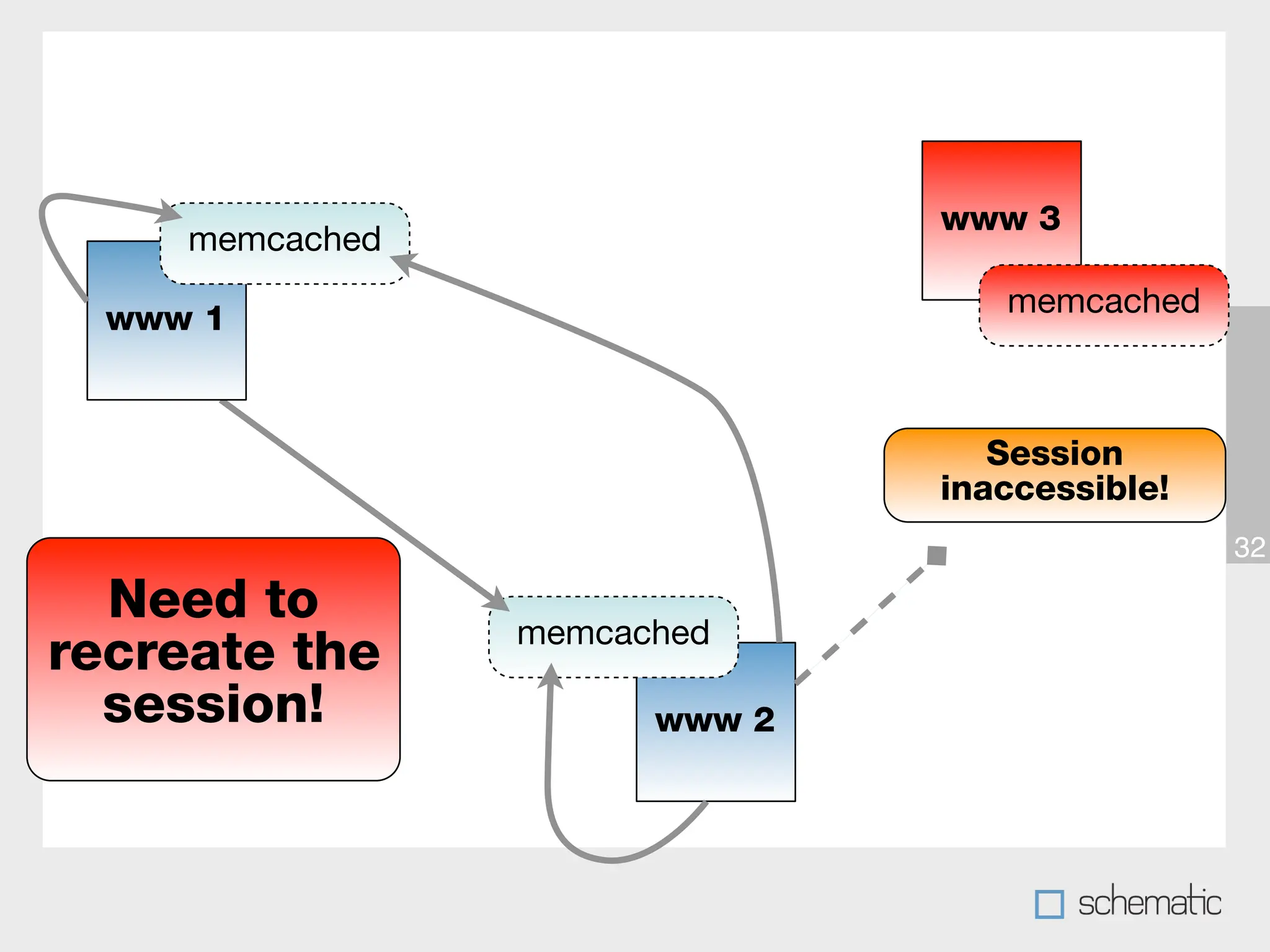
Slide 31: Session storage As of 2.1.1, you can set the session save handler as “memcache” and all will work automagically session.save_handler = memcache session.save_path = "tcp:// 192.168.1.10:11211,tcp:// 192.168.1.11:11211,tcp://192.168.1.12:11211" Store sessions to both the database and 31 memcache Write your own session handler that stores to the database and memcache
Slide 32: www 3 memcached memcached www 1 Session inaccessible! 32 Need to memcached recreate the session! www 2
Slide 33: A demonstration... 33
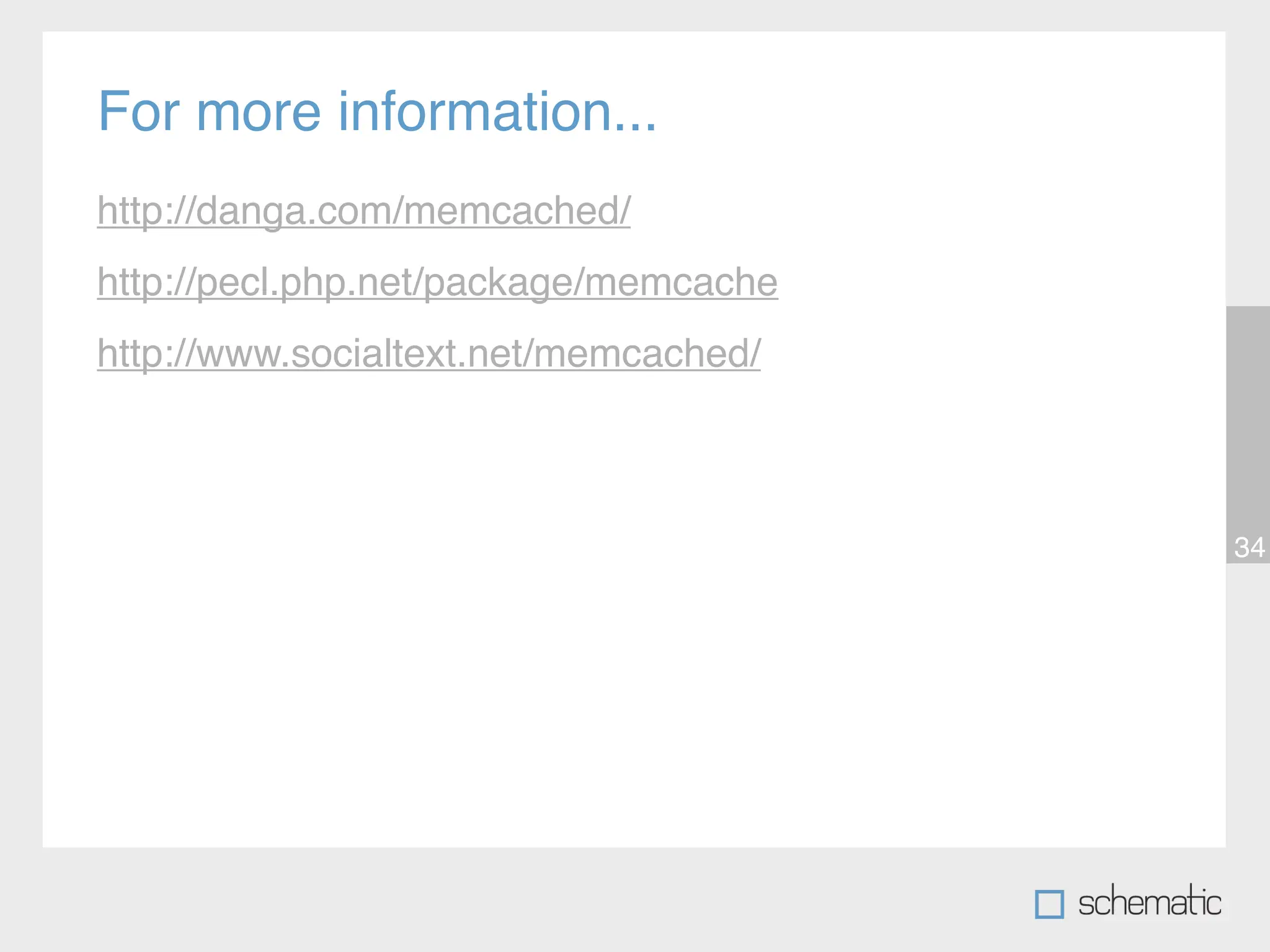
Slide 34: For more information... http://danga.com/memcached/ http://pecl.php.net/package/memcache http://www.socialtext.net/memcached/ 34
Slide 35: Thank You Slides available for download at benramsey.com. Ben Ramsey 35 Software Architect Schematic http://www.schematic.com/
Slide 36: We’re Hiring! It goes without saying: Schematic is only as good as the people who work here. That’s why we’re so particular about recruiting, training, nurturing, and retaining the very best people in our field. If you have digital expertise (technical, creative, managerial–or something else entirely), enthusiasm, curiosity, and the ability to collaborate with others, we’d love to hear from you. 36 Please visit http://www.schematic.com/ for more information.


Add a comment on Slide 1
If you have a SlideShare account, login to comment; else you can comment as a guest- Favorites & Groups
Showing 1-50 of 4 (more)