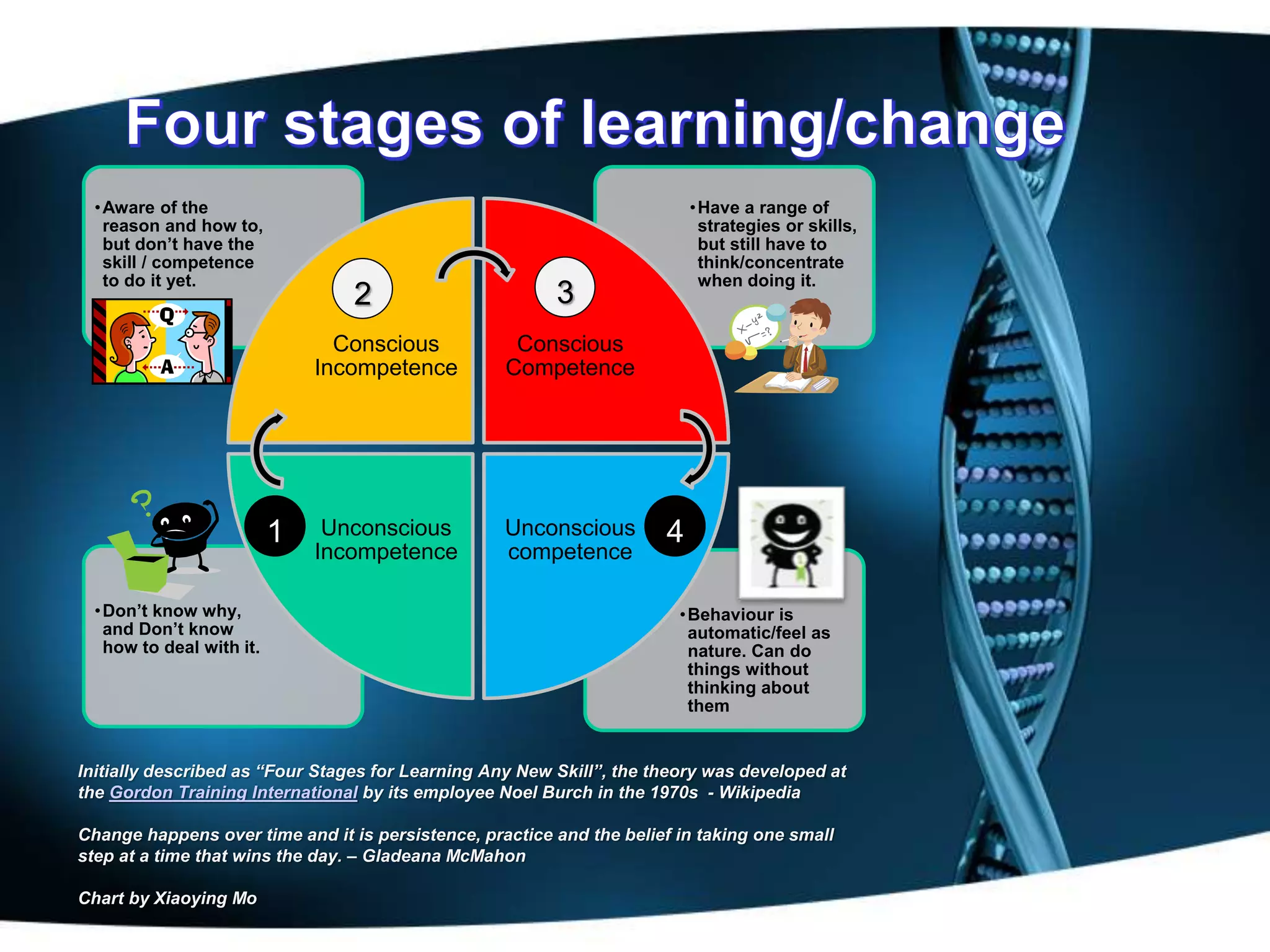
•Behaviour is
automatic/feel as
nature. Can do
things without
thinking about
them
•Don’t know why,
and Don’t know
how to deal with it.
•Have a range of
strategies or skills,
but still have to
think/concentrate
when doing it.
•Aware of the
reason and how to,
but don’t have the
skill / competence
to do it yet.
Conscious
Incompetence
Conscious
Competence
Unconscious
competence
Unconscious
Incompetence
1
2 3
4
Initially described as “Four Stages for Learning Any New Skill”, the theory was developed at
the Gordon Training International by its employee Noel Burch in the 1970s - Wikipedia
Change happens over time and it is persistence, practice and the belief in taking one small
step at a time that wins the day. – Gladeana McMahon
Chart by Xiaoying Mo

Four stages of learning change

  • 1.
    •Behaviour is automatic/feel as nature.Can do things without thinking about them •Don’t know why, and Don’t know how to deal with it. •Have a range of strategies or skills, but still have to think/concentrate when doing it. •Aware of the reason and how to, but don’t have the skill / competence to do it yet. Conscious Incompetence Conscious Competence Unconscious competence Unconscious Incompetence 1 2 3 4 Initially described as “Four Stages for Learning Any New Skill”, the theory was developed at the Gordon Training International by its employee Noel Burch in the 1970s - Wikipedia Change happens over time and it is persistence, practice and the belief in taking one small step at a time that wins the day. – Gladeana McMahon Chart by Xiaoying Mo