Event all the things
Modernizing apps with Node.js
C.V.
● Descendent of hominini tribe
● Founder at cloudconnect, Showyou, Alier
● Engineering Director at Heroku
Node, Python, Objective-C, Ruby,
Java, Tcl
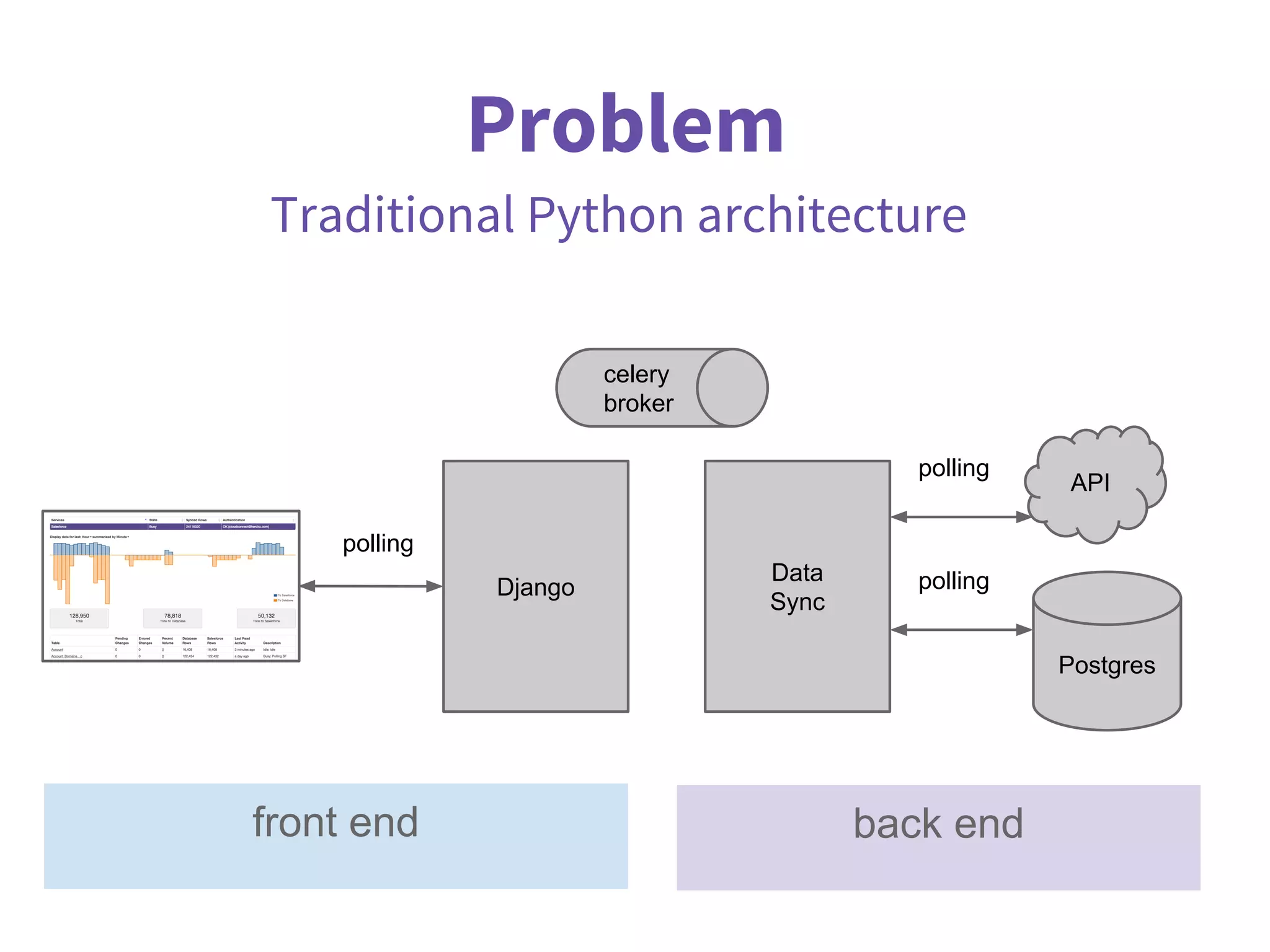
Problem
Traditional Python architecture
Django
Data
Sync
Postgres
polling
API
polling
polling
front end back end
celery
broker
Let’s go real-time!
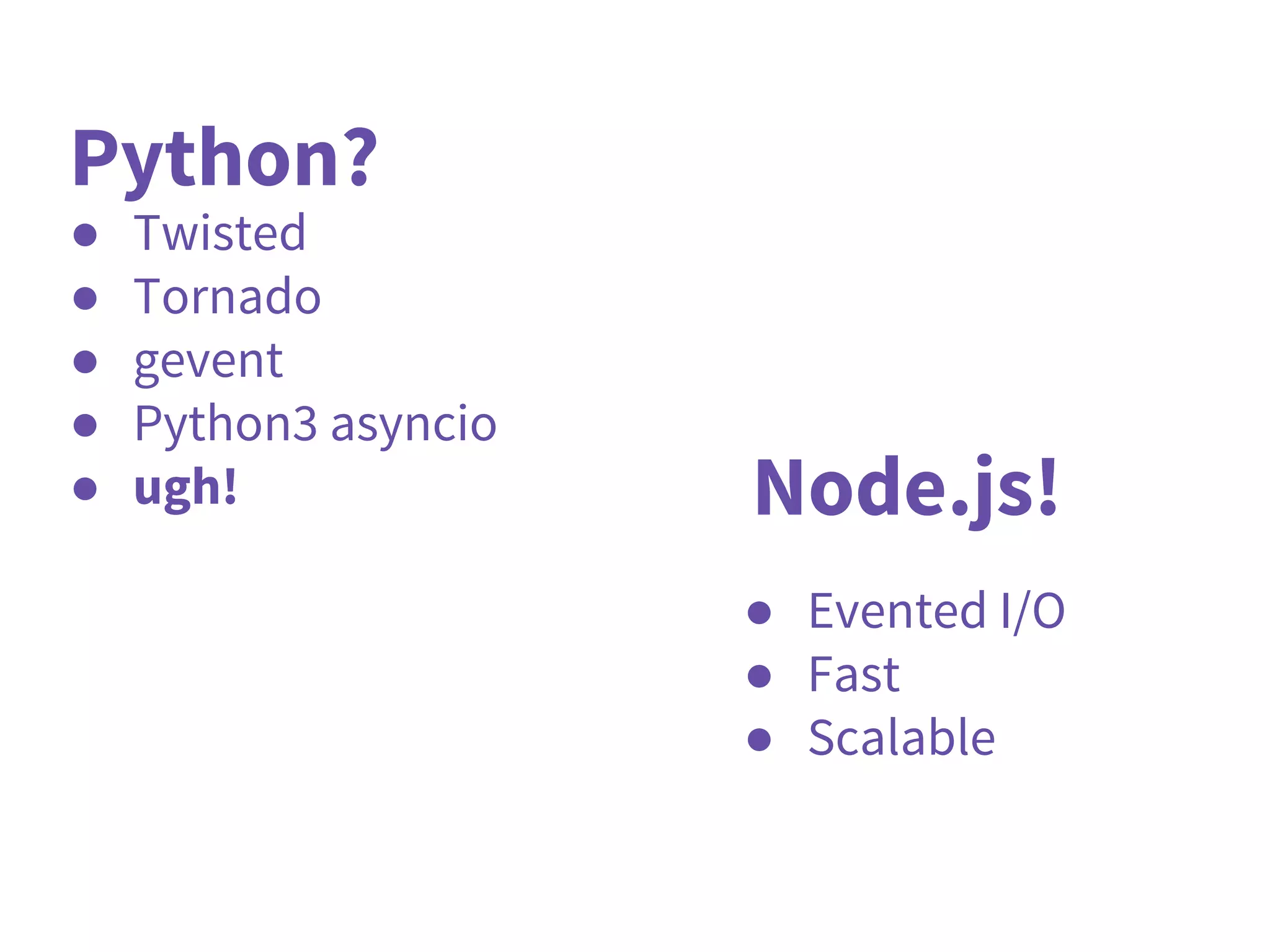
Node.js!
● Evented I/O
● Fast
● Scalable
Python?
● Twisted
● Tornado
● gevent
● Python3 asyncio
● ugh!
Perfect for Node
… Not so much
Modernize!
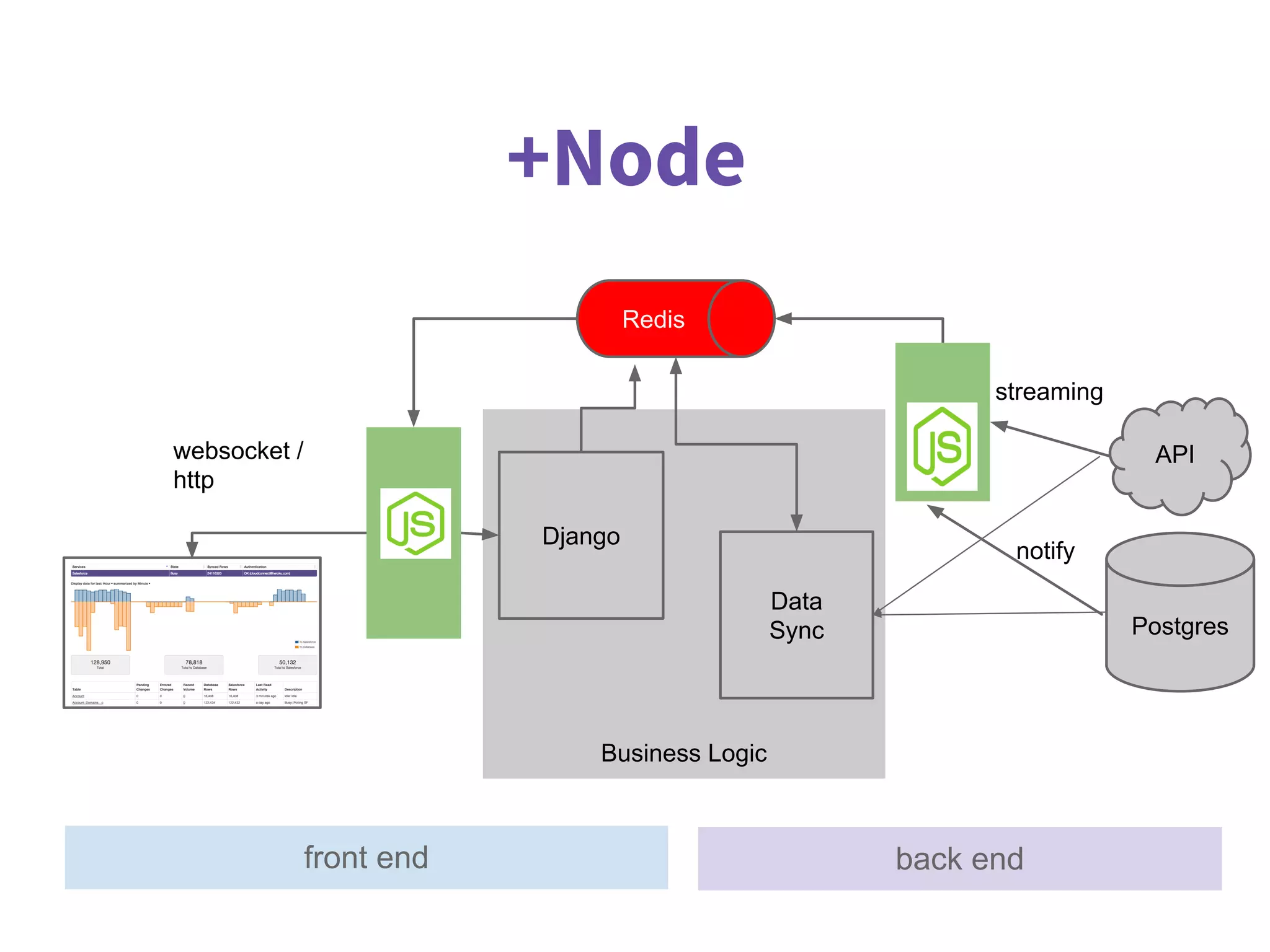
Business Logic
+Node
Django
APIwebsocket /
http
Redis
streaming
Data
Sync Postgres
notify
front end back end
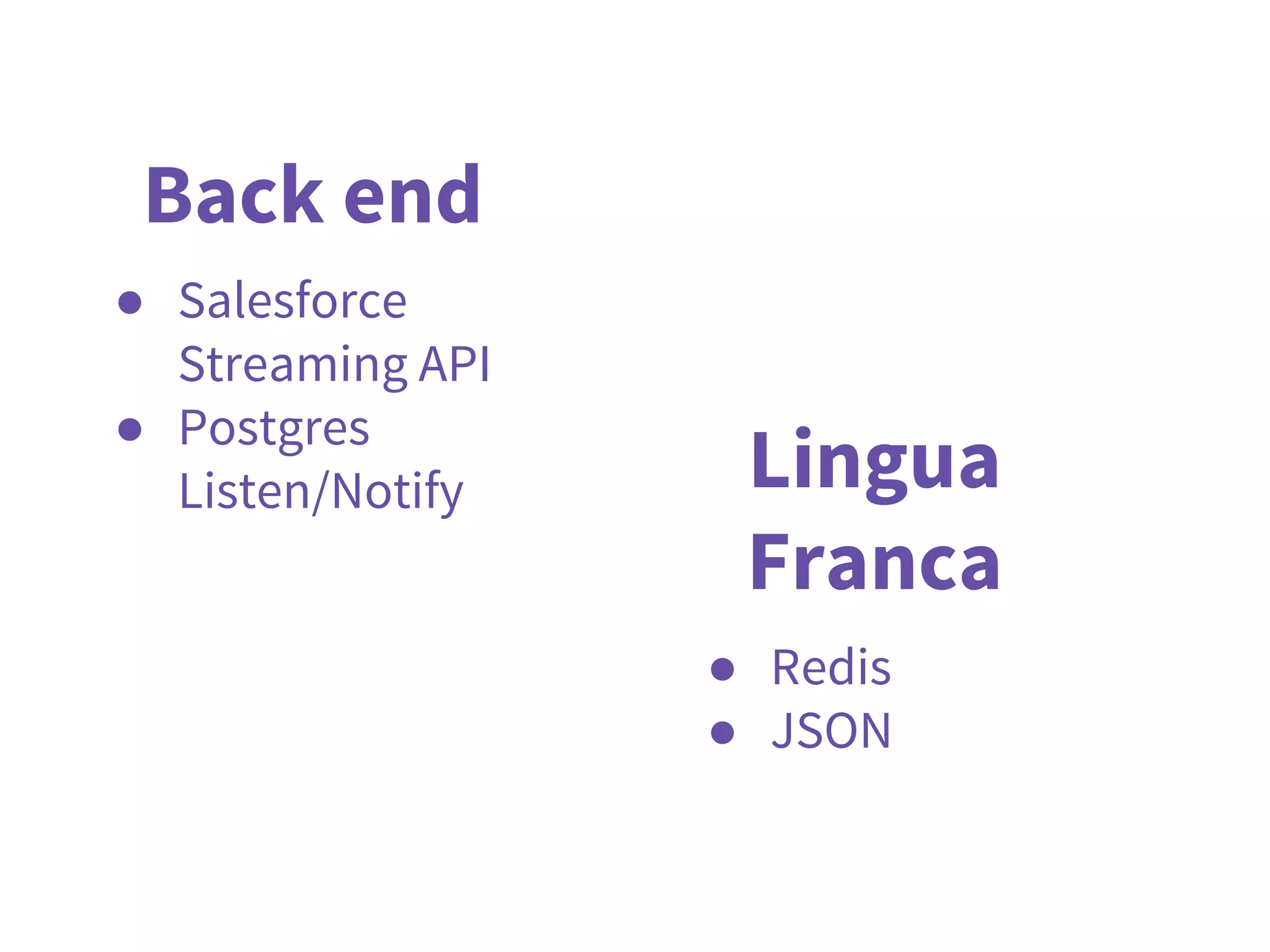
Back end
● Salesforce
Streaming API
● Postgres
Listen/Notify Lingua
Franca
● Redis
● JSON
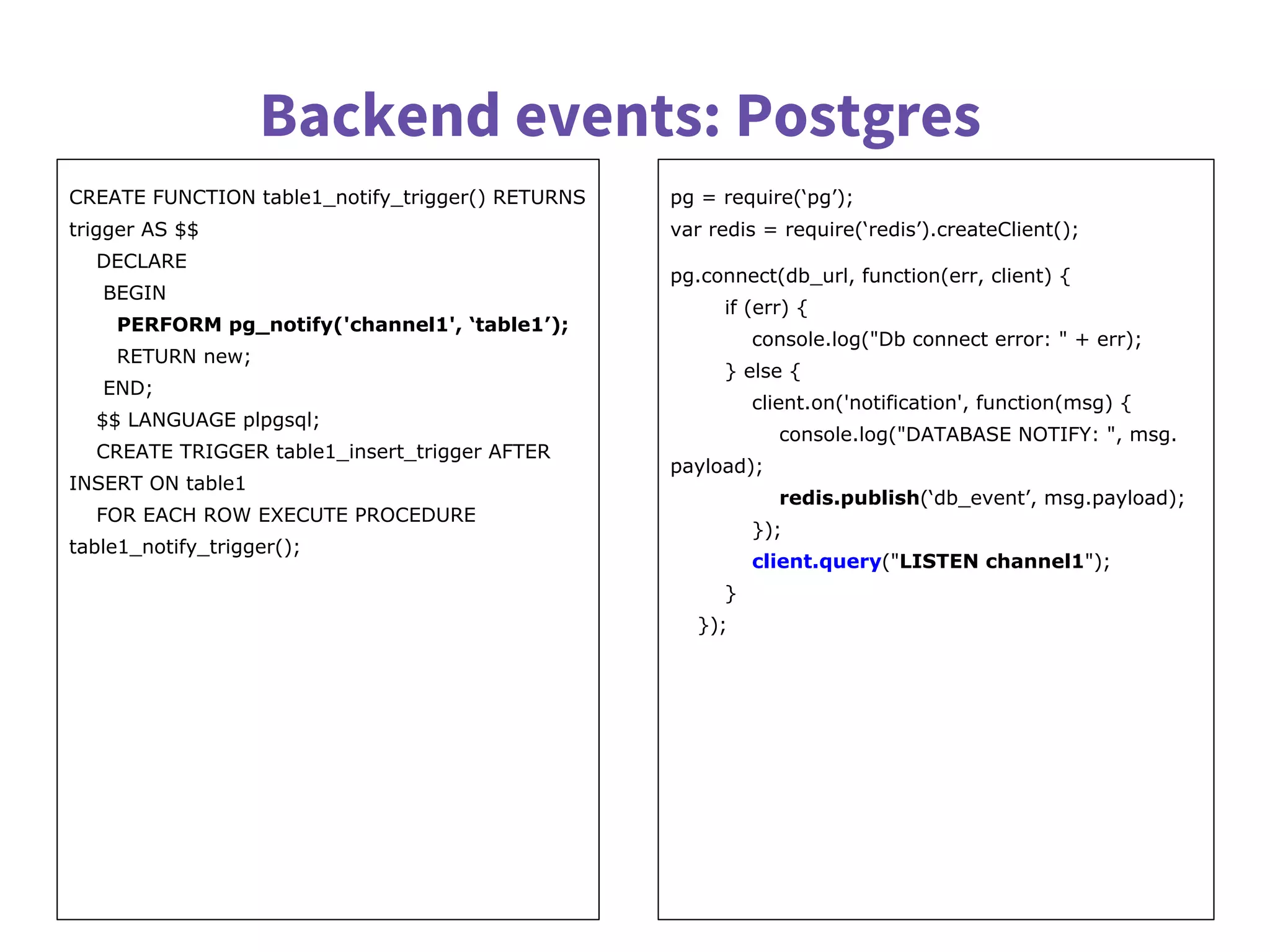
Backend events: Postgres
CREATE FUNCTION table1_notify_trigger() RETURNS
trigger AS $$
DECLARE
BEGIN
PERFORM pg_notify('channel1', ‘table1’);
RETURN new;
END;
$$ LANGUAGE plpgsql;
CREATE TRIGGER table1_insert_trigger AFTER
INSERT ON table1
FOR EACH ROW EXECUTE PROCEDURE
table1_notify_trigger();
pg = require(‘pg’);
var redis = require(‘redis’).createClient();
pg.connect(db_url, function(err, client) {
if (err) {
console.log("Db connect error: " + err);
} else {
client.on('notification', function(msg) {
console.log("DATABASE NOTIFY: ", msg.
payload);
redis.publish(‘db_event’, msg.payload);
});
client.query("LISTEN channel1");
}
});
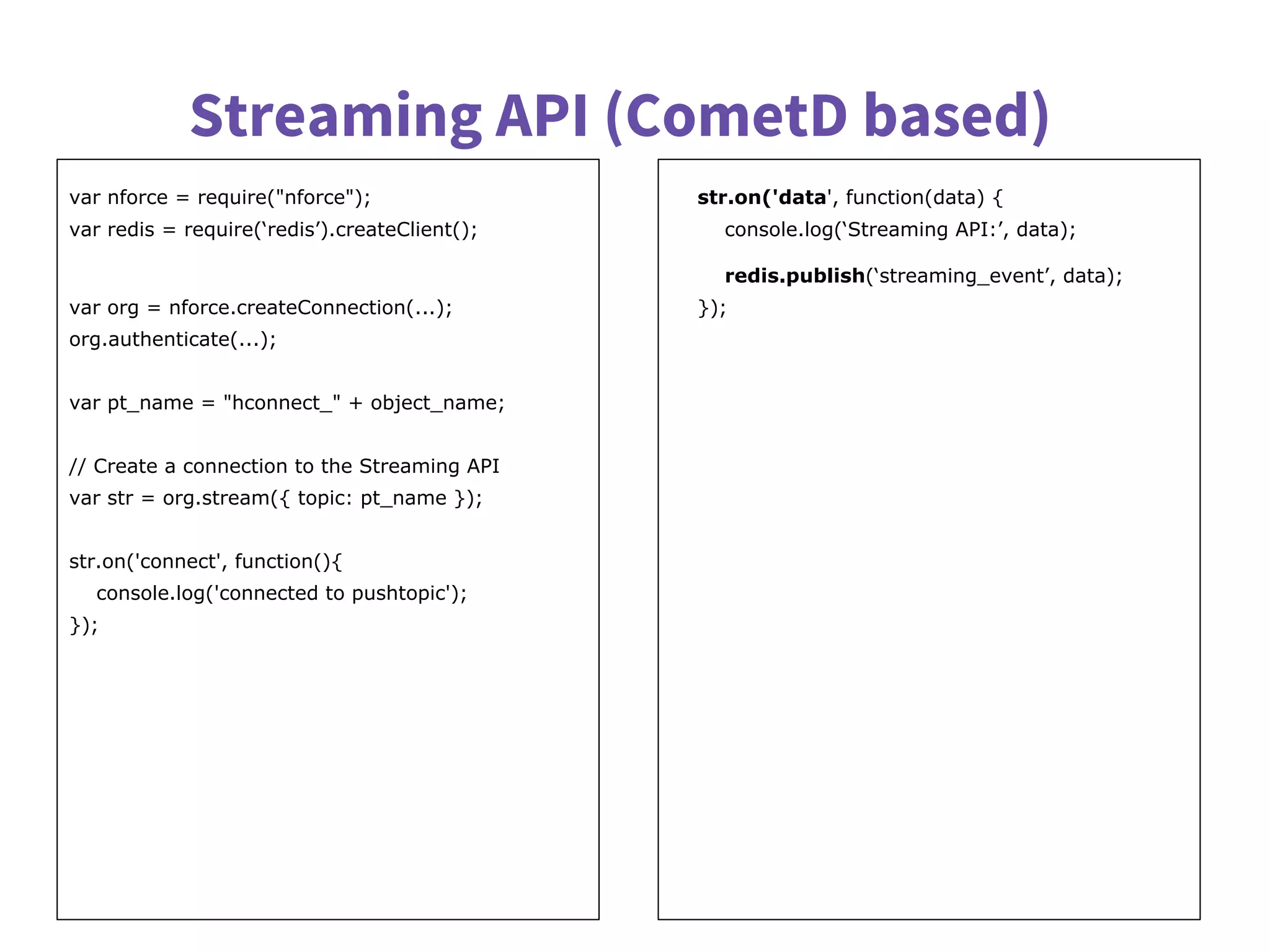
Streaming API (CometD based)
var nforce = require("nforce");
var redis = require(‘redis’).createClient();
var org = nforce.createConnection(...);
org.authenticate(...);
var pt_name = "hconnect_" + object_name;
// Create a connection to the Streaming API
var str = org.stream({ topic: pt_name });
str.on('connect', function(){
console.log('connected to pushtopic');
});
str.on('data', function(data) {
console.log(‘Streaming API:’, data);
redis.publish(‘streaming_event’, data);
});
Real-time UI
Django
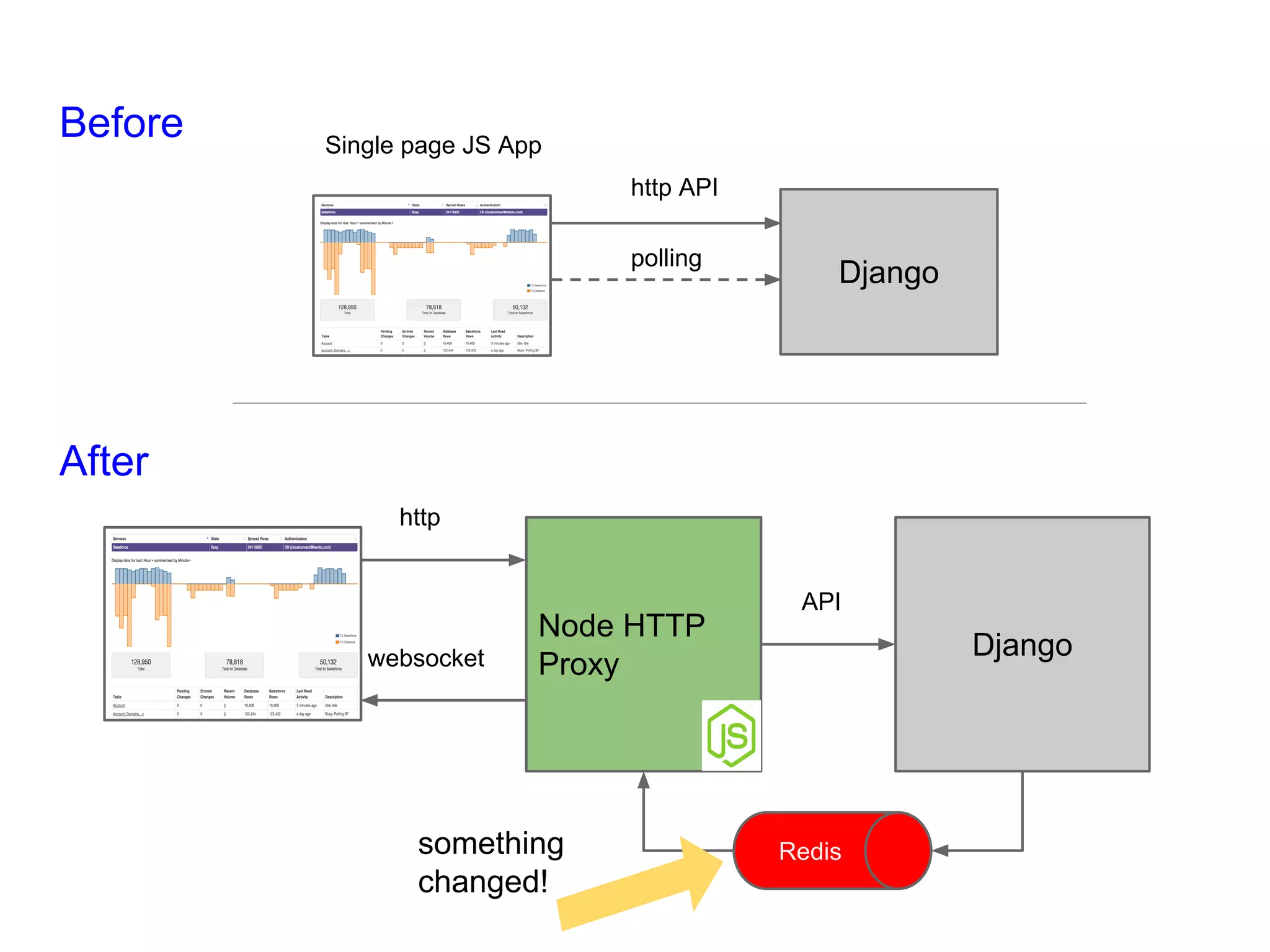
http
Node HTTP
Proxywebsocket
Redis
Django
http API
polling
API
Single page JS App
Before
After
something
changed!
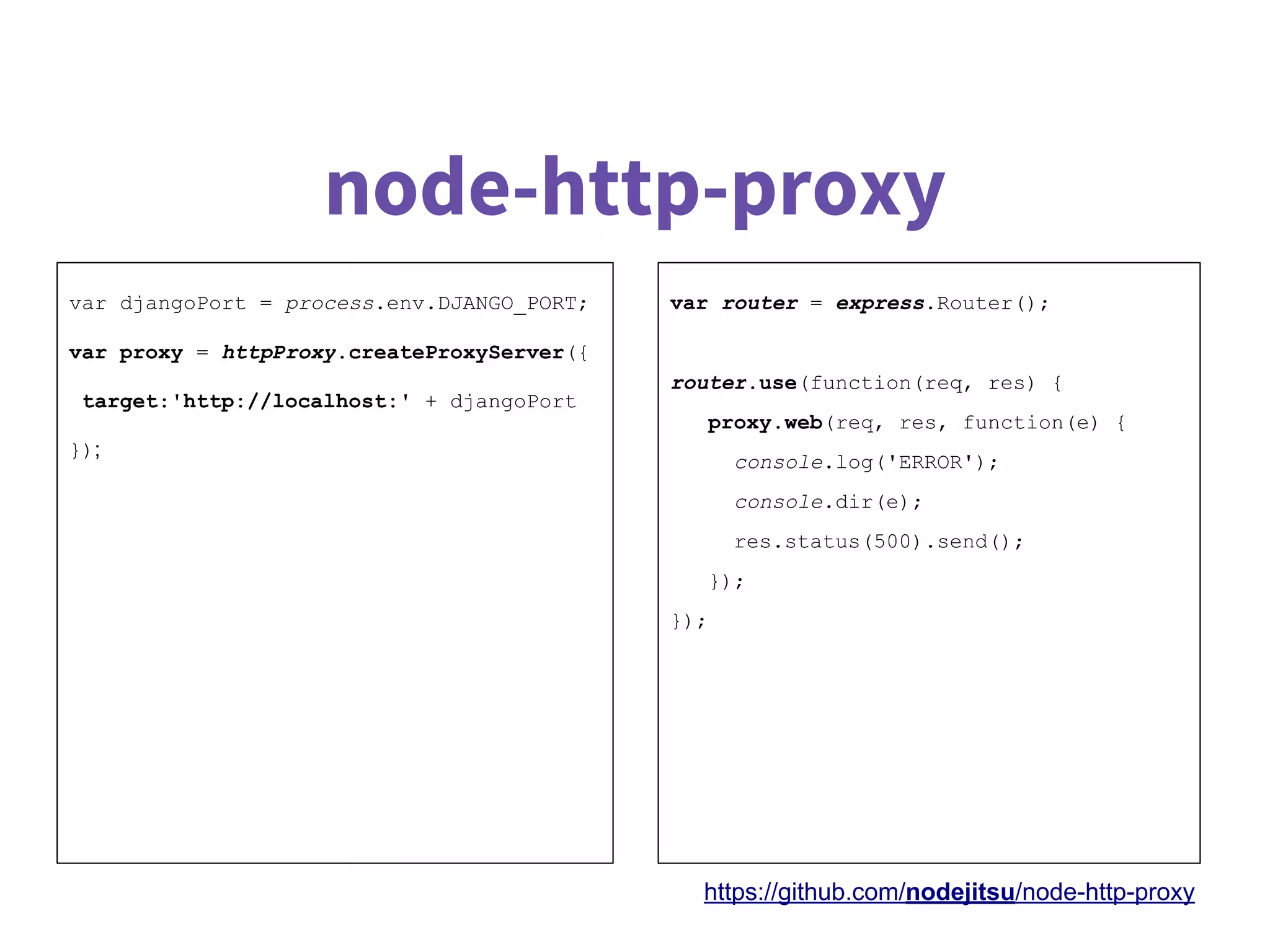
node-http-proxy
https://github.com/nodejitsu/node-http-proxy
var djangoPort = process.env.DJANGO_PORT;
var proxy = httpProxy.createProxyServer({
target:'http://localhost:' + djangoPort
});
var router = express.Router();
router.use(function(req, res) {
proxy.web(req, res, function(e) {
console.log('ERROR');
console.dir(e);
res.status(500).send();
});
});
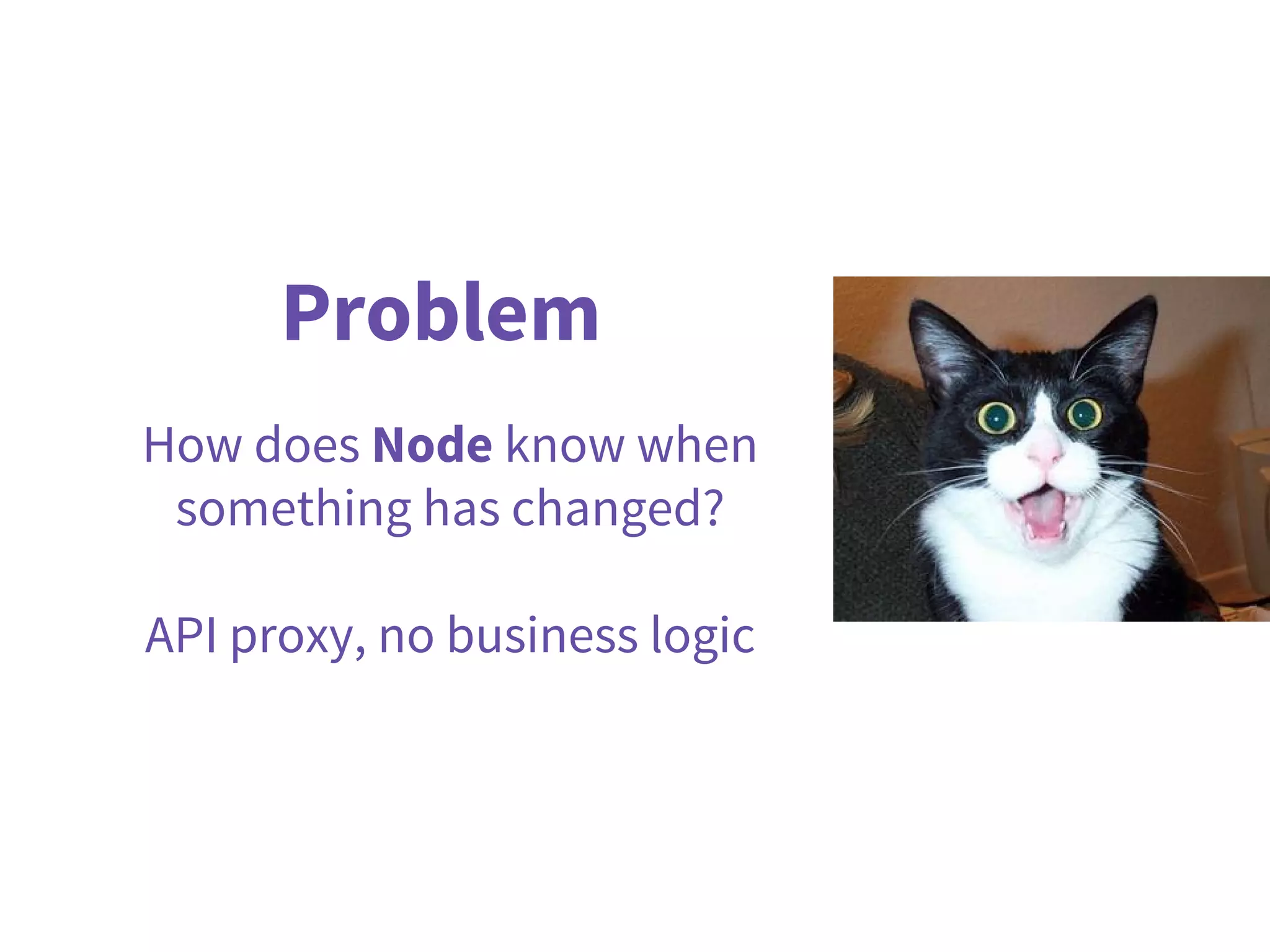
Problem
How does Node know when
something has changed?
API proxy, no business logic
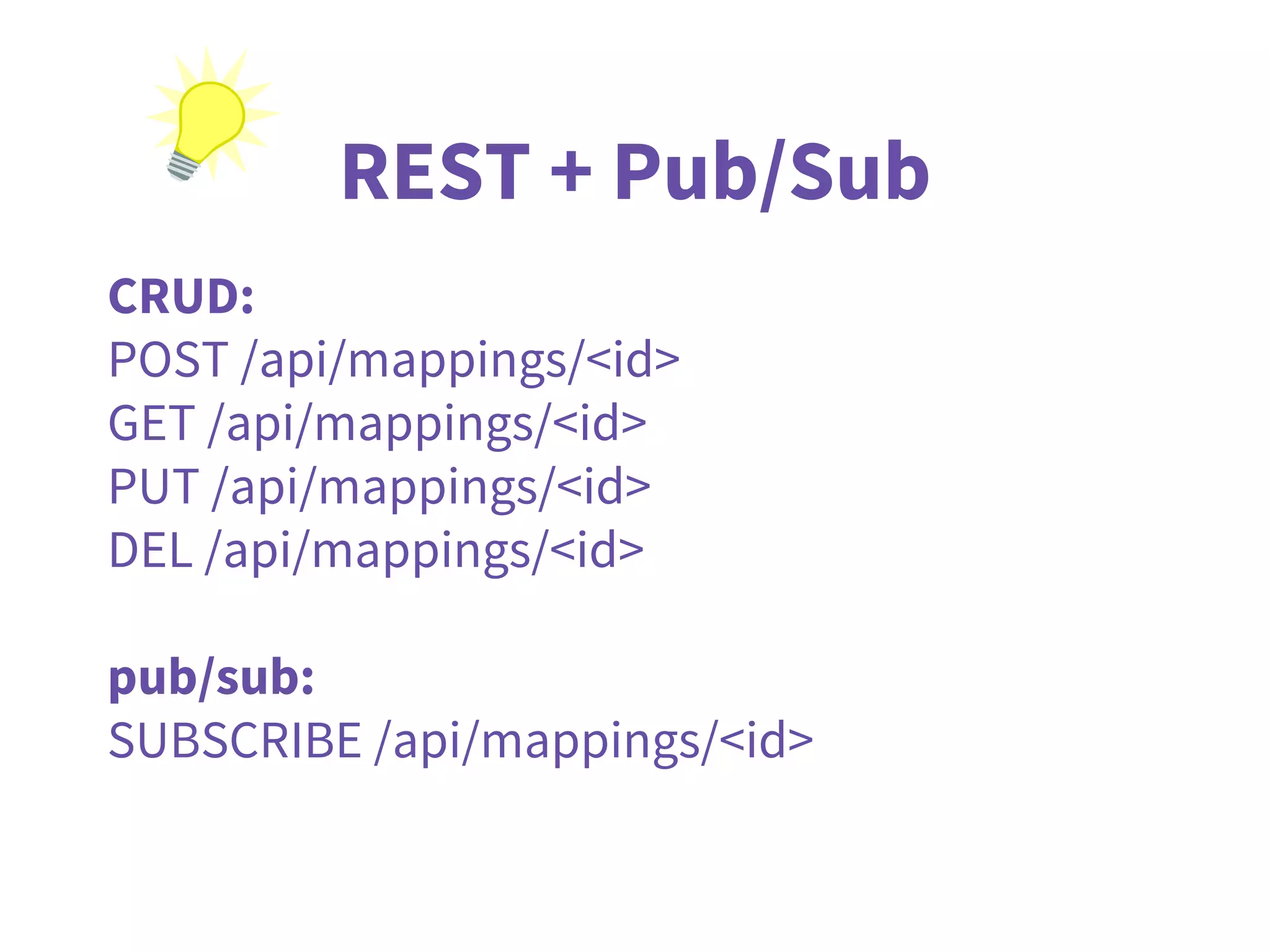
REST + Pub/Sub
CRUD:
POST /api/mappings/<id>
GET /api/mappings/<id>
PUT /api/mappings/<id>
DEL /api/mappings/<id>
pub/sub:
SUBSCRIBE /api/mappings/<id>
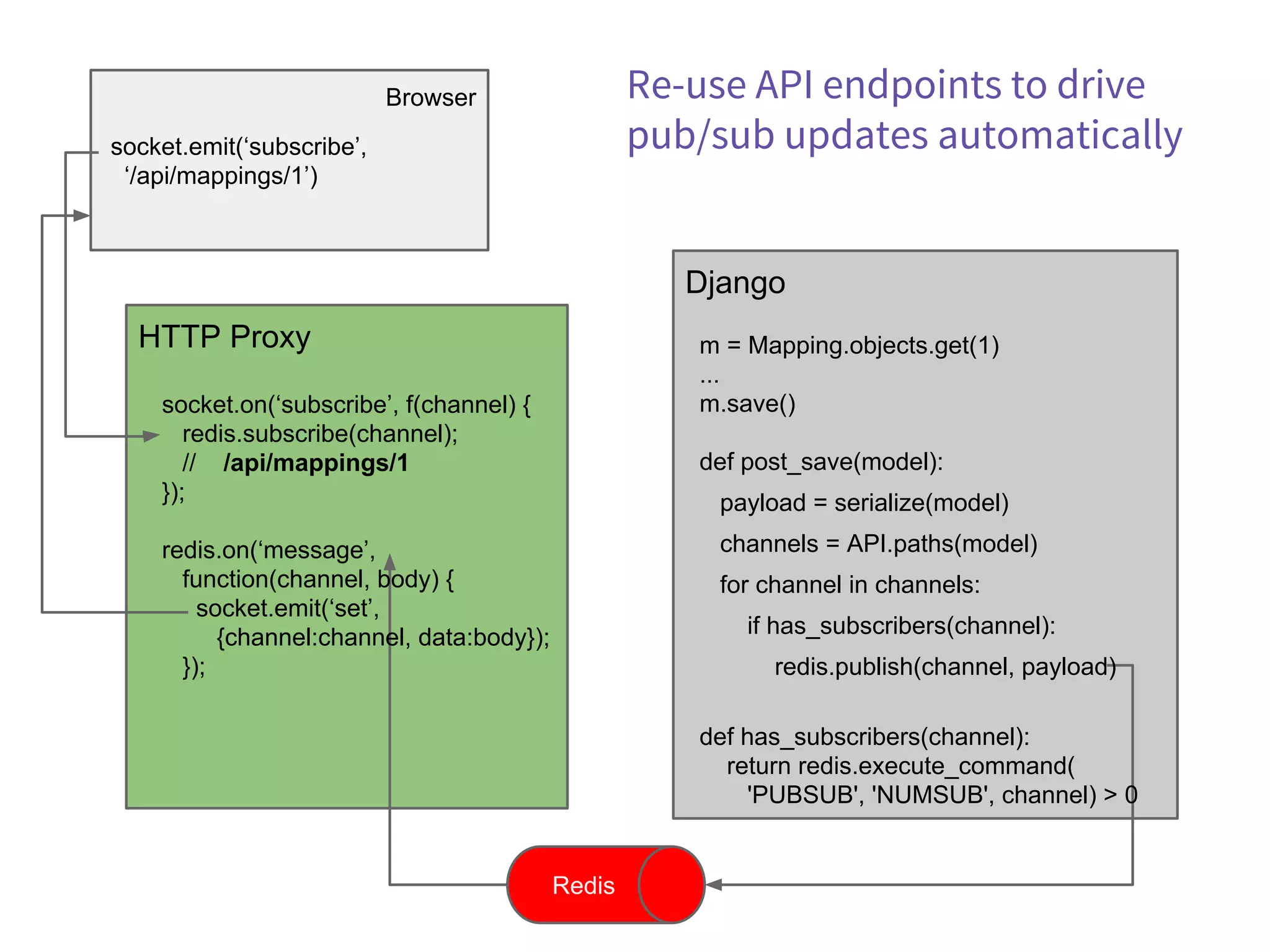
Browser
Django
HTTP Proxy
Redis
socket.emit(‘subscribe’,
‘/api/mappings/1’)
socket.on(‘subscribe’, f(channel) {
redis.subscribe(channel);
// /api/mappings/1
});
redis.on(‘message’,
function(channel, body) {
socket.emit(‘set’,
{channel:channel, data:body});
});
m = Mapping.objects.get(1)
...
m.save()
def post_save(model):
payload = serialize(model)
channels = API.paths(model)
for channel in channels:
if has_subscribers(channel):
redis.publish(channel, payload)
def has_subscribers(channel):
return redis.execute_command(
'PUBSUB', 'NUMSUB', channel) > 0
Re-use API endpoints to drive
pub/sub updates automatically
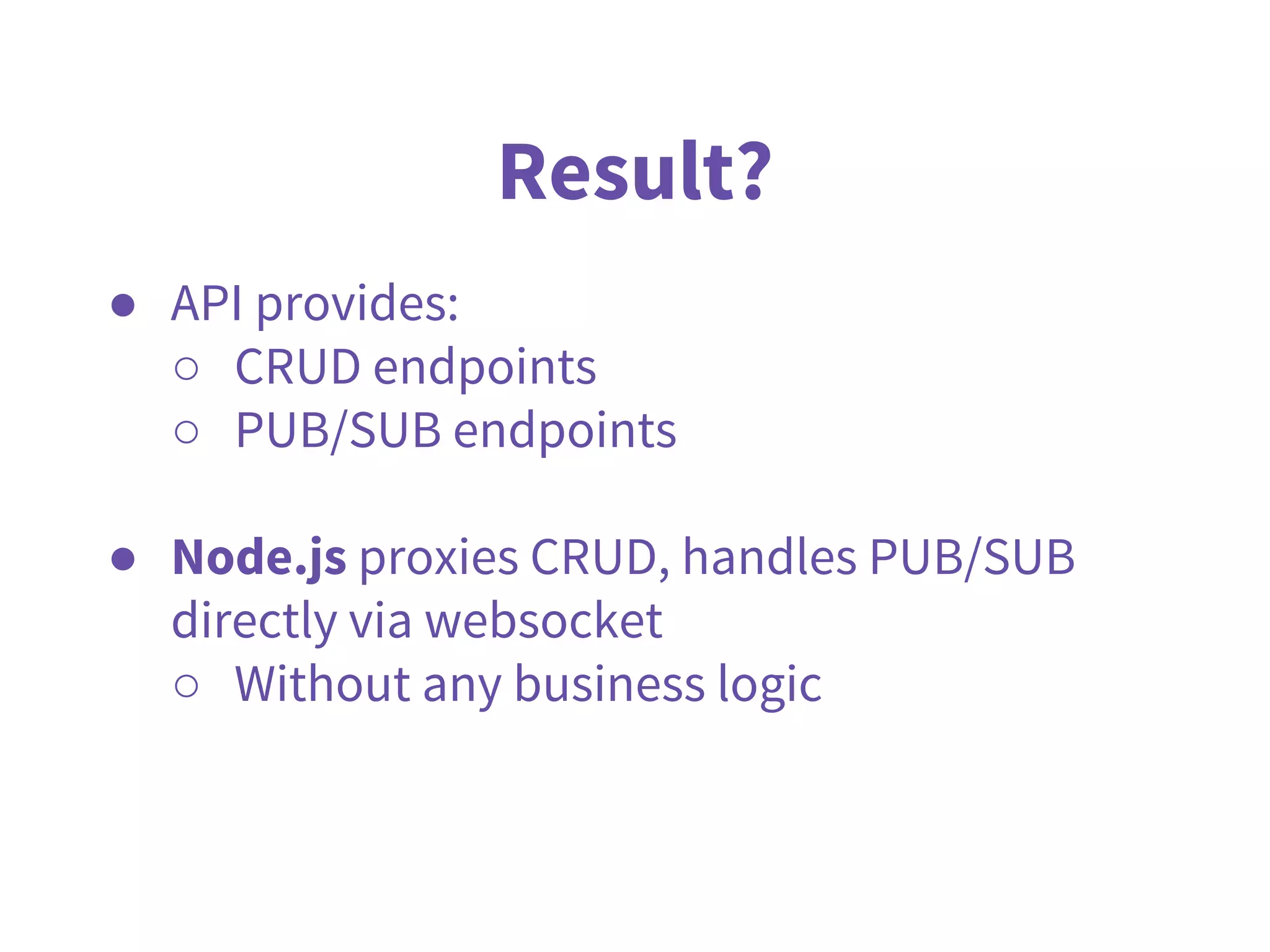
● API provides:
○ CRUD endpoints
○ PUB/SUB endpoints
● Node.js proxies CRUD, handles PUB/SUB
directly via websocket
○ Without any business logic
Result?
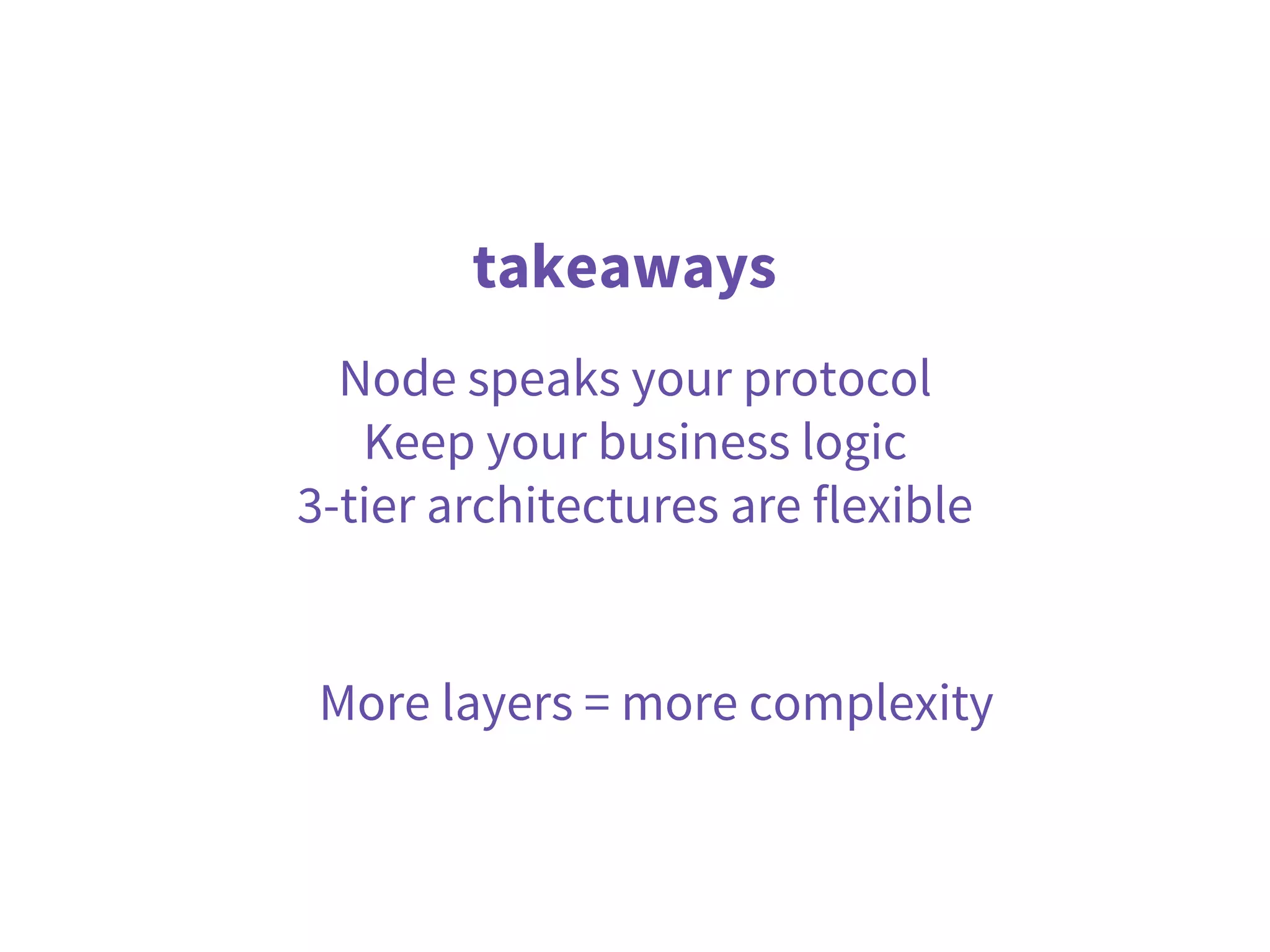
takeaways
Node speaks your protocol
Keep your business logic
3-tier architectures are flexible
More layers = more complexity
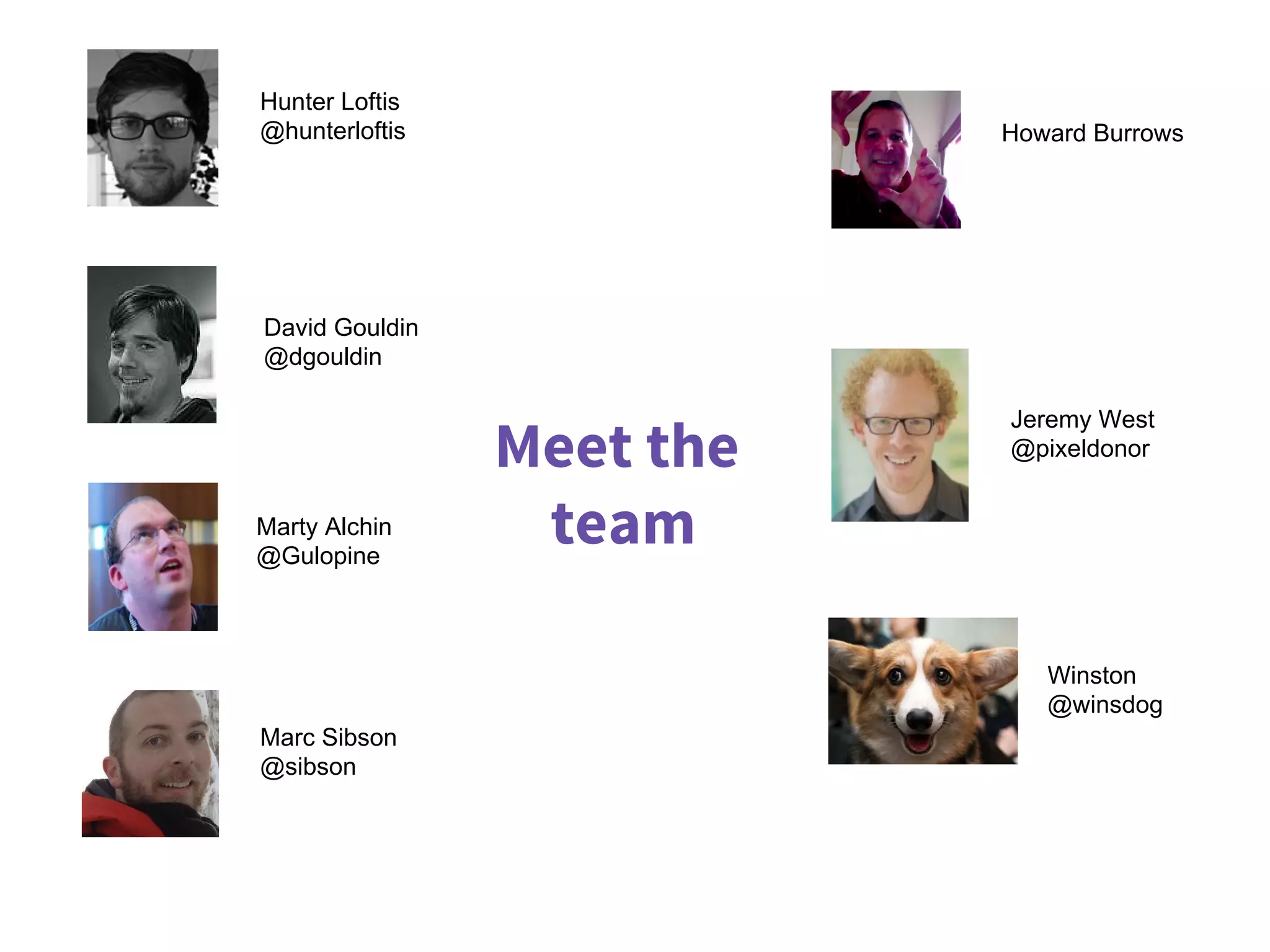
Meet the
team
David Gouldin
@dgouldin
Howard Burrows
Marty Alchin
@Gulopine
Jeremy West
@pixeldonor
Marc Sibson
@sibson
Winston
@winsdog
Hunter Loftis
@hunterloftis
Thank You
scottp@heroku.com @persingerscott
tinyurl.com/eventitall

App modernization and evented architectures with Node.js