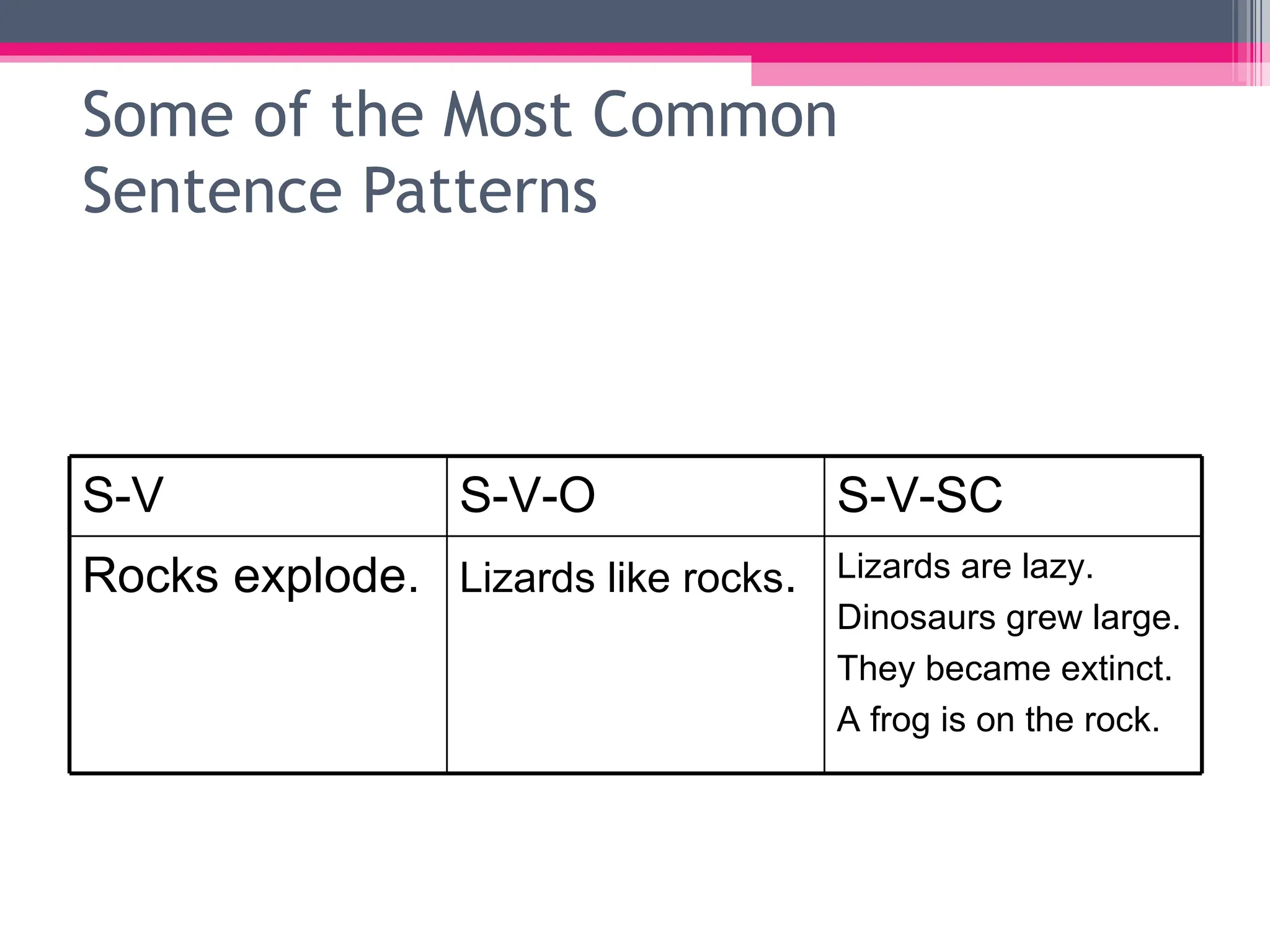
Some of theMost Common Sentence Patterns S-V S-V-O S-V-SC Rocks explode. Lizards like rocks . Lizards are lazy. Dinosaurs grew large. They became extinct. A frog is on the rock.
2.
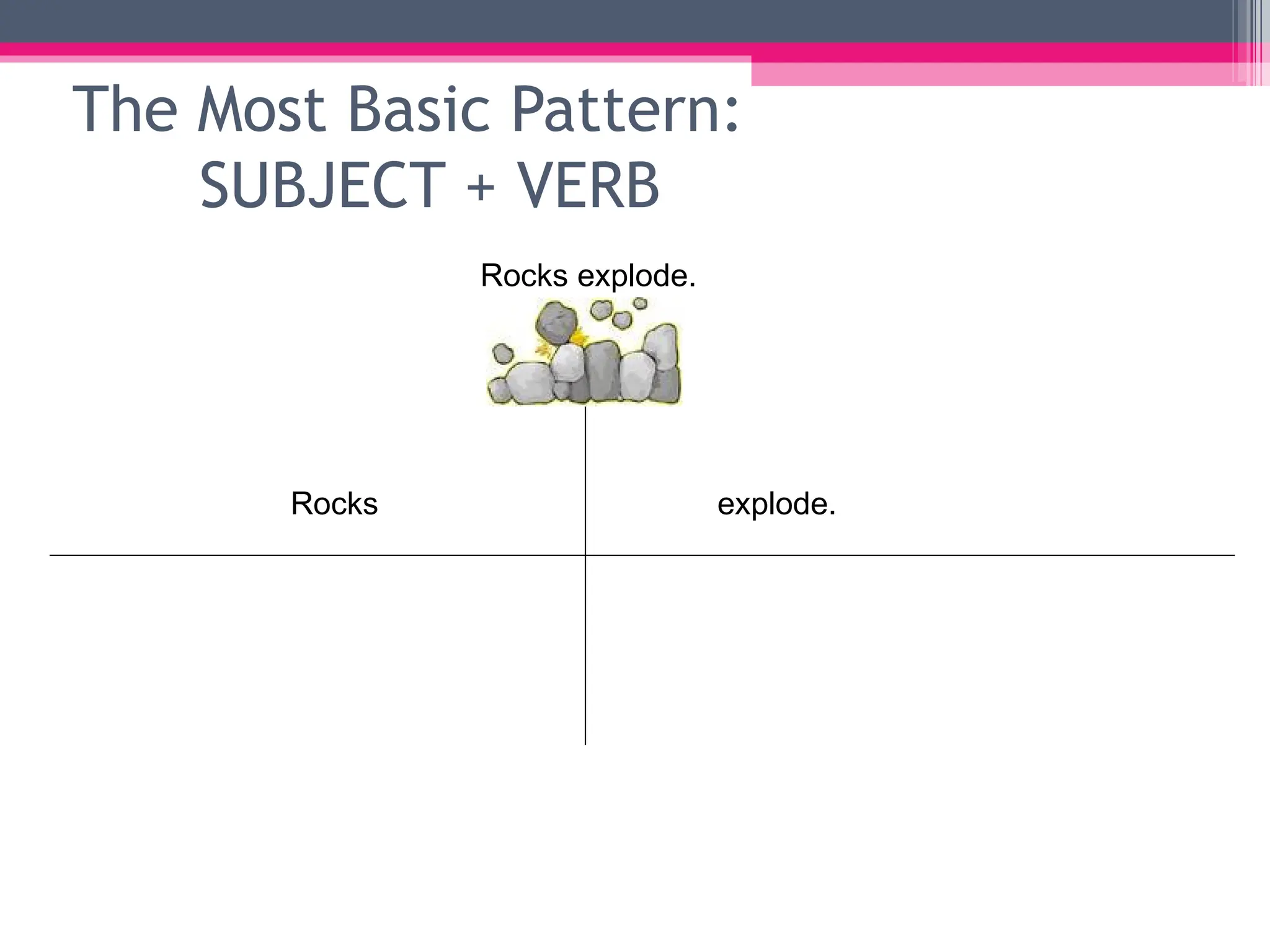
The Most BasicPattern: SUBJECT + VERB Rocks explode. Rocks explode.
3.
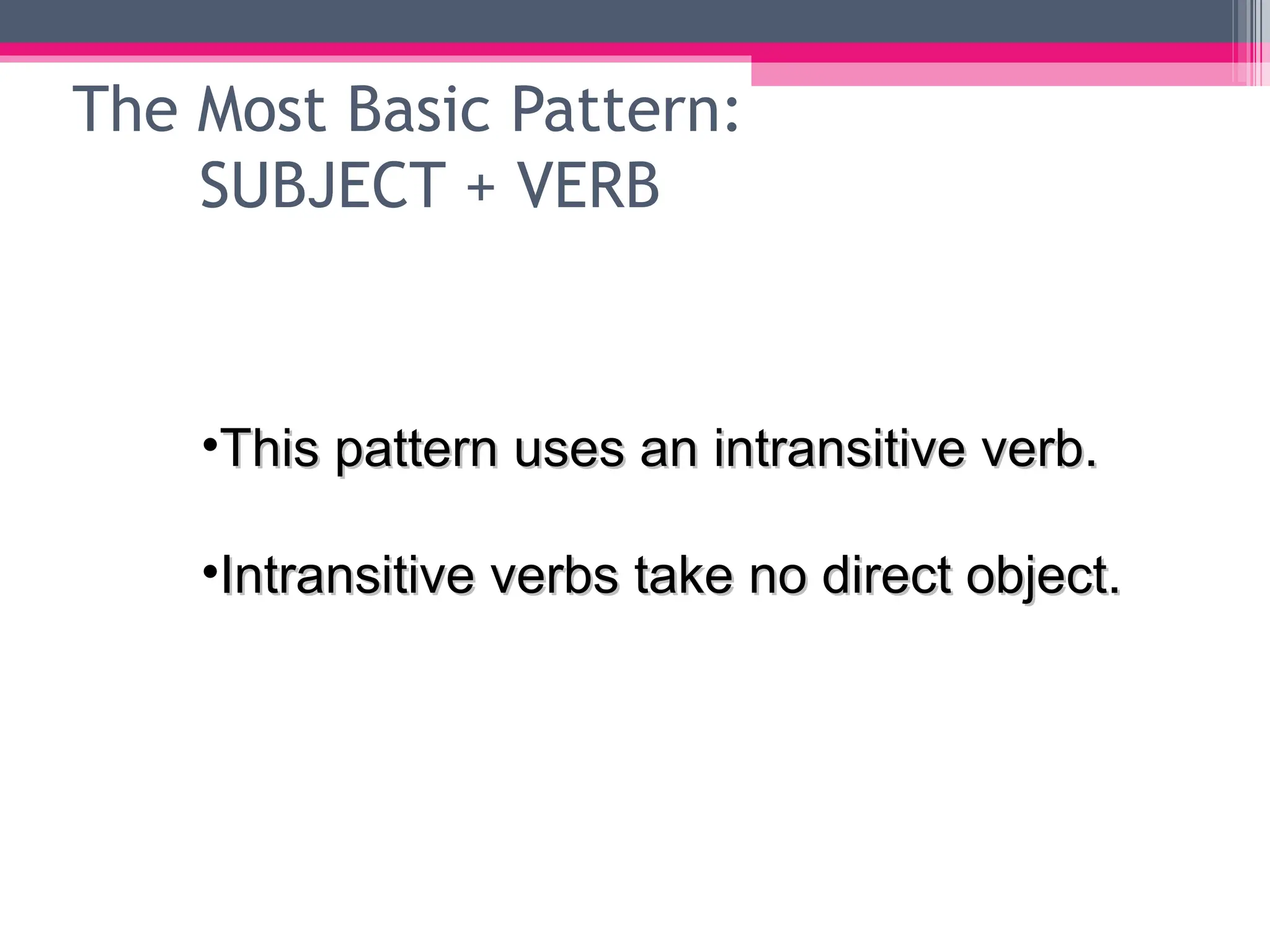
The Most BasicPattern: SUBJECT + VERB This pattern uses an intransitive verb. Intransitive verbs take no direct object.
4.
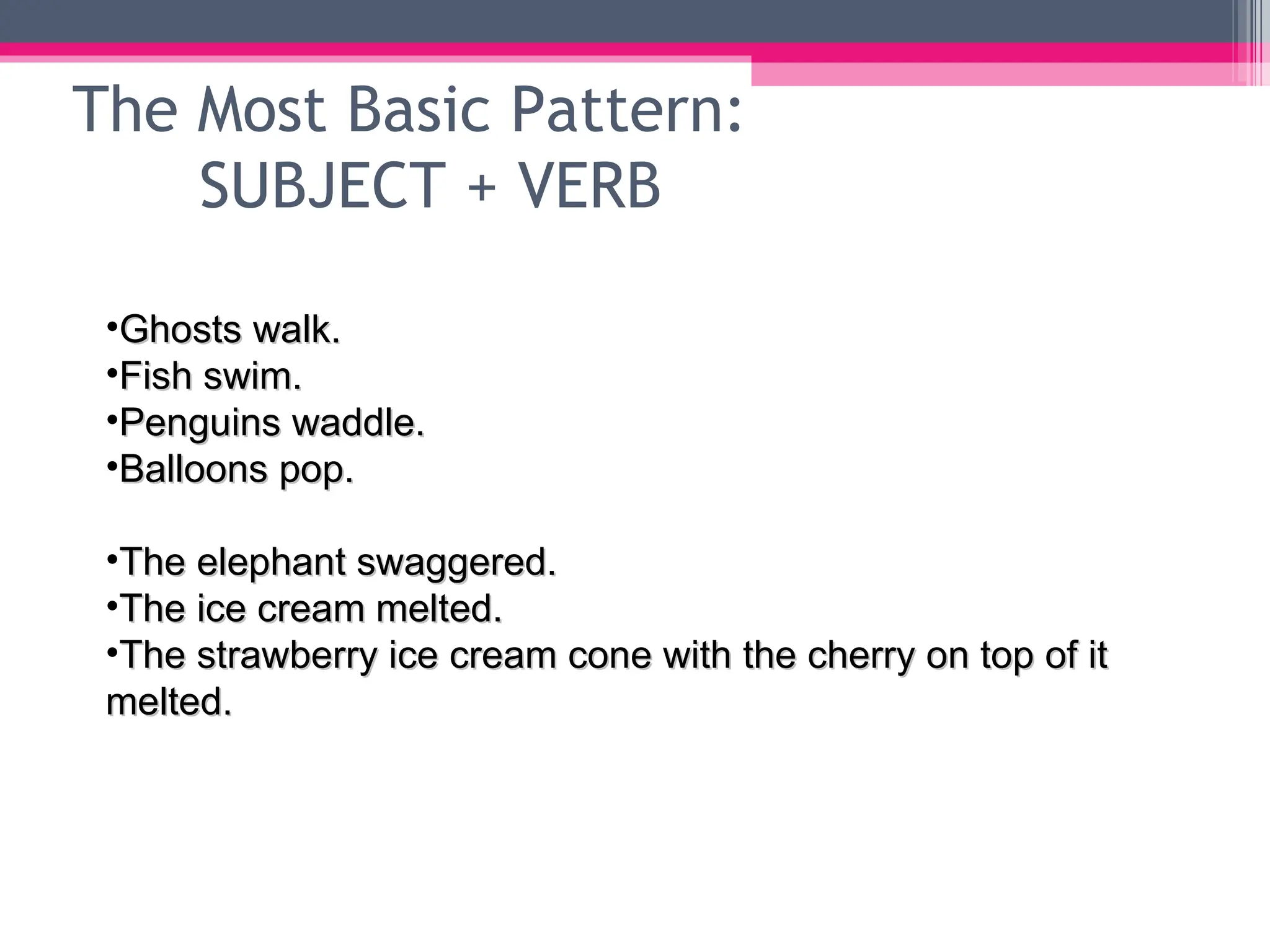
The Most BasicPattern: SUBJECT + VERB Ghosts walk. Fish swim. Penguins waddle. Balloons pop. The elephant swaggered. The ice cream melted. The strawberry ice cream cone with the cherry on top of it melted.
5.
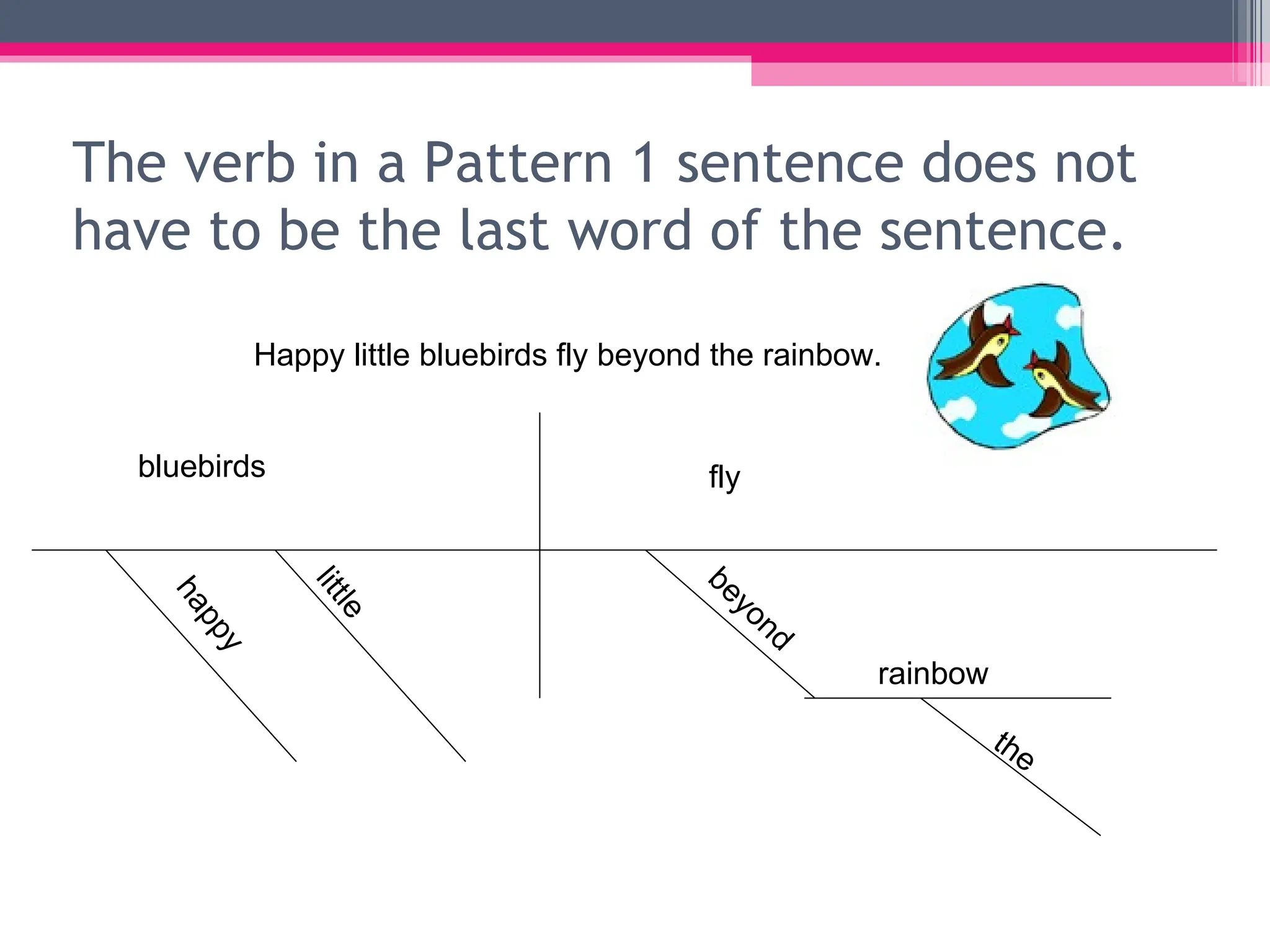
The verb ina Pattern 1 sentence does not have to be the last word of the sentence. Happy little bluebirds fly beyond the rainbow. bluebirds fly happy little the rainbow beyond
6.
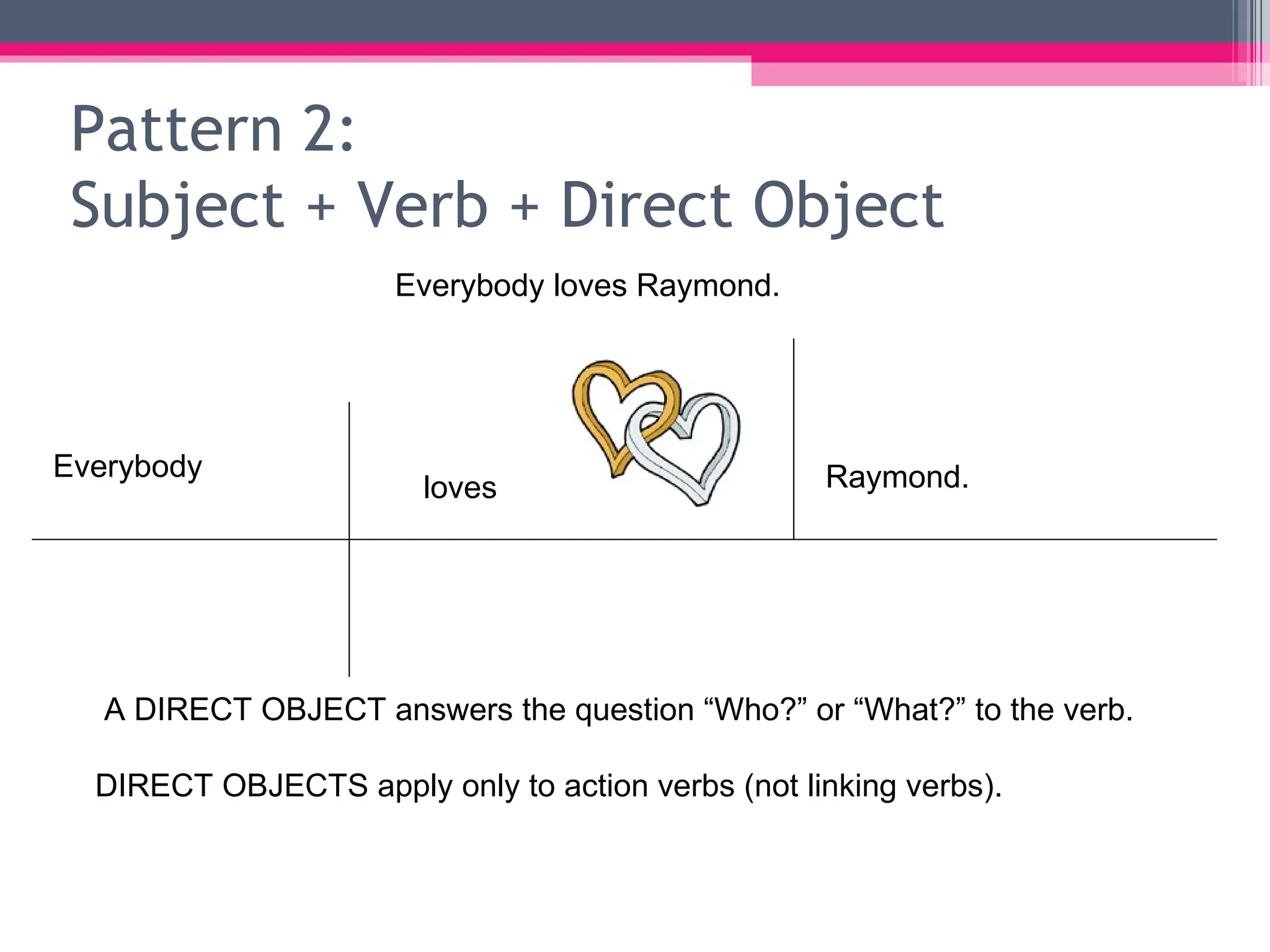
Pattern 2: Subject+ Verb + Direct Object Everybody loves Raymond. Raymond. loves Everybody A DIRECT OBJECT answers the question “Who?” or “What?” to the verb. DIRECT OBJECTS apply only to action verbs (not linking verbs).
7.
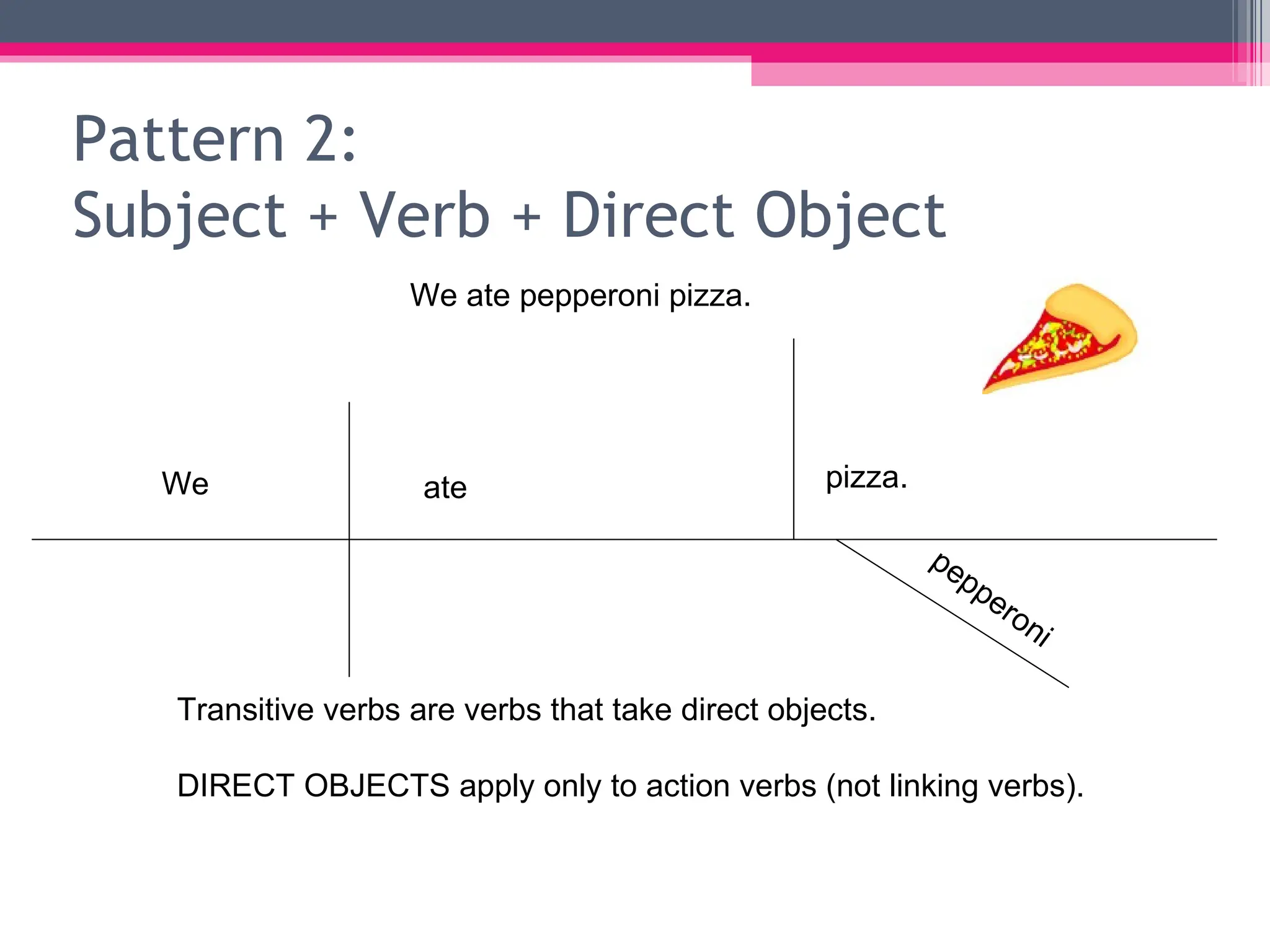
Pattern 2: Subject+ Verb + Direct Object We ate pepperoni pizza. pizza. ate We Transitive verbs are verbs that take direct objects. DIRECT OBJECTS apply only to action verbs (not linking verbs). pepperoni
8.
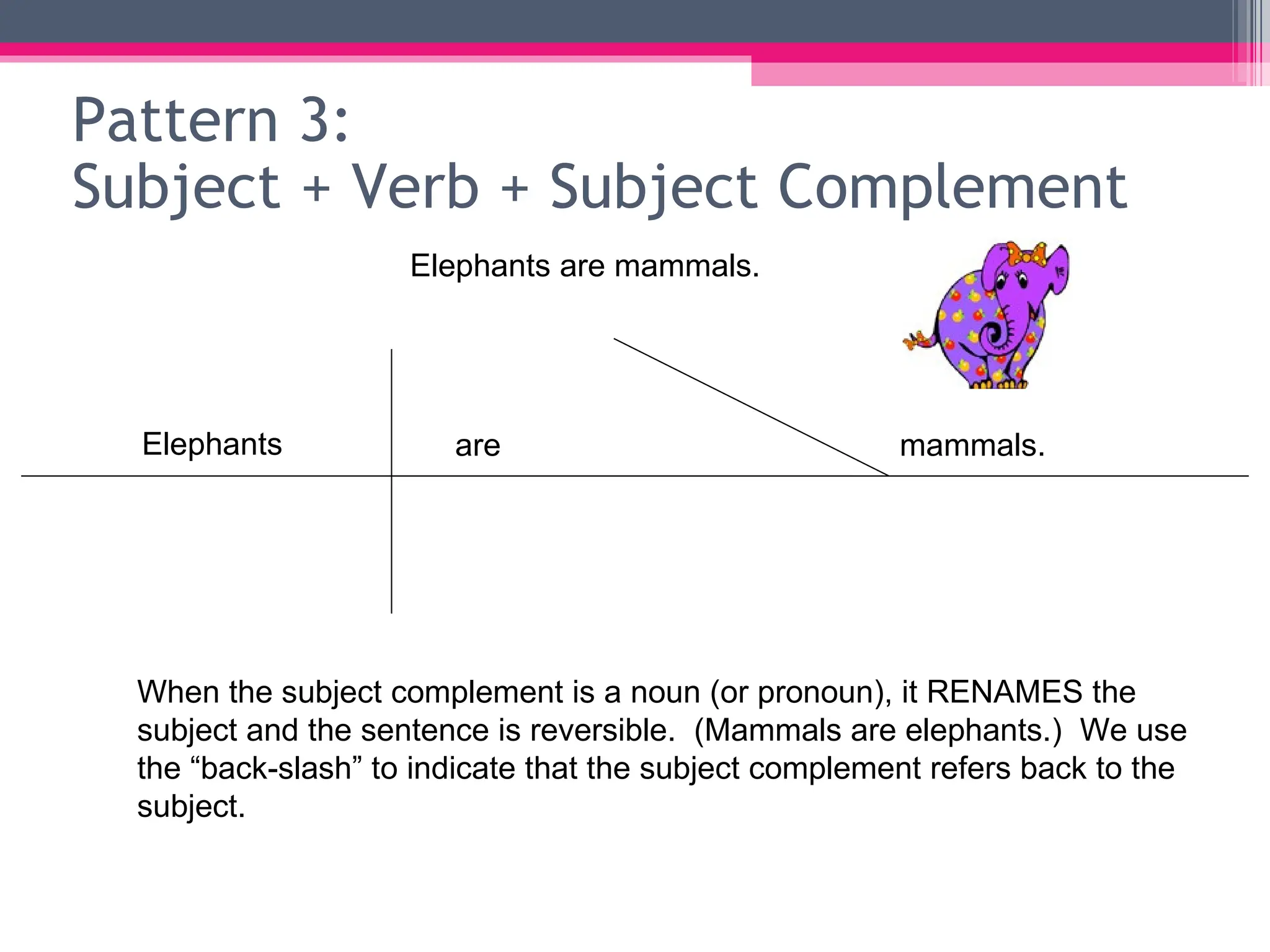
mammals. are ElephantsElephants are mammals. When the subject complement is a noun (or pronoun), it RENAMES the subject and the sentence is reversible. (Mammals are elephants.) We use the “back-slash” to indicate that the subject complement refers back to the subject. Pattern 3: Subject + Verb + Subject Complement
9.
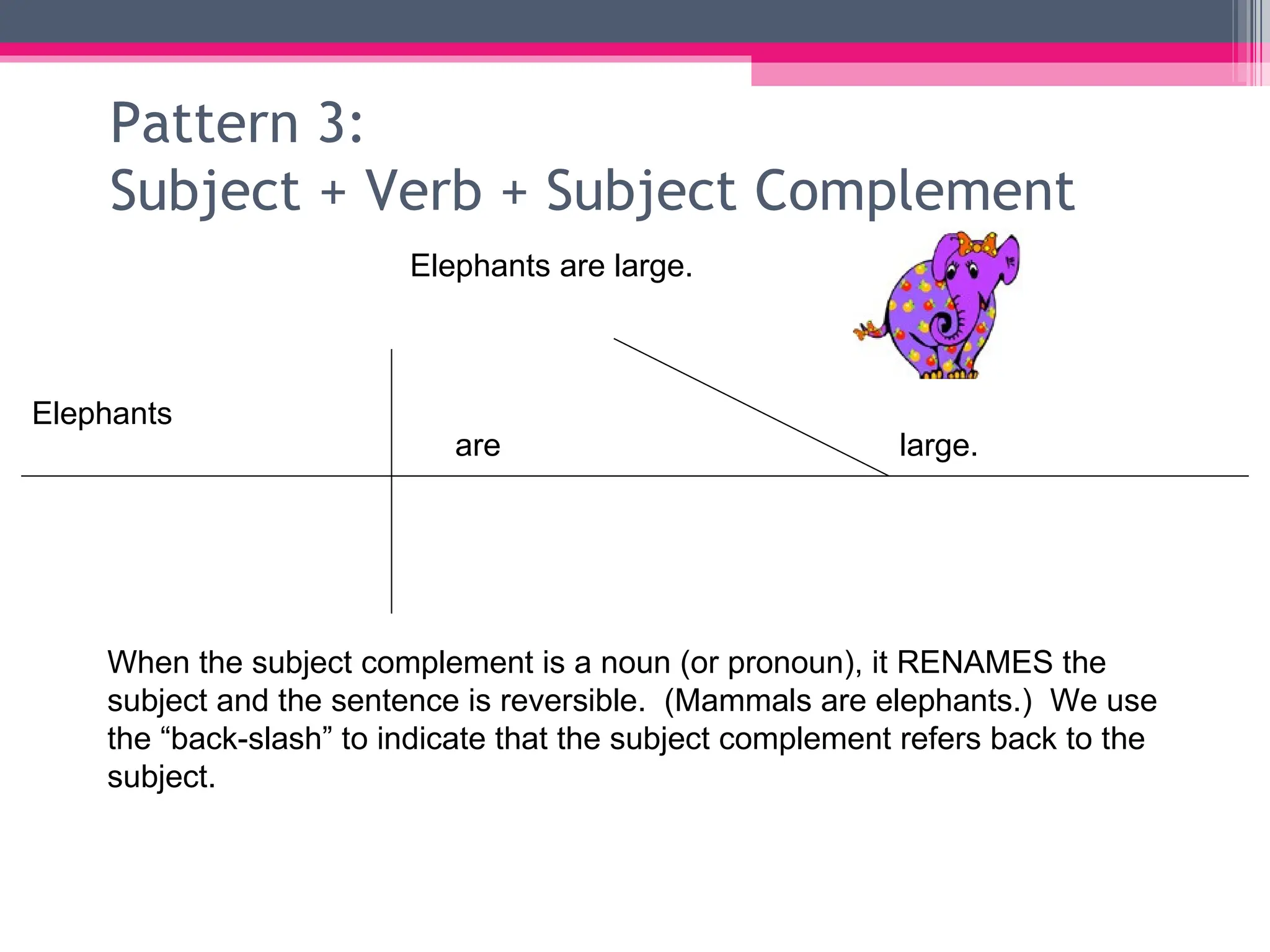
Pattern 3: Subject+ Verb + Subject Complement large. are Elephants Elephants are large. When the subject complement is a noun (or pronoun), it RENAMES the subject and the sentence is reversible. (Mammals are elephants.) We use the “back-slash” to indicate that the subject complement refers back to the subject.
10.
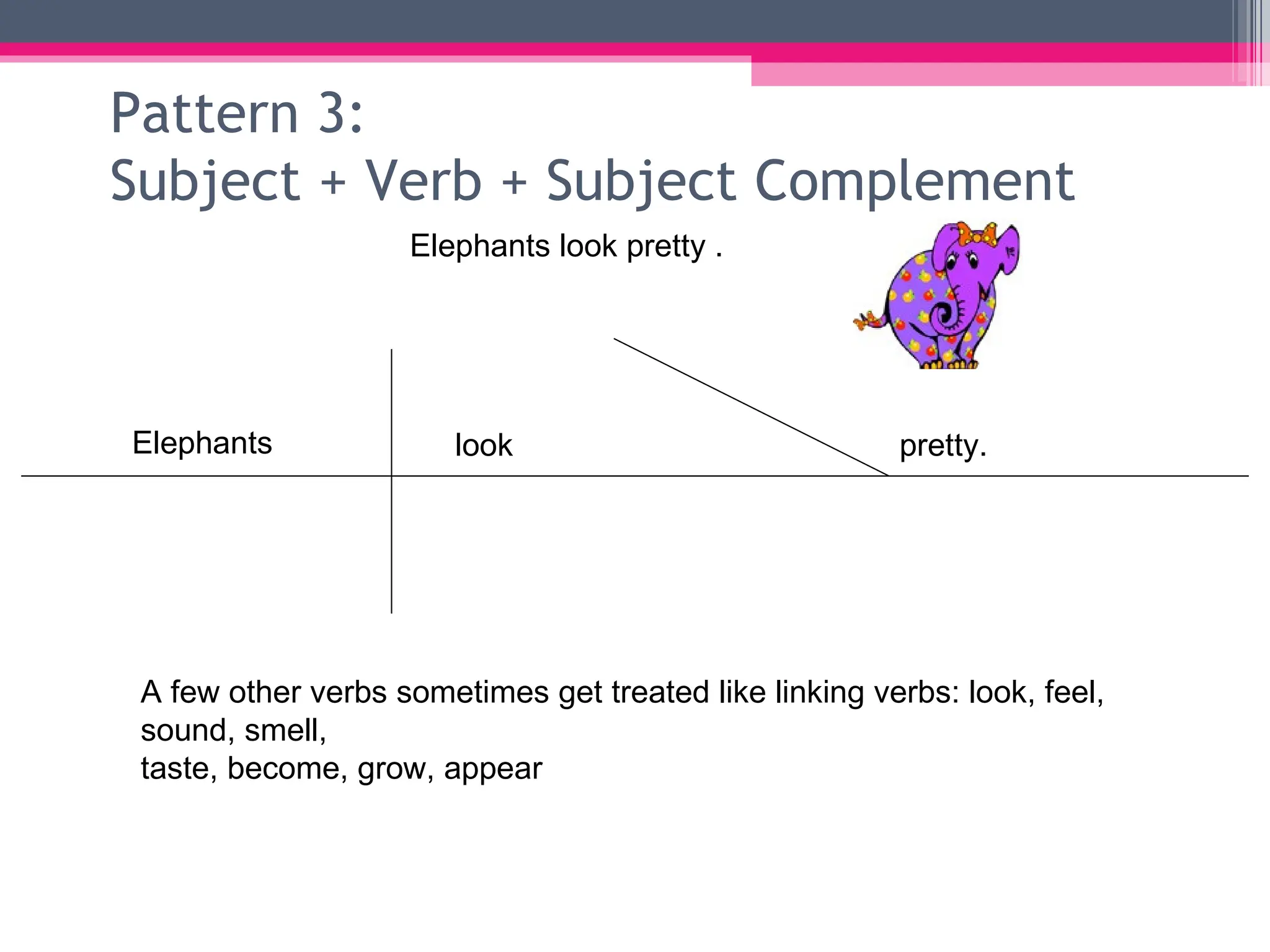
Pattern 3: Subject+ Verb + Subject Complement pretty. look Elephants Elephants look pretty . A few other verbs sometimes get treated like linking verbs: look, feel, sound, smell, taste, become, grow, appear


![The Olympians Powerpoint[1]](https://cdn.slidesharecdn.com/ss_thumbnails/theolympianspowerpoint1-1234051763059636-3-thumbnail.jpg?width=640&height=640&fit=bounds)


