Biodiversity Indicators
A quick guide to indicator development
Sarah Darrah, Ecosystem Assessment Programme, UNEP-WCMC
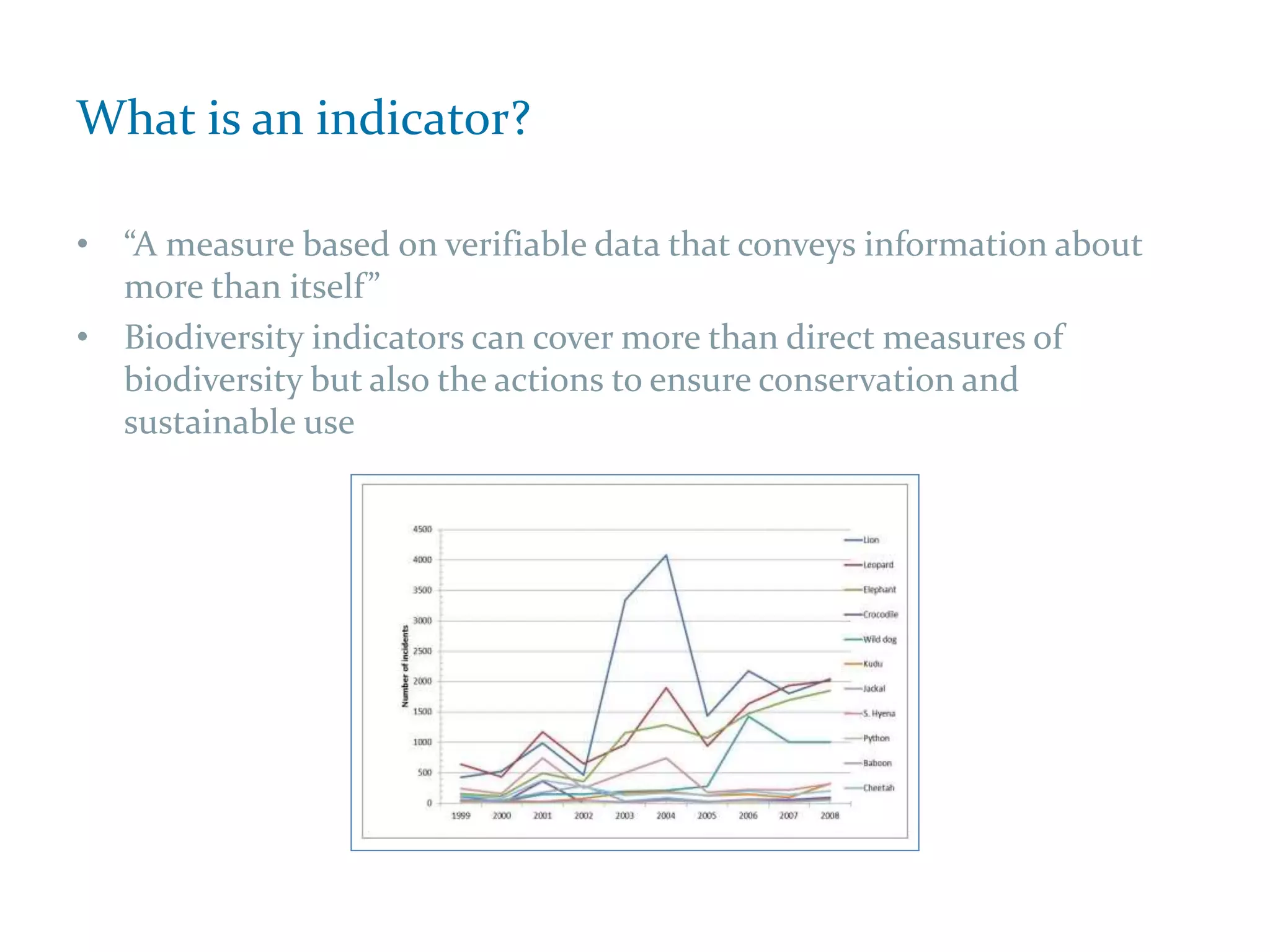
What is an indicator?
• “A measure based on verifiable data that conveys information about
more than itself”
• Biodiversity indicators can cover more than direct measures of
biodiversity but also the actions to ensure conservation and
sustainable use
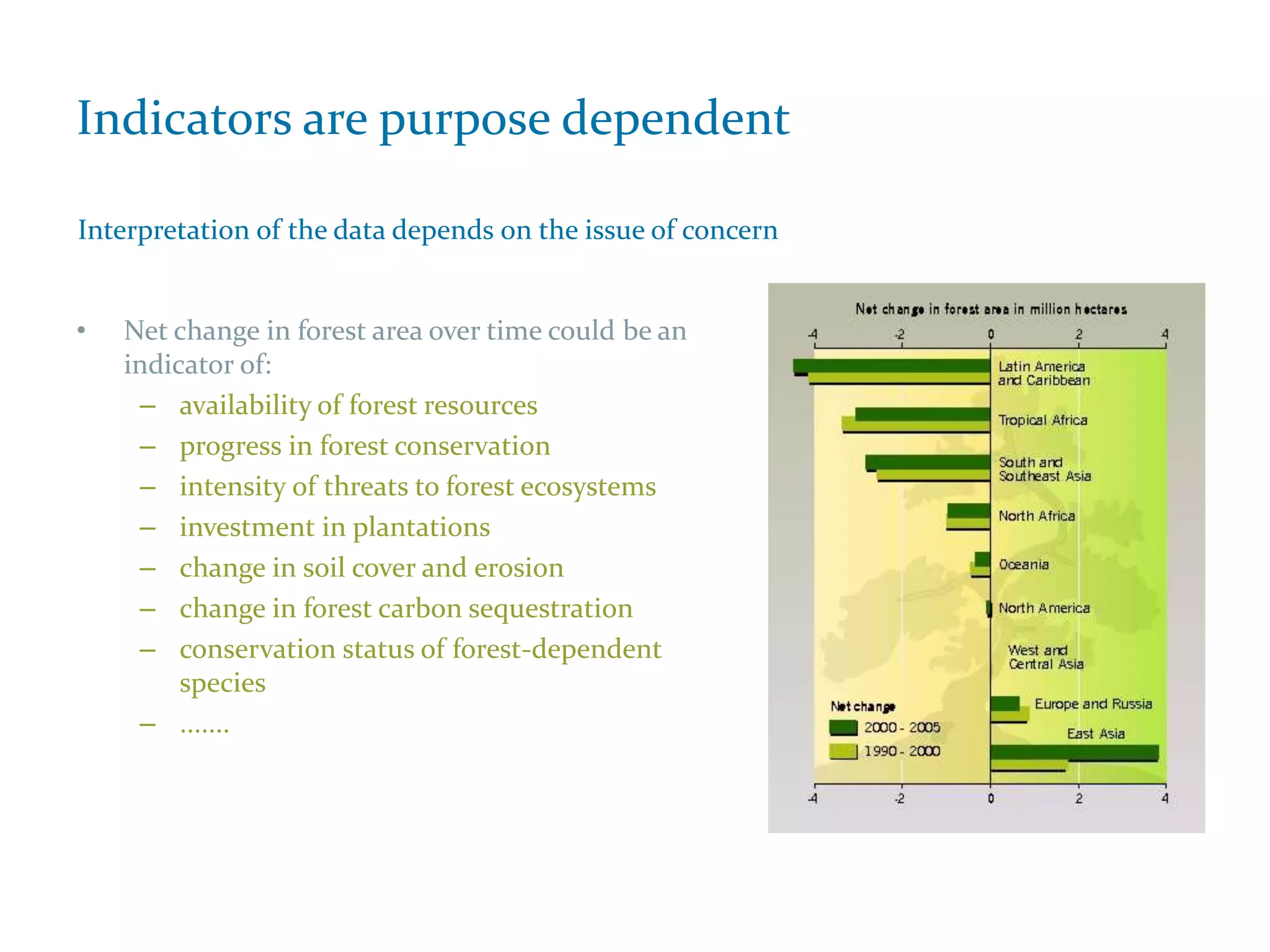
Indicators are purpose dependent
• Net change in forest area over time could be an
indicator of:
– availability of forest resources
– progress in forest conservation
– intensity of threats to forest ecosystems
– investment in plantations
– change in soil cover and erosion
– change in forest carbon sequestration
– conservation status of forest-dependent
species
– .......
Interpretation of the data depends on the issue of concern
Uses of biodiversity indicators
• To help understand the current and past status of biodiversity, and why it may
be changing
• To help decide on the most appropriate goals, policies and actions to address
an issue
• To raise awareness and build support about an issue through different
communication channels and means
• To put the issue and responses into context
• To help assess the progress, success and effectiveness of policy decisions and
actions taken to address an issue as part of adaptive management
• To track progress towards global, regional and national targets
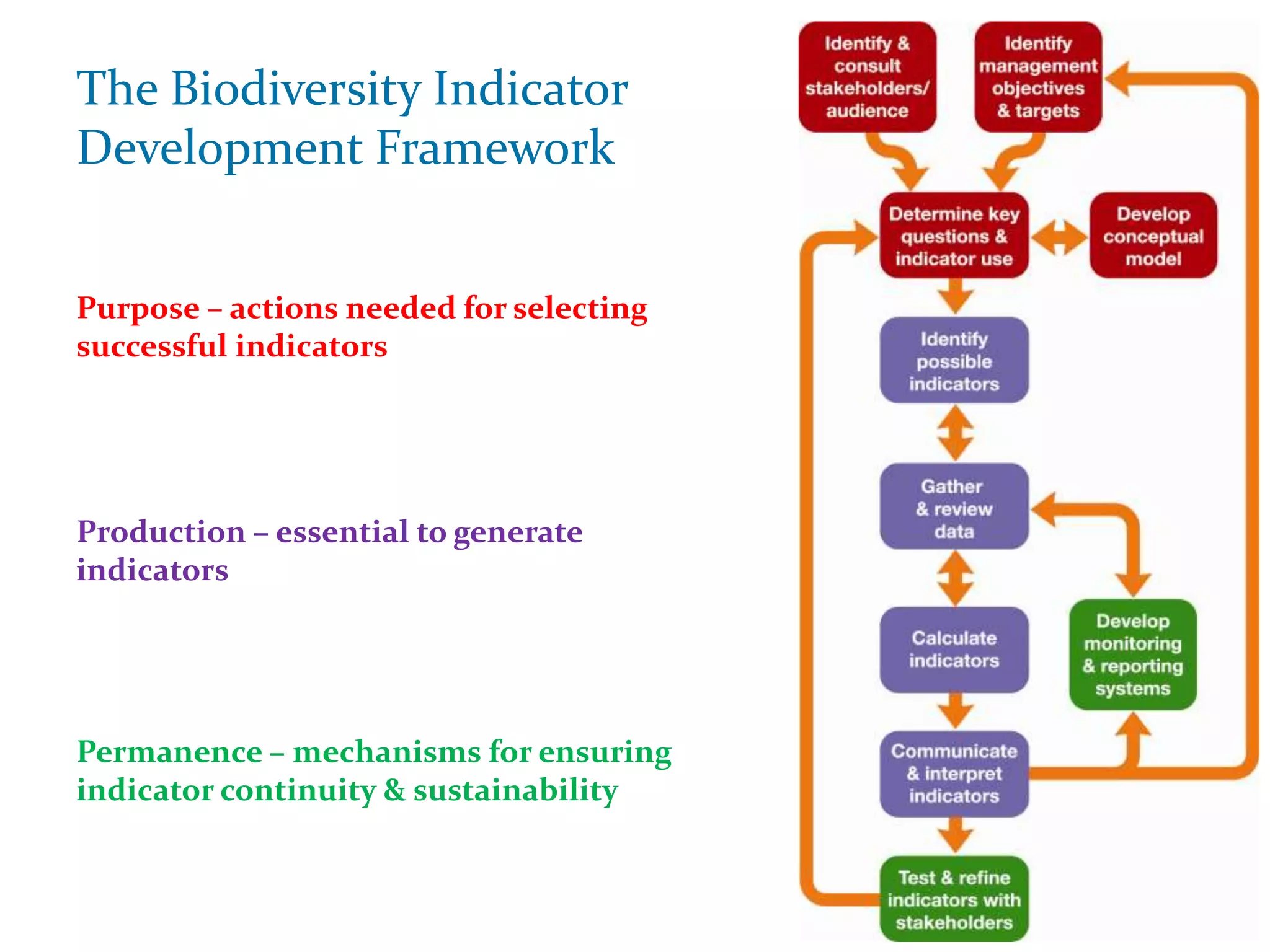
The Biodiversity Indicator
Development Framework
Purpose – actions needed for selecting
successful indicators
Production – essential to generate
indicators
Permanence – mechanisms for ensuring
indicator continuity & sustainability
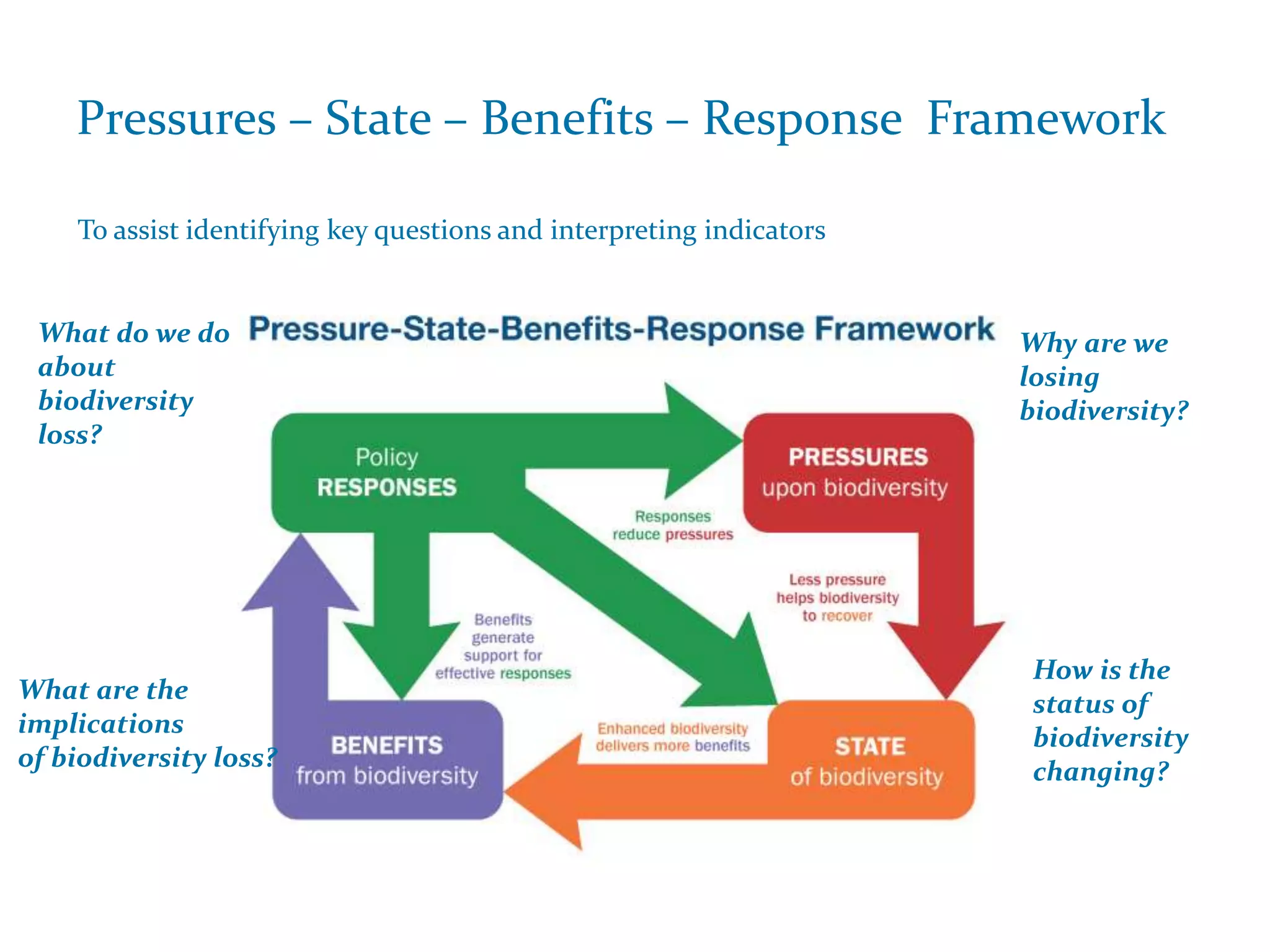
Pressures – State – Benefits – Response Framework
To assist identifying key questions and interpreting indicators
What do we do
about
biodiversity
loss?
What are the
implications
of biodiversity loss?
Why are we
losing
biodiversity?
How is the
status of
biodiversity
changing?
Indicators and NBSAPs
2 main types of indicators:
Impact indicators – for measuring progress towards a target
and a desired state of biodiversity
Implementation indicators (performance indicators) –
for monitoring the implementation of particular actions for
example in an NBSAP
What is a successful indicator?
• Scientifically valid – theory of relationship between the indicator and its purpose
(what change in the indicator means) + reliability of the data
• Based on available data – over time (monitoring)
• Responsive to change in the issue of interest
• Easily understandable – conceptually + presentation + interpretation
• Relevant to user’s needs
• It is used! (for measuring progress, early-warning, understanding an issue, awareness-
raising, …)
Some key messages for using indicators:
• Understand your data:
their strengths, their limitations, where they come from.
• Always put your indicators in context.
• Don’t try to answer everything at once: one indicator will never tell you all you want to
know.
• What story are you trying to tell?!
• Indicators should lead on to other things – they area not ends in themselves.
Biodiversity Indicators Partnership (BIP)
• CBD-mandated collaboration
• Over 40 organizations working globally
• Secretariat based at UNEP-WCMC
www.bipindicators.net

Biodiversity indicators: a quick guide to indicator development

  • 1.
    Biodiversity Indicators A quickguide to indicator development Sarah Darrah, Ecosystem Assessment Programme, UNEP-WCMC
  • 2.
    What is anindicator? • “A measure based on verifiable data that conveys information about more than itself” • Biodiversity indicators can cover more than direct measures of biodiversity but also the actions to ensure conservation and sustainable use
  • 3.
    Indicators are purposedependent • Net change in forest area over time could be an indicator of: – availability of forest resources – progress in forest conservation – intensity of threats to forest ecosystems – investment in plantations – change in soil cover and erosion – change in forest carbon sequestration – conservation status of forest-dependent species – ....... Interpretation of the data depends on the issue of concern
  • 4.
    Uses of biodiversityindicators • To help understand the current and past status of biodiversity, and why it may be changing • To help decide on the most appropriate goals, policies and actions to address an issue • To raise awareness and build support about an issue through different communication channels and means • To put the issue and responses into context • To help assess the progress, success and effectiveness of policy decisions and actions taken to address an issue as part of adaptive management • To track progress towards global, regional and national targets
  • 5.
    The Biodiversity Indicator DevelopmentFramework Purpose – actions needed for selecting successful indicators Production – essential to generate indicators Permanence – mechanisms for ensuring indicator continuity & sustainability
  • 6.
    Pressures – State– Benefits – Response Framework To assist identifying key questions and interpreting indicators What do we do about biodiversity loss? What are the implications of biodiversity loss? Why are we losing biodiversity? How is the status of biodiversity changing?
  • 7.
    Indicators and NBSAPs 2main types of indicators: Impact indicators – for measuring progress towards a target and a desired state of biodiversity Implementation indicators (performance indicators) – for monitoring the implementation of particular actions for example in an NBSAP
  • 8.
    What is asuccessful indicator? • Scientifically valid – theory of relationship between the indicator and its purpose (what change in the indicator means) + reliability of the data • Based on available data – over time (monitoring) • Responsive to change in the issue of interest • Easily understandable – conceptually + presentation + interpretation • Relevant to user’s needs • It is used! (for measuring progress, early-warning, understanding an issue, awareness- raising, …)
  • 9.
    Some key messagesfor using indicators: • Understand your data: their strengths, their limitations, where they come from. • Always put your indicators in context. • Don’t try to answer everything at once: one indicator will never tell you all you want to know. • What story are you trying to tell?! • Indicators should lead on to other things – they area not ends in themselves.
  • 10.
    Biodiversity Indicators Partnership(BIP) • CBD-mandated collaboration • Over 40 organizations working globally • Secretariat based at UNEP-WCMC www.bipindicators.net

Editor's Notes

  • #3 E.g. establishing protected area – to a direct indicator of biodiversity but indicates conservation actions have been taken to ensure its protection
  • #4 Your interpretation of an indicator depends on your purpose so good to set your purpose first
  • #6 BIDF helps to ensure that the methods of calculation and communication of the indicator(s) are clear and supported by stakeholders before investing in the monitoring and reporting systems.