Understanding Facts

Financial Report Semantics and
       Dynamics Theory
Overview


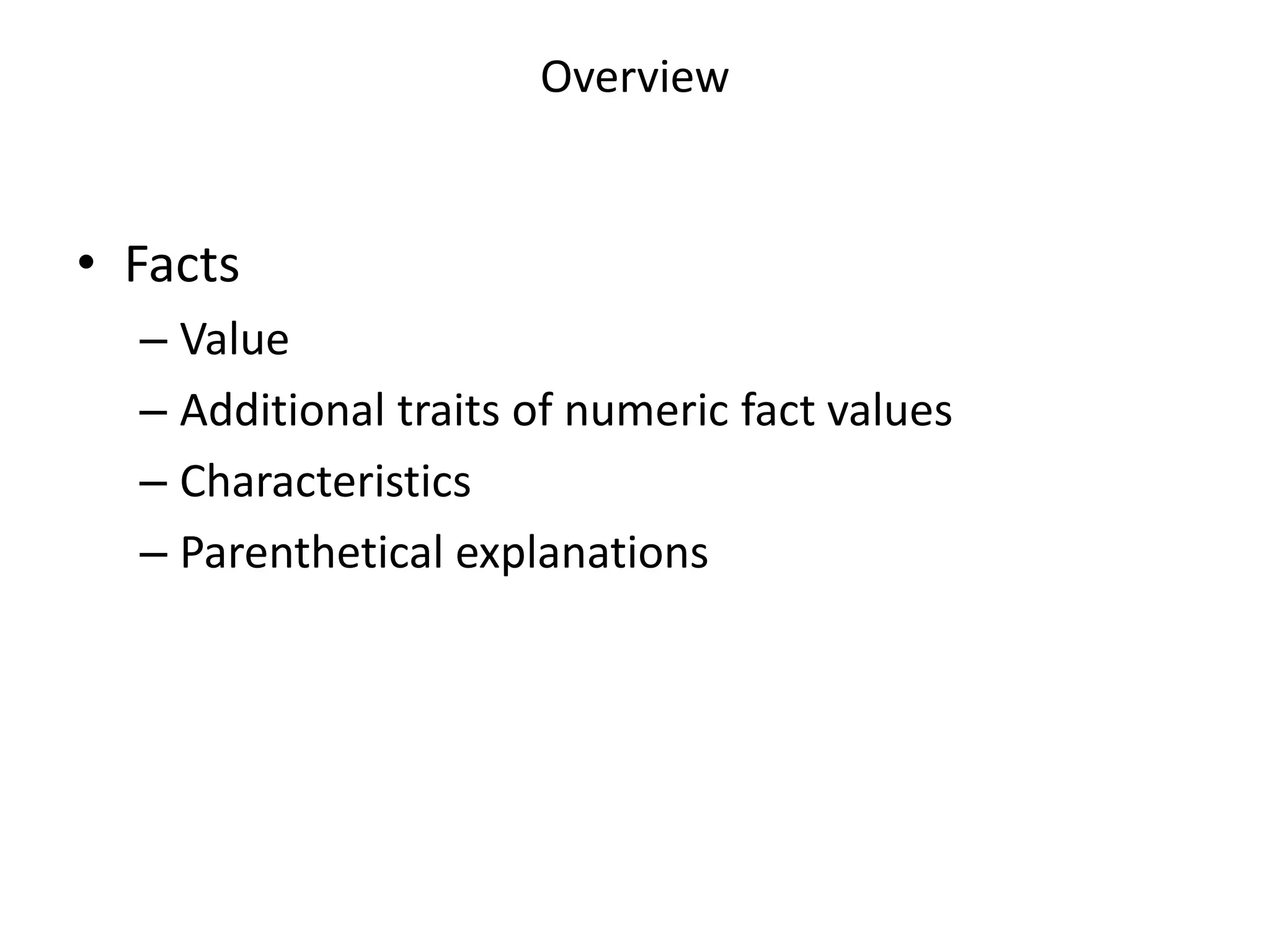
• Facts
  – Value
  – Additional traits of numeric fact values
  – Characteristics
  – Parenthetical explanations
Fact


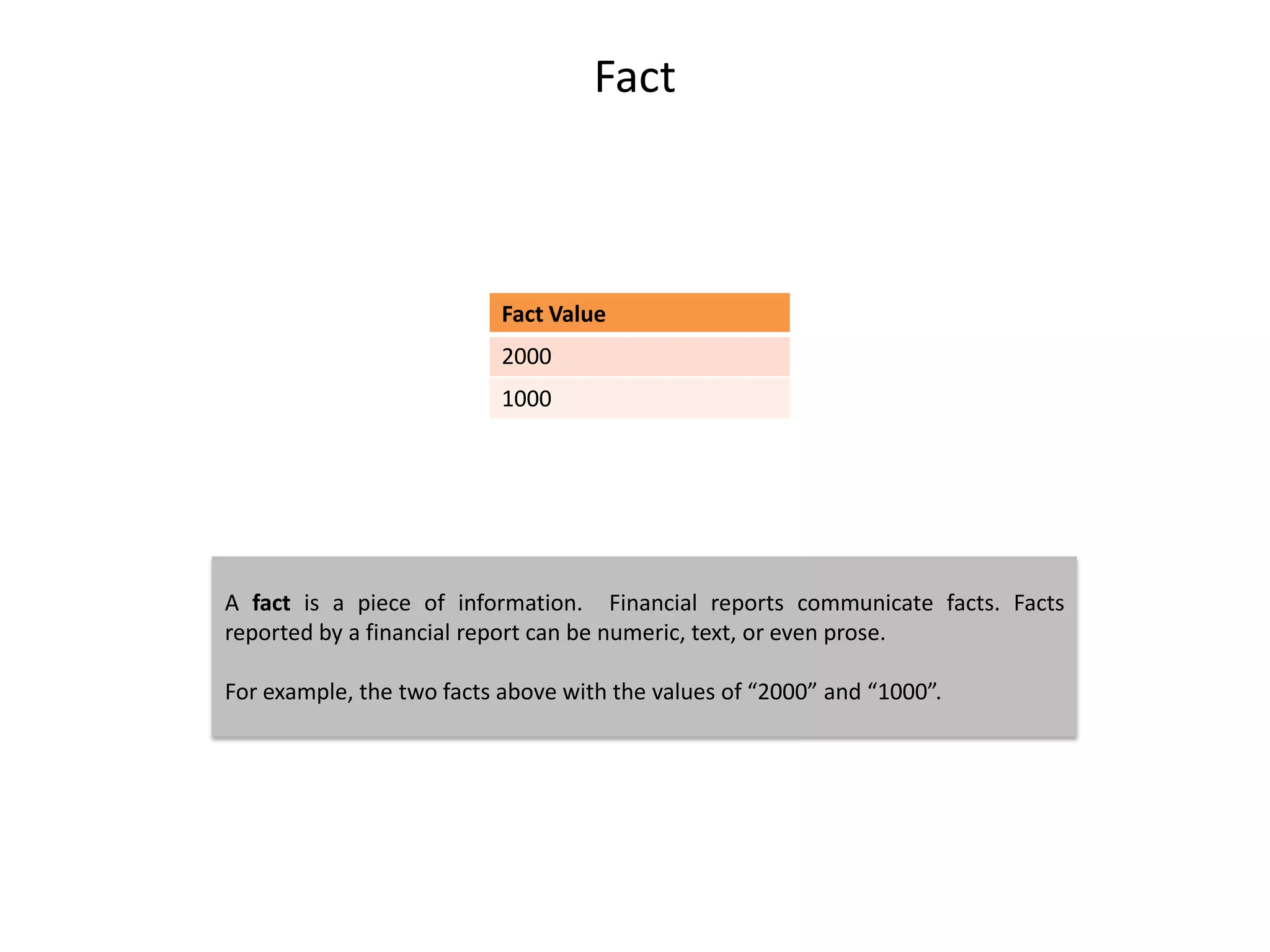
                           Fact Value
                           2000
                           1000


A fact is a piece of information. Financial reports communicate facts. Facts
reported by a financial report can be numeric, text, or even prose.

For example, the two facts above with the values of “2000” and “1000”.
Values
Prose:
                                                                                               Textual:
                                                                                     Sed elementum feugiat augue. Nam
                                                                                     non tortor non leo porta bibendum...


                                                                                              Numeric:
                                                                                               1147

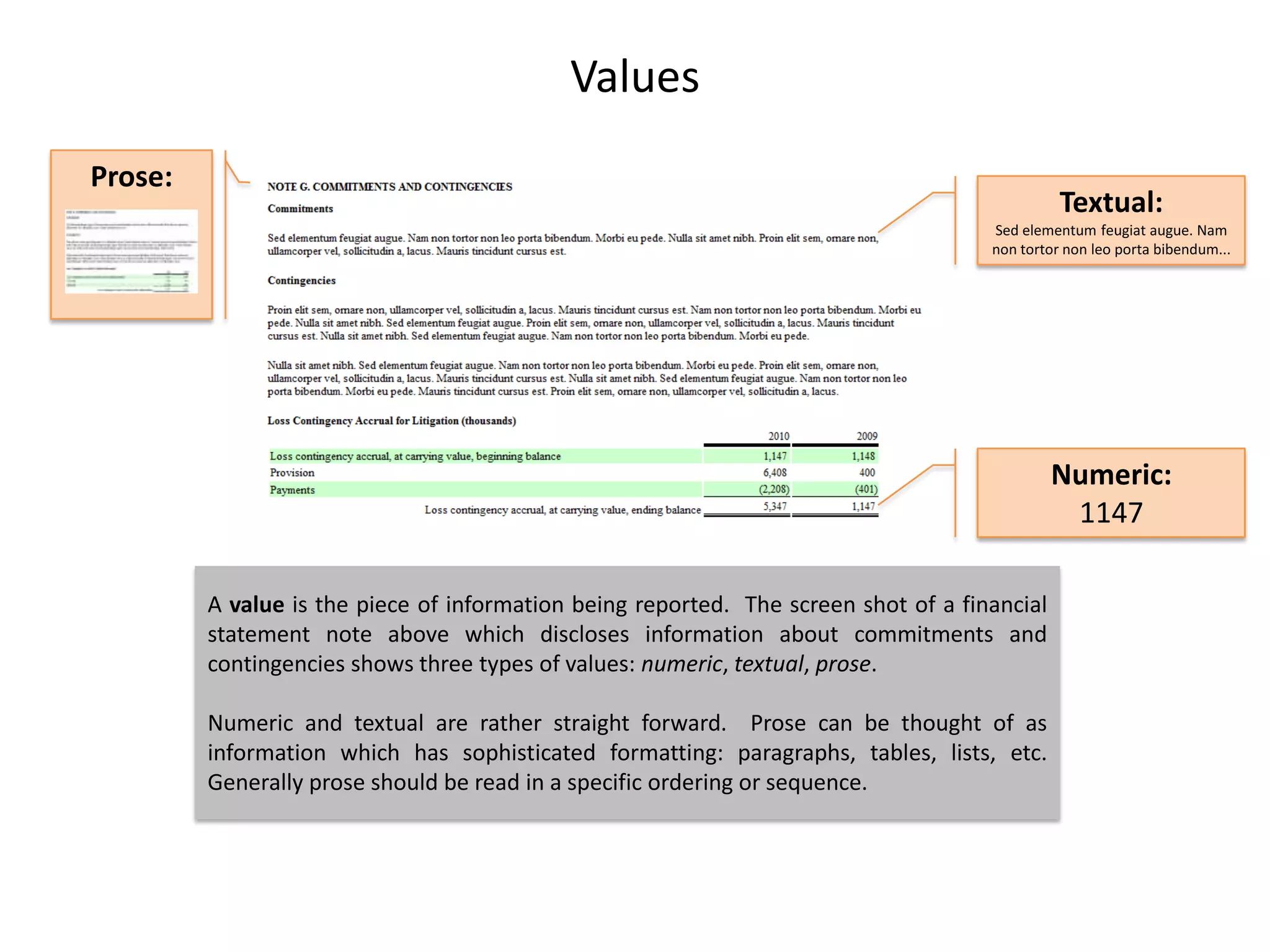
         A value is the piece of information being reported. The screen shot of a financial
         statement note above which discloses information about commitments and
         contingencies shows three types of values: numeric, textual, prose.

         Numeric and textual are rather straight forward. Prose can be thought of as
         information which has sophisticated formatting: paragraphs, tables, lists, etc.
         Generally prose should be read in a specific ordering or sequence.
Additional traits of numeric fact values


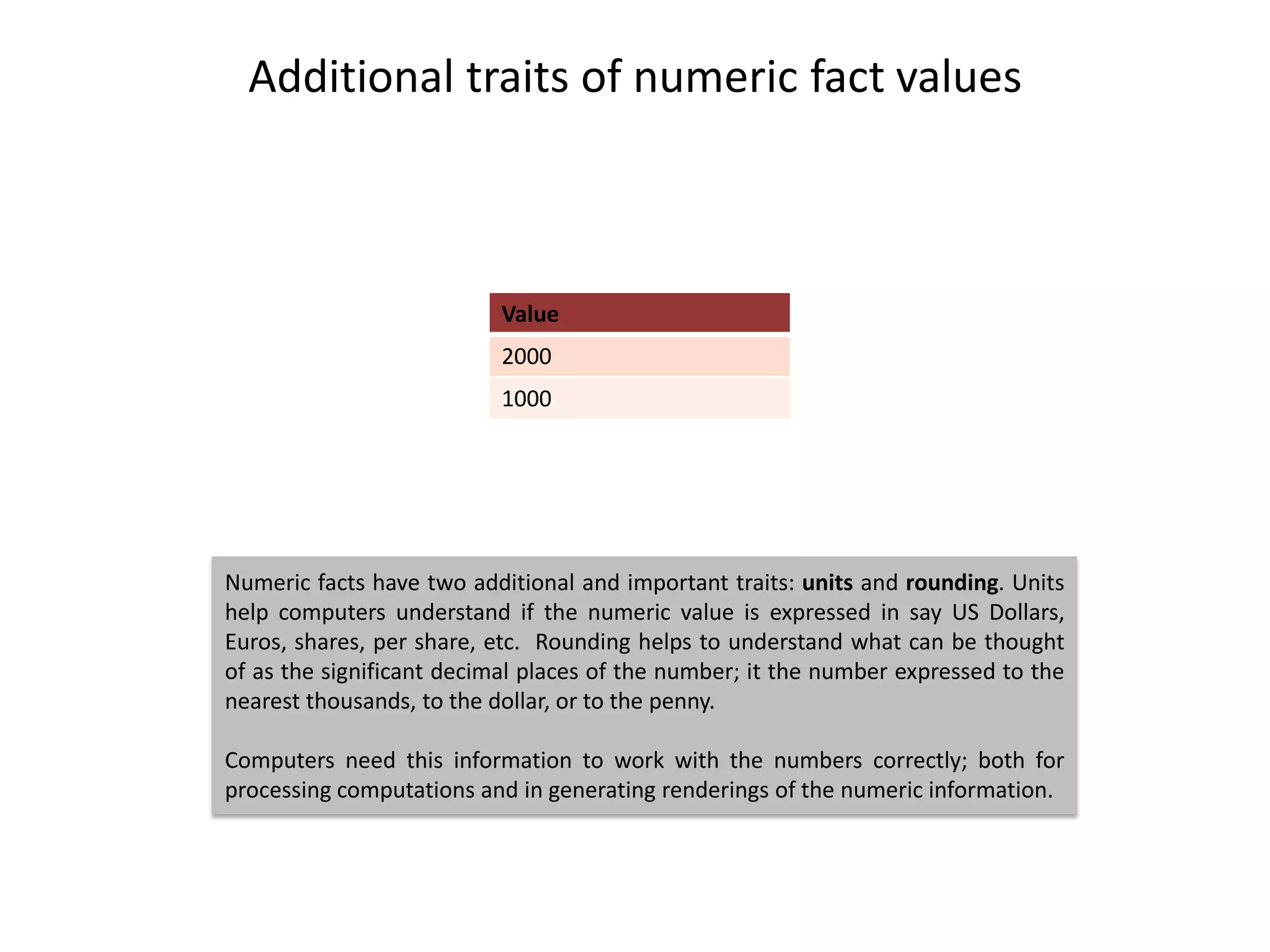
                           Value
                           2000
                           1000


Numeric facts have two additional and important traits: units and rounding. Units
help computers understand if the numeric value is expressed in say US Dollars,
Euros, shares, per share, etc. Rounding helps to understand what can be thought
of as the significant decimal places of the number; it the number expressed to the
nearest thousands, to the dollar, or to the penny.

Computers need this information to work with the numbers correctly; both for
processing computations and in generating renderings of the numeric information.
Characteristic


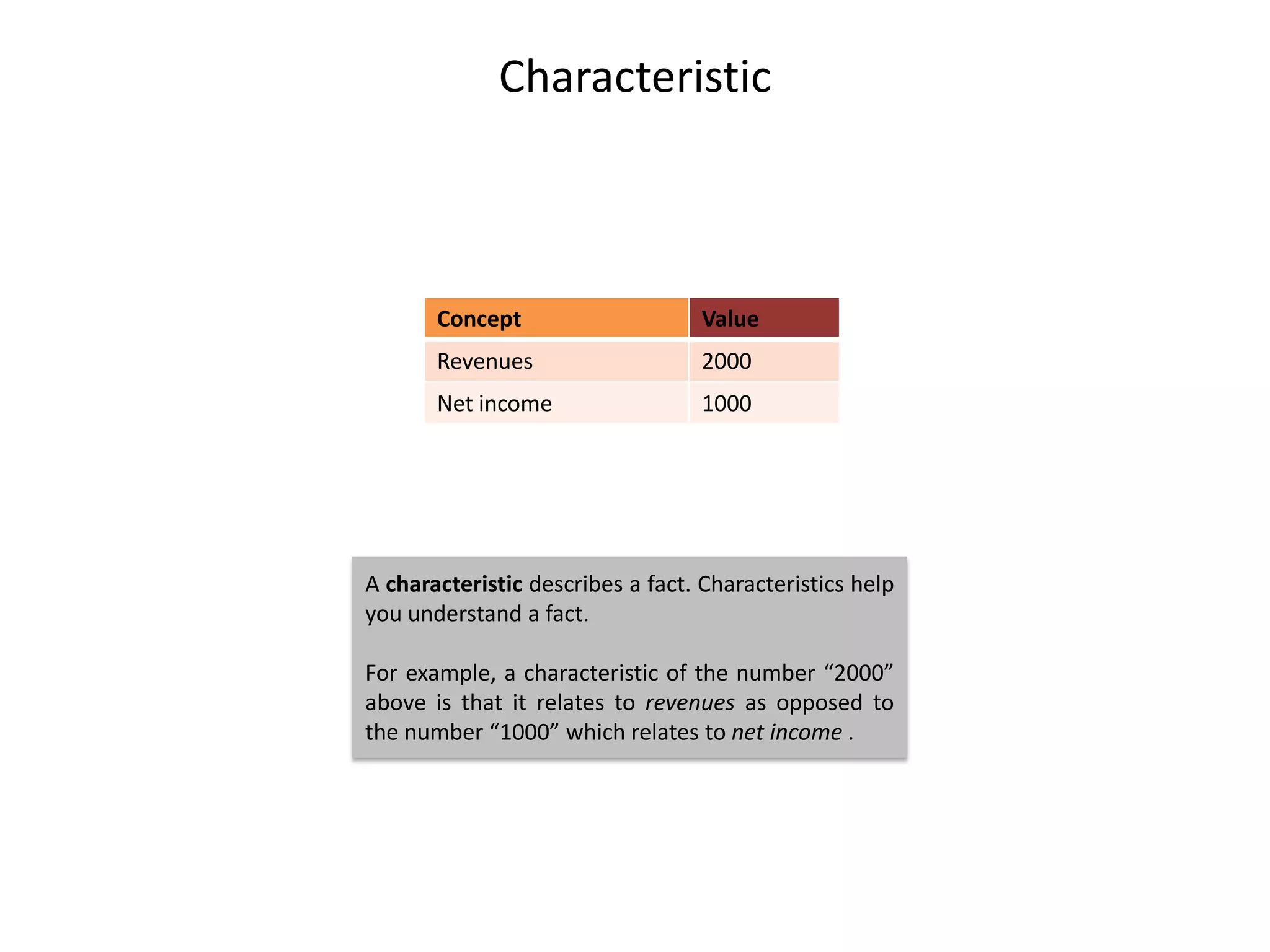
       Concept                    Value
       Revenues                   2000
       Net income                 1000


A characteristic describes a fact. Characteristics help
you understand a fact.

For example, a characteristic of the number “2000”
above is that it relates to revenues as opposed to
the number “1000” which relates to net income .
Characteristics


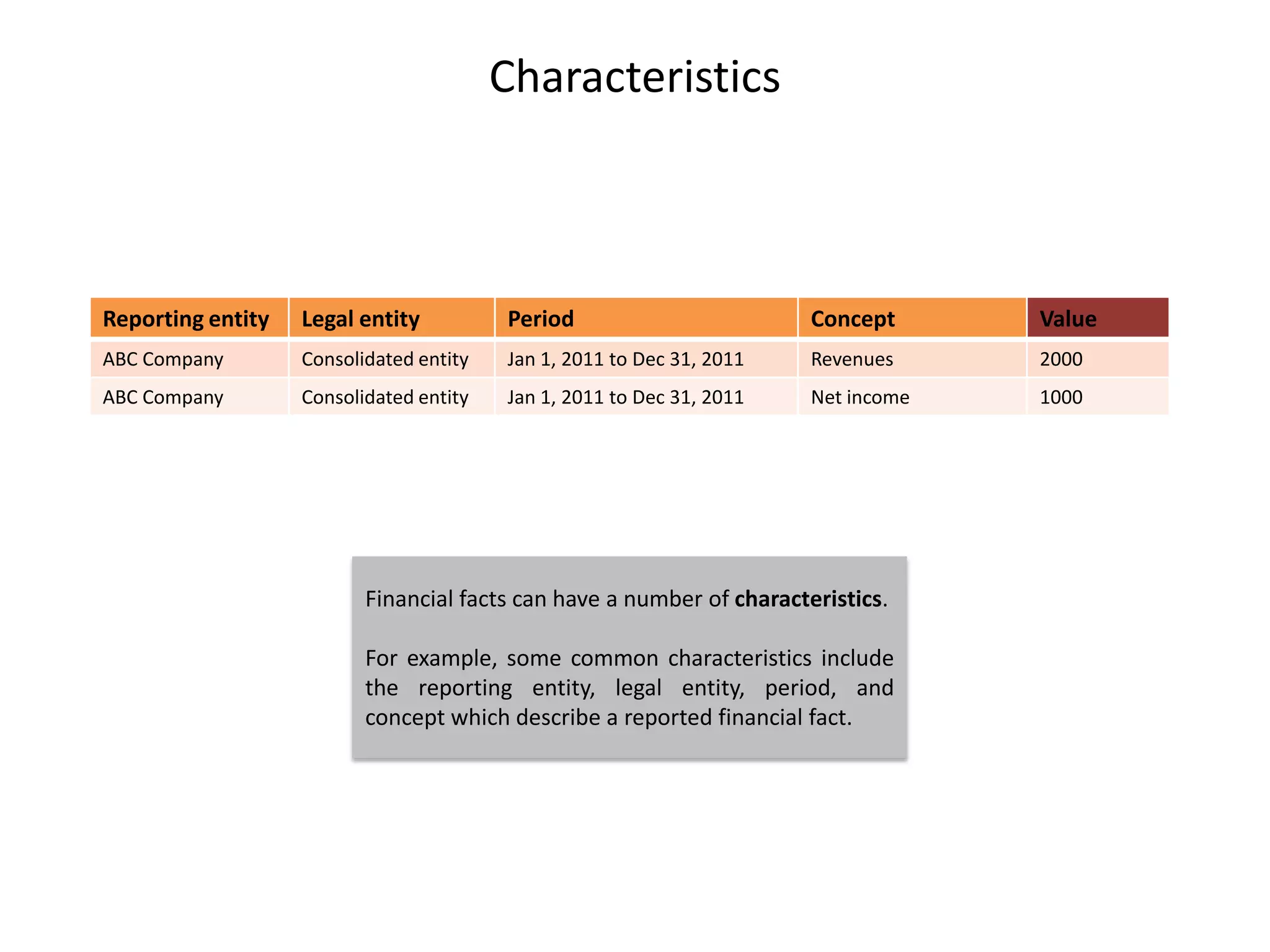
Reporting entity   Legal entity          Period                        Concept      Value
ABC Company        Consolidated entity   Jan 1, 2011 to Dec 31, 2011   Revenues     2000
ABC Company        Consolidated entity   Jan 1, 2011 to Dec 31, 2011   Net income   1000


                          Financial facts can have a number of characteristics.

                          For example, some common characteristics include
                          the reporting entity, legal entity, period, and
                          concept which describe a reported financial fact.
Fact


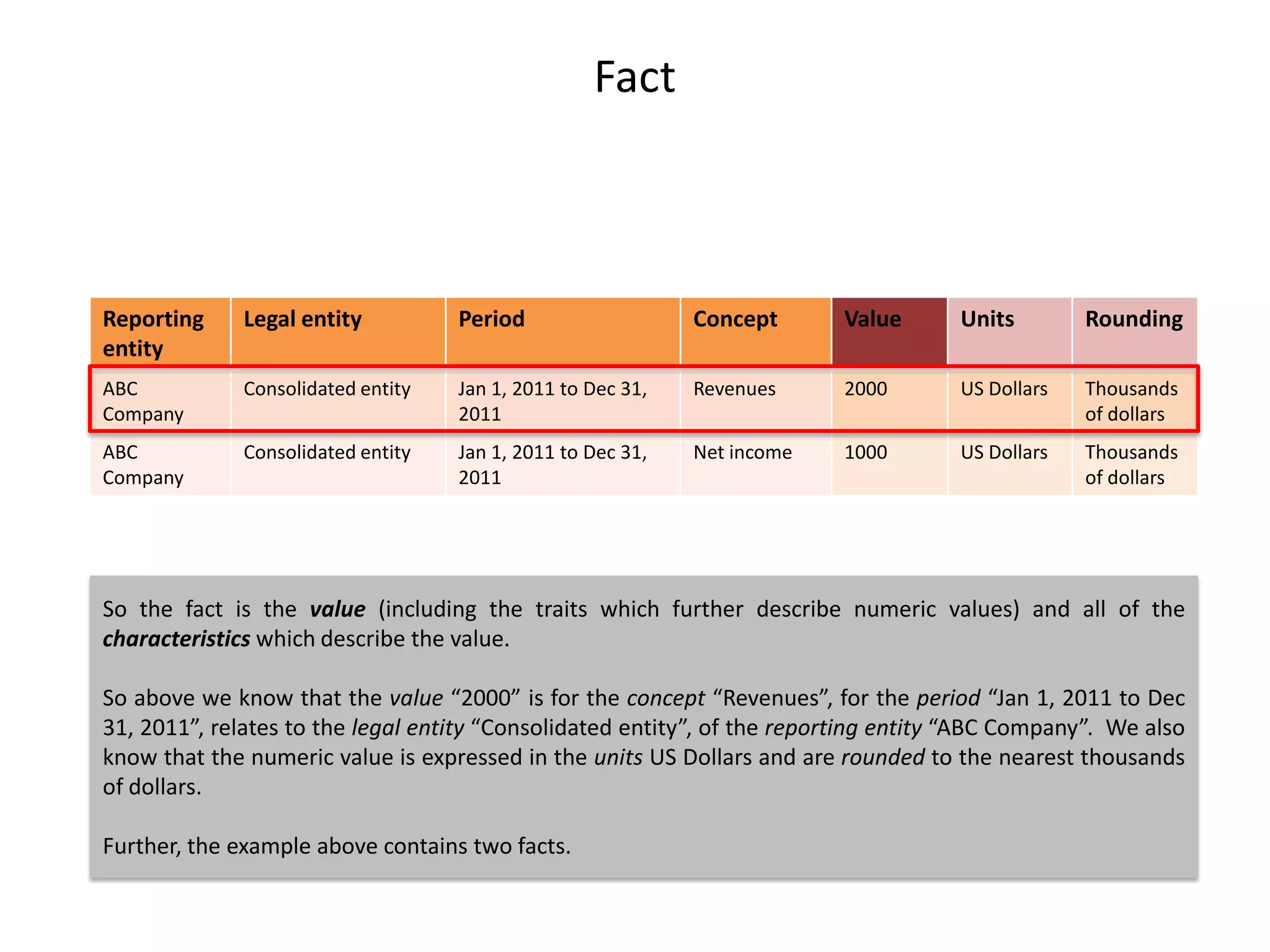
Reporting     Legal entity          Period                   Concept      Value      Units        Rounding
entity
ABC           Consolidated entity   Jan 1, 2011 to Dec 31,   Revenues     2000       US Dollars   Thousands
Company                             2011                                                          of dollars
ABC           Consolidated entity   Jan 1, 2011 to Dec 31,   Net income   1000       US Dollars   Thousands
Company                             2011                                                          of dollars


So the fact is the value (including the traits which further describe numeric values) and all of the
characteristics which describe the value.

So above we know that the value “2000” is for the concept “Revenues”, for the period “Jan 1, 2011 to Dec
31, 2011”, relates to the legal entity “Consolidated entity”, of the reporting entity “ABC Company”. We also
know that the numeric value is expressed in the units US Dollars and are rounded to the nearest thousands
of dollars.

Further, the example above contains two facts.
Parenthetical Explanations


Parenthetical
 explanation


Parenthetical
 explanation


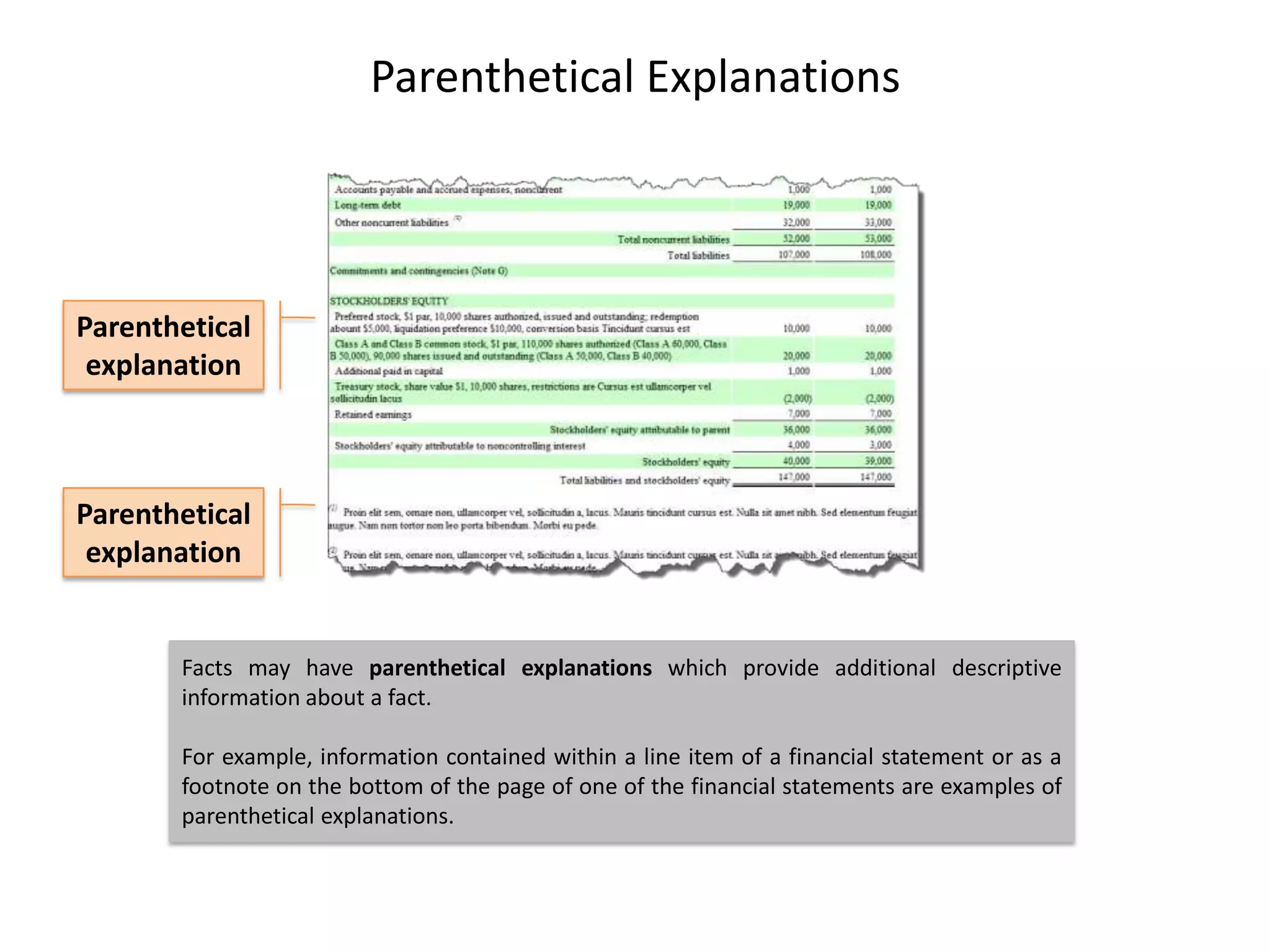
       Facts may have parenthetical explanations which provide additional descriptive
       information about a fact.

       For example, information contained within a line item of a financial statement or as a
       footnote on the bottom of the page of one of the financial statements are examples of
       parenthetical explanations.
Summary


• Facts
  – Value
  – Characteristics
  – Additional traits of numeric fact values
  – Parenthetical explanations

Understanding Facts

  • 1.
    Understanding Facts Financial ReportSemantics and Dynamics Theory
  • 2.
    Overview • Facts – Value – Additional traits of numeric fact values – Characteristics – Parenthetical explanations
  • 3.
    Fact Fact Value 2000 1000 A fact is a piece of information. Financial reports communicate facts. Facts reported by a financial report can be numeric, text, or even prose. For example, the two facts above with the values of “2000” and “1000”.
  • 4.
    Values Prose: Textual: Sed elementum feugiat augue. Nam non tortor non leo porta bibendum... Numeric: 1147 A value is the piece of information being reported. The screen shot of a financial statement note above which discloses information about commitments and contingencies shows three types of values: numeric, textual, prose. Numeric and textual are rather straight forward. Prose can be thought of as information which has sophisticated formatting: paragraphs, tables, lists, etc. Generally prose should be read in a specific ordering or sequence.
  • 5.
    Additional traits ofnumeric fact values Value 2000 1000 Numeric facts have two additional and important traits: units and rounding. Units help computers understand if the numeric value is expressed in say US Dollars, Euros, shares, per share, etc. Rounding helps to understand what can be thought of as the significant decimal places of the number; it the number expressed to the nearest thousands, to the dollar, or to the penny. Computers need this information to work with the numbers correctly; both for processing computations and in generating renderings of the numeric information.
  • 6.
    Characteristic Concept Value Revenues 2000 Net income 1000 A characteristic describes a fact. Characteristics help you understand a fact. For example, a characteristic of the number “2000” above is that it relates to revenues as opposed to the number “1000” which relates to net income .
  • 7.
    Characteristics Reporting entity Legal entity Period Concept Value ABC Company Consolidated entity Jan 1, 2011 to Dec 31, 2011 Revenues 2000 ABC Company Consolidated entity Jan 1, 2011 to Dec 31, 2011 Net income 1000 Financial facts can have a number of characteristics. For example, some common characteristics include the reporting entity, legal entity, period, and concept which describe a reported financial fact.
  • 8.
    Fact Reporting Legal entity Period Concept Value Units Rounding entity ABC Consolidated entity Jan 1, 2011 to Dec 31, Revenues 2000 US Dollars Thousands Company 2011 of dollars ABC Consolidated entity Jan 1, 2011 to Dec 31, Net income 1000 US Dollars Thousands Company 2011 of dollars So the fact is the value (including the traits which further describe numeric values) and all of the characteristics which describe the value. So above we know that the value “2000” is for the concept “Revenues”, for the period “Jan 1, 2011 to Dec 31, 2011”, relates to the legal entity “Consolidated entity”, of the reporting entity “ABC Company”. We also know that the numeric value is expressed in the units US Dollars and are rounded to the nearest thousands of dollars. Further, the example above contains two facts.
  • 9.
    Parenthetical Explanations Parenthetical explanation Parenthetical explanation Facts may have parenthetical explanations which provide additional descriptive information about a fact. For example, information contained within a line item of a financial statement or as a footnote on the bottom of the page of one of the financial statements are examples of parenthetical explanations.
  • 10.
    Summary • Facts – Value – Characteristics – Additional traits of numeric fact values – Parenthetical explanations