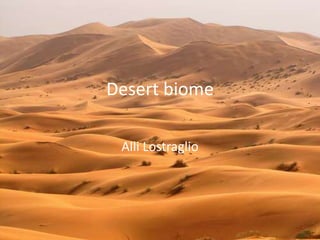
2. Sahara desert Rainfall less then 50 cm a year Temperatures range from 20-25 degrees extreme maximum ranges from 43.5-49 degrees participation is less then ten inches a year.
3. Location The Sahara desert covers the northern section of Africa, and spreads over almost all the “top of the continent, it is the largest hot desert in the world, as well as the second largest desert on earth after Antarctica.
4. If you were to visit the desert…. If you were to visit the desert some necessities you would have to bring… Water (as much as possible) Loose, light, clothing Sun glasses Your adventure would be hot, but you would see exotic plants like the cactus an moss, an you would see animals like the rattle snake, kangaroo rats knit foxes and more.
5. vegetation vegetation primarily consists of xerophytes, grasses, shrubs, and trees. Desert plants like the African welwitansia possess very long roots that go very deep Into the earth and help the plant survive in the hot and dry desert conditions
6. Animals in the desert… The animal population in the desert consist of animals like gerbils, jerboa, cope here, the desert hedgehog, barbory sheep, Oryx, dama deer, Nubian wild, anybis baboon, spotted hyena, common jackal, sand fox, libuan stripes weasel, mongoose, frogs, toads, crocodiles, lizards, skinks, cobra snails, ravens… and many more.
7.
8. Desert cacti The cactus family is one of the most easily recognized plant families in the world. Their thick stems an unusual shapes attract thousands of people to the desert each year. They mostly grow on rocky hillsides alluvial fans and in barren washes throughout the desert.
9. Sand fox The sand fox is nocturnal so it operates during the cool portion of the day rather then traveling in the scorching sun. It has large ears to improve its abilities to cool itself.bv It burrows underground to keep itself cool when it’s sleeping They are about the same size as a normal fox.
10. Skink The great desert skink is a large lizard that grows up to 40cm long and weigh up to 350 grams. They have a reddish-tanned and smooth skin.
11. Orange trees If you are like most people, you probably associate oranges with California or Florida, but the hot and dry regions of the Sahara is great for orange trees, particularly along the Nile river, and other oasis spots in the desert.