What is Zigbee?

• ZigBee is a new wireless technology
• Technological Standard Created for
  Control and Sensor Networks
• Based on the IEEE 802.15.4 Standard
• Created by the ZigBee Alliance
• Philips,Motorola,Intel,HP are all members
  of the allience.
Zigbee
• Designed for low power consumption
  allowing batteries to essentially last for
  ever
• ZigBee makes possible completely
  networked homes where all devices are
  able to communicate and be controlled by
  a single unit
• It provides network,security and
  application support services operating on
  the top of IEEE
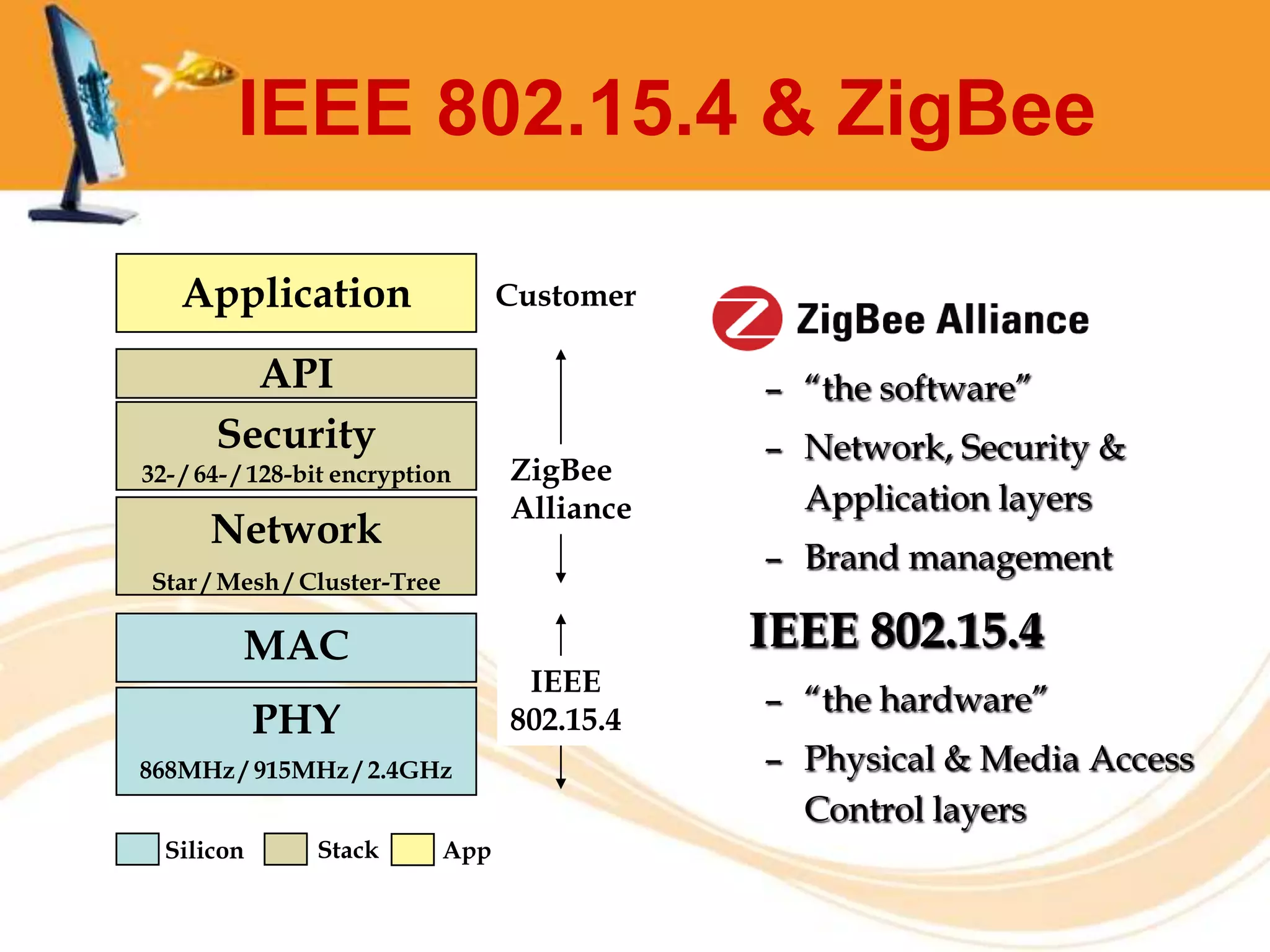
IEEE 802.15.4 & ZigBee

   Application                     Customer

         API                                  – “the software”
       Security                               – Network, Security &
32- / 64- / 128-bit encryption     ZigBee
                                   Alliance     Application layers
      Network
                                              – Brand management
Star / Mesh / Cluster-Tree

         MAC                                  IEEE 802.15.4
                                    IEEE
                                              – “the hardware”
            PHY                    802.15.4
868MHz / 915MHz / 2.4GHz                      – Physical & Media Access
                                                Control layers
  Silicon        Stack       App
Architecture
• Layered architecture
• These layers facilitate the features that
  make ZigBee very attractive:
          low cost
           easy implementation
           reliable data transfer
           short-range operations
           very low power consumption
          adequate security features
Architecture
Layers
   1.Network and Application Support layer
   2.Physical (PHY) layer
   3.Media access control (MAC) layer
Zigbee Device Types
• There are three different ZigBee device
  types that operate on the layers in any
  self-organizing application network

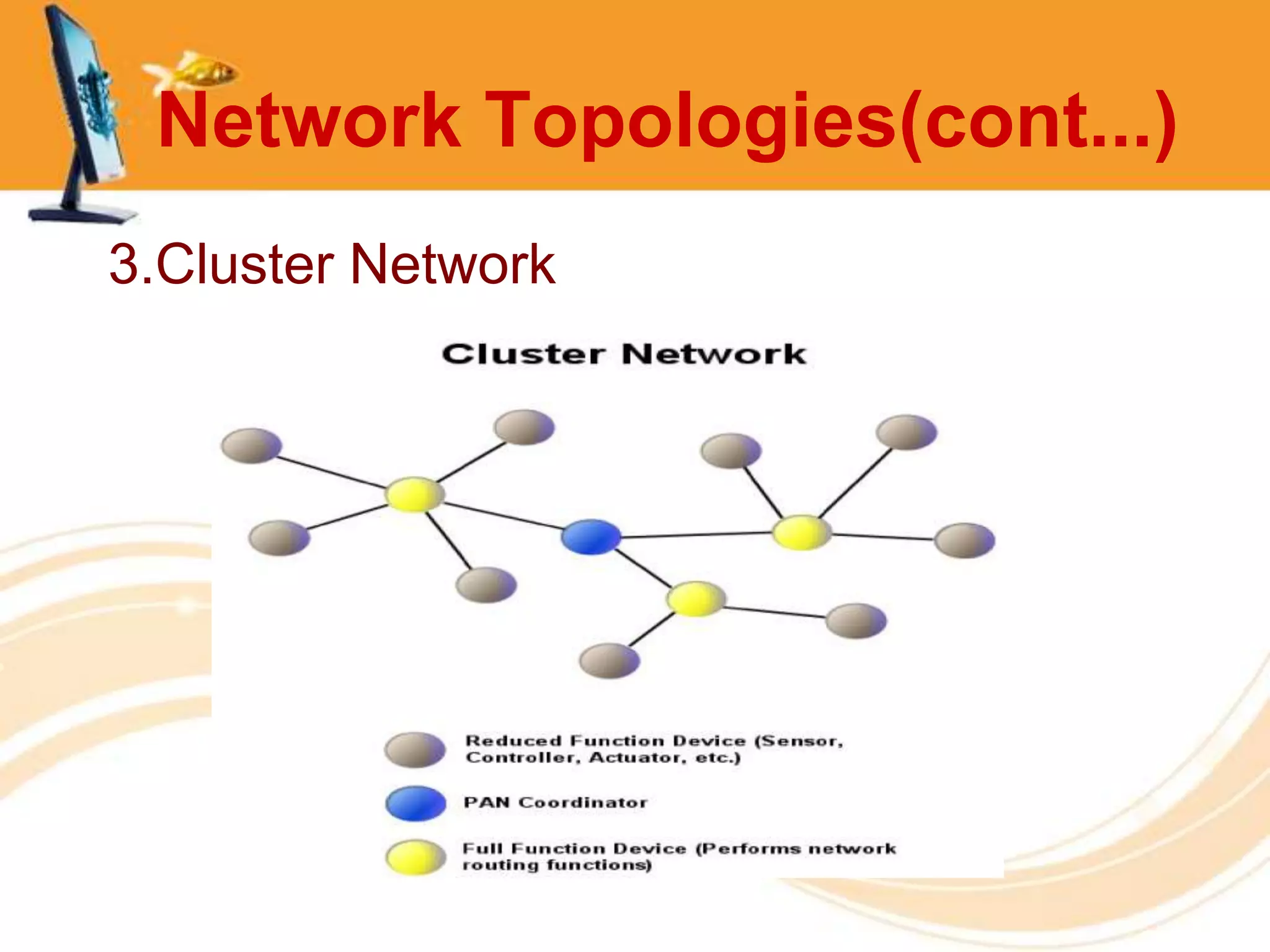
     1.    Zigbee Coordinator node
     2.    Full Function Device (FFD)
     3.    Reduced Function Device(RFD)
1.Zigbee Coordinator Node
• It is the root of network tree and a bridge
  to other network
• Able to store information about the
  network
• Only one ZCN for a network
• It act as a repositary for other security
  keys
2.The full Function Device
• An intermediatory router transmitting data
  from other devices
• Needs lesser memory than Zigbee
  coordinator node
• Lesser manufacturing cost
• Can operate on all topologies
• Also act as a coordinator
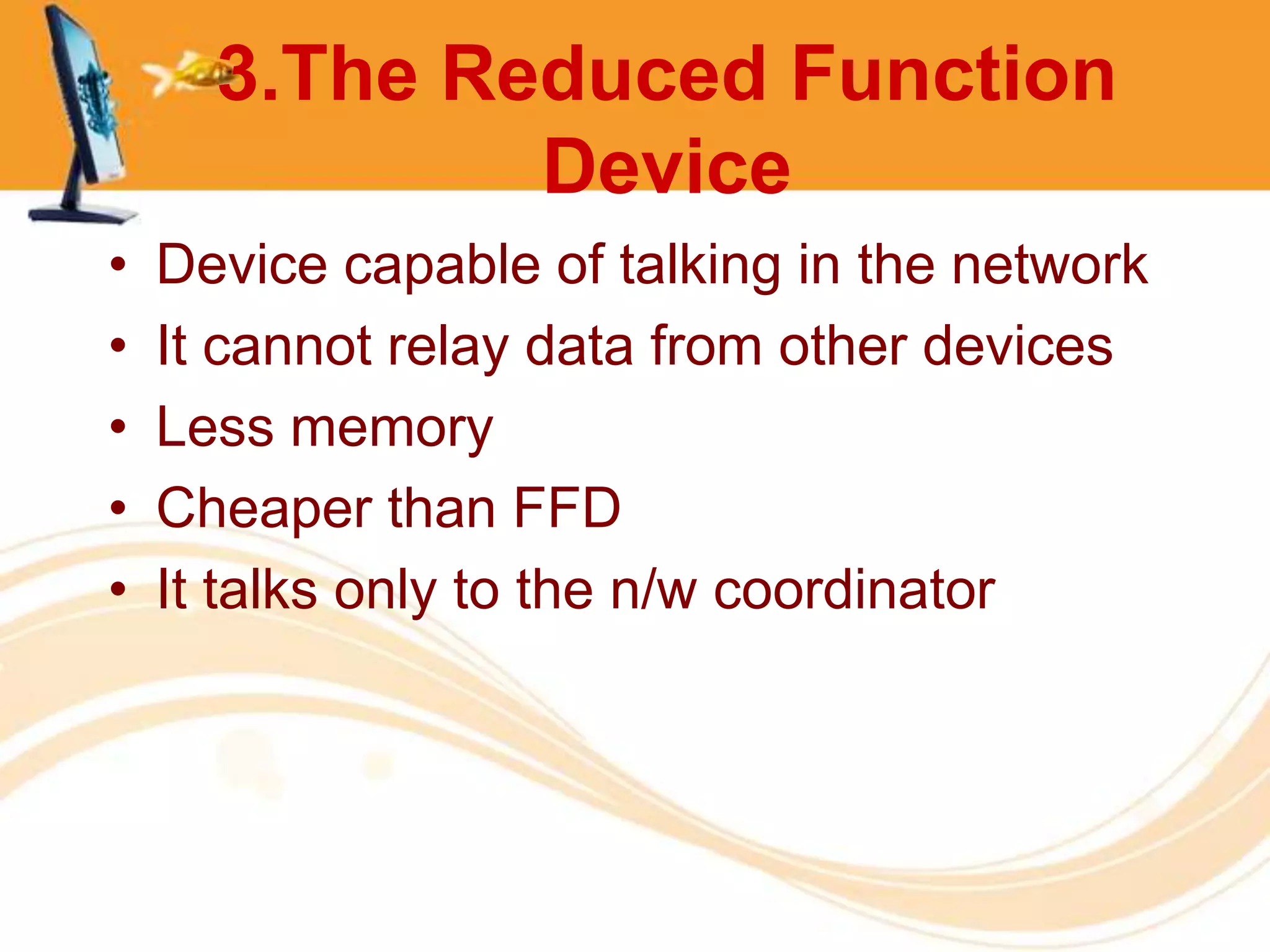
3.The Reduced Function
              Device
•   Device capable of talking in the network
•   It cannot relay data from other devices
•   Less memory
•   Cheaper than FFD
•   It talks only to the n/w coordinator
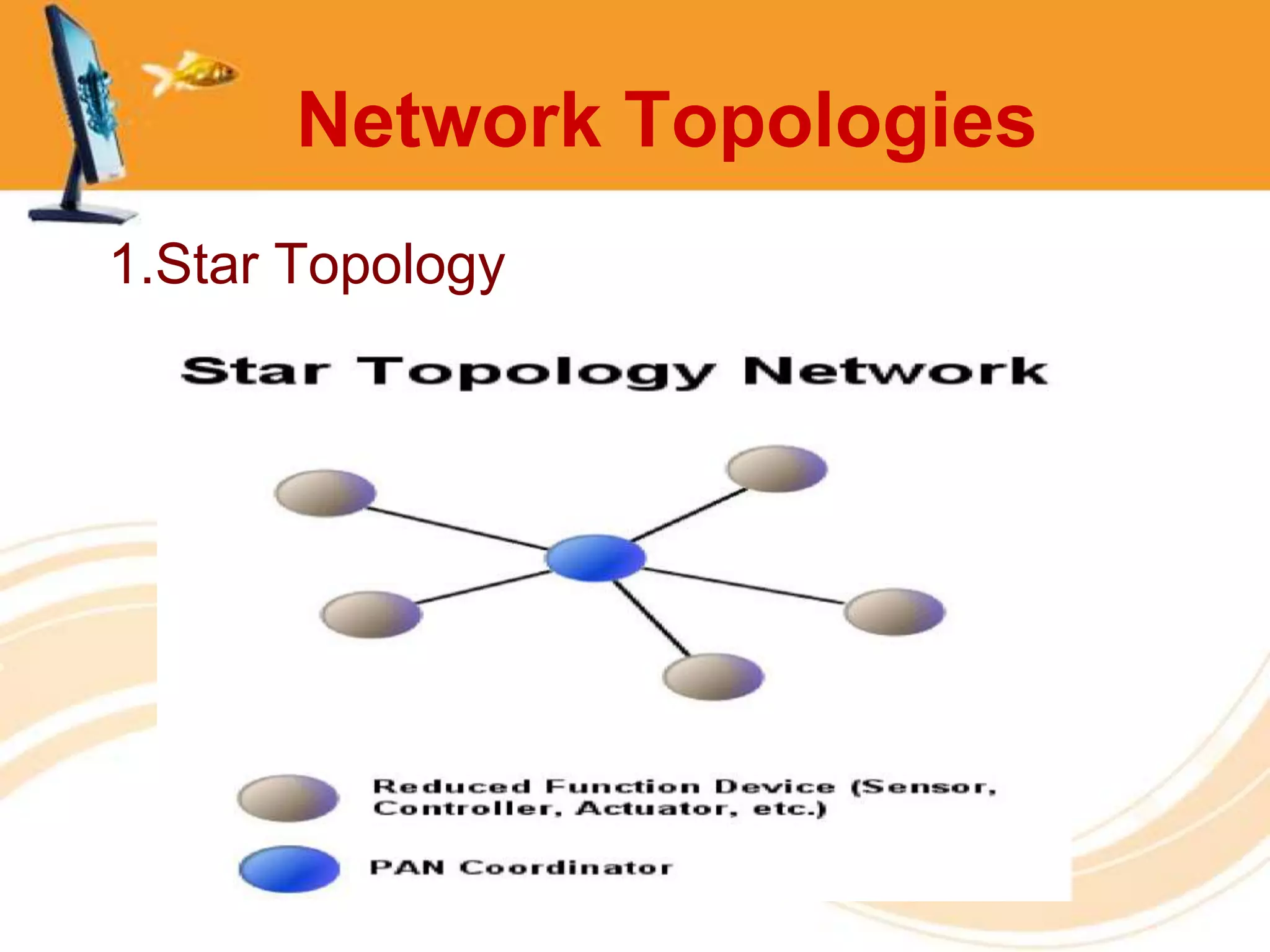
Network Topologies
1.Star Topology
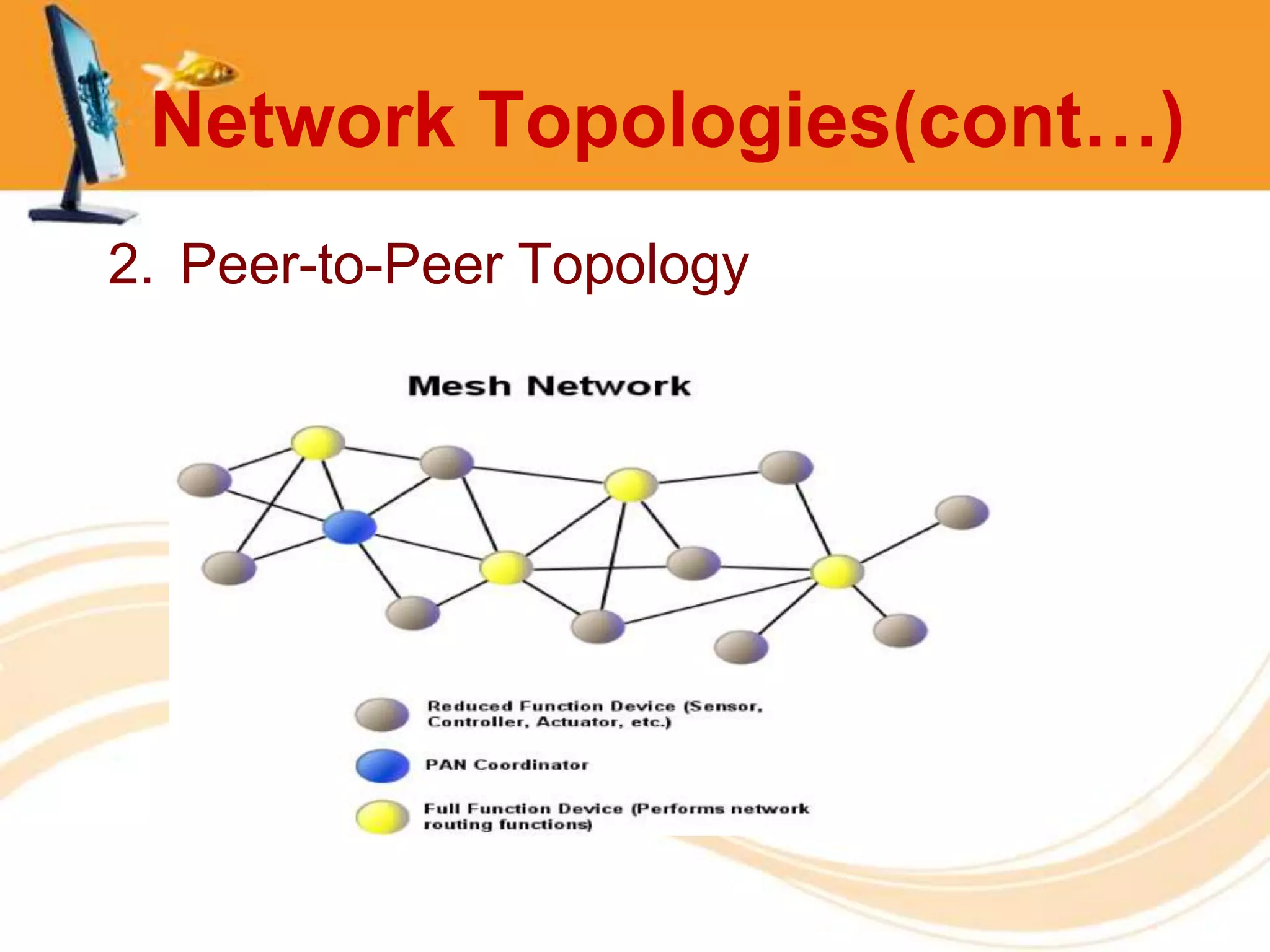
Network Topologies(cont…)
2. Peer-to-Peer Topology
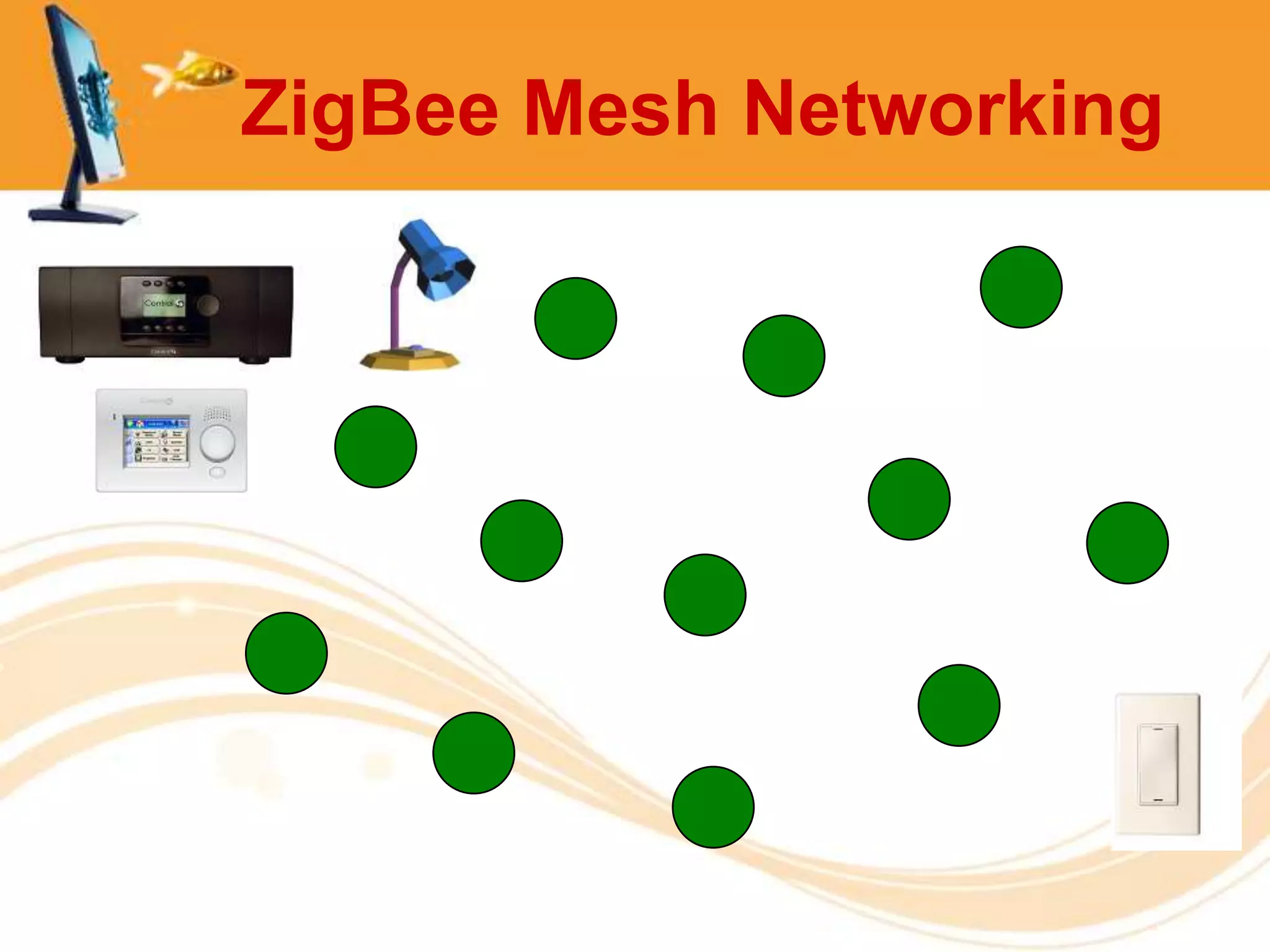
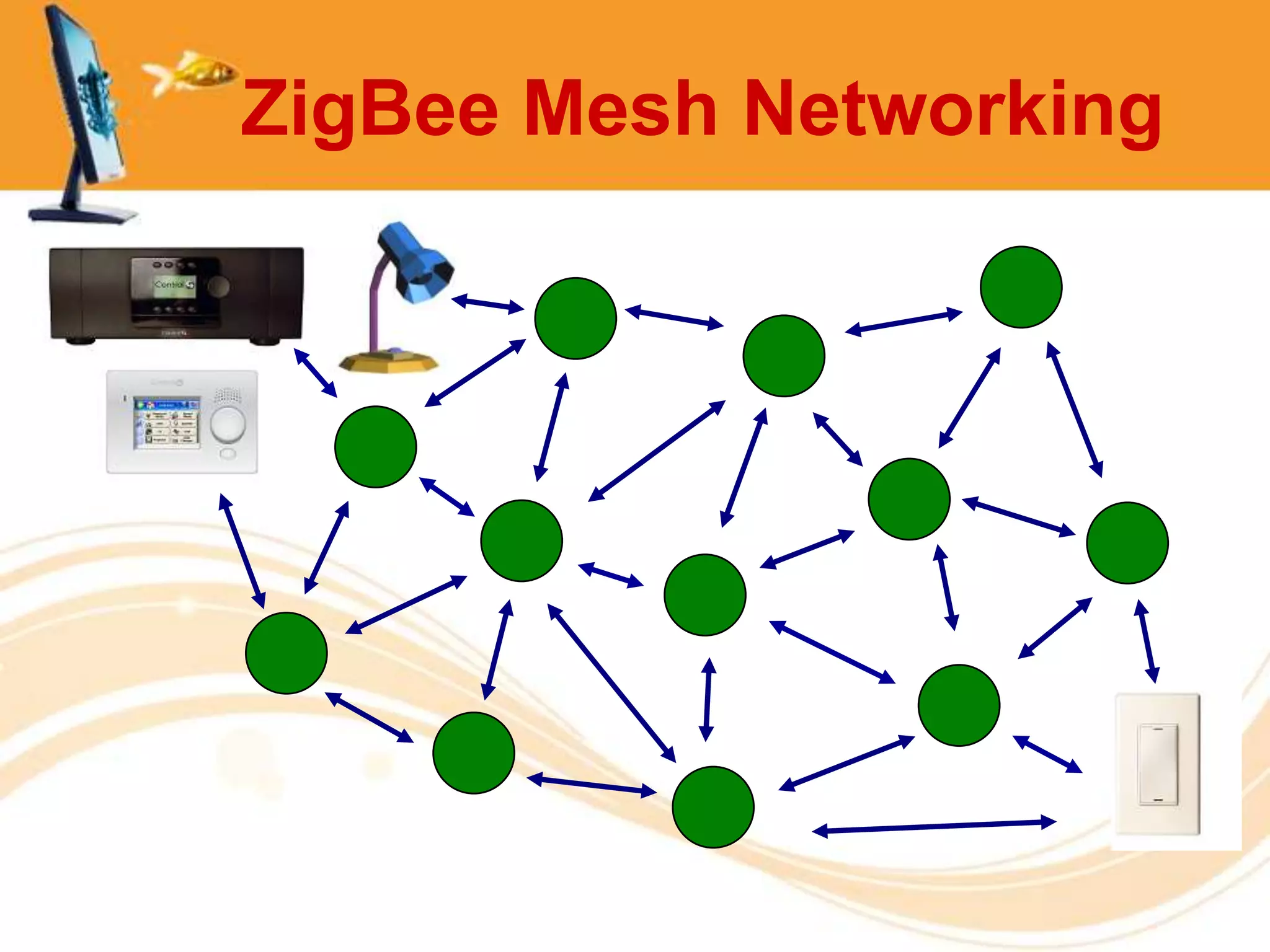
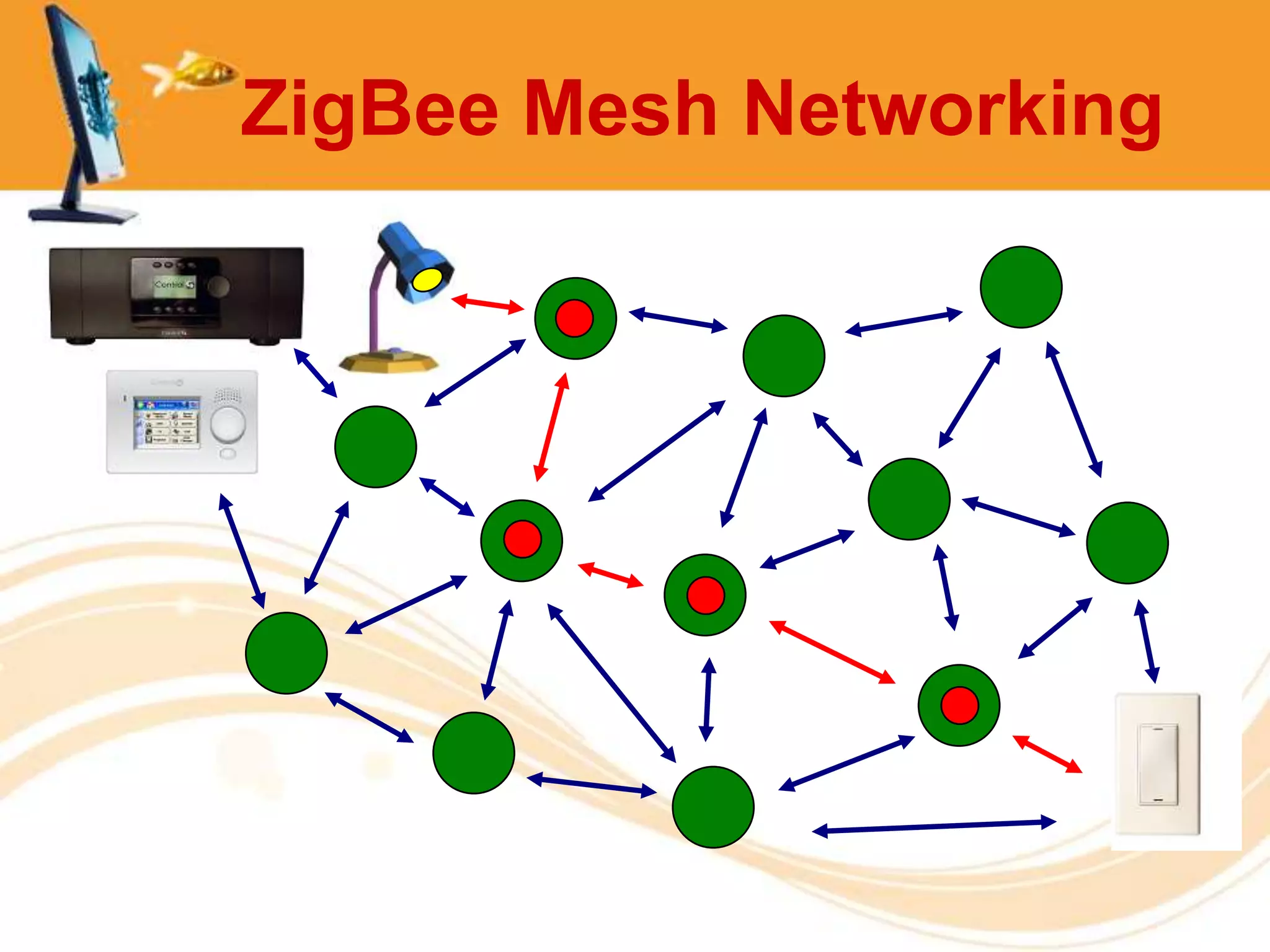
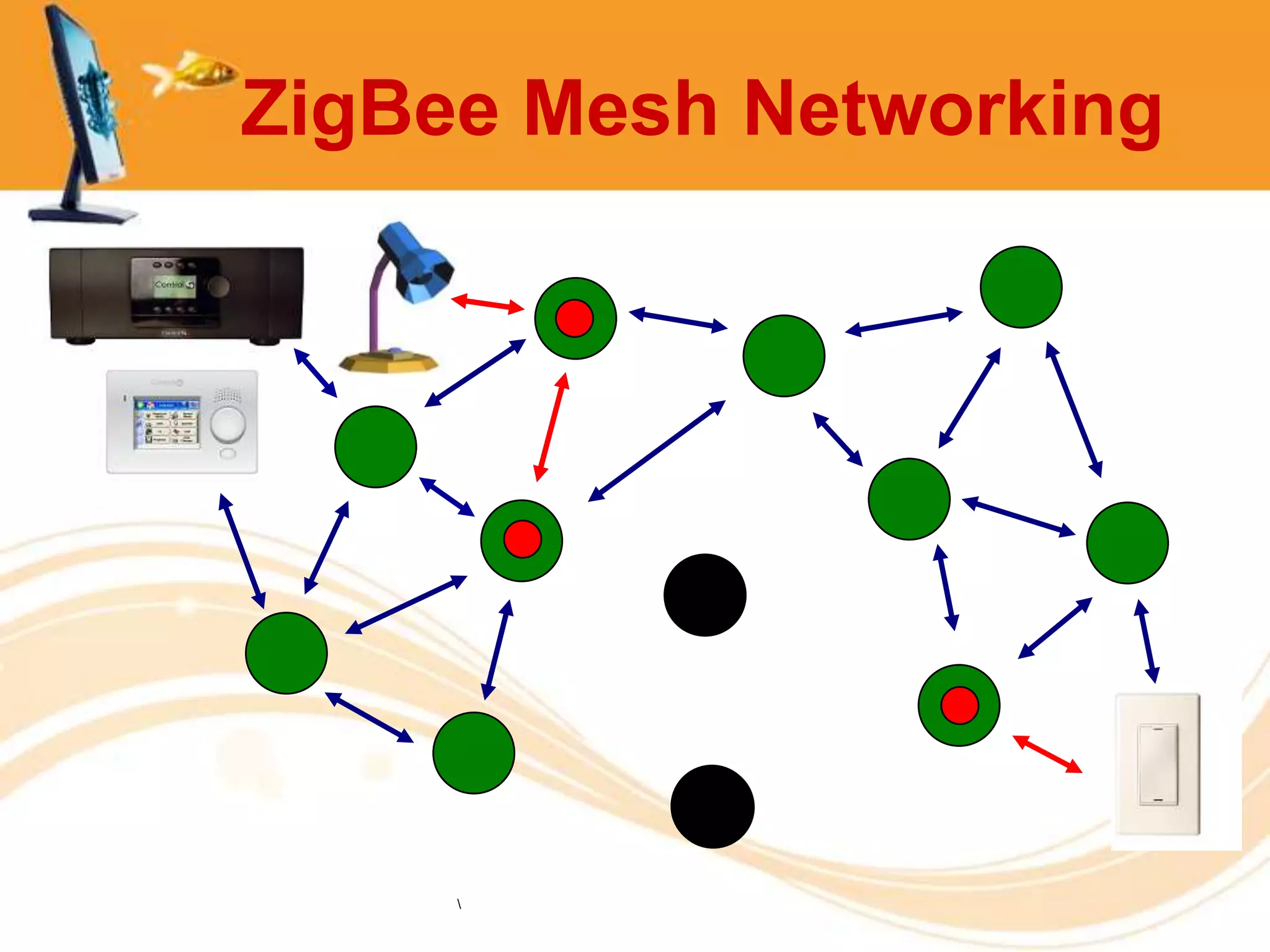
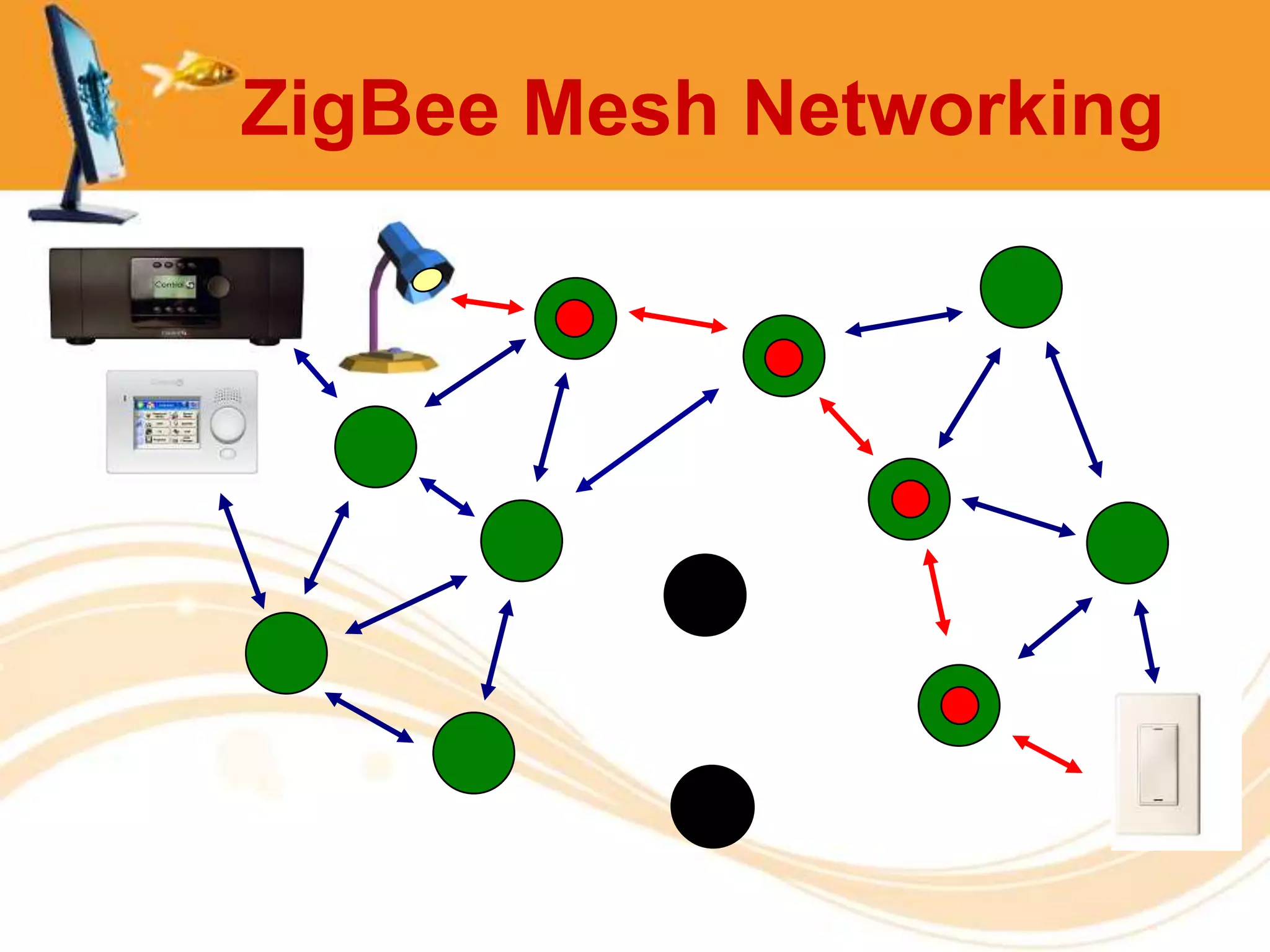
ZigBee Mesh Networking
Network Topologies(cont...)
3.Cluster Network
Characteristics
• Low power consumption with battery life
  ranging from months to years
• High density of nodes per network
• Low cost
• Simple implementation
• Low data rate
• Small packet devices
Applications
• The ZigBee Alliance targets applications
  Across consumer, commercial, industrial
  and government markets worldwide
• Home networking
• Industrial control and management
Conclusion
In future all devices and their controls will
be based on this standard.
Since Wireless personal Area Networking
applies not only to household devices, but
also to individualised office automation
applications, ZigBee is here to stay. It is
more than likely the basis of future home-
networking solutions………
THANK YOU…….

Zigbee Presentation

  • 2.
    What is Zigbee? •ZigBee is a new wireless technology • Technological Standard Created for Control and Sensor Networks • Based on the IEEE 802.15.4 Standard • Created by the ZigBee Alliance • Philips,Motorola,Intel,HP are all members of the allience.
  • 3.
    Zigbee • Designed forlow power consumption allowing batteries to essentially last for ever • ZigBee makes possible completely networked homes where all devices are able to communicate and be controlled by a single unit • It provides network,security and application support services operating on the top of IEEE
  • 4.
    IEEE 802.15.4 &ZigBee Application Customer API – “the software” Security – Network, Security & 32- / 64- / 128-bit encryption ZigBee Alliance Application layers Network – Brand management Star / Mesh / Cluster-Tree MAC IEEE 802.15.4 IEEE – “the hardware” PHY 802.15.4 868MHz / 915MHz / 2.4GHz – Physical & Media Access Control layers Silicon Stack App
  • 5.
    Architecture • Layered architecture •These layers facilitate the features that make ZigBee very attractive: low cost  easy implementation  reliable data transfer  short-range operations  very low power consumption adequate security features
  • 6.
    Architecture Layers 1.Network and Application Support layer 2.Physical (PHY) layer 3.Media access control (MAC) layer
  • 7.
    Zigbee Device Types •There are three different ZigBee device types that operate on the layers in any self-organizing application network 1. Zigbee Coordinator node 2. Full Function Device (FFD) 3. Reduced Function Device(RFD)
  • 8.
    1.Zigbee Coordinator Node •It is the root of network tree and a bridge to other network • Able to store information about the network • Only one ZCN for a network • It act as a repositary for other security keys
  • 9.
    2.The full FunctionDevice • An intermediatory router transmitting data from other devices • Needs lesser memory than Zigbee coordinator node • Lesser manufacturing cost • Can operate on all topologies • Also act as a coordinator
  • 10.
    3.The Reduced Function Device • Device capable of talking in the network • It cannot relay data from other devices • Less memory • Cheaper than FFD • It talks only to the n/w coordinator
  • 11.
  • 12.
  • 13.
  • 14.
  • 15.
  • 16.
  • 17.
  • 18.
  • 19.
    Characteristics • Low powerconsumption with battery life ranging from months to years • High density of nodes per network • Low cost • Simple implementation • Low data rate • Small packet devices
  • 20.
    Applications • The ZigBeeAlliance targets applications Across consumer, commercial, industrial and government markets worldwide • Home networking • Industrial control and management
  • 21.
    Conclusion In future alldevices and their controls will be based on this standard. Since Wireless personal Area Networking applies not only to household devices, but also to individualised office automation applications, ZigBee is here to stay. It is more than likely the basis of future home- networking solutions………
  • 23.