
1.Overview of Zero Trust
2.Why Does Zero Trust Matter?
3.Principles of Zero Trust
4.Getting Started
5.Conclusion
PLAN
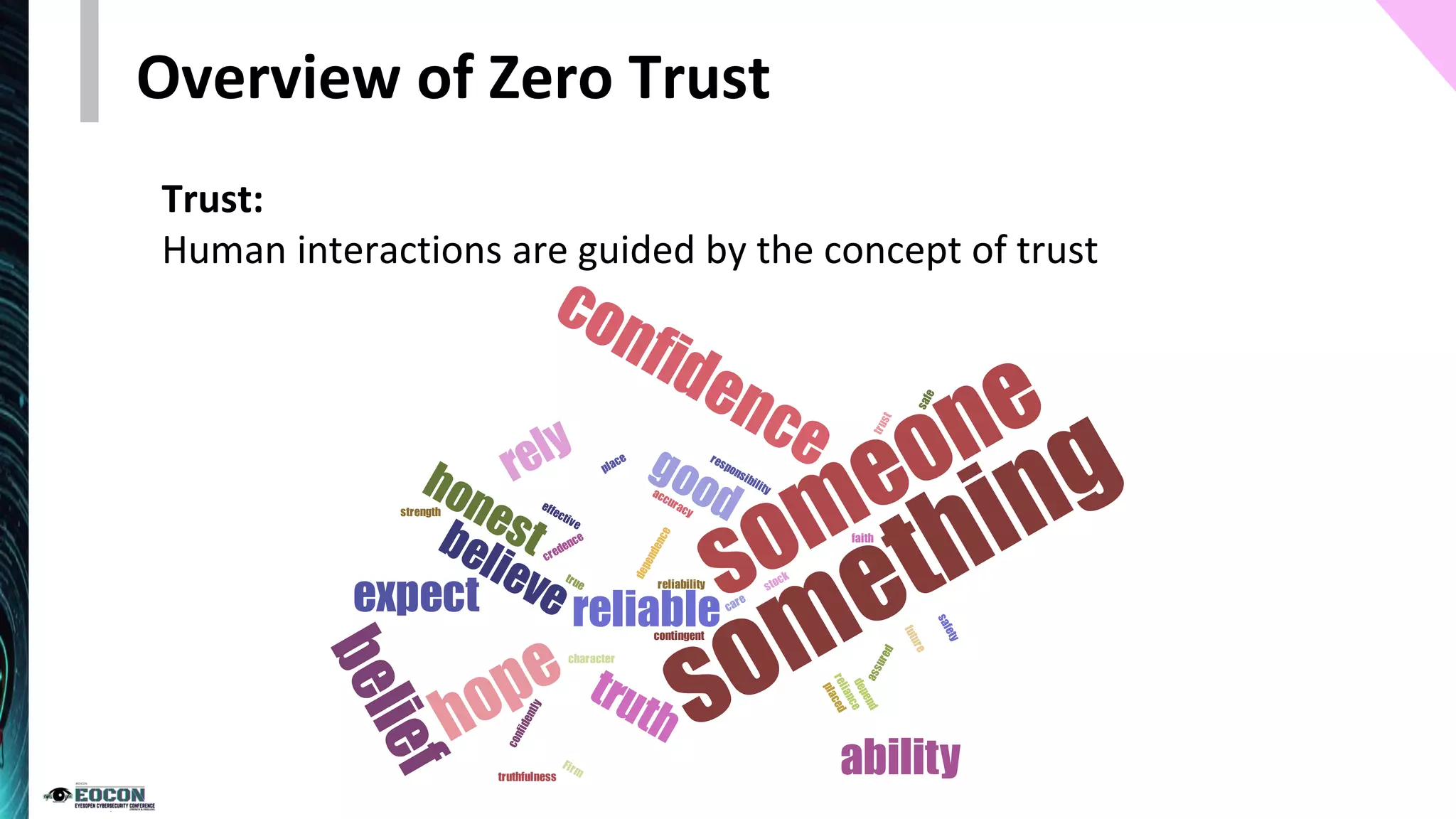
Trust:
Human interactions are guided by the concept of trust
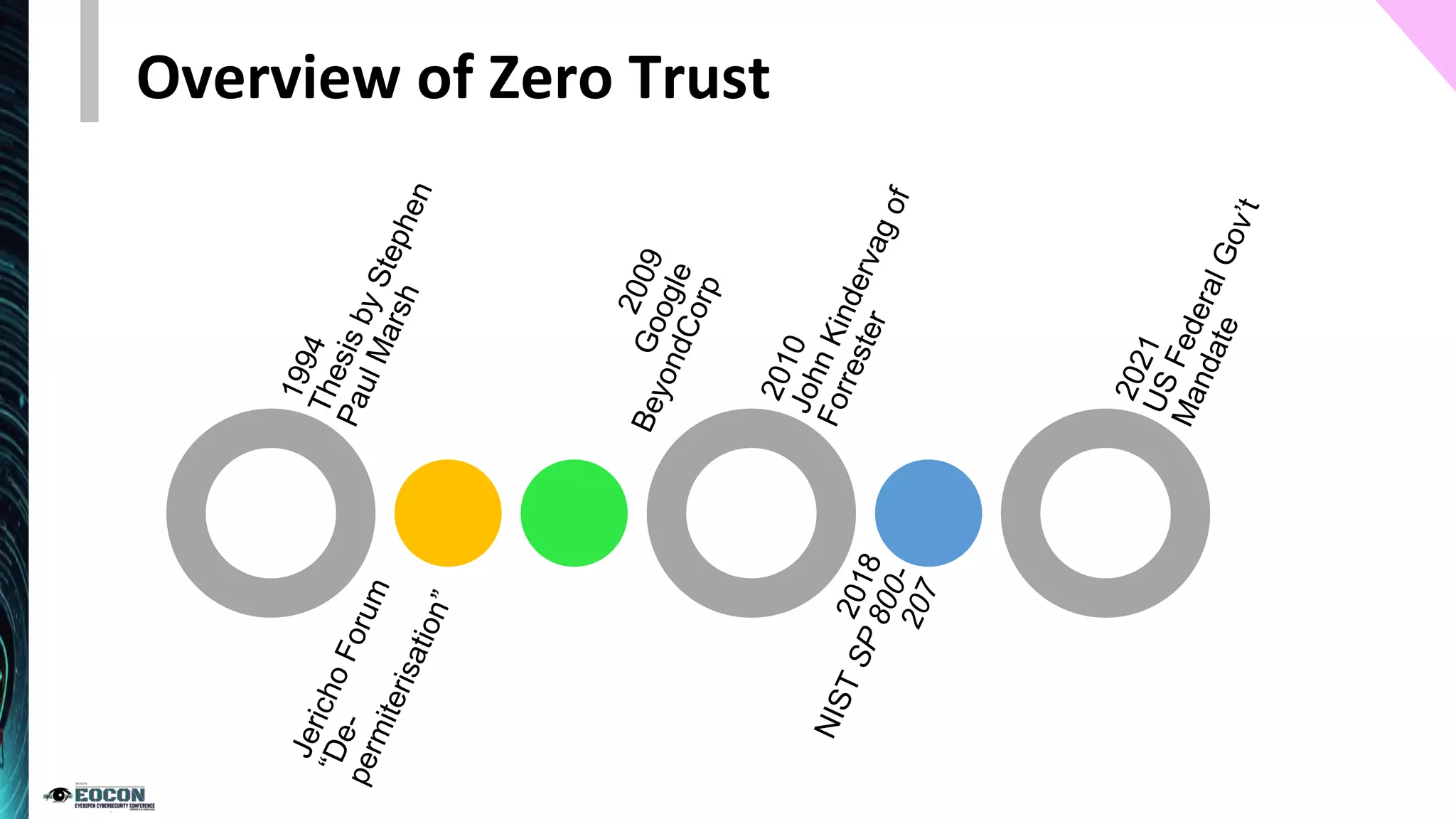
Overview of Zero Trust
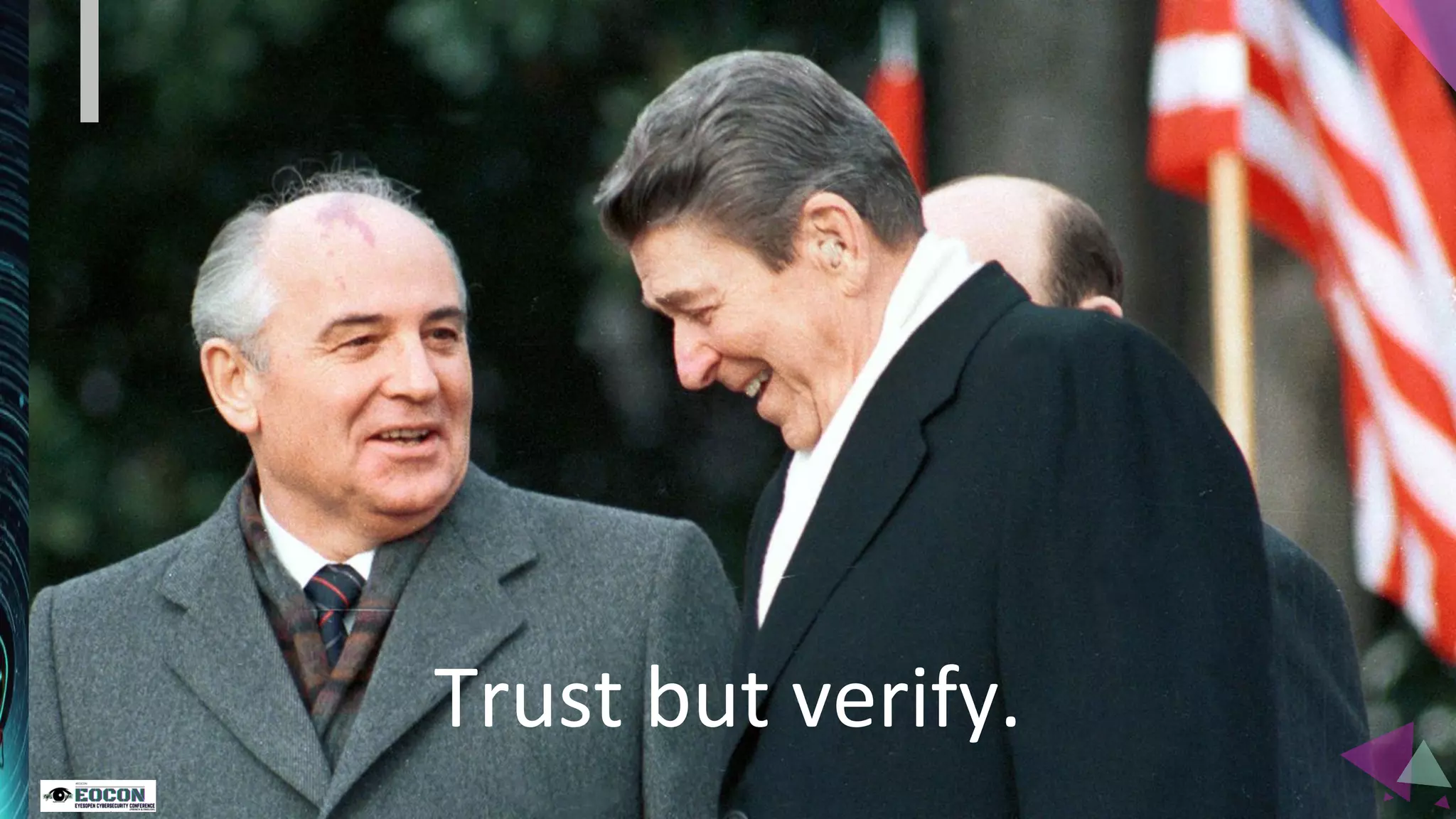
Trust but verify.
Overview of Zero Trust
• “Zero Trust Model” was coined by Forrester Research
analyst and thought-leader John Kindervag in 2010
• “never trust, always verify.”
• based on the assumption that risk is an inherent factor
both inside and outside the network.
Overview of Zero Trust
1.Overview of Zero Trust
2.Why Does Zero Trust Matter?
3.Principles of Zero Trust
4.Getting Started
5.Conclusion
PLAN
Why Does Zero Trust Matter?
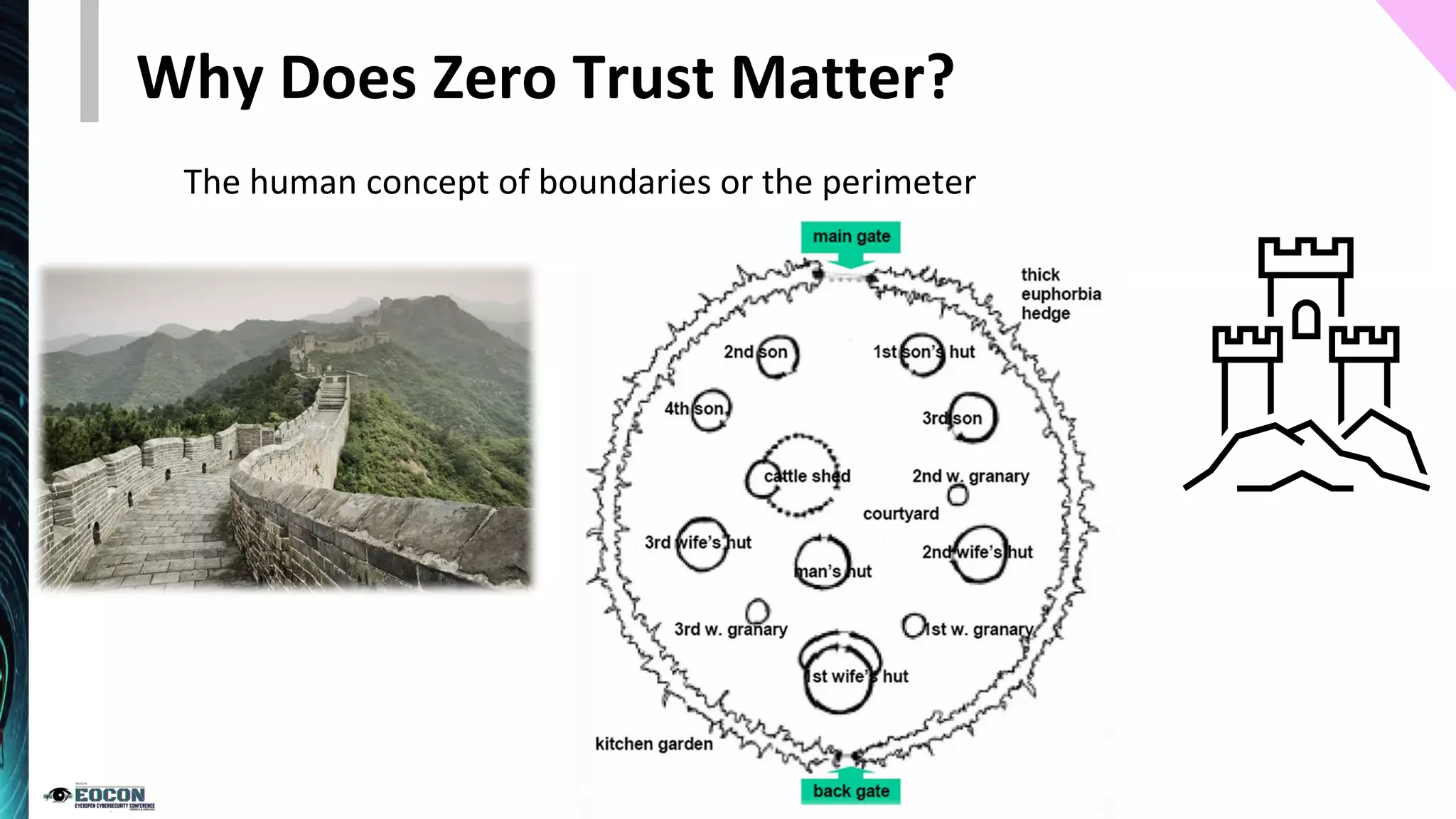
• The human concept of boundaries or the perimeter
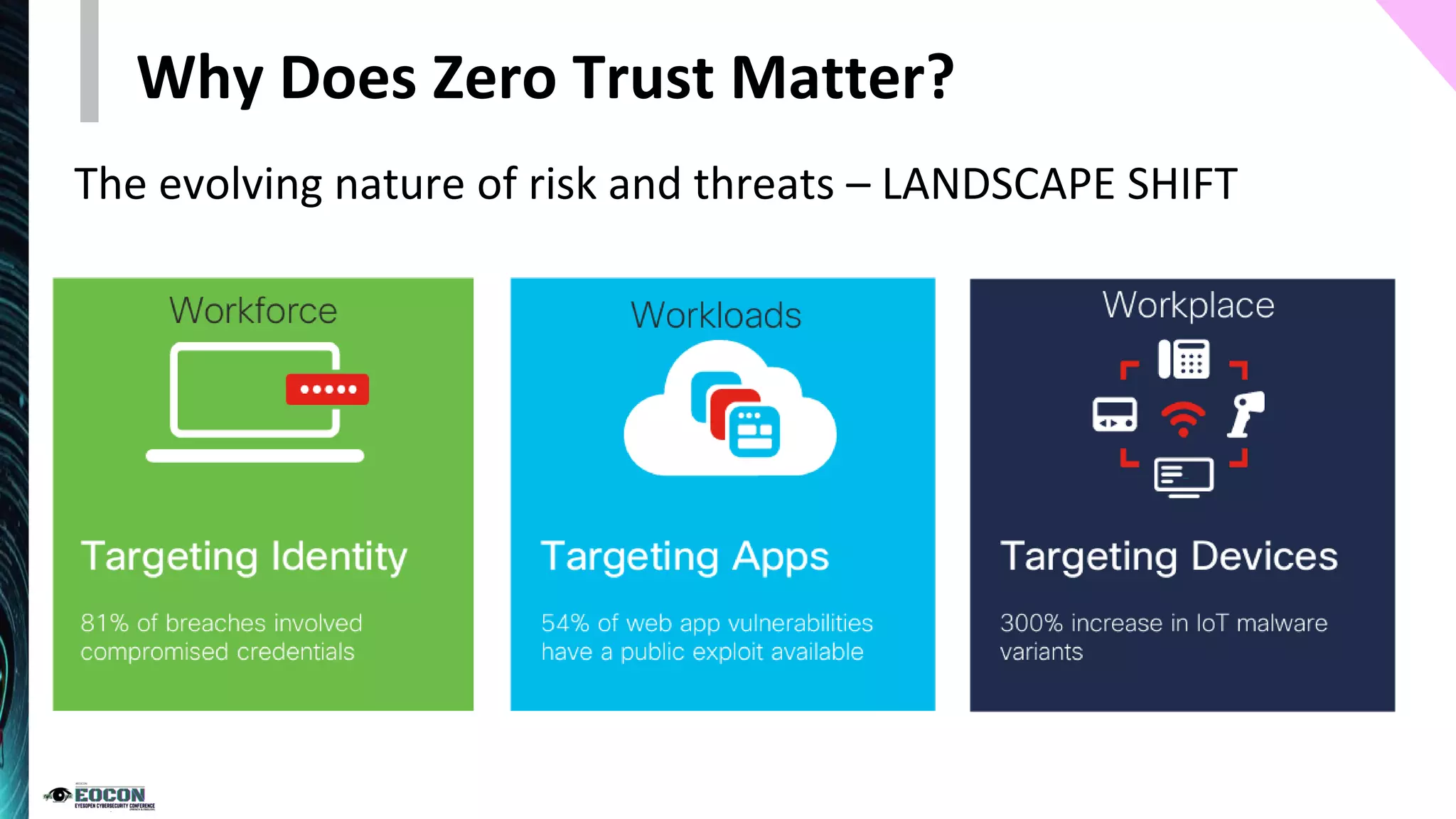
• The evolving nature of risk and threats
Why Does Zero Trust Matter?
The human concept of boundaries or the perimeter
Why Does Zero Trust Matter?
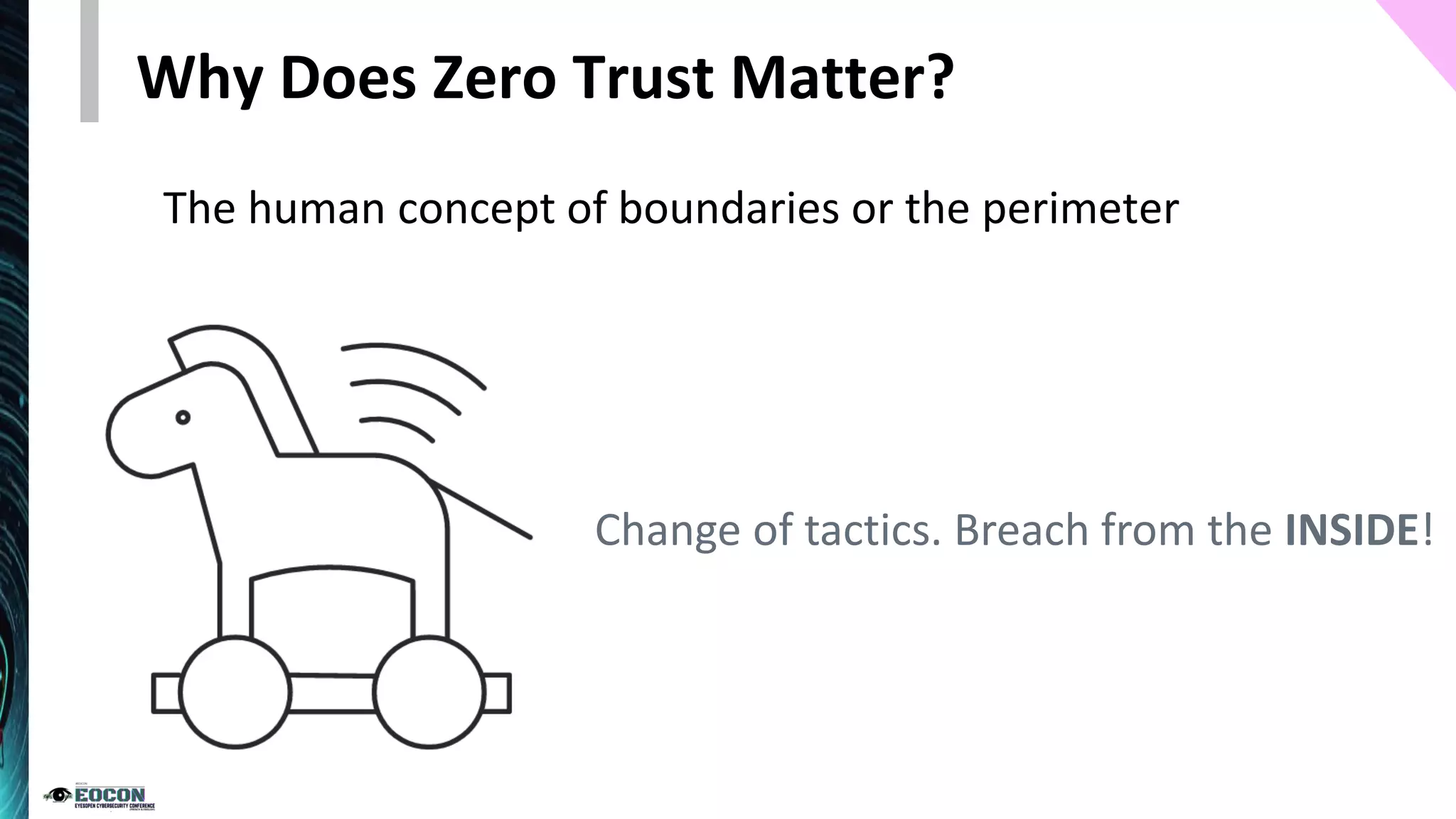
The human concept of boundaries or the perimeter
Change of tactics. Breach from the INSIDE!
Why Does Zero Trust Matter?
The evolving nature of risk and threats – LANDSCAPE SHIFT
Why Does Zero Trust Matter?
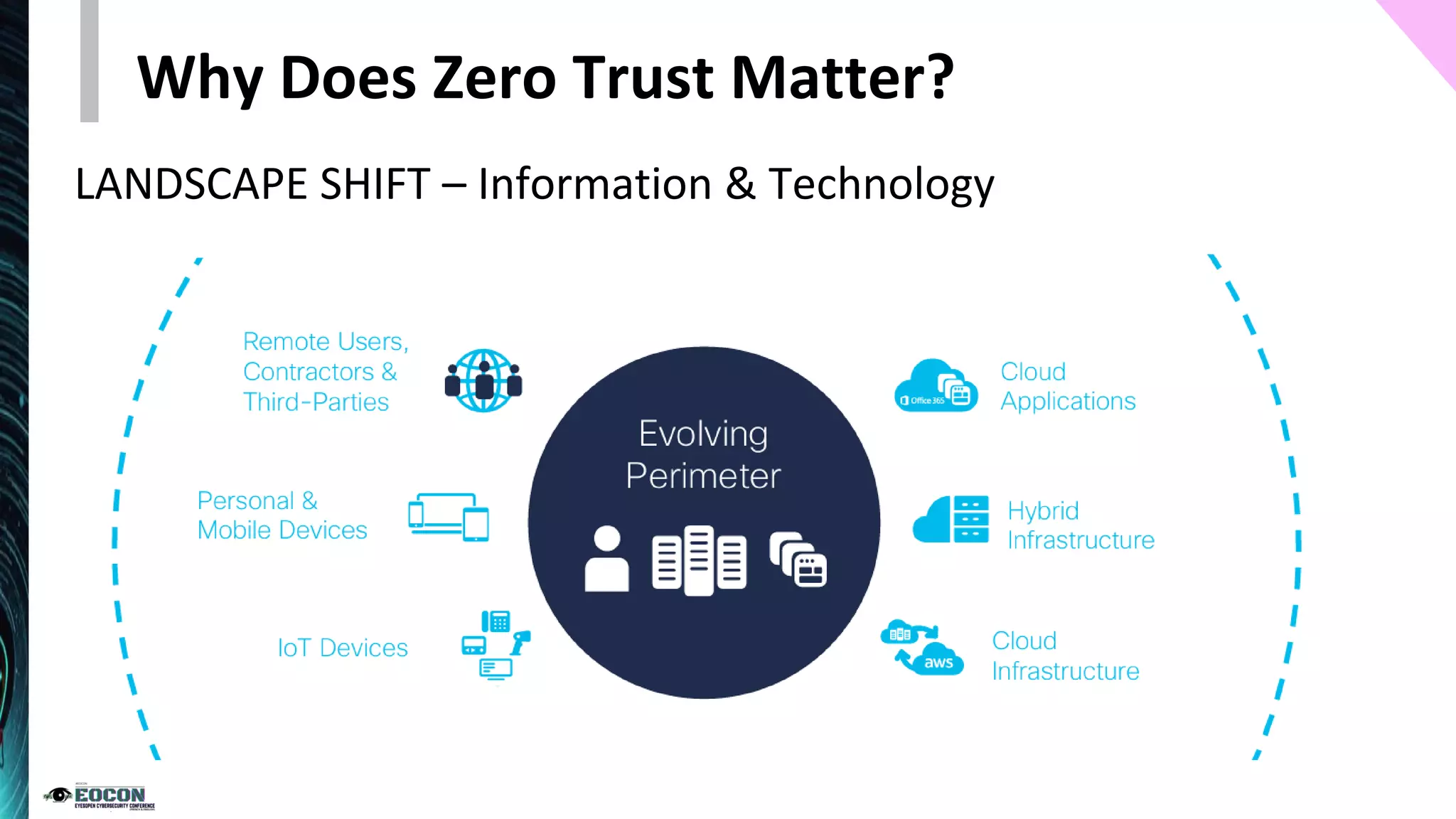
LANDSCAPE SHIFT – Information & Technology
Why Does Zero Trust Matter?
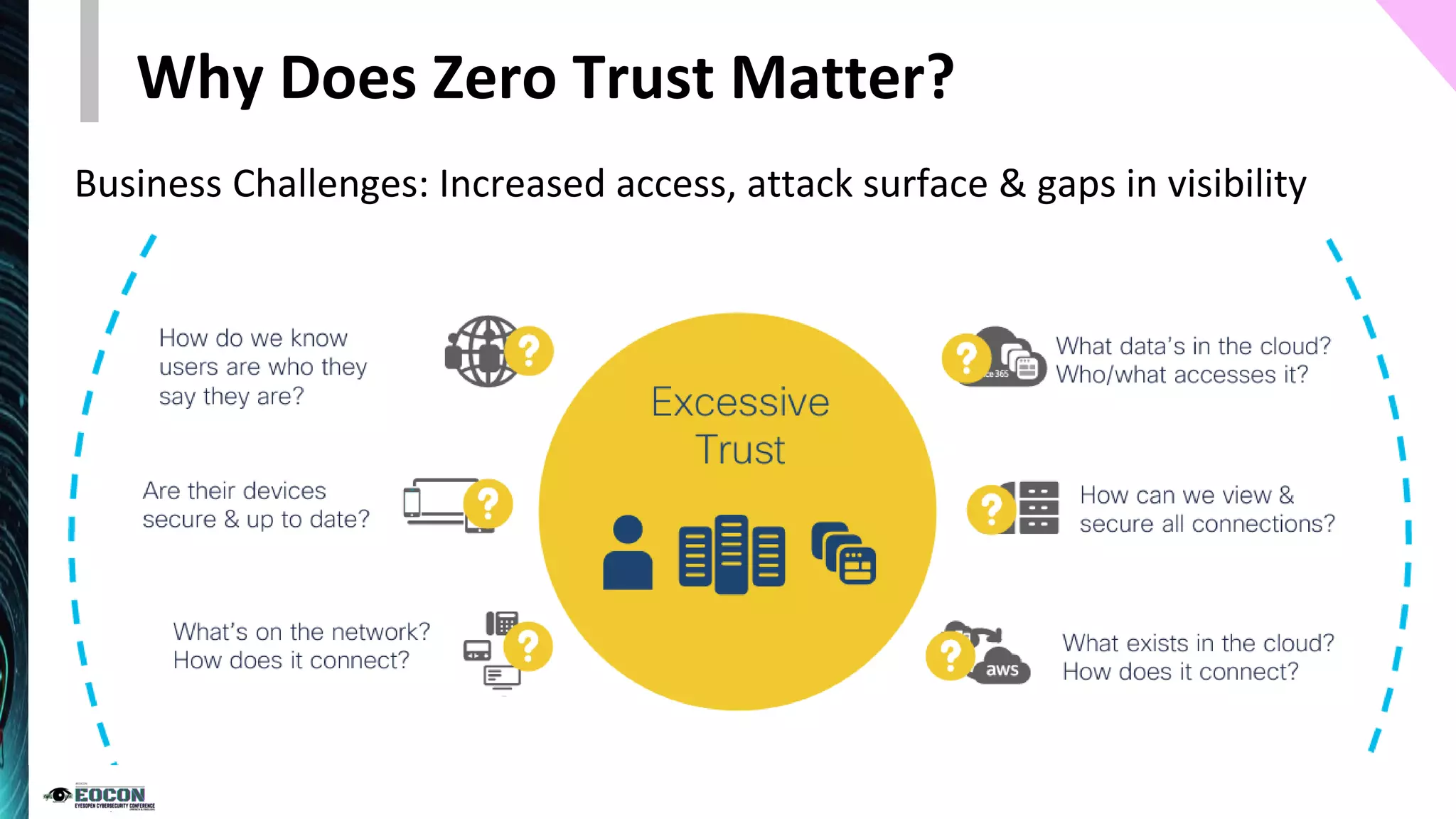
Business Challenges: Increased access, attack surface & gaps in visibility
1.Overview of Zero Trust
2.Why Does Zero Trust Matter?
3.Principles of Zero Trust
4.Getting Started
5.Conclusion
PLAN
Principles of Zero Trust
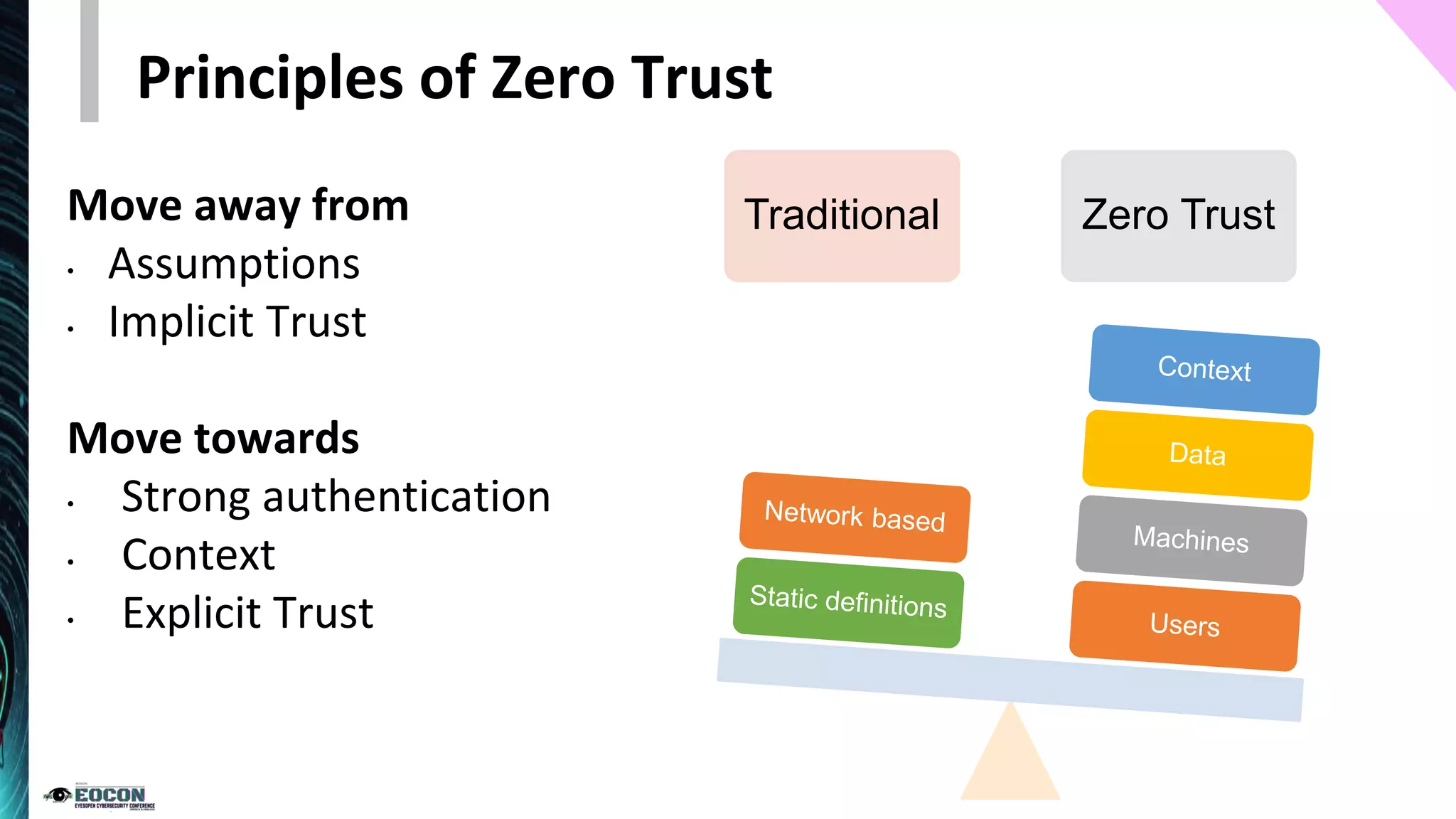
Traditional Zero Trust
Move away from
• Assumptions
• Implicit Trust
Move towards
• Strong authentication
• Context
• Explicit Trust
Principles of Zero Trust
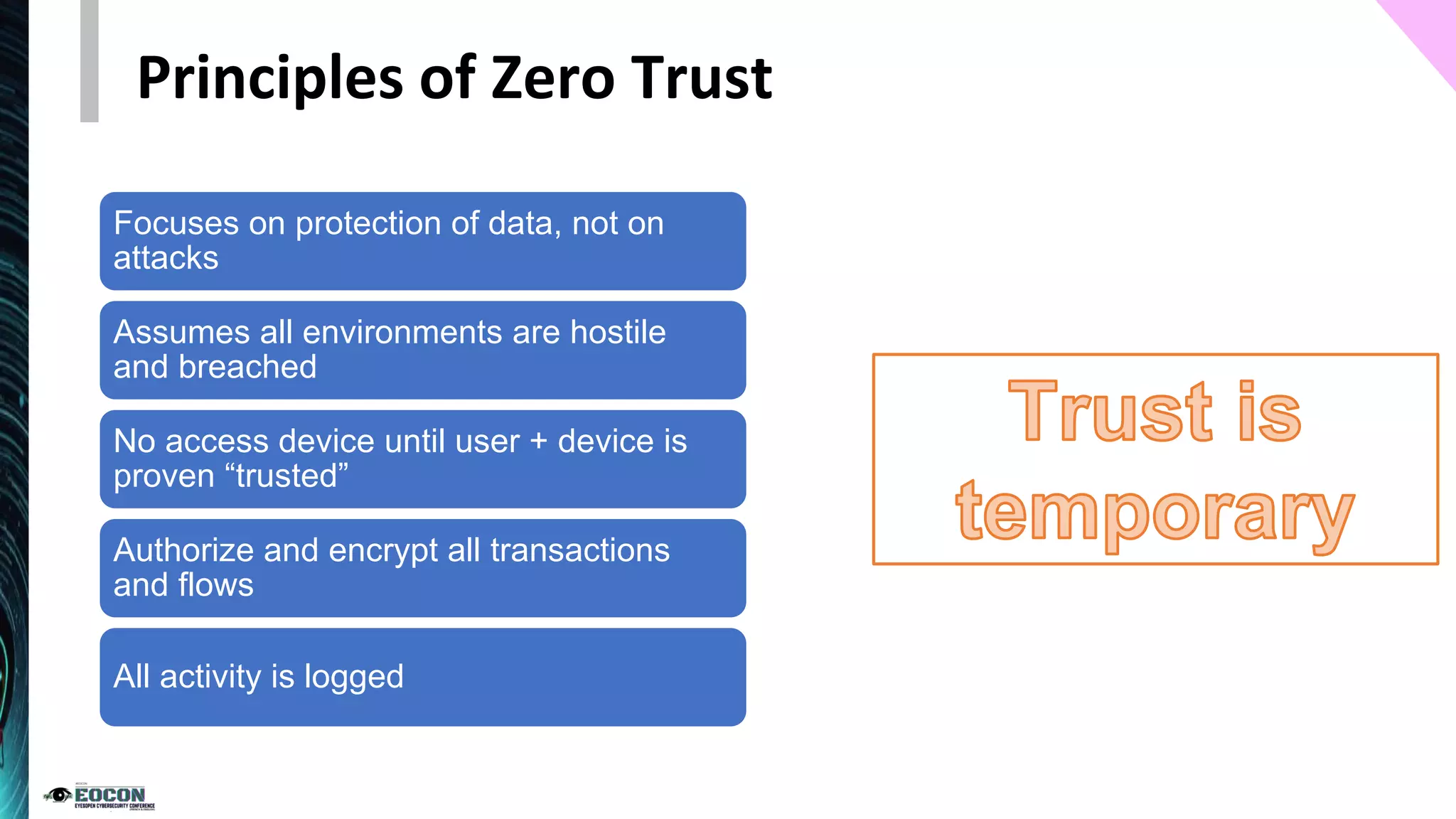
Focuses on protection of data, not on
attacks
Assumes all environments are hostile
and breached
No access device until user + device is
proven “trusted”
Authorize and encrypt all transactions
and flows
All activity is logged
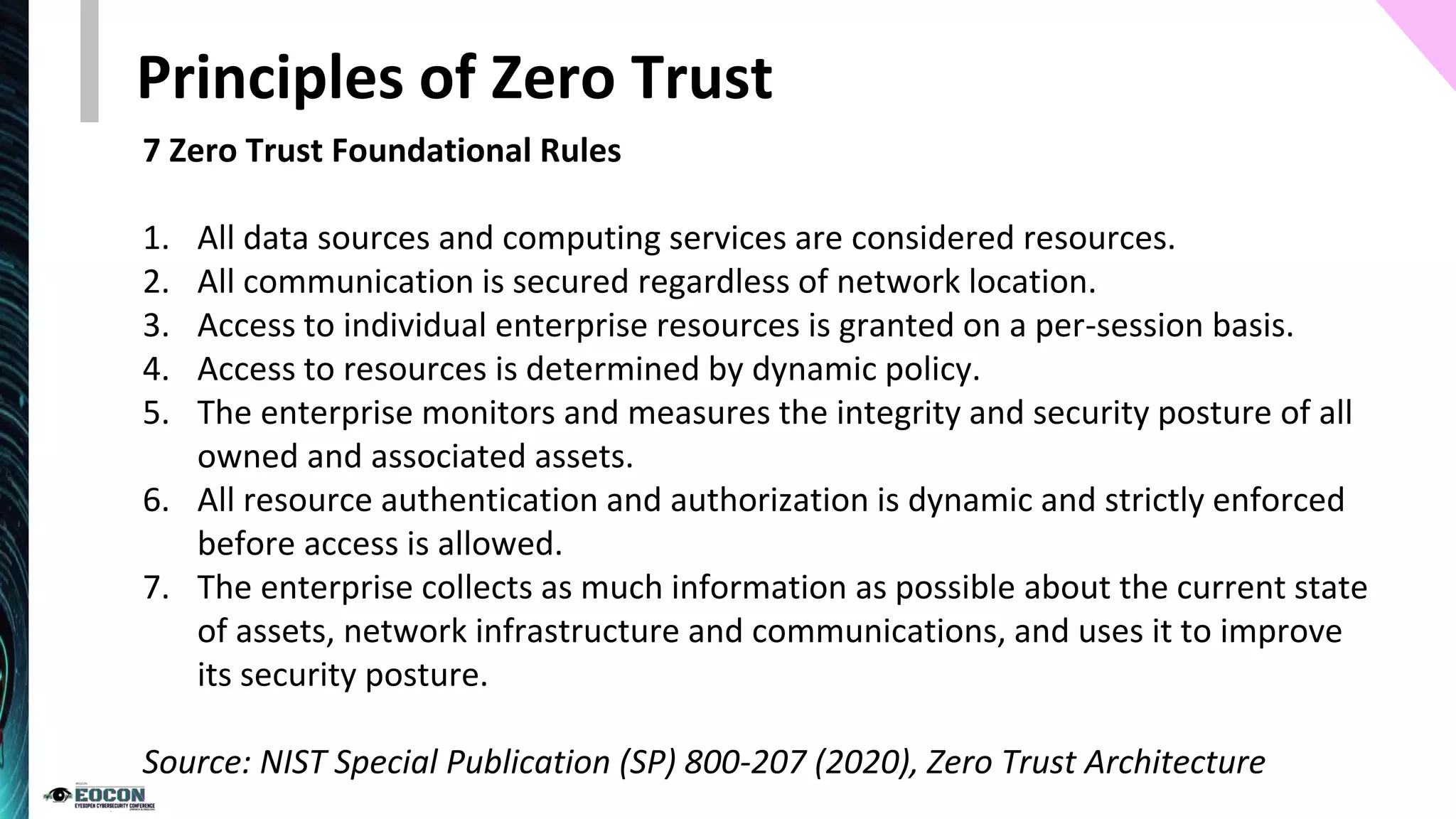
7 Zero Trust Foundational Rules
1. All data sources and computing services are considered resources.
2. All communication is secured regardless of network location.
3. Access to individual enterprise resources is granted on a per-session basis.
4. Access to resources is determined by dynamic policy.
5. The enterprise monitors and measures the integrity and security posture of all
owned and associated assets.
6. All resource authentication and authorization is dynamic and strictly enforced
before access is allowed.
7. The enterprise collects as much information as possible about the current state
of assets, network infrastructure and communications, and uses it to improve
its security posture.
Source: NIST Special Publication (SP) 800-207 (2020), Zero Trust Architecture
Principles of Zero Trust
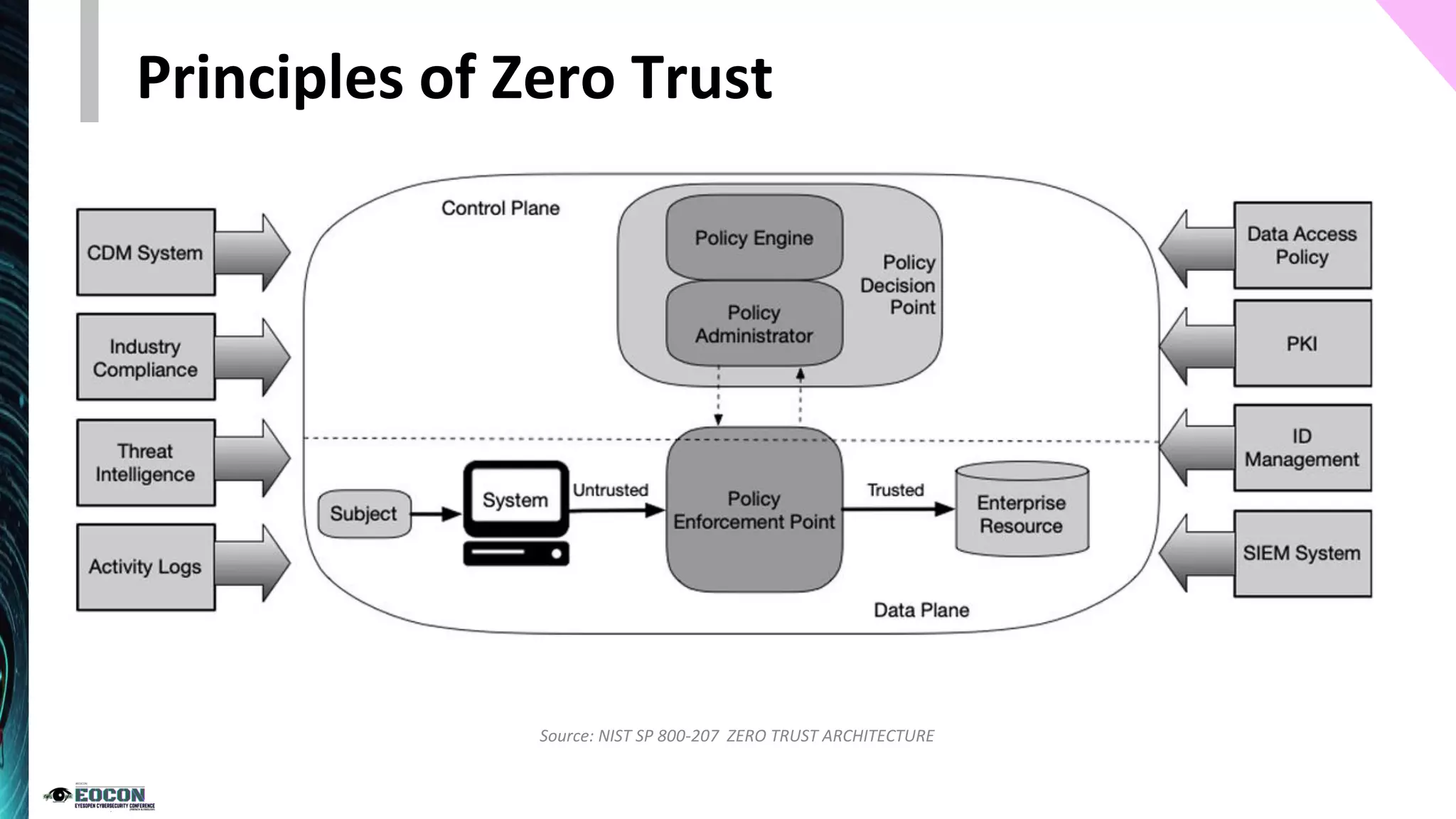
Source: NIST SP 800-207 ZERO TRUST ARCHITECTURE
Principles of Zero Trust
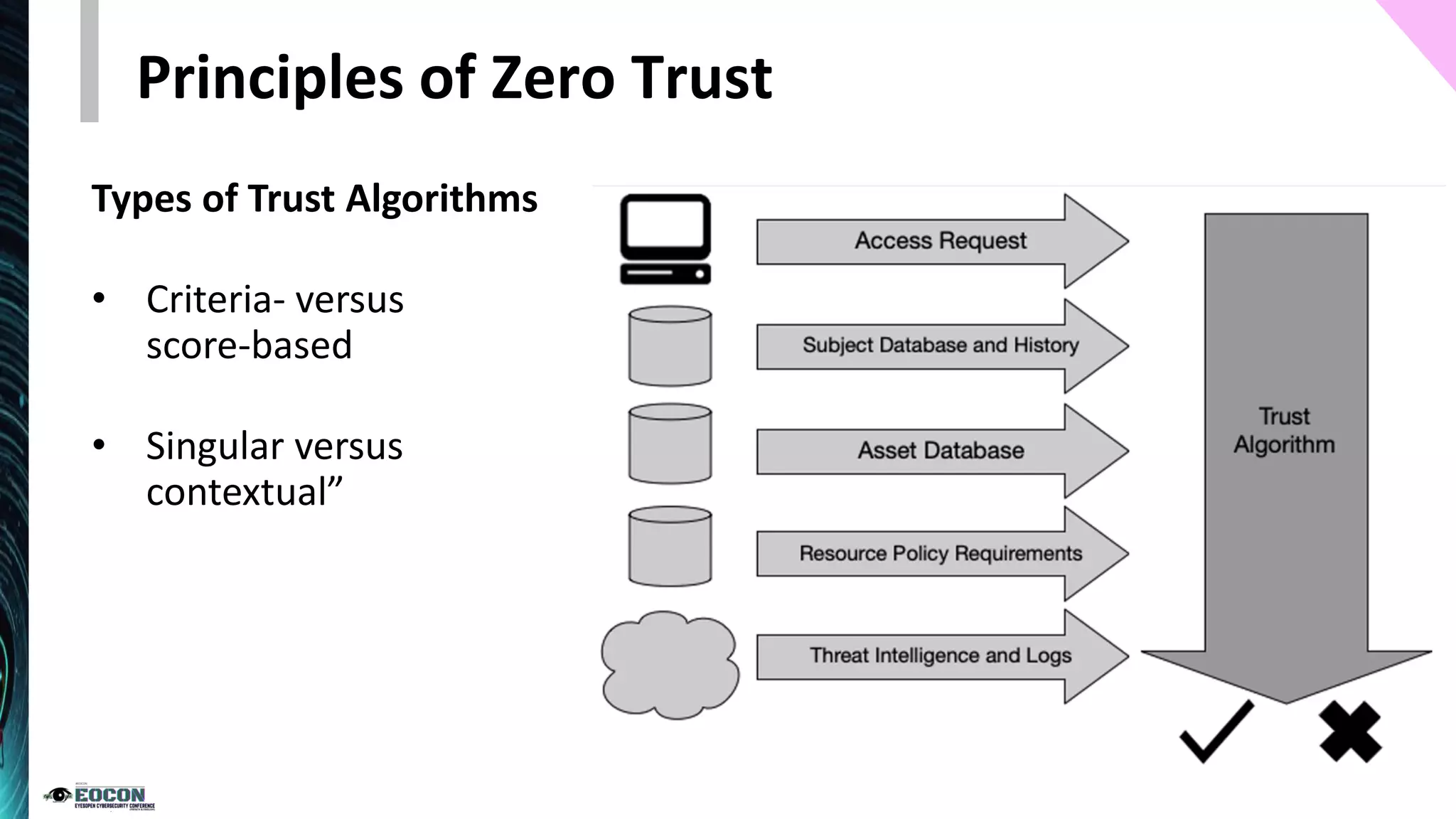
Types of Trust Algorithms
• Criteria- versus
score-based
• Singular versus
contextual”
Principles of Zero Trust
1.Overview of Zero Trust
2.Why Does Zero Trust Matter?
3.Principles of Zero Trust
4.Getting Started
5.Conclusion
PLAN
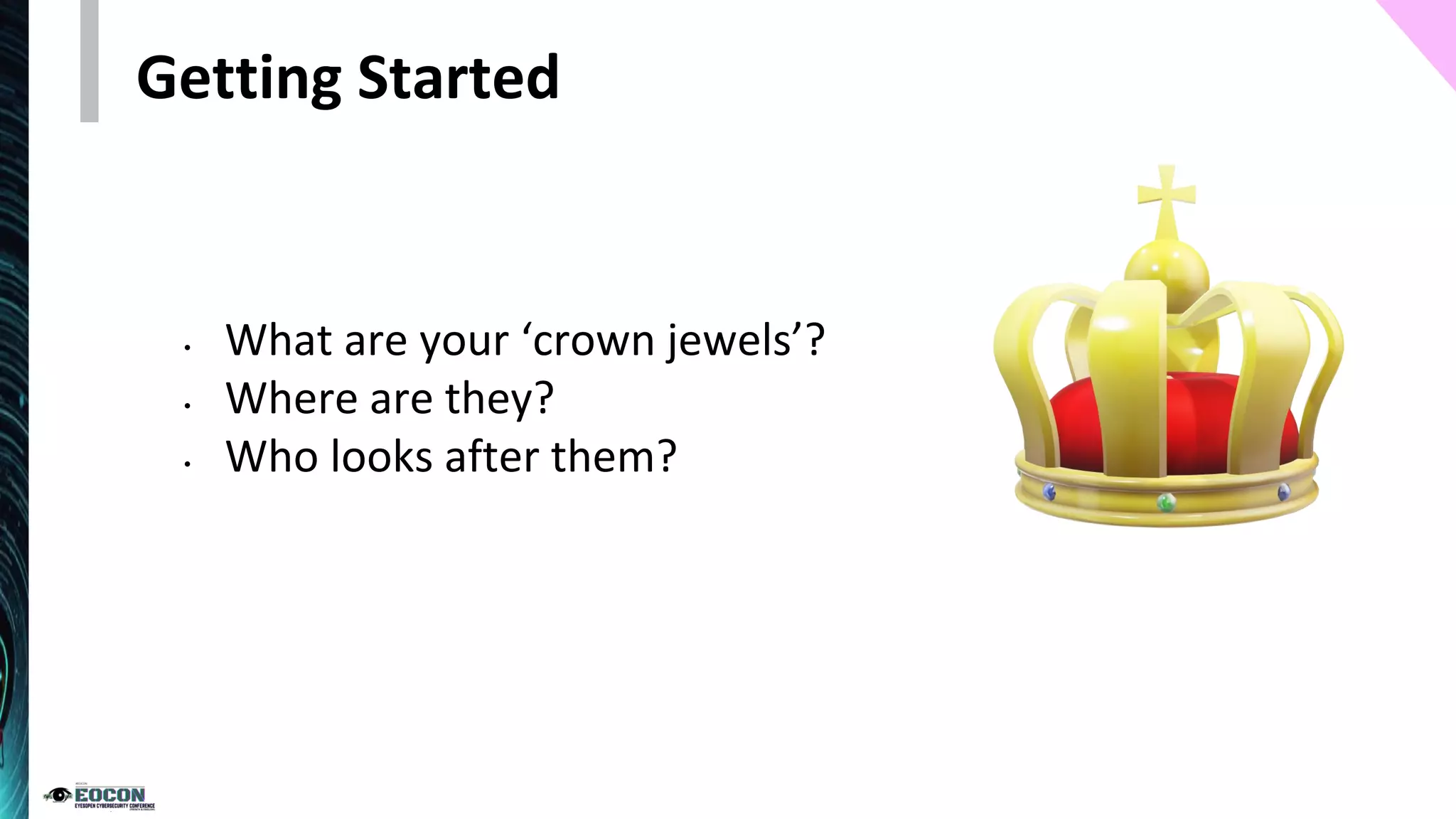
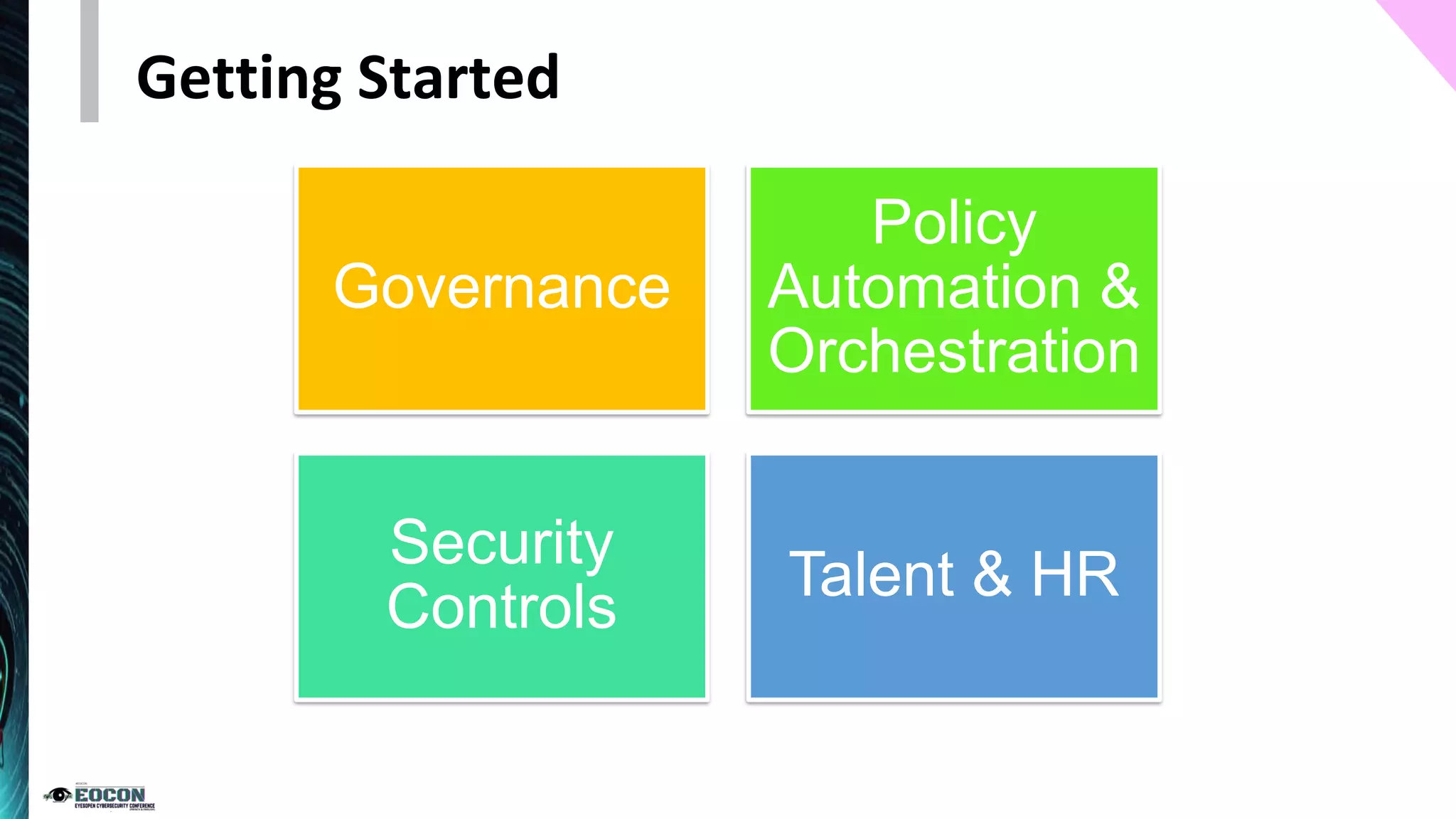
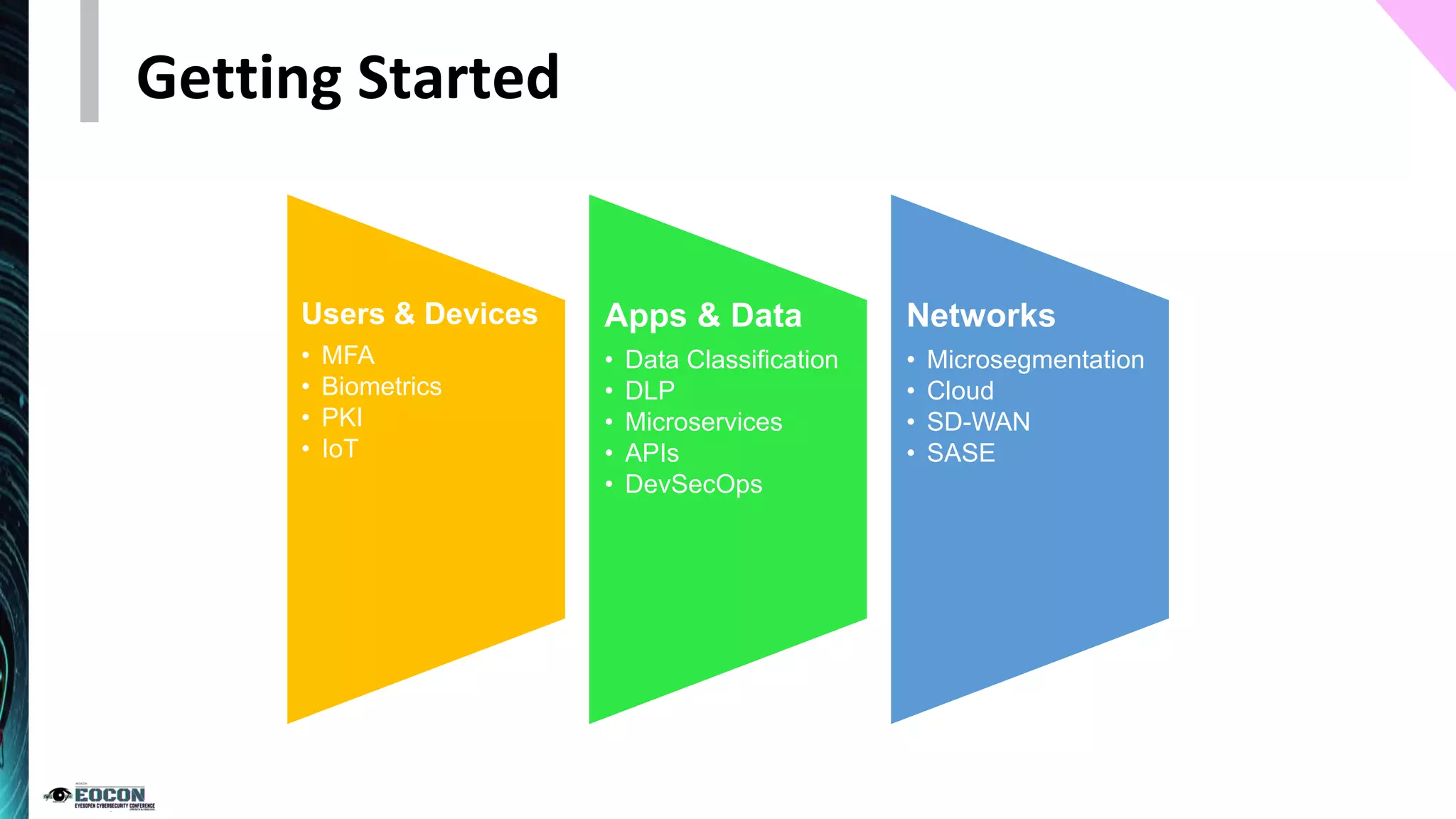
Getting Started
• What are your ‘crown jewels’?
• Where are they?
• Who looks after them?
Getting Started
Governance
Policy
Automation &
Orchestration
Security
Controls
Talent & HR
Getting Started
Users & Devices
• MFA
• Biometrics
• PKI
• IoT
Apps & Data
• Data Classification
• DLP
• Microservices
• APIs
• DevSecOps
Networks
• Microsegmentation
• Cloud
• SD-WAN
• SASE
1.Overview of Zero Trust
2.Why Does Zero Trust Matter?
3.Principles of Zero Trust
4.Getting Started
5.Conclusion
PLAN
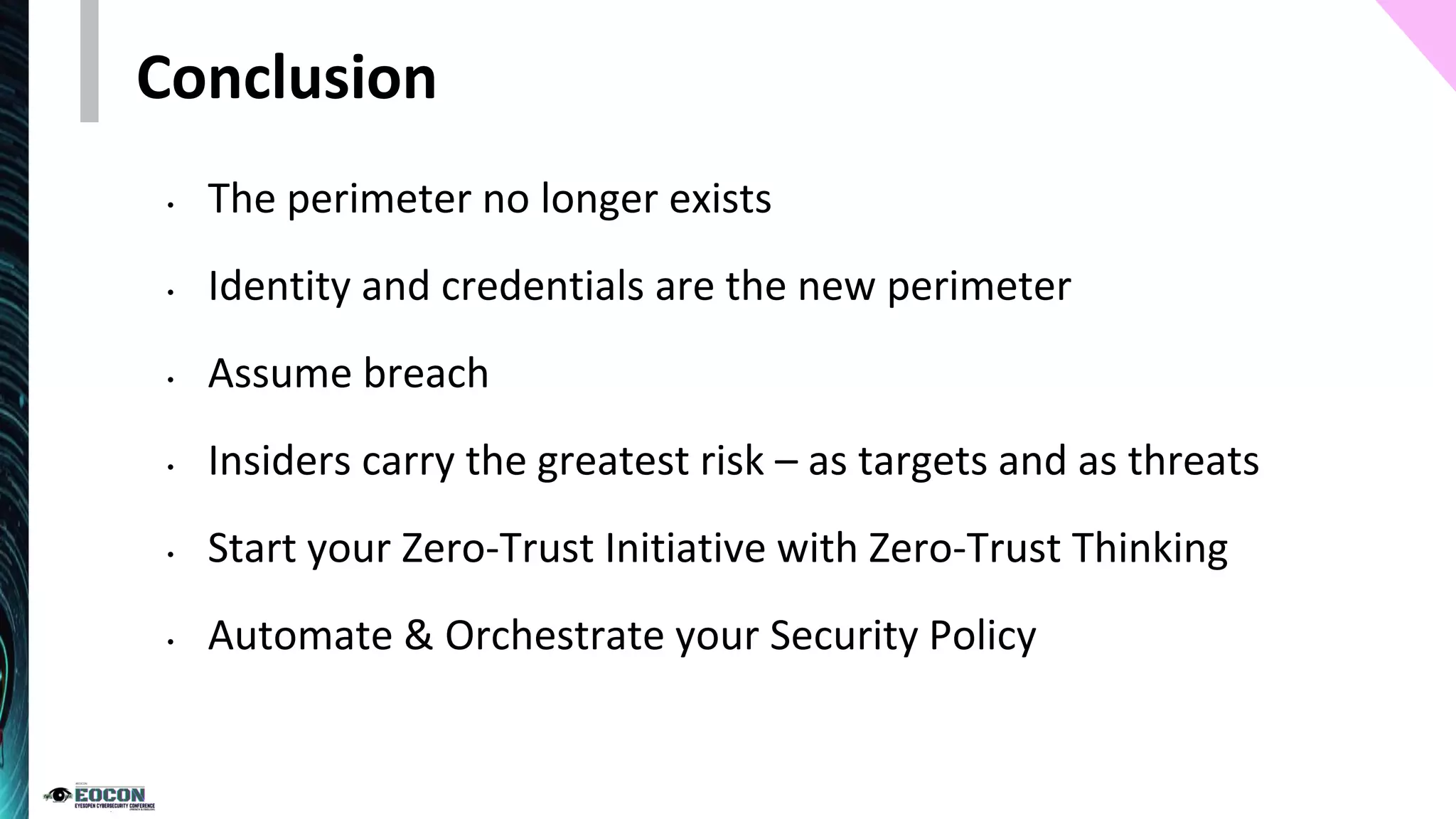
Conclusion
• The perimeter no longer exists
• Identity and credentials are the new perimeter
• Assume breach
• Insiders carry the greatest risk – as targets and as threats
• Start your Zero-Trust Initiative with Zero-Trust Thinking
• Automate & Orchestrate your Security Policy
Call to Action
Verify, then trust!
M E R C I !
T H A N K Y O U !
QUESTIONS ?
Resources
Microsoft Assessment
https://www.microsoft.com/en-ww/security/business/zero-trust/maturity-model-assessment-tool
BeyondCorp: Google’s Implementation of Zero Trust
https://cloud.google.com/beyondcorp

Zero Trust : How to Get Started

  • 2.
    1.Overview of ZeroTrust 2.Why Does Zero Trust Matter? 3.Principles of Zero Trust 4.Getting Started 5.Conclusion PLAN
  • 3.
    Trust: Human interactions areguided by the concept of trust Overview of Zero Trust
  • 4.
  • 5.
    Overview of ZeroTrust • “Zero Trust Model” was coined by Forrester Research analyst and thought-leader John Kindervag in 2010 • “never trust, always verify.” • based on the assumption that risk is an inherent factor both inside and outside the network.
  • 6.
  • 7.
    1.Overview of ZeroTrust 2.Why Does Zero Trust Matter? 3.Principles of Zero Trust 4.Getting Started 5.Conclusion PLAN
  • 8.
    Why Does ZeroTrust Matter? • The human concept of boundaries or the perimeter • The evolving nature of risk and threats
  • 9.
    Why Does ZeroTrust Matter? The human concept of boundaries or the perimeter
  • 10.
    Why Does ZeroTrust Matter? The human concept of boundaries or the perimeter Change of tactics. Breach from the INSIDE!
  • 11.
    Why Does ZeroTrust Matter? The evolving nature of risk and threats – LANDSCAPE SHIFT
  • 12.
    Why Does ZeroTrust Matter? LANDSCAPE SHIFT – Information & Technology
  • 13.
    Why Does ZeroTrust Matter? Business Challenges: Increased access, attack surface & gaps in visibility
  • 14.
    1.Overview of ZeroTrust 2.Why Does Zero Trust Matter? 3.Principles of Zero Trust 4.Getting Started 5.Conclusion PLAN
  • 15.
    Principles of ZeroTrust Traditional Zero Trust Move away from • Assumptions • Implicit Trust Move towards • Strong authentication • Context • Explicit Trust
  • 16.
    Principles of ZeroTrust Focuses on protection of data, not on attacks Assumes all environments are hostile and breached No access device until user + device is proven “trusted” Authorize and encrypt all transactions and flows All activity is logged
  • 17.
    7 Zero TrustFoundational Rules 1. All data sources and computing services are considered resources. 2. All communication is secured regardless of network location. 3. Access to individual enterprise resources is granted on a per-session basis. 4. Access to resources is determined by dynamic policy. 5. The enterprise monitors and measures the integrity and security posture of all owned and associated assets. 6. All resource authentication and authorization is dynamic and strictly enforced before access is allowed. 7. The enterprise collects as much information as possible about the current state of assets, network infrastructure and communications, and uses it to improve its security posture. Source: NIST Special Publication (SP) 800-207 (2020), Zero Trust Architecture Principles of Zero Trust
  • 18.
    Principles of ZeroTrust Source: NIST SP 800-207 ZERO TRUST ARCHITECTURE
  • 19.
    Principles of ZeroTrust Types of Trust Algorithms • Criteria- versus score-based • Singular versus contextual”
  • 20.
  • 21.
    1.Overview of ZeroTrust 2.Why Does Zero Trust Matter? 3.Principles of Zero Trust 4.Getting Started 5.Conclusion PLAN
  • 22.
    Getting Started • Whatare your ‘crown jewels’? • Where are they? • Who looks after them?
  • 23.
  • 24.
    Getting Started Users &Devices • MFA • Biometrics • PKI • IoT Apps & Data • Data Classification • DLP • Microservices • APIs • DevSecOps Networks • Microsegmentation • Cloud • SD-WAN • SASE
  • 25.
    1.Overview of ZeroTrust 2.Why Does Zero Trust Matter? 3.Principles of Zero Trust 4.Getting Started 5.Conclusion PLAN
  • 26.
    Conclusion • The perimeterno longer exists • Identity and credentials are the new perimeter • Assume breach • Insiders carry the greatest risk – as targets and as threats • Start your Zero-Trust Initiative with Zero-Trust Thinking • Automate & Orchestrate your Security Policy
  • 27.
  • 28.
    M E RC I ! T H A N K Y O U ! QUESTIONS ?
  • 29.