Dealer Training
FUEL PERFORMANCE PRODUCTS
There are two types of additives
on the market …
Consumer-Grade
and
Industrial Strength
Consumer Grade products
are used by Consumers
Industrial Strength products
are used by Industry
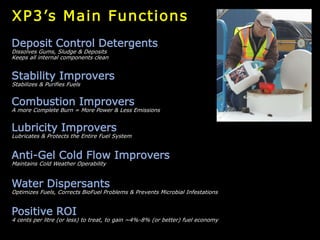
Deposit Control Detergents
Dissolves Gums, Sludge & Deposits
Keeps all internal components clean
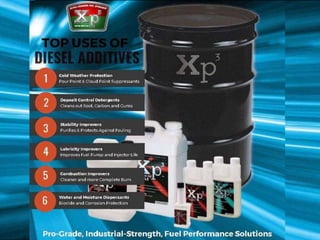
XP3’s Main Functions
Positive ROI
4 cents per litre (or less) to treat, to gain ~4%-8% (or better) fuel economy
Lubricity Improvers
Lubricates & Protects the Entire Fuel System
Anti-Gel Cold Flow Improvers
Maintains Cold Weather Operability
Combustion Improvers
A more Complete Burn = More Power & Less Emissions
Stability Improvers
Stabilizes & Purifies Fuels
Water Dispersants
Optimizes Fuels, Corrects BioFuel Problems & Prevents Microbial Infestations
BACKGROUND
Manufactured by
XP LAB INC.
est. 1989
Poway,
California
Ocean Freighters
Commercial Fleets
BULK Transport & Storage
Bio-Based Fuel Protection
Used Globally by Industry
XP3 treats over 4 billion litres of fuel
every year, in more than 28 countries.
Consumer Grade additives contain…
Diluting Fillers, like…
• hydrocarbons
• petroleum distillates
• naphthalene
• or other non-functional compounds
… because they are intended for retail consumers,
not for industrial or professional applications.
A larger bottle with a lower price point gives a false sense of value to the
uninformed retail consumer and is not at all connected to functionality or
results.
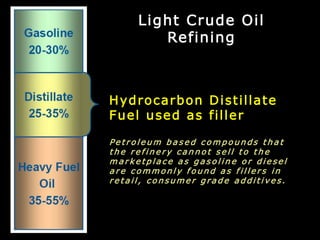
Hydrocarbon Distillate
Fuel used as filler
Pe t r o l e u m b a s e d c o m p o u n d s t h a t
t h e r e f i n e r y c a n n o t s e l l t o t h e
m a r k e t p l a c e a s g a s o l i n e o r d i e s e l
a r e c o m m o n l y f o u n d a s f i l l e r s i n
r e t a i l , c o n s u m e r g ra d e a d d i t i v e s .
Light Crude Oil
Refining
How to
determine
an additive’s
functionality
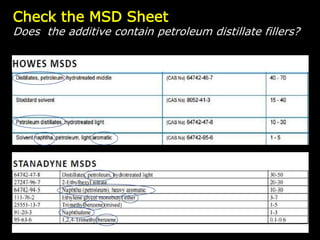
Check the MSD Sheet
Does the additive contain petroleum distillate fillers?
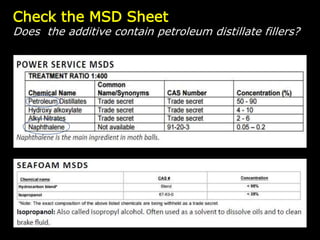
Check the MSD Sheet
Does the additive contain petroleum distillate fillers?
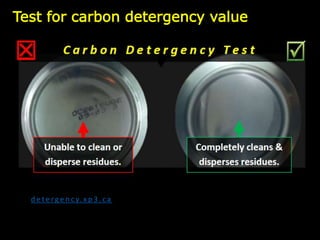
d e t e rg e n c y. x p 3 . c a
Test for carbon detergency value
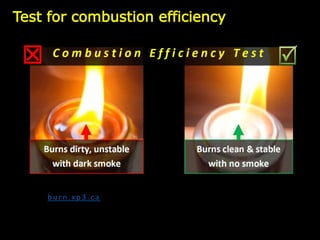
b u r n . x p 3 . c a
Test for combustion efficiency
b u r n . x p 3 . c a
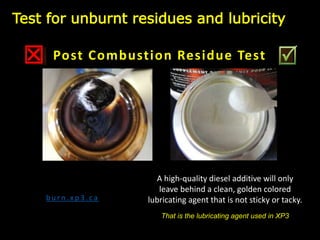
A high-quality diesel additive will only
leave behind a clean, golden colored
lubricating agent that is not sticky or tacky.
That is the lubricating agent used in XP3
Post Combustion Residue Test
Test for unburnt residues and lubricity
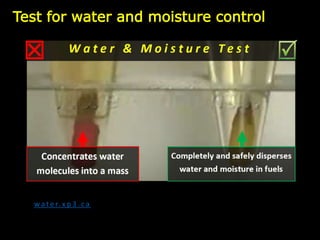
w a t e r. x p 3 . c a
Test for water and moisture control
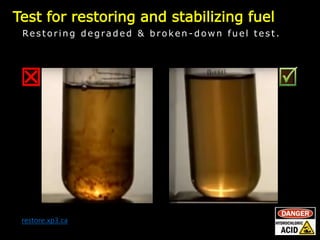
restore.xp3.ca
Restoring degraded & broken - dow n fuel test.
Test for restoring and stabilizing fuel
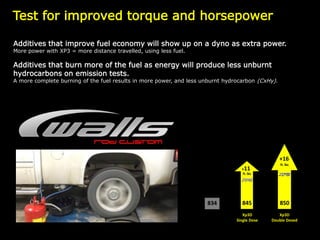
Additives that improve fuel economy will show up on a dyno as extra power.
More power with XP3 = more distance travelled, using less fuel.
Additives that burn more of the fuel as energy will produce less unburnt
hydrocarbons on emission tests.
A more complete burning of the fuel results in more power, and less unburnt hydrocarbon (CxHy).
834 845 850
Xp3D
Single Dose
Xp3D
Double Dosed
+11
+16
ft. lbs
ft. lbs
Test for improved torque and horsepower
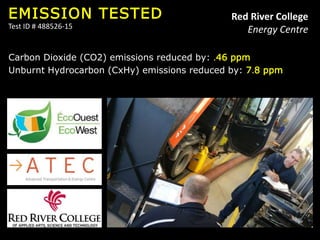
EMISSION TESTED
Test ID # 488526-15
Red River College
Energy Centre
Carbon Dioxide (CO2) emissions reduced by: .46 ppm
Unburnt Hydrocarbon (CxHy) emissions reduced by: 7.8 ppm
Re c o g n i z e d b y E c o We s t C a n a d a a n d v a l i d a t e d b y Re d
R i v e r C o l l e g e a s a c l e a n t e c h n o l o g y t h a t r e d uces
e m issions a n d im p r oves f uel e c onomy .
CleanTech EcoFriendly Validated
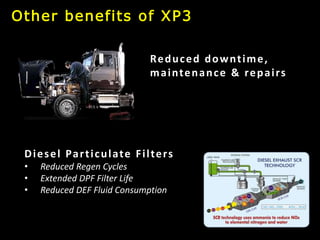
Reduced downtime,
maintenance & repairs
Diesel Particulate Filters
• Reduced Regen Cycles
• Extended DPF Filter Life
• Reduced DEF Fluid Consumption
Other benefits of XP3
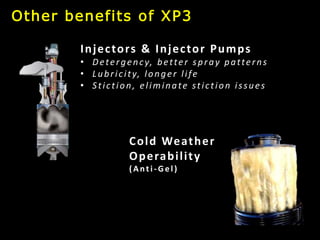
Injectors & Injector Pumps
• Detergency, better spray patterns
• Lubricity, longer life
• Stiction, eliminate stiction issues
Cold Weather
Operability
(Anti -Gel)
Other benefits of XP3
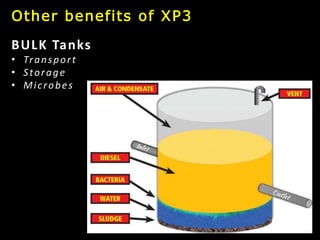
BULK Tanks
• Transport
• Storage
• Microbes
Other benefits of XP3
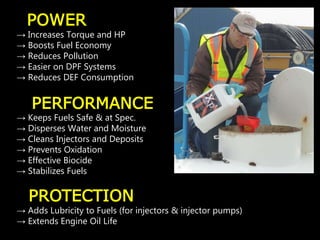
POWER
→ Increases Torque and HP
→ Boosts Fuel Economy
→ Reduces Pollution
→ Easier on DPF Systems
→ Reduces DEF Consumption
PERFORMANCE
→ Keeps Fuels Safe & at Spec.
→ Disperses Water and Moisture
→ Cleans Injectors and Deposits
→ Prevents Oxidation
→ Effective Biocide
→ Stabilizes Fuels
PROTECTION
→ Adds Lubricity to Fuels (for injectors & injector pumps)
→ Extends Engine Oil Life
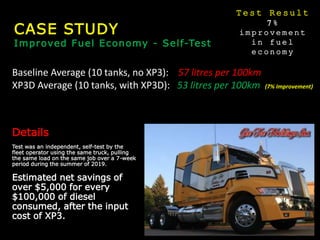
CASE STUDY
Improved Fuel Economy - Self-Test
Baseline Average (10 tanks, no XP3): 57 litres per 100km
XP3D Average (10 tanks, with XP3D): 53 litres per 100km (7% Improvement)
T e s t R e s ult
7 %
i m p r o v e m e n t
i n f u e l
e c o n o m y
Details
Test was an independent, self-test by the
fleet operator using the same truck, pulling
the same load on the same job over a 7-week
period during the summer of 2019.
Estimated net savings of
over $5,000 for every
$100,000 of diesel
consumed, after the input
cost of XP3.
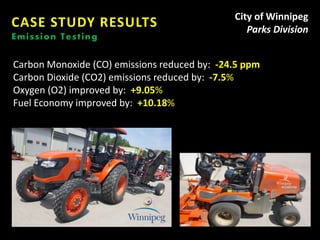
CASE STUDY RESULTS
Emission Testing
City of Winnipeg
Parks Division
Carbon Monoxide (CO) emissions reduced by: -24.5 ppm
Carbon Dioxide (CO2) emissions reduced by: -7.5%
Oxygen (O2) improved by: +9.05%
Fuel Economy improved by: +10.18%
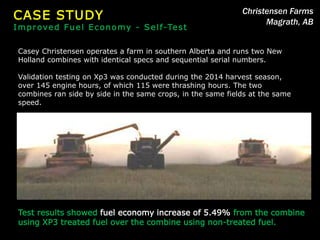
Christensen Farms
Magrath, AB
Casey Christensen operates a farm in southern Alberta and runs two New
Holland combines with identical specs and sequential serial numbers.
Validation testing on Xp3 was conducted during the 2014 harvest season,
over 145 engine hours, of which 115 were thrashing hours. The two
combines ran side by side in the same crops, in the same fields at the same
speed.
Test results showed fuel economy increase of 5.49% from the combine

using XP3 treated fuel over the combine using non-treated fuel.
CASE STUDY
Improved Fuel Economy - Self-Test
CASE STUDY
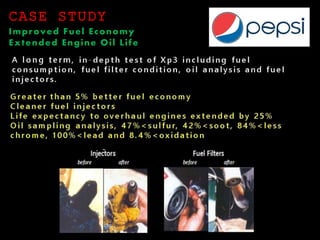
Improved Fuel Economy
Extended Engine Oil Life
s p r i n g e r. x p 3 . c a
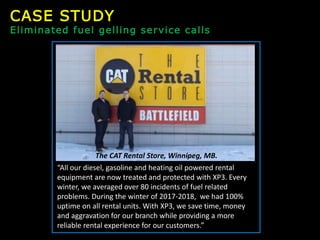
“All our diesel, gasoline and heating oil powered rental
equipment are now treated and protected with XP3. Every
winter, we averaged over 80 incidents of fuel related
problems. During the winter of 2017-2018, we had 100%
uptime on all rental units. With XP3, we save time, money
and aggravation for our branch while providing a more
reliable rental experience for our customers.”
The CAT Rental Store, Winnipeg, MB.
CASE STUDY
Eliminated fuel gelling service calls
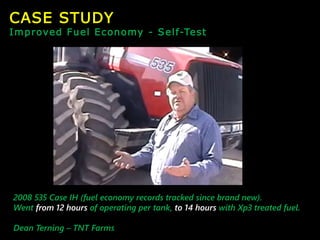
2008 535 Case IH (fuel economy records tracked since brand new).
Went from 12 hours of operating per tank, to 14 hours with Xp3 treated fuel.
Dean Terning – TNT Farms
CASE STUDY
Improved Fuel Economy - Self-Test
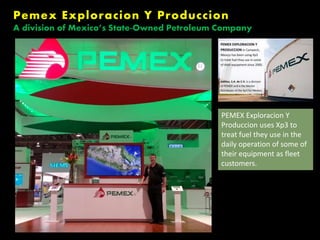
PEMEX Exploracion Y
Produccion uses Xp3 to
treat fuel they use in the
daily operation of some of
their equipment as fleet
customers.
Aditiva, S.A. de C.V.,
(a division of PEMEX)
is the Master
Distributor of Xp3
products for Mexico.
Pemex Exploracion Y Produccion
A division of Mexico’s State-Owned Petroleum Company
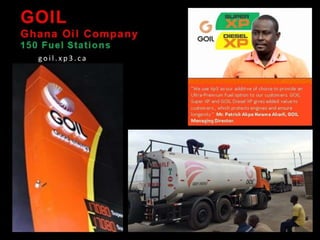
g o i l . x p 3 . c a
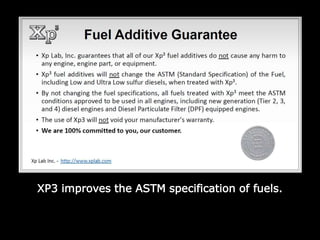
XP3 improves the ASTM specification of fuels.
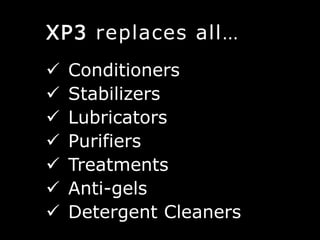
XP3 replaces all…
 Conditioners
 Stabilizers
 Lubricators
 Purifiers
 Treatments
 Anti-gels
 Detergent Cleaners
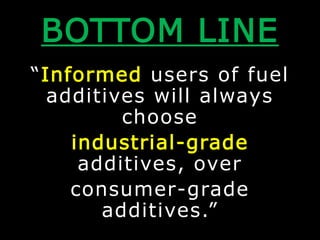
BOTTOM LINE
“Informed users of fuel
additives will always
choose
industrial-grade
additives, over
consumer-grade
additives.”
TAKE-AWAYS
Properly frame the
conversation
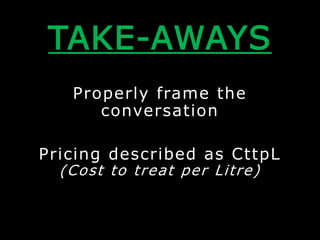
Pricing described as CttpL
(Cost to treat per Litre)
Sales Counter Reference Sheet
Available at:
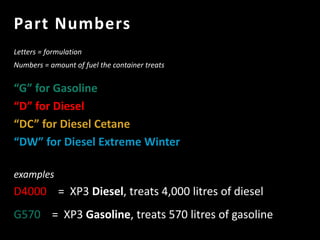
Part Numbers
Letters = formulation
Numbers = amount of fuel the container treats
“G” for Gasoline
“D” for Diesel
“DC” for Diesel Cetane
“DW” for Diesel Extreme Winter
examples
D4000 = XP3 Diesel, treats 4,000 litres of diesel
G570 = XP3 Gasoline, treats 570 litres of gasoline
Q&A
Videos.XP3.ca
1 - 8 0 0 - 5 0 7 - 2 4 5 9
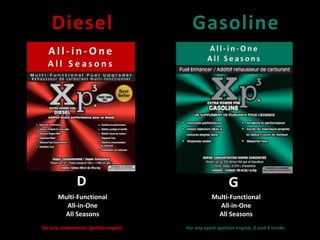
Diesel
Multi-Functional
All-in-One
All Seasons
For any compression ignition engine.
Gasoline
Multi-Functional
All-in-One
All Seasons
For any spark ignition engine, 2 and 4 stroke.
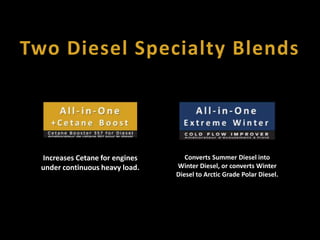
Converts Summer Diesel into
Winter Diesel, or converts Winter
Diesel to Arctic Grade Polar Diesel.
Increases Cetane for engines
under continuous heavy load.
Two Diesel Specialty Blends
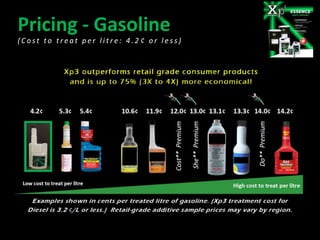
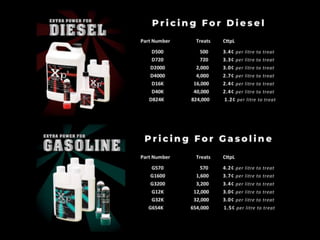
Pricing - Gasoline
( C o st to t r e a t p e r l i t r e : 4 . 2 ¢ o r l e s s )
{ ------ 3¢ / litre ------ }{ ------ 1¢ / litre ------ } { ------ 6¢ / litre ------ } { ------ 9¢ / litre ------ } { ------ 12¢ / litre +++ }
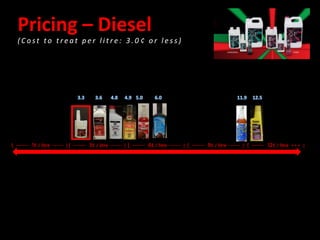
Pricing – Diesel
( C o st to t r e a t p e r l i t r e : 3 . 0 ¢ o r l e s s )
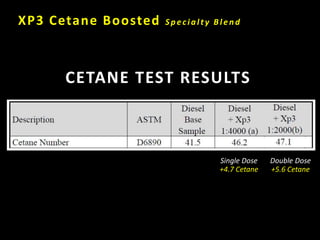
Single Dose
+4.7 Cetane
XP3 Cetane Boosted S pecialty B lend
CETANE TEST RESULTS
Double Dose
+5.6 Cetane
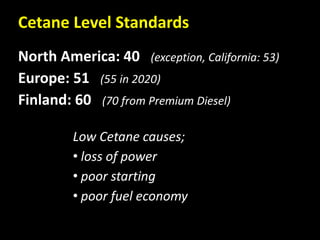
Cetane Level Standards
North America: 40 (exception, California: 53)
Europe: 51 (55 in 2020)
Finland: 60 (70 from Premium Diesel)
Low Cetane causes;
• loss of power
• poor starting
• poor fuel economy
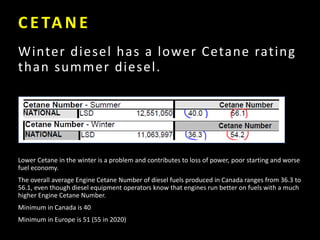
CETANE
Winter diesel has a lower Cetane rating
than summer diesel.
Lower Cetane in the winter is a problem and contributes to loss of power, poor starting and worse
fuel economy.
The overall average Engine Cetane Number of diesel fuels produced in Canada ranges from 36.3 to
56.1, even though diesel equipment operators know that engines run better on fuels with a much
higher Engine Cetane Number.
Minimum in Canada is 40
Minimum in Europe is 51 (55 in 2020)
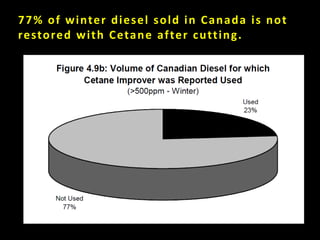
77% of winter diesel sold in Canada is not
restored with Cetane after cutting.
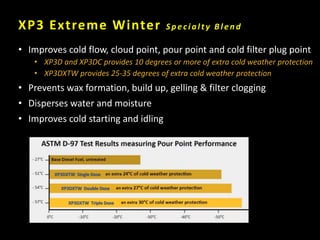
XP3 Extreme Winter S pecialty B lend
• Improves cold flow, cloud point, pour point and cold filter plug point
• XP3D and XP3DC provides 10 degrees or more of extra cold weather protection
• XP3DXTW provides 25-35 degrees of extra cold weather protection
• Prevents wax formation, build up, gelling & filter clogging
• Disperses water and moisture
• Improves cold starting and idling
XP3DXTW Single Dose
XP3DXTW Double Dose
XP3DXTW Triple Dose
R E P S O L A r g e n t i n a u s e s a n a d d i t i v e p a c k a g e f r o m X p L a b f o r t h e i r
P r e m i u m b r a n d o f A r c t i c R a t e d P o l a r d i e s e l i n A n t a r c t i c a ’s S o u t h P o l e .
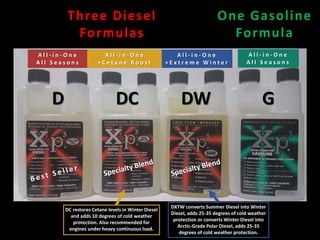
Three Diesel
Formulas
D DC DW G
A l l - i n - O n e
A l l S e a s o n s
A l l - i n - O n e
+ C e t a n e B o o s t
A l l - i n - O n e
+ E x t r e m e W i n t e r
A l l - i n - O n e
A l l S e a s o n s
One Gasoline
Formula
DC restores Cetane levels in Winter Diesel
and adds 10 degrees of cold weather
protection. Also recommended for
engines under heavy continuous load.
DXTW converts Summer Diesel into Winter
Diesel, adds 25-35 degrees of cold weather
protection or converts Winter Diesel into
Arctic-Grade Polar Diesel, adds 25-35
degrees of cold weather protection.
XP3 is a …
 purely concentrated
 industrial strength
 multi-functional
 fuel performance enhancer
 …that contains no fillers
Keeps fuels pure and stabilized for up to 5 years
Prevents problems caused by bio-fuels
Resolves water and moisture issues
D- ADITIVO XP3
EFEITO DETERGENTE-Limpeza de deposito aos tanques de combustível. Evitando a limpeza constante dos reservatórios e
evitando inclusive borras no sistema devido a solubilização dos componentes.
EFEITO DISPERSANTE-Promove a dispersão das moléculas de agua , como emulsão no combustível.
EFEITO ANTIOXIDANTE-Mantém os bicos e bomba injetora sempre limpos.
Este e vendido em baldes de 50 litros a um custo de USD 2.072,30 e usado na proporção de 9 litros do produto para
35.000 litros de óleo diesel .O que rende um balde para cerca de 200.000 litros.
TRANSLATION
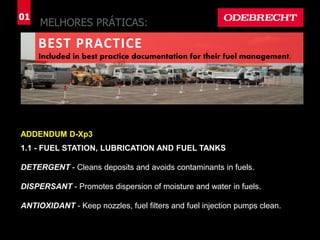
ADDENDUM D-Xp3
1.1 - FUEL STATION, LUBRICATION AND FUEL TANKS
DETERGENT - Cleans deposits and avoids contaminants in fuels.
DISPERSANT - Promotes dispersion of moisture and water in fuels.
ANTIOXIDANT - Keep nozzles, fuel filters and fuel injection pumps clean.
01
MELHORES PRÁTICAS:
1.1 – POSTO DE COMBUSTÍVEL,COMBOIO DE LUBRIFICAÇÃO E TANQUE
ABASTECEDORBEST PRACTICE
Included in best practice documentation for their fuel management.
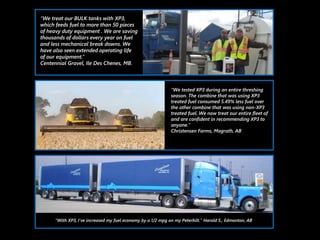
“We treat our BULK tanks with XP3,
which feeds fuel to more than 50 pieces
of heavy duty equipment . We are saving
thousands of dollars every year on fuel
and less mechanical break downs. We
have also seen extended operating life
of our equipment.”
Centennial Gravel, Ile Des Chenes, MB.
“We tested XP3 during an entire threshing
season. The combine that was using XP3
treated fuel consumed 5.49% less fuel over
the other combine that was using non-XP3
treated fuel. We now treat our entire fleet of
and are confident in recommending XP3 to
anyone.”
Christensen Farms, Magrath, AB
“With XP3, I’ve increased my fuel economy by a 1/2 mpg on my Peterbilt.” Harold S., Edmonton, AB
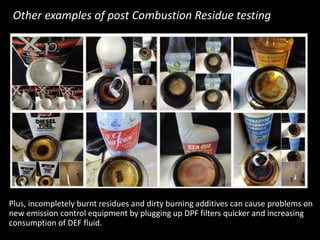
Plus, incompletely burnt residues and dirty burning additives can cause problems on
new emission control equipment by plugging up DPF filters quicker and increasing
consumption of DEF fluid.
Other examples of post Combustion Residue testing
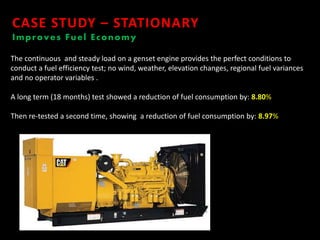
CASE STUDY – STATIONARY
Improves Fuel Economy
The continuous and steady load on a genset engine provides the perfect conditions to
conduct a fuel efficiency test; no wind, weather, elevation changes, regional fuel variances
and no operator variables .
A long term (18 months) test showed a reduction of fuel consumption by: 8.80%
Then re-tested a second time, showing a reduction of fuel consumption by: 8.97%
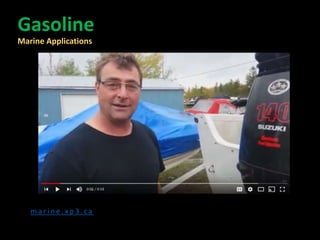
Gasoline
Marine Applications
m a r i n e . x p 3 . c a
user testimonial
Lombard, IL
West Acres Golf Course
West Acres Golf Course has several pieces of commercial
grade mowers, earthmoving equipment and gas operated
golf carts.
They use Xp3 to ensure that their equipment's fuel
systems, operation and condition remain in peak and top
operating condition all season long and keep their fuel
stabilized for off season storage.
g o l f. x p 3 . c a
Power
 Improved combustion
 More torque and horsepower
 Increases energy BTU output of fuels
 Less unburnt hydrocarbons
Performance
 Quieter and smoother running engine
 Extended oil life
 Less regen cycles
 Less DEF consumption
 Longer DPF life
 Better Fuel Economy
Protection
 Purifies and stabilizes
 Reduced maintenance
 Eliminates risks of microbial infestations
 Antioxidant protection
 Eliminates phase separation and fouling
of fuels
 Resolves all water and moisture related
problems
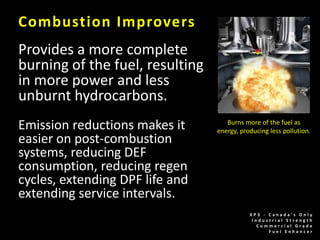
Combustion Improvers
Provides a more complete
burning of the fuel, resulting
in more power and less
unburnt hydrocarbons.
Emission reductions makes it
easier on post-combustion
systems, reducing DEF
consumption, reducing regen
cycles, extending DPF life and
extending service intervals.
Burns more of the fuel as
energy, producing less pollution.
X P 3 - C a n a d a ’ s O n l y
I n d u s t r i a l S t r e n g t h
C o m m e r c i a l G r a d e
F u e l E n h a n c e r
Lubricity Improvers
• Lubricates and protects the entire fuel system, including upper cylinder
walls, intake valves, egr’s, rings, common rails, fuel pumps, injector pumps
and injectors.
• Protects against injector fouling, injector failures and injector sticton.
• Lubricity test results of XP3D are;
BOLCE Test, from 360 to 300 scaring
HFRR Test, from .610 to .460 scaring
(Lower number = higher lubricity value)
Today’s Ultra Low Sulfur Diesels are more abrasive and contain less lubricity
than previous generations of diesel requiring after-market additives that
increase bring back lubricity levels to protect against premature wear of
internal engine components.
Water & Moisture Dispersants
Breaks down agglomeration deposits of suspended
moisture and free-standing water into thousands of sub-
microscopic particles for complete elimination, with no
interference and undetected throughout the combustion
process.
Eliminates conditions for algae, microbes, mold, fungus,
slime, biomass and bacteria can grow and contaminate
fuels as well as gelling in cold weather operation.
Protects against corrosion and formation of sulfuric acids.
X P 3 - C a n a d a ’ s O n l y
I n d u s t r i a l S t r e n g t h
C o m m e r c i a l G r a d e
F u e l E n h a n c e r
Stability Improvers
• Stabilizes and protect fuels.
• Keeps fuels clean and fresh.
• Improves fuel longevity and integrity.
• Breaks down and disperses contaminants.
• Protects against fouling and phase separation.
Safe & Environment Friendly
Reduces unburnt hydrocarbons, vanadium
pentoxide, exhaust smoke and polluting
emissions.
Does not contain any alcohol, kerosene,
aromatics, naphtha, sulfur, potentially
harmful compounds or any fillers
whatsoever.
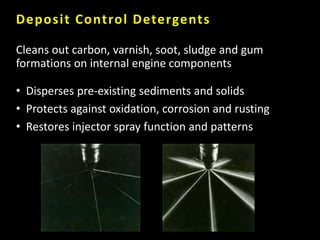
Deposit Control Detergents
Cleans out carbon, varnish, soot, sludge and gum
formations on internal engine components
• Disperses pre-existing sediments and solids
• Protects against oxidation, corrosion and rusting
• Restores injector spray function and patterns
Prevents Problems Caused by
Ethanol and Bio-Based Fuels
Clean Tech Validated
Improves Fuel Economy
Emission Tested
Reduces Pollution
Dyno Tested, Increases
Torque and Horsepower
Recognized by EcoWest
and validated by Red River
College as a clean
technology that reduces
emissions and improves
fuel economy.
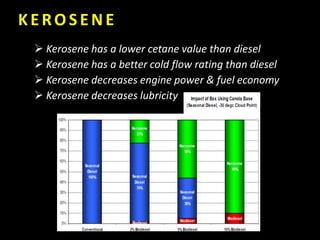
KEROSENE
 Kerosene has a lower cetane value than diesel
 Kerosene has a better cold flow rating than diesel
 Kerosene decreases engine power & fuel economy
 Kerosene decreases lubricity
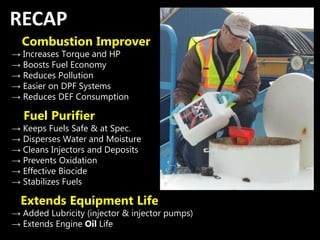
RECAP
Combustion Improver
→ Increases Torque and HP
→ Boosts Fuel Economy
→ Reduces Pollution
→ Easier on DPF Systems
→ Reduces DEF Consumption
Fuel Purifier
→ Keeps Fuels Safe & at Spec.
→ Disperses Water and Moisture
→ Cleans Injectors and Deposits
→ Prevents Oxidation
→ Effective Biocide
→ Stabilizes Fuels
Extends Equipment Life
→ Added Lubricity (injector & injector pumps)
→ Extends Engine Oil Life
Serving Commercial, Industrial & Recreational Markets

XP3 Fuel Performance Products Dealer Training Slide Deck

  • 1.
  • 2.
    There are twotypes of additives on the market … Consumer-Grade and Industrial Strength
  • 3.
    Consumer Grade products areused by Consumers Industrial Strength products are used by Industry
  • 4.
    Deposit Control Detergents DissolvesGums, Sludge & Deposits Keeps all internal components clean XP3’s Main Functions Positive ROI 4 cents per litre (or less) to treat, to gain ~4%-8% (or better) fuel economy Lubricity Improvers Lubricates & Protects the Entire Fuel System Anti-Gel Cold Flow Improvers Maintains Cold Weather Operability Combustion Improvers A more Complete Burn = More Power & Less Emissions Stability Improvers Stabilizes & Purifies Fuels Water Dispersants Optimizes Fuels, Corrects BioFuel Problems & Prevents Microbial Infestations
  • 5.
    BACKGROUND Manufactured by XP LABINC. est. 1989 Poway, California Ocean Freighters Commercial Fleets BULK Transport & Storage Bio-Based Fuel Protection
  • 6.
    Used Globally byIndustry XP3 treats over 4 billion litres of fuel every year, in more than 28 countries.
  • 7.
    Consumer Grade additivescontain… Diluting Fillers, like… • hydrocarbons • petroleum distillates • naphthalene • or other non-functional compounds … because they are intended for retail consumers, not for industrial or professional applications. A larger bottle with a lower price point gives a false sense of value to the uninformed retail consumer and is not at all connected to functionality or results.
  • 8.
    Hydrocarbon Distillate Fuel usedas filler Pe t r o l e u m b a s e d c o m p o u n d s t h a t t h e r e f i n e r y c a n n o t s e l l t o t h e m a r k e t p l a c e a s g a s o l i n e o r d i e s e l a r e c o m m o n l y f o u n d a s f i l l e r s i n r e t a i l , c o n s u m e r g ra d e a d d i t i v e s . Light Crude Oil Refining
  • 9.
  • 10.
    Check the MSDSheet Does the additive contain petroleum distillate fillers?
  • 11.
    Check the MSDSheet Does the additive contain petroleum distillate fillers?
  • 12.
    d e te rg e n c y. x p 3 . c a Test for carbon detergency value
  • 13.
    b u rn . x p 3 . c a Test for combustion efficiency
  • 14.
    b u rn . x p 3 . c a A high-quality diesel additive will only leave behind a clean, golden colored lubricating agent that is not sticky or tacky. That is the lubricating agent used in XP3 Post Combustion Residue Test Test for unburnt residues and lubricity
  • 15.
    w a te r. x p 3 . c a Test for water and moisture control
  • 16.
    restore.xp3.ca Restoring degraded &broken - dow n fuel test. Test for restoring and stabilizing fuel
  • 17.
    Additives that improvefuel economy will show up on a dyno as extra power. More power with XP3 = more distance travelled, using less fuel. Additives that burn more of the fuel as energy will produce less unburnt hydrocarbons on emission tests. A more complete burning of the fuel results in more power, and less unburnt hydrocarbon (CxHy). 834 845 850 Xp3D Single Dose Xp3D Double Dosed +11 +16 ft. lbs ft. lbs Test for improved torque and horsepower
  • 18.
    EMISSION TESTED Test ID# 488526-15 Red River College Energy Centre Carbon Dioxide (CO2) emissions reduced by: .46 ppm Unburnt Hydrocarbon (CxHy) emissions reduced by: 7.8 ppm
  • 19.
    Re c og n i z e d b y E c o We s t C a n a d a a n d v a l i d a t e d b y Re d R i v e r C o l l e g e a s a c l e a n t e c h n o l o g y t h a t r e d uces e m issions a n d im p r oves f uel e c onomy . CleanTech EcoFriendly Validated
  • 20.
    Reduced downtime, maintenance &repairs Diesel Particulate Filters • Reduced Regen Cycles • Extended DPF Filter Life • Reduced DEF Fluid Consumption Other benefits of XP3
  • 21.
    Injectors & InjectorPumps • Detergency, better spray patterns • Lubricity, longer life • Stiction, eliminate stiction issues Cold Weather Operability (Anti -Gel) Other benefits of XP3
  • 22.
    BULK Tanks • Transport •Storage • Microbes Other benefits of XP3
  • 23.
    POWER → Increases Torqueand HP → Boosts Fuel Economy → Reduces Pollution → Easier on DPF Systems → Reduces DEF Consumption PERFORMANCE → Keeps Fuels Safe & at Spec. → Disperses Water and Moisture → Cleans Injectors and Deposits → Prevents Oxidation → Effective Biocide → Stabilizes Fuels PROTECTION → Adds Lubricity to Fuels (for injectors & injector pumps) → Extends Engine Oil Life
  • 24.
    CASE STUDY Improved FuelEconomy - Self-Test Baseline Average (10 tanks, no XP3): 57 litres per 100km XP3D Average (10 tanks, with XP3D): 53 litres per 100km (7% Improvement) T e s t R e s ult 7 % i m p r o v e m e n t i n f u e l e c o n o m y Details Test was an independent, self-test by the fleet operator using the same truck, pulling the same load on the same job over a 7-week period during the summer of 2019. Estimated net savings of over $5,000 for every $100,000 of diesel consumed, after the input cost of XP3.
  • 25.
    CASE STUDY RESULTS EmissionTesting City of Winnipeg Parks Division Carbon Monoxide (CO) emissions reduced by: -24.5 ppm Carbon Dioxide (CO2) emissions reduced by: -7.5% Oxygen (O2) improved by: +9.05% Fuel Economy improved by: +10.18%
  • 26.
    Christensen Farms Magrath, AB CaseyChristensen operates a farm in southern Alberta and runs two New Holland combines with identical specs and sequential serial numbers. Validation testing on Xp3 was conducted during the 2014 harvest season, over 145 engine hours, of which 115 were thrashing hours. The two combines ran side by side in the same crops, in the same fields at the same speed. Test results showed fuel economy increase of 5.49% from the combine using XP3 treated fuel over the combine using non-treated fuel. CASE STUDY Improved Fuel Economy - Self-Test
  • 27.
    CASE STUDY Improved FuelEconomy Extended Engine Oil Life
  • 28.
    s p ri n g e r. x p 3 . c a
  • 29.
    “All our diesel,gasoline and heating oil powered rental equipment are now treated and protected with XP3. Every winter, we averaged over 80 incidents of fuel related problems. During the winter of 2017-2018, we had 100% uptime on all rental units. With XP3, we save time, money and aggravation for our branch while providing a more reliable rental experience for our customers.” The CAT Rental Store, Winnipeg, MB. CASE STUDY Eliminated fuel gelling service calls
  • 30.
    2008 535 CaseIH (fuel economy records tracked since brand new). Went from 12 hours of operating per tank, to 14 hours with Xp3 treated fuel. Dean Terning – TNT Farms CASE STUDY Improved Fuel Economy - Self-Test
  • 31.
    PEMEX Exploracion Y Produccionuses Xp3 to treat fuel they use in the daily operation of some of their equipment as fleet customers. Aditiva, S.A. de C.V., (a division of PEMEX) is the Master Distributor of Xp3 products for Mexico. Pemex Exploracion Y Produccion A division of Mexico’s State-Owned Petroleum Company
  • 32.
    g o il . x p 3 . c a
  • 33.
    XP3 improves theASTM specification of fuels.
  • 34.
    XP3 replaces all… Conditioners  Stabilizers  Lubricators  Purifiers  Treatments  Anti-gels  Detergent Cleaners
  • 35.
    BOTTOM LINE “Informed usersof fuel additives will always choose industrial-grade additives, over consumer-grade additives.”
  • 36.
    TAKE-AWAYS Properly frame the conversation Pricingdescribed as CttpL (Cost to treat per Litre)
  • 37.
    Sales Counter ReferenceSheet Available at:
  • 39.
    Part Numbers Letters =formulation Numbers = amount of fuel the container treats “G” for Gasoline “D” for Diesel “DC” for Diesel Cetane “DW” for Diesel Extreme Winter examples D4000 = XP3 Diesel, treats 4,000 litres of diesel G570 = XP3 Gasoline, treats 570 litres of gasoline
  • 40.
    Q&A Videos.XP3.ca 1 - 80 0 - 5 0 7 - 2 4 5 9
  • 41.
    Diesel Multi-Functional All-in-One All Seasons For anycompression ignition engine. Gasoline Multi-Functional All-in-One All Seasons For any spark ignition engine, 2 and 4 stroke.
  • 42.
    Converts Summer Dieselinto Winter Diesel, or converts Winter Diesel to Arctic Grade Polar Diesel. Increases Cetane for engines under continuous heavy load. Two Diesel Specialty Blends
  • 43.
    Pricing - Gasoline (C o st to t r e a t p e r l i t r e : 4 . 2 ¢ o r l e s s )
  • 44.
    { ------ 3¢/ litre ------ }{ ------ 1¢ / litre ------ } { ------ 6¢ / litre ------ } { ------ 9¢ / litre ------ } { ------ 12¢ / litre +++ } Pricing – Diesel ( C o st to t r e a t p e r l i t r e : 3 . 0 ¢ o r l e s s )
  • 45.
    Single Dose +4.7 Cetane XP3Cetane Boosted S pecialty B lend CETANE TEST RESULTS Double Dose +5.6 Cetane
  • 46.
    Cetane Level Standards NorthAmerica: 40 (exception, California: 53) Europe: 51 (55 in 2020) Finland: 60 (70 from Premium Diesel) Low Cetane causes; • loss of power • poor starting • poor fuel economy
  • 47.
    CETANE Winter diesel hasa lower Cetane rating than summer diesel. Lower Cetane in the winter is a problem and contributes to loss of power, poor starting and worse fuel economy. The overall average Engine Cetane Number of diesel fuels produced in Canada ranges from 36.3 to 56.1, even though diesel equipment operators know that engines run better on fuels with a much higher Engine Cetane Number. Minimum in Canada is 40 Minimum in Europe is 51 (55 in 2020)
  • 48.
    77% of winterdiesel sold in Canada is not restored with Cetane after cutting.
  • 49.
    XP3 Extreme WinterS pecialty B lend • Improves cold flow, cloud point, pour point and cold filter plug point • XP3D and XP3DC provides 10 degrees or more of extra cold weather protection • XP3DXTW provides 25-35 degrees of extra cold weather protection • Prevents wax formation, build up, gelling & filter clogging • Disperses water and moisture • Improves cold starting and idling XP3DXTW Single Dose XP3DXTW Double Dose XP3DXTW Triple Dose
  • 50.
    R E PS O L A r g e n t i n a u s e s a n a d d i t i v e p a c k a g e f r o m X p L a b f o r t h e i r P r e m i u m b r a n d o f A r c t i c R a t e d P o l a r d i e s e l i n A n t a r c t i c a ’s S o u t h P o l e .
  • 51.
    Three Diesel Formulas D DCDW G A l l - i n - O n e A l l S e a s o n s A l l - i n - O n e + C e t a n e B o o s t A l l - i n - O n e + E x t r e m e W i n t e r A l l - i n - O n e A l l S e a s o n s One Gasoline Formula DC restores Cetane levels in Winter Diesel and adds 10 degrees of cold weather protection. Also recommended for engines under heavy continuous load. DXTW converts Summer Diesel into Winter Diesel, adds 25-35 degrees of cold weather protection or converts Winter Diesel into Arctic-Grade Polar Diesel, adds 25-35 degrees of cold weather protection.
  • 52.
    XP3 is a…  purely concentrated  industrial strength  multi-functional  fuel performance enhancer  …that contains no fillers
  • 53.
    Keeps fuels pureand stabilized for up to 5 years Prevents problems caused by bio-fuels Resolves water and moisture issues
  • 54.
    D- ADITIVO XP3 EFEITODETERGENTE-Limpeza de deposito aos tanques de combustível. Evitando a limpeza constante dos reservatórios e evitando inclusive borras no sistema devido a solubilização dos componentes. EFEITO DISPERSANTE-Promove a dispersão das moléculas de agua , como emulsão no combustível. EFEITO ANTIOXIDANTE-Mantém os bicos e bomba injetora sempre limpos. Este e vendido em baldes de 50 litros a um custo de USD 2.072,30 e usado na proporção de 9 litros do produto para 35.000 litros de óleo diesel .O que rende um balde para cerca de 200.000 litros. TRANSLATION ADDENDUM D-Xp3 1.1 - FUEL STATION, LUBRICATION AND FUEL TANKS DETERGENT - Cleans deposits and avoids contaminants in fuels. DISPERSANT - Promotes dispersion of moisture and water in fuels. ANTIOXIDANT - Keep nozzles, fuel filters and fuel injection pumps clean. 01 MELHORES PRÁTICAS: 1.1 – POSTO DE COMBUSTÍVEL,COMBOIO DE LUBRIFICAÇÃO E TANQUE ABASTECEDORBEST PRACTICE Included in best practice documentation for their fuel management.
  • 55.
    “We treat ourBULK tanks with XP3, which feeds fuel to more than 50 pieces of heavy duty equipment . We are saving thousands of dollars every year on fuel and less mechanical break downs. We have also seen extended operating life of our equipment.” Centennial Gravel, Ile Des Chenes, MB. “We tested XP3 during an entire threshing season. The combine that was using XP3 treated fuel consumed 5.49% less fuel over the other combine that was using non-XP3 treated fuel. We now treat our entire fleet of and are confident in recommending XP3 to anyone.” Christensen Farms, Magrath, AB “With XP3, I’ve increased my fuel economy by a 1/2 mpg on my Peterbilt.” Harold S., Edmonton, AB
  • 56.
    Plus, incompletely burntresidues and dirty burning additives can cause problems on new emission control equipment by plugging up DPF filters quicker and increasing consumption of DEF fluid. Other examples of post Combustion Residue testing
  • 57.
    CASE STUDY –STATIONARY Improves Fuel Economy The continuous and steady load on a genset engine provides the perfect conditions to conduct a fuel efficiency test; no wind, weather, elevation changes, regional fuel variances and no operator variables . A long term (18 months) test showed a reduction of fuel consumption by: 8.80% Then re-tested a second time, showing a reduction of fuel consumption by: 8.97%
  • 58.
    Gasoline Marine Applications m ar i n e . x p 3 . c a
  • 59.
    user testimonial Lombard, IL WestAcres Golf Course West Acres Golf Course has several pieces of commercial grade mowers, earthmoving equipment and gas operated golf carts. They use Xp3 to ensure that their equipment's fuel systems, operation and condition remain in peak and top operating condition all season long and keep their fuel stabilized for off season storage. g o l f. x p 3 . c a
  • 60.
    Power  Improved combustion More torque and horsepower  Increases energy BTU output of fuels  Less unburnt hydrocarbons
  • 61.
    Performance  Quieter andsmoother running engine  Extended oil life  Less regen cycles  Less DEF consumption  Longer DPF life  Better Fuel Economy
  • 62.
    Protection  Purifies andstabilizes  Reduced maintenance  Eliminates risks of microbial infestations  Antioxidant protection  Eliminates phase separation and fouling of fuels  Resolves all water and moisture related problems
  • 63.
    Combustion Improvers Provides amore complete burning of the fuel, resulting in more power and less unburnt hydrocarbons. Emission reductions makes it easier on post-combustion systems, reducing DEF consumption, reducing regen cycles, extending DPF life and extending service intervals. Burns more of the fuel as energy, producing less pollution. X P 3 - C a n a d a ’ s O n l y I n d u s t r i a l S t r e n g t h C o m m e r c i a l G r a d e F u e l E n h a n c e r
  • 64.
    Lubricity Improvers • Lubricatesand protects the entire fuel system, including upper cylinder walls, intake valves, egr’s, rings, common rails, fuel pumps, injector pumps and injectors. • Protects against injector fouling, injector failures and injector sticton. • Lubricity test results of XP3D are; BOLCE Test, from 360 to 300 scaring HFRR Test, from .610 to .460 scaring (Lower number = higher lubricity value) Today’s Ultra Low Sulfur Diesels are more abrasive and contain less lubricity than previous generations of diesel requiring after-market additives that increase bring back lubricity levels to protect against premature wear of internal engine components.
  • 65.
    Water & MoistureDispersants Breaks down agglomeration deposits of suspended moisture and free-standing water into thousands of sub- microscopic particles for complete elimination, with no interference and undetected throughout the combustion process. Eliminates conditions for algae, microbes, mold, fungus, slime, biomass and bacteria can grow and contaminate fuels as well as gelling in cold weather operation. Protects against corrosion and formation of sulfuric acids. X P 3 - C a n a d a ’ s O n l y I n d u s t r i a l S t r e n g t h C o m m e r c i a l G r a d e F u e l E n h a n c e r
  • 66.
    Stability Improvers • Stabilizesand protect fuels. • Keeps fuels clean and fresh. • Improves fuel longevity and integrity. • Breaks down and disperses contaminants. • Protects against fouling and phase separation.
  • 67.
    Safe & EnvironmentFriendly Reduces unburnt hydrocarbons, vanadium pentoxide, exhaust smoke and polluting emissions. Does not contain any alcohol, kerosene, aromatics, naphtha, sulfur, potentially harmful compounds or any fillers whatsoever.
  • 68.
    Deposit Control Detergents Cleansout carbon, varnish, soot, sludge and gum formations on internal engine components • Disperses pre-existing sediments and solids • Protects against oxidation, corrosion and rusting • Restores injector spray function and patterns
  • 70.
    Prevents Problems Causedby Ethanol and Bio-Based Fuels Clean Tech Validated Improves Fuel Economy Emission Tested Reduces Pollution Dyno Tested, Increases Torque and Horsepower Recognized by EcoWest and validated by Red River College as a clean technology that reduces emissions and improves fuel economy.
  • 71.
    KEROSENE  Kerosene hasa lower cetane value than diesel  Kerosene has a better cold flow rating than diesel  Kerosene decreases engine power & fuel economy  Kerosene decreases lubricity
  • 73.
    RECAP Combustion Improver → IncreasesTorque and HP → Boosts Fuel Economy → Reduces Pollution → Easier on DPF Systems → Reduces DEF Consumption Fuel Purifier → Keeps Fuels Safe & at Spec. → Disperses Water and Moisture → Cleans Injectors and Deposits → Prevents Oxidation → Effective Biocide → Stabilizes Fuels Extends Equipment Life → Added Lubricity (injector & injector pumps) → Extends Engine Oil Life
  • 75.
    Serving Commercial, Industrial& Recreational Markets

Editor's Notes

  • #3 There is 2 classes of fuel additives on the market. Retail, Consumer-Grade and Industrial Strength, Commercial-Grade Retail, Consumer-Grade products are most often found in retail stores in automotive supplies departments for truck stops. Industrial Strength, Commercial-Grade products are used by Industry and are typically more difficult to procure for common use. Are you using a PRO-GRADE, INDUSTRIAL STRENGTH additive or a Retail-Grade Consumer additive. Pro-Grade industrial strength additives are used by industry and and only contain purely concentrated active compounds to upgrade the ASTM specifications and performance of your fuel. End the video with.... For safest and best fuel performance, make sure your educated choice for your fuel additive is a PRO-GRADE, INDUSTRIAL STRENGTH.
  • #4  Retail, Consumer-Grade products are used by Consumers… most often found in retail stores, automotive supplies and truck stops. Industrial Strength, Commercial-Grade products are used by Industry and are typically more difficult to procure for common use and often-times only available in BULK format. It's a choice between Retail Consumer Grade, used by the general public and… Pure Professional Grade used by informed industry experts that are responsible for the optimum performance of working equipment … and those who are responsible for the stability and safety of the fuel supply during transportation and in bulk storage tanks.
  • #10 So, how do you know if the additive you're using today, or have used in the past is Pro-Grade or Consumer-Grade? 4 quick and easy bench tests can help you find that out and 2 other tests that you can do in a lab. #1 - Carbon Detergency Value. How well does it break down and cleans out carbon and soot deposits? #2 - Combustion Efficiency. Does is burn clean and stable or does it emit smoke and particulate matter when burning? #3 - Post Combustion Residue. What does it leave behind after it's burned down?  #4 - Interaction with Water & Moisture. Can it safely break down and disperse water and moisture?