APA & Writing 
Workshop 
ED 257 
Dr. Cullerton
BIGGEST CHALLENGE WITH 
LITERACY 
AUTOBIOGRAPHIES: 
 IN-TEXT CITATIONS 
 BIBLIOGRAPHY 
 ORGANIZATION 
 TRANSITIONS 
 EXPLAINING QUOTES FROM TEXT 
 CONCLUSIONS 
 ONE DRAFT ONLY 
 NO REVISIONS MADE BEFORE SUBMISSION 
 WHAT COULD YOU HAVE DONE 
DIFFERENTLY?
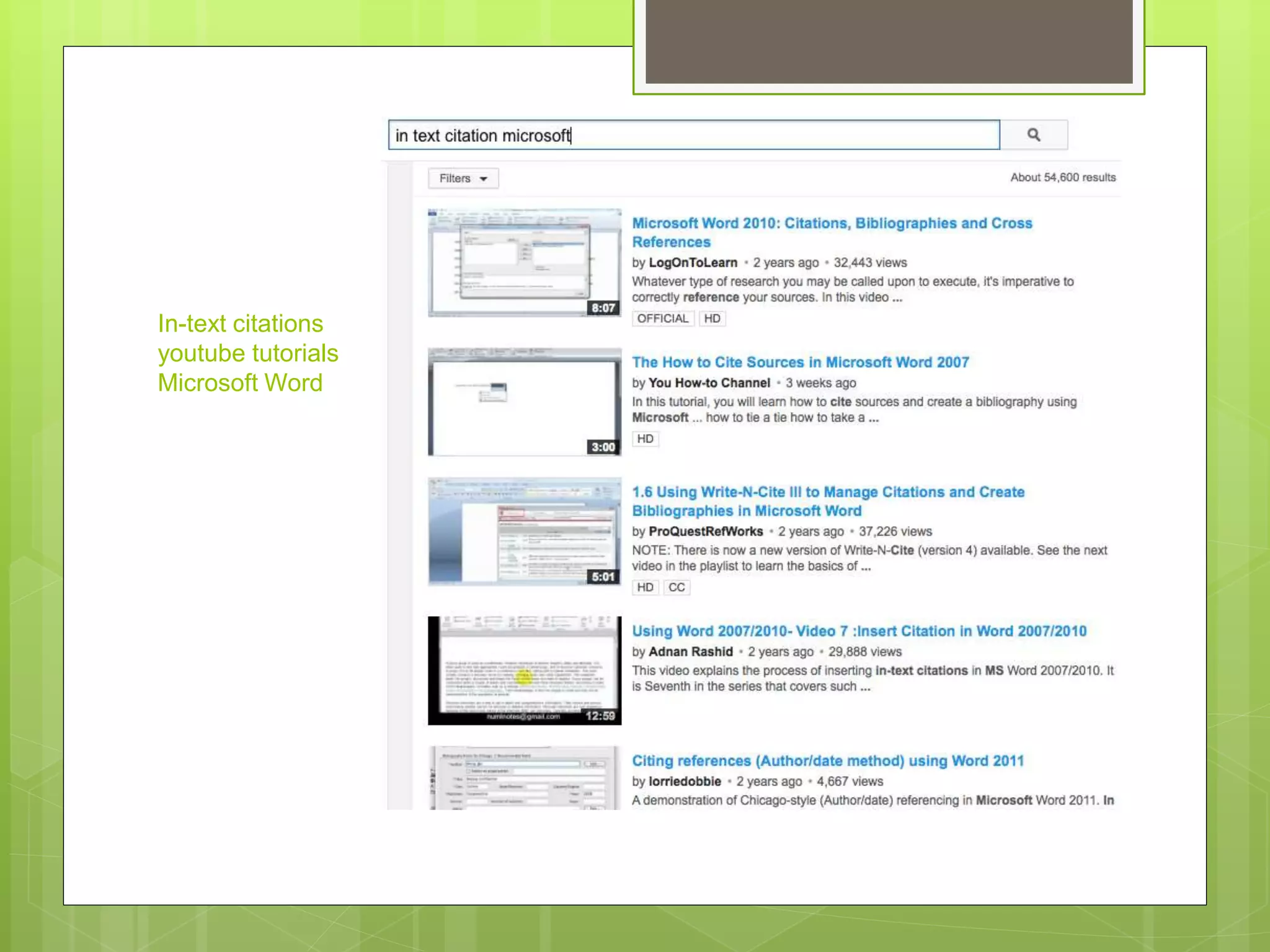
In-text citations 
youtube tutorials 
Microsoft Word
APA
WRITING 
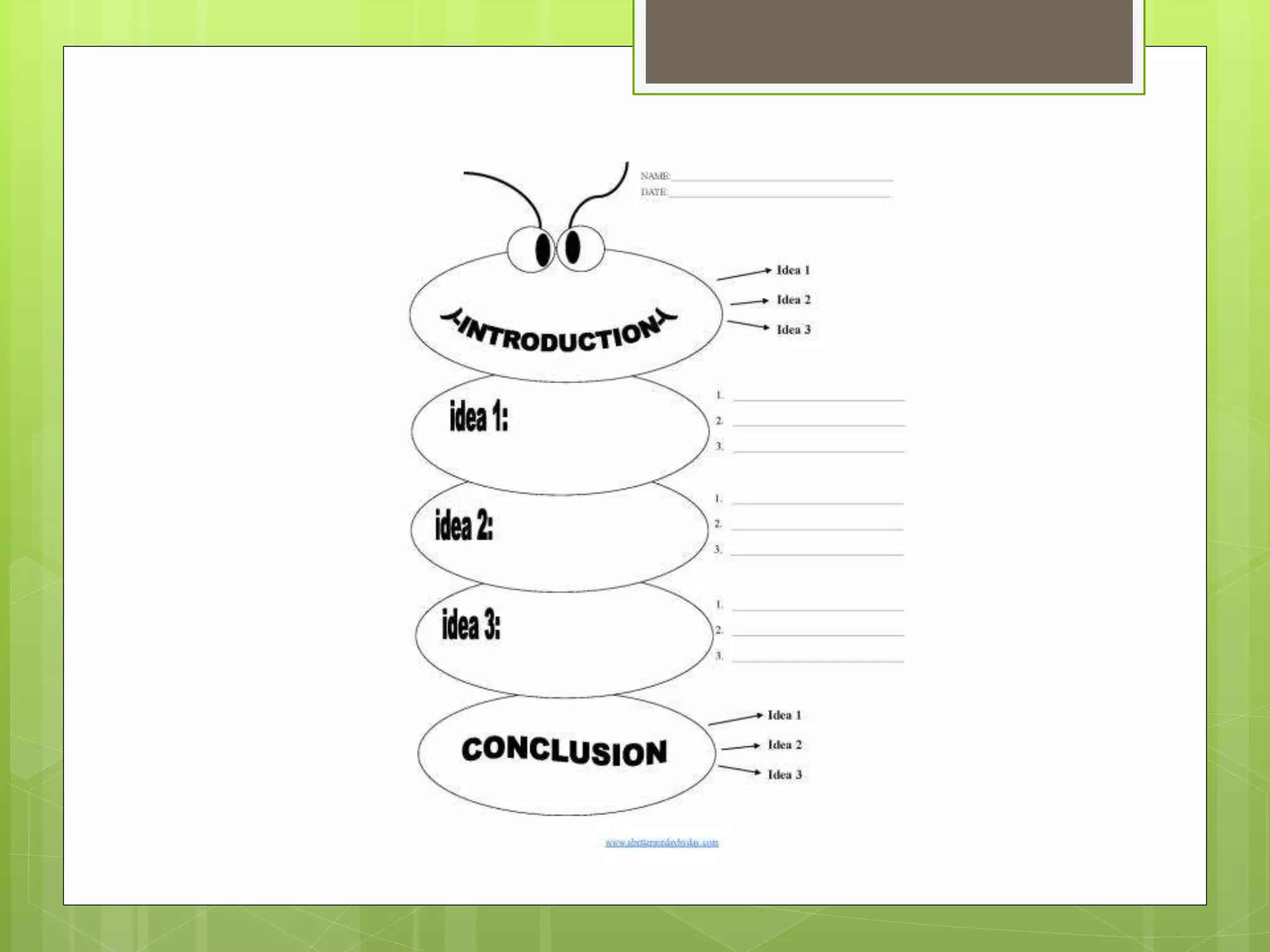
 Get in small group and try to arrange essay. 
 What is the correct order? 
 Where is the topic sentence? 
 How do you know this is the correct order? 
 How would you EXPLAIN this to your 
students?
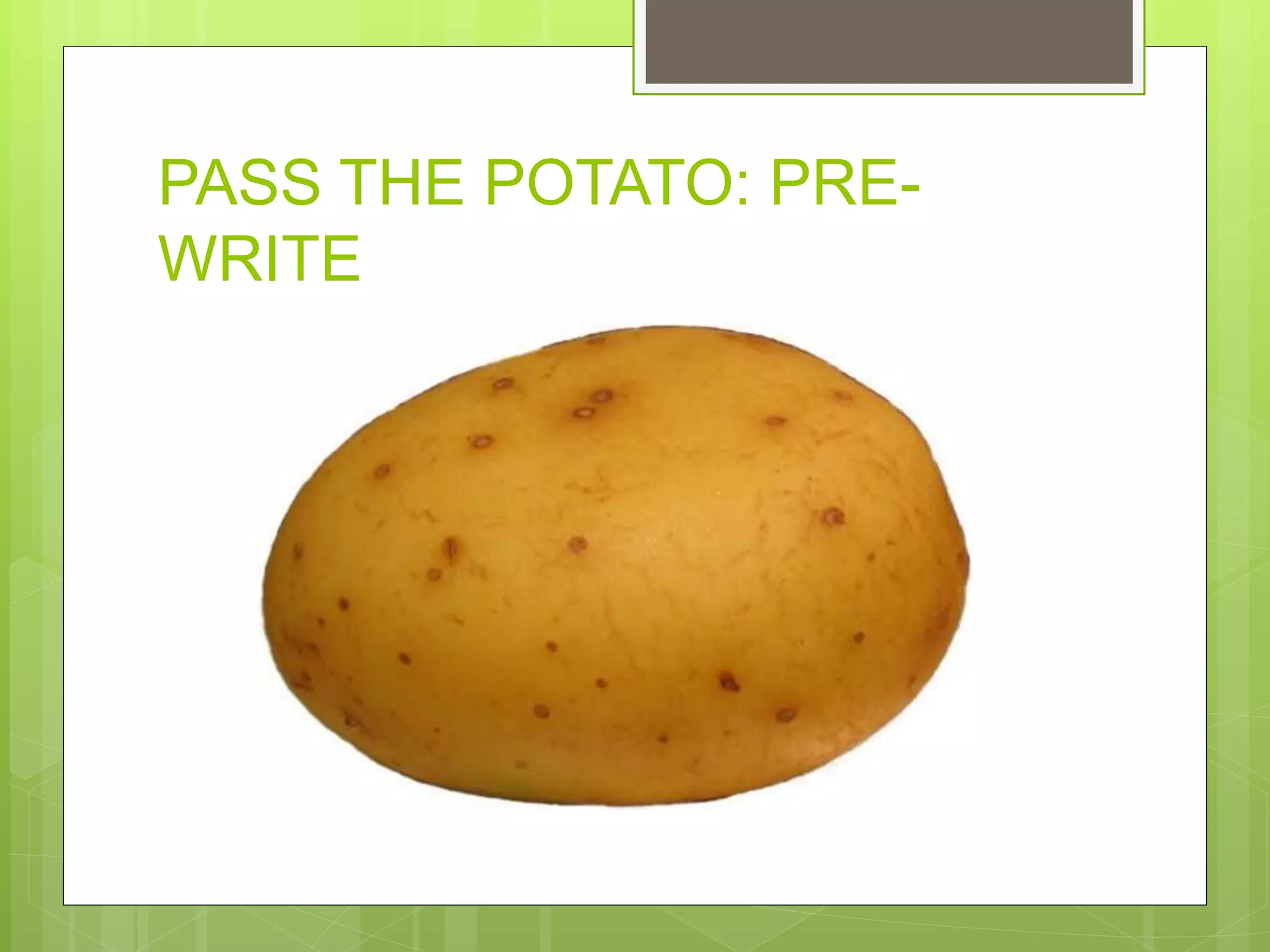
PASS THE POTATO: PRE-WRITE
Different types of writing 
Narrative: Telling a story 
Descriptive: Painting a picture 
Expository: Just the facts 
Persuasive: Convince me 
Argumentative: Compare/Contrast 
Analytical: Research, critical
Persuasive writing 
 Persuasive Essays can be a lot of fun to write. When writing 
a persuasive essay, your goal is to convince your audience 
that your argument is valid. By the end of reading your essay, 
hopefully your audience will agree with you! This can’t be 
done just by given your opinion on something. An opinion is 
not a valid argument unless you have evidence to support it. 
Persuasive essays usually start with a topic that has pros and 
cons. Before writing your essay, make a pros and cons list on 
the topic. Next, pick a side. Which one do you feel more 
strongly about? If you don’t feel strongly about either side, 
which side has evidence you can use to create a strong 
argument? Every point you make in a persuasive essay must 
point back to your thesis statement that is either for or 
against your topic. Like other essays, start your pre-write by 
reading the text and highlighting and annotating important 
parts that will support your argument. Next, use an outline of 
your choice (Flowchart, Sentence Outline or Concept Map) to 
get started on your essay.
Hook, Link, Thesis 
 I need 3 volunteers
Analytical 
 Writing an analytical essay takes patience and organization. 
Most importantly, in order to write a paper about a topic, you 
must be well-versed in the topic. The point of an analytical 
essay is to break down a topic into clear and manageable 
parts. It is much more than a summary, rather a deep 
analysis of the topic at hand. When brainstorming prior to 
writing an analytical essay ask yourself: what about the text 
do I find interesting? If you can’t think of anything, look for 
common themes throughout the text. Sometimes a topic is 
given to by a teacher. If so, ask yourself why the teacher 
chose this topic? Then, re-read the text and begin piecing 
together your argument by highlighting and annotating your 
text. You may use the Flowchart Outline, Sentence Outline, or 
Concept Map for your pre-write. Use whatever is easiest for 
you. 
 Remember, this is no time for an opinion in an analytical 
essay, you must use the text to form your argument. From 
there, you begin your analysis of the text.
Creative writing 
 Has a main idea or purpose, but this is not usually expressed directly as a "thesis" 
the way it would be at the start of a persuasive or analytical essay 
 Has a beginning, middle, and end, but these do not necessarily follow the 
format/organization of persuasive or analytical essay (don't think in terms of 
attentionFgrabber, link, thesis, topic sentence, evidence, analysis, conclusion) 
 Tries to make the writer's experience come alive for the reader 
 Often told in chronological order but may include flashback or other creative order of 
ideas. 
 Uses strong imagery and descriptive language 
 Often uses figurative language (metaphors, similes, personification, and hyperbole) 
as well as other literary devices"
graffiti 
1. I need one volunteer. 
2. You have been accused of vandalizing 
school property-I am going to be your lawyer 
and the class will be your jury. 
3. Hire me or fire me?
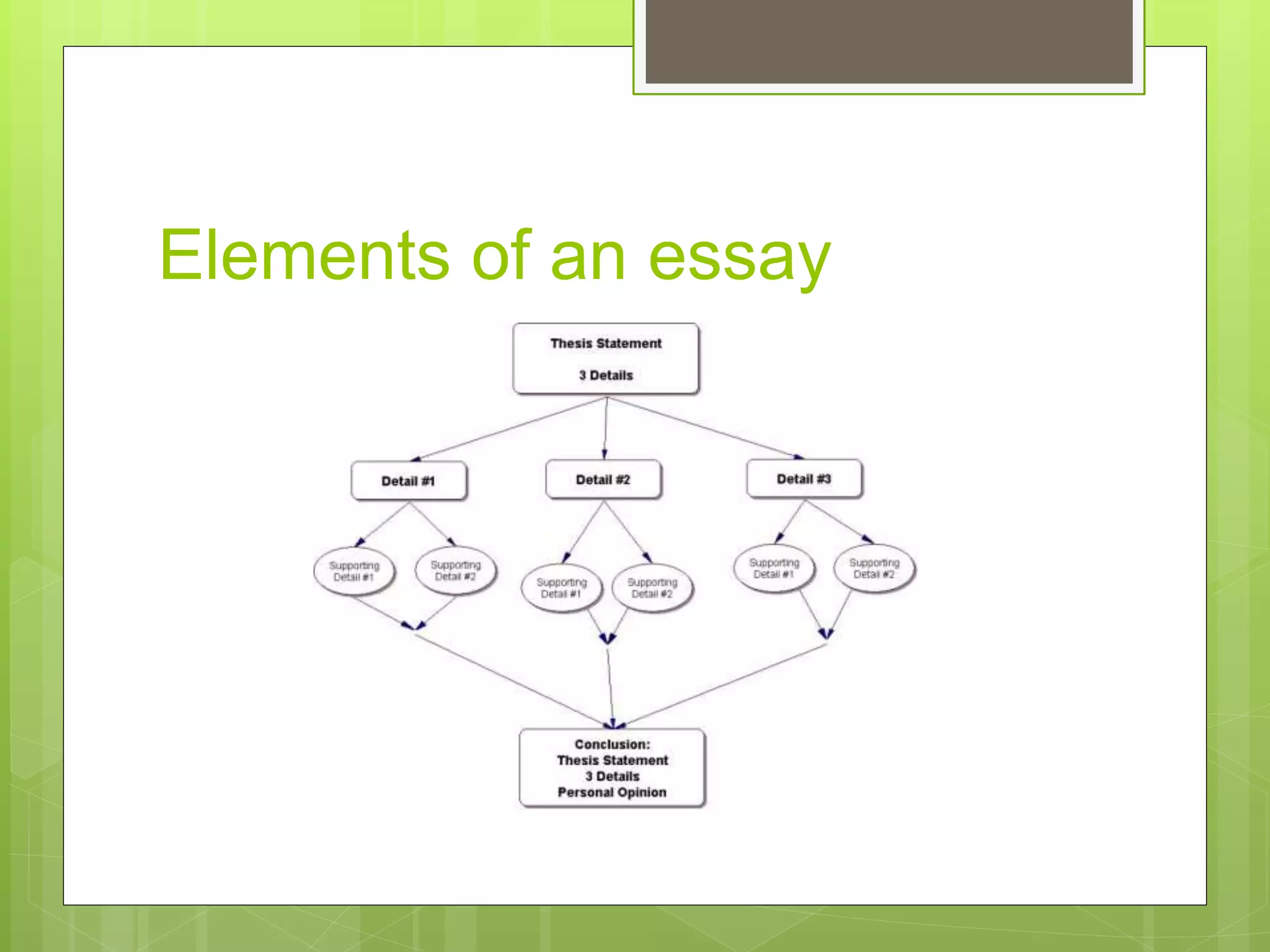
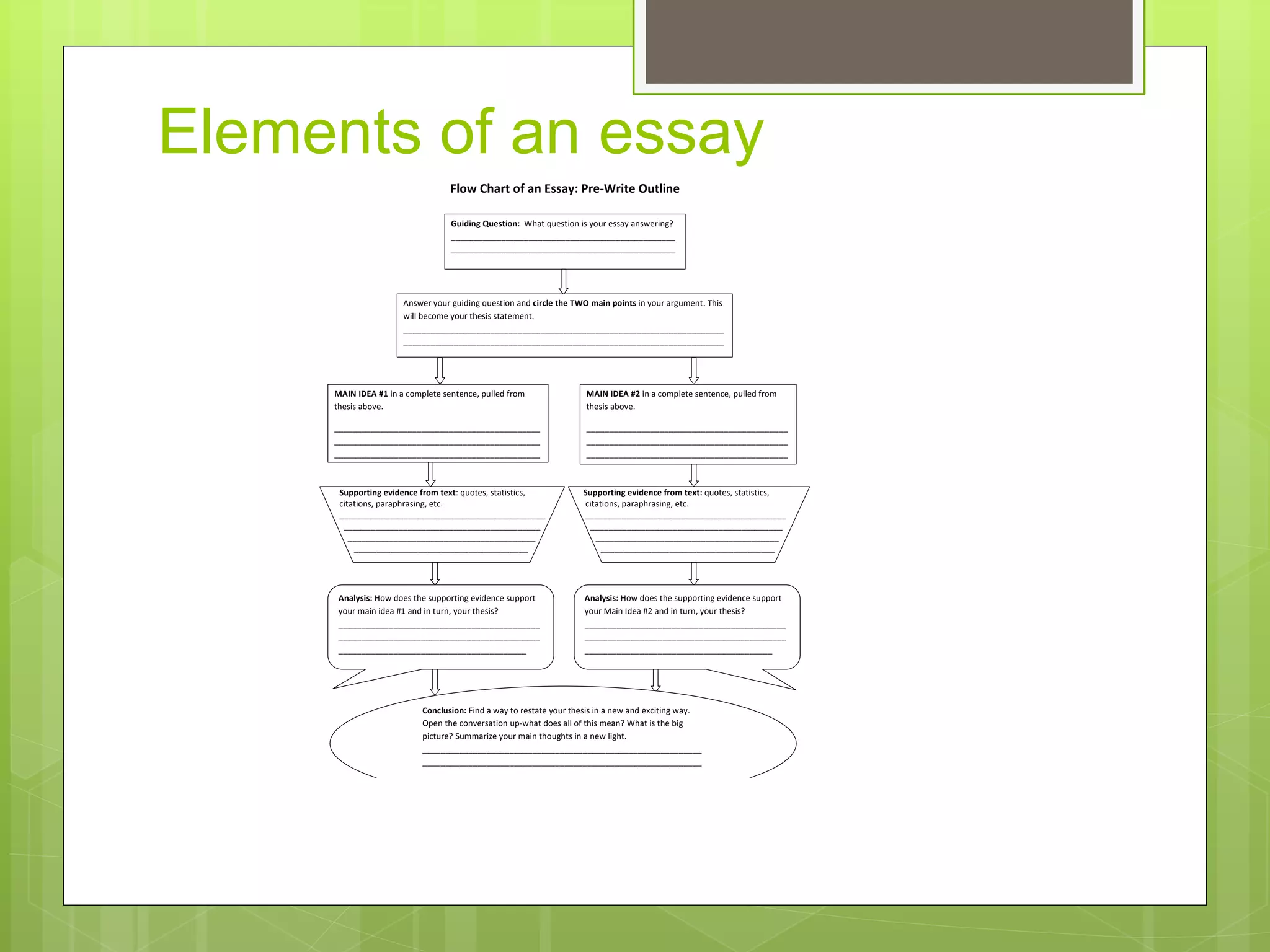
Elements of an essay
Elements of an essay 
Flow	Chart	of	an	Essay:	Pre-Write	Outline	 
		 
	 
Guiding	Question:		What	question	is	your	essay	answering?	 
_________________________________________________ 
_________________________________________________	 


MAIN	IDEA	#1	in	a	complete	sentence,	pulled	from	 
thesis	above.	 
	 
_____________________________________________ 
	 
_____________________________________________ 
_____________________________________________ 
	 
_________________________	 
	 
Answer	your	guiding	question	and	circle	the	TWO	main	points	in	your	argument.	This	 
will	become	your	thesis	statement.	 
______________________________________________________________________ 
______________________________________________________________________ 
__________________________________	 
Supporting	evidence	from	text:	quotes,	statistics,																												Supporting	evidence	from	text:	quotes,	statistics,			 
citations,	paraphrasing,	etc.			 	 																																														citations,	paraphrasing,	etc.	 
_____________________________________________																			____________________________________________	 
		___________________________________________																								__________________________________________	 
				_________________________________________																													________________________________________	 
							______________________________________																																			______________________________________	 


MAIN	IDEA	#2	in	a	complete	sentence,	pulled	from	 
thesis	above.	 
____________________________________________ 
____________________________________________ 
____________________________________________ 
________________________	 
Analysis:	How	does	the	supporting	evidence	support	 
your	main	idea	#1	and	in	turn,	your	thesis?	 
____________________________________________ 
____________________________________________ 
_________________________________________	 
Analysis:	How	does	the	supporting	evidence	support	 
your	Main	Idea	#2	and	in	turn,	your	thesis?	 
____________________________________________ 
____________________________________________ 
_________________________________________	 
Conclusion:	Find	a	way	to	restate	your	thesis	in	a	new	and	exciting	way.	 
Open	the	conversation	up-what	does	all	of	this	mean?	What	is	the	big	 
picture?	Summarize	your	main	thoughts	in	a	new	light.	 
_____________________________________________________________ 
_____________________________________________________________ 
_____________________________________________________________
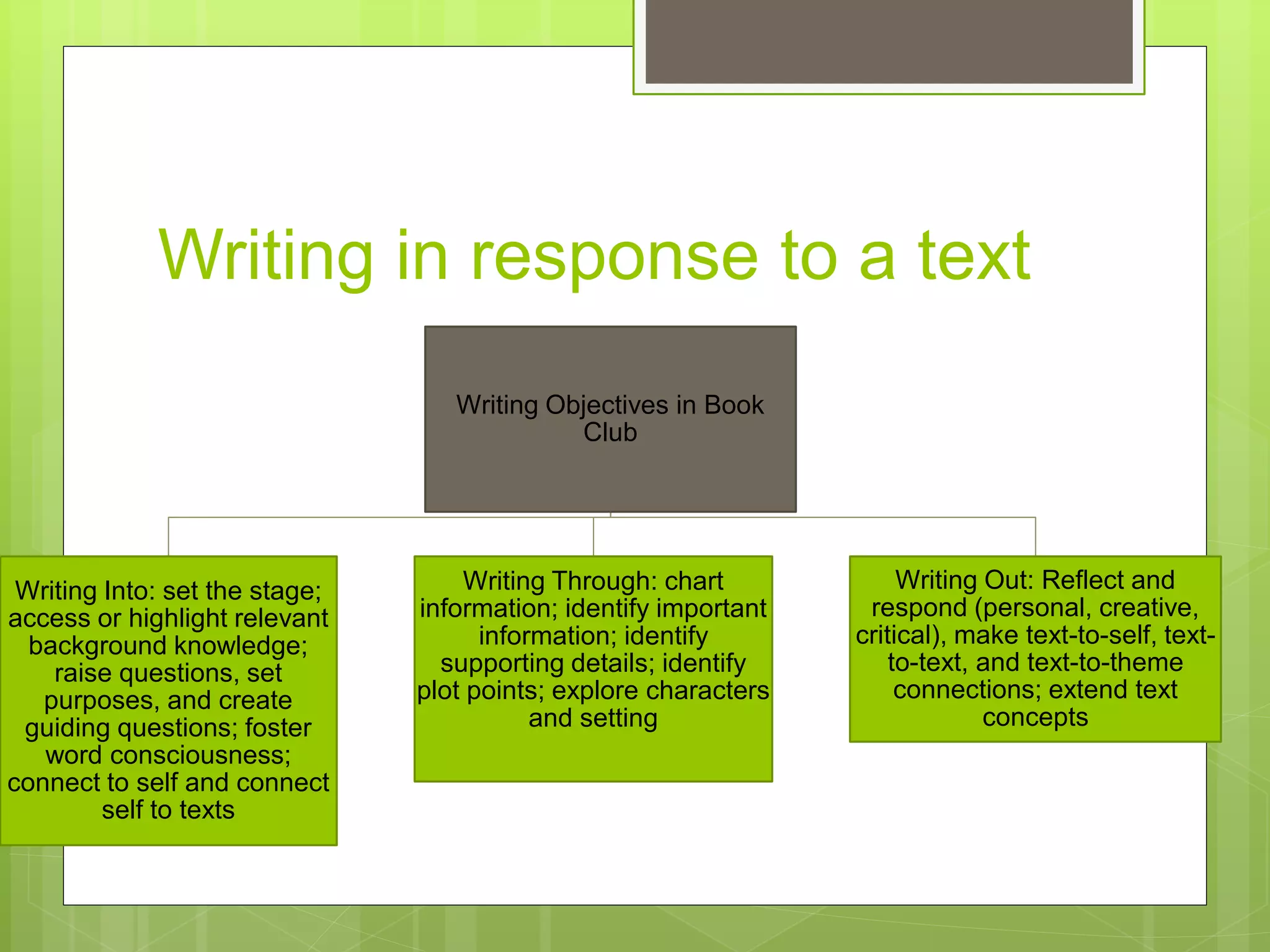
Writing in response to a text 
Writing Objectives in Book 
Club 
Writing Into: set the stage; 
access or highlight relevant 
background knowledge; 
raise questions, set 
purposes, and create 
guiding questions; foster 
word consciousness; 
connect to self and connect 
self to texts 
Writing Through: chart 
information; identify important 
information; identify 
supporting details; identify 
plot points; explore characters 
and setting 
Writing Out: Reflect and 
respond (personal, creative, 
critical), make text-to-self, text-to- 
text, and text-to-theme 
connections; extend text 
concepts
Now, pull out your reflections 
on the powerpoint and review 
them really quickly… 
 Refresh your memory (powerpoint and video on 
text complexity) 
 Handout from last class on text complexity 
 Small groups
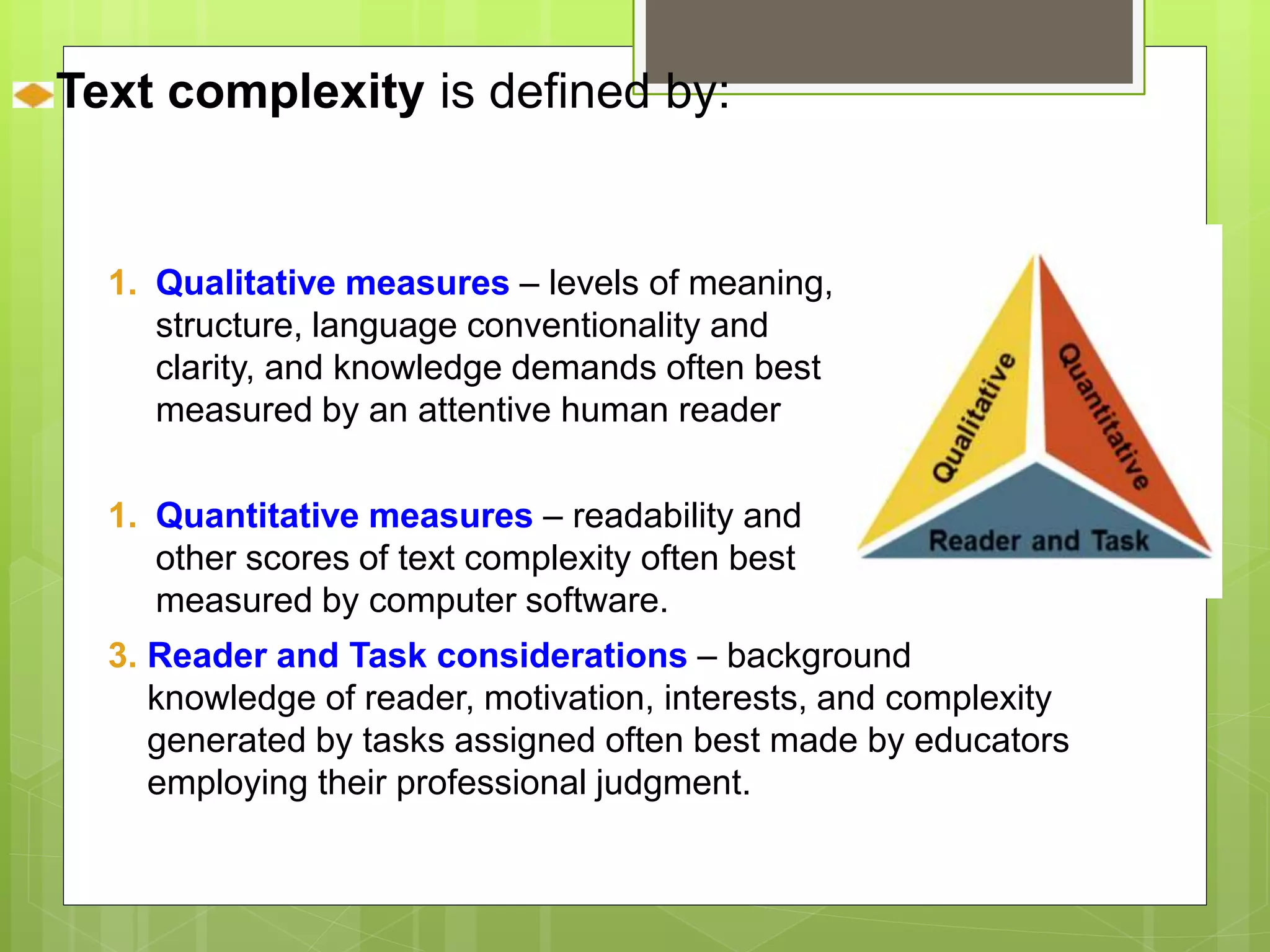
Text complexity is defined by: 
1. Qualitative measures – levels of meaning, 
structure, language conventionality and 
clarity, and knowledge demands often best 
measured by an attentive human reader 
1. Quantitative measures – readability and 
other scores of text complexity often best 
measured by computer software. 
3. Reader and Task considerations – background 
knowledge of reader, motivation, interests, and complexity 
generated by tasks assigned often best made by educators 
employing their professional judgment.

Writing workshop by Dr. Ali Cullerton

  • 1.
    APA & Writing Workshop ED 257 Dr. Cullerton
  • 2.
    BIGGEST CHALLENGE WITH LITERACY AUTOBIOGRAPHIES:  IN-TEXT CITATIONS  BIBLIOGRAPHY  ORGANIZATION  TRANSITIONS  EXPLAINING QUOTES FROM TEXT  CONCLUSIONS  ONE DRAFT ONLY  NO REVISIONS MADE BEFORE SUBMISSION  WHAT COULD YOU HAVE DONE DIFFERENTLY?
  • 3.
    In-text citations youtubetutorials Microsoft Word
  • 4.
  • 5.
    WRITING  Getin small group and try to arrange essay.  What is the correct order?  Where is the topic sentence?  How do you know this is the correct order?  How would you EXPLAIN this to your students?
  • 6.
  • 7.
    Different types ofwriting Narrative: Telling a story Descriptive: Painting a picture Expository: Just the facts Persuasive: Convince me Argumentative: Compare/Contrast Analytical: Research, critical
  • 8.
    Persuasive writing Persuasive Essays can be a lot of fun to write. When writing a persuasive essay, your goal is to convince your audience that your argument is valid. By the end of reading your essay, hopefully your audience will agree with you! This can’t be done just by given your opinion on something. An opinion is not a valid argument unless you have evidence to support it. Persuasive essays usually start with a topic that has pros and cons. Before writing your essay, make a pros and cons list on the topic. Next, pick a side. Which one do you feel more strongly about? If you don’t feel strongly about either side, which side has evidence you can use to create a strong argument? Every point you make in a persuasive essay must point back to your thesis statement that is either for or against your topic. Like other essays, start your pre-write by reading the text and highlighting and annotating important parts that will support your argument. Next, use an outline of your choice (Flowchart, Sentence Outline or Concept Map) to get started on your essay.
  • 9.
    Hook, Link, Thesis  I need 3 volunteers
  • 10.
    Analytical  Writingan analytical essay takes patience and organization. Most importantly, in order to write a paper about a topic, you must be well-versed in the topic. The point of an analytical essay is to break down a topic into clear and manageable parts. It is much more than a summary, rather a deep analysis of the topic at hand. When brainstorming prior to writing an analytical essay ask yourself: what about the text do I find interesting? If you can’t think of anything, look for common themes throughout the text. Sometimes a topic is given to by a teacher. If so, ask yourself why the teacher chose this topic? Then, re-read the text and begin piecing together your argument by highlighting and annotating your text. You may use the Flowchart Outline, Sentence Outline, or Concept Map for your pre-write. Use whatever is easiest for you.  Remember, this is no time for an opinion in an analytical essay, you must use the text to form your argument. From there, you begin your analysis of the text.
  • 11.
    Creative writing Has a main idea or purpose, but this is not usually expressed directly as a "thesis" the way it would be at the start of a persuasive or analytical essay  Has a beginning, middle, and end, but these do not necessarily follow the format/organization of persuasive or analytical essay (don't think in terms of attentionFgrabber, link, thesis, topic sentence, evidence, analysis, conclusion)  Tries to make the writer's experience come alive for the reader  Often told in chronological order but may include flashback or other creative order of ideas.  Uses strong imagery and descriptive language  Often uses figurative language (metaphors, similes, personification, and hyperbole) as well as other literary devices"
  • 12.
    graffiti 1. Ineed one volunteer. 2. You have been accused of vandalizing school property-I am going to be your lawyer and the class will be your jury. 3. Hire me or fire me?
  • 13.
  • 14.
    Elements of anessay Flow Chart of an Essay: Pre-Write Outline Guiding Question: What question is your essay answering? _________________________________________________ _________________________________________________ MAIN IDEA #1 in a complete sentence, pulled from thesis above. _____________________________________________ _____________________________________________ _____________________________________________ _________________________ Answer your guiding question and circle the TWO main points in your argument. This will become your thesis statement. ______________________________________________________________________ ______________________________________________________________________ __________________________________ Supporting evidence from text: quotes, statistics, Supporting evidence from text: quotes, statistics, citations, paraphrasing, etc. citations, paraphrasing, etc. _____________________________________________ ____________________________________________ ___________________________________________ __________________________________________ _________________________________________ ________________________________________ ______________________________________ ______________________________________ MAIN IDEA #2 in a complete sentence, pulled from thesis above. ____________________________________________ ____________________________________________ ____________________________________________ ________________________ Analysis: How does the supporting evidence support your main idea #1 and in turn, your thesis? ____________________________________________ ____________________________________________ _________________________________________ Analysis: How does the supporting evidence support your Main Idea #2 and in turn, your thesis? ____________________________________________ ____________________________________________ _________________________________________ Conclusion: Find a way to restate your thesis in a new and exciting way. Open the conversation up-what does all of this mean? What is the big picture? Summarize your main thoughts in a new light. _____________________________________________________________ _____________________________________________________________ _____________________________________________________________
  • 16.
    Writing in responseto a text Writing Objectives in Book Club Writing Into: set the stage; access or highlight relevant background knowledge; raise questions, set purposes, and create guiding questions; foster word consciousness; connect to self and connect self to texts Writing Through: chart information; identify important information; identify supporting details; identify plot points; explore characters and setting Writing Out: Reflect and respond (personal, creative, critical), make text-to-self, text-to- text, and text-to-theme connections; extend text concepts
  • 17.
    Now, pull outyour reflections on the powerpoint and review them really quickly…  Refresh your memory (powerpoint and video on text complexity)  Handout from last class on text complexity  Small groups
  • 18.
    Text complexity isdefined by: 1. Qualitative measures – levels of meaning, structure, language conventionality and clarity, and knowledge demands often best measured by an attentive human reader 1. Quantitative measures – readability and other scores of text complexity often best measured by computer software. 3. Reader and Task considerations – background knowledge of reader, motivation, interests, and complexity generated by tasks assigned often best made by educators employing their professional judgment.

Editor's Notes

  • #8 Some overlap in these types of writing
  • #13 thesis, evidence from text, explanation of evidence from text
  • #17 Book Club
  • #19 Quantitative: Mean Log Word Frequency, Mean sentence length