














Sam Knowles, 12|11|10
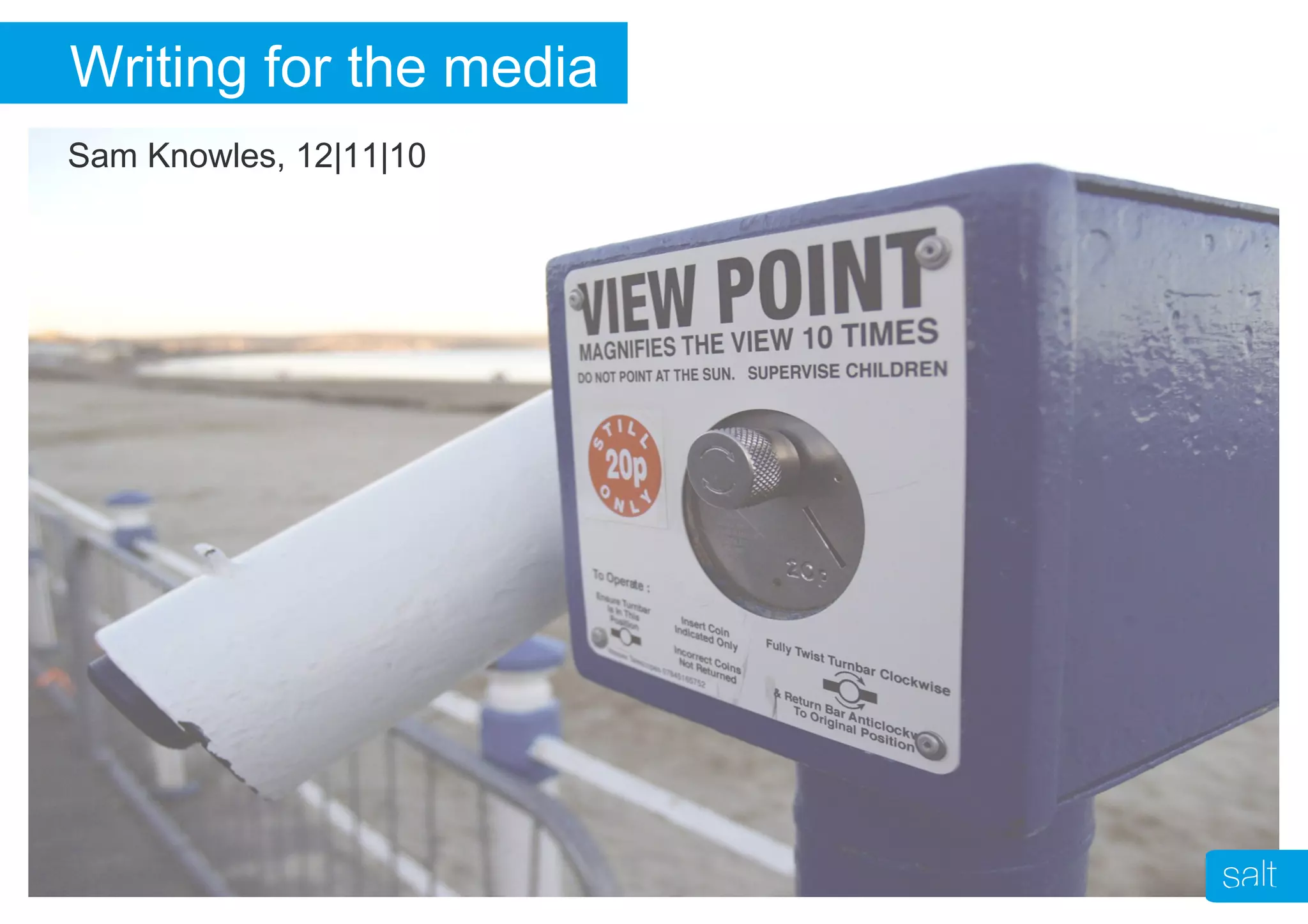
Writing for the media
All the research I've seen
says that editorial publicity is
better than paid-for publicity.
Sir Martin Sorrell, WPP, The Tim e s
“ “
Agenda
A. Do you know who I am?
B. Brand speak
C. Churnalism
D. Everyone an editor
E. Bringing this together
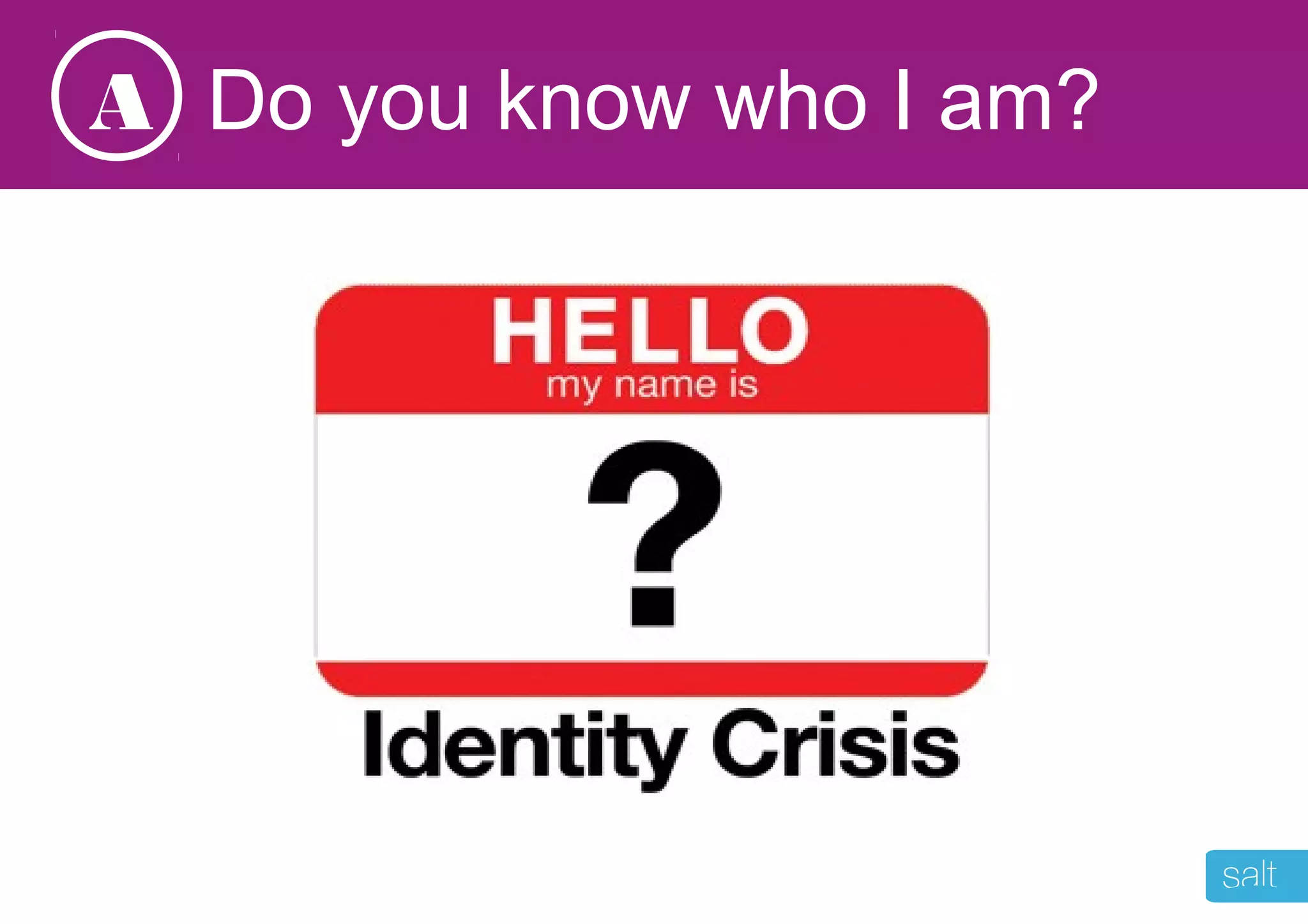
Do you know who I am?A
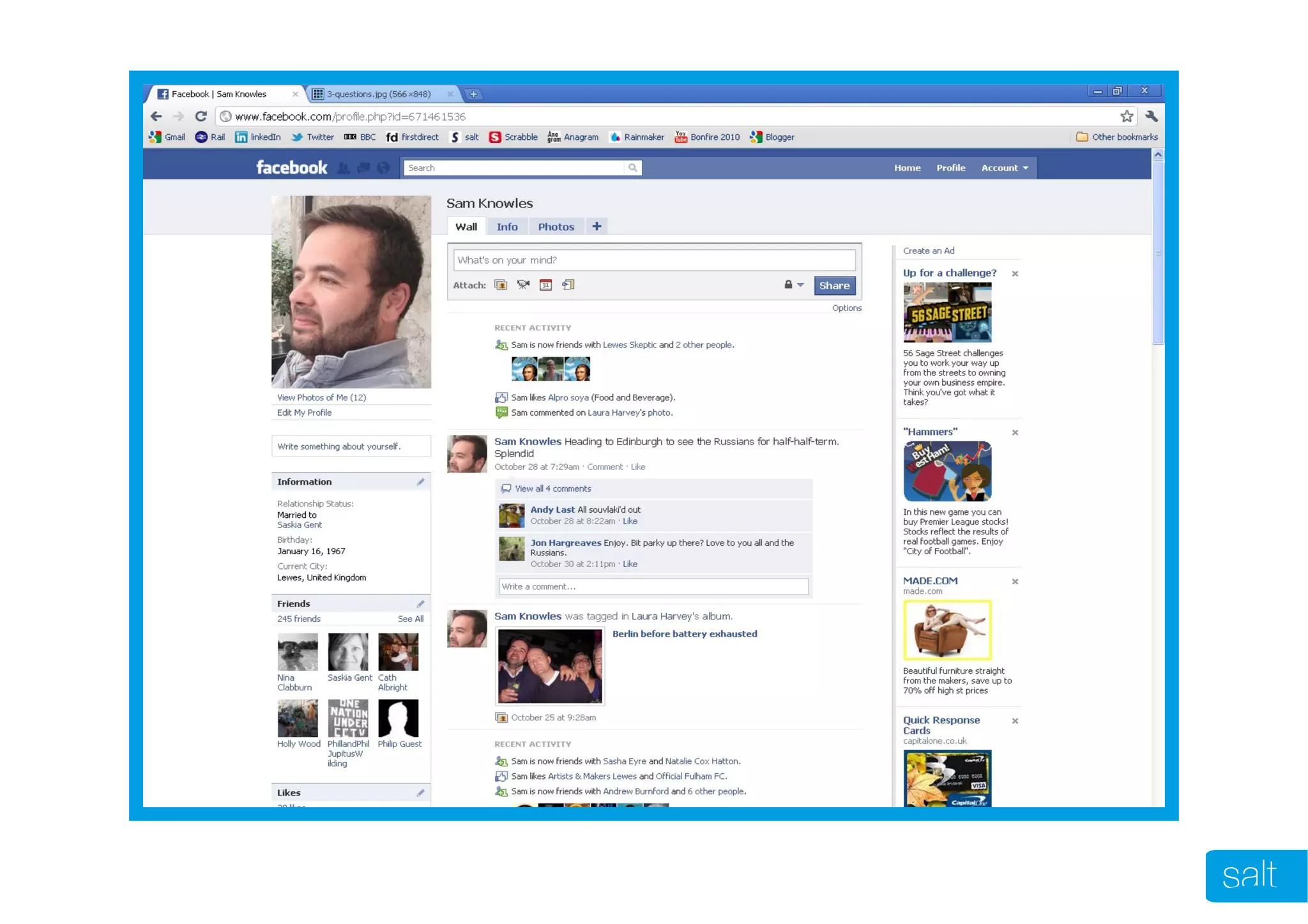
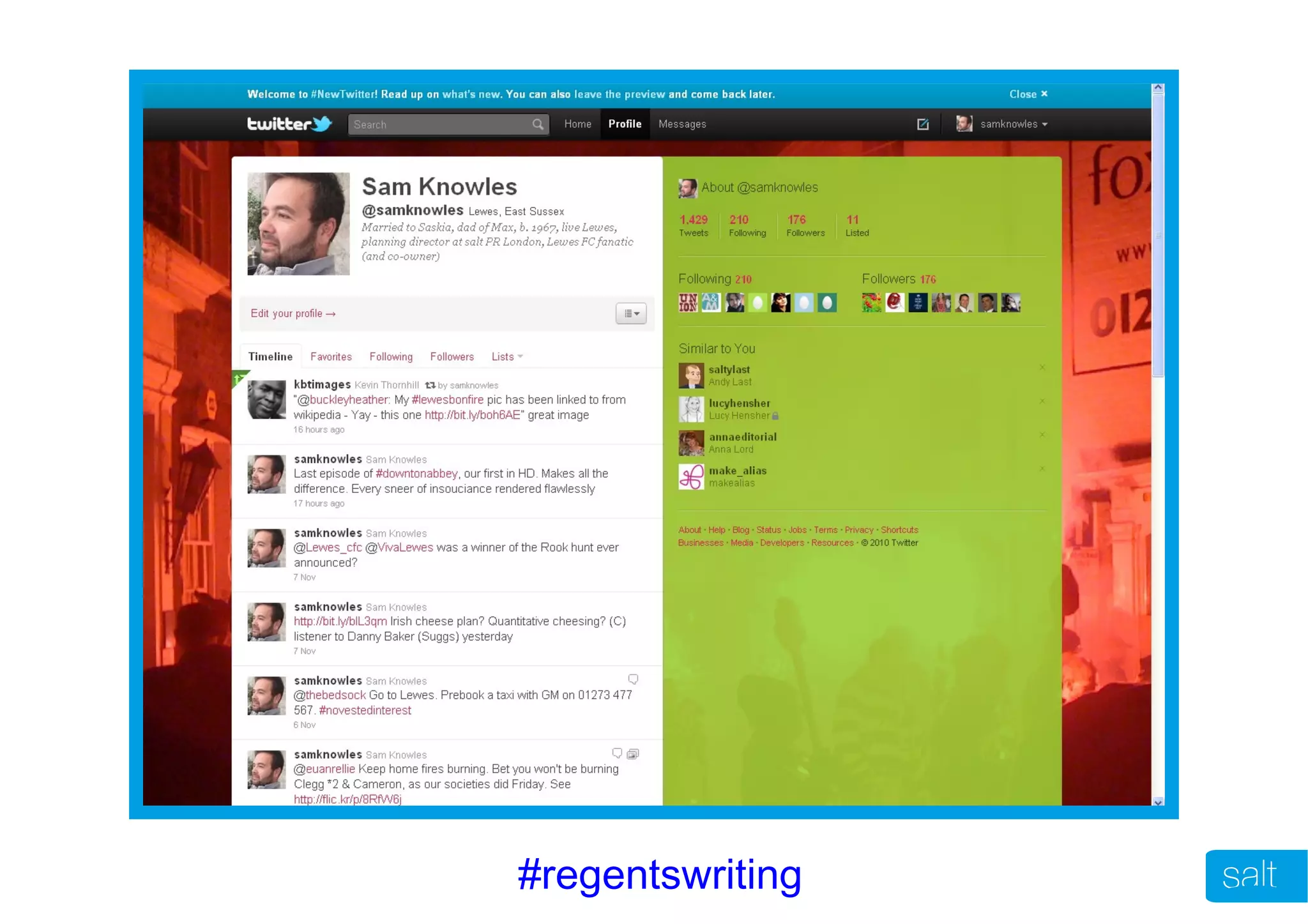
#regentswriting
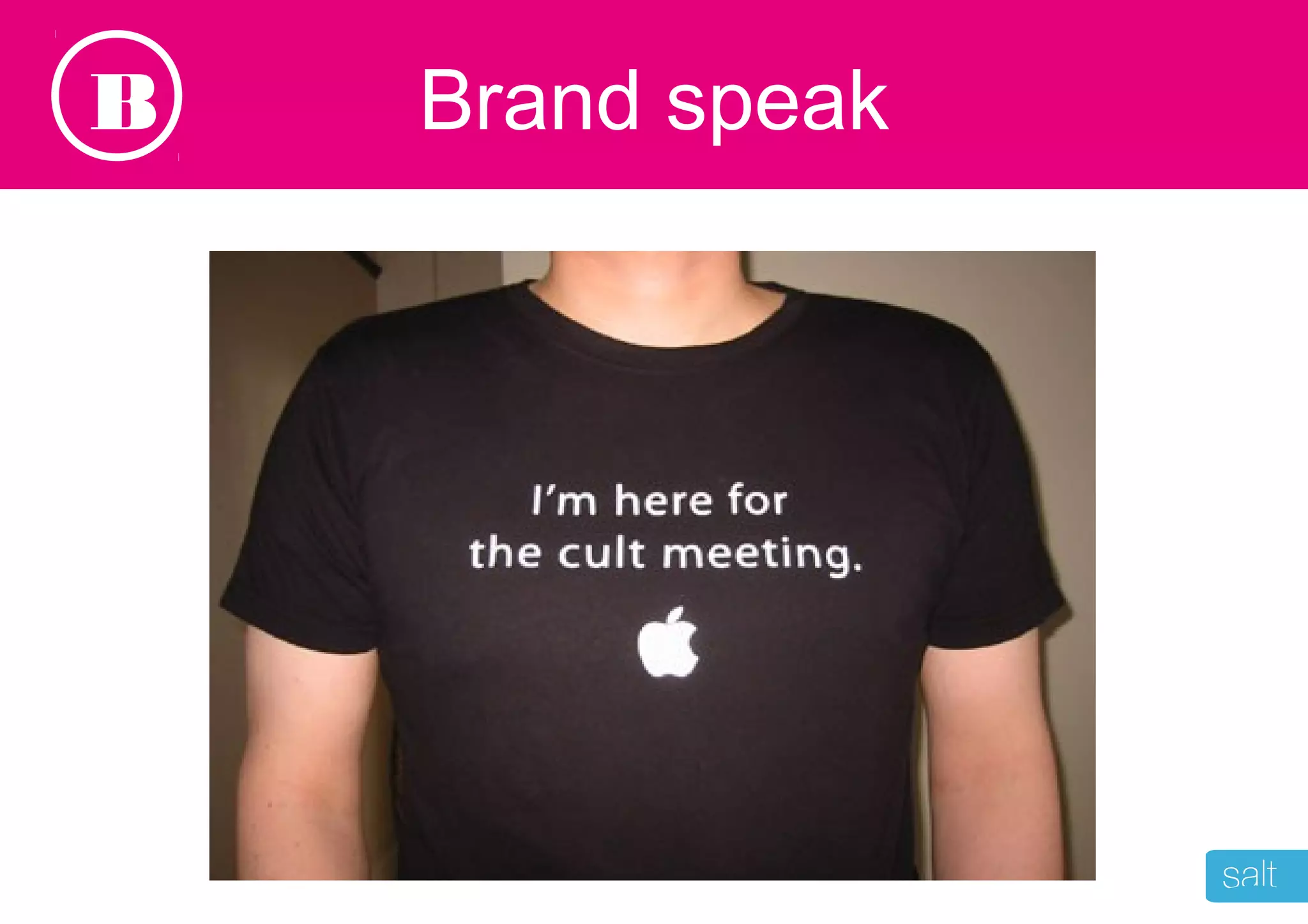
Brand speakB
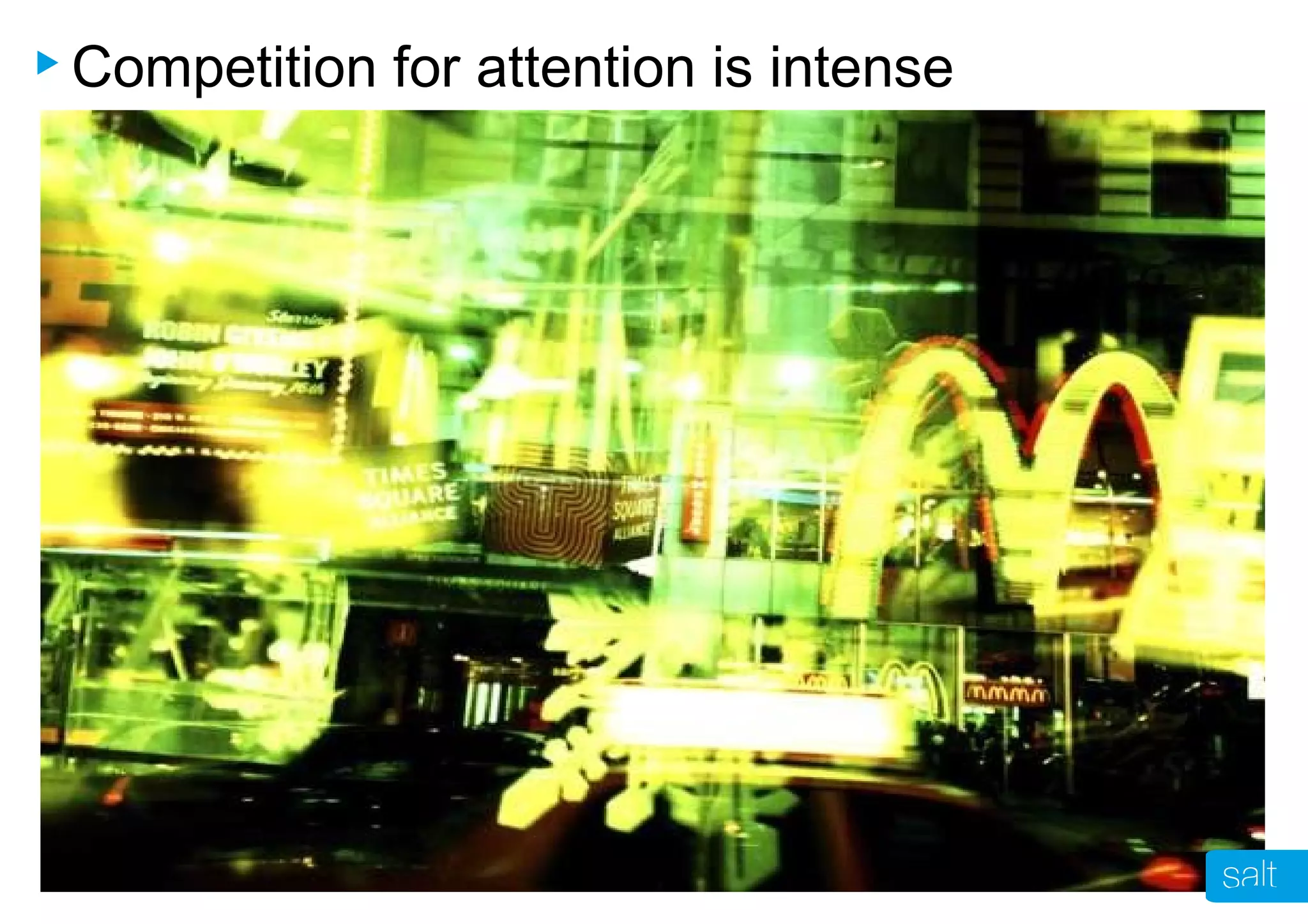
Competition for attention is intense
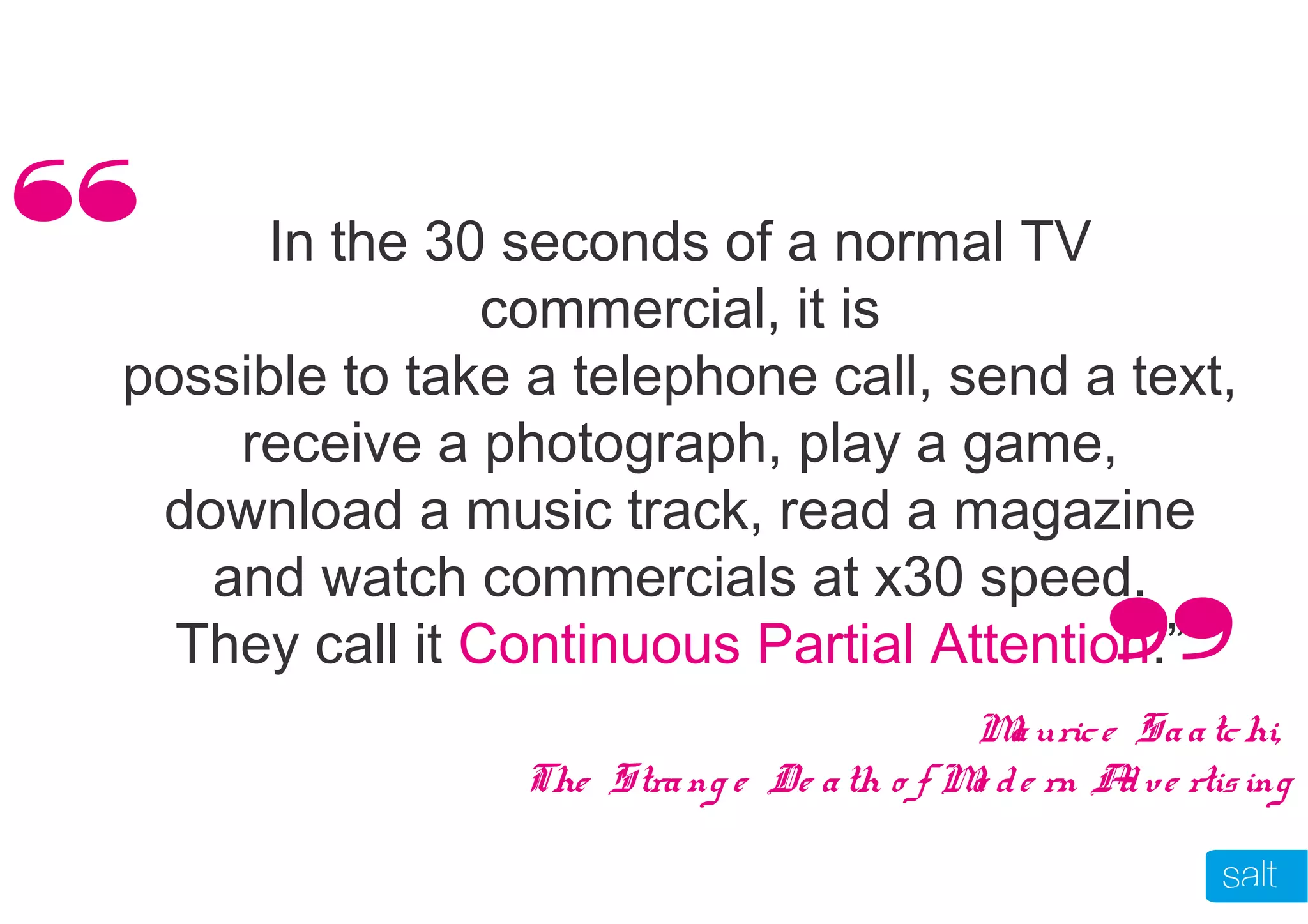
In the 30 seconds of a normal TV
commercial, it is
possible to take a telephone call, send a text,
receive a photograph, play a game,
download a music track, read a magazine
and watch commercials at x30 speed.
They call it Continuous Partial Attention.”
Maurice Saatchi,
The Strang e De ath o f Mo de rn Adve rtising
“
“
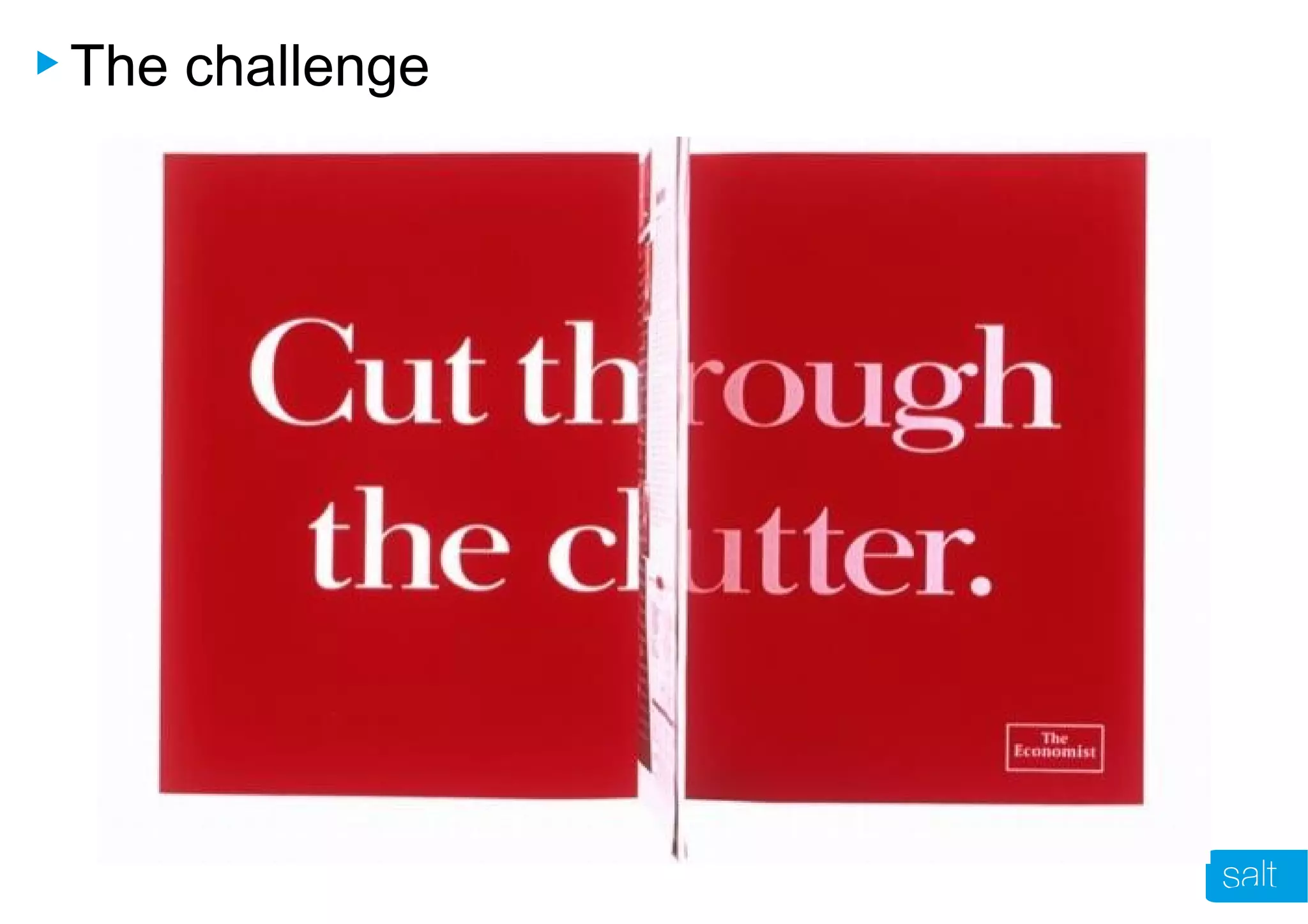
The challenge
Brand empathy
Any conversation you have has to be of value to your
customers
Brands need “social currency” to build relationships and
spark reactions
Compelling content starts sustainable conversations
and cut through the clutter
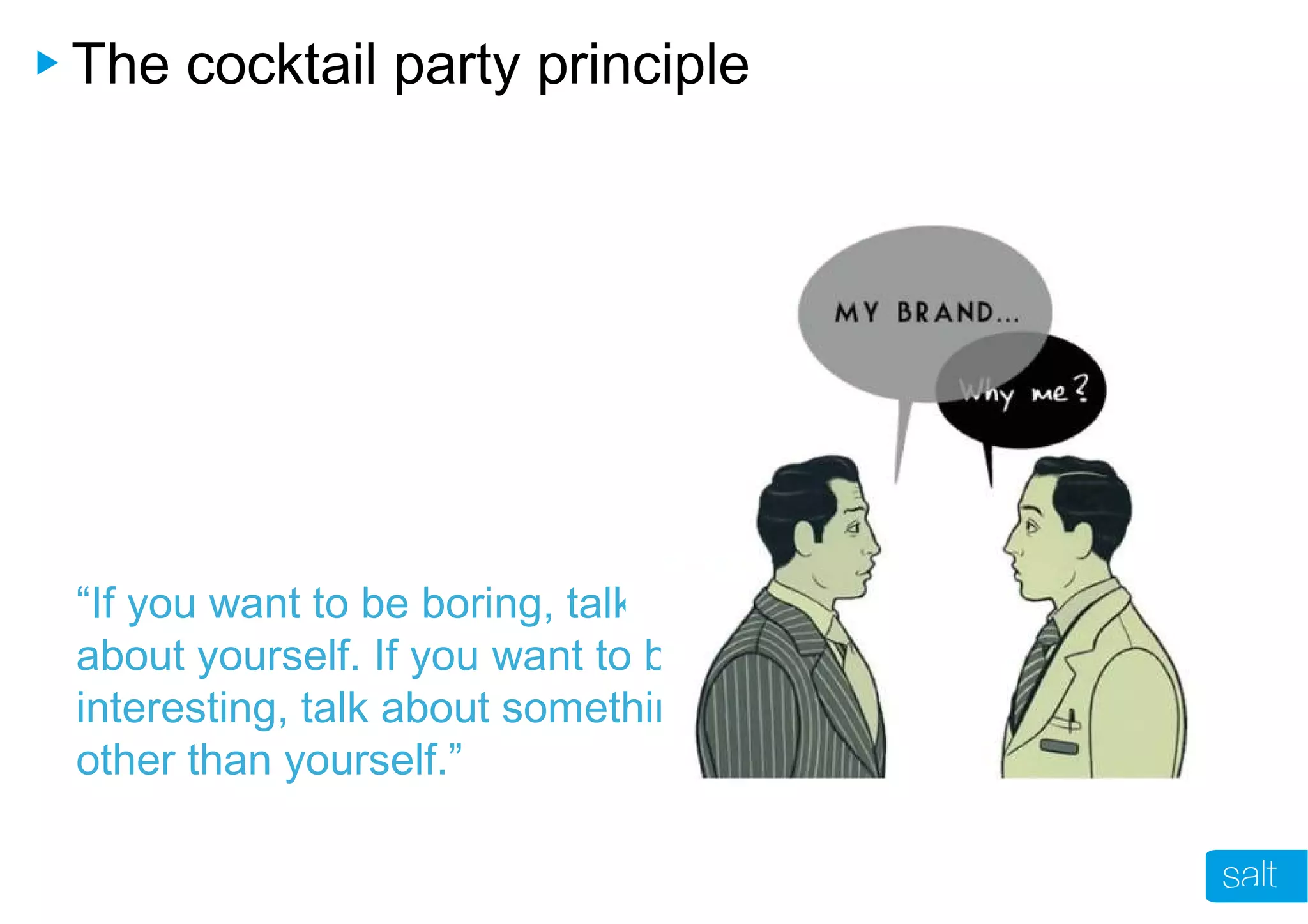
The cocktail party principle
“If you want to be boring, talk
about yourself. If you want to be
interesting, talk about something
other than yourself.”
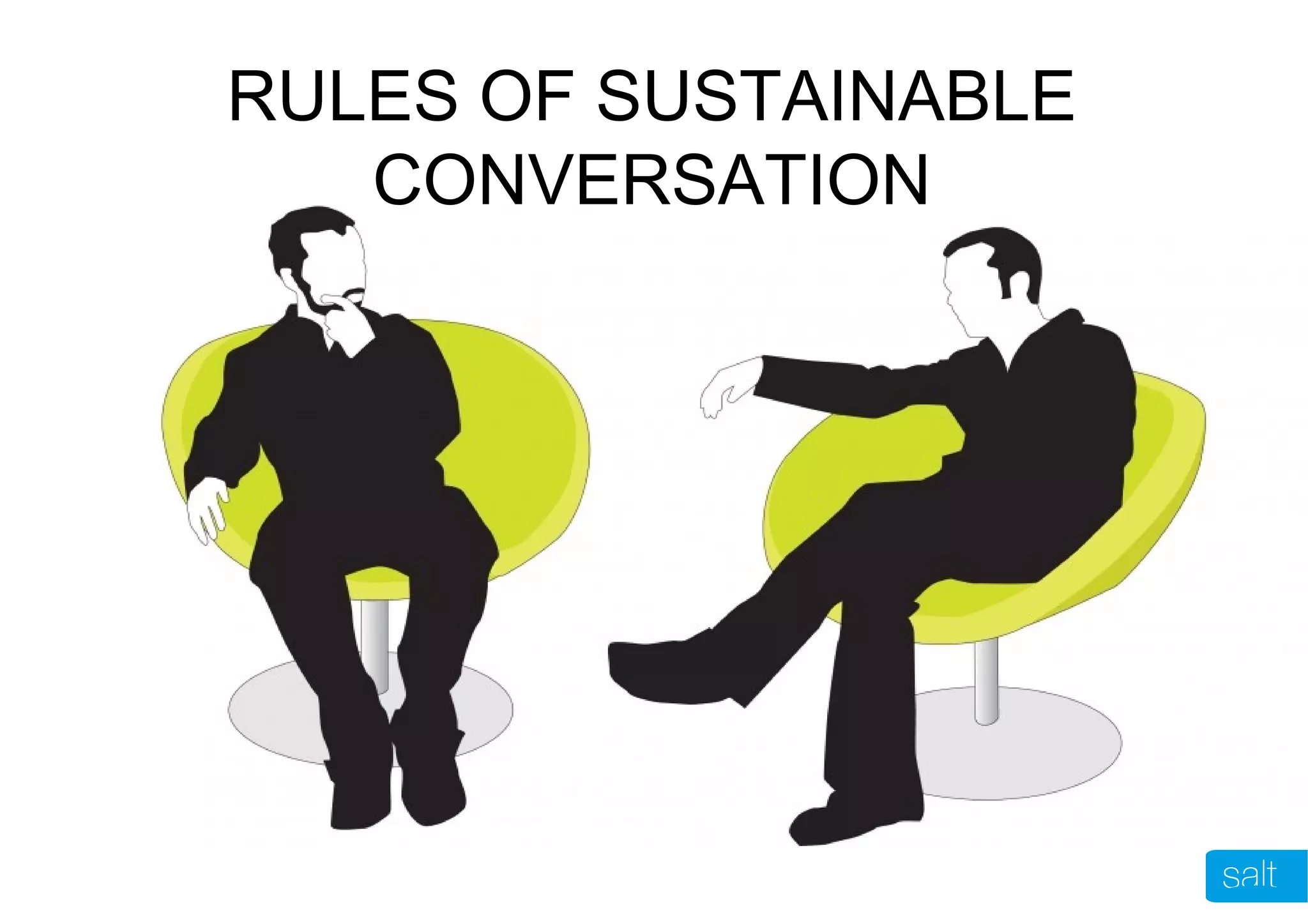
RULES OF SUSTAINABLE
CONVERSATION
>> 0 >> 1 >> 2 >> 3 >> 4 >>
1
Unde rstand yo ur m e dia1
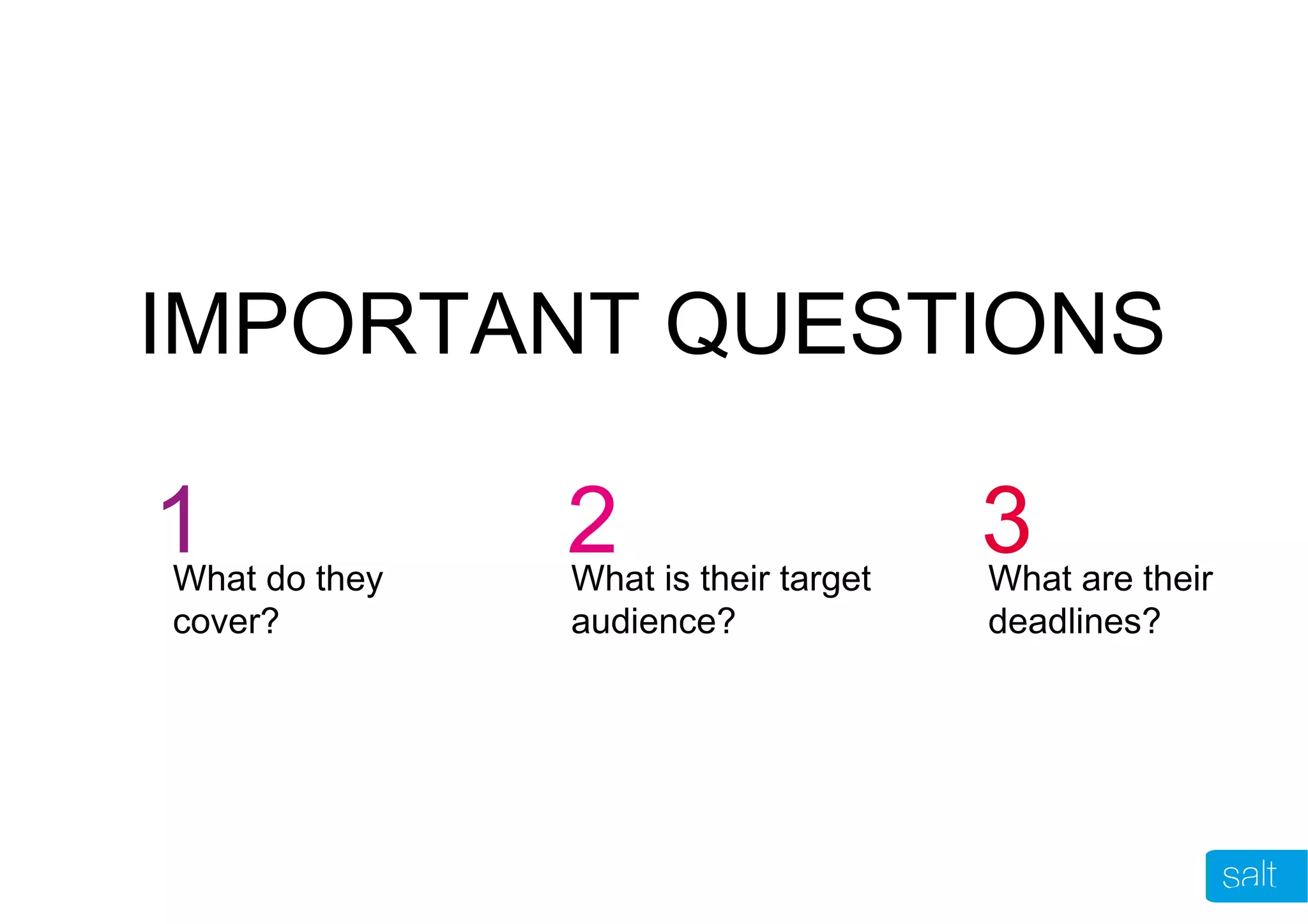
IMPORTANT QUESTIONS
1 2 3What do they
cover?
What is their target
audience?
What are their
deadlines?
>> 0 >> 1 >> 2 >> 3 >> 4 >>
2
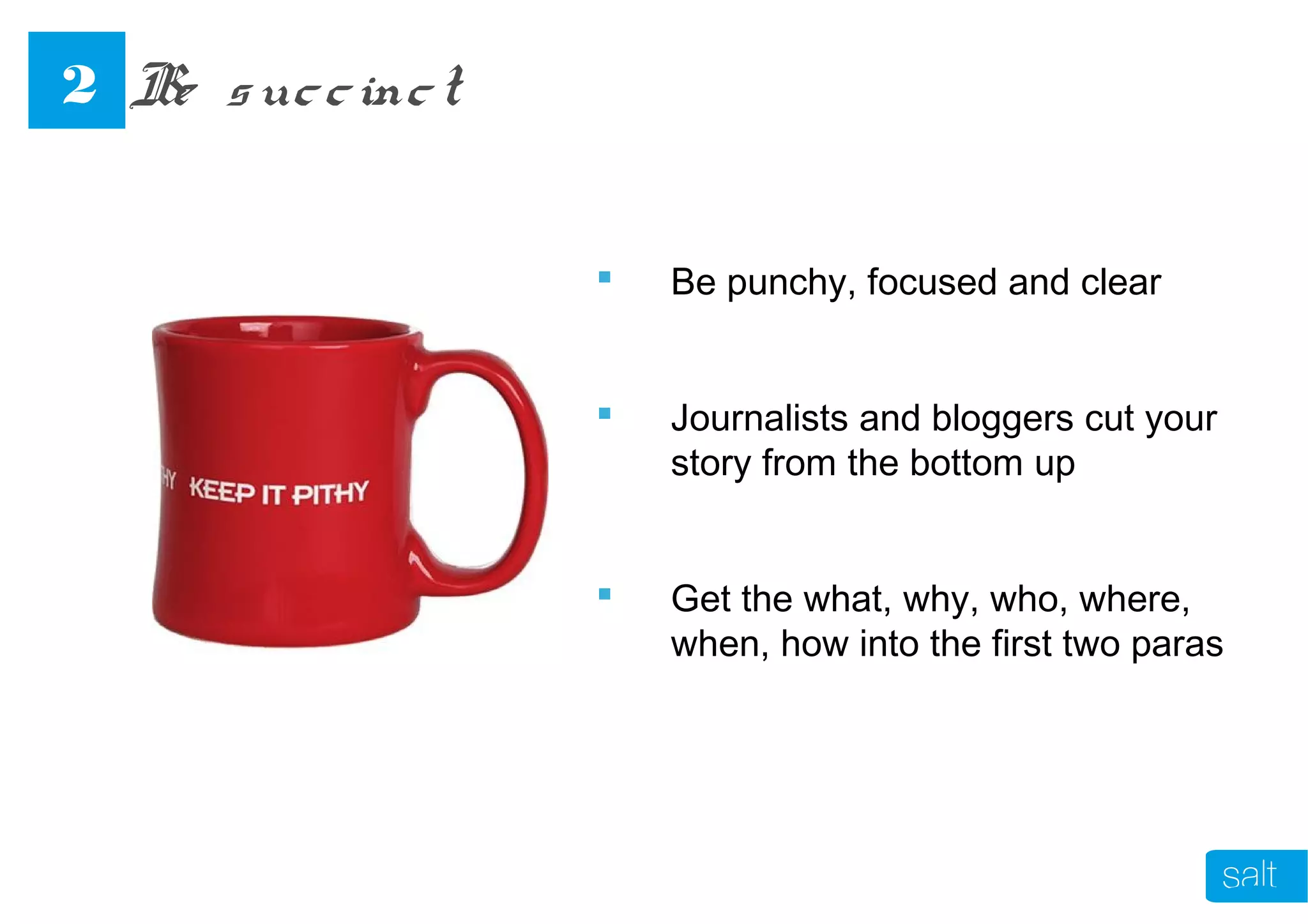
 Be punchy, focused and clear
 Journalists and bloggers cut your
story from the bottom up
 Get the what, why, who, where,
when, how into the first two paras
Be succinct2
>> 0 >> 1 >> 2 >> 3 >> 4 >>
3
Be inte re sting3
 Capture attention from the start
 Provide the kind of content you’d share with your
friends in the pub
 Or with your followers on Twitter
(And don’t be boring!)
>> 0 >> 1 >> 2 >> 3 >> 4 >>
4
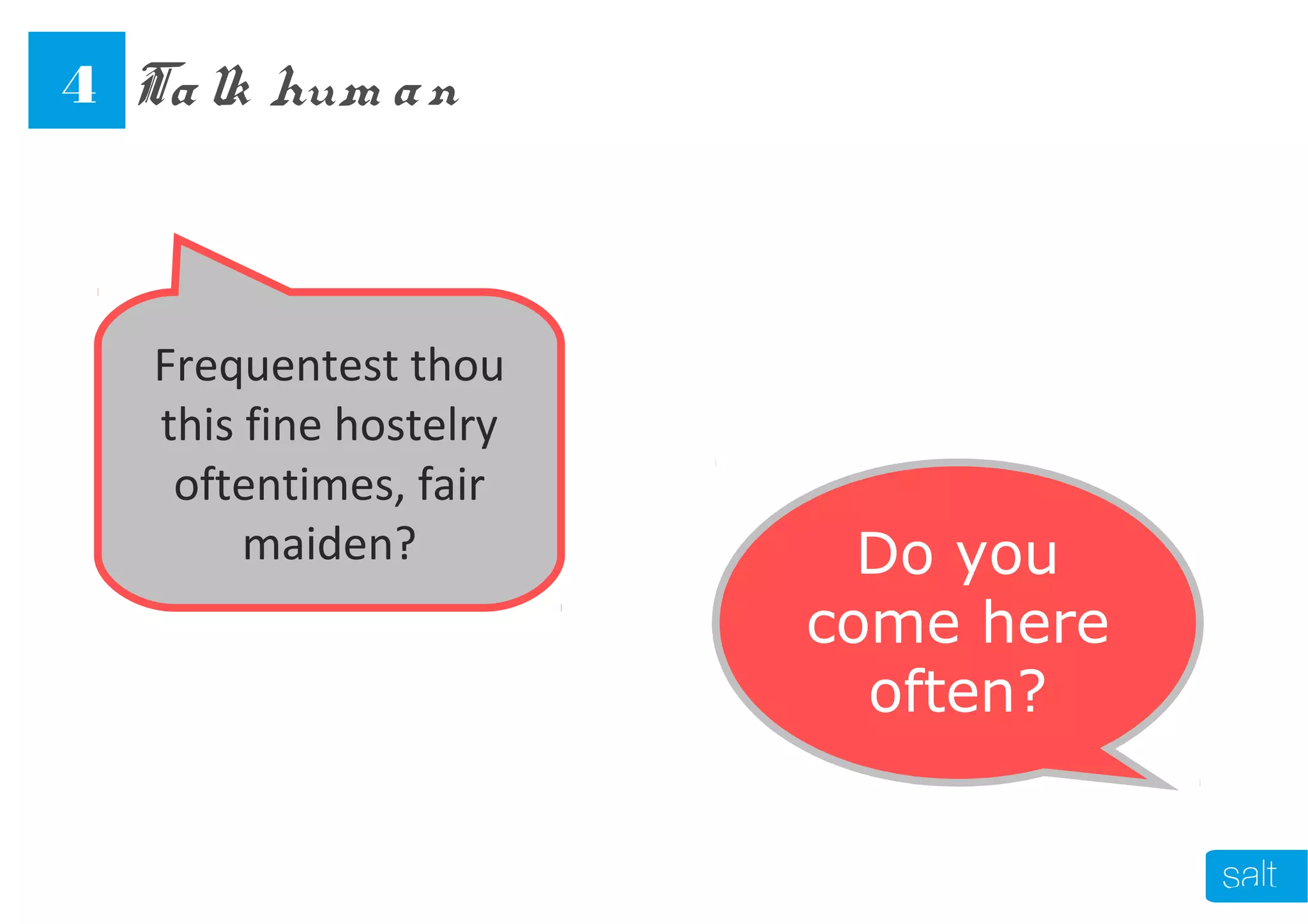
Frequentest thou
this fine hostelry
oftentimes, fair
maiden? Do you
come here
often?
Talk hum an4
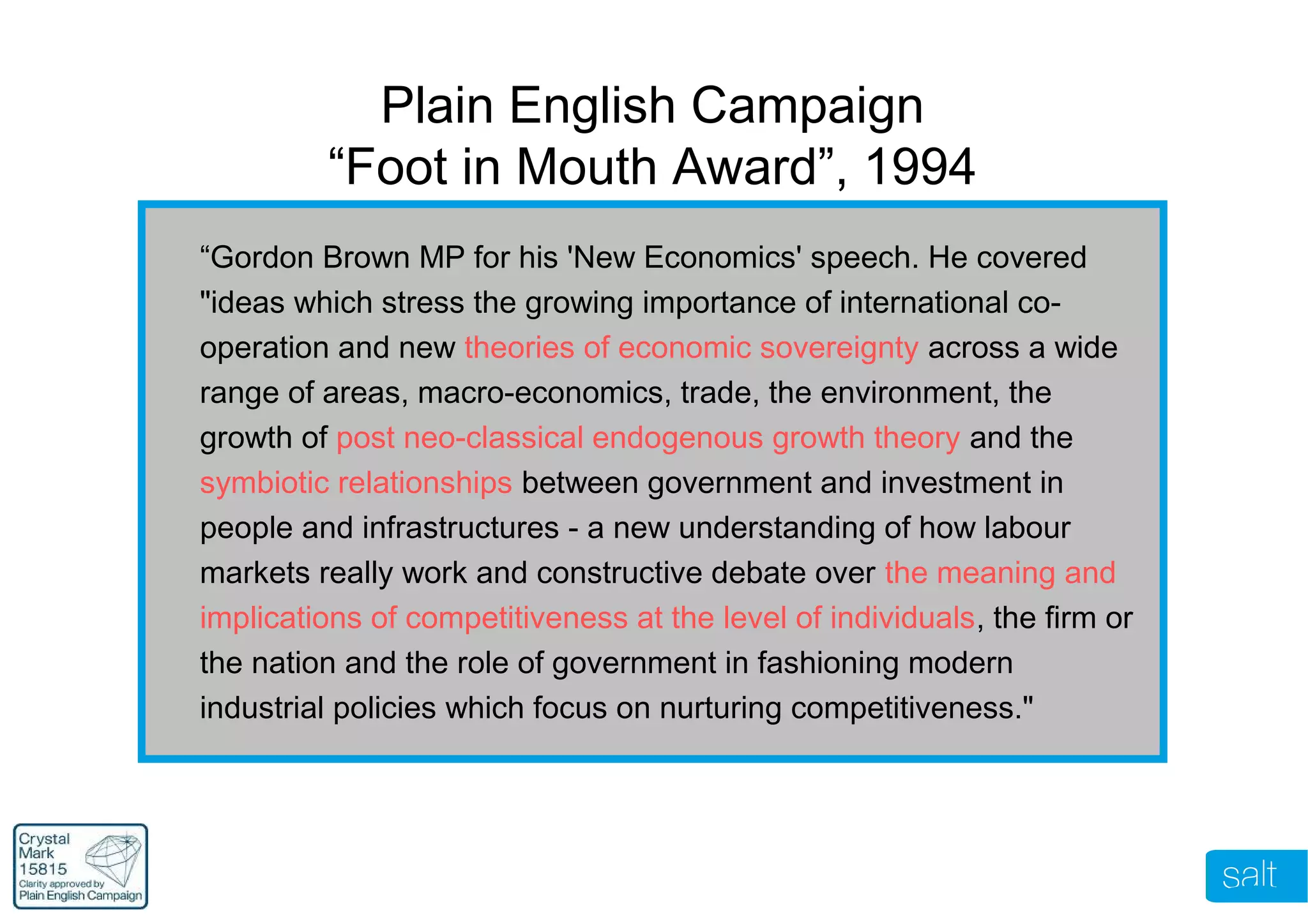
Plain English Campaign
“Foot in Mouth Award”, 1994
“Gordon Brown MP for his 'New Economics' speech. He covered
"ideas which stress the growing importance of international co-
operation and new theories of economic sovereignty across a wide
range of areas, macro-economics, trade, the environment, the
growth of post neo-classical endogenous growth theory and the
symbiotic relationships between government and investment in
people and infrastructures - a new understanding of how labour
markets really work and constructive debate over the meaning and
implications of competitiveness at the level of individuals, the firm or
the nation and the role of government in fashioning modern
industrial policies which focus on nurturing competitiveness."
Talking human
• Avoid sounding like a spokesperson
• Social media has blurred the line between
corporate and consumer speak
• Fashion great client quotes by talking to
them
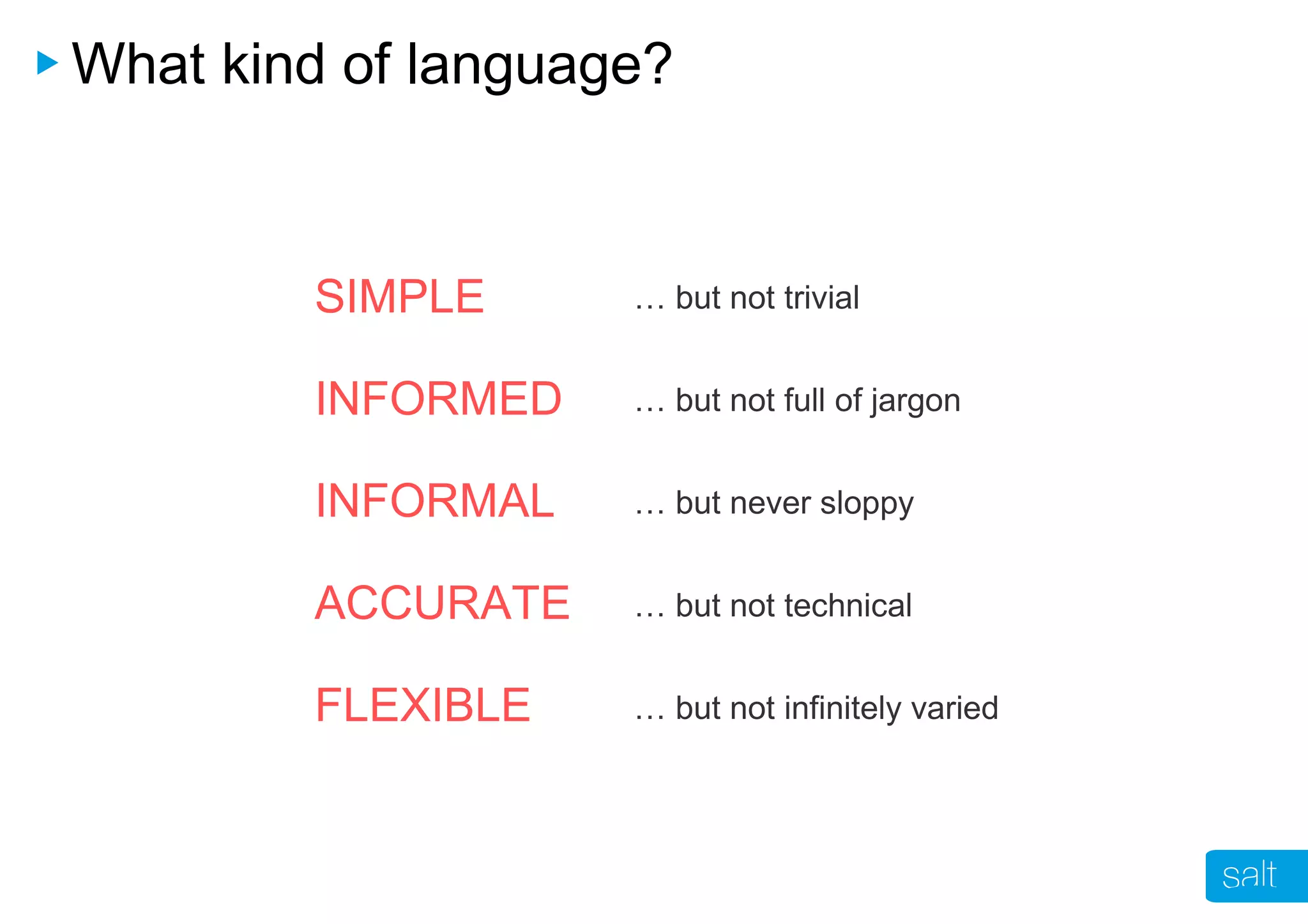
What kind of language?
SIMPLE
INFORMED
INFORMAL
ACCURATE
FLEXIBLE
… but not trivial
… but not full of jargon
… but never sloppy
… but not technical
… but not infinitely varied
>> 0 >> 1 >> 2 >> 3 >> 4 >>
5
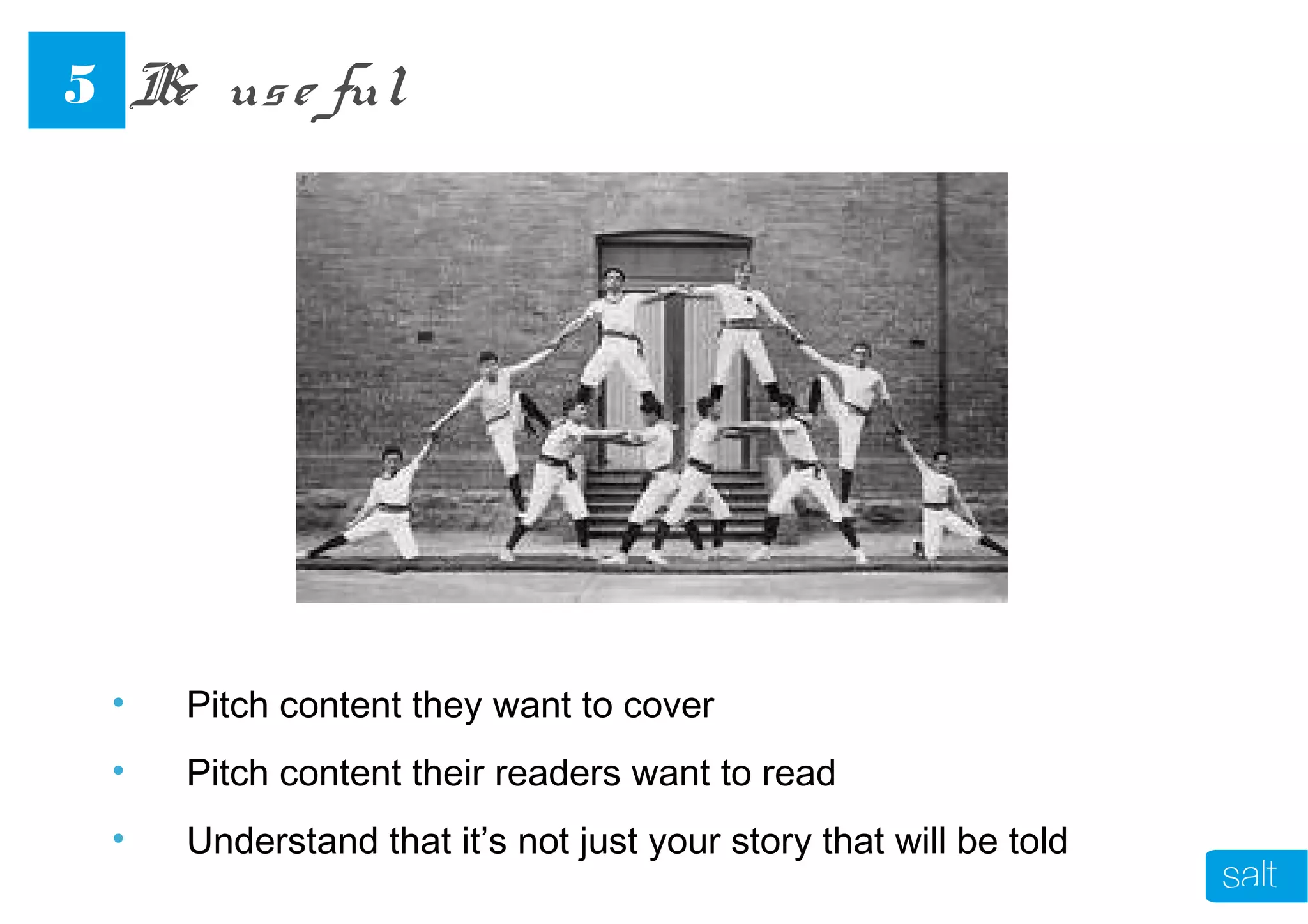
• Pitch content they want to cover
• Pitch content their readers want to read
• Understand that it’s not just your story that will be told
Be use ful5
>> 0 >> 1 >> 2 >> 3 >> 4 >>
6
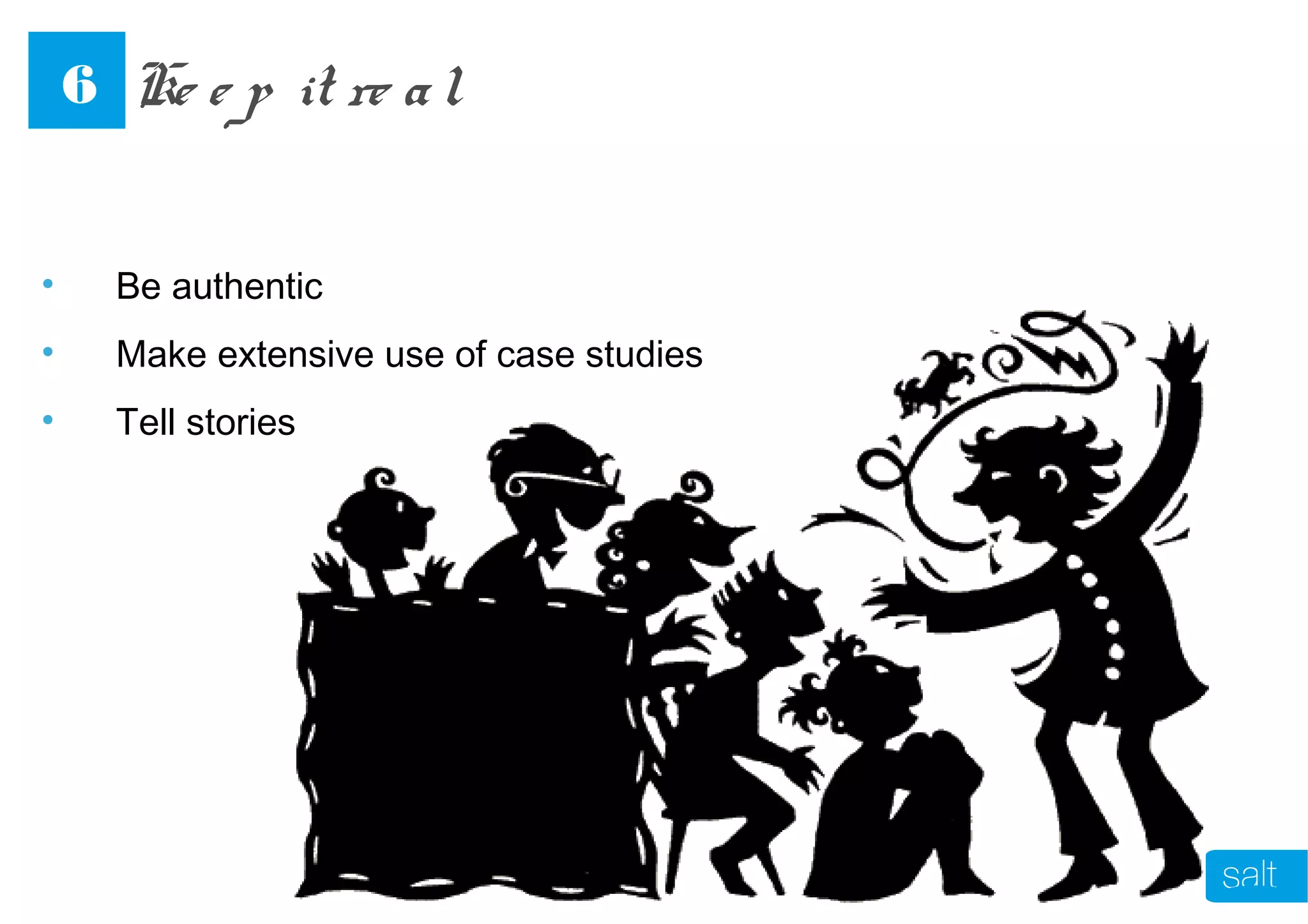
• Be authentic
• Make extensive use of case studies
• Tell stories
Ke e p it re al6
>> 0 >> 1 >> 2 >> 3 >> 4 >>
7
Think visual7
>> 0 >> 1 >> 2 >> 3 >> 4 >>
8
Use facts and fig ure s8
Be able to back up your claims
Use statistics as proof points
Deploy issues first, products second
>> 0 >> 1 >> 2 >> 3 >> 4 >>
9
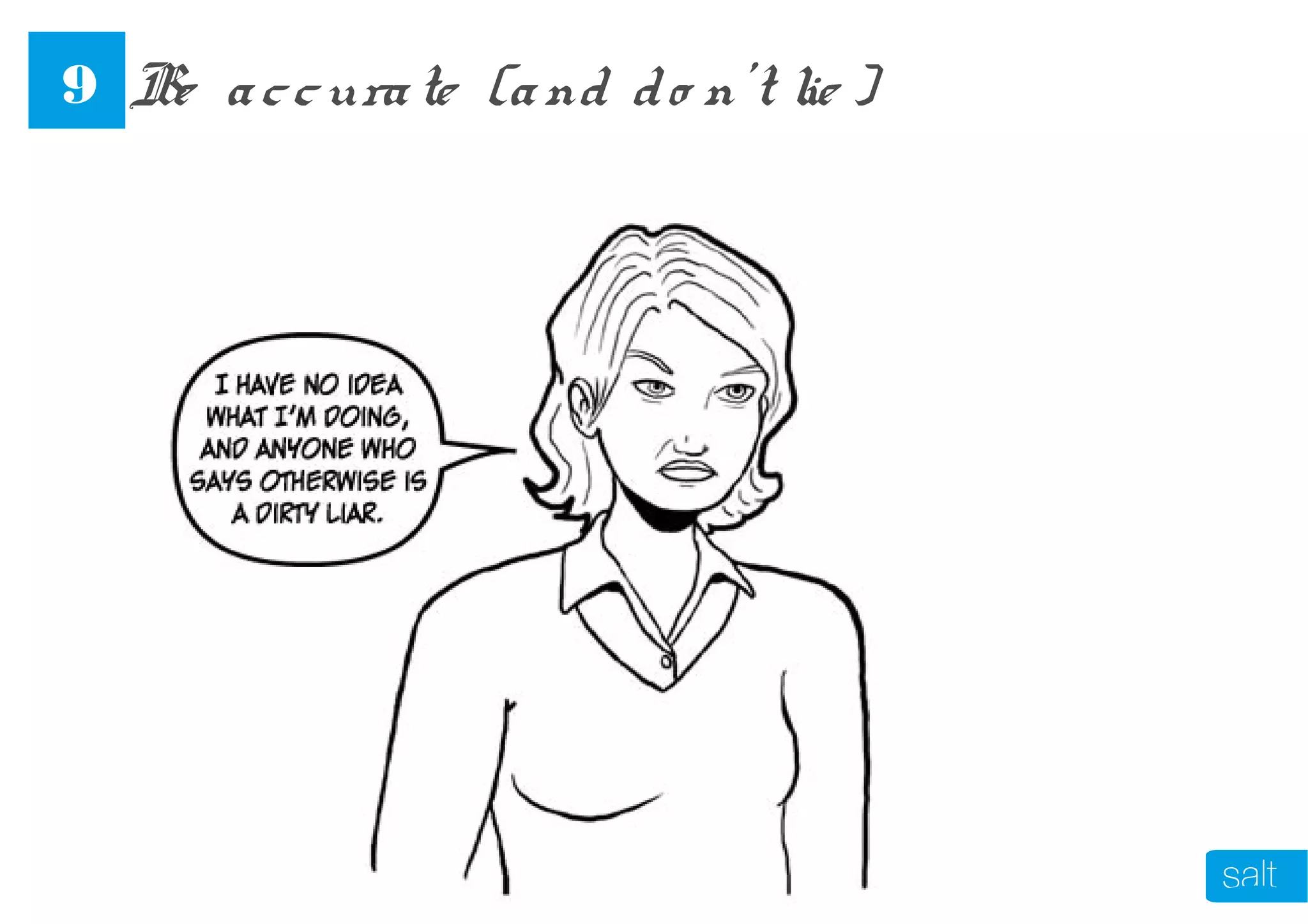
Be accurate (and do n’t lie )9
>> 0 >> 1 >> 2 >> 3 >> 4 >>
10
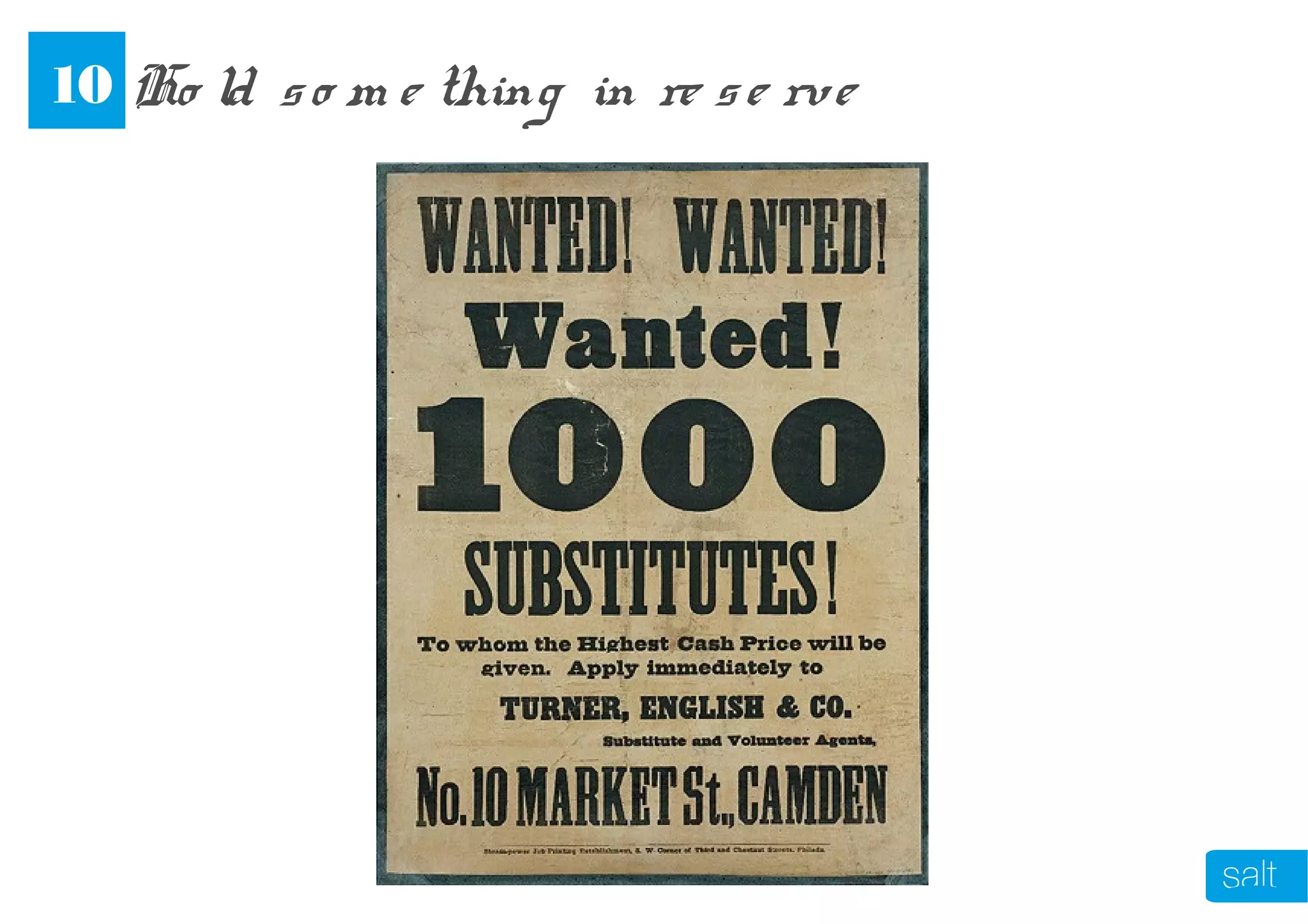
Ho ld so m e thing in re se rve10
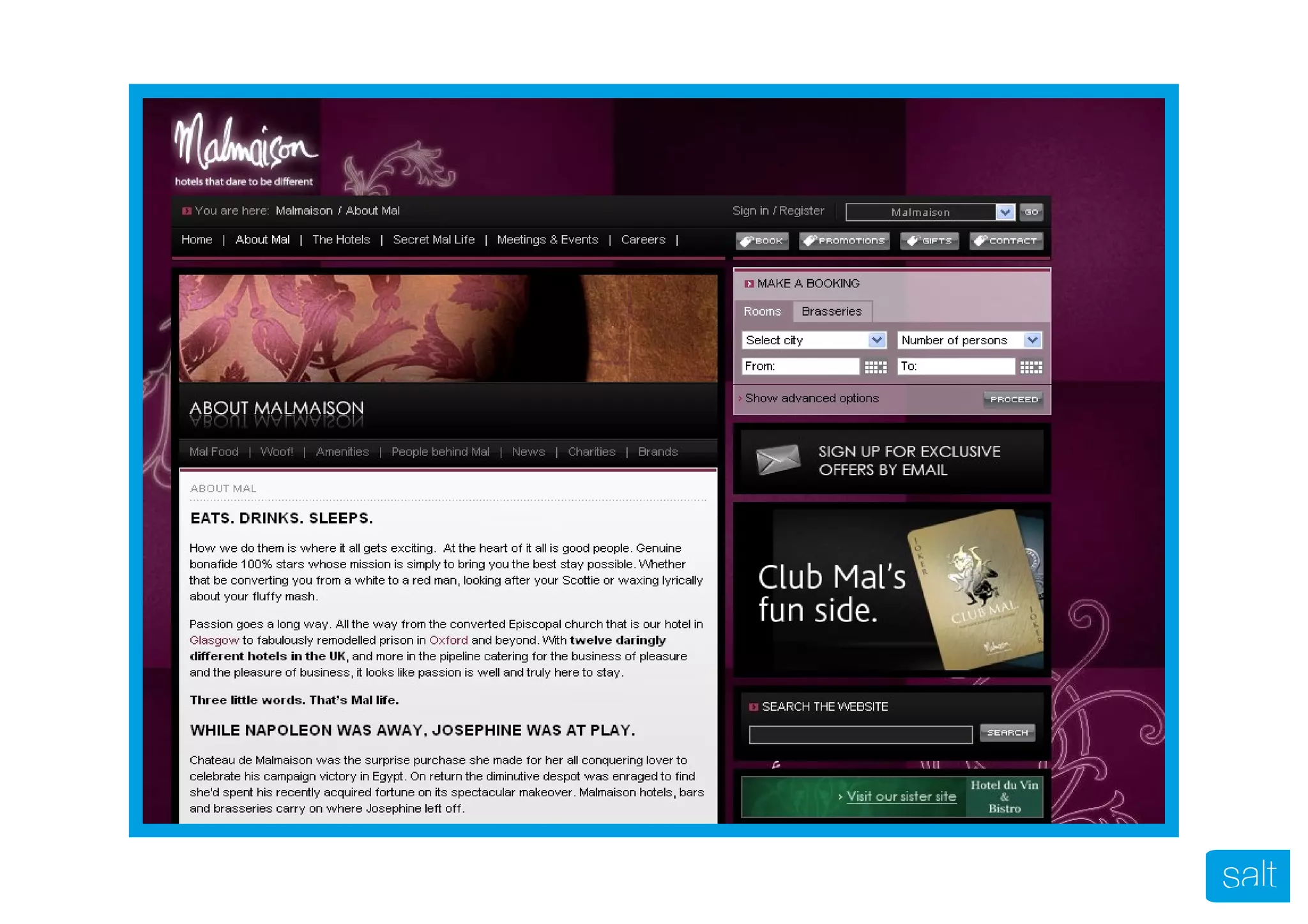
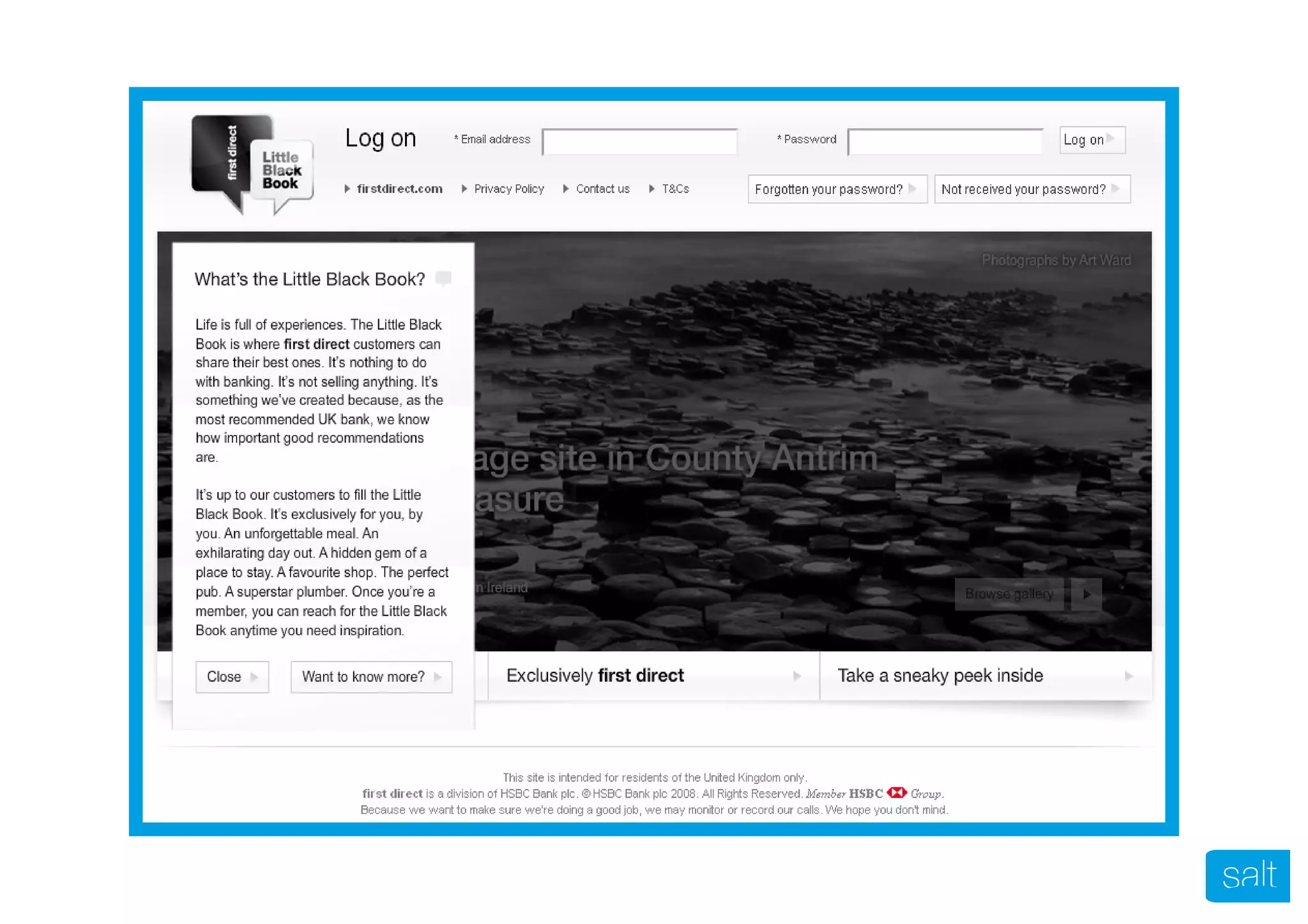
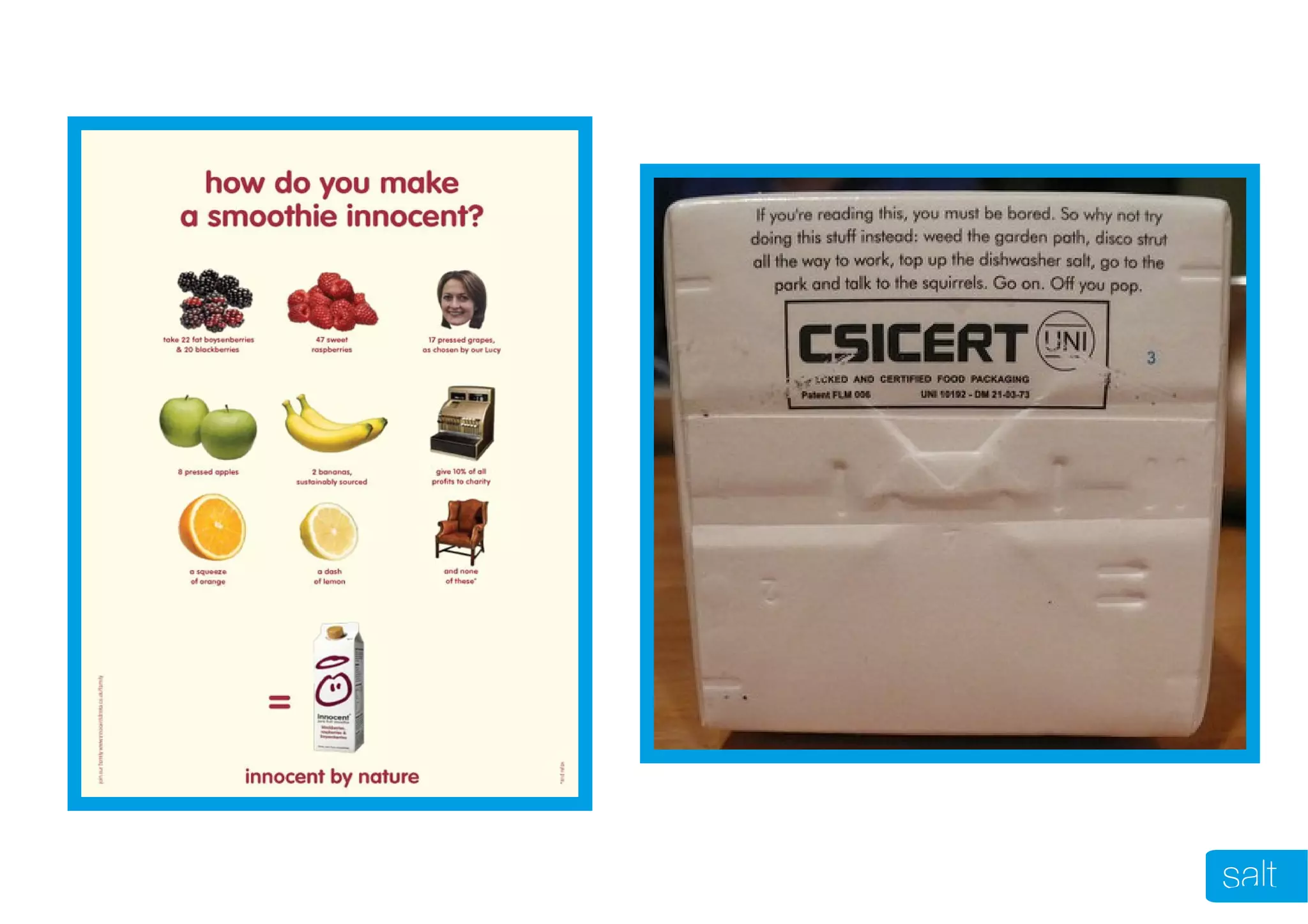
Companies that follow these rules
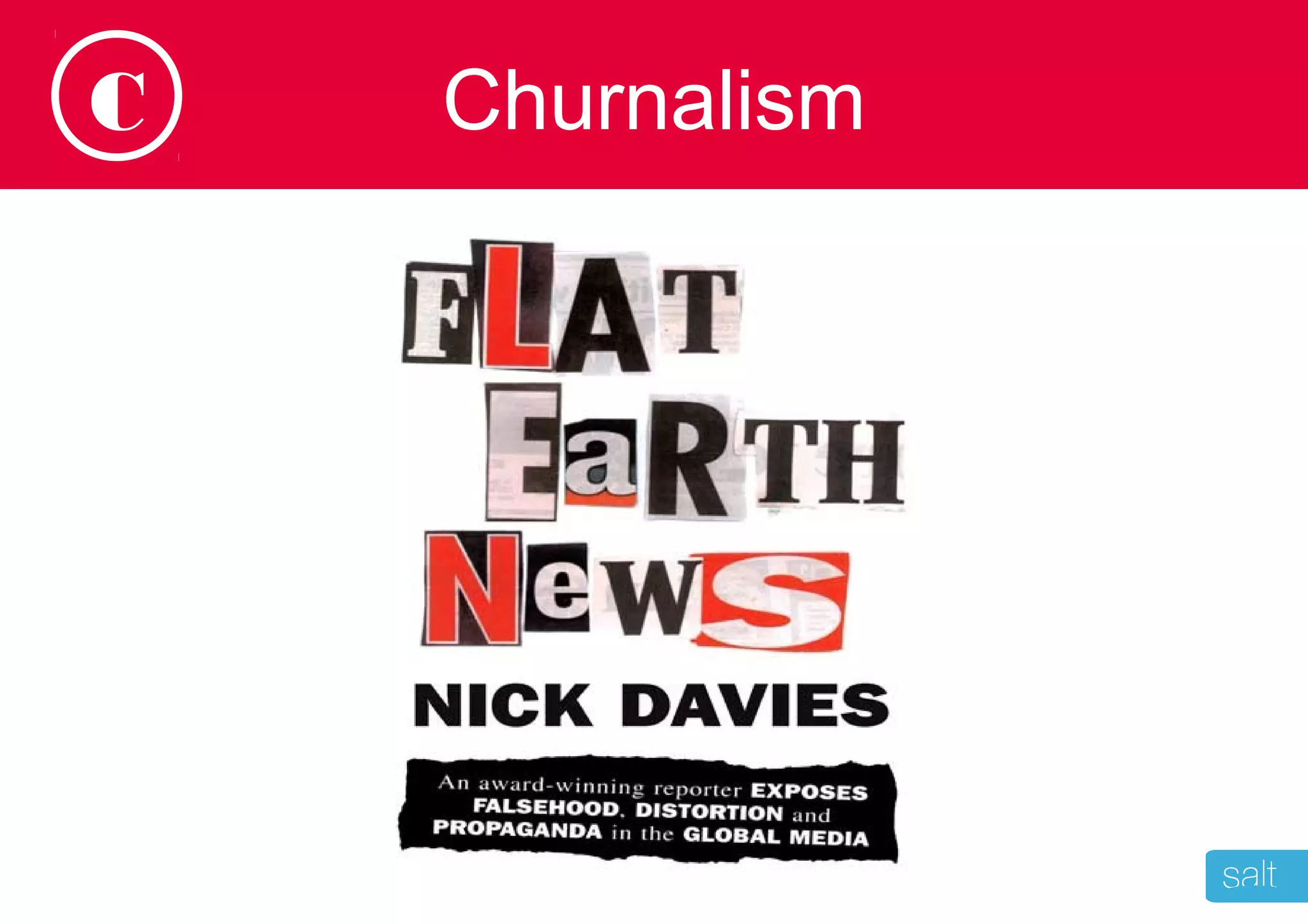
ChurnalismC
Our media have become mass
producers of distortion. An industry
whose task should be to filter out
falsehood has become a conduit
for propaganda and second-hand
news.
Nick Davie s, The Guardian, 20 0 8
“
“
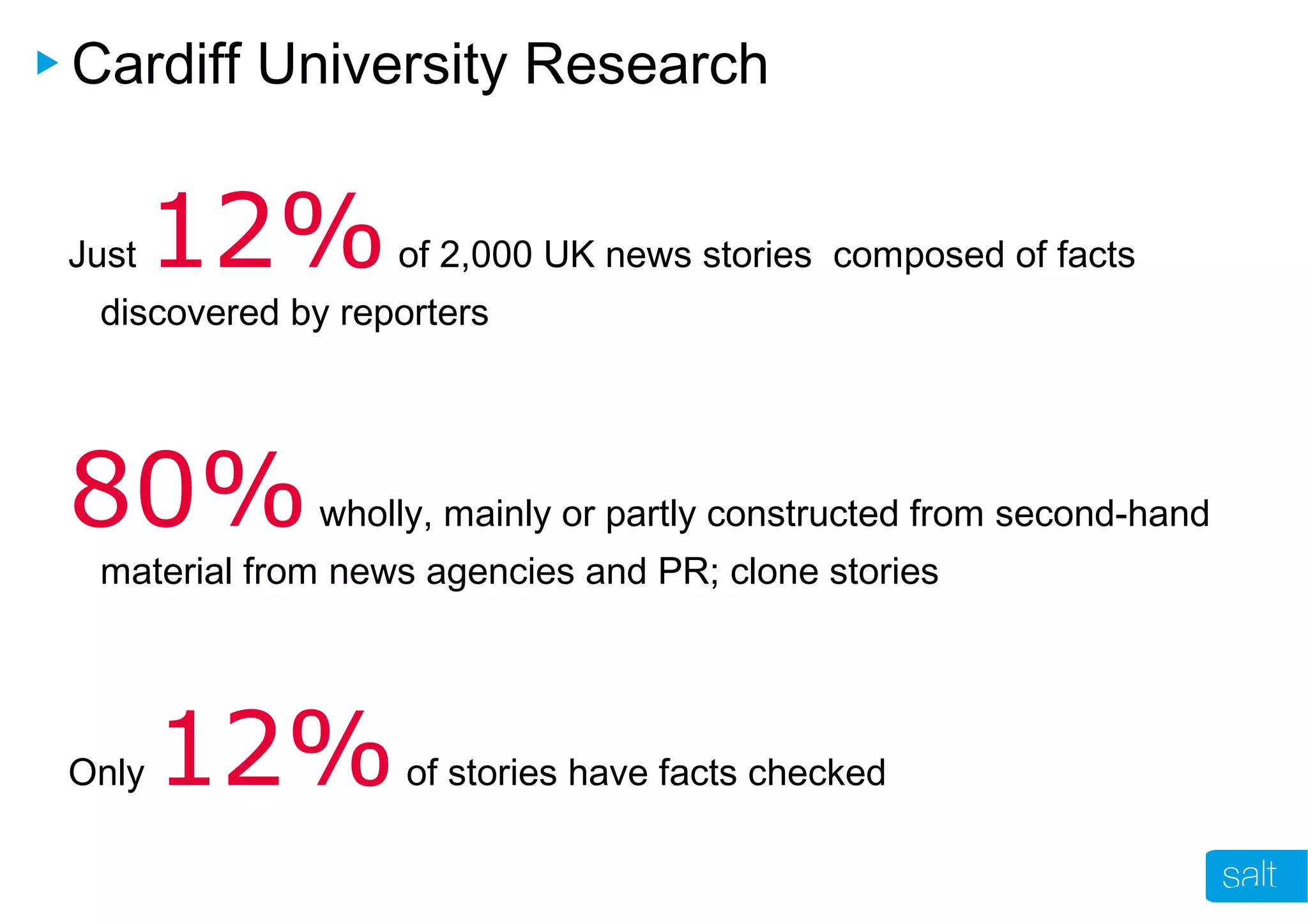
Cardiff University Research
Just 12%of 2,000 UK news stories composed of facts
discovered by reporters
80%wholly, mainly or partly constructed from second-hand
material from news agencies and PR; clone stories
Only 12%of stories have facts checked
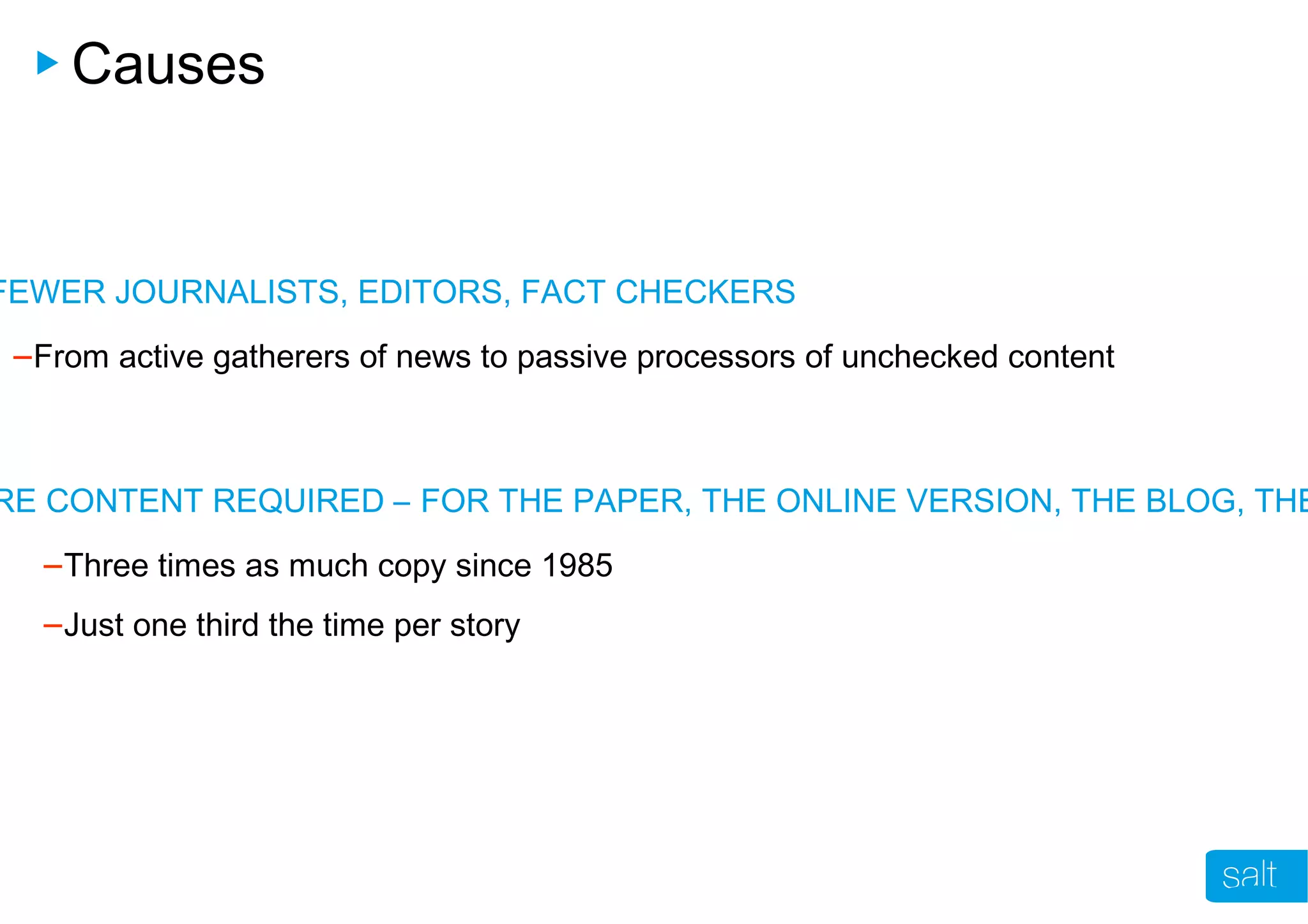
Causes
FEWER JOURNALISTS, EDITORS, FACT CHECKERS
–From active gatherers of news to passive processors of unchecked content
RE CONTENT REQUIRED – FOR THE PAPER, THE ONLINE VERSION, THE BLOG, THE
–Three times as much copy since 1985
–Just one third the time per story
Consequences
 Unchecked stories spread – unchecked – like
wildfire, from news reporters to columnists to
become received wisdom
 Companies with access to the best advisers
have disproportionate influence
 Decline in respect for journalism
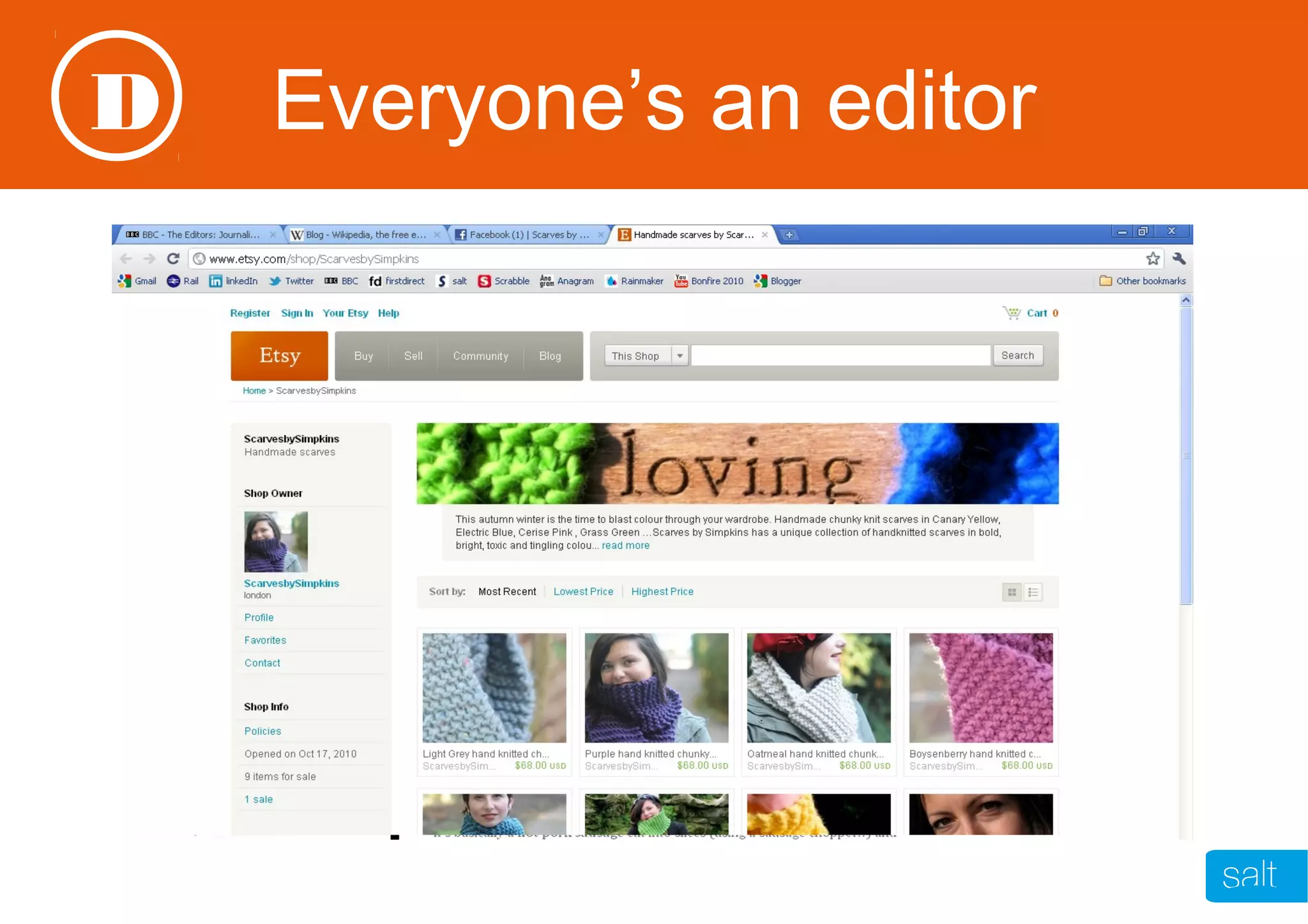
Everyone’s an editorD
Causes
• Mass availability of easy blogging tools and smart
phones
• Single-issue fanatics’ focus – live, multimedia,
interactive fanzines
• Collapse in trust for traditional media and
corporations vs participatory journalism
• Truly democratic – all opinions count
• Harness the wisdom of crowds
Consequences
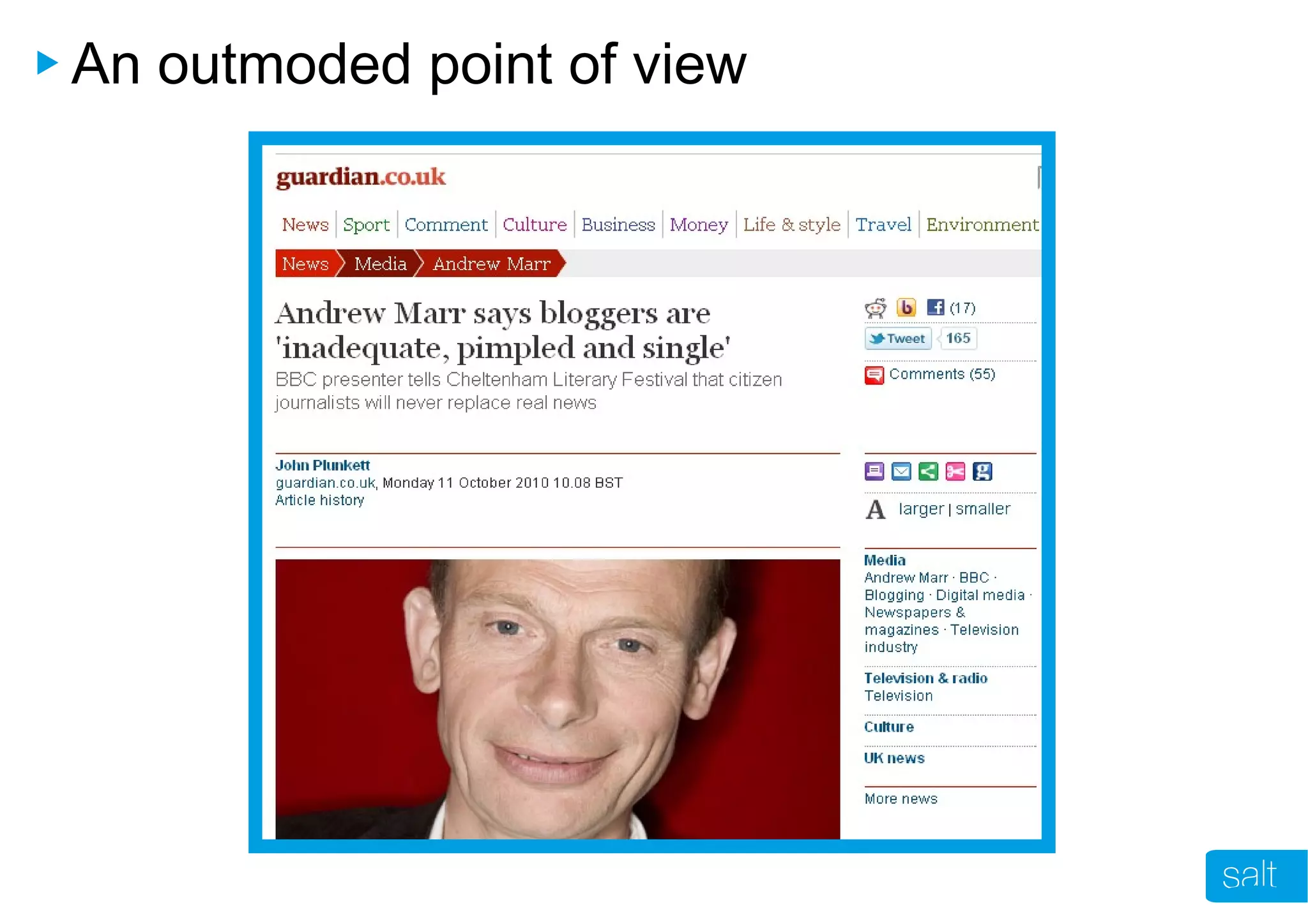
 Mass participation in journalism – the rise of the citizen journalist
 Success through quality content (content creates links, create
popularity)
 Corporate transparency and accountability (nowhere to hide)
An outmoded point of view
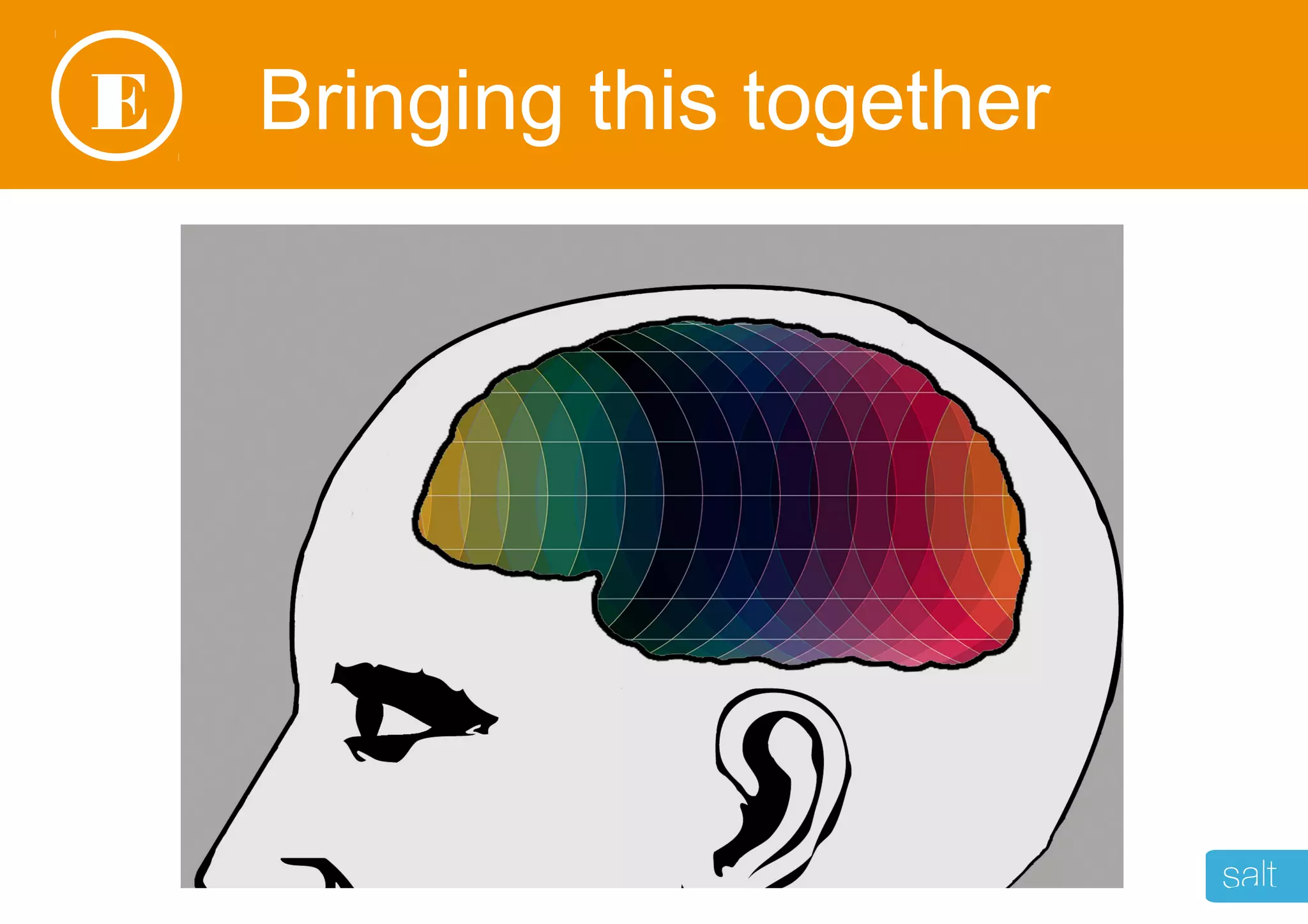
Bringing this togetherE
In summary
• Traditional and social media offer great opportunities for
brands to reach target audiences – if they follow simple
rules
• Pressures on journalists provide brands with
opportunities but also responsibilities
• New channels and technology mean many more voices
matter
Thank you
sam@saltlondon.com
+44 (0)20 8870 6777
Park House, 14 Northfields, London, SW18 1DD
www.saltlondon.com

Writing For The Media 12.11.10

  • 1.
  • 2.
    All the researchI've seen says that editorial publicity is better than paid-for publicity. Sir Martin Sorrell, WPP, The Tim e s “ “
  • 3.
    Agenda A. Do youknow who I am? B. Brand speak C. Churnalism D. Everyone an editor E. Bringing this together
  • 4.
    Do you knowwho I am?A
  • 7.
  • 8.
  • 9.
  • 10.
    In the 30seconds of a normal TV commercial, it is possible to take a telephone call, send a text, receive a photograph, play a game, download a music track, read a magazine and watch commercials at x30 speed. They call it Continuous Partial Attention.” Maurice Saatchi, The Strang e De ath o f Mo de rn Adve rtising “ “
  • 11.
  • 12.
    Brand empathy Any conversationyou have has to be of value to your customers Brands need “social currency” to build relationships and spark reactions Compelling content starts sustainable conversations and cut through the clutter
  • 13.
    The cocktail partyprinciple “If you want to be boring, talk about yourself. If you want to be interesting, talk about something other than yourself.”
  • 14.
  • 15.
    >> 0 >>1 >> 2 >> 3 >> 4 >> 1
  • 16.
    Unde rstand your m e dia1
  • 17.
    IMPORTANT QUESTIONS 1 23What do they cover? What is their target audience? What are their deadlines?
  • 18.
    >> 0 >>1 >> 2 >> 3 >> 4 >> 2
  • 19.
     Be punchy,focused and clear  Journalists and bloggers cut your story from the bottom up  Get the what, why, who, where, when, how into the first two paras Be succinct2
  • 20.
    >> 0 >>1 >> 2 >> 3 >> 4 >> 3
  • 21.
    Be inte resting3
  • 22.
     Capture attentionfrom the start  Provide the kind of content you’d share with your friends in the pub  Or with your followers on Twitter (And don’t be boring!)
  • 23.
    >> 0 >>1 >> 2 >> 3 >> 4 >> 4
  • 24.
    Frequentest thou this finehostelry oftentimes, fair maiden? Do you come here often? Talk hum an4
  • 25.
    Plain English Campaign “Footin Mouth Award”, 1994 “Gordon Brown MP for his 'New Economics' speech. He covered "ideas which stress the growing importance of international co- operation and new theories of economic sovereignty across a wide range of areas, macro-economics, trade, the environment, the growth of post neo-classical endogenous growth theory and the symbiotic relationships between government and investment in people and infrastructures - a new understanding of how labour markets really work and constructive debate over the meaning and implications of competitiveness at the level of individuals, the firm or the nation and the role of government in fashioning modern industrial policies which focus on nurturing competitiveness."
  • 26.
    Talking human • Avoidsounding like a spokesperson • Social media has blurred the line between corporate and consumer speak • Fashion great client quotes by talking to them
  • 27.
    What kind oflanguage? SIMPLE INFORMED INFORMAL ACCURATE FLEXIBLE … but not trivial … but not full of jargon … but never sloppy … but not technical … but not infinitely varied
  • 28.
    >> 0 >>1 >> 2 >> 3 >> 4 >> 5
  • 29.
    • Pitch contentthey want to cover • Pitch content their readers want to read • Understand that it’s not just your story that will be told Be use ful5
  • 30.
    >> 0 >>1 >> 2 >> 3 >> 4 >> 6
  • 31.
    • Be authentic •Make extensive use of case studies • Tell stories Ke e p it re al6
  • 32.
    >> 0 >>1 >> 2 >> 3 >> 4 >> 7
  • 33.
  • 34.
    >> 0 >>1 >> 2 >> 3 >> 4 >> 8
  • 35.
    Use facts andfig ure s8 Be able to back up your claims Use statistics as proof points Deploy issues first, products second
  • 36.
    >> 0 >>1 >> 2 >> 3 >> 4 >> 9
  • 37.
    Be accurate (anddo n’t lie )9
  • 38.
    >> 0 >>1 >> 2 >> 3 >> 4 >> 10
  • 39.
    Ho ld som e thing in re se rve10
  • 40.
  • 44.
  • 45.
    Our media havebecome mass producers of distortion. An industry whose task should be to filter out falsehood has become a conduit for propaganda and second-hand news. Nick Davie s, The Guardian, 20 0 8 “ “
  • 46.
    Cardiff University Research Just12%of 2,000 UK news stories composed of facts discovered by reporters 80%wholly, mainly or partly constructed from second-hand material from news agencies and PR; clone stories Only 12%of stories have facts checked
  • 47.
    Causes FEWER JOURNALISTS, EDITORS,FACT CHECKERS –From active gatherers of news to passive processors of unchecked content RE CONTENT REQUIRED – FOR THE PAPER, THE ONLINE VERSION, THE BLOG, THE –Three times as much copy since 1985 –Just one third the time per story
  • 48.
    Consequences  Unchecked storiesspread – unchecked – like wildfire, from news reporters to columnists to become received wisdom  Companies with access to the best advisers have disproportionate influence  Decline in respect for journalism
  • 49.
  • 50.
    Causes • Mass availabilityof easy blogging tools and smart phones • Single-issue fanatics’ focus – live, multimedia, interactive fanzines • Collapse in trust for traditional media and corporations vs participatory journalism • Truly democratic – all opinions count • Harness the wisdom of crowds
  • 51.
    Consequences  Mass participationin journalism – the rise of the citizen journalist  Success through quality content (content creates links, create popularity)  Corporate transparency and accountability (nowhere to hide)
  • 52.
  • 53.
  • 54.
    In summary • Traditionaland social media offer great opportunities for brands to reach target audiences – if they follow simple rules • Pressures on journalists provide brands with opportunities but also responsibilities • New channels and technology mean many more voices matter
  • 56.
    Thank you sam@saltlondon.com +44 (0)208870 6777 Park House, 14 Northfields, London, SW18 1DD www.saltlondon.com

Editor's Notes

  • #27 I’ve put your original image to the side, in case you still want to use it