
PERFORMANCE
MANAGEMENT
Session 3-Working Capital Management
Topics Covered

Elements of working capital
Objectives of working capital management
Shortening working capital cycle
Overtrading
Working capital Ratios


                               KAPP Edge Solutions
Elements of working capital


                 KAPP Edge Solutions
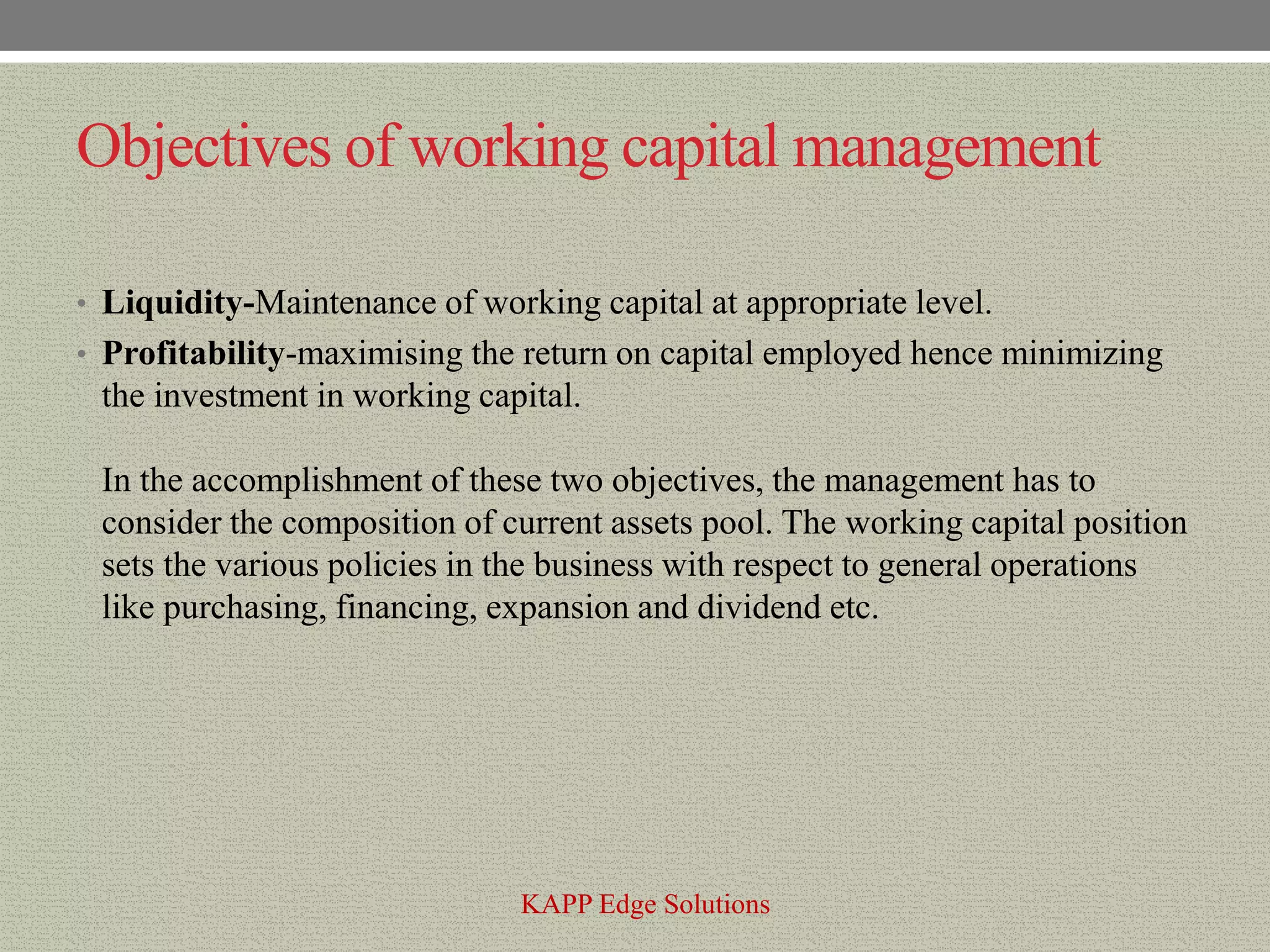
Objectives of working capital management

• Liquidity-Maintenance of working capital at appropriate level.
• Profitability-maximising the return on capital employed hence minimizing
 the investment in working capital.

 In the accomplishment of these two objectives, the management has to
 consider the composition of current assets pool. The working capital position
 sets the various policies in the business with respect to general operations
 like purchasing, financing, expansion and dividend etc.


                               KAPP Edge Solutions
Cash flow Vs. Profit

• Unprofitable companies can survive if they have liquidity.
• Profitable companies can not survive if they don’t have liquidity


                               KAPP Edge Solutions
Operating Cycle


                  KAPP Edge Solutions
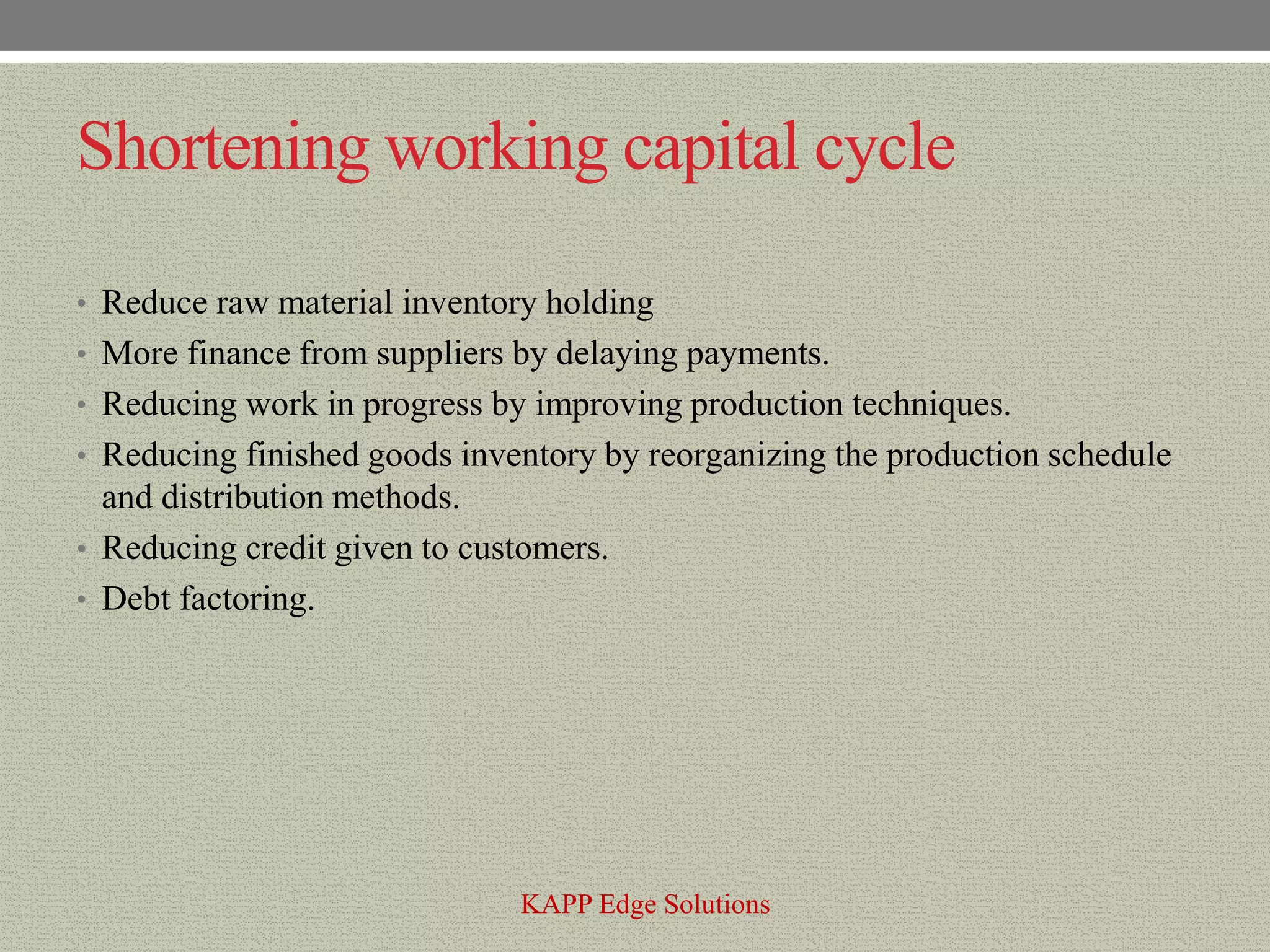
Shortening working capital cycle

• Reduce raw material inventory holding
• More finance from suppliers by delaying payments.
• Reducing work in progress by improving production techniques.
• Reducing finished goods inventory by reorganizing the production schedule
  and distribution methods.
• Reducing credit given to customers.
• Debt factoring.


                              KAPP Edge Solutions
Overtrading
• Meaning- when the business is not having access to sufficient capital to fund
 the increase.

• Indicators:
Rapid increase in turnover
Rapid increase in current assets
Dramatic drops in liquidity ratios
Most of the increase is financed by credit.


                               KAPP Edge Solutions
Overtrading-Solutions

Raising of more long term capital
Profit should be more than increase in working capital
Improve working capital management


                              KAPP Edge Solutions
Working capital Ratios
 Current ratio:

• Current asset
• Current liabilities


  Quick ratio:
• Current asset-inventory
   Current liabilities

Current Assets - Current Liabilities = Working Capital


                               KAPP Edge Solutions
Working capital Ratios
 Inventory Turnover Ratio:

  Raw Material
 ( Average inventory / Material usages) x 365 days

  Work in process:
 ( Average inventory / Production cost) x 365 days

   Finished Goods:
• ( Average inventory / Cost of goods sold ) x 365 days


• Significance-this tells us how long on average each unit of stock is in the
 shop/warehouse etc. before being sold. Clearly, the shorter this length of time
 the better.
                                KAPP Edge Solutions
Working capital Ratios
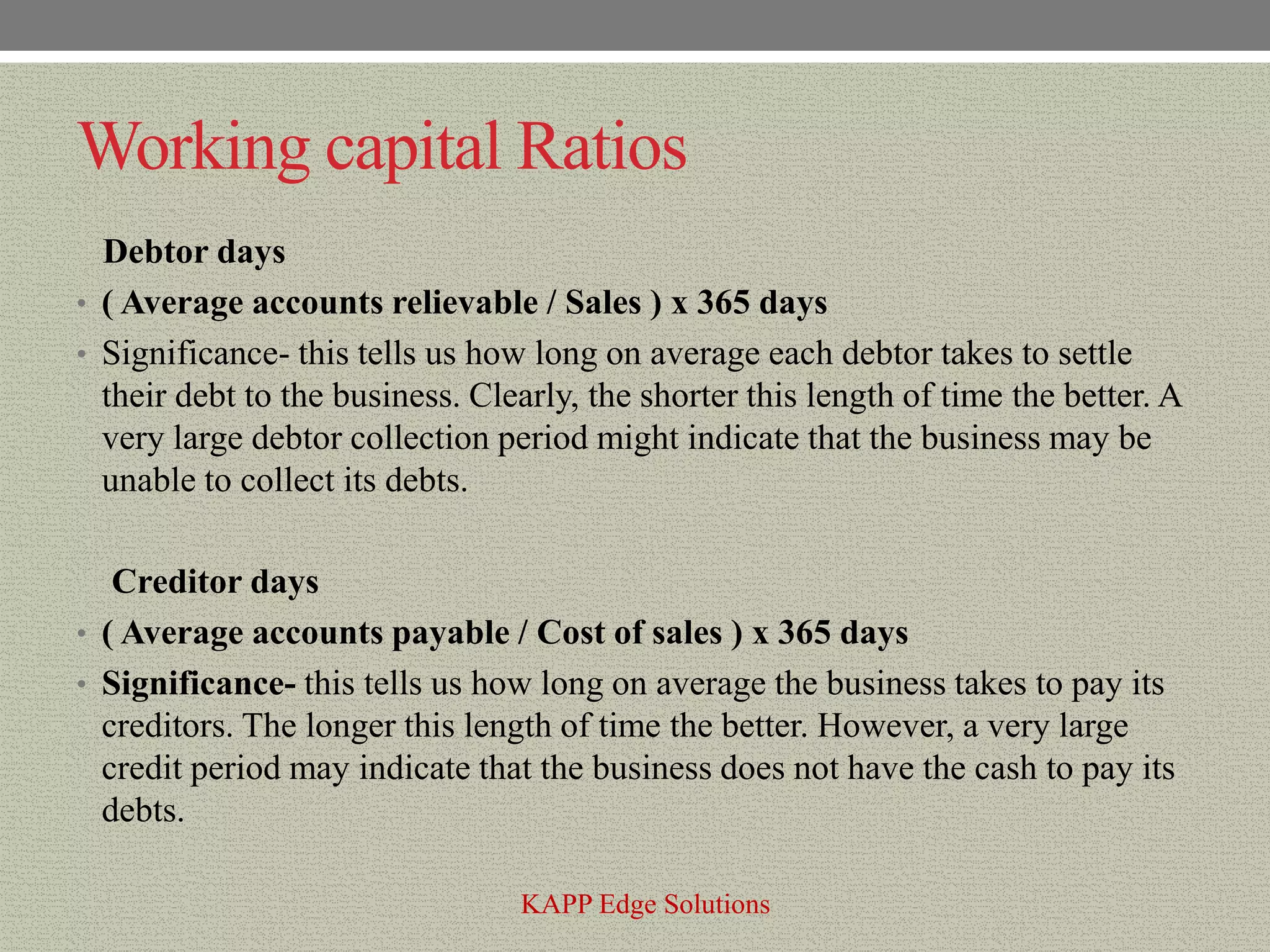
  Debtor days
• ( Average accounts relievable / Sales ) x 365 days
• Significance- this tells us how long on average each debtor takes to settle
  their debt to the business. Clearly, the shorter this length of time the better. A
  very large debtor collection period might indicate that the business may be
  unable to collect its debts.

   Creditor days
• ( Average accounts payable / Cost of sales ) x 365 days
• Significance- this tells us how long on average the business takes to pay its
  creditors. The longer this length of time the better. However, a very large
  credit period may indicate that the business does not have the cash to pay its
  debts.

                                 KAPP Edge Solutions
KAPP EDGE SOLUTIONS
WWW.ONLINEGLOBALCAREER.COM

Working capital management

  • 1.
  • 2.
    Topics Covered Elements ofworking capital Objectives of working capital management Shortening working capital cycle Overtrading Working capital Ratios KAPP Edge Solutions
  • 3.
    Elements of workingcapital KAPP Edge Solutions
  • 4.
    Objectives of workingcapital management • Liquidity-Maintenance of working capital at appropriate level. • Profitability-maximising the return on capital employed hence minimizing the investment in working capital. In the accomplishment of these two objectives, the management has to consider the composition of current assets pool. The working capital position sets the various policies in the business with respect to general operations like purchasing, financing, expansion and dividend etc. KAPP Edge Solutions
  • 5.
    Cash flow Vs.Profit • Unprofitable companies can survive if they have liquidity. • Profitable companies can not survive if they don’t have liquidity KAPP Edge Solutions
  • 6.
    Operating Cycle KAPP Edge Solutions
  • 7.
    Shortening working capitalcycle • Reduce raw material inventory holding • More finance from suppliers by delaying payments. • Reducing work in progress by improving production techniques. • Reducing finished goods inventory by reorganizing the production schedule and distribution methods. • Reducing credit given to customers. • Debt factoring. KAPP Edge Solutions
  • 8.
    Overtrading • Meaning- whenthe business is not having access to sufficient capital to fund the increase. • Indicators: Rapid increase in turnover Rapid increase in current assets Dramatic drops in liquidity ratios Most of the increase is financed by credit. KAPP Edge Solutions
  • 9.
    Overtrading-Solutions Raising of morelong term capital Profit should be more than increase in working capital Improve working capital management KAPP Edge Solutions
  • 10.
    Working capital Ratios Current ratio: • Current asset • Current liabilities Quick ratio: • Current asset-inventory Current liabilities Current Assets - Current Liabilities = Working Capital KAPP Edge Solutions
  • 11.
    Working capital Ratios Inventory Turnover Ratio: Raw Material ( Average inventory / Material usages) x 365 days Work in process: ( Average inventory / Production cost) x 365 days Finished Goods: • ( Average inventory / Cost of goods sold ) x 365 days • Significance-this tells us how long on average each unit of stock is in the shop/warehouse etc. before being sold. Clearly, the shorter this length of time the better. KAPP Edge Solutions
  • 12.
    Working capital Ratios Debtor days • ( Average accounts relievable / Sales ) x 365 days • Significance- this tells us how long on average each debtor takes to settle their debt to the business. Clearly, the shorter this length of time the better. A very large debtor collection period might indicate that the business may be unable to collect its debts. Creditor days • ( Average accounts payable / Cost of sales ) x 365 days • Significance- this tells us how long on average the business takes to pay its creditors. The longer this length of time the better. However, a very large credit period may indicate that the business does not have the cash to pay its debts. KAPP Edge Solutions
  • 13.