WIRING A RING MAIN


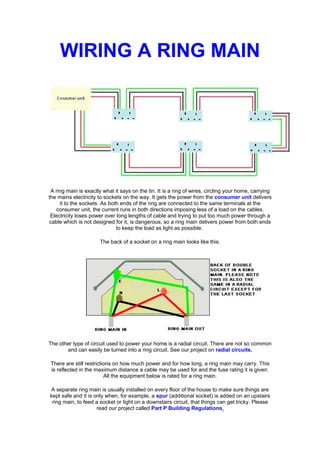
 A ring main is exactly what it says on the tin. It is a ring of wires, circling your home, carrying
the mains electricity to sockets on the way. It gets the power from the consumer unit delivers
     it to the sockets. As both ends of the ring are connected to the same terminals at the
   consumer unit, the current runs in both directions imposing less of a load on the cables.
 Electricity loses power over long lengths of cable and trying to put too much power through a
cable which is not designed for it, is dangerous, so a ring main delivers power from both ends
                              to keep the load as light as possible.

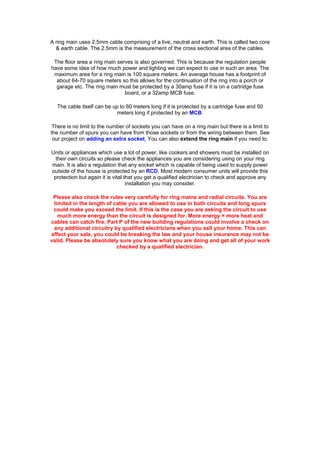
                       The back of a socket on a ring main looks like this.


The other type of circuit used to power your home is a radial circuit. There are not so common
       and can easily be turned into a ring circuit. See our project on radial circuits.

There are still restrictions on how much power and for how long, a ring main may carry. This
is reflected in the maximum distance a cable may be used for and the fuse rating it is given.
                         All the equipment below is rated for a ring main.

A separate ring main is usually installed on every floor of the house to make sure things are
kept safe and it is only when, for example, a spur (additional socket) is added on an upstairs
 ring main, to feed a socket or light on a downstairs circuit, that things can get tricky. Please
                     read our project called Part P Building Regulations.
A ring main uses 2.5mm cable comprising of a live, neutral and earth. This is called two core
  & earth cable. The 2.5mm is the measurement of the cross sectional area of the cables.

 The floor area a ring main serves is also governed. This is because the regulation people
have some idea of how much power and lighting we can expect to use in such an area. The
 maximum area for a ring main is 100 square meters. An average house has a footprint of
  about 64-70 square meters so this allows for the continuation of the ring into a porch or
  garage etc. The ring main must be protected by a 30amp fuse if it is on a cartridge fuse
                               board, or a 32amp MCB fuse.

  The cable itself can be up to 60 meters long if it is protected by a cartridge fuse and 50
                            meters long if protected by an MCB.

 There is no limit to the number of sockets you can have on a ring main but there is a limit to
the number of spurs you can have from those sockets or from the wiring between them. See
 our project on adding an extra socket. You can also extend the ring main if you need to.

Units or appliances which use a lot of power, like cookers and showers must be installed on
  their own circuits so please check the appliances you are considering using on your ring
main. It is also a regulation that any socket which is capable of being used to supply power
outside of the house is protected by an RCD. Most modern consumer units will provide this
 protection but again it is vital that you get a qualified electrician to check and approve any
                                   installation you may consider.

 Please also check the rules very carefully for ring mains and radial circuits. You are
 limited in the length of cable you are allowed to use in both circuits and long spurs
 could make you exceed the limit. If this is the case you are asking the circuit to use
   much more energy than the circuit is designed for. More energy = more heat and
cables can catch fire. Part P of the new building regulations could involve a check on
 any additional circuitry by qualified electricians when you sell your home. This can
affect your sale, you could be breaking the law and your house insurance may not be
valid. Please be absolutely sure you know what you are doing and get all of your work
                           checked by a qualified electrician.

Wiring a ring main

  • 1.
    WIRING A RINGMAIN A ring main is exactly what it says on the tin. It is a ring of wires, circling your home, carrying the mains electricity to sockets on the way. It gets the power from the consumer unit delivers it to the sockets. As both ends of the ring are connected to the same terminals at the consumer unit, the current runs in both directions imposing less of a load on the cables. Electricity loses power over long lengths of cable and trying to put too much power through a cable which is not designed for it, is dangerous, so a ring main delivers power from both ends to keep the load as light as possible. The back of a socket on a ring main looks like this. The other type of circuit used to power your home is a radial circuit. There are not so common and can easily be turned into a ring circuit. See our project on radial circuits. There are still restrictions on how much power and for how long, a ring main may carry. This is reflected in the maximum distance a cable may be used for and the fuse rating it is given. All the equipment below is rated for a ring main. A separate ring main is usually installed on every floor of the house to make sure things are kept safe and it is only when, for example, a spur (additional socket) is added on an upstairs ring main, to feed a socket or light on a downstairs circuit, that things can get tricky. Please read our project called Part P Building Regulations.
  • 2.
    A ring mainuses 2.5mm cable comprising of a live, neutral and earth. This is called two core & earth cable. The 2.5mm is the measurement of the cross sectional area of the cables. The floor area a ring main serves is also governed. This is because the regulation people have some idea of how much power and lighting we can expect to use in such an area. The maximum area for a ring main is 100 square meters. An average house has a footprint of about 64-70 square meters so this allows for the continuation of the ring into a porch or garage etc. The ring main must be protected by a 30amp fuse if it is on a cartridge fuse board, or a 32amp MCB fuse. The cable itself can be up to 60 meters long if it is protected by a cartridge fuse and 50 meters long if protected by an MCB. There is no limit to the number of sockets you can have on a ring main but there is a limit to the number of spurs you can have from those sockets or from the wiring between them. See our project on adding an extra socket. You can also extend the ring main if you need to. Units or appliances which use a lot of power, like cookers and showers must be installed on their own circuits so please check the appliances you are considering using on your ring main. It is also a regulation that any socket which is capable of being used to supply power outside of the house is protected by an RCD. Most modern consumer units will provide this protection but again it is vital that you get a qualified electrician to check and approve any installation you may consider. Please also check the rules very carefully for ring mains and radial circuits. You are limited in the length of cable you are allowed to use in both circuits and long spurs could make you exceed the limit. If this is the case you are asking the circuit to use much more energy than the circuit is designed for. More energy = more heat and cables can catch fire. Part P of the new building regulations could involve a check on any additional circuitry by qualified electricians when you sell your home. This can affect your sale, you could be breaking the law and your house insurance may not be valid. Please be absolutely sure you know what you are doing and get all of your work checked by a qualified electrician.