Why Xen?
August 2010
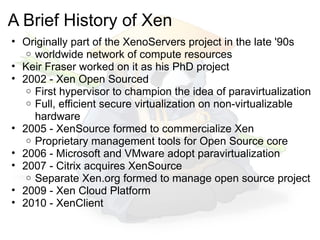
A Brief History of Xen
• Originally part of the XenoServers project in the late '90s
   o worldwide network of compute resources
• Keir Fraser worked on it as his PhD project
• 2002 - Xen Open Sourced
   o First hypervisor to champion the idea of paravirtualization
   o Full, efficient secure virtualization on non-virtualizable
     hardware
• 2005 - XenSource formed to commercialize Xen
   o Proprietary management tools for Open Source core
• 2006 - Microsoft and VMware adopt paravirtualization
• 2007 - Citrix acquires XenSource
   o Separate Xen.org formed to manage open source project
• 2009 - Xen Cloud Platform
• 2010 - XenClient
Xen.org? Open Source? Citrix?

• Core of Xen is all Free Software
• Possible to put together a completely functional system
   o many people do
• That gives you a commodity baseline
   o coordinated by xen.org, contributors from everywhere
• Many companies offer products derived from the free base
   o Citrix
   o Oracle
   o Novell
   o etc
• They add support and advanced features
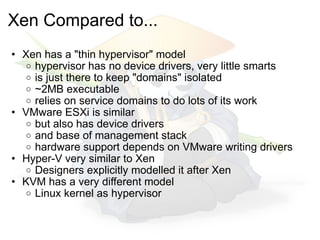
Xen Compared to...
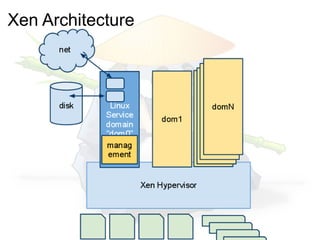
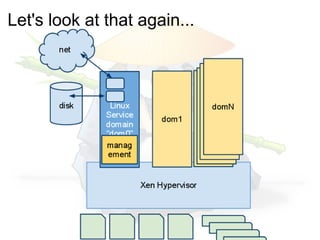
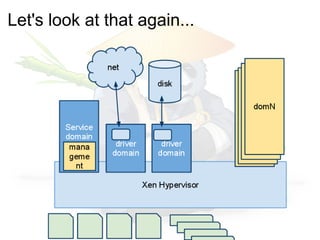
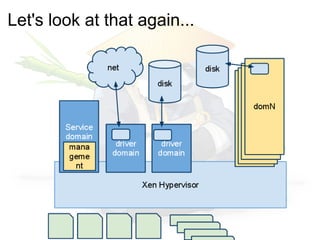
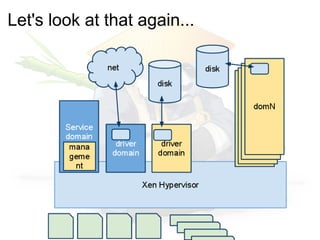
• Xen has a "thin hypervisor" model
   o hypervisor has no device drivers, very little smarts
   o is just there to keep "domains" isolated
   o ~2MB executable
   o relies on service domains to do lots of its work
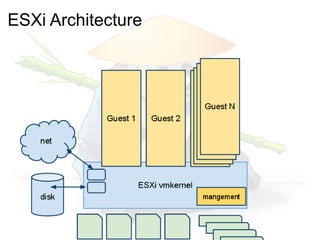
• VMware ESXi is similar
   o but also has device drivers
   o and base of management stack
   o hardware support depends on VMware writing drivers
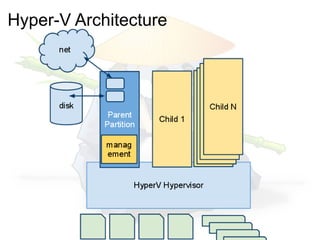
• Hyper-V very similar to Xen
   o Designers explicitly modelled it after Xen
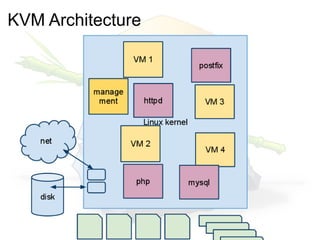
• KVM has a very different model
   o Linux kernel as hypervisor
Xen Architecture
Hyper-V Architecture
ESXi Architecture
KVM Architecture
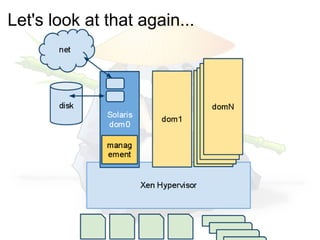
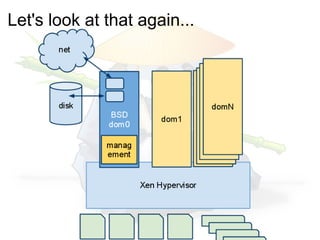
Let's look at that again...
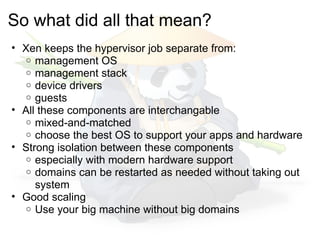
So what did all that mean?
• Xen keeps the hypervisor job separate from:
   o management OS
   o management stack
   o device drivers
   o guests
• All these components are interchangable
   o mixed-and-matched
   o choose the best OS to support your apps and hardware
• Strong isolation between these components
   o especially with modern hardware support
   o domains can be restarted as needed without taking out
     system
• Good scaling
   o Use your big machine without big domains
Different Use Cases
• Servers
   o the old reliable: server consolidation
   o standard open-source Xen
• Cloud
   o efficient management of images
   o rapid instancing
   o Xen Cloud Platform (about 80% of XenServer)
• Hosted desktops
   o much the same as servers, except
   o need lots of magic goo to make it efficient
       Lots of Citrix products
More Use Cases
• Client virtualization
   o Personal domain vs. Corporate locked-down domain
   o needs to work on modern laptops/desktops
   o needs most up-to-date driver support
   o XenClient (free, mostly open source)
• Secure Applications
   o launch individual apps and app clusters in their own
     domains
   o for example:
        random website browsing
        online banking
        shopping
        ...
   o Invisible Things Labs' Qubes-OS: http://qubes-os.org/
More Info

●   Web
    ●   Home Page (http://www.xen.org)
●   Documents
    ●   Why Xen? - What is Xen? - How Does Xen Work?
●   Support
    ●   IRC ##xen and #xen-api (XCP Project)
    ●   Xen Mailing Lists (http://lists.xensource.com)


Thanks to Jeremy Fitzhardinge for the creation of these excellent slides on Xen and
other virtualization alternatives

Why xen slides

  • 1.
  • 2.
    A Brief Historyof Xen • Originally part of the XenoServers project in the late '90s o worldwide network of compute resources • Keir Fraser worked on it as his PhD project • 2002 - Xen Open Sourced o First hypervisor to champion the idea of paravirtualization o Full, efficient secure virtualization on non-virtualizable hardware • 2005 - XenSource formed to commercialize Xen o Proprietary management tools for Open Source core • 2006 - Microsoft and VMware adopt paravirtualization • 2007 - Citrix acquires XenSource o Separate Xen.org formed to manage open source project • 2009 - Xen Cloud Platform • 2010 - XenClient
  • 3.
    Xen.org? Open Source?Citrix? • Core of Xen is all Free Software • Possible to put together a completely functional system o many people do • That gives you a commodity baseline o coordinated by xen.org, contributors from everywhere • Many companies offer products derived from the free base o Citrix o Oracle o Novell o etc • They add support and advanced features
  • 4.
    Xen Compared to... •Xen has a "thin hypervisor" model o hypervisor has no device drivers, very little smarts o is just there to keep "domains" isolated o ~2MB executable o relies on service domains to do lots of its work • VMware ESXi is similar o but also has device drivers o and base of management stack o hardware support depends on VMware writing drivers • Hyper-V very similar to Xen o Designers explicitly modelled it after Xen • KVM has a very different model o Linux kernel as hypervisor
  • 5.
  • 6.
  • 7.
  • 8.
  • 9.
    Let's look atthat again...
  • 10.
    Let's look atthat again...
  • 11.
    Let's look atthat again...
  • 12.
    Let's look atthat again...
  • 13.
    Let's look atthat again...
  • 14.
    Let's look atthat again...
  • 15.
    So what didall that mean? • Xen keeps the hypervisor job separate from: o management OS o management stack o device drivers o guests • All these components are interchangable o mixed-and-matched o choose the best OS to support your apps and hardware • Strong isolation between these components o especially with modern hardware support o domains can be restarted as needed without taking out system • Good scaling o Use your big machine without big domains
  • 16.
    Different Use Cases •Servers o the old reliable: server consolidation o standard open-source Xen • Cloud o efficient management of images o rapid instancing o Xen Cloud Platform (about 80% of XenServer) • Hosted desktops o much the same as servers, except o need lots of magic goo to make it efficient  Lots of Citrix products
  • 17.
    More Use Cases •Client virtualization o Personal domain vs. Corporate locked-down domain o needs to work on modern laptops/desktops o needs most up-to-date driver support o XenClient (free, mostly open source) • Secure Applications o launch individual apps and app clusters in their own domains o for example:  random website browsing  online banking  shopping  ... o Invisible Things Labs' Qubes-OS: http://qubes-os.org/
  • 18.
    More Info ● Web ● Home Page (http://www.xen.org) ● Documents ● Why Xen? - What is Xen? - How Does Xen Work? ● Support ● IRC ##xen and #xen-api (XCP Project) ● Xen Mailing Lists (http://lists.xensource.com) Thanks to Jeremy Fitzhardinge for the creation of these excellent slides on Xen and other virtualization alternatives