Information Management
Why use a Database
Why use a database?
Via a Database the following is possible:
• Eliminate redundancies
• Data Mining
• Data Mart
• Data Warehouse
Eliminate Redundancies
• A redundancy in database refers to the existence of the same or similar data
in multiple locations. The occurrence of this leads to more storage
consumption and runs the risk of the database becoming a liability on a
network
Data Mining
• Data mining is essentially a harvesting of accessible data, adding perspective
and context and using the created information for various purposes, for
examples, generating sales/revenue etc. Social Media platforms such as
Youtube, Facebook, Instagram etc utilize Data Mining software in order to
provide what they consider to be a “personalized user experience” by
generating recommending user content by utilizing our preferences and
browsing history.
Data Warehouse
• Data Warehouse refers to a central repository for mined data. Keeping a Data
Warehouse can assist a lot with planning and decision making at an
enterprise wide level. For example, grocery stores are able to determine when
they should have the bulk of their employees on hand by studying data
outlining the days of greater customer concentration.
Data Mart
• Data Marts are also used to further a data driven approach to decision
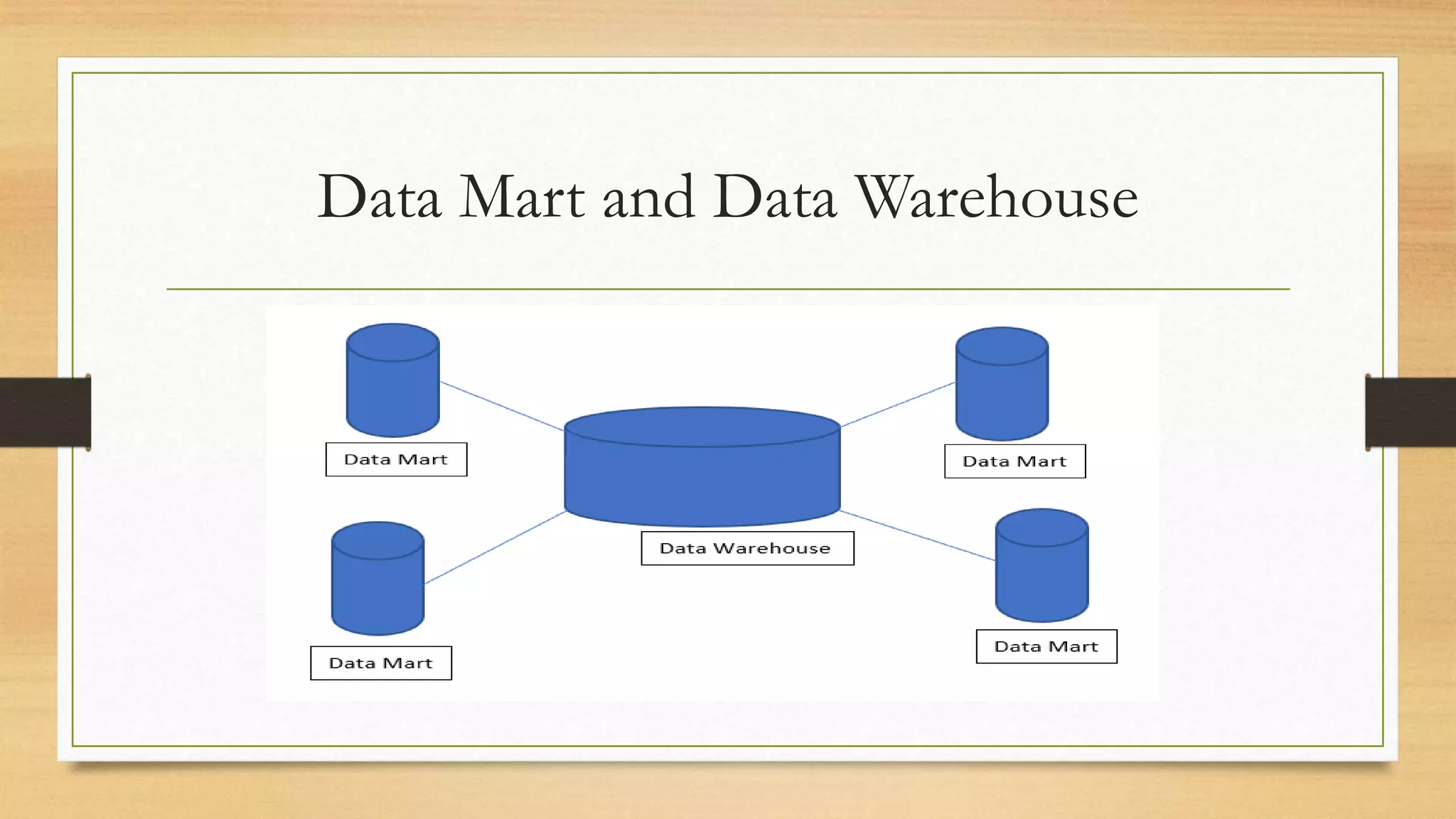
making. However, a Data Mart serves a specific area in the entity. The
combination of multiple Data Marts form the Data Warehouse. For example,
A school’s School Management System (SMS) is a Database Management
System (DBMS) handling data for all students and teachers in the school
population. This school DBMS would have comprised of data concerning
students grades, classes, contact information, homeroom etc. The various
entities would be considered Data Marts completing the Data Warehouse
Data Mart and Data Warehouse
The End.

Why use a database?

  • 1.
  • 2.
    Why use adatabase? Via a Database the following is possible: • Eliminate redundancies • Data Mining • Data Mart • Data Warehouse
  • 3.
    Eliminate Redundancies • Aredundancy in database refers to the existence of the same or similar data in multiple locations. The occurrence of this leads to more storage consumption and runs the risk of the database becoming a liability on a network
  • 4.
    Data Mining • Datamining is essentially a harvesting of accessible data, adding perspective and context and using the created information for various purposes, for examples, generating sales/revenue etc. Social Media platforms such as Youtube, Facebook, Instagram etc utilize Data Mining software in order to provide what they consider to be a “personalized user experience” by generating recommending user content by utilizing our preferences and browsing history.
  • 5.
    Data Warehouse • DataWarehouse refers to a central repository for mined data. Keeping a Data Warehouse can assist a lot with planning and decision making at an enterprise wide level. For example, grocery stores are able to determine when they should have the bulk of their employees on hand by studying data outlining the days of greater customer concentration.
  • 6.
    Data Mart • DataMarts are also used to further a data driven approach to decision making. However, a Data Mart serves a specific area in the entity. The combination of multiple Data Marts form the Data Warehouse. For example, A school’s School Management System (SMS) is a Database Management System (DBMS) handling data for all students and teachers in the school population. This school DBMS would have comprised of data concerning students grades, classes, contact information, homeroom etc. The various entities would be considered Data Marts completing the Data Warehouse
  • 7.
    Data Mart andData Warehouse
  • 8.