Why Learn Genetic Testing
What is Genetic Testing
What is it? The testing of a person’s germline genes. This testing is typically performed using
biospecimens such as blood or cells
Why do it?
• Some families experience higher rates of cancer than others
• Risk based on personal or family history of cancer
• Informs cancer screening recommendations
2
Screening vs. Genetic testing vs. Biomarker testing
Screening tests – like MCED, mammograms
Looking for signs of cancer in general population
Genetic testing
Testing for inherited risk to determine risk for developing certain cancers or passing risk onto
children
Biomarker testing
Used in people who already have cancer to determine best treatment options, how aggressive
the disease is, monitor for recurrence
3
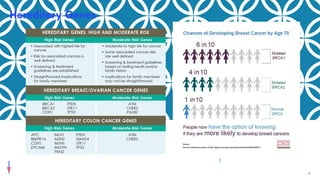
Hereditary Genes
4
Considerations of Genetic Testing
Benefits:
• Better understanding of cancer risks
• Inform blood relatives of potential cancer risks
Limitations:
• Testing can be expensive if not covered by insurance
• It does not always provide an answer about the cause of cancer within a family
Risks:
• Life, long-term care and disability insurers are permitted to use genetic and health information to
make coverage and premium decisions
5
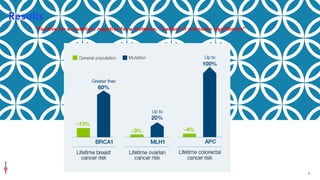
Results
6
• Positive for a mutation, negative for a mutation, “variant of unknown significance”
Insurance Coverage
Insurance Coverage for Genetic Testing
• Most health plans cover genetic counseling and testing for inherited gene mutations linked to cancer in people who meet
the national guidelines.
• The cost of testing and your out-of-pocket charges may vary based on several factors.
• Insurance Coverage for Genetic Testing
Insurance Coverage for Cancer Screening
• Varies based on cancer type, typically according to national guidelines
• Oftentimes states have laws that impact this coverage for state-regulated plans
How does the Affordable Care Act come into play?
• Non-grandfathered private health insurance plans are required under the ACA to provide coverage of certain
preventive services without cost sharing (according to USPSTF guidelines).
• Includes services that have an “A” or “B” recommendation rating from the USPSTF
• Lung cancer screening for certain adults – B grade
• Colorectal cancer screening for 45-75 – B grade
• Breast cancer screening for women aged 50-74 - B grade
• Genetic testing for BRCA – B Grade
7
THANK YOU

Why Learn Genetic testing and the importance in disease

  • 1.
  • 2.
    What is GeneticTesting What is it? The testing of a person’s germline genes. This testing is typically performed using biospecimens such as blood or cells Why do it? • Some families experience higher rates of cancer than others • Risk based on personal or family history of cancer • Informs cancer screening recommendations 2
  • 3.
    Screening vs. Genetictesting vs. Biomarker testing Screening tests – like MCED, mammograms Looking for signs of cancer in general population Genetic testing Testing for inherited risk to determine risk for developing certain cancers or passing risk onto children Biomarker testing Used in people who already have cancer to determine best treatment options, how aggressive the disease is, monitor for recurrence 3
  • 4.
  • 5.
    Considerations of GeneticTesting Benefits: • Better understanding of cancer risks • Inform blood relatives of potential cancer risks Limitations: • Testing can be expensive if not covered by insurance • It does not always provide an answer about the cause of cancer within a family Risks: • Life, long-term care and disability insurers are permitted to use genetic and health information to make coverage and premium decisions 5
  • 6.
    Results 6 • Positive fora mutation, negative for a mutation, “variant of unknown significance”
  • 7.
    Insurance Coverage Insurance Coveragefor Genetic Testing • Most health plans cover genetic counseling and testing for inherited gene mutations linked to cancer in people who meet the national guidelines. • The cost of testing and your out-of-pocket charges may vary based on several factors. • Insurance Coverage for Genetic Testing Insurance Coverage for Cancer Screening • Varies based on cancer type, typically according to national guidelines • Oftentimes states have laws that impact this coverage for state-regulated plans How does the Affordable Care Act come into play? • Non-grandfathered private health insurance plans are required under the ACA to provide coverage of certain preventive services without cost sharing (according to USPSTF guidelines). • Includes services that have an “A” or “B” recommendation rating from the USPSTF • Lung cancer screening for certain adults – B grade • Colorectal cancer screening for 45-75 – B grade • Breast cancer screening for women aged 50-74 - B grade • Genetic testing for BRCA – B Grade 7
  • 8.