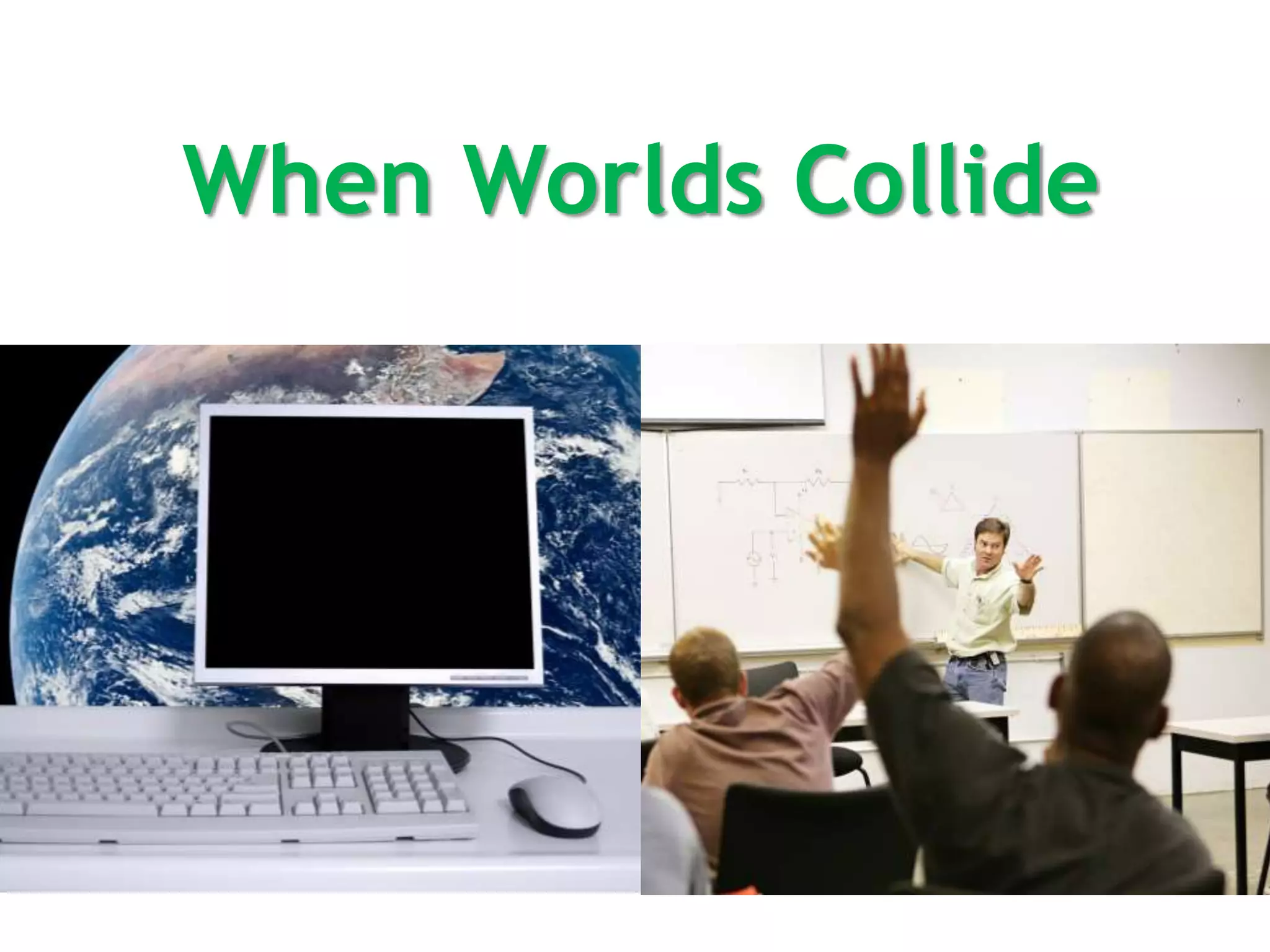
When Worlds Collide
Blended Learning for 2016
Meagen Farrell
Lead Teacher Trainer
When Worlds Collide
By the end of this session,
you will know how to:
1. Measure & identify blended learning in adult
education
2. Transform your program into blended learning
3. Access resources for implementation and further
exploration
Create the Perfect Blend
What is
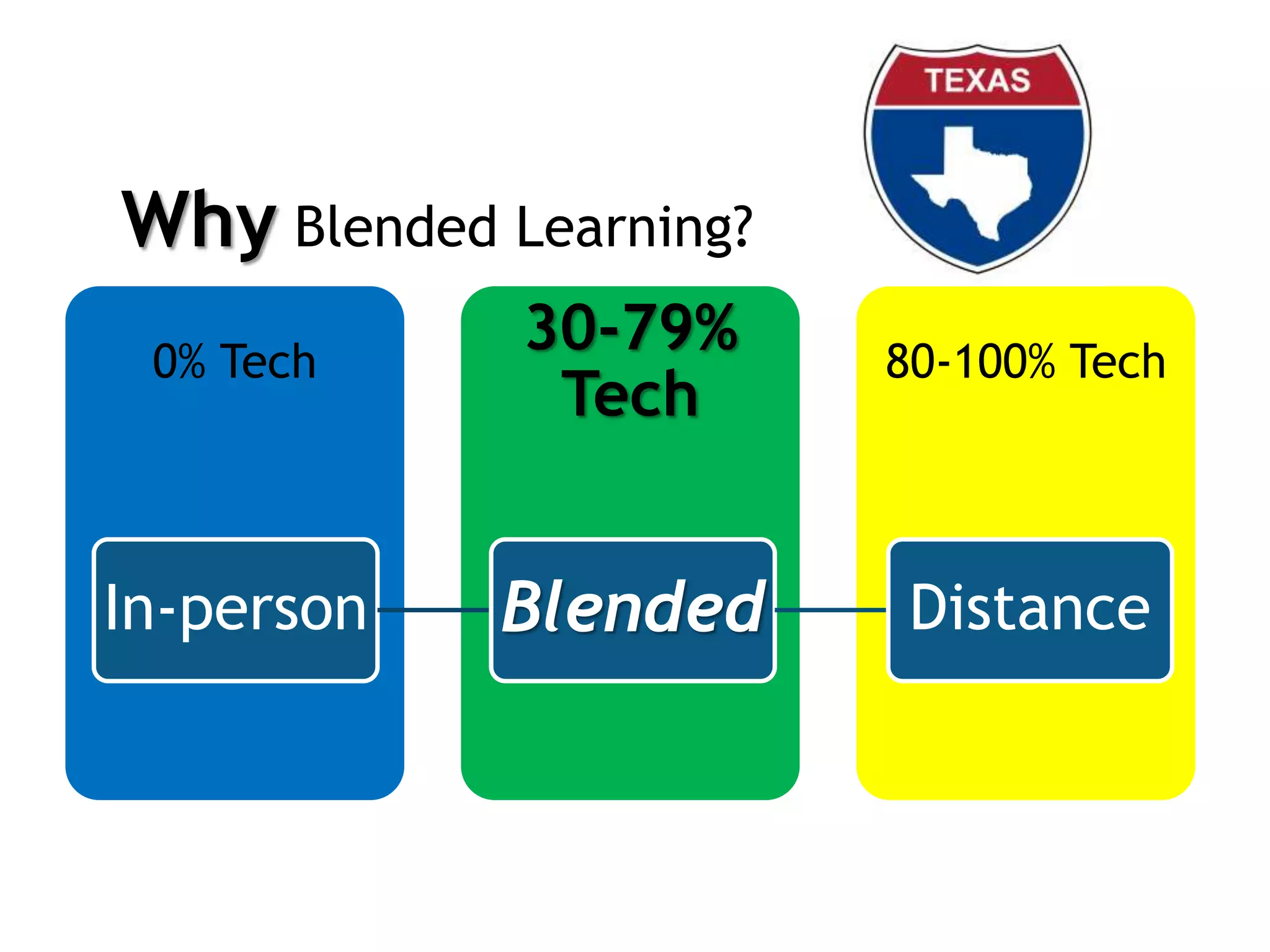
?
Use our FREE guide!
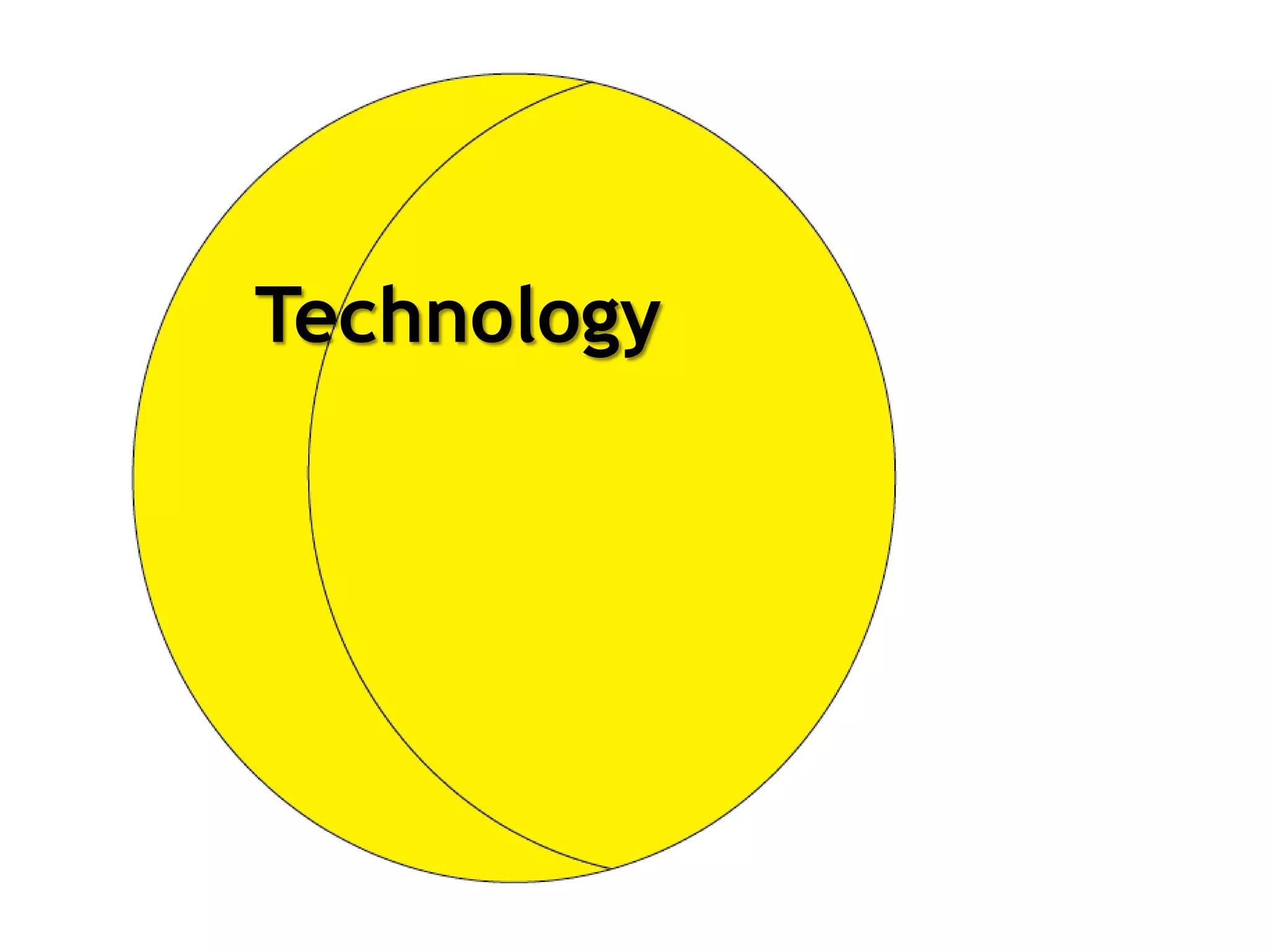
Technology
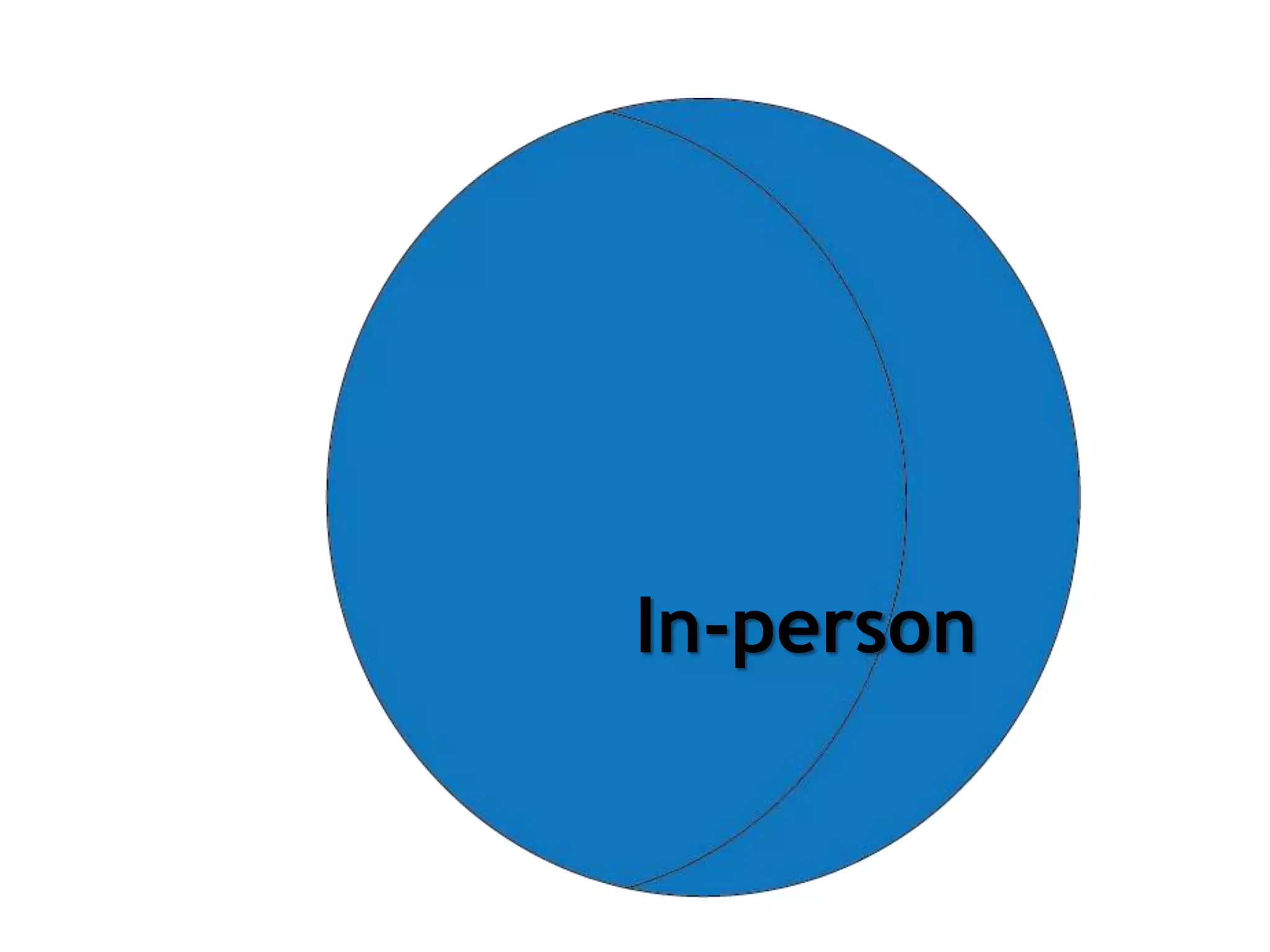
In-person
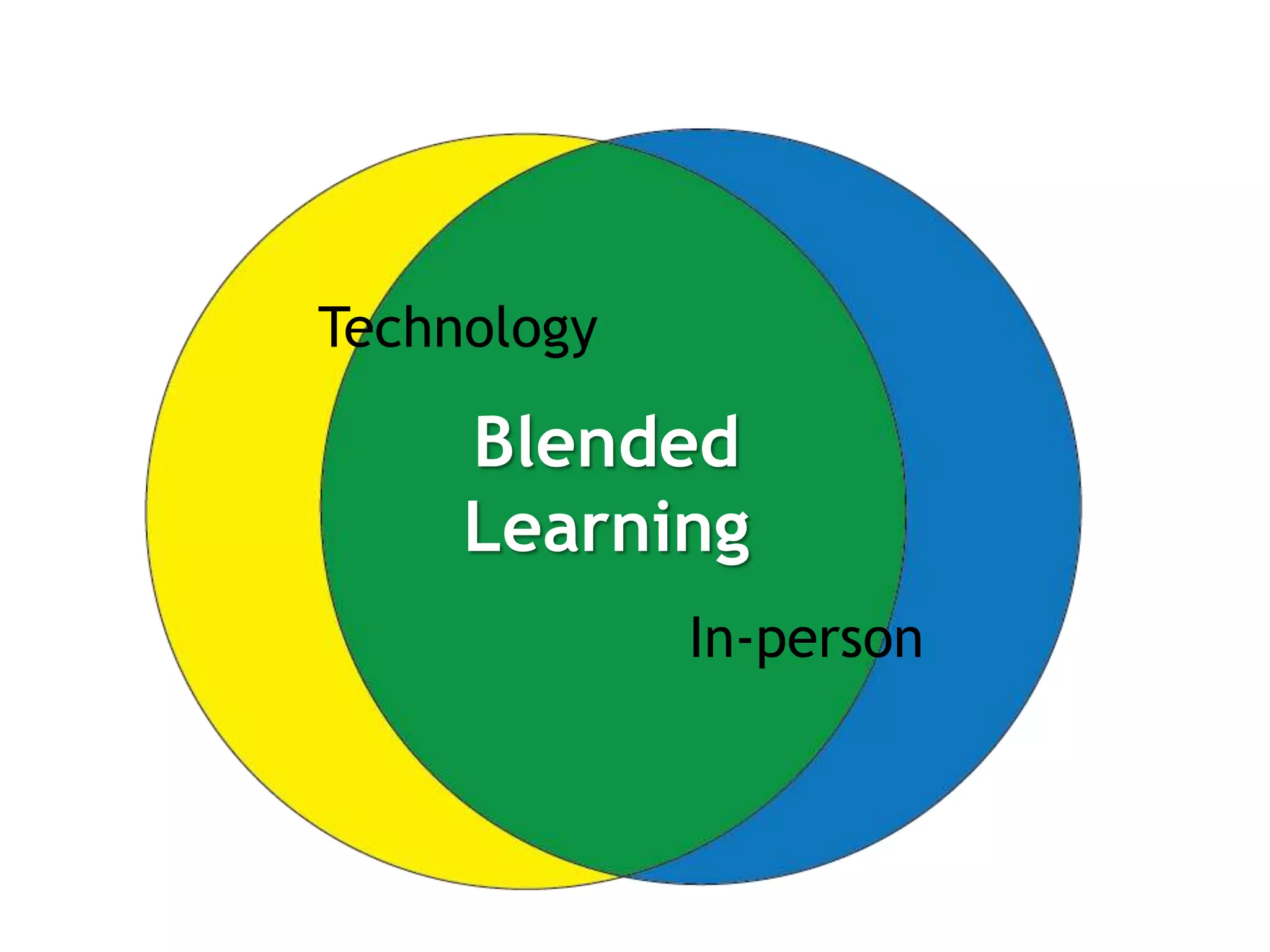
Blended
Learning
Technology
In-person
80-100%
Tech
30-79%
Tech
1-29%
Tech
0% Tech
In-person
Web
Facilitated Blended Distance
How much Technology?
Why Blended Learning?
80-100% Tech
30-79%
Tech
0% Tech
In-person Blended Distance
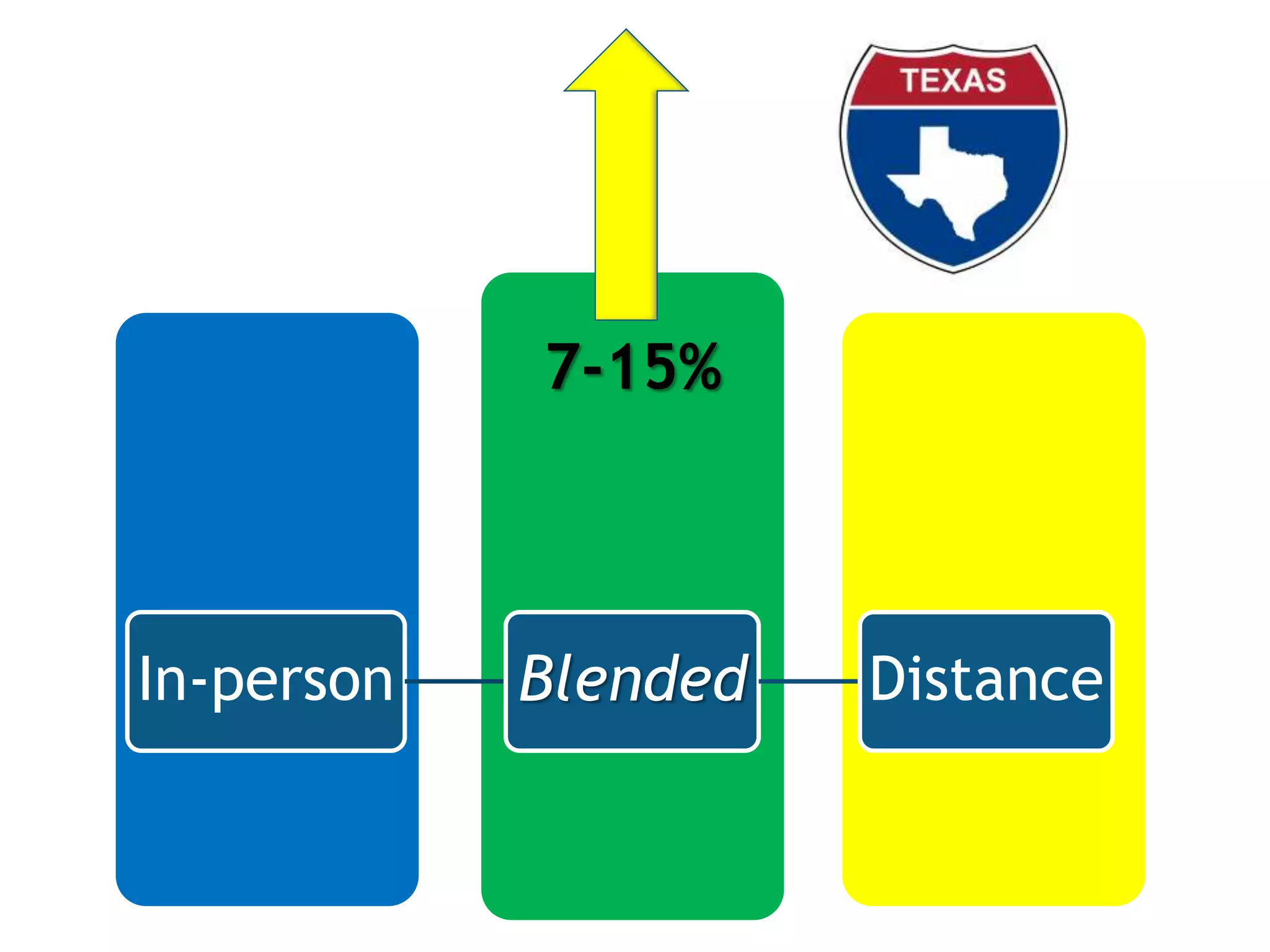
7-15%
In-person Blended Distance
How to Blend
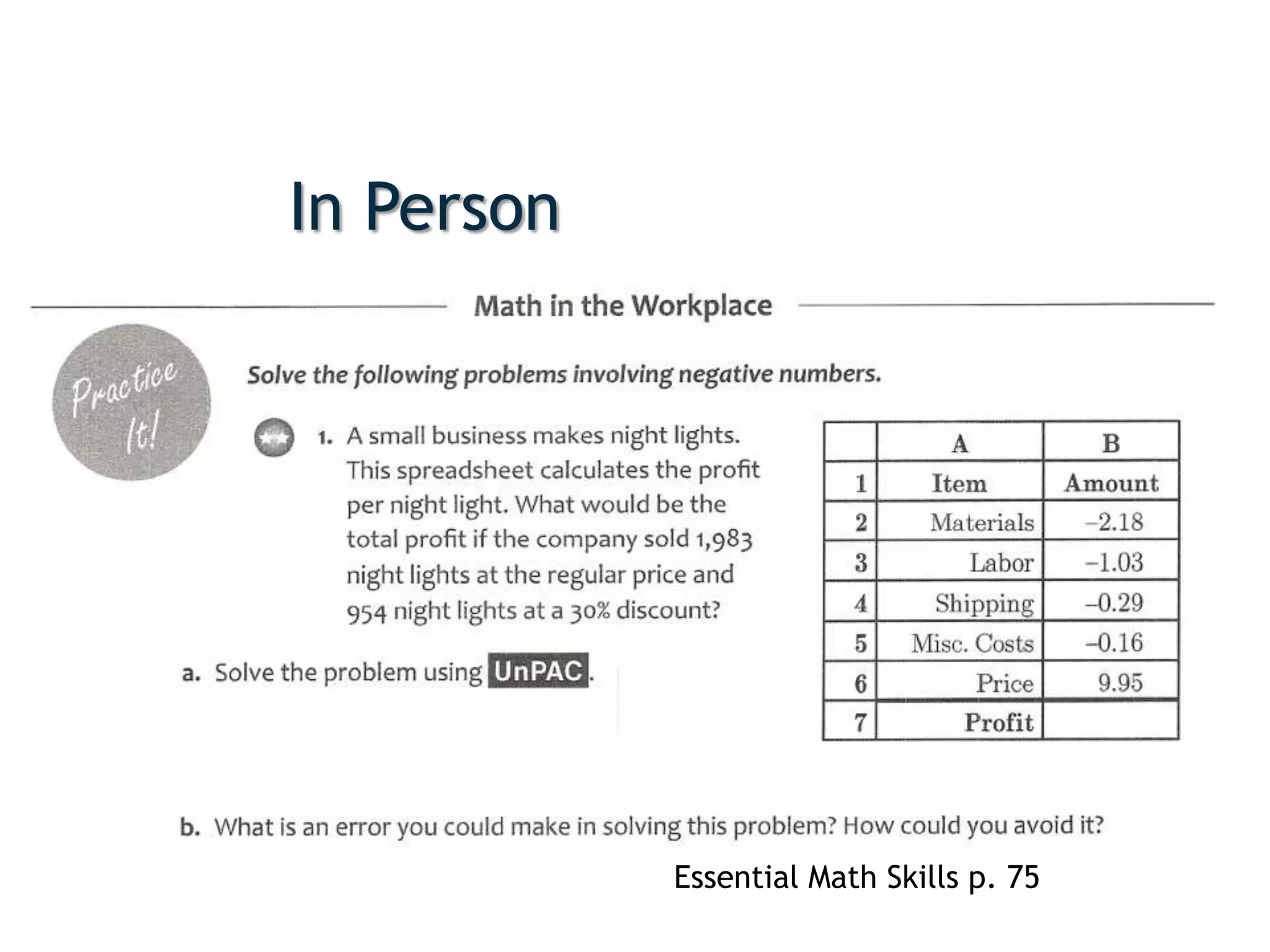
In Person > Rotations
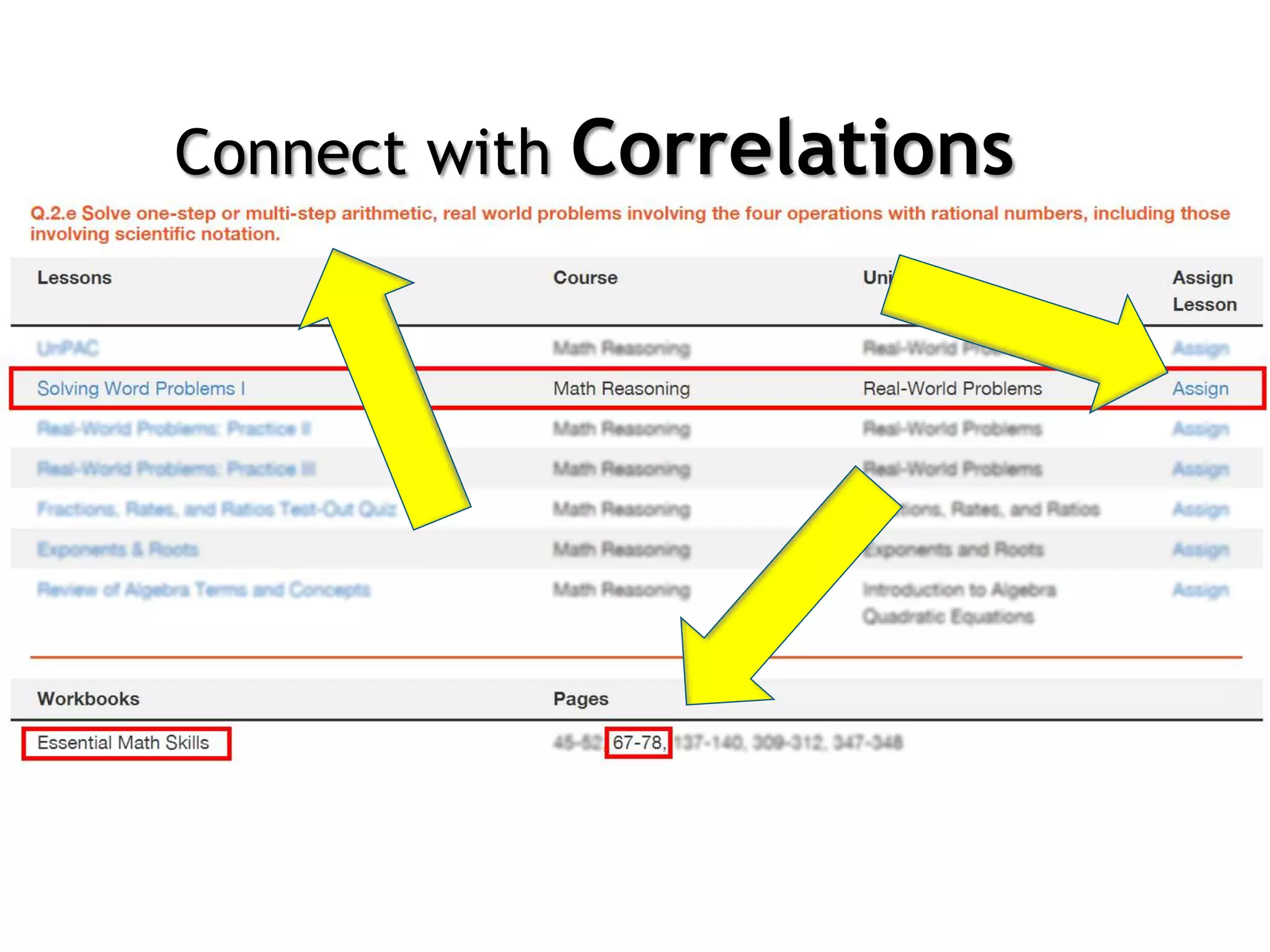
Essential Math Skills p. 75
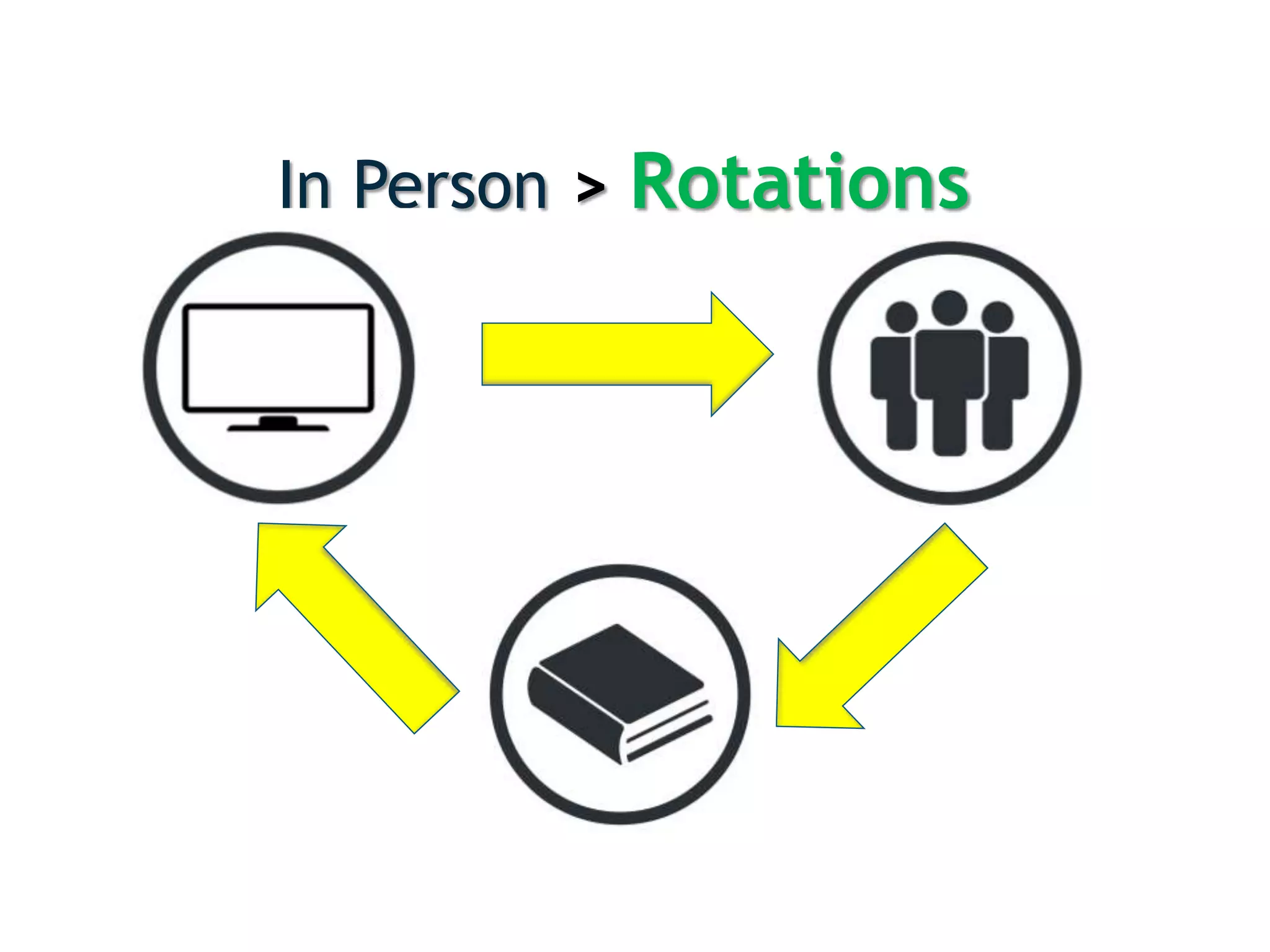
In Person > Rotations
Connect with Correlations
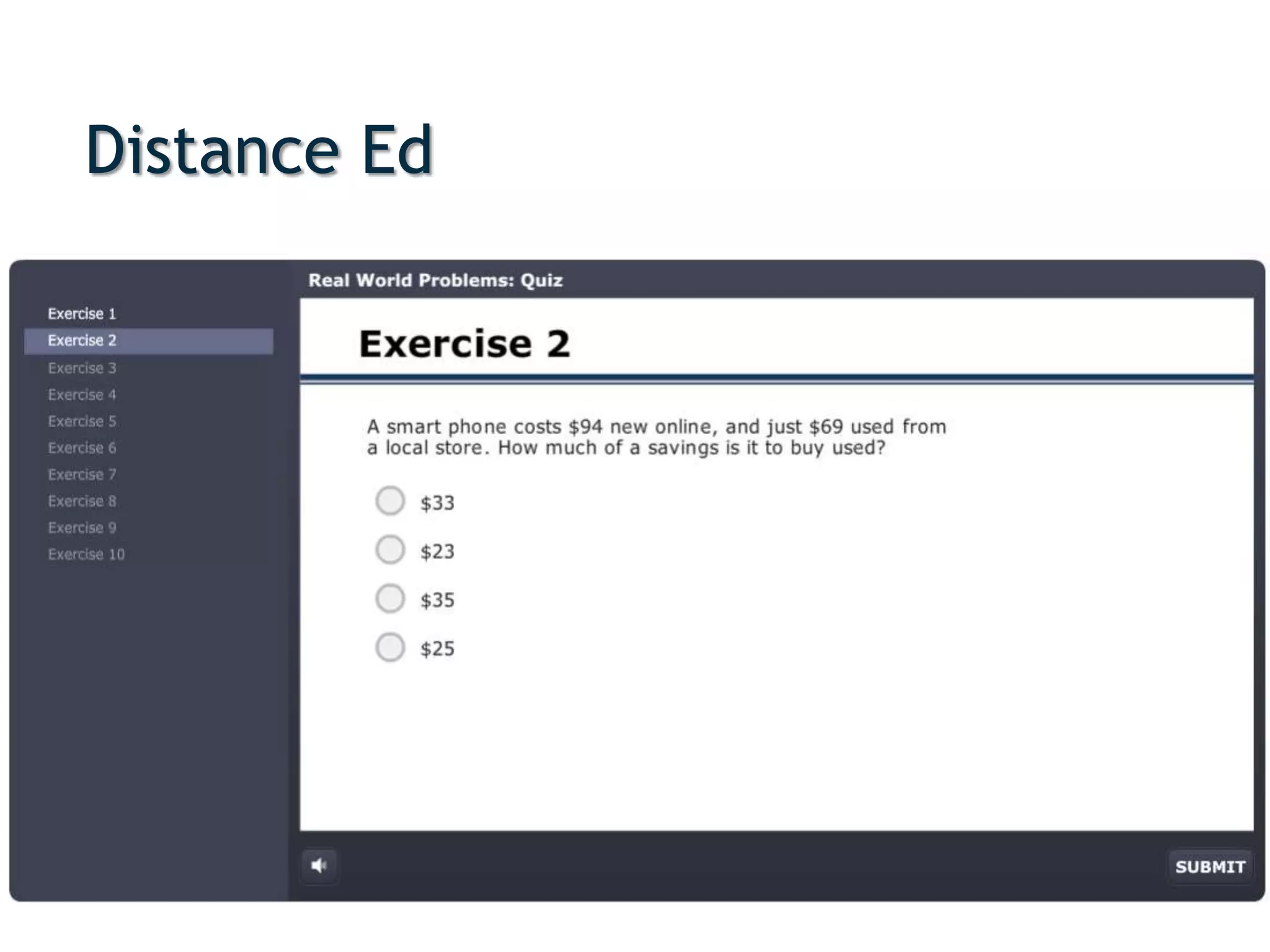
Distance Ed > Groups
experience
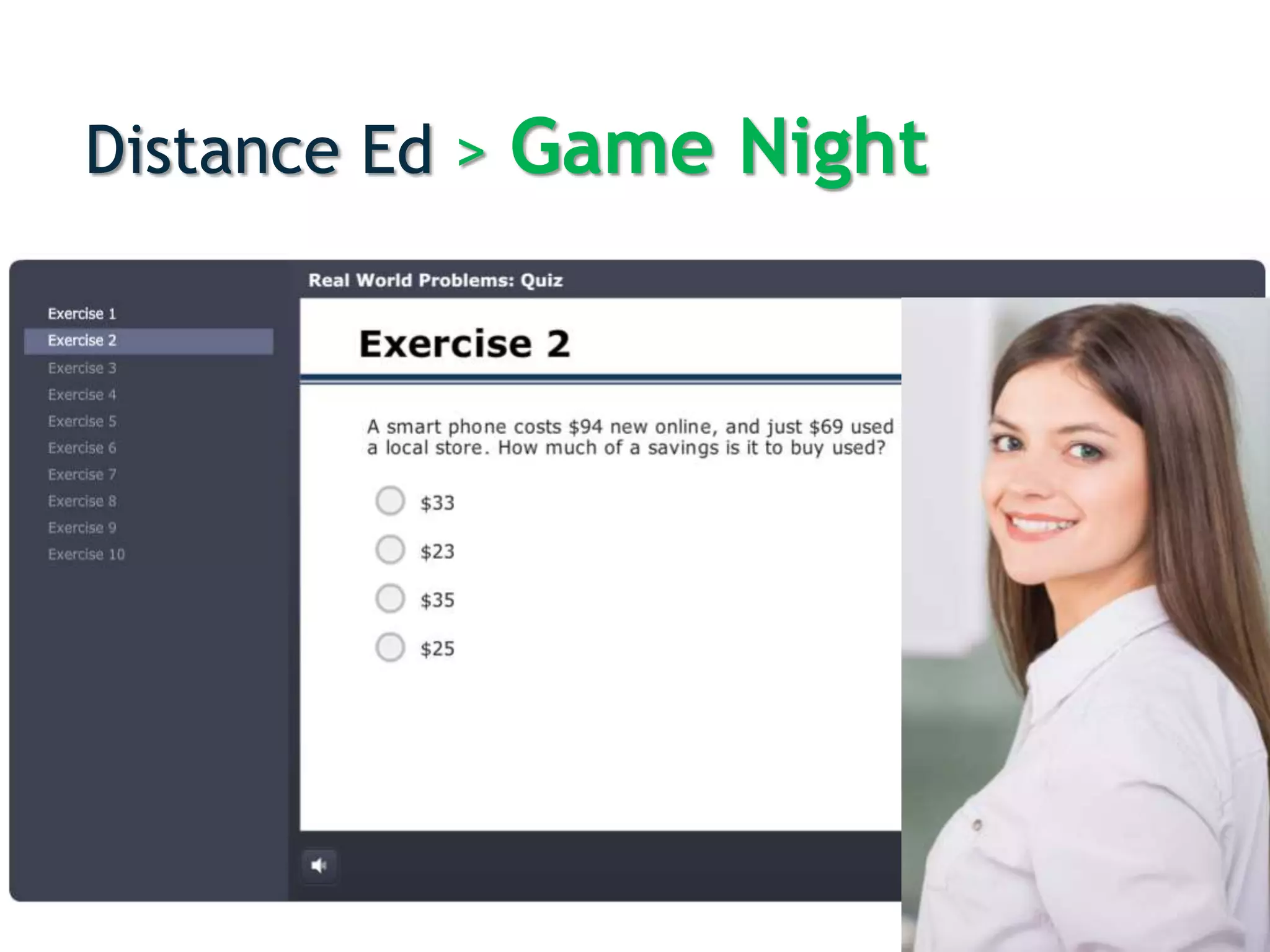
Distance Ed > Game Night
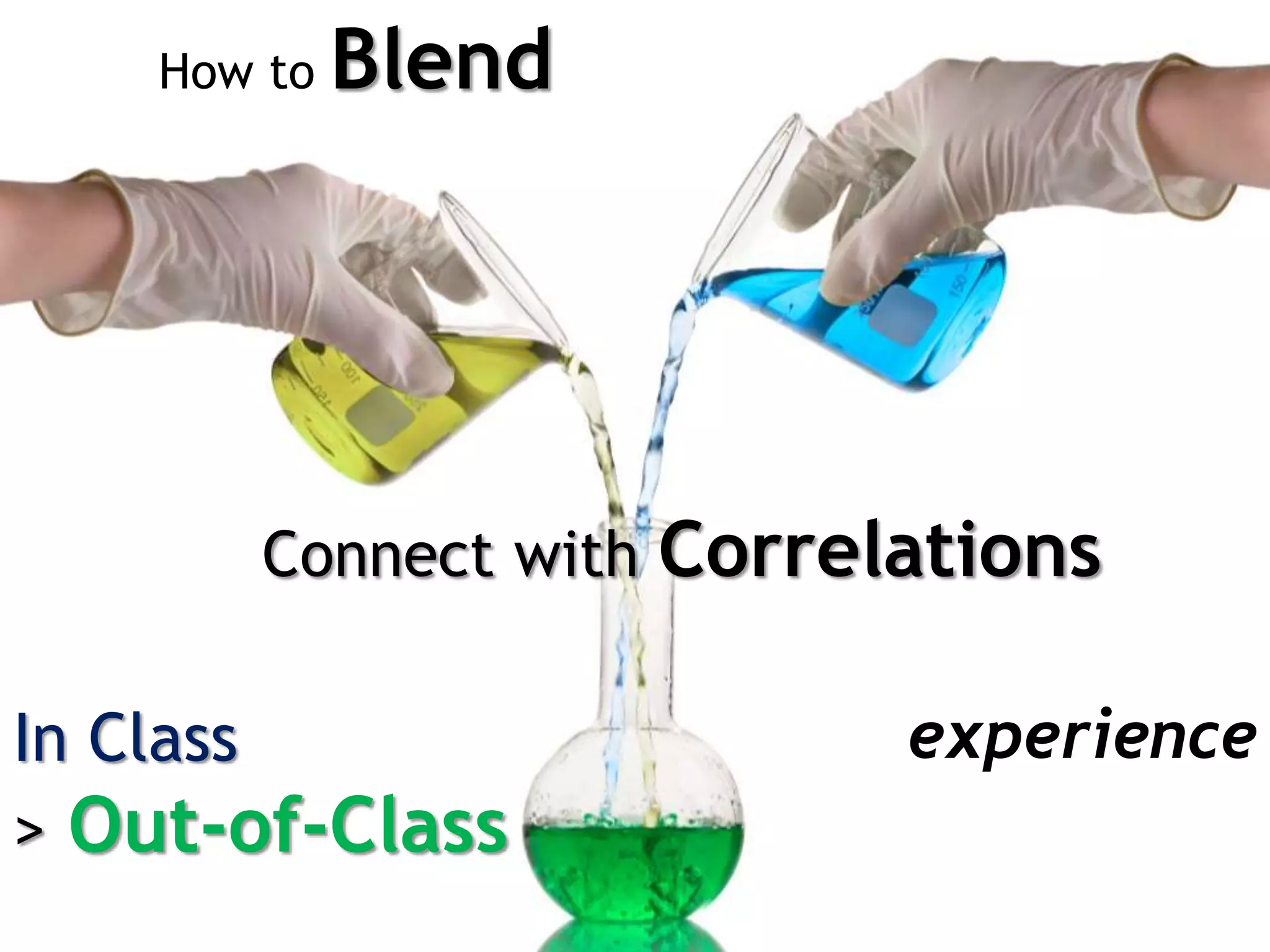
In Class > Out-of-Class
DIY: Do It Yourself> Out-of-Class
Increased Time 50%!
In Class > Out-of-Class
How to Blend
experience
Connect with Correlations
In Class
> Out-of-Class
How to Kick Off Blended Learning
“Quantity of devices and well-developed
adaptive software is the key to a successful
blended learning implementation,”
said no one ever!
Indiana Jones Plan
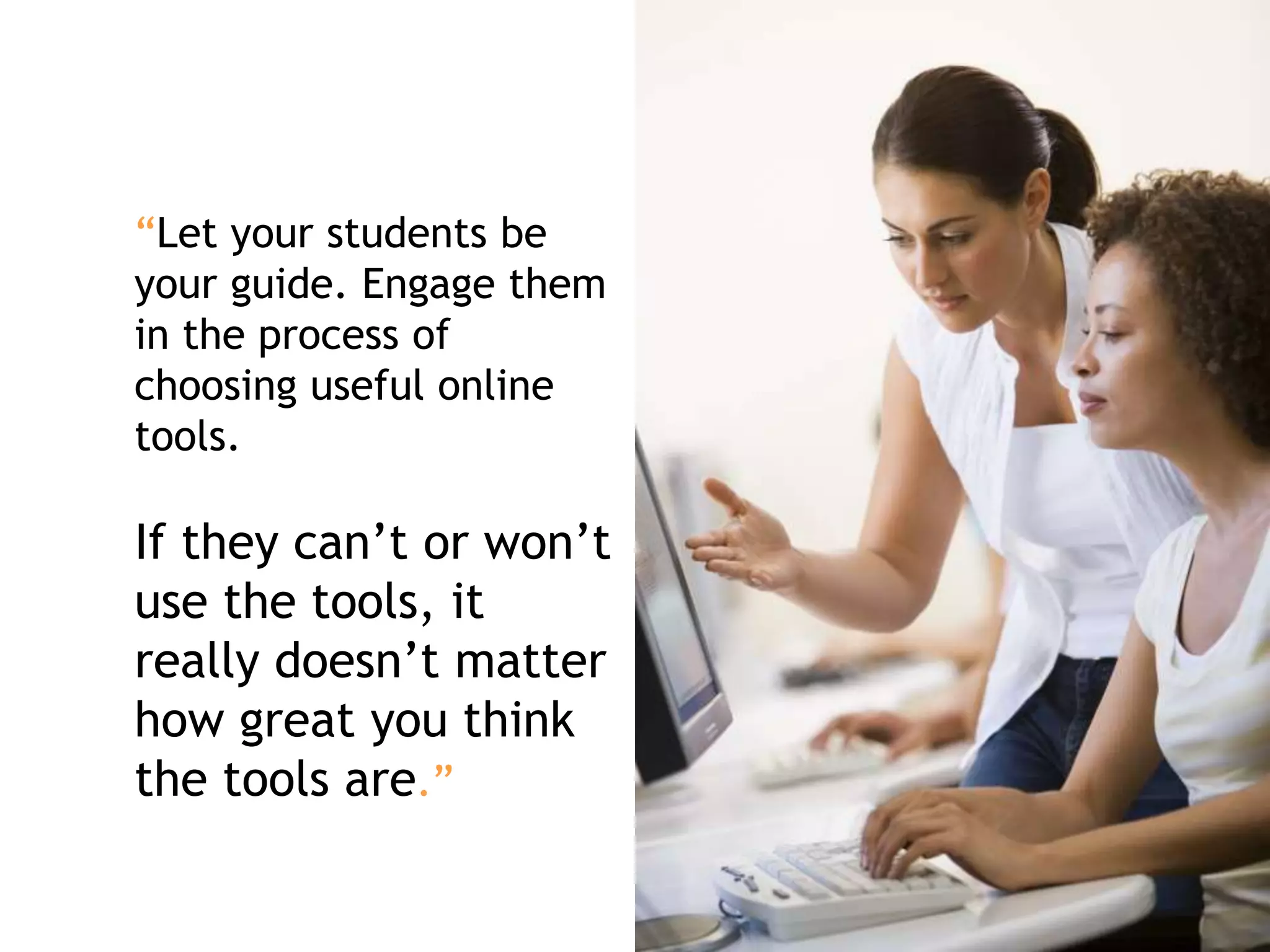
“Let your students be
your guide. Engage them
in the process of
choosing useful online
tools.
If they can’t or won’t
use the tools, it
really doesn’t matter
how great you think
the tools are.”
Mission Impossible Plan
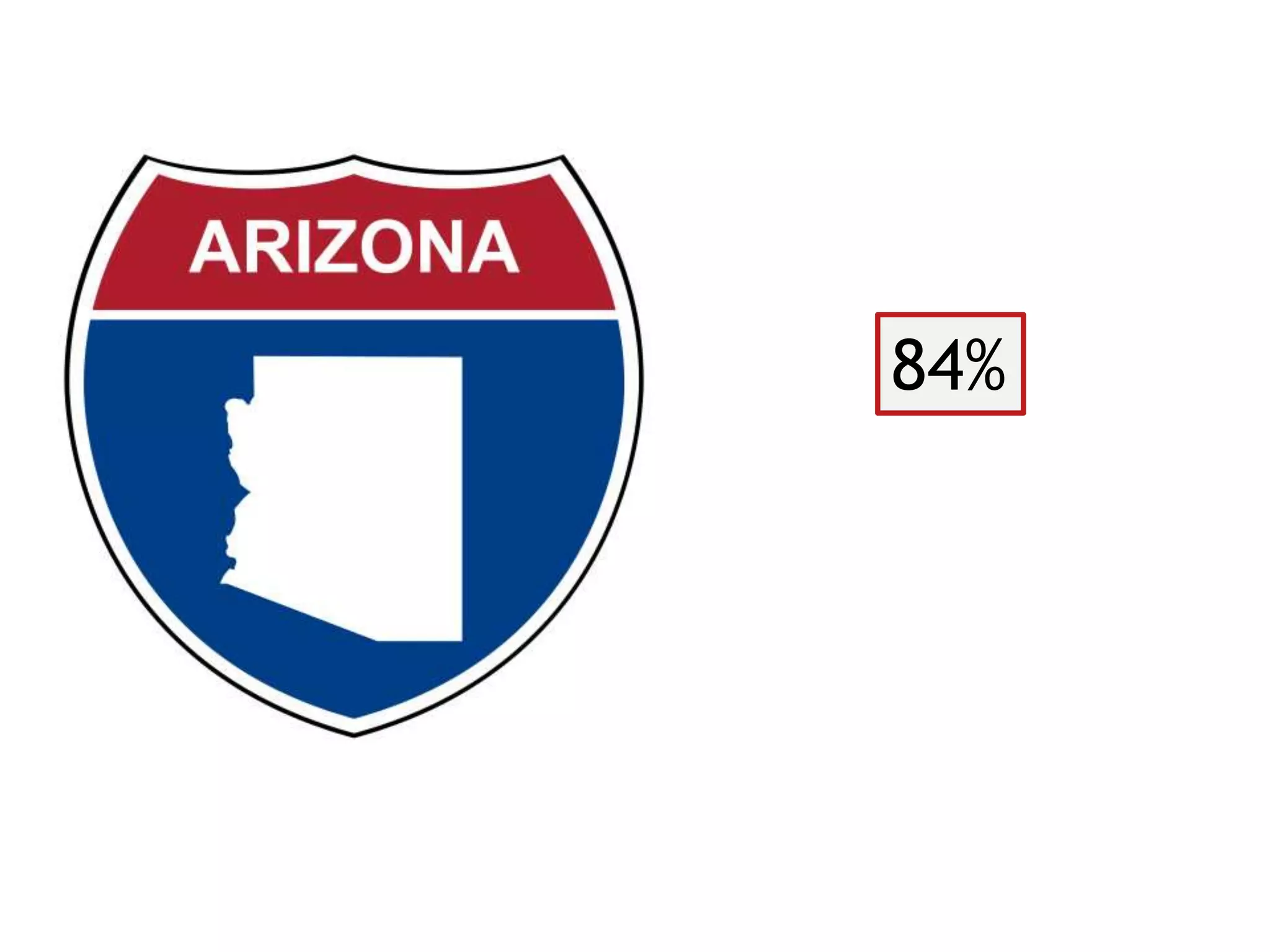
84%
Use our FREE guide!
How will YOU
kick off blended learning?
THANK YOU!

When Worlds Collide: Blended Learning for 2016

Editor's Notes

  • #2 Hi! We’re Adam & Meagen from Essential Education. And you are here to talk about blended learning.
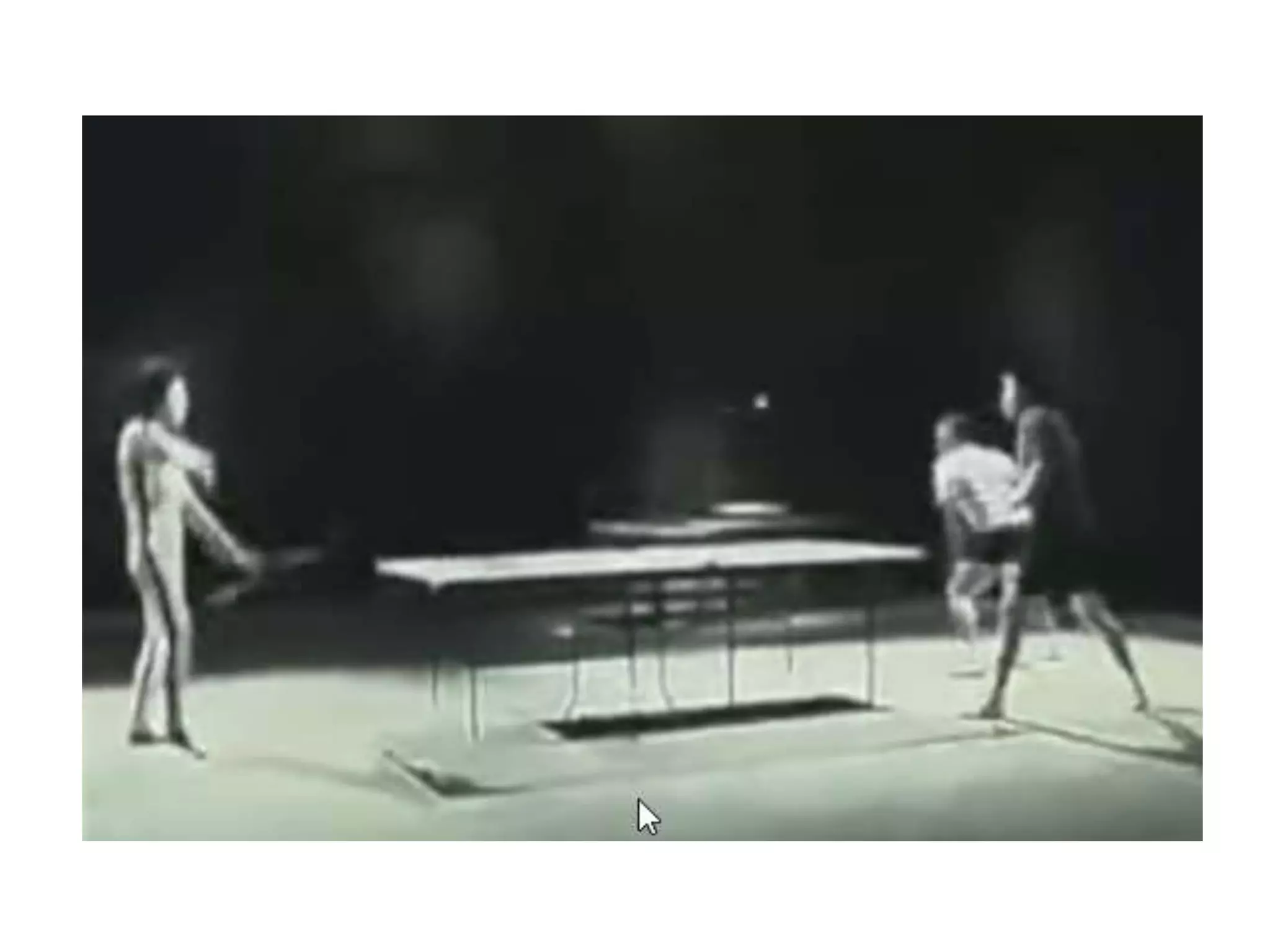
  • #3 So what does blended learning have to do with adult education? Adult education is like playing ping pong. Simple to explain, difficult to do well.
  • #4 Blended learning is like playing ping pong with nunchucks. (Play the video for details) So today we’re going to show you how transforming your regular adult education classroom into blended learning is like playing ping pong with nunchucks. Challenging? Yes. But you are here because you are up to that challenge.
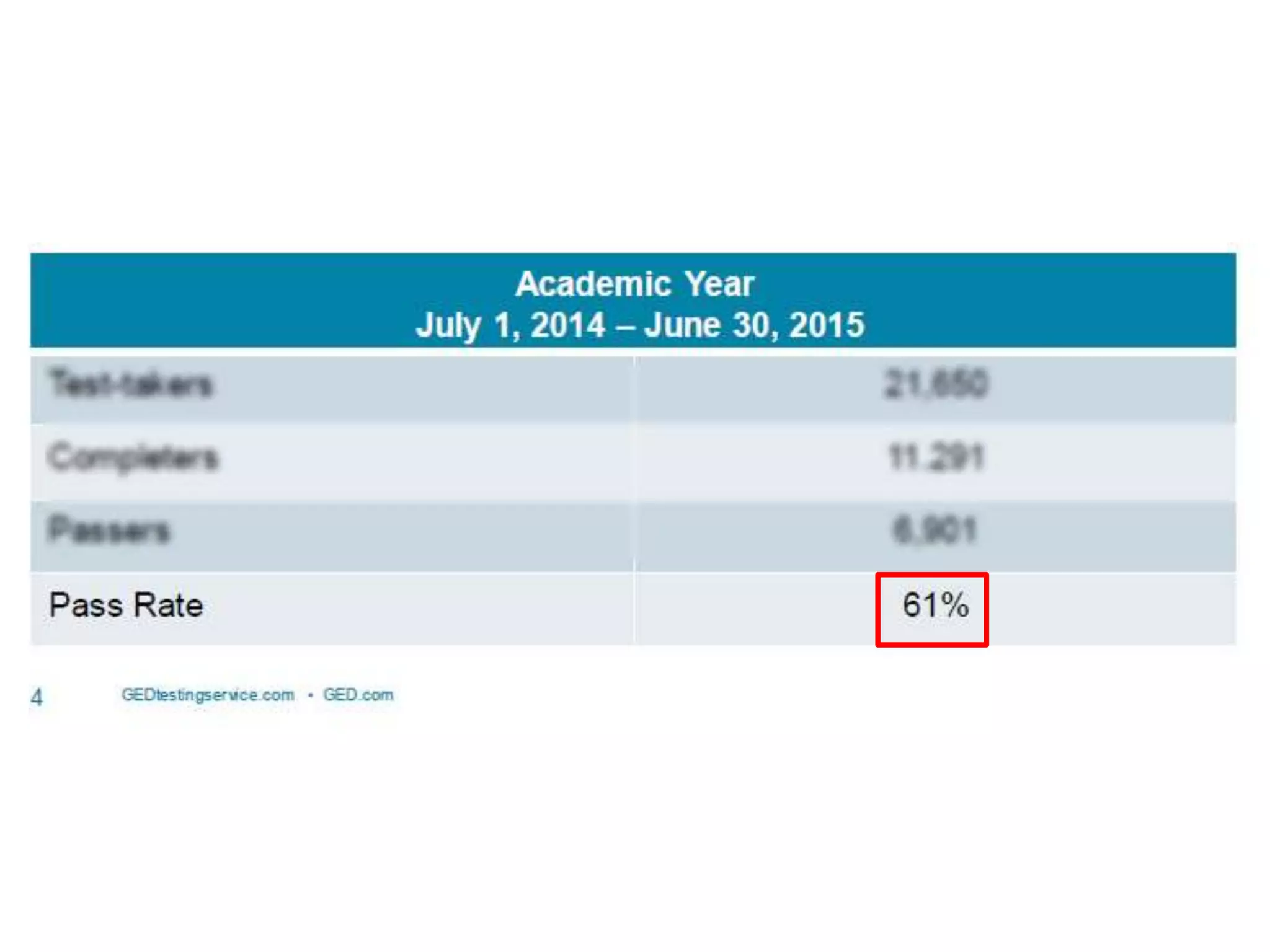
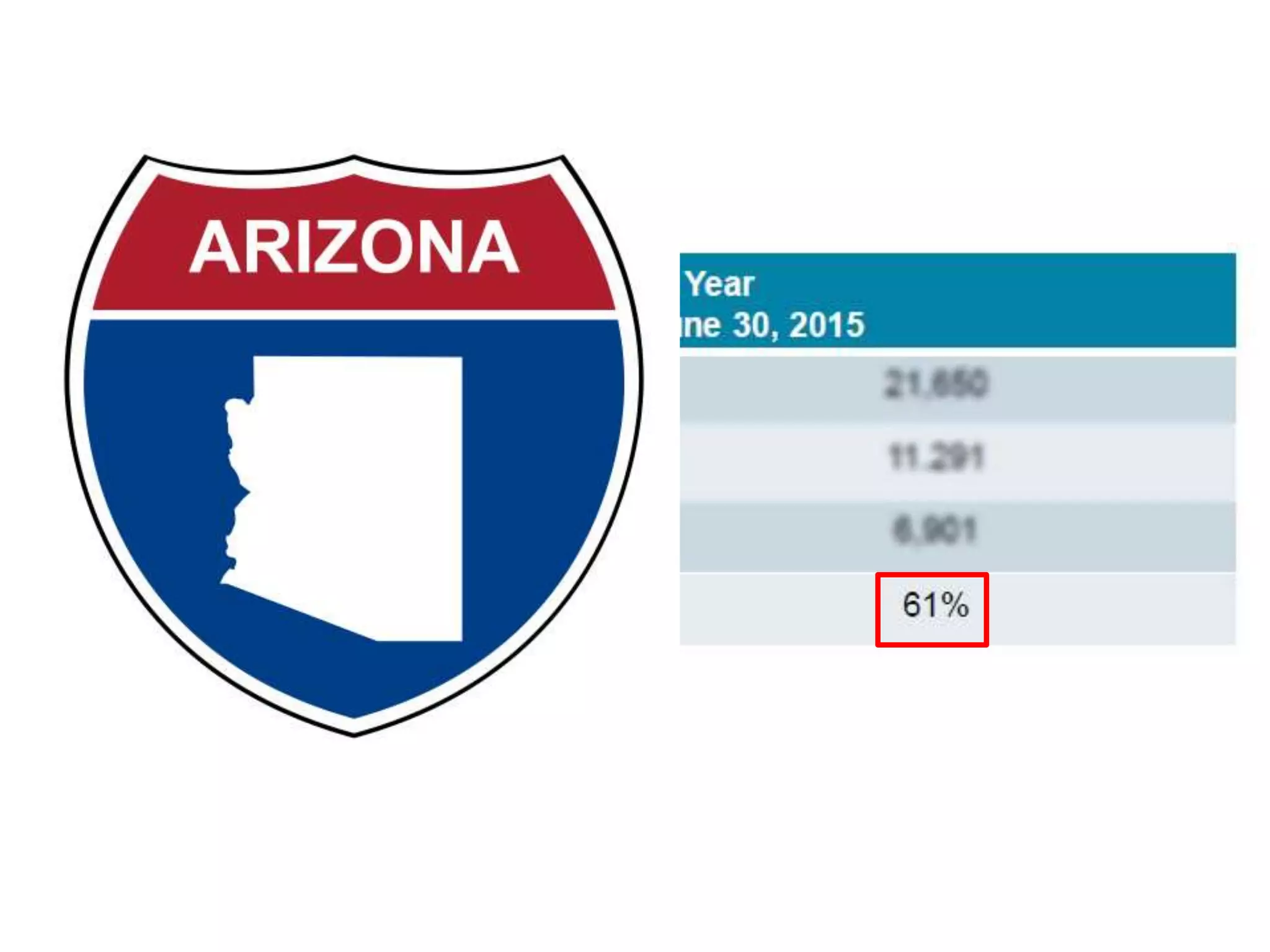
  • #5 Here’s another example of ping pong. This statistic is the passing rates on the GED Test from 2014-2015. 61%, which I think is actually no small potatoes considering all the barriers to learning that our students have.
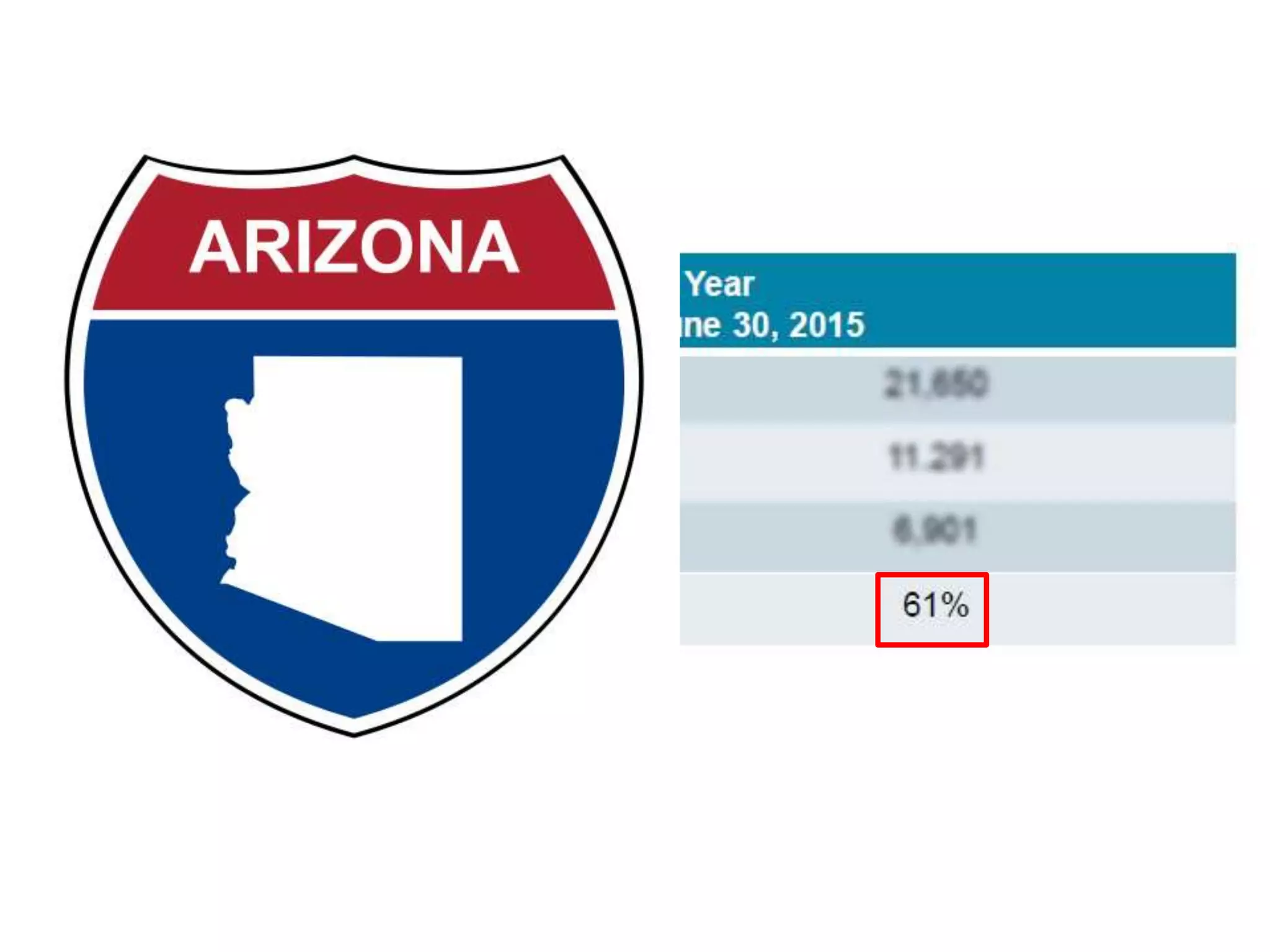
  • #6 But Arizona Department of Corrections thought they could do better than that. So they decided to implement blended learning. And they had a session earlier about how they used Professional Learning Communities, or PLCs, to develop those skills. They decided to take the plunge, and we’ll get back to you later with how that turned out.
  • #7 I want to know how familiar you are with blended learning already. Raise your hands, on a scale of 0 to 5: 0 being never heard of blended learning, 2 is I’m getting started, 5 is I teach it to others. Where are you, 0 to 5? Our goal today is that wherever you are on that scale, we want to help you figure out how to get to the next level.
  • #9 So if you had to explain blended learning to someone who was a zero, who had never heard of it before, how would you define it? We define it as mixing student use of technology with face-to-face instruction.
  • #10 Now, we’re not going to make you nunchuck ping pong masters within one hour. So to help you on your journey, we have this fabulous, FREE blended learning guide by Dr David Rosen and Dr Carmine Stewart. Click the link to request your copy: goo.gl/9wmKYK
  • #11 So blended learning is like a Venn diagram. One circle of the Venn diagram is technology
  • #12 The other circle is in-person instruction
  • #13 Blended learning is that overlap of STUDENT use of technology, and in-person instruction. But the central question of blended learning is: what percentage of your student’s study time are THEY using technology?
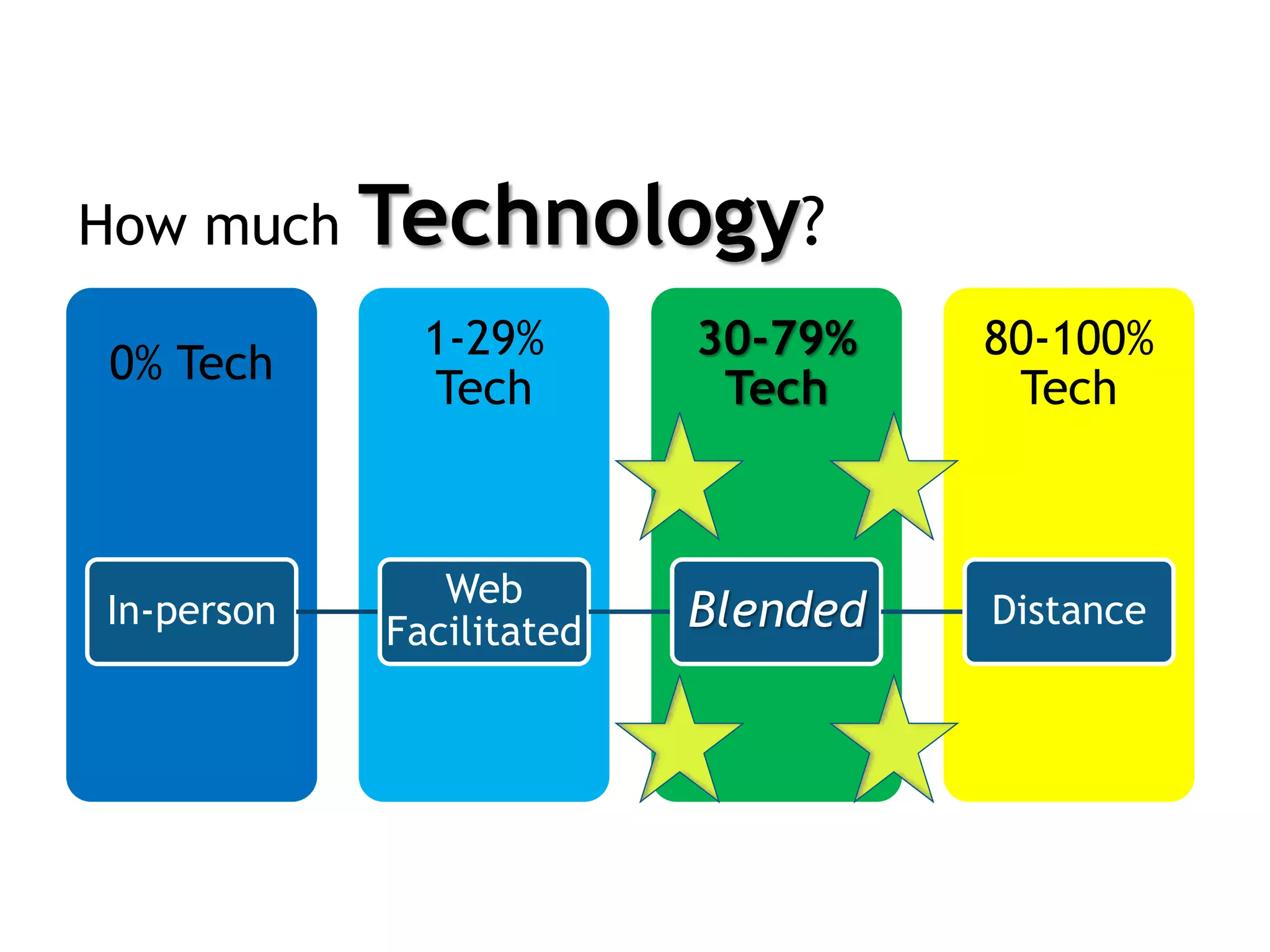
  • #14 The magic number for blended learning is 30% of more of your STUDENTS study time should be using technology. This is a number used by researchers to measure what qualifies as a blended learning program. The upper boundary of that is 80%...when your students have 20% or less of in-person instruction, then it becomes distance education. If your students are using technology, but less than 30% of the time, that is considered a web-facilitated course. Those are all good things…but they’re NOT blended learning. So remember: 30% or more. We promised algebra, and there is math involved in figuring out blended learning.
  • #15 Great, now we know how to measure blended learning, but why bother? What brought you here? Why are you interested in blended learning?
  • #16 Here’s my reason: It increases student success. One of the studies cited in our blended learning looked at data from the Texas Educating Adults Management Systems over 3 years, from 2009 to 2012. The study compared the results across the state from in-person programs, blended learning programs, and distance education programs. They found that every year, blended learning programs had 7-15% more of their students increase a learning level than in-person or distance classes. So here’s an easy way to remember your goal in blended learning: 30% or more can increase your scores 15%.
  • #17 But how do you make that happen? How do you move your teaching to the next level of blended learning? We’re going to play a game looking at three adult education classroom scenarios, and then transform them into blended learning.
  • #18 First up: a Corrections classroom! Who here works in or with Corrections facilities? Let’s look at a classroom with a bookshelf full of print materials. We promised you Algebra, right? Typically the math instructor starts by introducing a topic using a video or slideshow on a projector for the class. Even though the instructor is using the projector, this is 0% student use of technology so far. Next, students break into groups to do activities related to the topic at their level. Maybe they are all working on worksheets with word problems written at different reading levels. They answer some practice problems. Then they come back together and the teacher helps them grade their own papers to see what they got correct, and discuss what went wrong. There are six computers in the classroom, all offline, but students never get on them. How can we transform this into blended learning?
  • #19 Okay, our recommendation for this classroom is to transform it using the latest in fashionable classroom models...ROTATIONS! First of all, instead of students answering questions on copied worksheets, save the trees, save time copying, AND save time grading by having students do practice activities on the computer. For rotations, the teacher can group students by level. So while some students are watching instructional videos and doing practice problems on the computer, another group may be reading in print books with additional instruction and practice, and a third small group is having that teacher-led discussion about math at a level they can understand. After a certain amount of time or completing a certain amount of work, students can rotate stations. Hence, ROTATION model!
  • #20 The important thing here is that all the activities in a rotation model are connected by reinforcing the same educational standards.
  • #21 Our second challenge is a distance education program. How many folks here work in or with distance education programs?
  • #22 So let’s apply that to a distance education program. You have students who work online all the time, or use print books at home, but don’t have face-to-face instructional time. And we know why students do this...they have internet without transportation, or they live in such a rural area that driving is prohibitive, or they have kids and can’t get childcare. All good reasons why distance education is important. But what experiences could you provide for distance education students that would make it worth their while to attend face-to-face? How would you transform a distance ed program into blended learning?
  • #23 One of our Essential Education recommendations for this program is...MATH GAME NIGHT! We’re not talking about BINGO here. I mean use games to practice math content. You can use clickers for students to submit their answers, or even smart phone apps to do the same thing. There are great templates for Jeopardy- or Family Feud-style slideshows, but you add all the questions and make them relate to what your students are currently learning, let’s say Algebra! When it comes to games, the possibilities are endless. The technical term for this is gamification and, fun fact, it’s an evidence-based educational practice!
  • #24 One of our Essential Education recommendations for this program is...MATH GAME NIGHT! We’re not talking about BINGO here. I mean use games to practice math content. You can use clickers for students to submit their answers, or even smart phone apps to do the same thing. There are great templates for Jeopardy- or Family Feud-style slideshows, but you add all the questions and make them relate to what your students are currently learning, let’s say Algebra! When it comes to games, the possibilities are endless. The technical term for this is gamification and, fun fact, it’s an evidence-based educational practice!
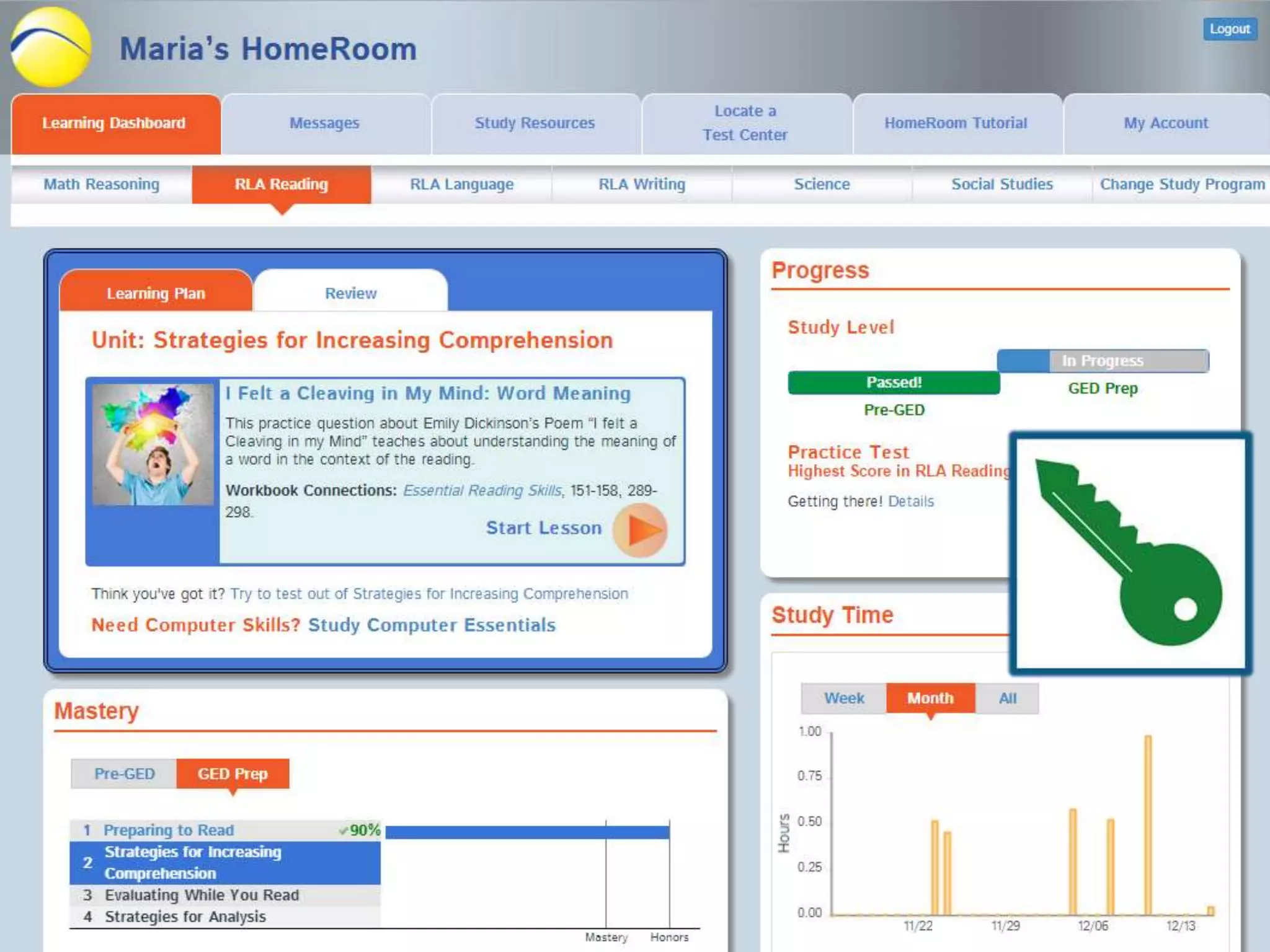
  • #25 Our third and final classroom is one where students are using technology in the classroom about 20-25% of the time. They’re really close to blended learning. How do we increase this amount of time to reach 30% of student study time on the computer? Ideas? Our Essential Education recommendation is to extend your contact hours with students by using the same technology in class as you do outside of class. If you went to David Rosen’s talk earlier or have read our Blended Learning guide, he uses the term turnkey product to talk about this type of curriculum. It has everything all in one place: lessons, practice problems, practice tests, and your tracking system. And students can access it online from anywhere they can access the internet.
  • #26 Our third and final classroom is one where students are using technology in the classroom about 20-25% of the time. They’re really close to blended learning. How do we increase this amount of time to reach 30% of student study time on the computer? Ideas? Our Essential Education recommendation is to extend your contact hours with students by using the same technology in class as you do outside of class. If you went to David Rosen’s talk earlier or have read our Blended Learning guide, he uses the term turnkey product to talk about this type of curriculum. It has everything all in one place: lessons, practice problems, practice tests, and your tracking system. And students can access it online from anywhere they can access the internet.
  • #27 Our third and final classroom is one where students are using technology in the classroom about 20-25% of the time. They’re really close to blended learning. How do we increase this amount of time to reach 30% of student study time on the computer? Ideas? Our Essential Education recommendation is to extend your contact hours with students by using the same technology in class as you do outside of class. If you went to David Rosen’s talk earlier or have read our Blended Learning guide, he uses the term turnkey product to talk about this type of curriculum. It has everything all in one place: lessons, practice problems, practice tests, and your tracking system. And students can access it online from anywhere they can access the internet.
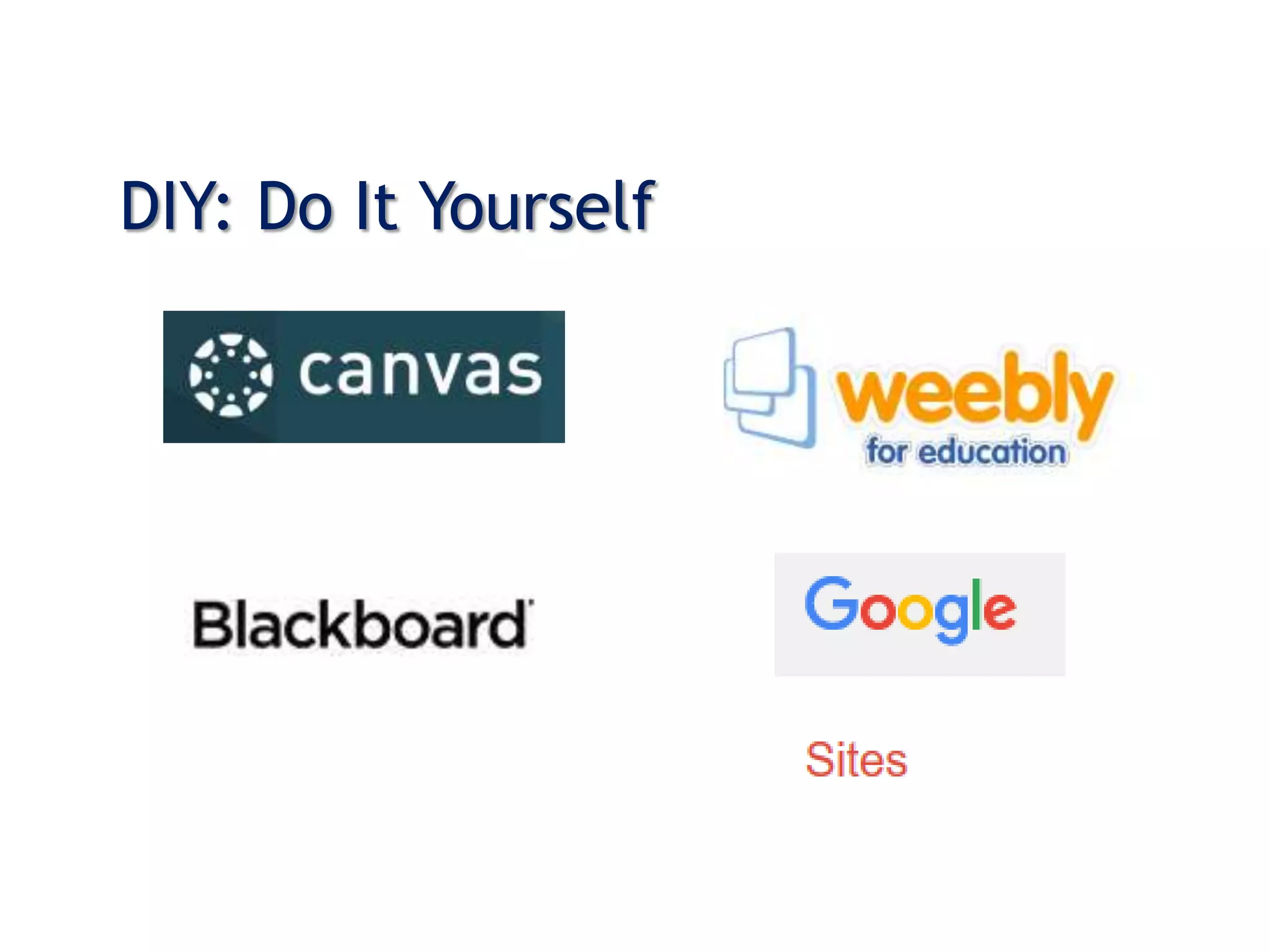
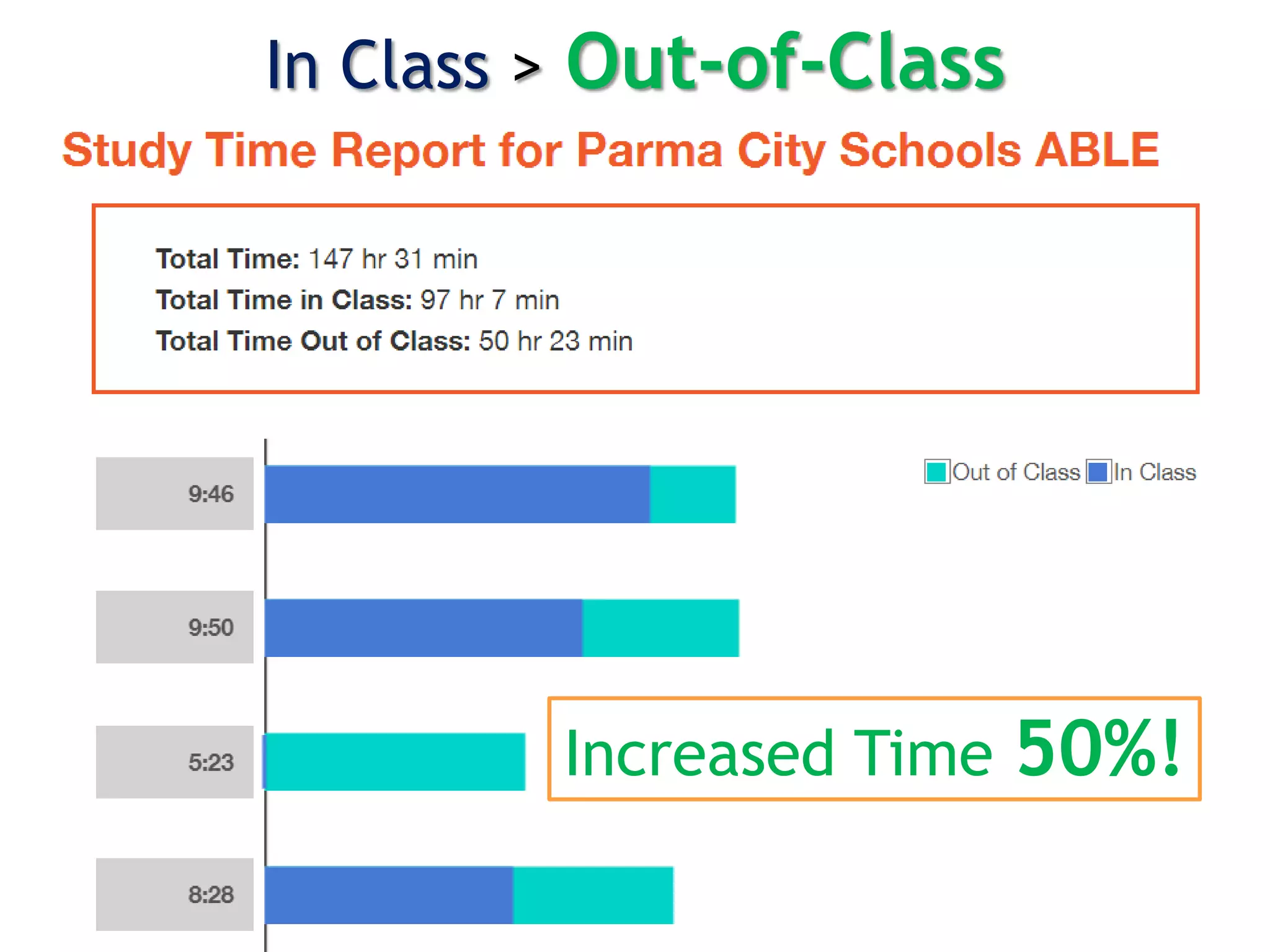
  • #28 So to demonstrate the increase, here’s a real life example here of a classroom in Ohio where they were already using blended learning. They were even using rotations already! But they tried a pilot with our turnkey product, and of course we’re not the only possibility here. So our turnkey product allowed students to access the assignments or personalized learning plans from home, to continue their classwork. And because of the built-in tracking system, the teachers discovered that they were able to increase their student time on the computer by 50% by offering them access at home.
  • #29 THAT is the power of blended learning. THAT is how blended learning can take your adult education teaching to the next level. When your work face-to-face is correlated with what students are studying on the computer, AND you create engaging experiences, AND students can access it both in class and out of class... then you can increase their study time, their retention, and ultimately have more students reach their goals.
  • #30 This is the beginning of one of my favorite articles from EdSurge.com by Elena Anina, Freddy Exparza and Mark Montero, published Sep 28, 2016: https://www.edsurge.com/news/2015-09-28-how-to-kick-off-blended-learning-hint-it-s-not-just-about-tech Technology cannot replace instructors. Never ever. But from an administrative or even a personal perspective, how do you get the follow-through necessary to go from boring old ping pong teaching to nunchucks? How can you fulfill the promise that 30% or more can increase your scores 15%?
  • #31 Implementation is a spectrum. And at one end of the spectrum is the Indian Jones method: “I’m going after that truck.” “How?” “I don’t know. I’m making this up as I go.” You just try it out and see what happens.
  • #32 This quote is from educator Wendy Hoben in California from our Blended Learning Guide on page 17. Involve students in testing and evaluating technology before you make a big purchase.
  • #33 If you work in fairly restrictive environment, like a Corrections facility offline or school with strong internet filters, then the Mission Impossible plan may be for you. This is where you nail down every precise detail, lots of communication and testing, to keep security tight while still doing what feels risky. The Mission Impossible style says, “Do you really think we can do this?” “Of course!” You’ve got it all planned.
  • #34 Which brings us back full circle to Arizona Department of Corrections. They had to have a very detailed, state-wide plan to purchase, train, and install GED Academy at four facilities last summer. It took a lot of planning, and a lot of communication to get everyone on board.
  • #35 In December 2015, we had preliminary results from Perryville facility, one of those involved in the pilot. 16 of their 19 test takers passed the final exam. 84%! Instructor John Roberts said: “The inmates who passed the test, said that they felt well prepared due to the blended learning that they have engaged in with their classroom teachers and GED Academy. ”
  • #36 We hope at the end of this session you feel motivated to take blended learning to the next level. But you’re going to need some help. We’re in the process of building a self-paced, online professional development course on blended learning. And right now we have this fabulous, FREE blended learning guide. Click the link to request your copy: goo.gl/9wmKYK
  • #37 So now it’s time for you to make a decision. You know now that 30% or more can increase your scores 15%. 30% of what? STUDENT use of technology. So what is ONE thing you will do right away to promote that, and get deeper with blended learning?
  • #38 Thank you so much for coming! To find out more about Essential Education, please visit us at essentialed.com Don’t forget to rate our session on the COABE App: https://app.doubledutch.me/#/220b954e-c5d8-468b-a280-f18964d01e6b/events/326ddc53-4c8d-4bfa-8a59-4f5bbeb0dc35/item/10726731