When – Or When Not – to
Outsource the Revenue Cycle
Michael Bernstein
Madison Healthcare Advisors
Providing Excellence in Financial Solutions


1
Reasons for Partnering

• Inability to attract or retain appropriately skilled
  employees
• High cost of billing and collections
• Declining reimbursements
• Denial management
• Clinical documentation improvement
• Large volume of aged receivables
• Growing number of self-pay accounts
• Consistently not collecting 100% of NPR


2
Reasons for Partnering - continued
• Constantly changing payment protocols and processes
• Underutilized or outdated revenue cycle technology
• Lack of migration plan for new systems of system
  conversions
• Regulatory issues: compliance, Patient Protection and
  Affordable Care Act, HIPAA 5010, ICD-10
• Consumer expectations: cash pricing and bundled
  payments
• Improved A/R = Improved operating income
• Hospital versus physician processes

3
Common Myths
• Loss of control
• Admitting to failure
• The most important factor is selecting the lowest-priced
  partner
• Only a few need to make the decision
• Expect a seamless transition
• Specific performance standards are not required
• Termination is an easy process
• The hospital/physician is indemnified against claims


4
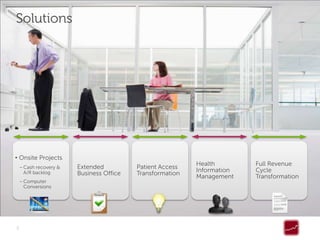
Solutions


• Onsite Projects
                                                           Health        Full Revenue
    – Cash recovery &   Extended          Patient Access
                                                           Information   Cycle
      A/R backlog       Business Office   Transformation
                                                           Management    Transformation
    – Computer
      Conversions


5
Expected Outcomes

• Improving and accelerating cash flow
• Sustainable results – best practices
• Avoid losses from aging receivables
• Reduction in bad debt and charity
• Reduced operating costs
• Access to enhanced technology


6
Expected Outcomes - continued
• Access to management and staff with deep domain
  expertise
• Ongoing training on best practices and regulatory
  changes
• High-performing employees with incentive-based pay
  systems
• Staff augmentation solutions
• Elimination of duplicate functions
• Improved customer satisfaction


7
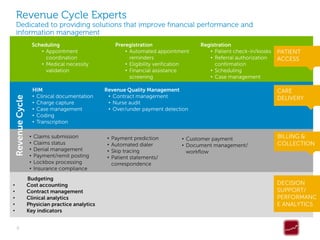
Revenue Cycle Experts
    Dedicated to providing solutions that improve financial performance and
    information management
                     Scheduling                       Preregistration                  Registration
                        • Appointment                     • Automated appointment         • Patient check-in/kiosks   PATIENT
                          coordination                      reminders                     • Referral authorization    ACCESS
                        • Medical necessity               • Eligibility verification        confirmation
                          validation                      • Financial assistance          • Scheduling
                                                            screening                     • Case management

                     HIM                        Revenue Quality Management                                            CARE
                     • Clinical documentation    • Contract management                                                DELIVERY
Revenue Cycle


                     • Charge capture            • Nurse audit
                     • Case management           • Over/under payment detection
                     • Coding
                     • Transcription

                 •   Claims submission           •   Payment prediction          • Customer payment                   BILLING &
                 •   Claims status               •   Automated dialer            • Document management/               COLLECTION
                 •   Denial management           •   Skip tracing                  workflow
                 •   Payment/remit posting       •   Patient statements/
                 •   Lockbox processing              correspondence
                 •   Insurance compliance
                Budgeting
•               Cost accounting                                                                                       DECISION
•               Contract management                                                                                   SUPPORT/
•               Clinical analytics                                                                                    PERFORMANC
•               Physician practice analytics                                                                          E ANALYTICS
•               Key indicators


    8
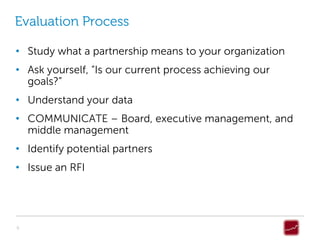
Evaluation Process

• Study what a partnership means to your organization
• Ask yourself, “Is our current process achieving our
  goals?”
• Understand your data
• COMMUNICATE – Board, executive management, and
  middle management
• Identify potential partners
• Issue an RFI


9
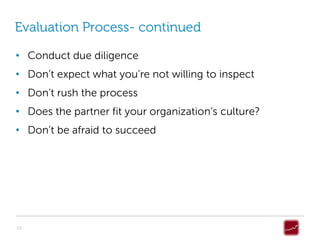
Evaluation Process- continued

• Conduct due diligence
• Don’t expect what you’re not willing to inspect
• Don’t rush the process
• Does the partner fit your organization’s culture?
• Don’t be afraid to succeed


10
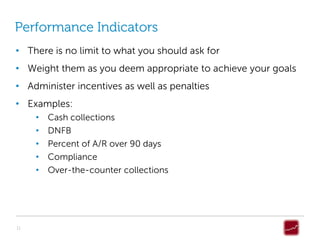
Performance Indicators
• There is no limit to what you should ask for
• Weight them as you deem appropriate to achieve your goals
• Administer incentives as well as penalties
• Examples:
     •   Cash collections
     •   DNFB
     •   Percent of A/R over 90 days
     •   Compliance
     •   Over-the-counter collections


11
Contract Considerations
• Clearly define key performance indicators and scope of work
• Accuracy of metrics is critical
• Clearly delineate number of days that you receive the collections
  for work in progress at transition
• Incentives and penalties: how much and settlement dates
• Consider your cash requirements when developing the incentive
  calculation
• Third-party responsibility (i.e., underpayment recovery, silent PPO
  recovery, denial and appeal recovery)
• Location of outsourced staff
• Collective bargaining considerations
• Whose technology will be utilized?
12
Consider…
“What do we have to do today to be ready for an uncertain
tomorrow?”


“What futurity do we have to build into our present
thinking and doing, what time spans do we have to
consider, and how do we use this information to make a
rational decision now?”


                                           Peter Drucker


13
Questions?


14

When Or When Not To Outsource The Revenue Cycle (1) Finalfinal Version

  • 1.
    When – OrWhen Not – to Outsource the Revenue Cycle Michael Bernstein Madison Healthcare Advisors Providing Excellence in Financial Solutions 1
  • 2.
    Reasons for Partnering •Inability to attract or retain appropriately skilled employees • High cost of billing and collections • Declining reimbursements • Denial management • Clinical documentation improvement • Large volume of aged receivables • Growing number of self-pay accounts • Consistently not collecting 100% of NPR 2
  • 3.
    Reasons for Partnering- continued • Constantly changing payment protocols and processes • Underutilized or outdated revenue cycle technology • Lack of migration plan for new systems of system conversions • Regulatory issues: compliance, Patient Protection and Affordable Care Act, HIPAA 5010, ICD-10 • Consumer expectations: cash pricing and bundled payments • Improved A/R = Improved operating income • Hospital versus physician processes 3
  • 4.
    Common Myths • Lossof control • Admitting to failure • The most important factor is selecting the lowest-priced partner • Only a few need to make the decision • Expect a seamless transition • Specific performance standards are not required • Termination is an easy process • The hospital/physician is indemnified against claims 4
  • 5.
    Solutions • Onsite Projects Health Full Revenue – Cash recovery & Extended Patient Access Information Cycle A/R backlog Business Office Transformation Management Transformation – Computer Conversions 5
  • 6.
    Expected Outcomes • Improvingand accelerating cash flow • Sustainable results – best practices • Avoid losses from aging receivables • Reduction in bad debt and charity • Reduced operating costs • Access to enhanced technology 6
  • 7.
    Expected Outcomes -continued • Access to management and staff with deep domain expertise • Ongoing training on best practices and regulatory changes • High-performing employees with incentive-based pay systems • Staff augmentation solutions • Elimination of duplicate functions • Improved customer satisfaction 7
  • 8.
    Revenue Cycle Experts Dedicated to providing solutions that improve financial performance and information management Scheduling Preregistration Registration • Appointment • Automated appointment • Patient check-in/kiosks PATIENT coordination reminders • Referral authorization ACCESS • Medical necessity • Eligibility verification confirmation validation • Financial assistance • Scheduling screening • Case management HIM Revenue Quality Management CARE • Clinical documentation • Contract management DELIVERY Revenue Cycle • Charge capture • Nurse audit • Case management • Over/under payment detection • Coding • Transcription • Claims submission • Payment prediction • Customer payment BILLING & • Claims status • Automated dialer • Document management/ COLLECTION • Denial management • Skip tracing workflow • Payment/remit posting • Patient statements/ • Lockbox processing correspondence • Insurance compliance Budgeting • Cost accounting DECISION • Contract management SUPPORT/ • Clinical analytics PERFORMANC • Physician practice analytics E ANALYTICS • Key indicators 8
  • 9.
    Evaluation Process • Studywhat a partnership means to your organization • Ask yourself, “Is our current process achieving our goals?” • Understand your data • COMMUNICATE – Board, executive management, and middle management • Identify potential partners • Issue an RFI 9
  • 10.
    Evaluation Process- continued •Conduct due diligence • Don’t expect what you’re not willing to inspect • Don’t rush the process • Does the partner fit your organization’s culture? • Don’t be afraid to succeed 10
  • 11.
    Performance Indicators • Thereis no limit to what you should ask for • Weight them as you deem appropriate to achieve your goals • Administer incentives as well as penalties • Examples: • Cash collections • DNFB • Percent of A/R over 90 days • Compliance • Over-the-counter collections 11
  • 12.
    Contract Considerations • Clearlydefine key performance indicators and scope of work • Accuracy of metrics is critical • Clearly delineate number of days that you receive the collections for work in progress at transition • Incentives and penalties: how much and settlement dates • Consider your cash requirements when developing the incentive calculation • Third-party responsibility (i.e., underpayment recovery, silent PPO recovery, denial and appeal recovery) • Location of outsourced staff • Collective bargaining considerations • Whose technology will be utilized? 12
  • 13.
    Consider… “What do wehave to do today to be ready for an uncertain tomorrow?” “What futurity do we have to build into our present thinking and doing, what time spans do we have to consider, and how do we use this information to make a rational decision now?” Peter Drucker 13
  • 14.