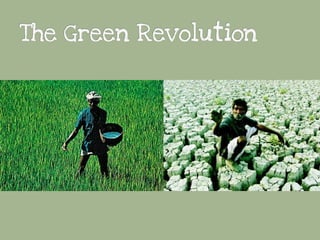
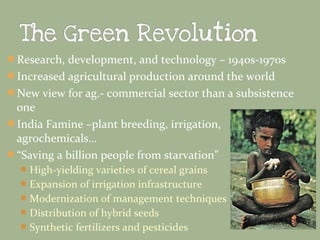
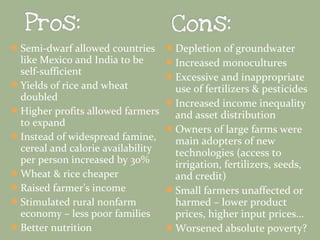
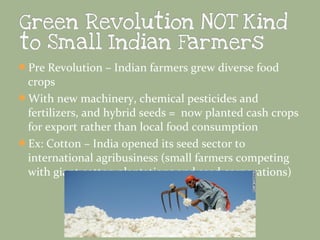
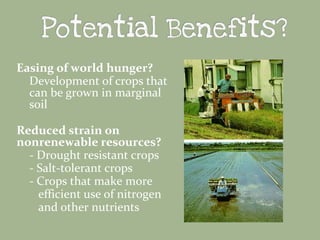
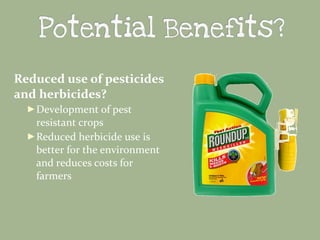
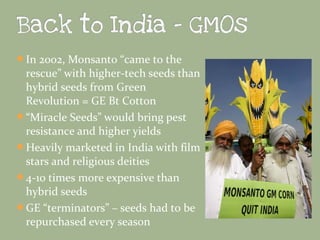
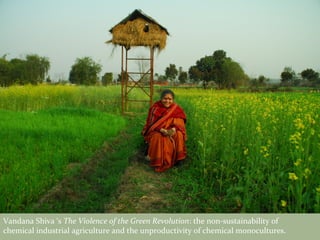
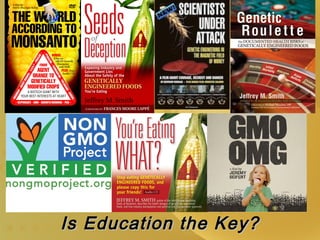
The document summarizes the impacts of the Green Revolution from the 1940s-1970s, which aimed to increase global agricultural production through new technologies. It led to increased cereal crop yields through high-yielding varieties, irrigation infrastructure, and chemical fertilizers and pesticides. This boosted food availability and reduced famine in countries like India and Mexico. However, it also had negative consequences like groundwater depletion, increased monocultures, and worsening inequality as small farmers struggled with high input costs. The document then discusses the introduction of GE crops and notes both arguments for reducing world hunger but also concerns about the impacts on bees, weeds, and Indian farmer suicides.