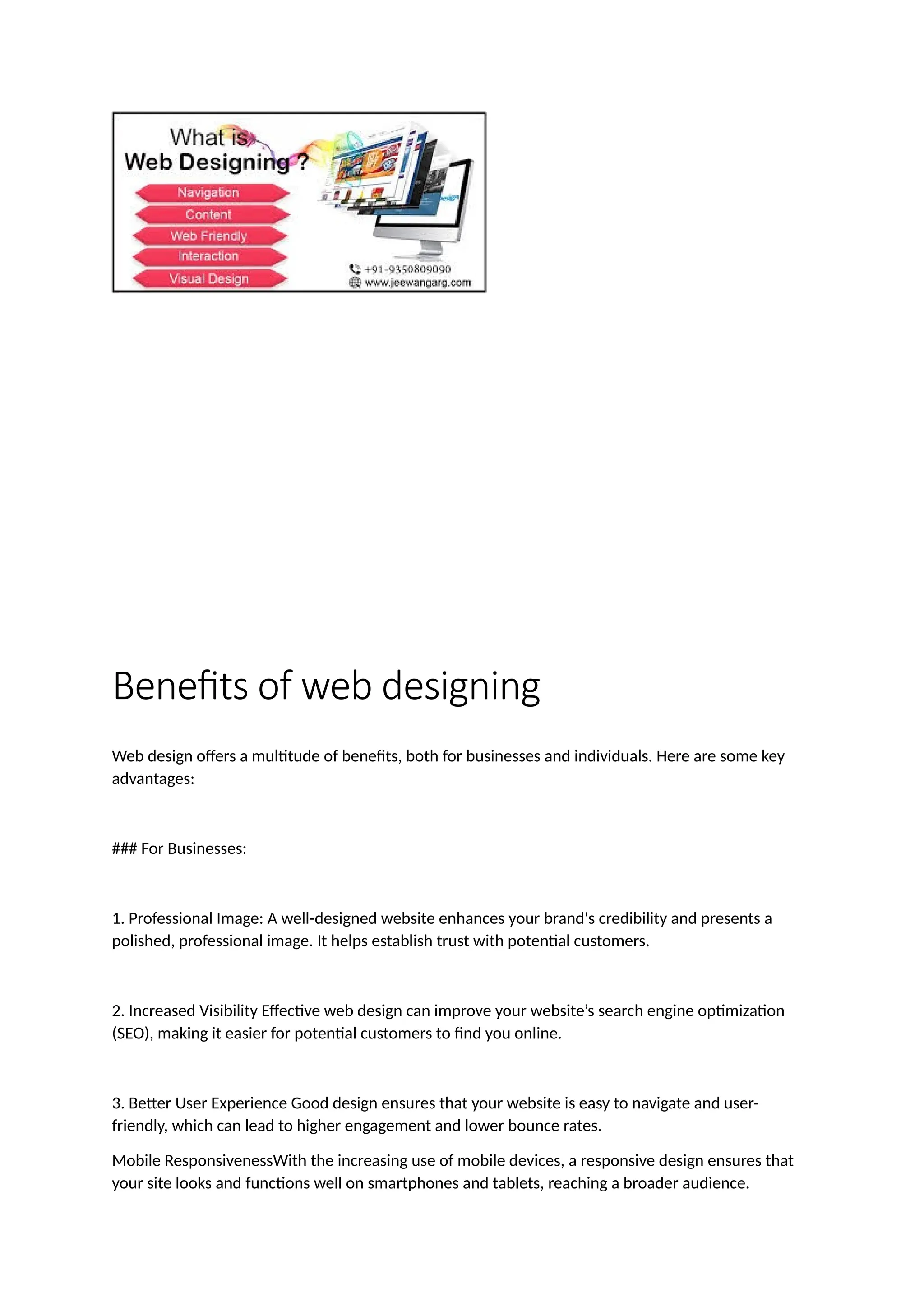
Web designing
Web designing is a fascinating field that blends creativity with technical skills to create visually
appealing and functional websites. Whether you’re starting from scratch or refining an existing site,
there are several key aspects to consider:
1. **User Experience (UX) Design**: Focuses on creating a seamless, intuitive experience for users.
This involves understanding user behavior, creating user personas, and designing user flows to
ensure visitors can easily navigate the site.
2. **User Interface (UI) Design**: Deals with the look and feel of the website. This includes layout,
color schemes, typography, and visual elements. Good UI design ensures that the website is
aesthetically pleasing and aligned with the brand’s identity.
3. **Responsive Design**: Ensures that the website functions well on a variety of devices and screen
sizes, from desktop computers to mobile phones. This often involves using flexible grids and layouts,
as well as media queries in CSS.
4. **Web Accessibility**: Involves designing websites that are accessible to all users, including those
with disabilities. This includes implementing features like screen reader compatibility, keyboard
navigation, and sufficient color contrast.
5. **Front-End Development**: Involves coding the visual aspects of the website using HTML, CSS,
and JavaScript. This is where the designs are translated into functional web pages.
6. **Back-End Development**: Involves server-side development, including database management,
server logic, and integration with front-end elements. Technologies used include PHP, Python, Ruby,
and various databases like MySQL or MongoDB.
7. **SEO (Search Engine Optimization)**: Ensures that the website is optimized for search engines to
improve visibility and ranking in search results. This includes using appropriate keywords, meta tags,
and optimizing page load speeds.
8. **Content Management Systems (CMS)**: Platforms like WordPress, Joomla, and Drupal allow
users to create, manage, and modify digital content without needing to code. They often come with
themes and plugins to extend functionality.
9. **Testing and Debugging**: Involves checking the website for bugs, compatibility issues, and
performance problems. Testing across different browsers and devices is crucial to ensure a consistent
user experience.
10. **Maintenance and Updates**: Regular updates and maintenance are necessary to keep the
website secure, functional, and up-to-date with the latest web standards and technologies.
Are you looking to dive into web designing, or do you have a specific project or question in mind?
https://excellenceacademy.co.in/web-designing-course-in-chandigarh/
Types of web designing
Web design is a broad field with many different approaches and methodologies. Here are some key
types and concepts within web design:
1.Static Web Design
Description: Involves creating web pages with fixed content that doesn't change unless manually
updated by the designer.
- Use Case: Personal blogs, portfolios, small business websites where content doesn't need
frequent updates.
2. Dynamic Web Design
- Description Involves creating web pages that are generated in real-time based on user
interactions or other data sources.
- Use Cases: E-commerce sites, social media platforms, news websites.
3. Responsive Web Design
-Description: Ensures that web content adjusts seamlessly to different screen sizes and devices
(desktops, tablets, smartphones).
- Use Cases: Modern websites that need to cater to users on various devices.
4.Adaptive Web Design
- Description: Uses multiple fixed layout sizes based on the device's screen width. Unlike responsive
design, which fluidly adjusts, adaptive design delivers specific layouts for different devices.
- Use Cases: Sites that target specific devices with optimized experiences, like a custom experience
for tablets versus smartphones.
5. Mobile-First Design
- Description Focuses on designing the mobile version of a site first, then scaling up to larger
screens. This approach prioritizes the mobile user experience.
- Use Cases Sites where mobile users are the primary audience.
6. Minimalist Web Design
Description Emphasizes simplicity, using fewer elements, clean lines, and a focus on essential
content.
- Use Cases: Portfolio sites, personal blogs, and any site where clarity and simplicity are desired.
7. Material Design:
Description: Developed by Google, this design philosophy focuses on creating a visual language
that combines classic principles of good design with the innovation and possibility of technology and
science.
- Use Cases: Websites and applications aiming for a modern, cohesive aesthetic with depth and
motion.
8. Flat Design
Description: Features a minimalistic approach with 2D elements, bright colors, and a lack of
complex textures or gradients.
Use Cases Modern, clean websites and apps looking to maintain simplicity and focus on usability.
9. Skeuomorphic Design:
- Description Mimics real-world objects and textures to make digital interfaces more intuitive.
- Use Cases: Older designs and applications where users benefit from familiar visual cues.
10. User Interface (UI) Design
Description: Focuses on the layout and design of interactive elements to ensure an intuitive and
aesthetically pleasing user experience.
Use Case: Websites and apps where interaction design is crucial.
11.User Experience (UX) Design
Description Encompasses the overall experience a user has with a product, including usability,
accessibility, and interaction.
Use Cases Any website or application where user satisfaction and efficiency are priorities.
12. Conversion-Centered Design (CCD)
Descriptio: Aims to optimize elements of a website to encourage specific user actions, such as
making a purchase or filling out a form.
Use Case: E-commerce sites, landing pages, and lead generation forms.
13. Content-First Design:
Description: Focuses on creating a strong content strategy before designing the visual layout,
ensuring that the design supports and enhances the content.
Use Cases: Content-heavy sites like news outlets, educational platforms, and blogs.
14. Prototyping and Wireframing:
Description Involves creating preliminary designs and layouts to test ideas and user flows before
full development begins.
Use Case Early stages of website or app development to refine functionality and layout.
Each of these approaches can be tailored to fit specific needs and goals, so understanding the
strengths and limitations of each is key to creating effective web designing
Images
Benefits of web designing
Web design offers a multitude of benefits, both for businesses and individuals. Here are some key
advantages:
### For Businesses:
1. Professional Image: A well-designed website enhances your brand's credibility and presents a
polished, professional image. It helps establish trust with potential customers.
2. Increased Visibility Effective web design can improve your website’s search engine optimization
(SEO), making it easier for potential customers to find you online.
3. Better User Experience Good design ensures that your website is easy to navigate and user-
friendly, which can lead to higher engagement and lower bounce rates.
Mobile ResponsivenessWith the increasing use of mobile devices, a responsive design ensures that
your site looks and functions well on smartphones and tablets, reaching a broader audience.
5. Competitive Advantage: A modern, well-designed website can set you apart from competitors,
helping you attract and retain customers.
6. Increased Conversion Rates Effective design elements, such as clear calls to action and intuitive
navigation, can improve the likelihood of turning visitors into customers.
7. Brand Consistency A website allows you to maintain consistent branding across various digital
platforms, reinforcing your brand identity and message.
8 Analytics and Insights: Integrated analytics tools can provide valuable insights into user behavior,
helping you make data-driven decisions to improve your site and marketing strategies.
For Individuals:
1. Creative Expression Web design allows for a high degree of creativity and self-expression, whether
you’re designing a personal blog, portfolio, or a unique project.
2 Skill Development: Learning web design skills can open up various career opportunities and
enhance your technical abilities, including knowledge of HTML, CSS, JavaScript, and design principles.
3. Freelance Opportunities: With web design skills, you can take on freelance projects or start your
own business, providing services to clients who need a professional web presence.
4. Problem-Solving Skills: Web design involves problem-solving and critical thinking, which can be
intellectually rewarding and transferable to other areas of life and work.
5. Community Engagement: Engaging in web design can connect you with a community of designers,
developers, and creatives, fostering collaboration and learning opportunities.
6. Portfolio Building: Designing your own website or projects allows you to build a portfolio that
showcases your skills and style, which can be beneficial for job hunting or attracting clients.
In summary, web design can significantly impact business success and individual growth, offering
benefits like enhanced visibility, improved user experience, and opportunities for creativity and
career advancement.
Scope of web designing
The scope of web designing is vast and continually evolving, reflecting changes in technology, user
expectations, and industry standards. Here’s an overview of key areas within the scope of web
design:
1. User Experience (UX) Design
- Research: Understanding user needs through surveys, interviews, and usability testing.
- Information Architecture: Structuring content and navigation to facilitate easy access.
- Wireframing and Prototyping: Creating low-fidelity layouts and interactive prototypes to visualize
and test designs.
2. User Interface (UI) Design
- Visual Design: Crafting the look and feel of the website, including color schemes, typography, and
imagery.
- Interactive Elements: Designing buttons, forms, and other interactive components to enhance
usability.
- Responsive Design Ensuring the website looks and functions well on various devices and screen
sizes.
3. Front-End Development
- HTML/CSS Building the structure and style of web pages.
- JavaScript Adding interactivity and dynamic content.
- Frameworks and Libraries Utilizing tools like React, Vue.js, or Angular for efficient development.
4. Back-End Development (often overlaps with web development)
- Server-Side Scripting: Creating and managing the server-side logic of the website using languages
like PHP, Python, or Ruby.
- Database Management: Designing and interacting with databases to store and manage data.
5. Web Design Trends and Innovations
-Accessibility Designing for users with disabilities to ensure inclusivity.
-SEO Best Practices: Implementing design strategies that improve search engine rankings.
- **Performance Optimization**: Enhancing page load times and overall site performance.
6.Content Management Systems (CMS:
CMS Platforms: Working with systems like WordPress, Joomla, or Drupal to enable easy content
updates.
Custom CMS Development: Creating tailored content management solutions.
7. E-commerce Design
Online Store Layout: Designing user-friendly and visually appealing e-commerce interfaces.
Payment Integration Implementing secure payment gateways and checkout processes.
8. Mobile and Web Application
App Design Creating interfaces and experiences for mobile apps and web applications.
Cross-Platform Design Ensuring a consistent experience across different platforms.
9. Branding and Marketing
Brand Consistency Reflecting brand identity through web design elements.
Conversion Rate Optimization (CRO Designing to maximize user engagement and conversion rates.
10. Maintenance and Support
Updating Content Regularly refreshing website content and design elements.
Bug Fixes and Improvements Addressing issues and implementing updates as needed
The field of web design is dynamic, and professionals need to stay current with emerging
technologies and design trends to remain competitive.
Salary package of web designing
The salary package for a web designer can vary significantly depending on several factors, including
location, experience, education, and the specific industry or company they work for. Here's a general
overview:
1. Location Salaries for web designers can differ greatly depending on the geographic region. For
instance, web designers in major tech hubs like San Francisco or New York City might earn more
compared to those in smaller cities or regions with a lower cost of living.
2. Experience
Entry-Level For those just starting out, salaries might range from $40,000 to $60,000 per year in the
U.S.
Mid-LevelWith a few years of experience, a web designer can expect to earn between $60,000 and
$80,000 annually.
- **Senior-Level**: Experienced web designers or those in leadership roles might earn between
$80,000 and $120,000 or more per year.
3. **Education**: While a formal degree can be beneficial, many web designers also succeed with
relevant certifications or strong portfolios. Specialized training or advanced degrees might lead to
higher salaries.
4. **Industry**: Web designers working in high-demand industries such as tech, finance, or large
corporations may see higher salaries compared to those in non-profits or smaller businesses.
5. **Freelance vs. Full-Time**: Freelance web designers have variable incomes based on project load
and client base, which can sometimes lead to higher earnings but with less stability. Full-time
positions offer more stability but might have a lower ceiling compared to top freelance rates.
6. **Skills and Specializations**: Web designers with additional skills in UX/UI design, front-end
development, or specific software expertise might command higher salaries.
These figures are general estimates and can fluctuate based on market conditions and individual
circumstances. If you're considering a career in web design or looking to negotiate a salary, it's a
good idea to research specific data for your location and field of interest.
Web  designing course in chandigarh mohali

Web designing course in chandigarh mohali

  • 1.
    Web designing Web designingis a fascinating field that blends creativity with technical skills to create visually appealing and functional websites. Whether you’re starting from scratch or refining an existing site, there are several key aspects to consider: 1. **User Experience (UX) Design**: Focuses on creating a seamless, intuitive experience for users. This involves understanding user behavior, creating user personas, and designing user flows to ensure visitors can easily navigate the site. 2. **User Interface (UI) Design**: Deals with the look and feel of the website. This includes layout, color schemes, typography, and visual elements. Good UI design ensures that the website is aesthetically pleasing and aligned with the brand’s identity. 3. **Responsive Design**: Ensures that the website functions well on a variety of devices and screen sizes, from desktop computers to mobile phones. This often involves using flexible grids and layouts, as well as media queries in CSS. 4. **Web Accessibility**: Involves designing websites that are accessible to all users, including those with disabilities. This includes implementing features like screen reader compatibility, keyboard navigation, and sufficient color contrast. 5. **Front-End Development**: Involves coding the visual aspects of the website using HTML, CSS, and JavaScript. This is where the designs are translated into functional web pages. 6. **Back-End Development**: Involves server-side development, including database management, server logic, and integration with front-end elements. Technologies used include PHP, Python, Ruby, and various databases like MySQL or MongoDB. 7. **SEO (Search Engine Optimization)**: Ensures that the website is optimized for search engines to improve visibility and ranking in search results. This includes using appropriate keywords, meta tags, and optimizing page load speeds. 8. **Content Management Systems (CMS)**: Platforms like WordPress, Joomla, and Drupal allow users to create, manage, and modify digital content without needing to code. They often come with themes and plugins to extend functionality.
  • 2.
    9. **Testing andDebugging**: Involves checking the website for bugs, compatibility issues, and performance problems. Testing across different browsers and devices is crucial to ensure a consistent user experience. 10. **Maintenance and Updates**: Regular updates and maintenance are necessary to keep the website secure, functional, and up-to-date with the latest web standards and technologies. Are you looking to dive into web designing, or do you have a specific project or question in mind? https://excellenceacademy.co.in/web-designing-course-in-chandigarh/ Types of web designing Web design is a broad field with many different approaches and methodologies. Here are some key types and concepts within web design: 1.Static Web Design Description: Involves creating web pages with fixed content that doesn't change unless manually updated by the designer. - Use Case: Personal blogs, portfolios, small business websites where content doesn't need frequent updates. 2. Dynamic Web Design - Description Involves creating web pages that are generated in real-time based on user interactions or other data sources. - Use Cases: E-commerce sites, social media platforms, news websites. 3. Responsive Web Design -Description: Ensures that web content adjusts seamlessly to different screen sizes and devices (desktops, tablets, smartphones). - Use Cases: Modern websites that need to cater to users on various devices.
  • 3.
    4.Adaptive Web Design -Description: Uses multiple fixed layout sizes based on the device's screen width. Unlike responsive design, which fluidly adjusts, adaptive design delivers specific layouts for different devices. - Use Cases: Sites that target specific devices with optimized experiences, like a custom experience for tablets versus smartphones. 5. Mobile-First Design - Description Focuses on designing the mobile version of a site first, then scaling up to larger screens. This approach prioritizes the mobile user experience. - Use Cases Sites where mobile users are the primary audience. 6. Minimalist Web Design Description Emphasizes simplicity, using fewer elements, clean lines, and a focus on essential content. - Use Cases: Portfolio sites, personal blogs, and any site where clarity and simplicity are desired. 7. Material Design: Description: Developed by Google, this design philosophy focuses on creating a visual language that combines classic principles of good design with the innovation and possibility of technology and science. - Use Cases: Websites and applications aiming for a modern, cohesive aesthetic with depth and motion. 8. Flat Design Description: Features a minimalistic approach with 2D elements, bright colors, and a lack of complex textures or gradients. Use Cases Modern, clean websites and apps looking to maintain simplicity and focus on usability. 9. Skeuomorphic Design: - Description Mimics real-world objects and textures to make digital interfaces more intuitive. - Use Cases: Older designs and applications where users benefit from familiar visual cues. 10. User Interface (UI) Design
  • 4.
    Description: Focuses onthe layout and design of interactive elements to ensure an intuitive and aesthetically pleasing user experience. Use Case: Websites and apps where interaction design is crucial. 11.User Experience (UX) Design Description Encompasses the overall experience a user has with a product, including usability, accessibility, and interaction. Use Cases Any website or application where user satisfaction and efficiency are priorities. 12. Conversion-Centered Design (CCD) Descriptio: Aims to optimize elements of a website to encourage specific user actions, such as making a purchase or filling out a form. Use Case: E-commerce sites, landing pages, and lead generation forms. 13. Content-First Design: Description: Focuses on creating a strong content strategy before designing the visual layout, ensuring that the design supports and enhances the content. Use Cases: Content-heavy sites like news outlets, educational platforms, and blogs. 14. Prototyping and Wireframing: Description Involves creating preliminary designs and layouts to test ideas and user flows before full development begins. Use Case Early stages of website or app development to refine functionality and layout. Each of these approaches can be tailored to fit specific needs and goals, so understanding the strengths and limitations of each is key to creating effective web designing Images
  • 5.
    Benefits of webdesigning Web design offers a multitude of benefits, both for businesses and individuals. Here are some key advantages: ### For Businesses: 1. Professional Image: A well-designed website enhances your brand's credibility and presents a polished, professional image. It helps establish trust with potential customers. 2. Increased Visibility Effective web design can improve your website’s search engine optimization (SEO), making it easier for potential customers to find you online. 3. Better User Experience Good design ensures that your website is easy to navigate and user- friendly, which can lead to higher engagement and lower bounce rates. Mobile ResponsivenessWith the increasing use of mobile devices, a responsive design ensures that your site looks and functions well on smartphones and tablets, reaching a broader audience.
  • 6.
    5. Competitive Advantage:A modern, well-designed website can set you apart from competitors, helping you attract and retain customers. 6. Increased Conversion Rates Effective design elements, such as clear calls to action and intuitive navigation, can improve the likelihood of turning visitors into customers. 7. Brand Consistency A website allows you to maintain consistent branding across various digital platforms, reinforcing your brand identity and message. 8 Analytics and Insights: Integrated analytics tools can provide valuable insights into user behavior, helping you make data-driven decisions to improve your site and marketing strategies. For Individuals: 1. Creative Expression Web design allows for a high degree of creativity and self-expression, whether you’re designing a personal blog, portfolio, or a unique project. 2 Skill Development: Learning web design skills can open up various career opportunities and enhance your technical abilities, including knowledge of HTML, CSS, JavaScript, and design principles. 3. Freelance Opportunities: With web design skills, you can take on freelance projects or start your own business, providing services to clients who need a professional web presence. 4. Problem-Solving Skills: Web design involves problem-solving and critical thinking, which can be intellectually rewarding and transferable to other areas of life and work. 5. Community Engagement: Engaging in web design can connect you with a community of designers, developers, and creatives, fostering collaboration and learning opportunities. 6. Portfolio Building: Designing your own website or projects allows you to build a portfolio that showcases your skills and style, which can be beneficial for job hunting or attracting clients. In summary, web design can significantly impact business success and individual growth, offering benefits like enhanced visibility, improved user experience, and opportunities for creativity and career advancement.
  • 7.
    Scope of webdesigning The scope of web designing is vast and continually evolving, reflecting changes in technology, user expectations, and industry standards. Here’s an overview of key areas within the scope of web design: 1. User Experience (UX) Design - Research: Understanding user needs through surveys, interviews, and usability testing. - Information Architecture: Structuring content and navigation to facilitate easy access. - Wireframing and Prototyping: Creating low-fidelity layouts and interactive prototypes to visualize and test designs. 2. User Interface (UI) Design - Visual Design: Crafting the look and feel of the website, including color schemes, typography, and imagery. - Interactive Elements: Designing buttons, forms, and other interactive components to enhance usability. - Responsive Design Ensuring the website looks and functions well on various devices and screen sizes. 3. Front-End Development - HTML/CSS Building the structure and style of web pages. - JavaScript Adding interactivity and dynamic content. - Frameworks and Libraries Utilizing tools like React, Vue.js, or Angular for efficient development. 4. Back-End Development (often overlaps with web development) - Server-Side Scripting: Creating and managing the server-side logic of the website using languages like PHP, Python, or Ruby. - Database Management: Designing and interacting with databases to store and manage data. 5. Web Design Trends and Innovations
  • 8.
    -Accessibility Designing forusers with disabilities to ensure inclusivity. -SEO Best Practices: Implementing design strategies that improve search engine rankings. - **Performance Optimization**: Enhancing page load times and overall site performance. 6.Content Management Systems (CMS: CMS Platforms: Working with systems like WordPress, Joomla, or Drupal to enable easy content updates. Custom CMS Development: Creating tailored content management solutions. 7. E-commerce Design Online Store Layout: Designing user-friendly and visually appealing e-commerce interfaces. Payment Integration Implementing secure payment gateways and checkout processes. 8. Mobile and Web Application App Design Creating interfaces and experiences for mobile apps and web applications. Cross-Platform Design Ensuring a consistent experience across different platforms. 9. Branding and Marketing Brand Consistency Reflecting brand identity through web design elements. Conversion Rate Optimization (CRO Designing to maximize user engagement and conversion rates. 10. Maintenance and Support Updating Content Regularly refreshing website content and design elements. Bug Fixes and Improvements Addressing issues and implementing updates as needed The field of web design is dynamic, and professionals need to stay current with emerging technologies and design trends to remain competitive. Salary package of web designing The salary package for a web designer can vary significantly depending on several factors, including location, experience, education, and the specific industry or company they work for. Here's a general overview:
  • 9.
    1. Location Salariesfor web designers can differ greatly depending on the geographic region. For instance, web designers in major tech hubs like San Francisco or New York City might earn more compared to those in smaller cities or regions with a lower cost of living. 2. Experience Entry-Level For those just starting out, salaries might range from $40,000 to $60,000 per year in the U.S. Mid-LevelWith a few years of experience, a web designer can expect to earn between $60,000 and $80,000 annually. - **Senior-Level**: Experienced web designers or those in leadership roles might earn between $80,000 and $120,000 or more per year. 3. **Education**: While a formal degree can be beneficial, many web designers also succeed with relevant certifications or strong portfolios. Specialized training or advanced degrees might lead to higher salaries. 4. **Industry**: Web designers working in high-demand industries such as tech, finance, or large corporations may see higher salaries compared to those in non-profits or smaller businesses. 5. **Freelance vs. Full-Time**: Freelance web designers have variable incomes based on project load and client base, which can sometimes lead to higher earnings but with less stability. Full-time positions offer more stability but might have a lower ceiling compared to top freelance rates. 6. **Skills and Specializations**: Web designers with additional skills in UX/UI design, front-end development, or specific software expertise might command higher salaries. These figures are general estimates and can fluctuate based on market conditions and individual circumstances. If you're considering a career in web design or looking to negotiate a salary, it's a good idea to research specific data for your location and field of interest.