WEARABLE BIOSENSORS
 Submitted to:-
 Megha Chitranshi
 Submitted by:-
 Rohit Dadoriya
 0905EC131137
 EC-ITM
Contents
 Introduction
 Need for a wearable biosensor
 Components of a Biosensor
 Ring Sensor
 Smart Shirt
 Applications
 Conclusion
 References
Wearable Biosensor = Wearable + Biosensor
• Biosensor is an analytical
device used for detection
of analyte.
• e.g. Blood Glucose
Detector
• Object that can be worn
on body.
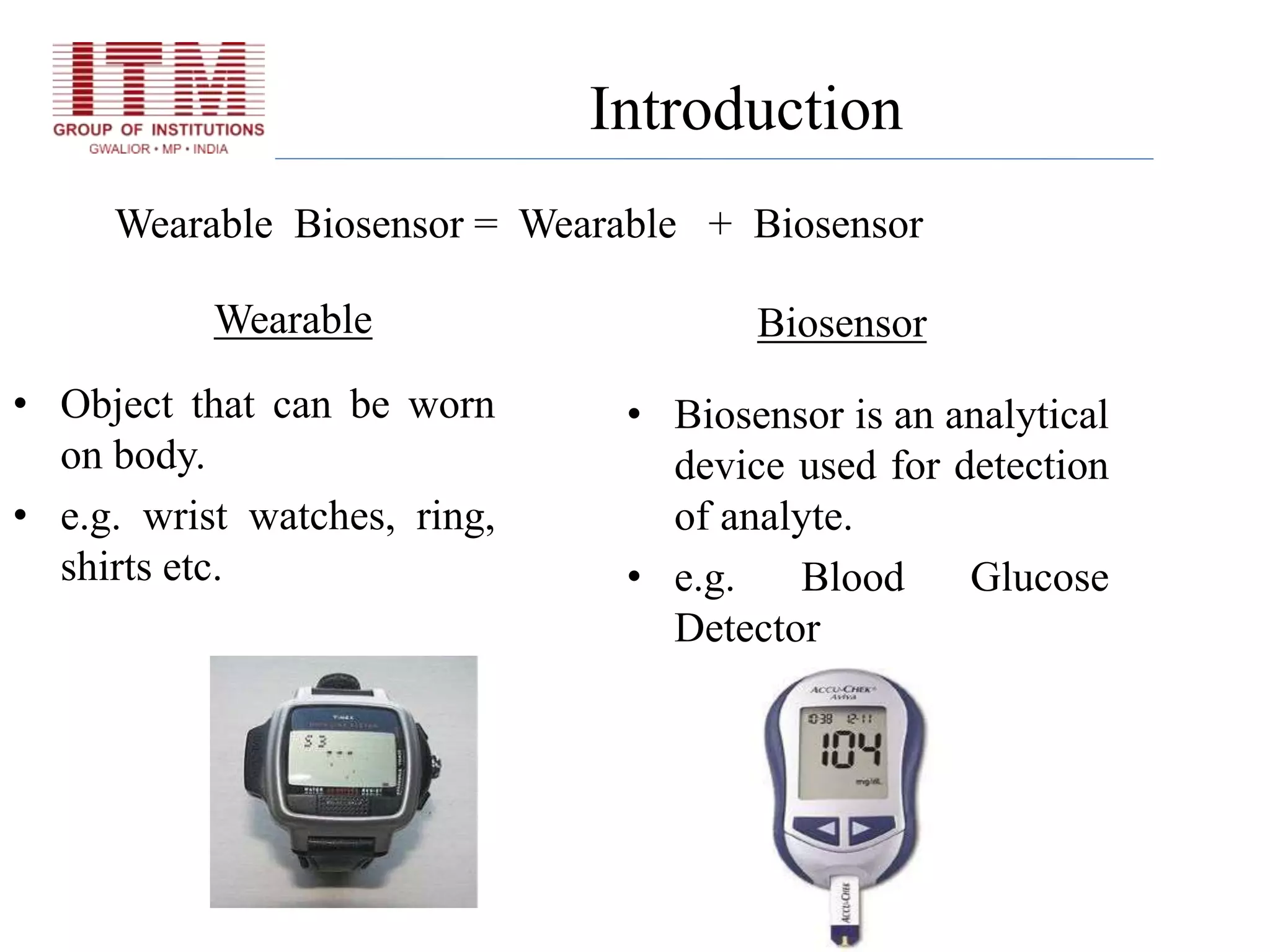
• e.g. wrist watches, ring,
shirts etc.
BiosensorWearable
Introduction
Wearable Biosensor
• Wearable monitoring devices that allow continuous
monitoring of physiological signals.
• They rely on wireless sensors enclosed in items that can be
worn, such as ring or shirt.
• The data sets recorded using these systems are then processed
to detect patient’s clinical situations.
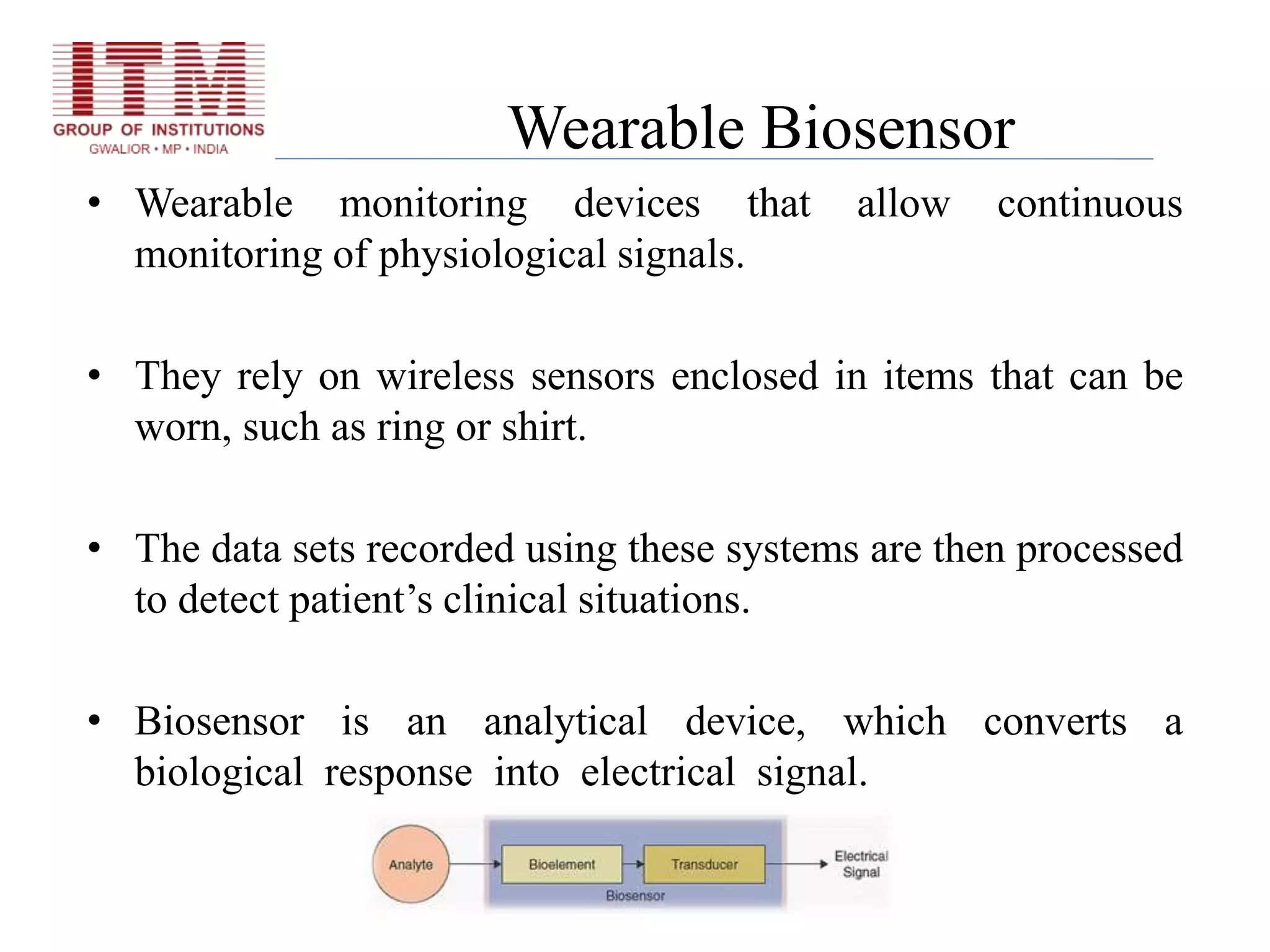
• Biosensor is an analytical device, which converts a
biological response into electrical signal.
Need for a wearable biosensor
 Remote monitoring of patients
 Training support for athletes
 Monitoring of individuals who work with
hazardous elements
 Tracking of professional truck driver’s vital signs to
alert them of fatigue
 Use of wearable monitoring devices allow continuous
monitoring of physiological signals
 Wearable systems are totally non-obtrusive devices that allow
physicians to overcome the limitations of ambulatory
technology
 Detects events predictive of possible worsening of
the patient’s clinical situations
Components Of Wearable Biosensor
Three main components of wearable biosensors are:
• Biological element: For sensing the presence and
concentration of a substance.
• Transducer: The product of interaction of biological
component and sample may be a suitable chemical, charge
etc., which can be converted by transducer into an electrical
signal.
• Associated Electronic Devices: The electrical signal may be
further amplified and can be read on digital panels
Types Of Wearable Biosensor
 Ring Sensor:
It allows one to continuously
monitor heart rate and oxygen saturation.
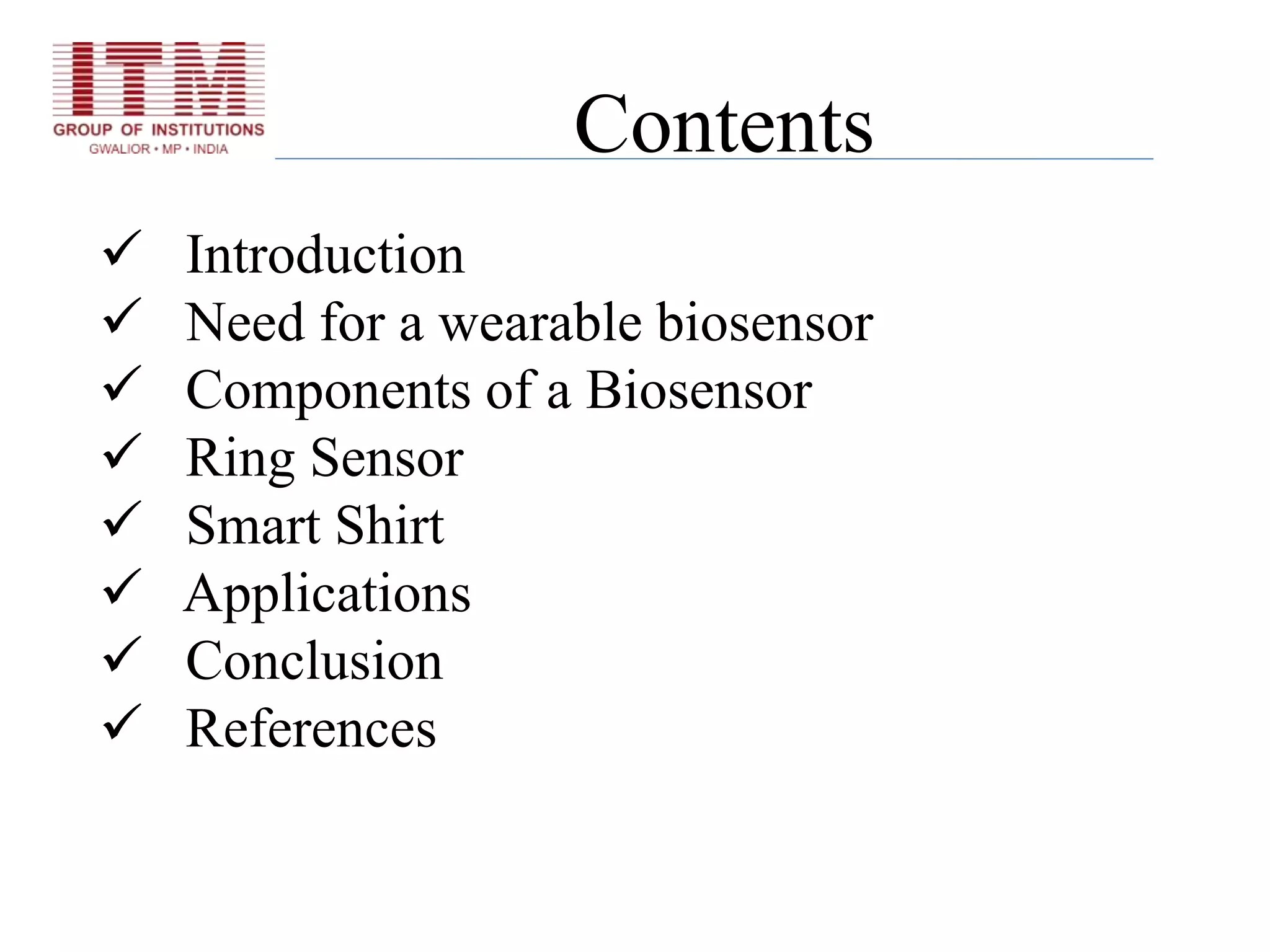
The device is shaped like a ring.
 Smart Shirt:
This technology has been used to
integrate sensors for monitoring the vital
signs like temperature, heart rate and
respiration rate.
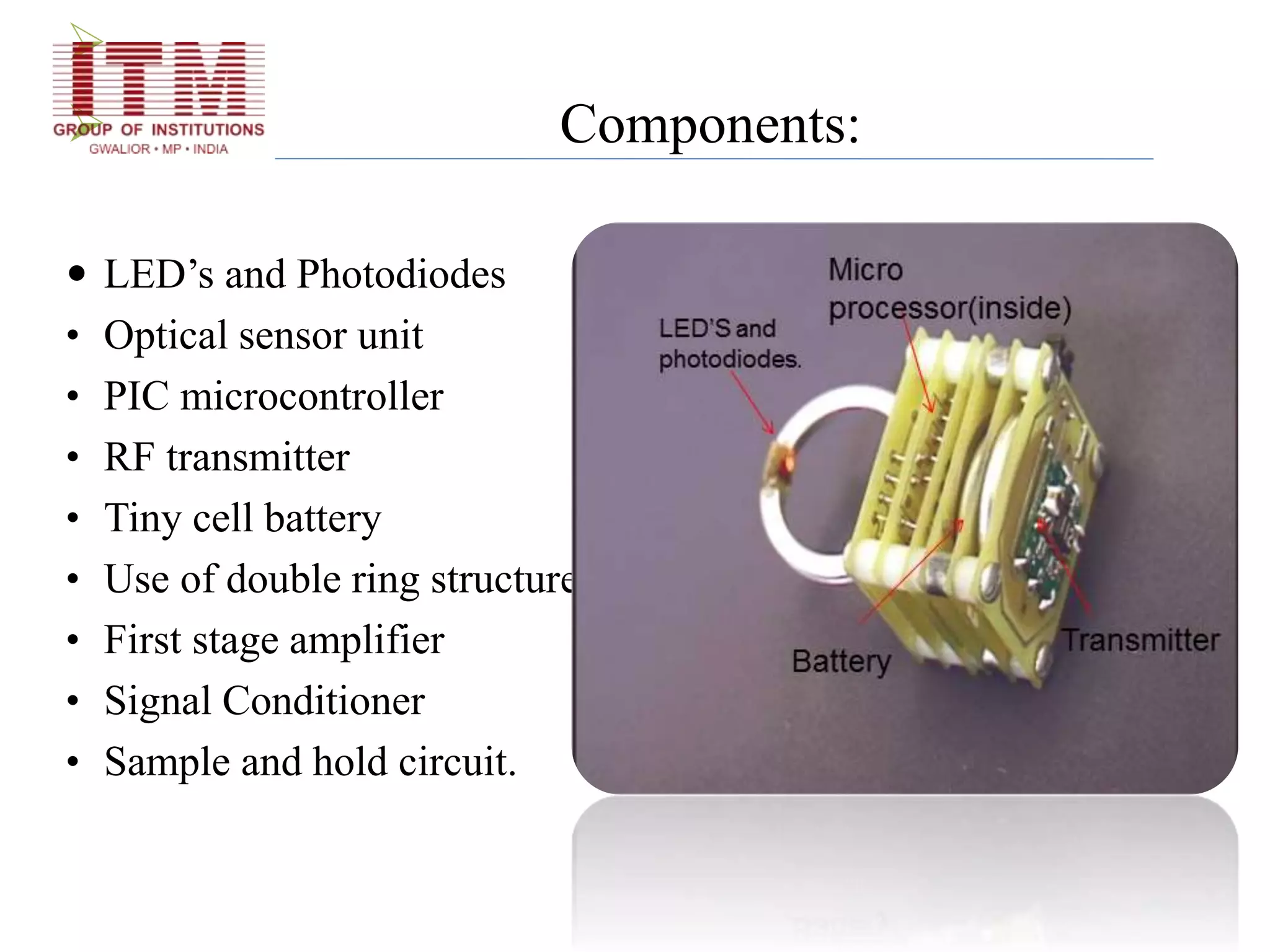
About Ring Sensor
 It is a pulse oximetry, i.e.
it monitors the oxygen saturation.
 It is based on the concept of
photoconductor.
Principles :-
 Detection pulsatile blood volume changes by photoelectric
method by photo resistor
 Connected as a part of voltage divider circuit and produces a
voltage that varies with the amount of blood in the finger.

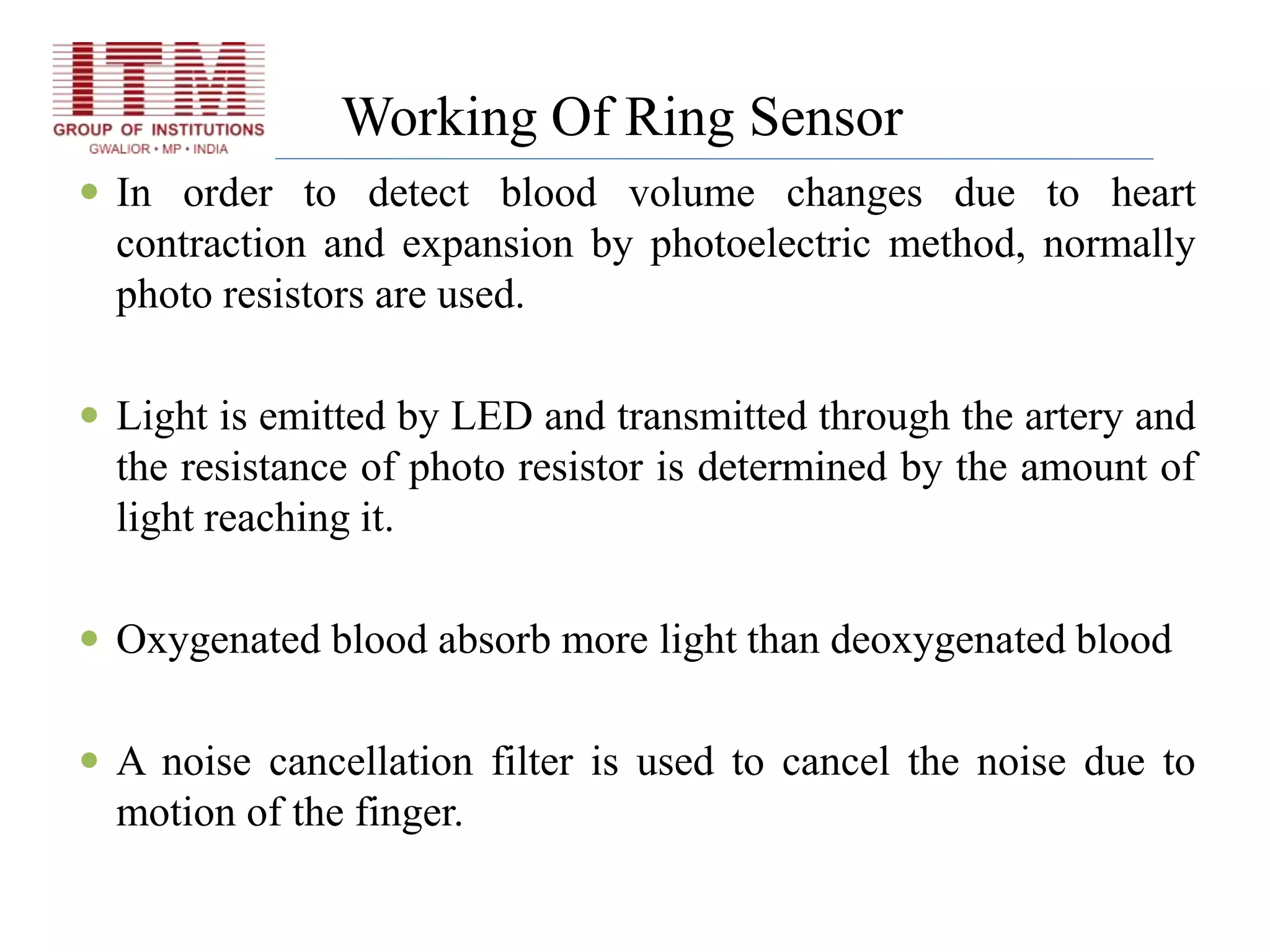
 Components:
 LED’s and Photodiodes
• Optical sensor unit
• PIC microcontroller
• RF transmitter
• Tiny cell battery
• Use of double ring structure.
• First stage amplifier
• Signal Conditioner
• Sample and hold circuit.
Working Of Ring Sensor
 In order to detect blood volume changes due to heart
contraction and expansion by photoelectric method, normally
photo resistors are used.
 Light is emitted by LED and transmitted through the artery and
the resistance of photo resistor is determined by the amount of
light reaching it.
 Oxygenated blood absorb more light than deoxygenated blood
 A noise cancellation filter is used to cancel the noise due to
motion of the finger.
Applications
 Wireless supervision of people during hazardous operations.
 In an overcrowded emergency department.
 surveillance of abnormal heart failure.
 In cardio-vascular disease for monitoring the hyper tension.
Advantages
 Continuous monitoring.
 Easy to use.
 Reducing hospitalization fee
Disadvantages
 Initial cost is high.
 Limited number of physiological
parameters can be monitored.
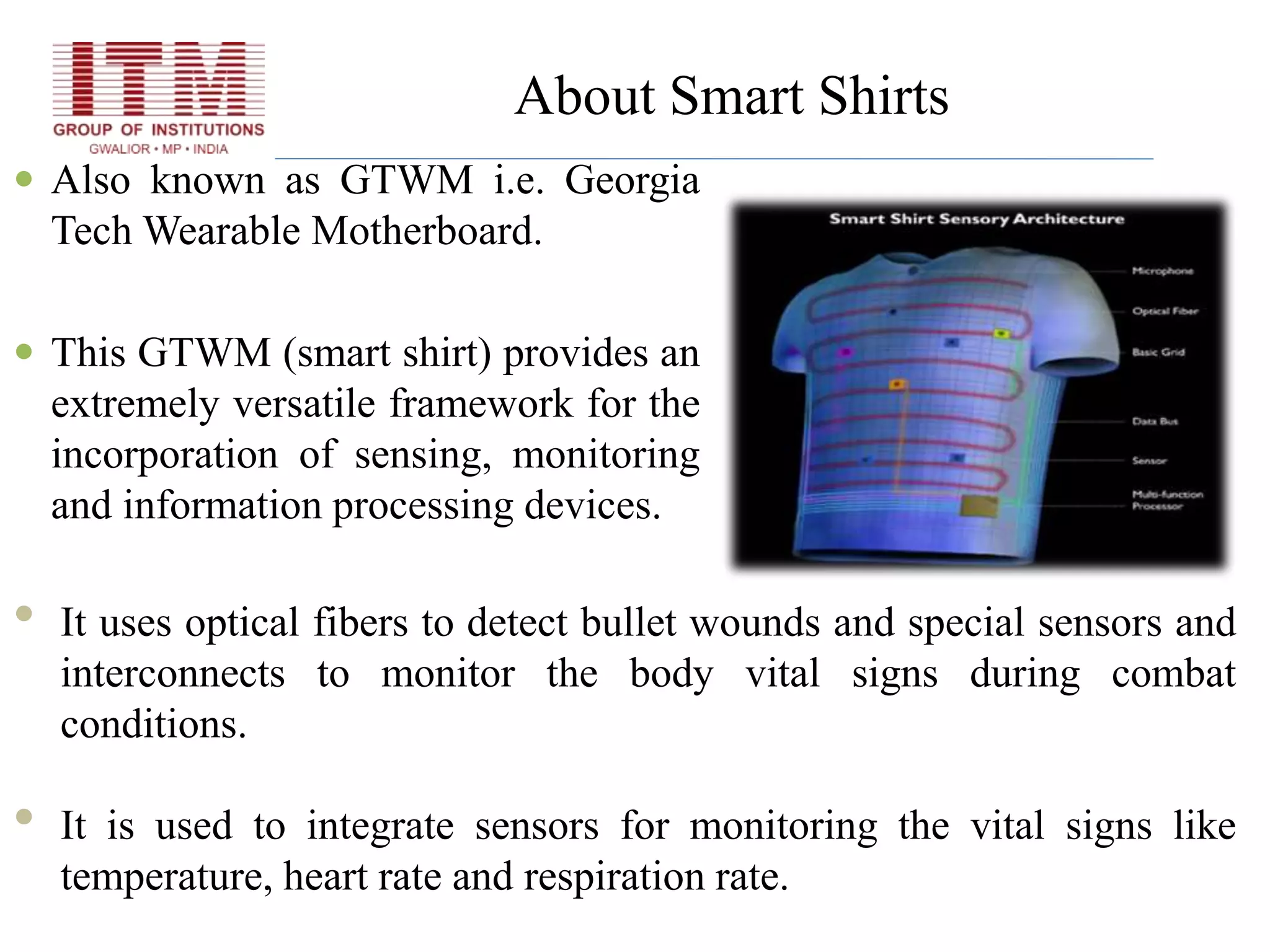
About Smart Shirts
 Also known as GTWM i.e. Georgia
Tech Wearable Motherboard.
 This GTWM (smart shirt) provides an
extremely versatile framework for the
incorporation of sensing, monitoring
and information processing devices.
• It uses optical fibers to detect bullet wounds and special sensors and
interconnects to monitor the body vital signs during combat
conditions.
• It is used to integrate sensors for monitoring the vital signs like
temperature, heart rate and respiration rate.
Working of Smart Shirt
 A combat soldier sensor to his body, pulls the smart shirt on, and
attaches the sensors to the smart shirt.
 A “signal” is sent from one end of the plastic optical fiber to a
receiver at the other end. The emitter and the receiver are
connected to a Personal Status Monitor (PSM) worn at the hip
level by the soldier.
 If the light from the emitter does not reach the receiver inside the
PSM, it signifies that the smart shirt has been penetrated (i.e.; the
soldier has been shot).
 The signal bounces back to the PSM forum the point of
penetration, helping the medical personnel pinpoint the exact
location the solider wounds.
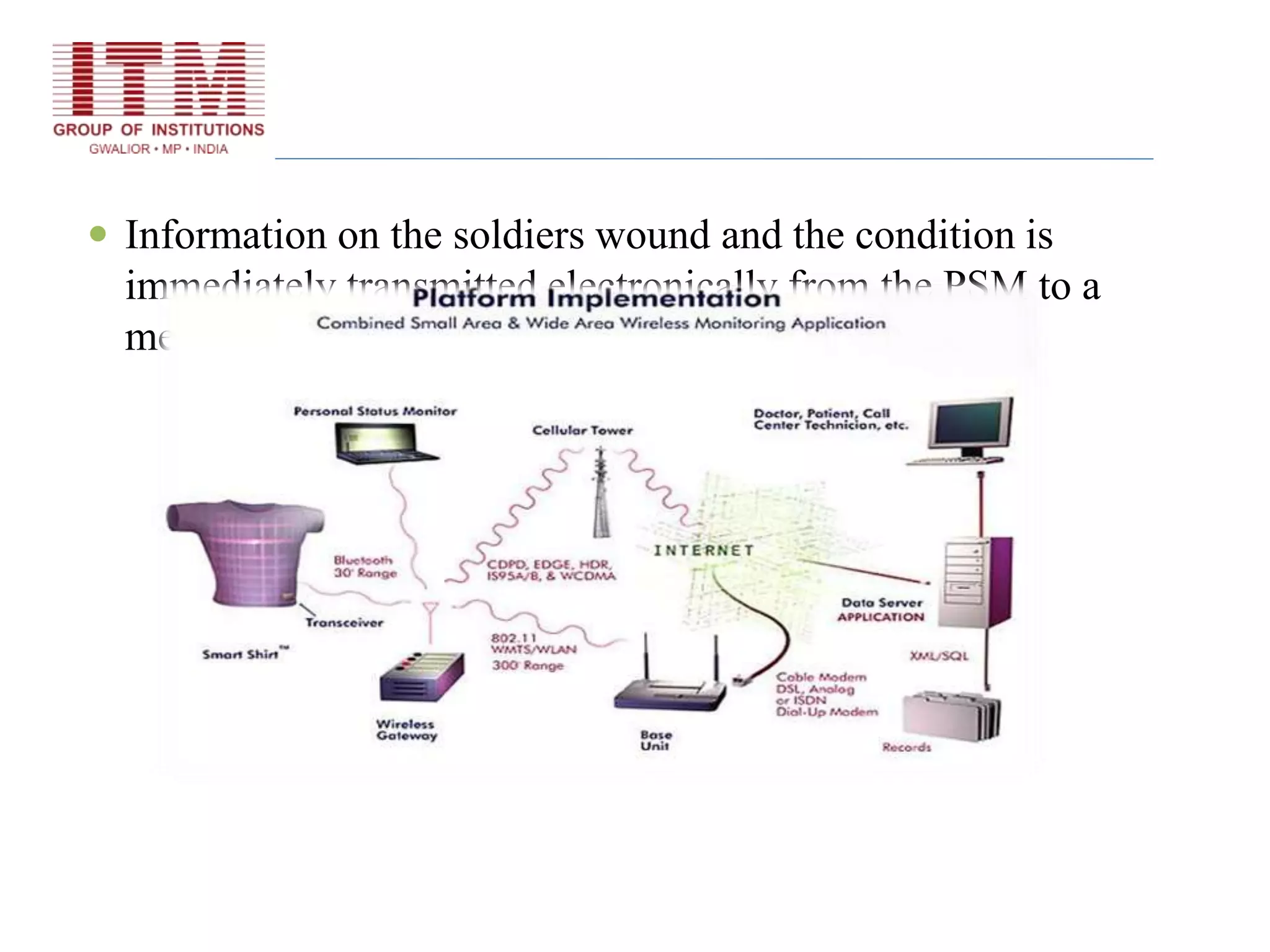
 Information on the soldiers wound and the condition is
immediately transmitted electronically from the PSM to a
medical unit.
Applications Of smart shirt
 Combat casualty care.
 Medical monitoring.
 Sports/ Performance monitoring.
 Space experiments.
 Mission critical/ hazardous application.
 Fire- fighting.
 Wearable mobile information infrastructure.
Advantages
 Continuous monitoring.
 Right Treatment at the right time
 Easy to wear and takeoff.
Disadvantages
 Initial cost is high
 Battery life is less
Conclusion
 Applied to restricted area of potential market.
 Limitations: Sensitivity And battery life.
 Advanced technologies such as the smart shirt have at partial to
dramatically alter its landscape of healthcare delivery and at
practice of medicine as we know them today.
 It is leading to the realization of “Affordable Healthcare, Any
place, Anytime, Anyone”.
 H.Harry , “Mobile monitoring with wearable sensors”.
 Park and Jayaraman, ”Enhancing the quality of life through wearable
technology”.
 Handbook of biomedical instrumentation .
 www.wikipedia.com.
References
Thank You…

Wearable biosensors

  • 1.
    WEARABLE BIOSENSORS  Submittedto:-  Megha Chitranshi  Submitted by:-  Rohit Dadoriya  0905EC131137  EC-ITM
  • 2.
    Contents  Introduction  Needfor a wearable biosensor  Components of a Biosensor  Ring Sensor  Smart Shirt  Applications  Conclusion  References
  • 3.
    Wearable Biosensor =Wearable + Biosensor • Biosensor is an analytical device used for detection of analyte. • e.g. Blood Glucose Detector • Object that can be worn on body. • e.g. wrist watches, ring, shirts etc. BiosensorWearable Introduction
  • 4.
    Wearable Biosensor • Wearablemonitoring devices that allow continuous monitoring of physiological signals. • They rely on wireless sensors enclosed in items that can be worn, such as ring or shirt. • The data sets recorded using these systems are then processed to detect patient’s clinical situations. • Biosensor is an analytical device, which converts a biological response into electrical signal.
  • 5.
    Need for awearable biosensor  Remote monitoring of patients  Training support for athletes  Monitoring of individuals who work with hazardous elements  Tracking of professional truck driver’s vital signs to alert them of fatigue
  • 6.
     Use ofwearable monitoring devices allow continuous monitoring of physiological signals  Wearable systems are totally non-obtrusive devices that allow physicians to overcome the limitations of ambulatory technology  Detects events predictive of possible worsening of the patient’s clinical situations
  • 7.
    Components Of WearableBiosensor Three main components of wearable biosensors are: • Biological element: For sensing the presence and concentration of a substance. • Transducer: The product of interaction of biological component and sample may be a suitable chemical, charge etc., which can be converted by transducer into an electrical signal. • Associated Electronic Devices: The electrical signal may be further amplified and can be read on digital panels
  • 8.
    Types Of WearableBiosensor  Ring Sensor: It allows one to continuously monitor heart rate and oxygen saturation. The device is shaped like a ring.  Smart Shirt: This technology has been used to integrate sensors for monitoring the vital signs like temperature, heart rate and respiration rate.
  • 9.
    About Ring Sensor It is a pulse oximetry, i.e. it monitors the oxygen saturation.  It is based on the concept of photoconductor. Principles :-  Detection pulsatile blood volume changes by photoelectric method by photo resistor  Connected as a part of voltage divider circuit and produces a voltage that varies with the amount of blood in the finger.
  • 10.
      Components:  LED’sand Photodiodes • Optical sensor unit • PIC microcontroller • RF transmitter • Tiny cell battery • Use of double ring structure. • First stage amplifier • Signal Conditioner • Sample and hold circuit.
  • 11.
    Working Of RingSensor  In order to detect blood volume changes due to heart contraction and expansion by photoelectric method, normally photo resistors are used.  Light is emitted by LED and transmitted through the artery and the resistance of photo resistor is determined by the amount of light reaching it.  Oxygenated blood absorb more light than deoxygenated blood  A noise cancellation filter is used to cancel the noise due to motion of the finger.
  • 12.
    Applications  Wireless supervisionof people during hazardous operations.  In an overcrowded emergency department.  surveillance of abnormal heart failure.  In cardio-vascular disease for monitoring the hyper tension. Advantages  Continuous monitoring.  Easy to use.  Reducing hospitalization fee Disadvantages  Initial cost is high.  Limited number of physiological parameters can be monitored.
  • 13.
    About Smart Shirts Also known as GTWM i.e. Georgia Tech Wearable Motherboard.  This GTWM (smart shirt) provides an extremely versatile framework for the incorporation of sensing, monitoring and information processing devices. • It uses optical fibers to detect bullet wounds and special sensors and interconnects to monitor the body vital signs during combat conditions. • It is used to integrate sensors for monitoring the vital signs like temperature, heart rate and respiration rate.
  • 14.
    Working of SmartShirt  A combat soldier sensor to his body, pulls the smart shirt on, and attaches the sensors to the smart shirt.  A “signal” is sent from one end of the plastic optical fiber to a receiver at the other end. The emitter and the receiver are connected to a Personal Status Monitor (PSM) worn at the hip level by the soldier.  If the light from the emitter does not reach the receiver inside the PSM, it signifies that the smart shirt has been penetrated (i.e.; the soldier has been shot).  The signal bounces back to the PSM forum the point of penetration, helping the medical personnel pinpoint the exact location the solider wounds.
  • 15.
     Information onthe soldiers wound and the condition is immediately transmitted electronically from the PSM to a medical unit.
  • 16.
    Applications Of smartshirt  Combat casualty care.  Medical monitoring.  Sports/ Performance monitoring.  Space experiments.  Mission critical/ hazardous application.  Fire- fighting.  Wearable mobile information infrastructure. Advantages  Continuous monitoring.  Right Treatment at the right time  Easy to wear and takeoff. Disadvantages  Initial cost is high  Battery life is less
  • 17.
    Conclusion  Applied torestricted area of potential market.  Limitations: Sensitivity And battery life.  Advanced technologies such as the smart shirt have at partial to dramatically alter its landscape of healthcare delivery and at practice of medicine as we know them today.  It is leading to the realization of “Affordable Healthcare, Any place, Anytime, Anyone”.
  • 18.
     H.Harry ,“Mobile monitoring with wearable sensors”.  Park and Jayaraman, ”Enhancing the quality of life through wearable technology”.  Handbook of biomedical instrumentation .  www.wikipedia.com. References
  • 19.