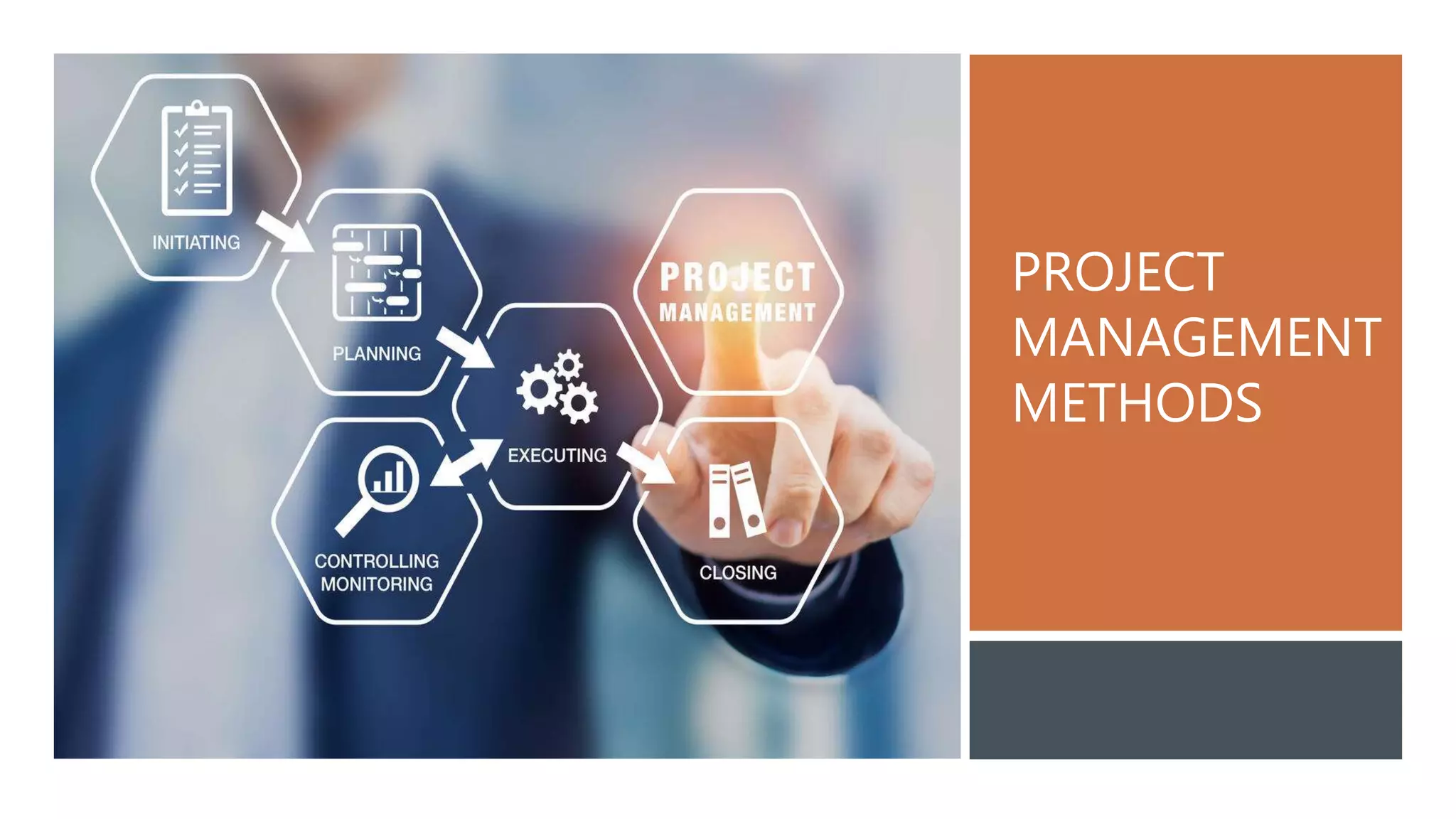
PROJECT
MANAGEMENT
METHODS
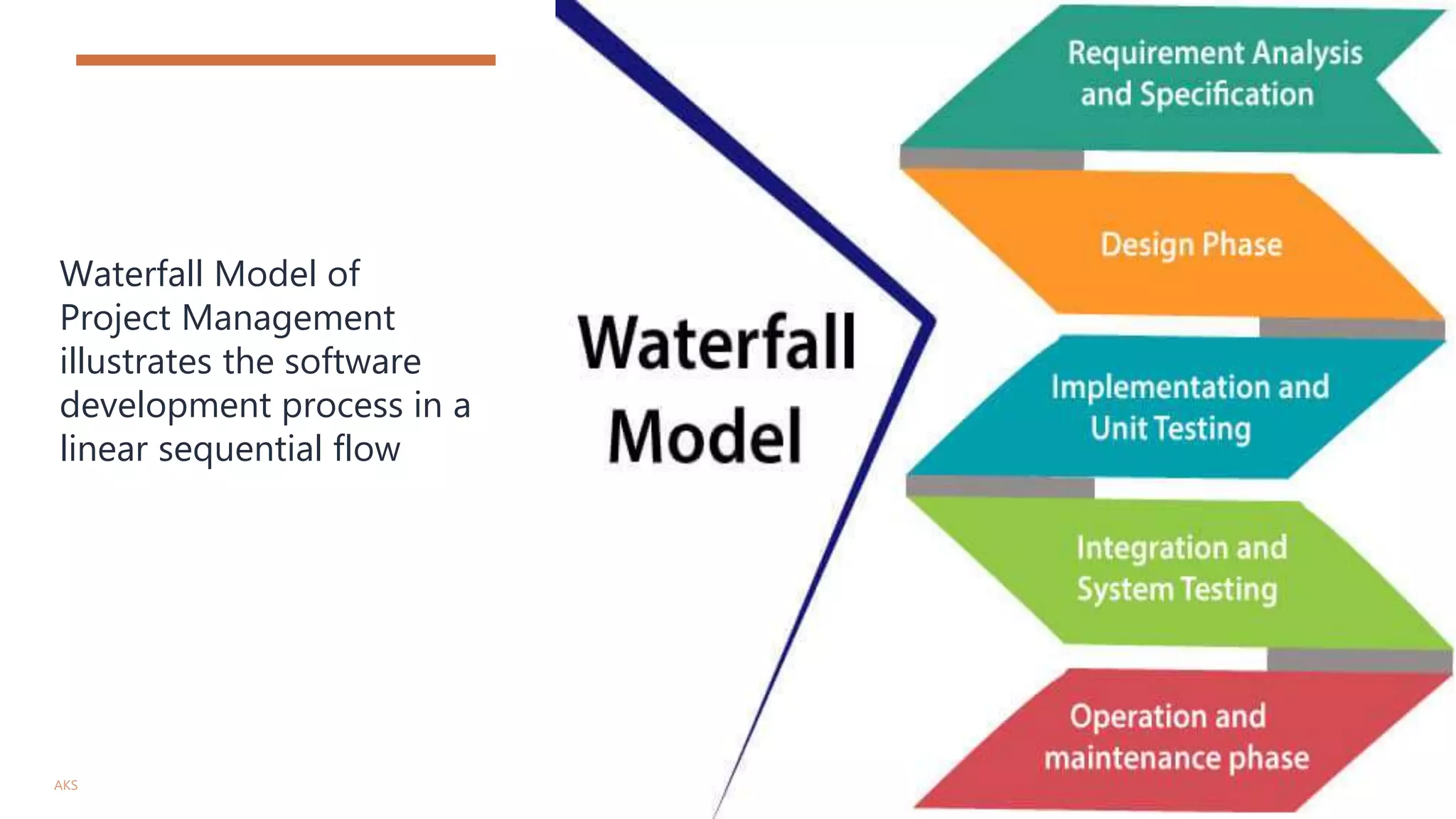
Waterfall Model of
Project Management
illustrates the software
development process in a
linear sequential flow
2
3
TEACH A COURSE
WATERFALL MODEAL
REQUIREMENT
GATHERING
 Gather requirements at this stage
 Using Interviews, calls, we gather
the maximum information
 Finalize and get the sign off from
the stakeholders
 Shared to the team
AKS 4
DESIGN
 Design of the System happens at this
phase
 Architectural design, system design
 Finalization happens and Ready to Go
AKS 5
IMPLEMENTATION
 Implementation happens at this
time
 Coding or real time work
happens at this time.
 Architectural implementation and
functional implementation
happens at this time
AKS 6
TESTING
 Testers start doing the testing of
what is delivered to them
 Cross checks with the signed
BRD and give the confirmation
 Any issues found will be returned
back to the team for
implementation
AKS 7
DELIVERY &
MAINTENANCE
 Product is complete and deploys the
application after successful testing
 Do the Support if any issues or bug
arises
 Deliver Project Documentations
AKS 8
9
AKS
10
AKS
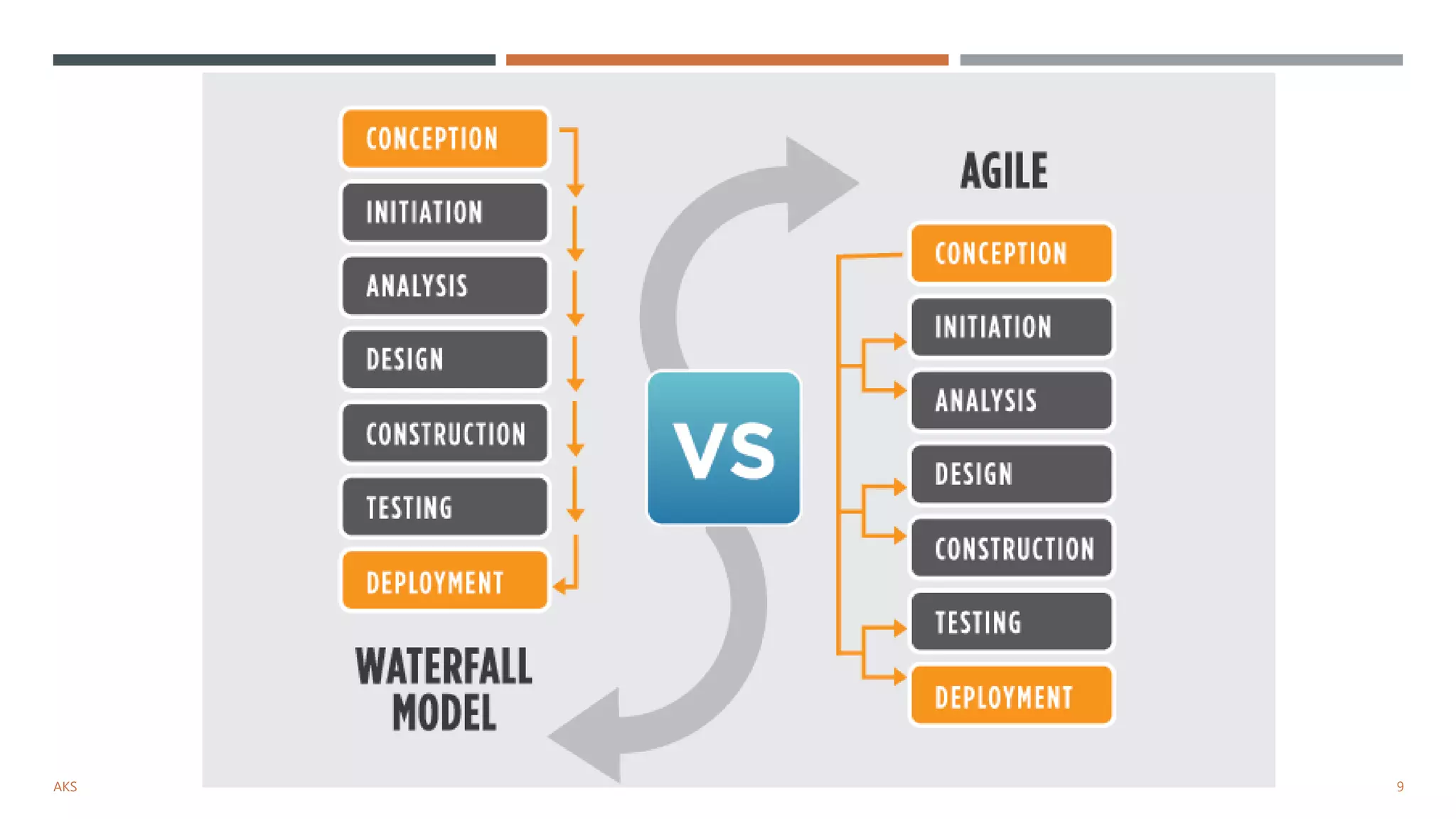
WATERFALL VS AGILE
AGILE
WATERFALL
 Separates the project development lifecycle into sprints.
 Follows an incremental approach
 Follow an iterative development approach because of this
planning, development, prototyping and other software
development phases may appear more than once
 Testing is performed concurrently with software
 Test team can take part in the requirements change
problems
 Agile is a continuous iteration of development and testing
 Agile allows changes in project development requirement
 Software development process is divided into distinct
phases
 Follows a sequential design process.
 Project development phases like designing, development,
testing, etc. are completed once.
 “Testing” phase comes after the “Build” phase.
 It is difficult for the test to initiate any change in
requirements.
 Waterfall is a Liner Sequential Life Cycle Model.
 Waterfall has no scope of changing the requirements
once the project development start
THANK YOU!

WaterFall Project Management Methodology

  • 1.
  • 2.
    Waterfall Model of ProjectManagement illustrates the software development process in a linear sequential flow 2
  • 3.
  • 4.
    REQUIREMENT GATHERING  Gather requirementsat this stage  Using Interviews, calls, we gather the maximum information  Finalize and get the sign off from the stakeholders  Shared to the team AKS 4
  • 5.
    DESIGN  Design ofthe System happens at this phase  Architectural design, system design  Finalization happens and Ready to Go AKS 5
  • 6.
    IMPLEMENTATION  Implementation happensat this time  Coding or real time work happens at this time.  Architectural implementation and functional implementation happens at this time AKS 6
  • 7.
    TESTING  Testers startdoing the testing of what is delivered to them  Cross checks with the signed BRD and give the confirmation  Any issues found will be returned back to the team for implementation AKS 7
  • 8.
    DELIVERY & MAINTENANCE  Productis complete and deploys the application after successful testing  Do the Support if any issues or bug arises  Deliver Project Documentations AKS 8
  • 9.
  • 10.
    10 AKS WATERFALL VS AGILE AGILE WATERFALL Separates the project development lifecycle into sprints.  Follows an incremental approach  Follow an iterative development approach because of this planning, development, prototyping and other software development phases may appear more than once  Testing is performed concurrently with software  Test team can take part in the requirements change problems  Agile is a continuous iteration of development and testing  Agile allows changes in project development requirement  Software development process is divided into distinct phases  Follows a sequential design process.  Project development phases like designing, development, testing, etc. are completed once.  “Testing” phase comes after the “Build” phase.  It is difficult for the test to initiate any change in requirements.  Waterfall is a Liner Sequential Life Cycle Model.  Waterfall has no scope of changing the requirements once the project development start
  • 11.