A vote of trust
Content
• Statistics and graphs;
• Latvian view on change
  management;
• Common mistakes;
• Why a vote of trust?
• Building trust
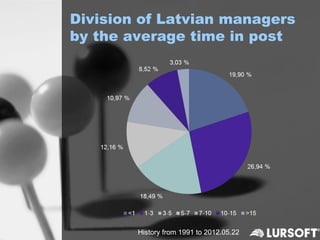
Division of Latvian managers
by the average time in post


        History from 1991 to 2012.05.22
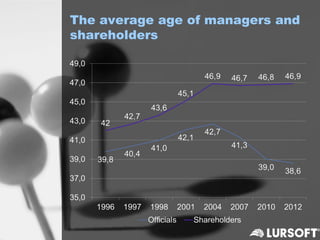
The average age of managers and
shareholders
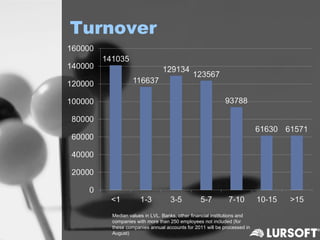
Turnover


   Median values in LVL. Banks, other financial institutions and
   companies with more than 250 employees not included (for
   these companies annual accounts for 2011 will be processed in
   August)
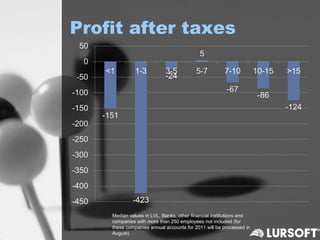
Profit after taxes


    Median values in LVL. Banks, other financial institutions and
    companies with more than 250 employees not included (for
    these companies annual accounts for 2011 will be processed in
    August)
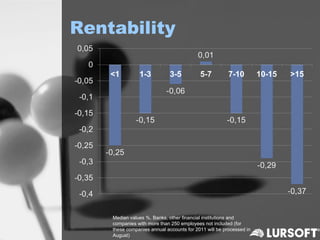
Rentability


    Median values %. Banks, other financial institutions and
    companies with more than 250 employees not included (for
    these companies annual accounts for 2011 will be processed in
    August)
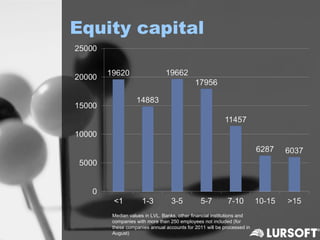
Equity capital


    Median values in LVL. Banks, other financial institutions and
    companies with more than 250 employees not included (for
    these companies annual accounts for 2011 will be processed in
    August)
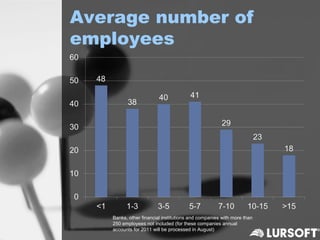
Average number of
employees


   Banks, other financial institutions and companies with more than
   250 employees not included (for these companies annual
   accounts for 2011 will be processed in August)
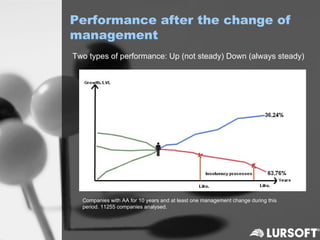
Performance after the change of
management
Two types of performance: Up (not steady) Down (always steady)


  Companies with AA for 10 years and at least one management change during this
  period. 11255 companies analysed.
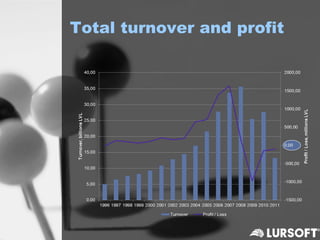
Total turnover and profit
What are the most important things in change
management? Answers from Latvian
enterpreuners.
Our great philosopher and poet Rainis said: «Only those will exist who 'will change.»


•The leader - he/she is the team's coach, who support and guide the team to the target. Y/N ?

•Eeverything depends on the charisma of a leader. Y/N ?

•The primary is the CEO and his key department heads. Y/N ?

•Change initiators and managers should understand that people are not unhappy handicaps of
change plans, they are the main components of this plan, they can be the most important
instrument of a change. Y/N ?

•The reforms are part of life, even a part of everyday life, but better if they take place gradually and
the people are prepared. Otherwise it can happen that change leads to paralysis. Y/N ?

•Change happens when the right moment has come. Y/N ?

•To try to reduce fixed costs. Y/N ?

                                                                                       ​
•A clear strategy and vision for the future, as well as a return to fundamental values and principles
will be important. Y/N ?

•Clearly defined change target. Y/N ?
Source: www.news.lv, Lursoft customers
Before proceeding to
common mistakes


One of the most popular mistakes mentioned on the Internet

     Moving too slowly with the changes.
              Change management isn’t a waltz, it’s rock ‘n roll.*


                           Do you agree?
*From: http://www.pritchettnet.com/
General view on common
mistakes in change management
•   Failing to create a sense of urgency and leadership involvement. A sense of
    urgency motivates employees to buy in and help in the change process.
    Additionally, by involving company leaders, employees will be further motivated
    in their efforts.
•   Communicating poorly. Develop a clear vision of where the company needs to
    be, and communicate that vision to all employees, customers and shareholders.
•   Not empowering employees to lead the change. Encourage employees to
    develop new ideas, try new approaches and serve as stewards of change.
•   Focusing only on the long term. Large-scale organizational change is a long
    process. Break down your vision into smaller short-term goals, and communicate
    short-term successes at each opportunity.
•   Assuming that change is complete once initial goals are achieved. If you
    declare victory too soon, the focus will be taken away from your efforts, and all
    traces of your hard work could soon disappear. Successful companies
    consistently re-evaluate their change efforts to determine where other areas can
    be improved, such as employee development and retention, new projects and
    new systems and structures.

* Adapted from “Leading Change: Why Transformation Efforts Fail” by John P.
    Kotter, Harvard Business on http://blog.tatumllc.com
Why a vote of trust?


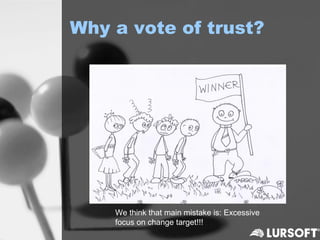
    We think that main mistake is: Excessive
    focus on change target!!!
Why a vote of trust?
• Life does not end with the concrete
  target.
• With whom we will achieve the next
  ones?
• If you don't have trusted relationships
  between your employees you will not
  have trusted relationships with your
  customers.
• It's critical for your business!!!
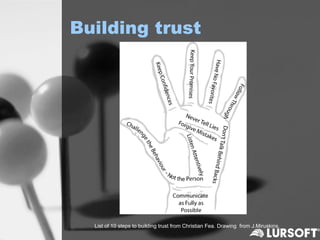
Building trust


  List of 10 steps to building trust from Christian Fea. Drawing from J.Miruskins.
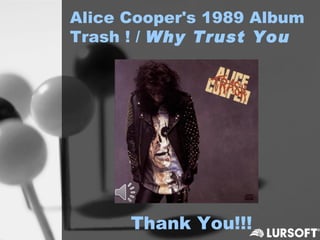
Alice Cooper's 1989 Album
Trash ! / Why Trust You


      Thank You!!!

Vote trust

  • 1.
    A vote oftrust
  • 2.
    Content • Statistics andgraphs; • Latvian view on change management; • Common mistakes; • Why a vote of trust? • Building trust
  • 3.
    Division of Latvianmanagers by the average time in post History from 1991 to 2012.05.22
  • 4.
    The average ageof managers and shareholders
  • 5.
    Turnover Median values in LVL. Banks, other financial institutions and companies with more than 250 employees not included (for these companies annual accounts for 2011 will be processed in August)
  • 6.
    Profit after taxes Median values in LVL. Banks, other financial institutions and companies with more than 250 employees not included (for these companies annual accounts for 2011 will be processed in August)
  • 7.
    Rentability Median values %. Banks, other financial institutions and companies with more than 250 employees not included (for these companies annual accounts for 2011 will be processed in August)
  • 8.
    Equity capital Median values in LVL. Banks, other financial institutions and companies with more than 250 employees not included (for these companies annual accounts for 2011 will be processed in August)
  • 9.
    Average number of employees Banks, other financial institutions and companies with more than 250 employees not included (for these companies annual accounts for 2011 will be processed in August)
  • 10.
    Performance after thechange of management Two types of performance: Up (not steady) Down (always steady) Companies with AA for 10 years and at least one management change during this period. 11255 companies analysed.
  • 11.
  • 12.
    What are themost important things in change management? Answers from Latvian enterpreuners. Our great philosopher and poet Rainis said: «Only those will exist who 'will change.» •The leader - he/she is the team's coach, who support and guide the team to the target. Y/N ? •Eeverything depends on the charisma of a leader. Y/N ? •The primary is the CEO and his key department heads. Y/N ? •Change initiators and managers should understand that people are not unhappy handicaps of change plans, they are the main components of this plan, they can be the most important instrument of a change. Y/N ? •The reforms are part of life, even a part of everyday life, but better if they take place gradually and the people are prepared. Otherwise it can happen that change leads to paralysis. Y/N ? •Change happens when the right moment has come. Y/N ? •To try to reduce fixed costs. Y/N ? ​ •A clear strategy and vision for the future, as well as a return to fundamental values and principles will be important. Y/N ? •Clearly defined change target. Y/N ? Source: www.news.lv, Lursoft customers
  • 13.
    Before proceeding to commonmistakes One of the most popular mistakes mentioned on the Internet Moving too slowly with the changes. Change management isn’t a waltz, it’s rock ‘n roll.* Do you agree? *From: http://www.pritchettnet.com/
  • 14.
    General view oncommon mistakes in change management • Failing to create a sense of urgency and leadership involvement. A sense of urgency motivates employees to buy in and help in the change process. Additionally, by involving company leaders, employees will be further motivated in their efforts. • Communicating poorly. Develop a clear vision of where the company needs to be, and communicate that vision to all employees, customers and shareholders. • Not empowering employees to lead the change. Encourage employees to develop new ideas, try new approaches and serve as stewards of change. • Focusing only on the long term. Large-scale organizational change is a long process. Break down your vision into smaller short-term goals, and communicate short-term successes at each opportunity. • Assuming that change is complete once initial goals are achieved. If you declare victory too soon, the focus will be taken away from your efforts, and all traces of your hard work could soon disappear. Successful companies consistently re-evaluate their change efforts to determine where other areas can be improved, such as employee development and retention, new projects and new systems and structures. * Adapted from “Leading Change: Why Transformation Efforts Fail” by John P. Kotter, Harvard Business on http://blog.tatumllc.com
  • 15.
    Why a voteof trust? We think that main mistake is: Excessive focus on change target!!!
  • 16.
    Why a voteof trust? • Life does not end with the concrete target. • With whom we will achieve the next ones? • If you don't have trusted relationships between your employees you will not have trusted relationships with your customers. • It's critical for your business!!!
  • 17.
    Building trust List of 10 steps to building trust from Christian Fea. Drawing from J.Miruskins.
  • 18.
    Alice Cooper's 1989Album Trash ! / Why Trust You Thank You!!!