EXPERIMENTS 
Important source of knowledge at education of scientific subjects
ESTIMATION OF VITAMIN C IN 
FRUIT AND VEGETABLE JUICES 
• The aim of 
experiment is 
checking the relative 
amount of vitamin C 
in different juices.
WHAT IS VITAMIN C? 
Vitamin C, ascorbic acid, a water soluble vitamin, which plays 
a major role in the cellular oxidation, especially in the 
tyrosine oxidation and reduction processes. 
Vitamin C increases body resistance, what is essential to 
maintain correct condition of the connective tissue. 
It facilitates the absorption of iron. 
Its deficiency causes scurvy.
MATERIALS
MATERIALS
MATERIALS 
• A beaker is a simple 
container for stirring, mixing 
and heating liquids. 
• Pasteur pipettes, also 
known as droppers,are 
used to transfer small 
quantities of liquids
TESTING JUICES 
1) Orange 
2) Pomagranate 
3) Lemon 
4) Carrot 
5) Celery 
6) Tomato 
7) Parsley 
8) Cherry 
9) Grapefruit 
10) Apple
PROCEDURE 
Preparing the solution of starch including iodine 
Pour starch to the bowl or beaker . Next, pour hot water 
from kettle to the bowl. Then, put the bowl into cold water 
and blend the solution quickly. When the solution looks 
like a jelly you must add drops of iodine and blend it. The 
solution is ready when it stained blue.
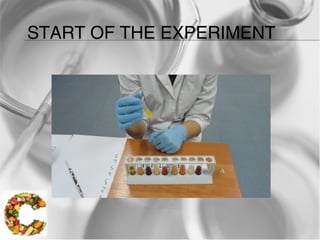
START OF THE EXPERIMENT
PROCESS OF THE 
EXPERIMENT 
Note the number 
of iodine 
solution drops 
which are 
being put into 
each juice 
Add the iodine 
solution to the 
test tube drop by 
drop until it 
changes the 
colour into violet-blue 
Add the iodine 
solution drops 
to the test tube
RESULTS 
Extract Number of drops 
of iodine solution 
orange 6 
pomagranate 5 
lemon 2 
carrot 8 
celery 7 
tomato 9 
parsley 6 
cherry 3 
grapefruit 2 
apple 3 
• Lemon and grapefruit 
juice were the ones 
that changed colour 
in the shortest time. 
• Tomato juice 
required the biggest 
amount of iodine 
solution to change 
its colour.
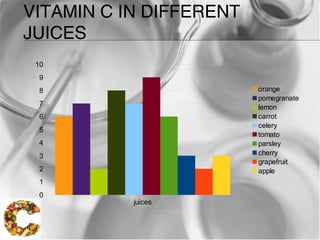
THE RELATIVE LEVEL OF 
VITAMIN C IN DIFFERENT 
JUICES 
juices 
10 
9 
8 
7 
6 
5 
4 
3 
2 
1 
0 
orange 
pomegranate 
lemon 
carrot 
celery 
tomato 
parsley 
cherry 
grapefruit 
apple
CONCLUSIONS 
• All of the examined juices contain vitamin C, 
however its content is different. 
• The biggest amount of vitamin C in examined 
extracts was found in the fresh lemon juice 
prepared in the lab as well as in the juice of red 
grapefruit which was bought in the shop. 
• The least content of vitamin C was reported in 
the essence of vegetables such as parsley, 
carrot and tomato. 
• Vitamin C was also detected in apple and 
grapefruit juices containing preservatives.
EXPERIMENT CONDUCTED BY 
• Marika Karasek 
student 
• PhD Anna 
Gruszczyńska 
biology teacher

Vitamin c 2

  • 2.
    EXPERIMENTS Important sourceof knowledge at education of scientific subjects
  • 3.
    ESTIMATION OF VITAMINC IN FRUIT AND VEGETABLE JUICES • The aim of experiment is checking the relative amount of vitamin C in different juices.
  • 4.
    WHAT IS VITAMINC? Vitamin C, ascorbic acid, a water soluble vitamin, which plays a major role in the cellular oxidation, especially in the tyrosine oxidation and reduction processes. Vitamin C increases body resistance, what is essential to maintain correct condition of the connective tissue. It facilitates the absorption of iron. Its deficiency causes scurvy.
  • 5.
  • 6.
  • 7.
    MATERIALS • Abeaker is a simple container for stirring, mixing and heating liquids. • Pasteur pipettes, also known as droppers,are used to transfer small quantities of liquids
  • 8.
    TESTING JUICES 1)Orange 2) Pomagranate 3) Lemon 4) Carrot 5) Celery 6) Tomato 7) Parsley 8) Cherry 9) Grapefruit 10) Apple
  • 9.
    PROCEDURE Preparing thesolution of starch including iodine Pour starch to the bowl or beaker . Next, pour hot water from kettle to the bowl. Then, put the bowl into cold water and blend the solution quickly. When the solution looks like a jelly you must add drops of iodine and blend it. The solution is ready when it stained blue.
  • 10.
    START OF THEEXPERIMENT
  • 11.
    PROCESS OF THE EXPERIMENT Note the number of iodine solution drops which are being put into each juice Add the iodine solution to the test tube drop by drop until it changes the colour into violet-blue Add the iodine solution drops to the test tube
  • 12.
    RESULTS Extract Numberof drops of iodine solution orange 6 pomagranate 5 lemon 2 carrot 8 celery 7 tomato 9 parsley 6 cherry 3 grapefruit 2 apple 3 • Lemon and grapefruit juice were the ones that changed colour in the shortest time. • Tomato juice required the biggest amount of iodine solution to change its colour.
  • 13.
    THE RELATIVE LEVELOF VITAMIN C IN DIFFERENT JUICES juices 10 9 8 7 6 5 4 3 2 1 0 orange pomegranate lemon carrot celery tomato parsley cherry grapefruit apple
  • 14.
    CONCLUSIONS • Allof the examined juices contain vitamin C, however its content is different. • The biggest amount of vitamin C in examined extracts was found in the fresh lemon juice prepared in the lab as well as in the juice of red grapefruit which was bought in the shop. • The least content of vitamin C was reported in the essence of vegetables such as parsley, carrot and tomato. • Vitamin C was also detected in apple and grapefruit juices containing preservatives.
  • 15.
    EXPERIMENT CONDUCTED BY • Marika Karasek student • PhD Anna Gruszczyńska biology teacher