VIRTUALARTIFICIALINTELLIGENCEROLEONLIBRARIES
(V.A.I.R.O.L)
SEMINAR PRESENTED BY
BONULA GANESH
MLISC 2nd Semester
ROLL:122201422004
Dept.of Library and Information Science
ANDHRAUNIVERSITY
Visakhapatnam
Introduction :
• Artificial Intelligence (AI) has
significantly transformed various
sectors, and its role in libraries is no
exception. Libraries have traditionally
been repositories of knowledge, and AI
has added a new dimension to their
functioning. This essay delves into the
role of Artificial Intelligence in libraries,
highlighting its impact on cataloging,
information retrieval, user experience,
and the potential challenges it brings.
What is AI :- we must know before going to the AI library.
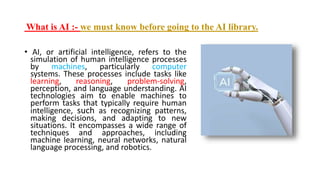
• AI, or artificial intelligence, refers to the
simulation of human intelligence processes
by machines, particularly computer
systems. These processes include tasks like
learning, reasoning, problem-solving,
perception, and language understanding. AI
technologies aim to enable machines to
perform tasks that typically require human
intelligence, such as recognizing patterns,
making decisions, and adapting to new
situations. It encompasses a wide range of
techniques and approaches, including
machine learning, neural networks, natural
language processing, and robotics.
AI Cataloguing :-
• One of the primary areas where AI has made
its mark is cataloging. AI algorithms can
process and categorize vast amounts of
information quickly and accurately. This
automation of cataloging tasks has
streamlined the organization of materials,
making them more accessible to users.
Through Natural Language Processing (NLP),
AI can extract key information from text and
assign appropriate metadata, making it
easier for library patrons to find the
resources they need.
AI Information Retrieval in Library's :-
• In terms of information retrieval, AI has revolutionized
the way users search for and access materials. AI-
powered recommendation systems analyze users' search
patterns, preferences, and borrowing history to suggest
relevant resources. This personalized approach enhances
user experience by presenting materials that align with
their interests, thereby encouraging more
comprehensive exploration of the library's collection.
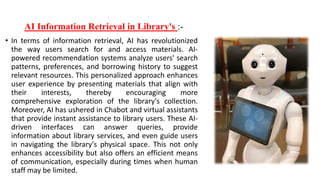
Moreover, AI has ushered in Chabot and virtual assistants
that provide instant assistance to library users. These AI-
driven interfaces can answer queries, provide
information about library services, and even guide users
in navigating the library's physical space. This not only
enhances accessibility but also offers an efficient means
of communication, especially during times when human
staff may be limited.
5 Ways AI Impact Libraries:-
Benefits of AI Library :-
• However, alongside its benefits, AI in libraries
also presents challenges.
• One concern is the potential loss of human
touch.
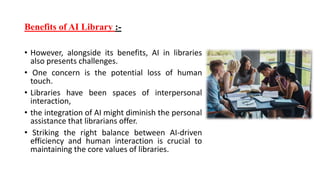
• Libraries have been spaces of interpersonal
interaction,
• the integration of AI might diminish the personal
assistance that librarians offer.
• Striking the right balance between AI-driven
efficiency and human interaction is crucial to
maintaining the core values of libraries.
Look at the AI Library :-
• The first AI Universal University in
India will open in karjat on august
1, 2023.Mumbai.
• The first AI University in India to
offer AI Library.
AI Privacy and data security in AI Libraries :-
Privacy and data security become critical issues when implementing AI
in libraries.
• As AI algorithms gather user data to provide personalized
recommendations, ensuring the protection of sensitive information is
uppermost.
• Libraries must prioritize strong data protection measures and
transparency to address these concerns.
Conclusion :-
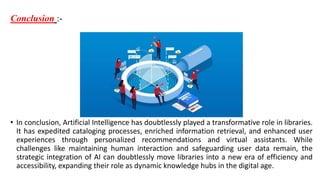
• In conclusion, Artificial Intelligence has doubtlessly played a transformative role in libraries.
It has expedited cataloging processes, enriched information retrieval, and enhanced user
experiences through personalized recommendations and virtual assistants. While
challenges like maintaining human interaction and safeguarding user data remain, the
strategic integration of AI can doubtlessly move libraries into a new era of efficiency and
accessibility, expanding their role as dynamic knowledge hubs in the digital age.
Thank you

VIRTUAL ARTIFICIAL INTELLIGENCE ROLE ON LIBRARIES

  • 1.
    VIRTUALARTIFICIALINTELLIGENCEROLEONLIBRARIES (V.A.I.R.O.L) SEMINAR PRESENTED BY BONULAGANESH MLISC 2nd Semester ROLL:122201422004 Dept.of Library and Information Science ANDHRAUNIVERSITY Visakhapatnam
  • 2.
    Introduction : • ArtificialIntelligence (AI) has significantly transformed various sectors, and its role in libraries is no exception. Libraries have traditionally been repositories of knowledge, and AI has added a new dimension to their functioning. This essay delves into the role of Artificial Intelligence in libraries, highlighting its impact on cataloging, information retrieval, user experience, and the potential challenges it brings.
  • 3.
    What is AI:- we must know before going to the AI library. • AI, or artificial intelligence, refers to the simulation of human intelligence processes by machines, particularly computer systems. These processes include tasks like learning, reasoning, problem-solving, perception, and language understanding. AI technologies aim to enable machines to perform tasks that typically require human intelligence, such as recognizing patterns, making decisions, and adapting to new situations. It encompasses a wide range of techniques and approaches, including machine learning, neural networks, natural language processing, and robotics.
  • 4.
    AI Cataloguing :- •One of the primary areas where AI has made its mark is cataloging. AI algorithms can process and categorize vast amounts of information quickly and accurately. This automation of cataloging tasks has streamlined the organization of materials, making them more accessible to users. Through Natural Language Processing (NLP), AI can extract key information from text and assign appropriate metadata, making it easier for library patrons to find the resources they need.
  • 5.
    AI Information Retrievalin Library's :- • In terms of information retrieval, AI has revolutionized the way users search for and access materials. AI- powered recommendation systems analyze users' search patterns, preferences, and borrowing history to suggest relevant resources. This personalized approach enhances user experience by presenting materials that align with their interests, thereby encouraging more comprehensive exploration of the library's collection. Moreover, AI has ushered in Chabot and virtual assistants that provide instant assistance to library users. These AI- driven interfaces can answer queries, provide information about library services, and even guide users in navigating the library's physical space. This not only enhances accessibility but also offers an efficient means of communication, especially during times when human staff may be limited.
  • 6.
    5 Ways AIImpact Libraries:-
  • 7.
    Benefits of AILibrary :- • However, alongside its benefits, AI in libraries also presents challenges. • One concern is the potential loss of human touch. • Libraries have been spaces of interpersonal interaction, • the integration of AI might diminish the personal assistance that librarians offer. • Striking the right balance between AI-driven efficiency and human interaction is crucial to maintaining the core values of libraries.
  • 8.
    Look at theAI Library :- • The first AI Universal University in India will open in karjat on august 1, 2023.Mumbai. • The first AI University in India to offer AI Library.
  • 9.
    AI Privacy anddata security in AI Libraries :- Privacy and data security become critical issues when implementing AI in libraries. • As AI algorithms gather user data to provide personalized recommendations, ensuring the protection of sensitive information is uppermost. • Libraries must prioritize strong data protection measures and transparency to address these concerns.
  • 10.
    Conclusion :- • Inconclusion, Artificial Intelligence has doubtlessly played a transformative role in libraries. It has expedited cataloging processes, enriched information retrieval, and enhanced user experiences through personalized recommendations and virtual assistants. While challenges like maintaining human interaction and safeguarding user data remain, the strategic integration of AI can doubtlessly move libraries into a new era of efficiency and accessibility, expanding their role as dynamic knowledge hubs in the digital age.
  • 11.