VERB TENSES Present Simple Tense.
USE We use the Present Simple Tense : To describe routines. To describe habits. To describe what we frequently do.
IN A SENTENCE It is easy to recognize when we have to use the present simple tense, we can find some of these words : Every- Adverbs of frequency (usually, often, never,…)‏ Expressions like “ on Mondays, in summer…”
IDEA We use the Present Simple to describe things that repeat once and again. (e. g. I usually get up at 7.30)‏ We also use the present simple to describe statements that are always true. (e.g. Water boils at 100ºc)‏
HOW TO WRITE SENTENCES IN THE PRESENT SIMPLE TENSE We just write the subject in front of the verb. We  drink  coffee everymorning. Students  read  at home. My parents  live  in  Barcelona .
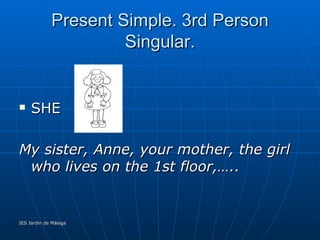
Present Simple. 3rd Person Singular. SHE My sister, Anne, your mother, the girl who lives on the 1st floor,…..
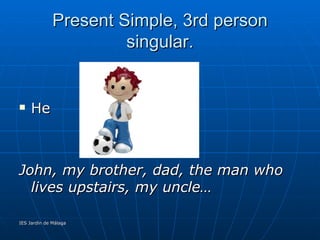
Present Simple, 3rd person singular. He  John, my brother, dad, the man who lives upstairs, my uncle…
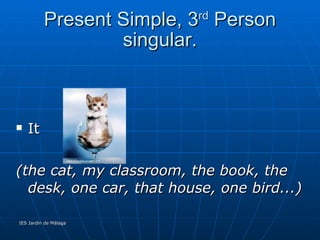
Present Simple, 3 rd  Person singular. It  (the cat, my classroom, the book, the desk, one car, that house, one bird...)‏
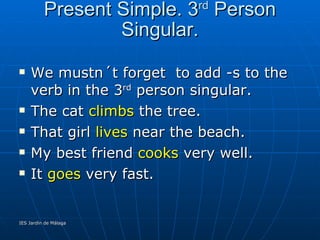
Present Simple. 3 rd  Person Singular. We mustn´t forget  to add -s to the verb in the 3 rd  person singular. The cat  climbs  the tree. That girl  lives  near the beach. My best friend  cooks  very well. It  goes  very fast.
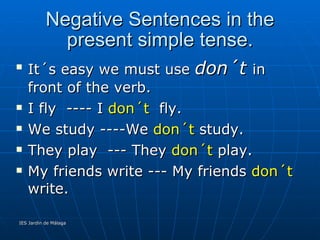
Negative Sentences in the present simple tense. It´s easy we must use  don´t  in front of the verb. I fly  ---- I  don´t   fly. We study ----We  don´t  study. They play  --- They  don´t  play. My friends write --- My friends  don´t  write.
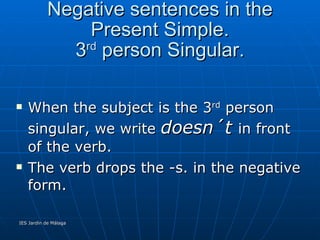
Negative sentences in the Present Simple. 3 rd  person Singular. When the subject is the 3 rd  person singular, we write  doesn´t  in front of the verb. The verb drops the -s. in the negative form. He lives-- He  doesn´t  live. It rains---It  doesn´t  rain. My aunt works --- My aunt  doesn´t  work.
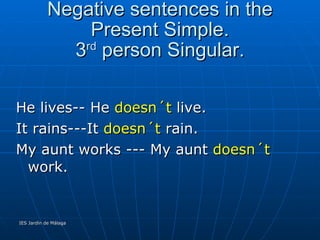
Negative sentences in the Present Simple. 3 rd  person Singular. He lives-- He  doesn´t  live. It rains---It  doesn´t  rain. My aunt works --- My aunt  doesn´t  work.
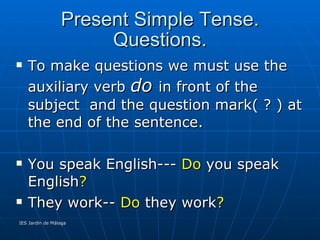
Present Simple Tense. Questions. To make questions we must use the auxiliary verb  do  in front of the subject  and the question mark( ? ) at the end of the sentence. You speak English---  Do  you speak English ? They work--  Do  they work ?
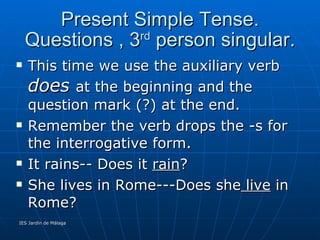
Present Simple Tense. Questions , 3 rd  person singular. This time we use the auxiliary verb  does  at the beginning and the question mark (?) at the end. Remember the verb drops the -s for the interrogative form. It rains-- Does it  rain ? She lives in Rome---Does she  live  in Rome?

Verb Tenses Present Simple

  • 1.
    VERB TENSES PresentSimple Tense.
  • 2.
    USE We usethe Present Simple Tense : To describe routines. To describe habits. To describe what we frequently do.
  • 3.
    IN A SENTENCEIt is easy to recognize when we have to use the present simple tense, we can find some of these words : Every- Adverbs of frequency (usually, often, never,…)‏ Expressions like “ on Mondays, in summer…”
  • 4.
    IDEA We usethe Present Simple to describe things that repeat once and again. (e. g. I usually get up at 7.30)‏ We also use the present simple to describe statements that are always true. (e.g. Water boils at 100ºc)‏
  • 5.
    HOW TO WRITESENTENCES IN THE PRESENT SIMPLE TENSE We just write the subject in front of the verb. We drink coffee everymorning. Students read at home. My parents live in Barcelona .
  • 6.
    Present Simple. 3rdPerson Singular. SHE My sister, Anne, your mother, the girl who lives on the 1st floor,…..
  • 7.
    Present Simple, 3rdperson singular. He John, my brother, dad, the man who lives upstairs, my uncle…
  • 8.
    Present Simple, 3rd Person singular. It (the cat, my classroom, the book, the desk, one car, that house, one bird...)‏
  • 9.
    Present Simple. 3rd Person Singular. We mustn´t forget to add -s to the verb in the 3 rd person singular. The cat climbs the tree. That girl lives near the beach. My best friend cooks very well. It goes very fast.
  • 10.
    Negative Sentences inthe present simple tense. It´s easy we must use don´t in front of the verb. I fly ---- I don´t fly. We study ----We don´t study. They play --- They don´t play. My friends write --- My friends don´t write.
  • 11.
    Negative sentences inthe Present Simple. 3 rd person Singular. When the subject is the 3 rd person singular, we write doesn´t in front of the verb. The verb drops the -s. in the negative form. He lives-- He doesn´t live. It rains---It doesn´t rain. My aunt works --- My aunt doesn´t work.
  • 12.
    Negative sentences inthe Present Simple. 3 rd person Singular. He lives-- He doesn´t live. It rains---It doesn´t rain. My aunt works --- My aunt doesn´t work.
  • 13.
    Present Simple Tense.Questions. To make questions we must use the auxiliary verb do in front of the subject and the question mark( ? ) at the end of the sentence. You speak English--- Do you speak English ? They work-- Do they work ?
  • 14.
    Present Simple Tense.Questions , 3 rd person singular. This time we use the auxiliary verb does at the beginning and the question mark (?) at the end. Remember the verb drops the -s for the interrogative form. It rains-- Does it rain ? She lives in Rome---Does she live in Rome?