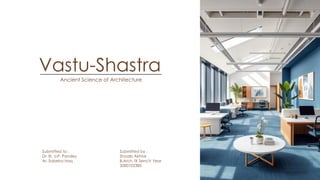
Vastu-Shastra
Ancient Science of Architecture
Submitted to :
Dr. Er. U.P. Pandey
Ar. Sabeha Haq
Submitted by :
Shoaib Akhtar
B.Arch. IX Sem/V Year
2000102385
preencoded.png
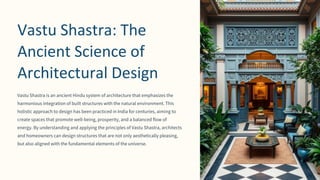
Vastu Shastra: The
Ancient Science of
Architectural Design
Vastu Shastra is an ancient Hindu system of architecture that emphasizes the
harmonious integration of built structures with the natural environment. This
holistic approach to design has been practiced in India for centuries, aiming to
create spaces that promote well-being, prosperity, and a balanced flow of
energy. By understanding and applying the principles of Vastu Shastra, architects
and homeowners can design structures that are not only aesthetically pleasing,
but also aligned with the fundamental elements of the universe.
preencoded.png
Understanding the Principles of Vastu Shastra
1
Orientation
Vastu Shastra emphasizes the importance of properly orienting a structure in relation
to the cardinal directions, ensuring that the various rooms and elements are positioned
to harness the positive energies of the sun, moon, and other celestial bodies.
2
Placement
The placement of different spaces and objects within a structure is also crucial, with
specific areas designated for various activities and functions based on their associated
elements and energy flows.
3
Proportions
Vastu Shastra emphasizes the importance of balanced proportions and symmetry in
the design of a structure, ensuring that the overall layout is harmonious and promotes
a sense of balance and well-being.
preencoded.png
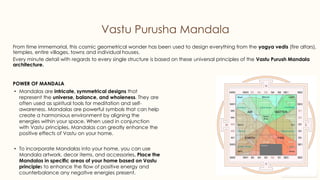
Vastu Purusha Mandala
From time immemorial, this cosmic geometrical wonder has been used to design everything from the yagya vedis (fire altars),
temples, entire villages, towns and individual houses.
Every minute detail with regards to every single structure is based on these universal principles of the Vastu Purush Mandala
architecture.
POWER OF MANDALA
• Mandalas are intricate, symmetrical designs that
represent the universe, balance, and wholeness. They are
often used as spiritual tools for meditation and self-
awareness. Mandalas are powerful symbols that can help
create a harmonious environment by aligning the
energies within your space. When used in conjunction
with Vastu principles, Mandalas can greatly enhance the
positive effects of Vastu on your home.
• To incorporate Mandalas into your home, you can use
Mandala artwork, decor items, and accessories. Place the
Mandalas in specific areas of your home based on Vastu
principles to enhance the flow of positive energy and
counterbalance any negative energies present.
preencoded.png
The Five Elements and Their Role in Vastu
Earth
The element of earth represents stability,
grounding, and nourishment. In Vastu
Shastra, the earth element is associated
with the northeast and southwest corners
of a structure, and its placement is crucial
for providing a solid foundation and
promoting prosperity.
Water
The element of water is associated with
the northern and eastern directions, and it
is believed to bring emotional and spiritual
cleansing, as well as financial abundance.
Proper placement of water features, such
as fountains or ponds, can enhance the
flow of positive energy.
Fire
The element of fire is linked to the
southern and southeastern directions, and
it is believed to represent passion,
creativity, and energy. The placement of
fire-related elements, such as fireplaces or
stoves, can influence the overall energy of
a space.
preencoded.png
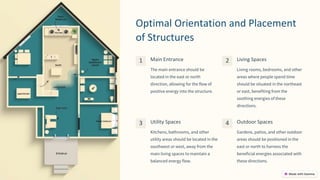
Optimal Orientation and Placement
of Structures
1 Main Entrance
The main entrance should be
located in the east or north
direction, allowing for the flow of
positive energy into the structure.
2 Living Spaces
Living rooms, bedrooms, and other
areas where people spend time
should be situated in the northeast
or east, benefiting from the
soothing energies of these
directions.
3 Utility Spaces
Kitchens, bathrooms, and other
utility areas should be located in the
southwest or west, away from the
main living spaces to maintain a
balanced energy flow.
4 Outdoor Spaces
Gardens, patios, and other outdoor
areas should be positioned in the
east or north to harness the
beneficial energies associated with
these directions.
preencoded.png
Harmony Between Built Environment and Nature
Respect for Natural Landscape
Landscape
Vastu Shastra encourages the
preservation and integration of the
natural landscape, ensuring that the
built environment co-exists
harmoniously with its surroundings.
This can include the placement of
structures to work with the contours of
the land, the incorporation of trees and
water bodies, and the use of natural
materials.
Enhancing Natural Elements
Vastu Shastra advises the strategic
placement of elements like fountains,
gardens, and skylights to harness the
positive energies of natural phenomena
such as the sun, moon, and wind. This
can create a sense of balance and well-
being within the built space.
Sustainable Design
The principles of Vastu Shastra align
with the modern focus on sustainable
architecture, emphasizing the use of
renewable materials, energy-efficient
design, and a holistic approach to the
built environment's relationship with
the natural world.
preencoded.png
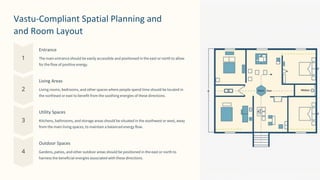
Vastu-Compliant Spatial Planning and
and Room Layout
Entrance
The main entrance should be easily accessible and positioned in the east or north to allow
for the flow of positive energy.
Living Areas
Living rooms, bedrooms, and other spaces where people spend time should be located in
the northeast or east to benefit from the soothing energies of these directions.
Utility Spaces
Kitchens, bathrooms, and storage areas should be situated in the southwest or west, away
from the main living spaces, to maintain a balanced energy flow.
Outdoor Spaces
Gardens, patios, and other outdoor areas should be positioned in the east or north to
harness the beneficial energies associated with these directions.
preencoded.png
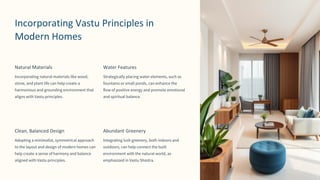
Incorporating Vastu Principles in
Modern Homes
Natural Materials
Incorporating natural materials like wood,
stone, and plant life can help create a
harmonious and grounding environment that
aligns with Vastu principles.
Water Features
Strategically placing water elements, such as
fountains or small ponds, can enhance the
flow of positive energy and promote emotional
and spiritual balance.
Clean, Balanced Design
Adopting a minimalist, symmetrical approach
to the layout and design of modern homes can
help create a sense of harmony and balance
aligned with Vastu principles.
Abundant Greenery
Integrating lush greenery, both indoors and
outdoors, can help connect the built
environment with the natural world, as
emphasized in Vastu Shastra.
preencoded.png
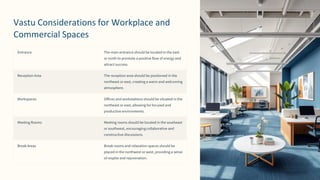
Vastu Considerations for Workplace and
Commercial Spaces
Entrance The main entrance should be located in the east
or north to promote a positive flow of energy and
attract success.
Reception Area The reception area should be positioned in the
northeast or east, creating a warm and welcoming
atmosphere.
Workspaces Offices and workstations should be situated in the
northeast or east, allowing for focused and
productive environments.
Meeting Rooms Meeting rooms should be located in the southeast
or southwest, encouraging collaborative and
constructive discussions.
Break Areas Break rooms and relaxation spaces should be
placed in the northwest or west, providing a sense
of respite and rejuvenation.
preencoded.png
The Impact of Vastu on Energy, Wellness, and Prosperity
Prosperity
Energy Flow
Vastu Shastra emphasizes the importance
of creating a harmonious flow of energy
within a built environment, which is
believed to have a direct impact on the
well-being and prosperity of the
occupants. By aligning structures and
spaces with the natural elements and
cosmic forces, Vastu can help promote a
sense of balance and positive energy.
Wellness and Harmony
The principles of Vastu Shastra are closely
linked to the concept of holistic well-
being, as they aim to create spaces that
are conducive to physical, mental, and
spiritual health. By considering factors like
orientation, placement, and proportions,
Vastu can help foster a sense of calmness,
clarity, and harmony within the built
environment.
Prosperity and Success
Vastu Shastra is also believed to have a
positive impact on the financial and
professional success of the occupants. By
aligning the built environment with the
energies of wealth, abundance, and
growth, Vastu can help attract and harness
the flow of prosperity in various aspects of
life.
preencoded.png
Integrating Vastu Shastra for Holistic Living
Mindful Design
Incorporating Vastu Shastra into the
design and construction of living and
working spaces encourages a mindful
approach to the built environment. This
holistic perspective considers the
interplay between the physical,
emotional, and spiritual aspects of a
space, resulting in a harmonious and
nurturing experience for the occupants.
Balanced Lifestyle
By aligning the built environment with
the principles of Vastu Shastra,
individuals can cultivate a balanced
lifestyle that promotes physical, mental,
and emotional well-being. This can lead
to a greater sense of clarity, focus, and
overall life satisfaction.
Sustainable Living
The principles of Vastu Shastra, with
their emphasis on the harmonious
integration of the built environment and
nature, are inherently aligned with the
goals of sustainable living. By adopting
Vastu-based design strategies,
individuals and communities can
reduce their environmental impact
while creating spaces that are both
aesthetically pleasing and nurturing.

Vastus shastra assignment portfolio .pdf

  • 1.
    Vastu-Shastra Ancient Science ofArchitecture Submitted to : Dr. Er. U.P. Pandey Ar. Sabeha Haq Submitted by : Shoaib Akhtar B.Arch. IX Sem/V Year 2000102385
  • 2.
    preencoded.png Vastu Shastra: The AncientScience of Architectural Design Vastu Shastra is an ancient Hindu system of architecture that emphasizes the harmonious integration of built structures with the natural environment. This holistic approach to design has been practiced in India for centuries, aiming to create spaces that promote well-being, prosperity, and a balanced flow of energy. By understanding and applying the principles of Vastu Shastra, architects and homeowners can design structures that are not only aesthetically pleasing, but also aligned with the fundamental elements of the universe.
  • 3.
    preencoded.png Understanding the Principlesof Vastu Shastra 1 Orientation Vastu Shastra emphasizes the importance of properly orienting a structure in relation to the cardinal directions, ensuring that the various rooms and elements are positioned to harness the positive energies of the sun, moon, and other celestial bodies. 2 Placement The placement of different spaces and objects within a structure is also crucial, with specific areas designated for various activities and functions based on their associated elements and energy flows. 3 Proportions Vastu Shastra emphasizes the importance of balanced proportions and symmetry in the design of a structure, ensuring that the overall layout is harmonious and promotes a sense of balance and well-being.
  • 4.
    preencoded.png Vastu Purusha Mandala Fromtime immemorial, this cosmic geometrical wonder has been used to design everything from the yagya vedis (fire altars), temples, entire villages, towns and individual houses. Every minute detail with regards to every single structure is based on these universal principles of the Vastu Purush Mandala architecture. POWER OF MANDALA • Mandalas are intricate, symmetrical designs that represent the universe, balance, and wholeness. They are often used as spiritual tools for meditation and self- awareness. Mandalas are powerful symbols that can help create a harmonious environment by aligning the energies within your space. When used in conjunction with Vastu principles, Mandalas can greatly enhance the positive effects of Vastu on your home. • To incorporate Mandalas into your home, you can use Mandala artwork, decor items, and accessories. Place the Mandalas in specific areas of your home based on Vastu principles to enhance the flow of positive energy and counterbalance any negative energies present.
  • 5.
    preencoded.png The Five Elementsand Their Role in Vastu Earth The element of earth represents stability, grounding, and nourishment. In Vastu Shastra, the earth element is associated with the northeast and southwest corners of a structure, and its placement is crucial for providing a solid foundation and promoting prosperity. Water The element of water is associated with the northern and eastern directions, and it is believed to bring emotional and spiritual cleansing, as well as financial abundance. Proper placement of water features, such as fountains or ponds, can enhance the flow of positive energy. Fire The element of fire is linked to the southern and southeastern directions, and it is believed to represent passion, creativity, and energy. The placement of fire-related elements, such as fireplaces or stoves, can influence the overall energy of a space.
  • 6.
    preencoded.png Optimal Orientation andPlacement of Structures 1 Main Entrance The main entrance should be located in the east or north direction, allowing for the flow of positive energy into the structure. 2 Living Spaces Living rooms, bedrooms, and other areas where people spend time should be situated in the northeast or east, benefiting from the soothing energies of these directions. 3 Utility Spaces Kitchens, bathrooms, and other utility areas should be located in the southwest or west, away from the main living spaces to maintain a balanced energy flow. 4 Outdoor Spaces Gardens, patios, and other outdoor areas should be positioned in the east or north to harness the beneficial energies associated with these directions.
  • 7.
    preencoded.png Harmony Between BuiltEnvironment and Nature Respect for Natural Landscape Landscape Vastu Shastra encourages the preservation and integration of the natural landscape, ensuring that the built environment co-exists harmoniously with its surroundings. This can include the placement of structures to work with the contours of the land, the incorporation of trees and water bodies, and the use of natural materials. Enhancing Natural Elements Vastu Shastra advises the strategic placement of elements like fountains, gardens, and skylights to harness the positive energies of natural phenomena such as the sun, moon, and wind. This can create a sense of balance and well- being within the built space. Sustainable Design The principles of Vastu Shastra align with the modern focus on sustainable architecture, emphasizing the use of renewable materials, energy-efficient design, and a holistic approach to the built environment's relationship with the natural world.
  • 8.
    preencoded.png Vastu-Compliant Spatial Planningand and Room Layout Entrance The main entrance should be easily accessible and positioned in the east or north to allow for the flow of positive energy. Living Areas Living rooms, bedrooms, and other spaces where people spend time should be located in the northeast or east to benefit from the soothing energies of these directions. Utility Spaces Kitchens, bathrooms, and storage areas should be situated in the southwest or west, away from the main living spaces, to maintain a balanced energy flow. Outdoor Spaces Gardens, patios, and other outdoor areas should be positioned in the east or north to harness the beneficial energies associated with these directions.
  • 9.
    preencoded.png Incorporating Vastu Principlesin Modern Homes Natural Materials Incorporating natural materials like wood, stone, and plant life can help create a harmonious and grounding environment that aligns with Vastu principles. Water Features Strategically placing water elements, such as fountains or small ponds, can enhance the flow of positive energy and promote emotional and spiritual balance. Clean, Balanced Design Adopting a minimalist, symmetrical approach to the layout and design of modern homes can help create a sense of harmony and balance aligned with Vastu principles. Abundant Greenery Integrating lush greenery, both indoors and outdoors, can help connect the built environment with the natural world, as emphasized in Vastu Shastra.
  • 10.
    preencoded.png Vastu Considerations forWorkplace and Commercial Spaces Entrance The main entrance should be located in the east or north to promote a positive flow of energy and attract success. Reception Area The reception area should be positioned in the northeast or east, creating a warm and welcoming atmosphere. Workspaces Offices and workstations should be situated in the northeast or east, allowing for focused and productive environments. Meeting Rooms Meeting rooms should be located in the southeast or southwest, encouraging collaborative and constructive discussions. Break Areas Break rooms and relaxation spaces should be placed in the northwest or west, providing a sense of respite and rejuvenation.
  • 11.
    preencoded.png The Impact ofVastu on Energy, Wellness, and Prosperity Prosperity Energy Flow Vastu Shastra emphasizes the importance of creating a harmonious flow of energy within a built environment, which is believed to have a direct impact on the well-being and prosperity of the occupants. By aligning structures and spaces with the natural elements and cosmic forces, Vastu can help promote a sense of balance and positive energy. Wellness and Harmony The principles of Vastu Shastra are closely linked to the concept of holistic well- being, as they aim to create spaces that are conducive to physical, mental, and spiritual health. By considering factors like orientation, placement, and proportions, Vastu can help foster a sense of calmness, clarity, and harmony within the built environment. Prosperity and Success Vastu Shastra is also believed to have a positive impact on the financial and professional success of the occupants. By aligning the built environment with the energies of wealth, abundance, and growth, Vastu can help attract and harness the flow of prosperity in various aspects of life.
  • 12.
    preencoded.png Integrating Vastu Shastrafor Holistic Living Mindful Design Incorporating Vastu Shastra into the design and construction of living and working spaces encourages a mindful approach to the built environment. This holistic perspective considers the interplay between the physical, emotional, and spiritual aspects of a space, resulting in a harmonious and nurturing experience for the occupants. Balanced Lifestyle By aligning the built environment with the principles of Vastu Shastra, individuals can cultivate a balanced lifestyle that promotes physical, mental, and emotional well-being. This can lead to a greater sense of clarity, focus, and overall life satisfaction. Sustainable Living The principles of Vastu Shastra, with their emphasis on the harmonious integration of the built environment and nature, are inherently aligned with the goals of sustainable living. By adopting Vastu-based design strategies, individuals and communities can reduce their environmental impact while creating spaces that are both aesthetically pleasing and nurturing.