Valuation Methods In Finance
Presented by: IIM SKILLS
Category: Financial
Modeling, Knowledge
Introduction
"Valuation methods in finance determine the fair
value for various purposes like selling, taxation, or
divorce proceedings.”
"During the valuation process, all components of a
business are reviewed to determine the overall
worth of the organization."
"Estimates are both an art and a science, using
formal methods for accuracy."
"A business valuation, often known as a company
valuation, assesses the economic worth of a
company."
Importance of
Business
Valuation
"Helps in making informed decisions for
selling or merging companies."
"Useful for resolving disputes in
taxation, divorce, or shareholder
deadlocks."
"Assists in determining partner
ownership and attracting investors."
"Provides a basis for financial planning
and improving company worth."
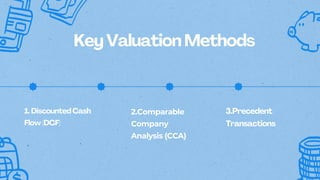
Key Valuation Methods
1. Discounted Cash
Flow (DCF)
2.Comparable
Company
Analysis (CCA)
3.Precedent
Transactions
Discounted Cash
Flow (DCF)
Estimates value based on
future cash flows discounted to
present value.
Suitable for companies with
stable and predictable cash
flows.
Comparable
Company
Analysis (CCA)
Compares target
company with similar
companies using metrics
like P/E ratio,
EV/EBITDA, etc.
Helps in
understanding market
value based on peer
performance.
Precedent Transactions
Provides insights into historical
acquisition prices to reflect real
market conditions.
Analyzes past transactions of similar
companies.
Application and
Benefits
Valuation methods guide strategic
decisions in mergers, acquisitions, and
investments.
Essential for financial planning, attracting
investors, and ensuring fair negotiations.
Accurate valuations are crucial for business growth and stability.
Combining different valuation methods offers a comprehensive approach
to understanding a company's worth.
Reference: For more information, visit IIMSKILLS Valuation Methods in
Finance.
Conclusion
Thank you
very
much!

Valuation methods in finance

  • 1.
    Valuation Methods InFinance Presented by: IIM SKILLS Category: Financial Modeling, Knowledge
  • 2.
    Introduction "Valuation methods infinance determine the fair value for various purposes like selling, taxation, or divorce proceedings.” "During the valuation process, all components of a business are reviewed to determine the overall worth of the organization." "Estimates are both an art and a science, using formal methods for accuracy." "A business valuation, often known as a company valuation, assesses the economic worth of a company."
  • 3.
    Importance of Business Valuation "Helps inmaking informed decisions for selling or merging companies." "Useful for resolving disputes in taxation, divorce, or shareholder deadlocks." "Assists in determining partner ownership and attracting investors." "Provides a basis for financial planning and improving company worth."
  • 4.
    Key Valuation Methods 1.Discounted Cash Flow (DCF) 2.Comparable Company Analysis (CCA) 3.Precedent Transactions
  • 5.
    Discounted Cash Flow (DCF) Estimatesvalue based on future cash flows discounted to present value. Suitable for companies with stable and predictable cash flows.
  • 6.
    Comparable Company Analysis (CCA) Compares target companywith similar companies using metrics like P/E ratio, EV/EBITDA, etc. Helps in understanding market value based on peer performance.
  • 7.
    Precedent Transactions Provides insightsinto historical acquisition prices to reflect real market conditions. Analyzes past transactions of similar companies.
  • 8.
    Application and Benefits Valuation methodsguide strategic decisions in mergers, acquisitions, and investments. Essential for financial planning, attracting investors, and ensuring fair negotiations.
  • 9.
    Accurate valuations arecrucial for business growth and stability. Combining different valuation methods offers a comprehensive approach to understanding a company's worth. Reference: For more information, visit IIMSKILLS Valuation Methods in Finance. Conclusion
  • 10.