GOVERNMENT IN AMERICA Introduction Government in USA is  large , and  Americans   believe  that all the  social issues  and  concerns  can be  solved  by the  government  though few believe that  it  is of no interest to the people. Government in United states is  c onstitution-based   federal republic ; with  strong   democratic  tradition.
The Beginning The United States began as  13 independent colonies  under a  loose confederation  in 1776. After  winning  their  independence  from  Great Britain in 1783 , the  colonies  had trouble getting along with each other.  After much  debate and controversy , the states  adopted  a written  constitution  in  1787.   Certain powers  were given to the  federal government , while other powers were kept by the  individual states .
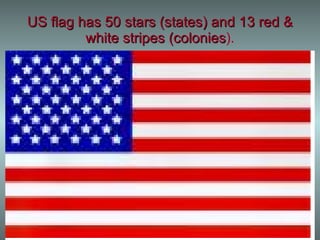
US flag has 50 stars (states) and 13 red & white stripes (colonies ).
The Bill of Rights The  first ten amendments  of the constitution  limit  the  powers  of the  government  to  abridge   individual human  rights . This Bill of Rights is cherished by  all Americans .  Despite  constitutional guarantees, groups such as  BLACKS  and  WOMEN  have had to struggle, over two centuries, to claim their constitutional rights.  e.g. The first amendment guarantees freedom of religion,speech,freedom of press etc.
STRUCTURE OF THE GOVERNMENT FEDERAL GOVERNMENT THE EXECUTIVE BRANCH THE LEGISLATIVE BRANCH THE JUDICIAL BRANCH STATE GOVERNMENT- Often but not always similar in structure to the federal govt.
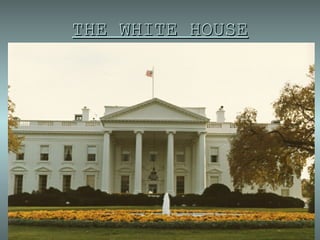
Executive Branch The President  is the  head of the executive   branch , chosen through a  popular  election  every four years . The President  lives  during his  term  in the  Executive Mansion   (“The White House”),  at  1600, Pennsylvania avenue, in Washington D.C.
THE WHITE HOUSE
continued…. The Vice- President  who is also  elected , takes over in case  the President  is  ill or dies . All the  other officer’s  of the  executive branch , known as the President’s  cabinet  are chosen by the President with the  advice  and the  consent  of the  congress .
The Legislative Branch 1.The Senate 2. The House of Representatives Each of the  50 states  has  2 senators (6 year terms) There are  435 seats  in the  House of   Representatives (2 year terms) allocated to each state on basis of  population. This is the  bi-cameral system  of  representation .
The Judicial Branch  Supreme Court  Federal Courts SUPREME COURT -Members  appointed  to  life   terms  by  the President  & must be  confirmed  by the  congress . FEDERAL COURTS- The  94 U.S. judicial districts  are organized into  12 regional circuits , each of which has a  United States court of appeals .
Balance of Power The  American system  is different from the  Parliamentary system common  in many  other countries . The  President  is elected directly by the people  as  are the  senators  and the  representatives . The  Supreme court  is  independent  of the  Executive  and  the legislative branches .
Continued… With  a lot of  controversy  and  compromises , the  system  was  designed  to provide  checks  and  balances , so that no one  branch  of the  government  could hold  too much power . The  Congress  can  frustrate  the President, while  the President  has the  power  to  veto   laws  that the Congress has  passed.
State Government State Govts . are  structured  much like the  federal govt ., though in many cases the  state judiciary  is  directly  elected. The  chief executive  of the state is the  Governor. State   counties   small towns and   villages Cities are incorporated with special laws and have special legal status.
Conclusion Each  level of the government, both  federal  as well a the  state govt . has its own  lawmaking  and  administrative  areas . Whatever your views, in the United states you’ll have to deal with government at many levels. THANK YOU .

US GOVT

  • 1.
    GOVERNMENT IN AMERICAIntroduction Government in USA is large , and Americans believe that all the social issues and concerns can be solved by the government though few believe that it is of no interest to the people. Government in United states is c onstitution-based federal republic ; with strong democratic tradition.
  • 2.
    The Beginning TheUnited States began as 13 independent colonies under a loose confederation in 1776. After winning their independence from Great Britain in 1783 , the colonies had trouble getting along with each other. After much debate and controversy , the states adopted a written constitution in 1787. Certain powers were given to the federal government , while other powers were kept by the individual states .
  • 3.
    US flag has50 stars (states) and 13 red & white stripes (colonies ).
  • 4.
    The Bill ofRights The first ten amendments of the constitution limit the powers of the government to abridge individual human rights . This Bill of Rights is cherished by all Americans . Despite constitutional guarantees, groups such as BLACKS and WOMEN have had to struggle, over two centuries, to claim their constitutional rights. e.g. The first amendment guarantees freedom of religion,speech,freedom of press etc.
  • 5.
    STRUCTURE OF THEGOVERNMENT FEDERAL GOVERNMENT THE EXECUTIVE BRANCH THE LEGISLATIVE BRANCH THE JUDICIAL BRANCH STATE GOVERNMENT- Often but not always similar in structure to the federal govt.
  • 6.
    Executive Branch ThePresident is the head of the executive branch , chosen through a popular election every four years . The President lives during his term in the Executive Mansion (“The White House”), at 1600, Pennsylvania avenue, in Washington D.C.
  • 7.
  • 8.
    continued…. The Vice-President who is also elected , takes over in case the President is ill or dies . All the other officer’s of the executive branch , known as the President’s cabinet are chosen by the President with the advice and the consent of the congress .
  • 9.
    The Legislative Branch1.The Senate 2. The House of Representatives Each of the 50 states has 2 senators (6 year terms) There are 435 seats in the House of Representatives (2 year terms) allocated to each state on basis of population. This is the bi-cameral system of representation .
  • 10.
    The Judicial Branch Supreme Court  Federal Courts SUPREME COURT -Members appointed to life terms by the President & must be confirmed by the congress . FEDERAL COURTS- The 94 U.S. judicial districts are organized into 12 regional circuits , each of which has a United States court of appeals .
  • 11.
    Balance of PowerThe American system is different from the Parliamentary system common in many other countries . The President is elected directly by the people as are the senators and the representatives . The Supreme court is independent of the Executive and the legislative branches .
  • 12.
    Continued… With a lot of controversy and compromises , the system was designed to provide checks and balances , so that no one branch of the government could hold too much power . The Congress can frustrate the President, while the President has the power to veto laws that the Congress has passed.
  • 13.
    State Government StateGovts . are structured much like the federal govt ., though in many cases the state judiciary is directly elected. The chief executive of the state is the Governor. State  counties  small towns and villages Cities are incorporated with special laws and have special legal status.
  • 14.
    Conclusion Each level of the government, both federal as well a the state govt . has its own lawmaking and administrative areas . Whatever your views, in the United states you’ll have to deal with government at many levels. THANK YOU .