Unix/Linux Command Reference

File Commands
   1.   ls                      Directory listing
   2.   ls -al                  Formatted listing with hidden files
   3.   ls -lt                  Sorting the Formatted listing by time modification
   4.   cd dir                  Change directory to dir
   5.   cd                      Change to home directory
   6.   pwd                     Show current working directory
   7.   mkdir dir               Creating a directory dir
   8.   cat >file               Places the standard input into the file
   9.   more file               Output the contents of the file
   10. head file                Output the first 10 lines of the file
   11. tail file                Output the last 10 lines of the file
   12. tail -f file             Output the contents of file as it grows,starting with
                                the last 10 lines
   13. touch file               Create or update file
   14. rm file                  Deleting the file
   15. rm -r dir                Deleting the directory
   16. rm -f file               Force to remove the file
   17. rm -rf dir               Force to remove the directory dir
   18. cp file1 file2           Copy the contents of file1 to file2
   19. cp -r dir1 dir2          Copy dir1 to dir2;create dir2 if not present
   20. mv file1 file2           Rename or move file1 to file2,if file2 is an existing
                                directory
   21. ln -s file link          Create symbolic link link to file


Process management
   1.   ps                      To display the currently working processes
   2.   top                     Display all running process


Unix/Linux Command Reference 
3.   kill pid                 Kill the process with given pid
   4.   killall proc             Kill all the process named proc
   5.   pkill pattern            Will kill all processes matching the pattern
   6.   bg                       List stopped or background jobs,resume a stopped
                                 job in the background
   7.   fg                       Brings the most recent job to foreground
   8.   fg n                     Brings job n to the foreground


File permission
   1.   chmod octal file         Change the permission of file to octal,which can
                                 be found separately for user,group,world by
                                 adding,
                                    •  4-read(r)
                                    •  2-write(w)
                                    •  1-execute(x)


Searching
   1.    grep pattern file       Search for pattern in file
   2.    grep -r pattern dir     Search recursively for pattern in dir
   3.    command | grep          Search pattern in the output of a command
         pattern
   4.    locate file             Find all instances of file
   5.    find . -name filename   Searches in the current directory (represented by
                                 a period) and below it, for files and directories with
                                 names starting with filename
   6.    pgrep pattern           Searches for all the named processes , that
                                 matches with the pattern and, by default, returns
                                 their ID

System Info
   1.    date                    Show the current date and time
   2.    cal                     Show this month's calender
   3.    uptime                  Show current uptime
   4.    w                       Display who is on line
   5.    whoami                  Who you are logged in as


Unix/Linux Command Reference 
6.    finger user                 Display information about user
   7.    uname -a                    Show kernel information
   8.    cat /proc/cpuinfo           Cpu information
   9.    cat proc/meminfo            Memory information
   10. man command                   Show the manual for command
   11. df                            Show the disk usage
   12. du                            Show directory space usage
   13. free                          Show memory and swap usage
   14. whereis app                   Show possible locations of app
   15. which app                     Show which applications will be run by default

Compression
   1.    tar cf file.tar file        Create tar named file.tar containing file
   2.    tar xf file.tar             Extract the files from file.tar
   3.    tar czf file.tar.gz files   Create a tar with Gzip compression
   4.    tar xzf file.tar.gz         Extract a tar using Gzip
   5.    tar cjf file.tar.bz2        Create tar with Bzip2 compression
   6.    tar xjf file.tar.bz2        Extract a tar using Bzip2
   7.    gzip file                   Compresses file and renames it to file.gz
   8.    gzip -d file.gz             Decompresses file.gz back to file


Network
   1.    ping host                   Ping host and output results
   2.    whois domain                Get whois information for domains
   3.    dig domain                  Get DNS information for domain
   4.    dig -x host                 Reverse lookup host
   5.    wget file                   Download file
   6.    wget -c file                Continue a stopped download


Unix/Linux Command Reference 
Shortcuts
   1.   ctrl+c                  Halts the current command
   2.   ctrl+z                  Stops the current command, resume with fg in the
                                foreground or bg in the background
   3.   ctrl+d                  Logout the current session, similar to exit
   4.   ctrl+w                  Erases one word in the current line
   5.   ctrl+u                  Erases the whole line
   6.   ctrl+r                  Type to bring up a recent command
   7.   !!                      Repeats the last command
   8.   exit                    Logout the current session


Unix/Linux Command Reference 

Unix commands

  • 1.
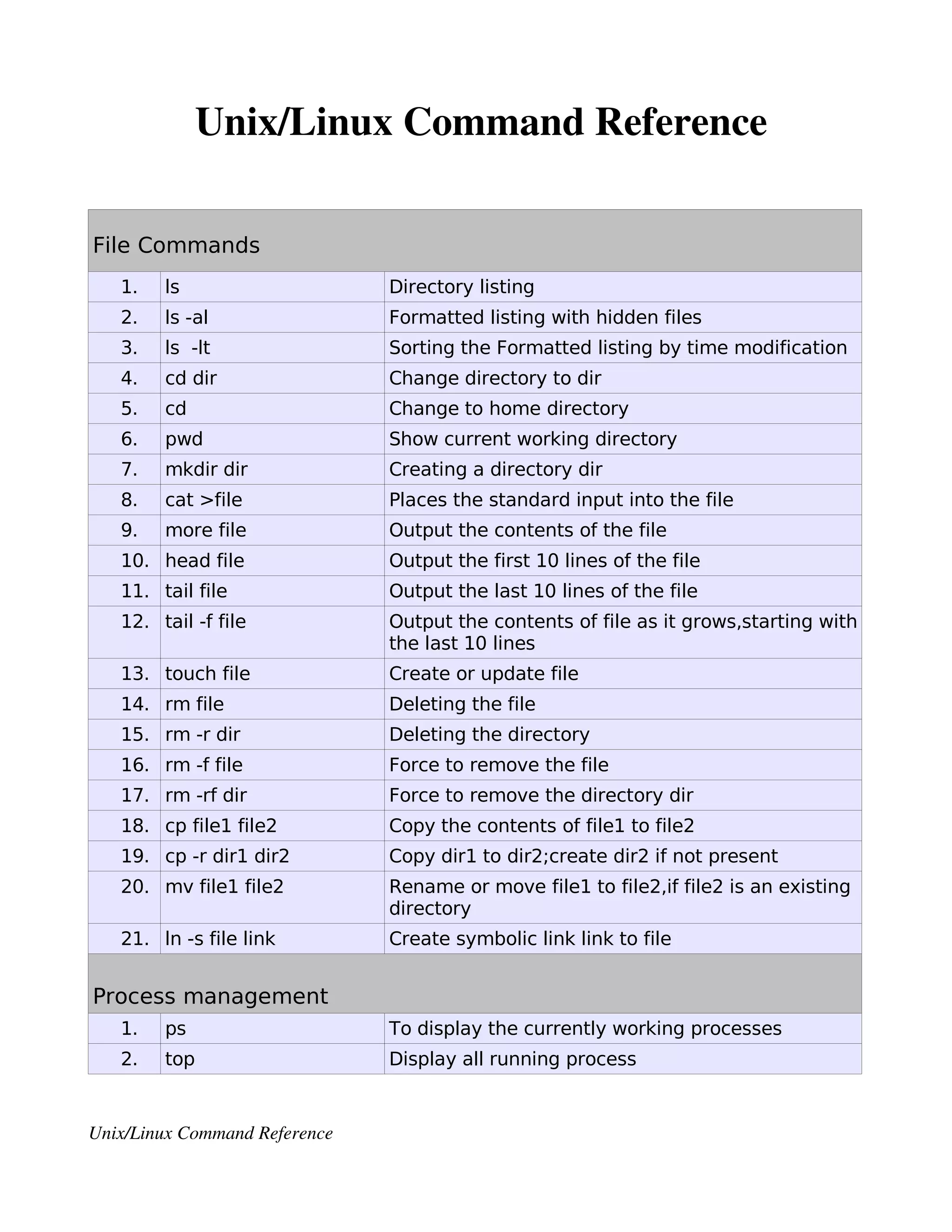
     Unix/Linux Command Reference File Commands 1. ls Directory listing 2. ls -al Formatted listing with hidden files 3. ls -lt Sorting the Formatted listing by time modification 4. cd dir Change directory to dir 5. cd Change to home directory 6. pwd Show current working directory 7. mkdir dir Creating a directory dir 8. cat >file Places the standard input into the file 9. more file Output the contents of the file 10. head file Output the first 10 lines of the file 11. tail file Output the last 10 lines of the file 12. tail -f file Output the contents of file as it grows,starting with the last 10 lines 13. touch file Create or update file 14. rm file Deleting the file 15. rm -r dir Deleting the directory 16. rm -f file Force to remove the file 17. rm -rf dir Force to remove the directory dir 18. cp file1 file2 Copy the contents of file1 to file2 19. cp -r dir1 dir2 Copy dir1 to dir2;create dir2 if not present 20. mv file1 file2 Rename or move file1 to file2,if file2 is an existing directory 21. ln -s file link Create symbolic link link to file Process management 1. ps To display the currently working processes 2. top Display all running process Unix/Linux Command Reference 
  • 2.
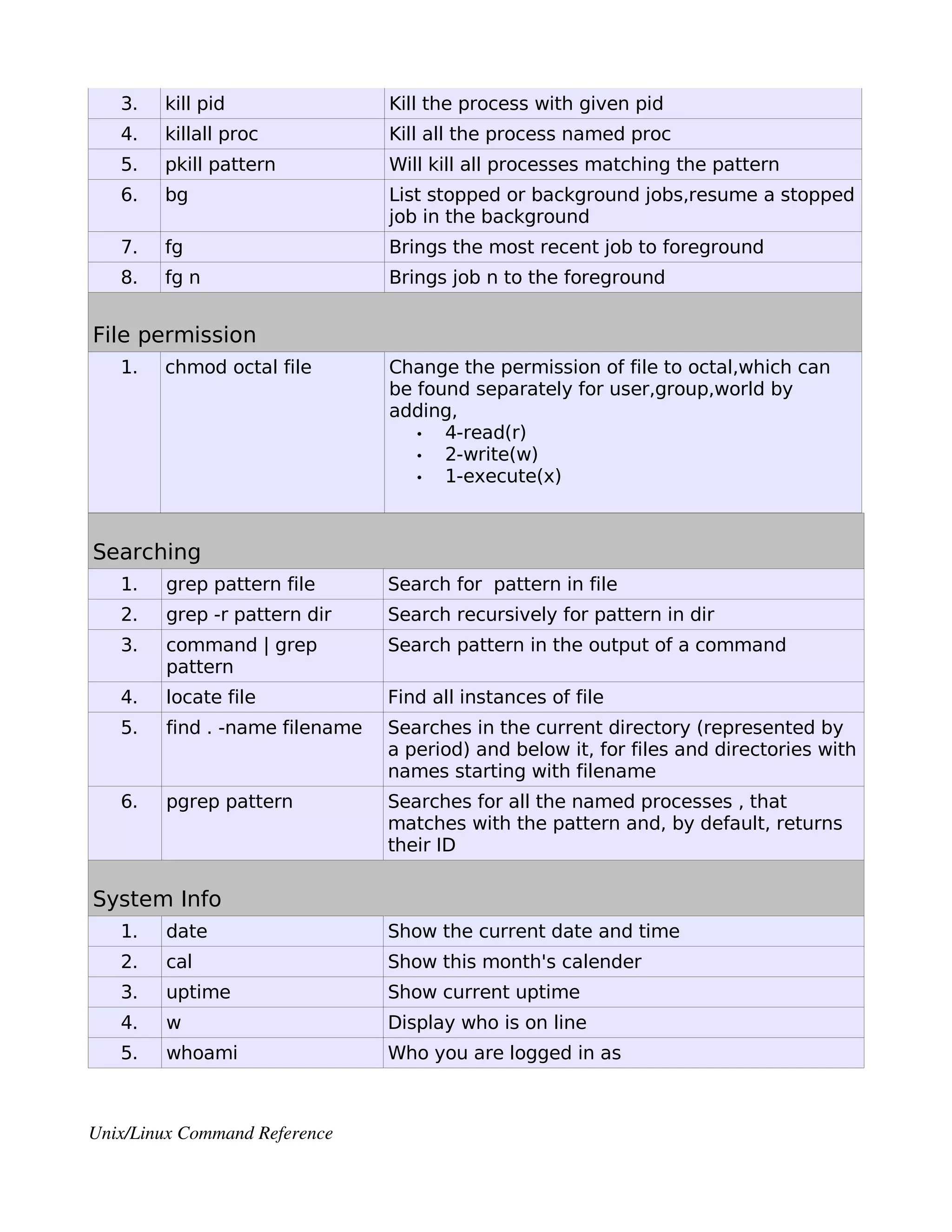
    3. kill pid Kill the process with given pid 4. killall proc Kill all the process named proc 5. pkill pattern Will kill all processes matching the pattern 6. bg List stopped or background jobs,resume a stopped job in the background 7. fg Brings the most recent job to foreground 8. fg n Brings job n to the foreground File permission 1. chmod octal file Change the permission of file to octal,which can be found separately for user,group,world by adding, • 4-read(r) • 2-write(w) • 1-execute(x) Searching 1. grep pattern file Search for pattern in file 2. grep -r pattern dir Search recursively for pattern in dir 3. command | grep Search pattern in the output of a command pattern 4. locate file Find all instances of file 5. find . -name filename Searches in the current directory (represented by a period) and below it, for files and directories with names starting with filename 6. pgrep pattern Searches for all the named processes , that matches with the pattern and, by default, returns their ID System Info 1. date Show the current date and time 2. cal Show this month's calender 3. uptime Show current uptime 4. w Display who is on line 5. whoami Who you are logged in as Unix/Linux Command Reference 
  • 3.
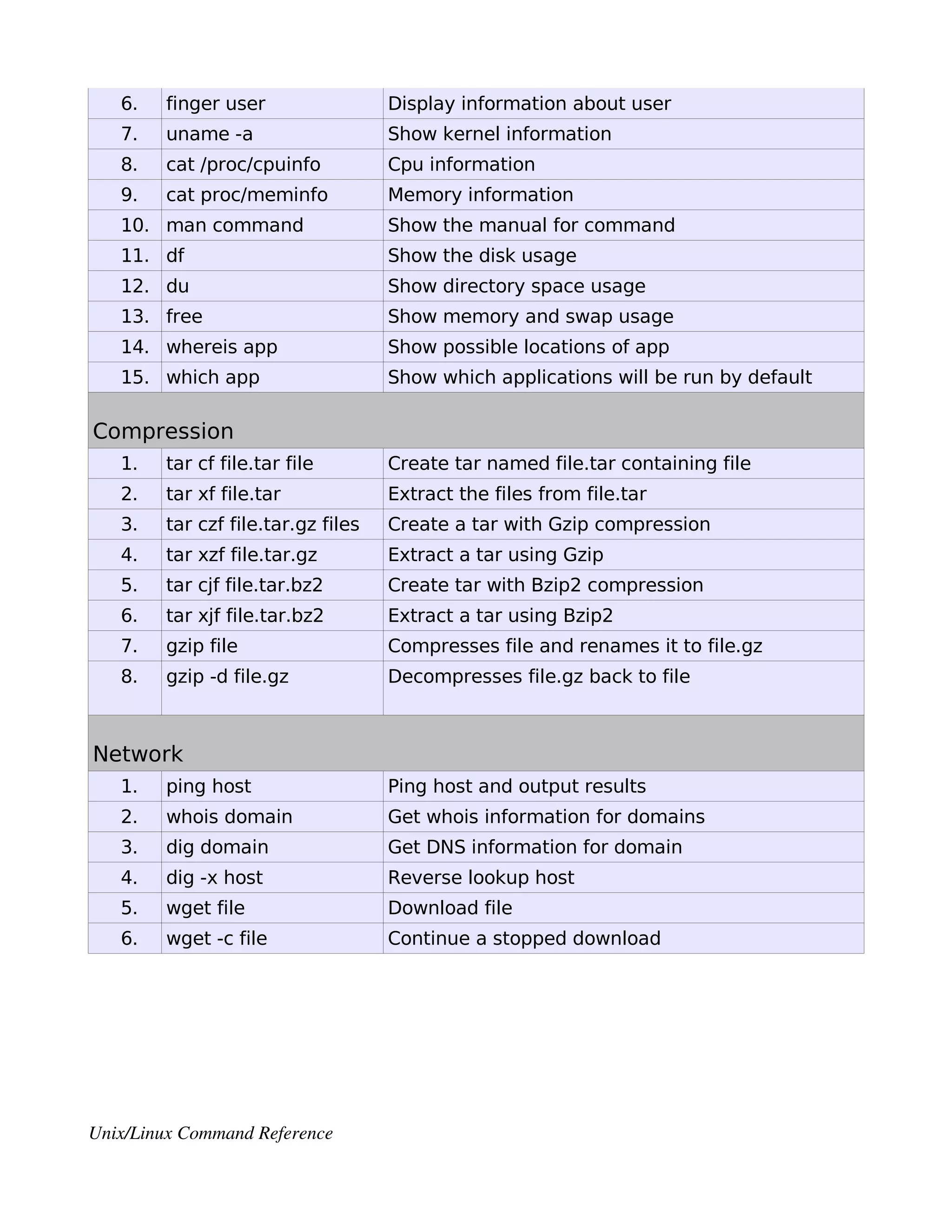
    6. finger user Display information about user 7. uname -a Show kernel information 8. cat /proc/cpuinfo Cpu information 9. cat proc/meminfo Memory information 10. man command Show the manual for command 11. df Show the disk usage 12. du Show directory space usage 13. free Show memory and swap usage 14. whereis app Show possible locations of app 15. which app Show which applications will be run by default Compression 1. tar cf file.tar file Create tar named file.tar containing file 2. tar xf file.tar Extract the files from file.tar 3. tar czf file.tar.gz files Create a tar with Gzip compression 4. tar xzf file.tar.gz Extract a tar using Gzip 5. tar cjf file.tar.bz2 Create tar with Bzip2 compression 6. tar xjf file.tar.bz2 Extract a tar using Bzip2 7. gzip file Compresses file and renames it to file.gz 8. gzip -d file.gz Decompresses file.gz back to file Network 1. ping host Ping host and output results 2. whois domain Get whois information for domains 3. dig domain Get DNS information for domain 4. dig -x host Reverse lookup host 5. wget file Download file 6. wget -c file Continue a stopped download Unix/Linux Command Reference 
  • 4.
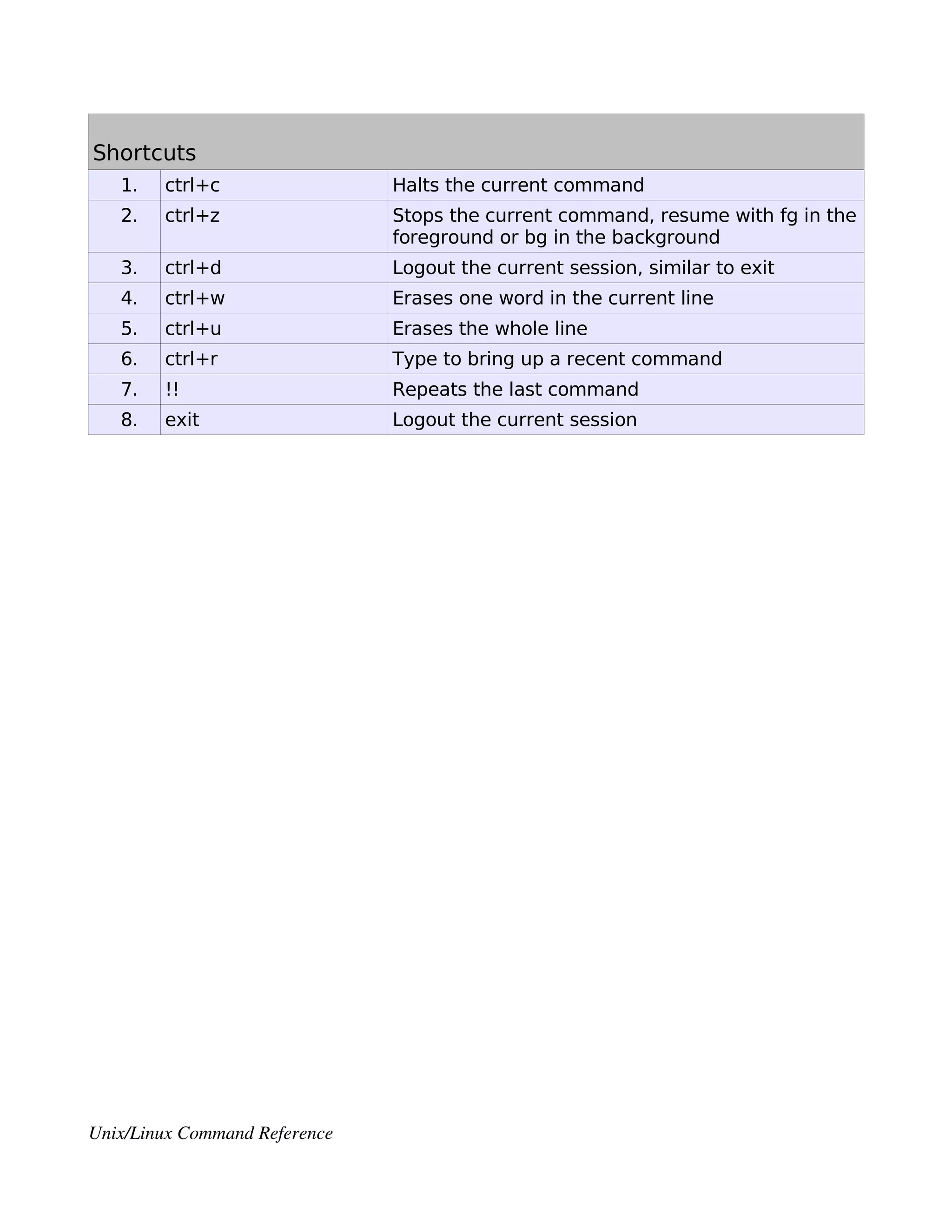
    Shortcuts 1. ctrl+c Halts the current command 2. ctrl+z Stops the current command, resume with fg in the foreground or bg in the background 3. ctrl+d Logout the current session, similar to exit 4. ctrl+w Erases one word in the current line 5. ctrl+u Erases the whole line 6. ctrl+r Type to bring up a recent command 7. !! Repeats the last command 8. exit Logout the current session Unix/Linux Command Reference