REIMUEL M. BISNAR
Teacher I
Certified Microsoft Innovative Educator
Educator Community Contributor & Influencer
Let’s Warm Up
Direction: Choose the letter of your answer.
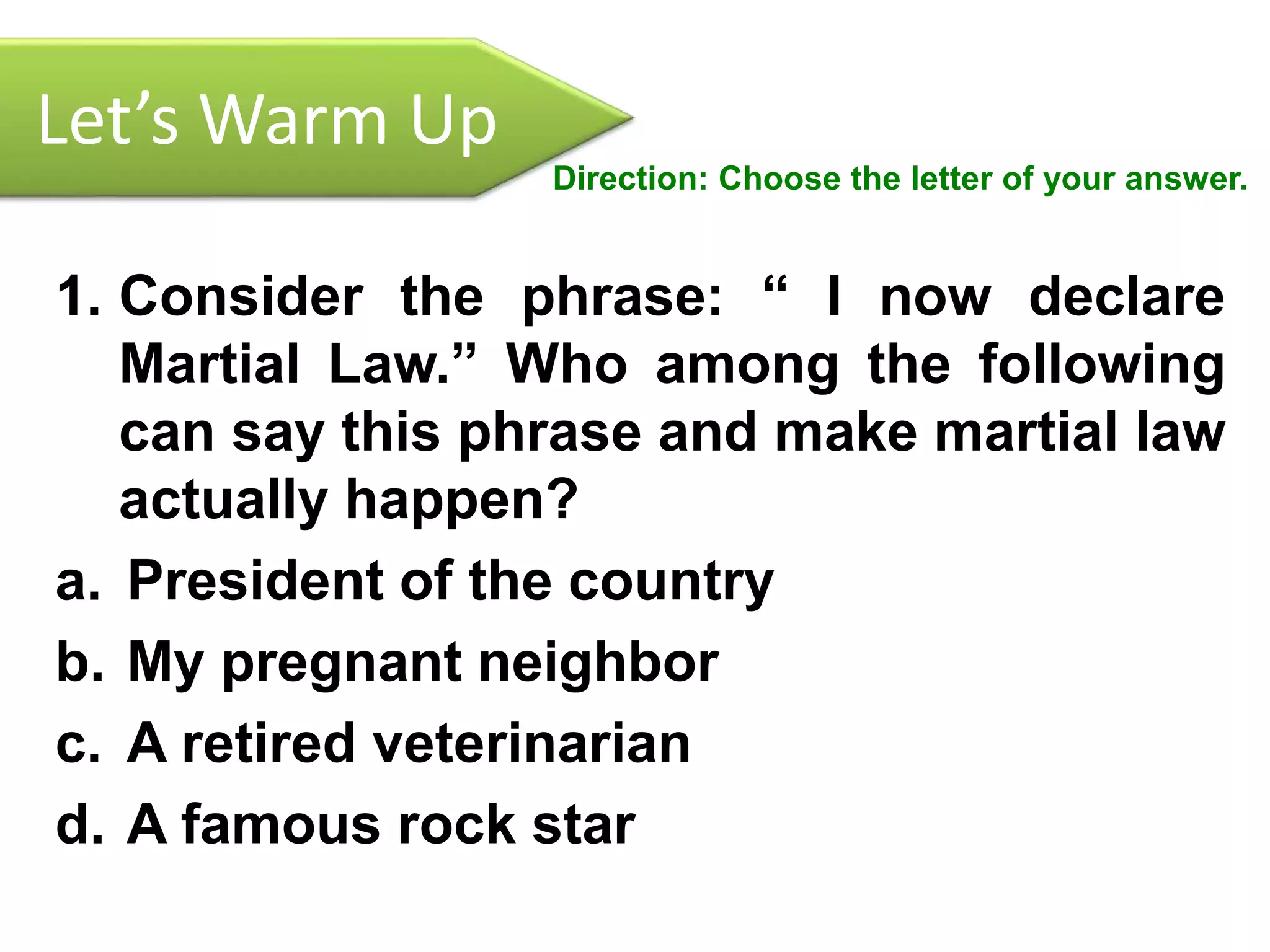
1. Consider the phrase: “ I now declare
Martial Law.” Who among the following
can say this phrase and make martial law
actually happen?
a. President of the country
b. My pregnant neighbor
c. A retired veterinarian
d. A famous rock star
Let’s Warm Up
Direction: Choose the letter of your answer.
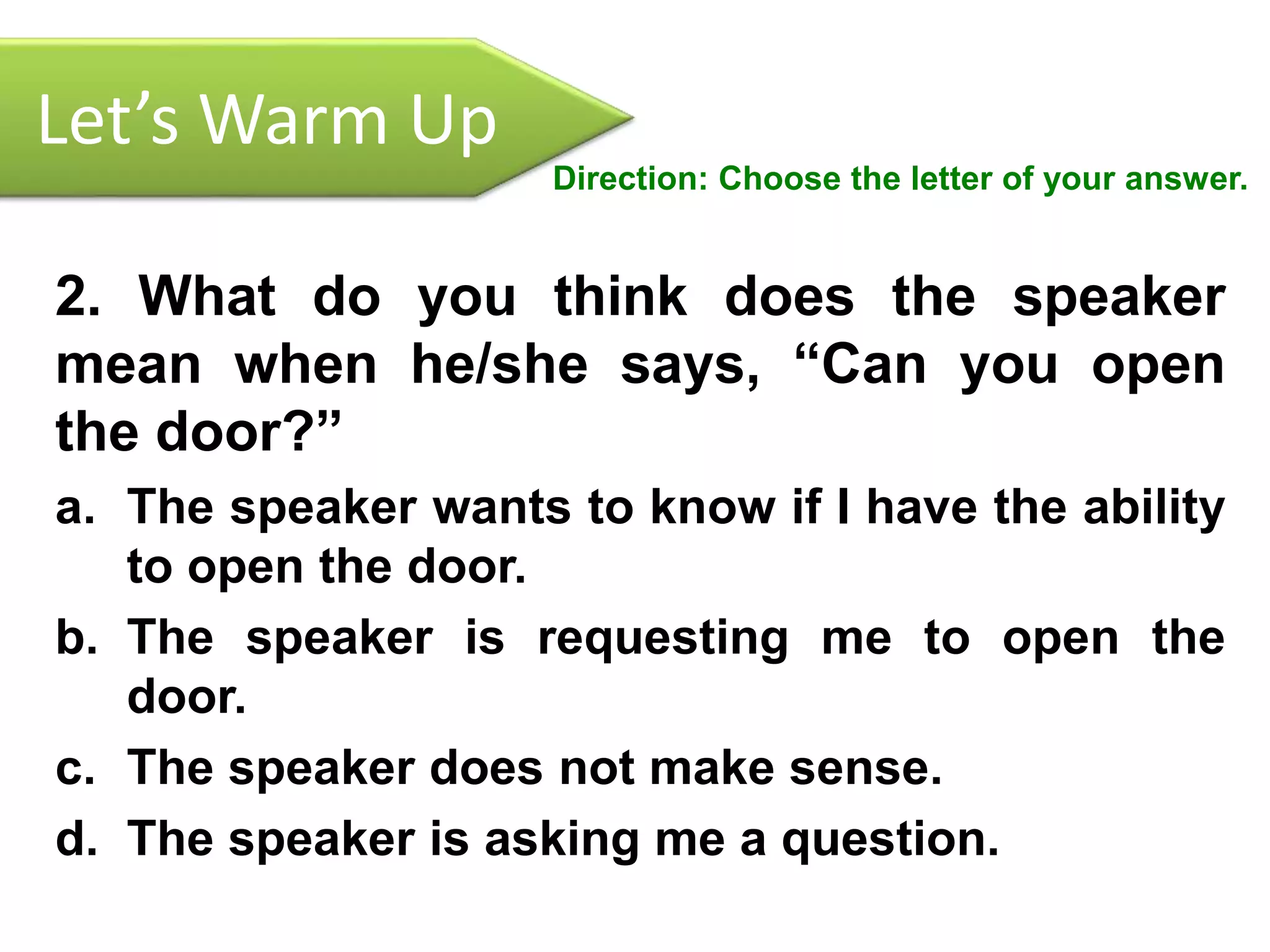
2. What do you think does the speaker
mean when he/she says, “Can you open
the door?”
a. The speaker wants to know if I have the ability
to open the door.
b. The speaker is requesting me to open the
door.
c. The speaker does not make sense.
d. The speaker is asking me a question.
Let’s Warm Up
Direction: Choose the letter of your answer.
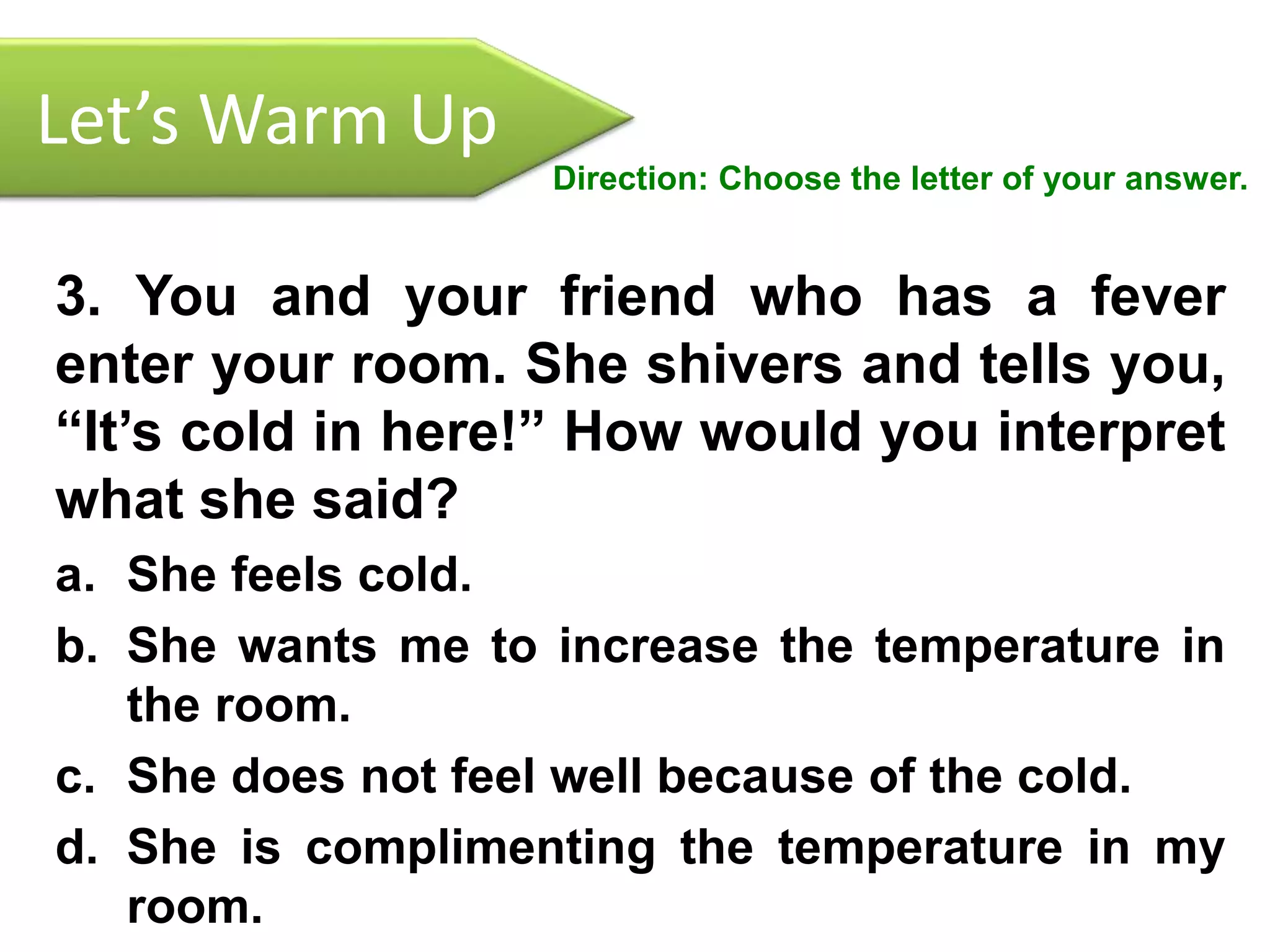
3. You and your friend who has a fever
enter your room. She shivers and tells you,
“It’s cold in here!” How would you interpret
what she said?
a. She feels cold.
b. She wants me to increase the temperature in
the room.
c. She does not feel well because of the cold.
d. She is complimenting the temperature in my
room.
Let’s Warm Up
Direction: Choose the letter of your answer.
4. Based on the scenario in item number 3,
what would your next action be?
a. I will thank my friend.
b. I will agree with her and say that the room is
cold.
c. I will increase the temperature to decrease the
coldness.
d. I will ignore my friend.
Let’s Warm Up
Direction: Choose the letter of your answer.
5. In which of the following statements is
the speaker making a commitment?
a. “I checked her Facebook profile
yesterday.”
b. “I’m in love and I’m happy.”
c. “I promise to love you for better or for
worse.”
d. “I think following my suggestion will get
us a high grade.”
Let’s Work and Learn
Video 1:
https://www.youtube.com
/watch?v=hpZFctBUHQ
Let’s Work and Learn
Video 1:
https://www.youtube.com
/watch?v=hpZFctBUHQ
Let’s Work and Learn
What greeting is used by
the customer service
agent?
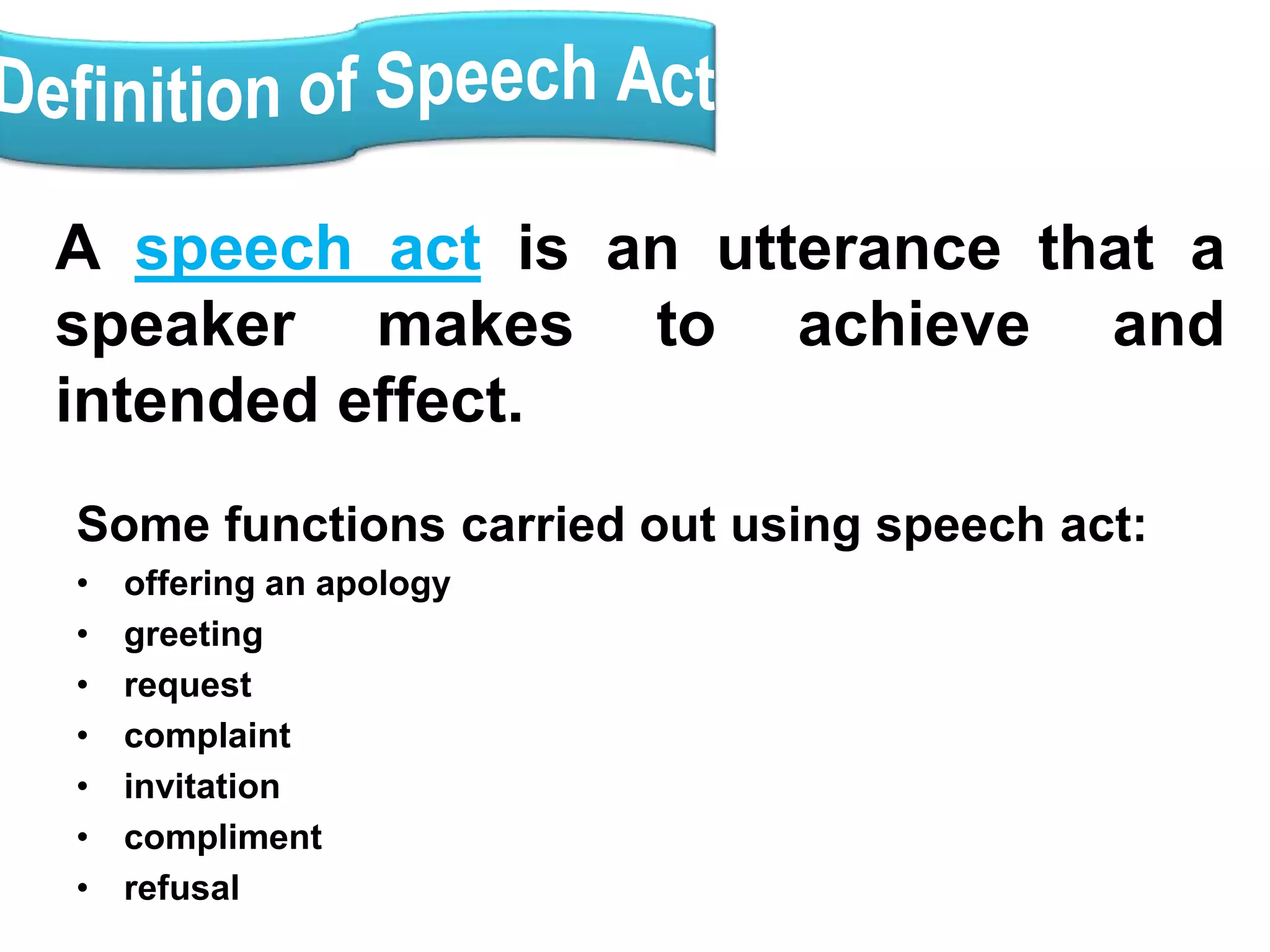
A speech act is an utterance that a
speaker makes to achieve and
intended effect.
Some functions carried out using speech act:
• offering an apology
• greeting
• request
• complaint
• invitation
• compliment
• refusal
This was according to
John Langshaw Austin
(1962), a philosopher and
the developer of the
Speech Act Theory.
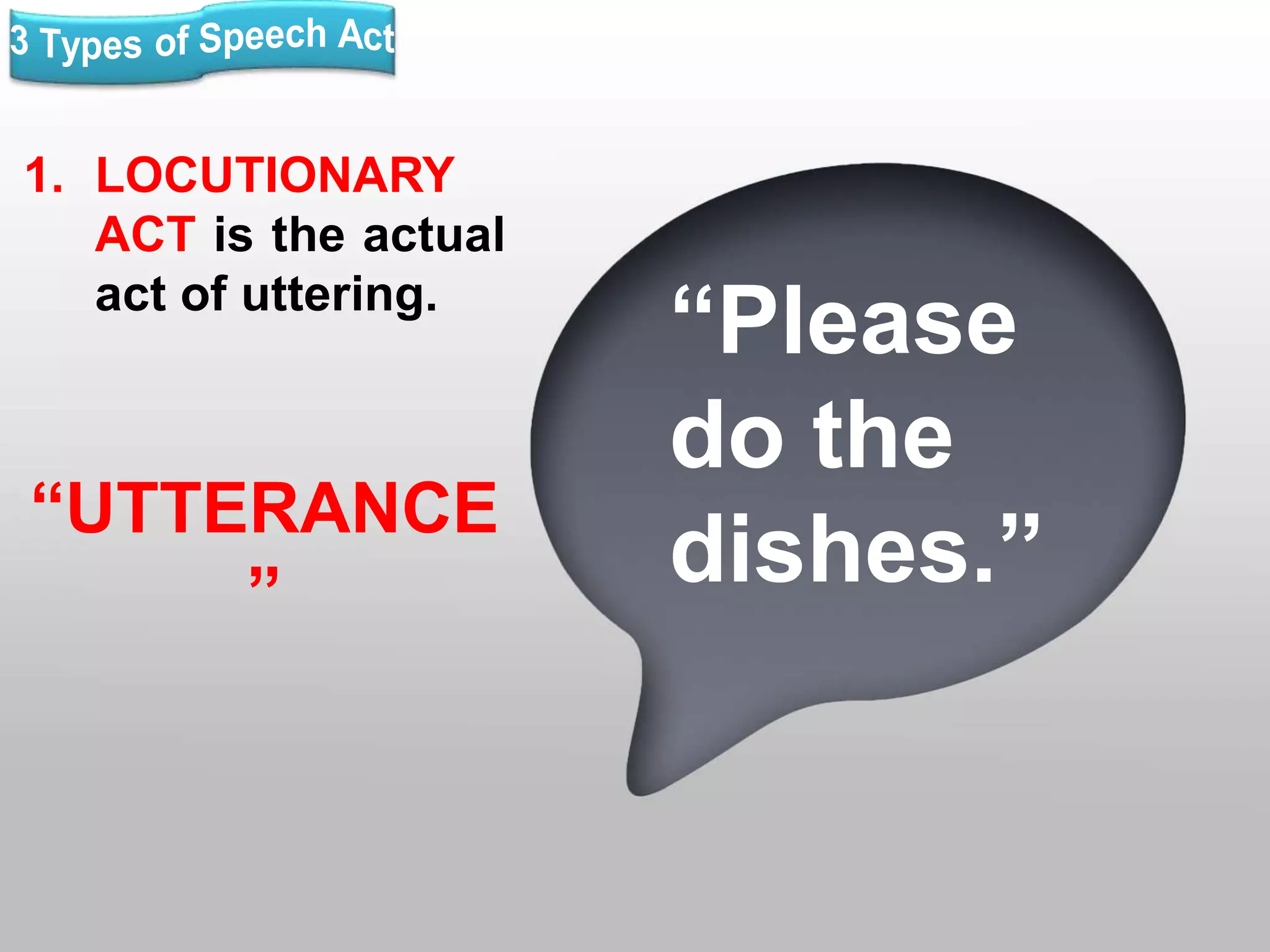
1. LOCUTIONARY
ACT is the actual
act of uttering.
“UTTERANCE
”
“Please
do the
dishes.”
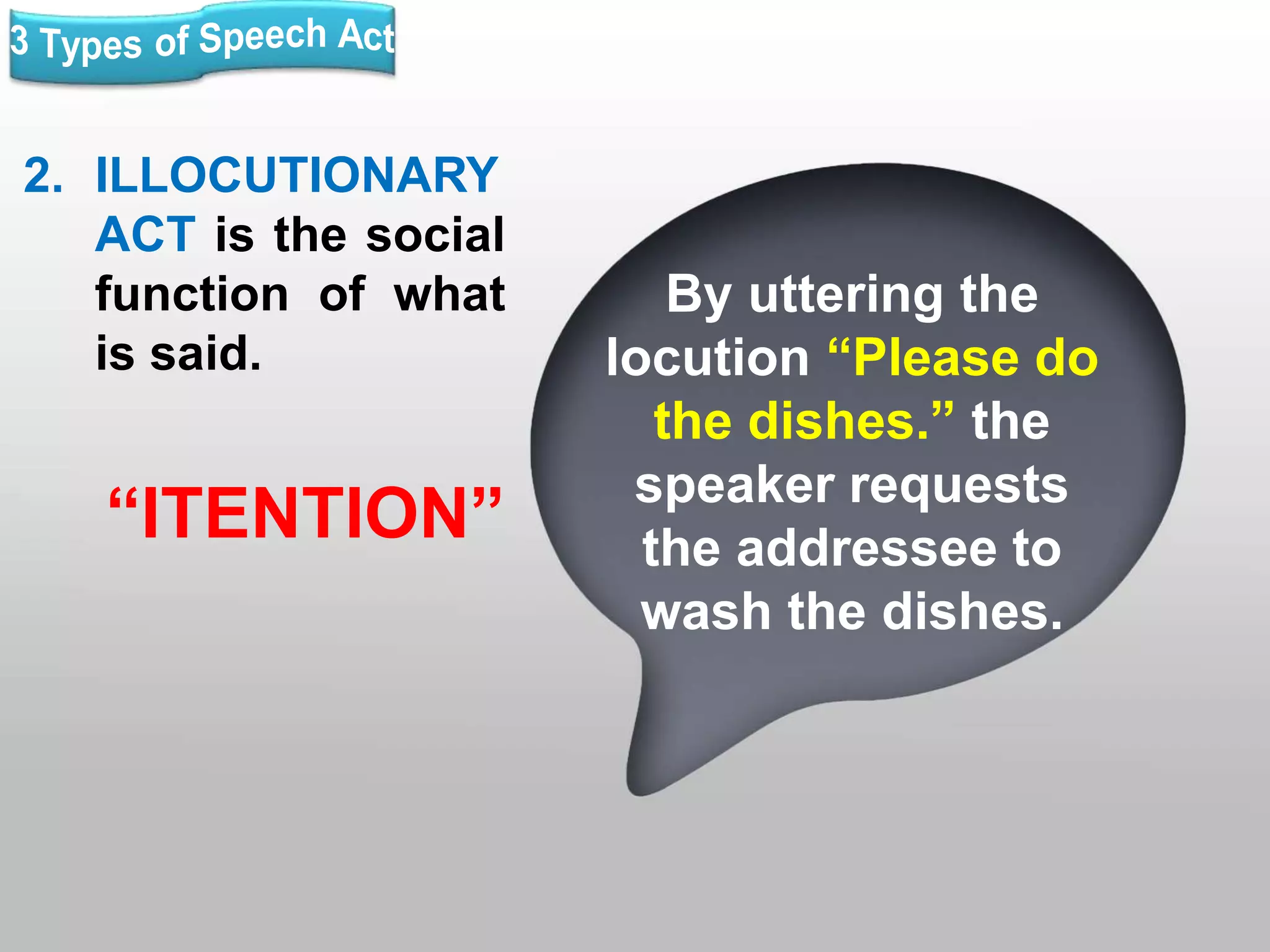
2. ILLOCUTIONARY
ACT is the social
function of what
is said.
“ITENTION”
By uttering the
locution “Please do
the dishes.” the
speaker requests
the addressee to
wash the dishes.
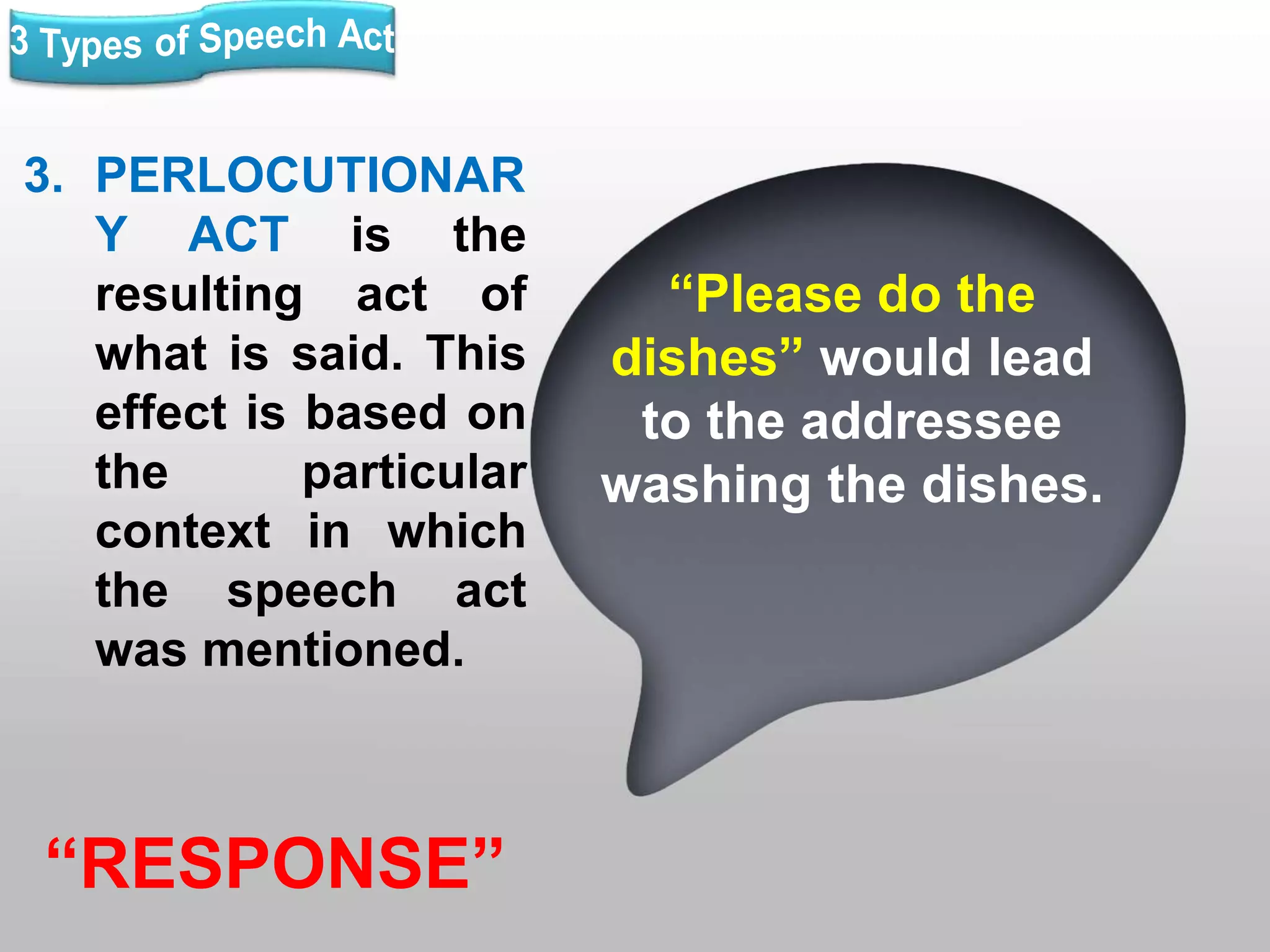
3. PERLOCUTIONAR
Y ACT is the
resulting act of
what is said. This
effect is based on
the particular
context in which
the speech act
was mentioned.
“RESPONSE”
“Please do the
dishes” would lead
to the addressee
washing the dishes.
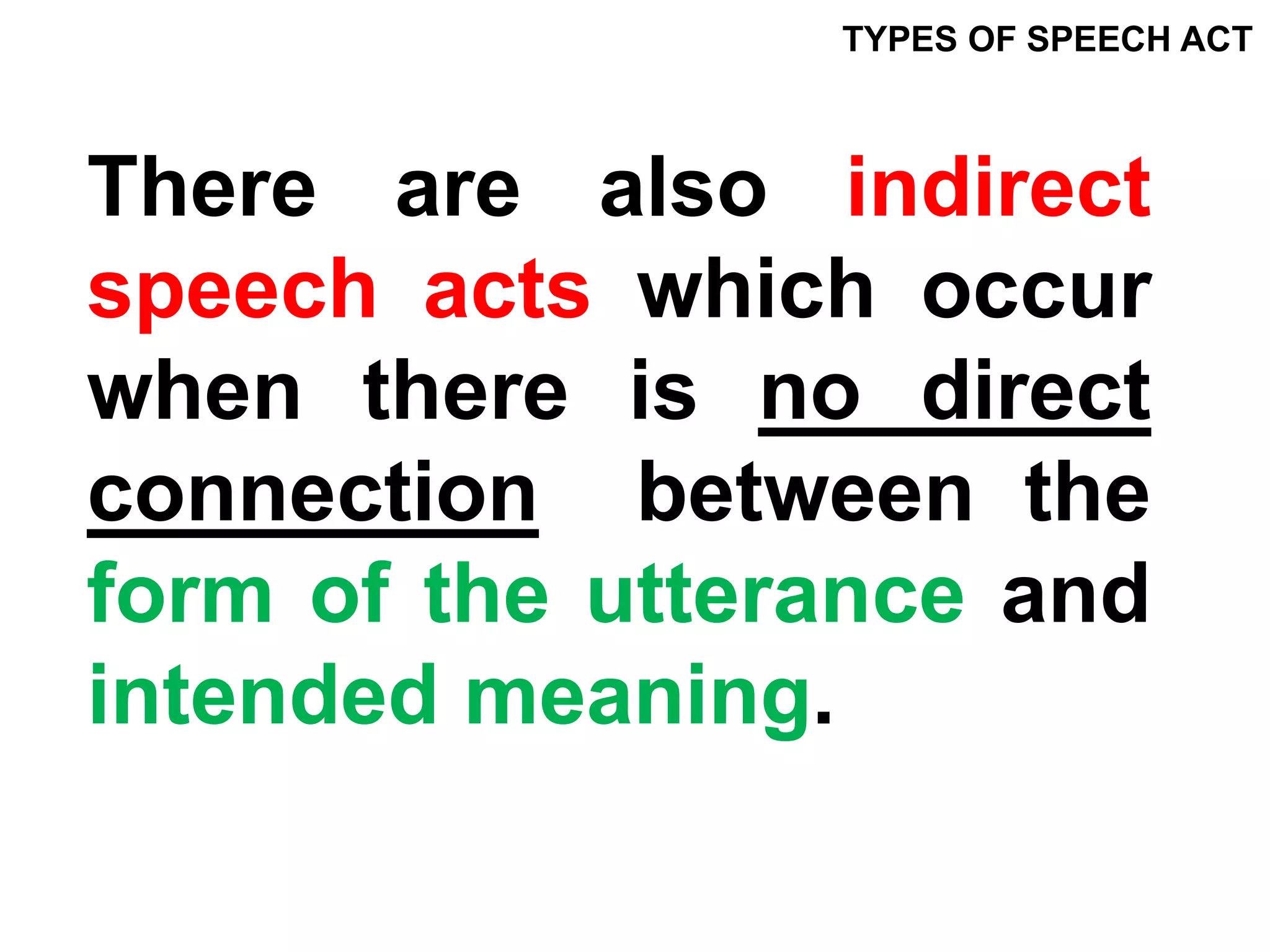
There are also indirect
speech acts which occur
when there is no direct
connection between the
form of the utterance and
intended meaning.
TYPES OF SPEECH ACT
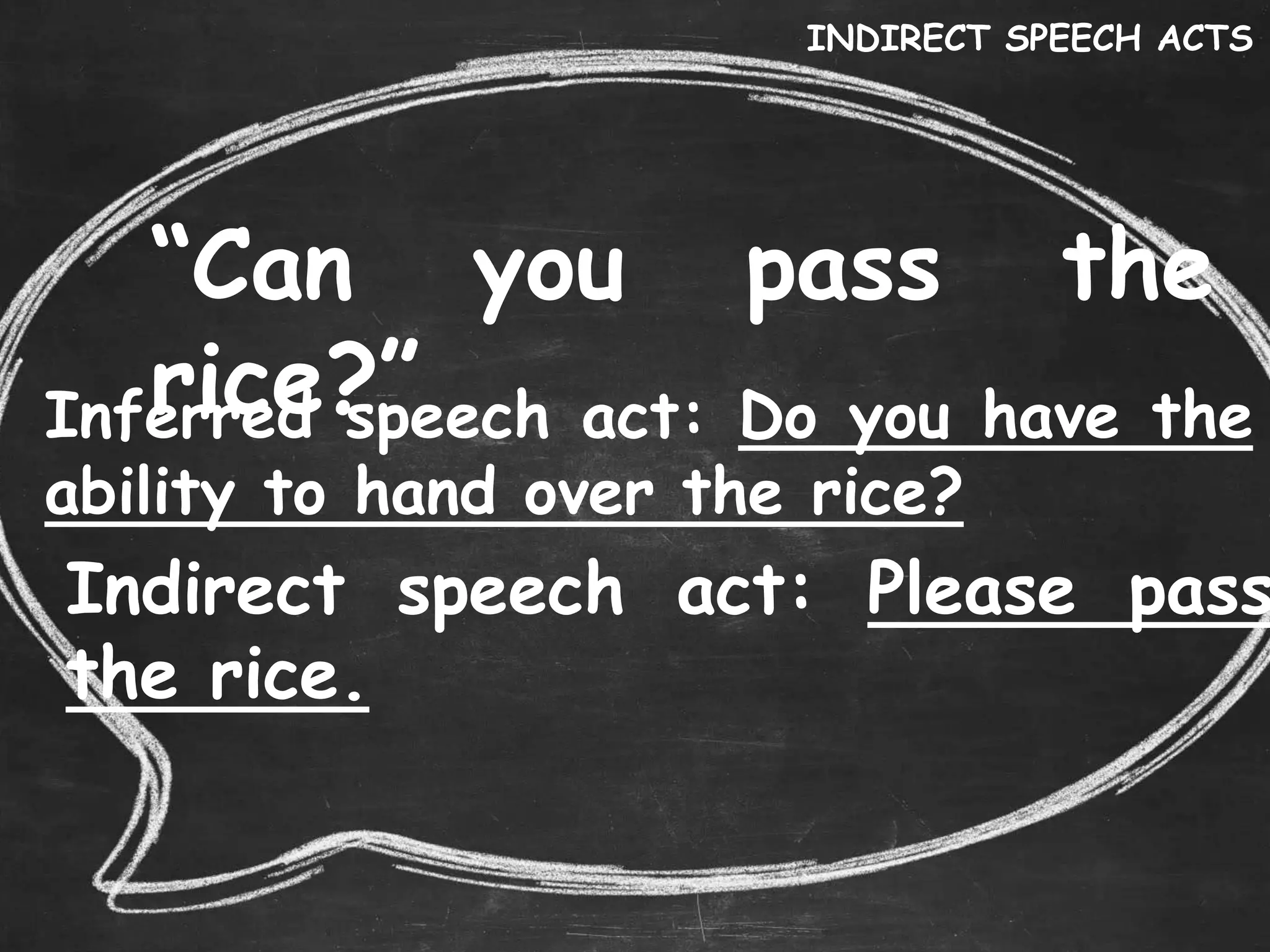
“Can you pass the
rice?”
INDIRECT SPEECH ACTS
Inferred speech act: Do you have the
ability to hand over the rice?
Indirect speech act: Please pass
the rice.
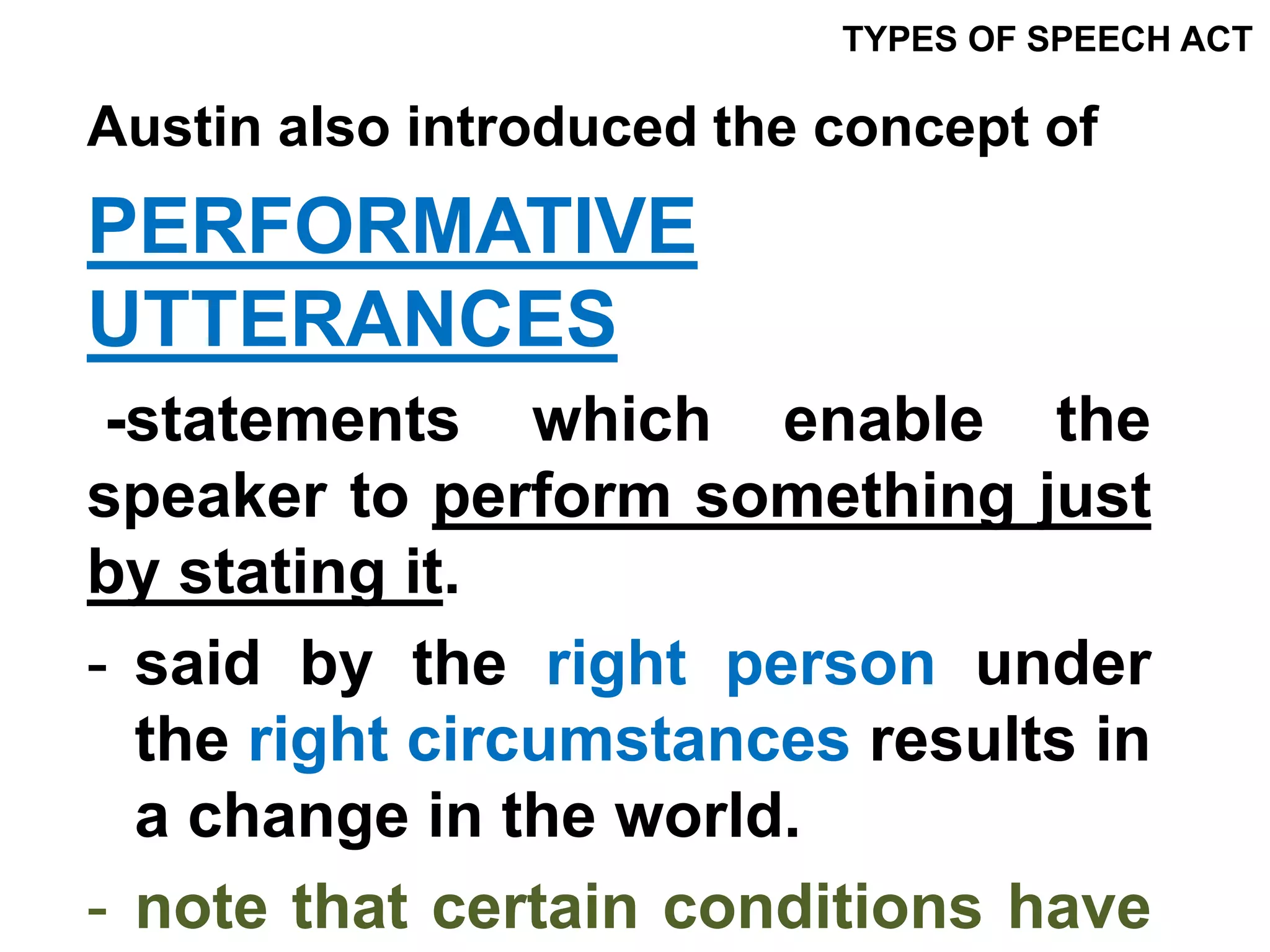
Austin also introduced the concept of
PERFORMATIVE
UTTERANCES
-statements which enable the
speaker to perform something just
by stating it.
- said by the right person under
the right circumstances results in
a change in the world.
- note that certain conditions have
TYPES OF SPEECH ACT
For example, the phrase “I now
pronounce you husband and
wife,” when uttered by an
authorized person such as
judge or priest will have the
actual effect of binding a couple
in marriage.
PERFORMATIVE UTTERANCES
a. ‘I do (sc. take this woman to be my lawful
wedded wife)’ – as uttered in the course of the
marriage ceremony.
b. ‘I name this ship the Queen Elizabeth’ –
accompanied by the smashing of a bottle
against the hull of the ship.
c. ‘I give and bequeath my watch to my
brother’ – as occurring in a will.
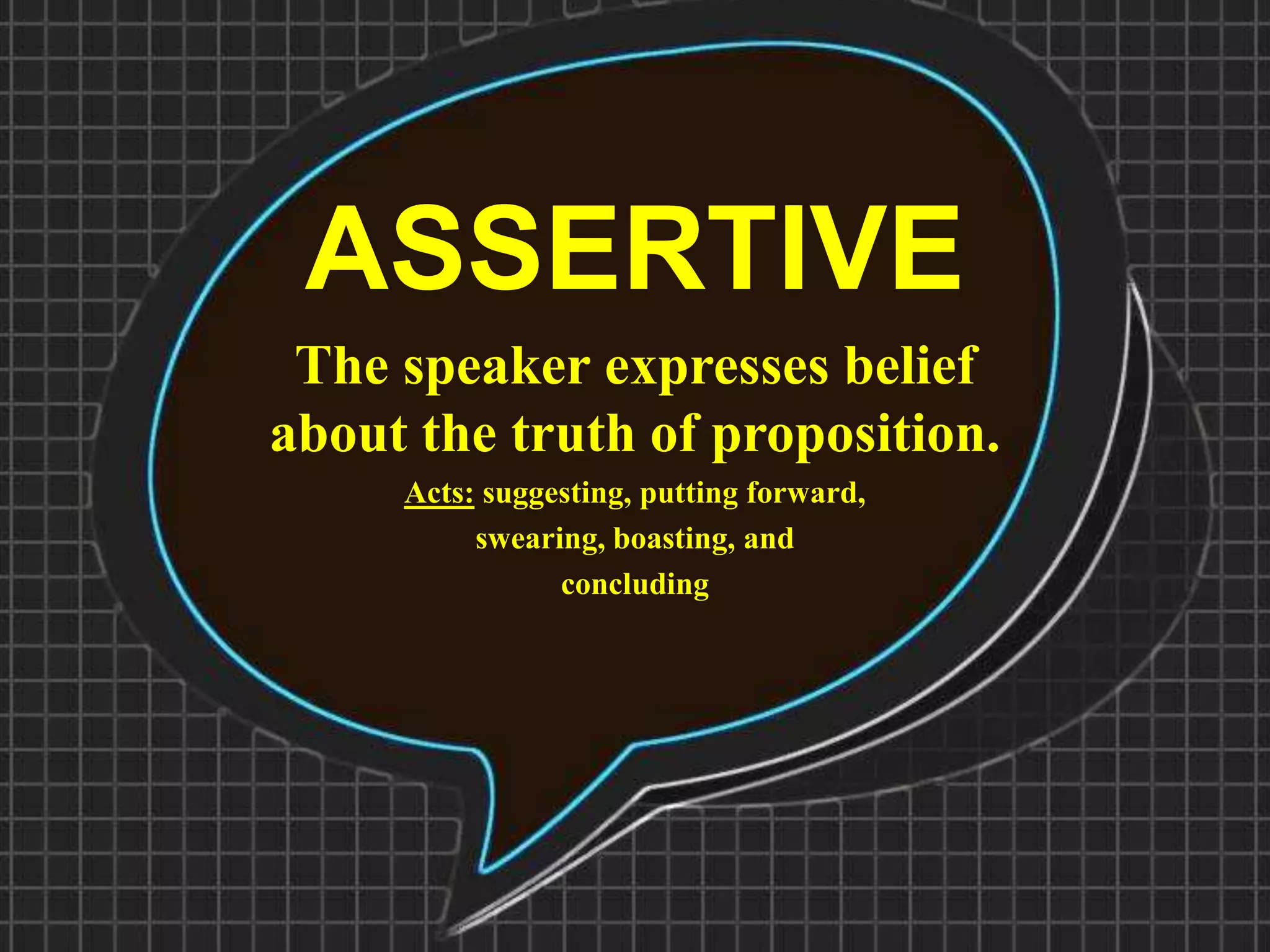
ASSERTIVE
The speaker expresses belief
about the truth of proposition.
Acts: suggesting, putting forward,
swearing, boasting, and
concluding
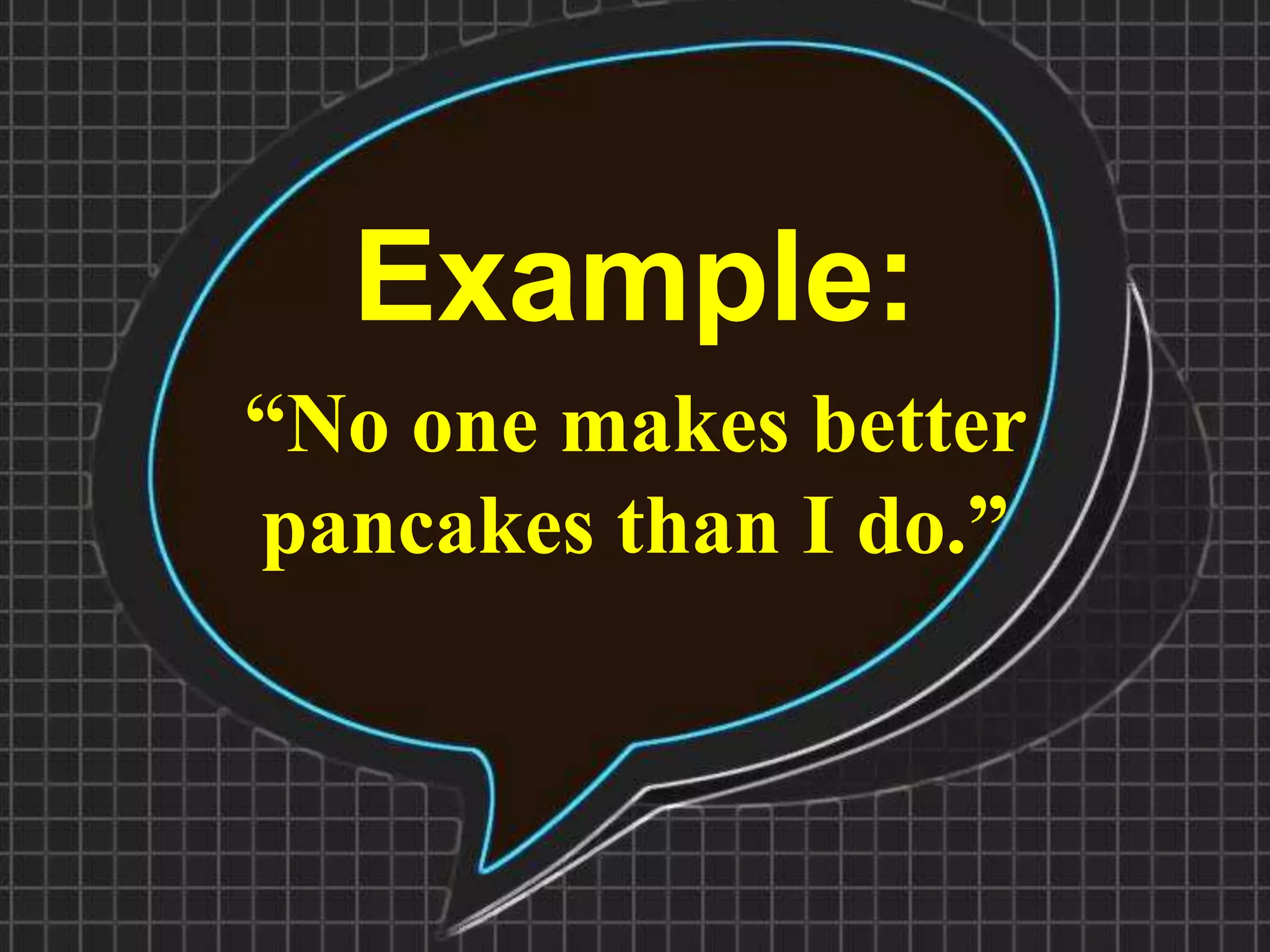
Example:
“No one makes better
pancakes than I do.”
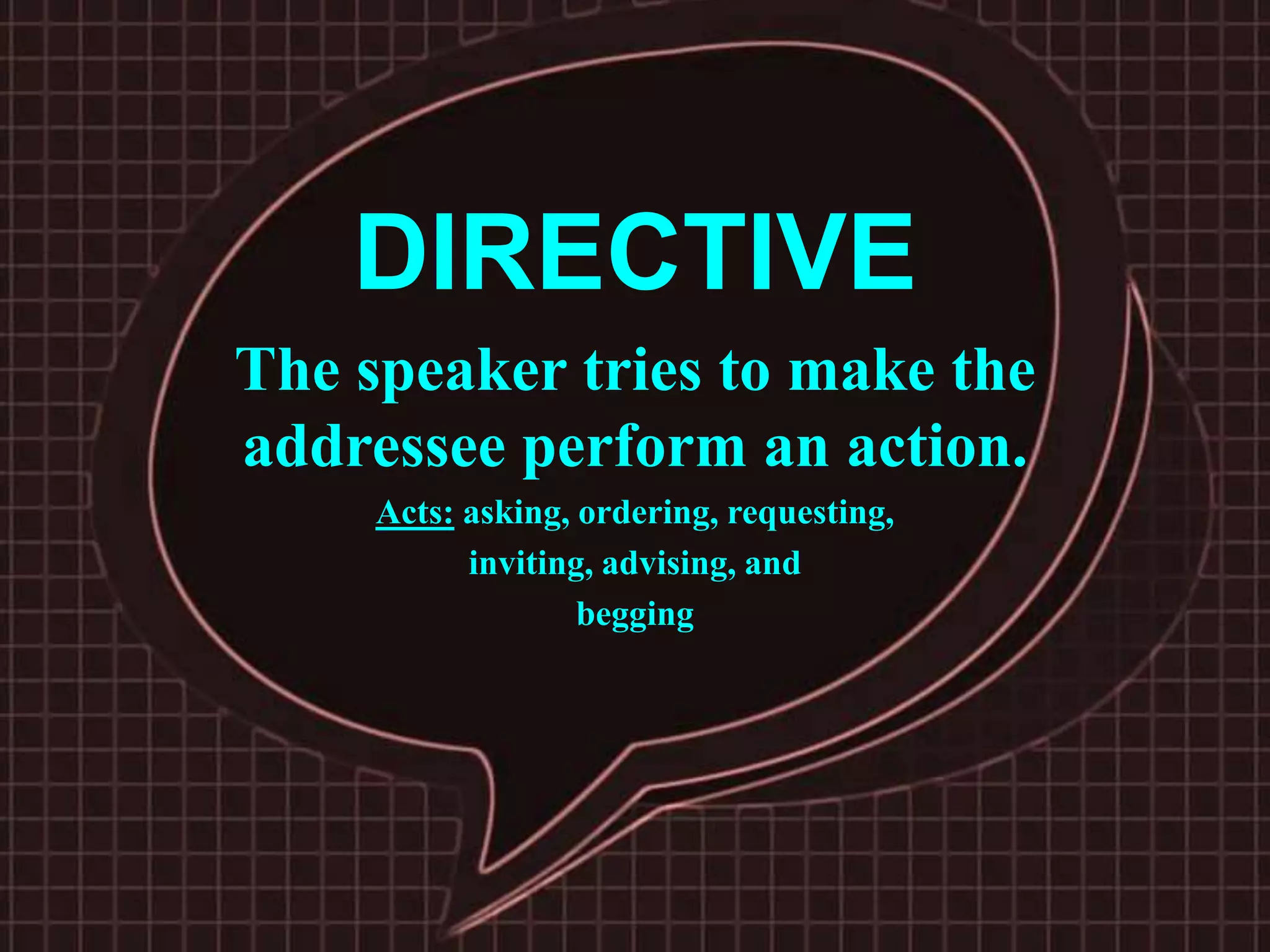
DIRECTIVE
The speaker tries to make the
addressee perform an action.
Acts: asking, ordering, requesting,
inviting, advising, and
begging
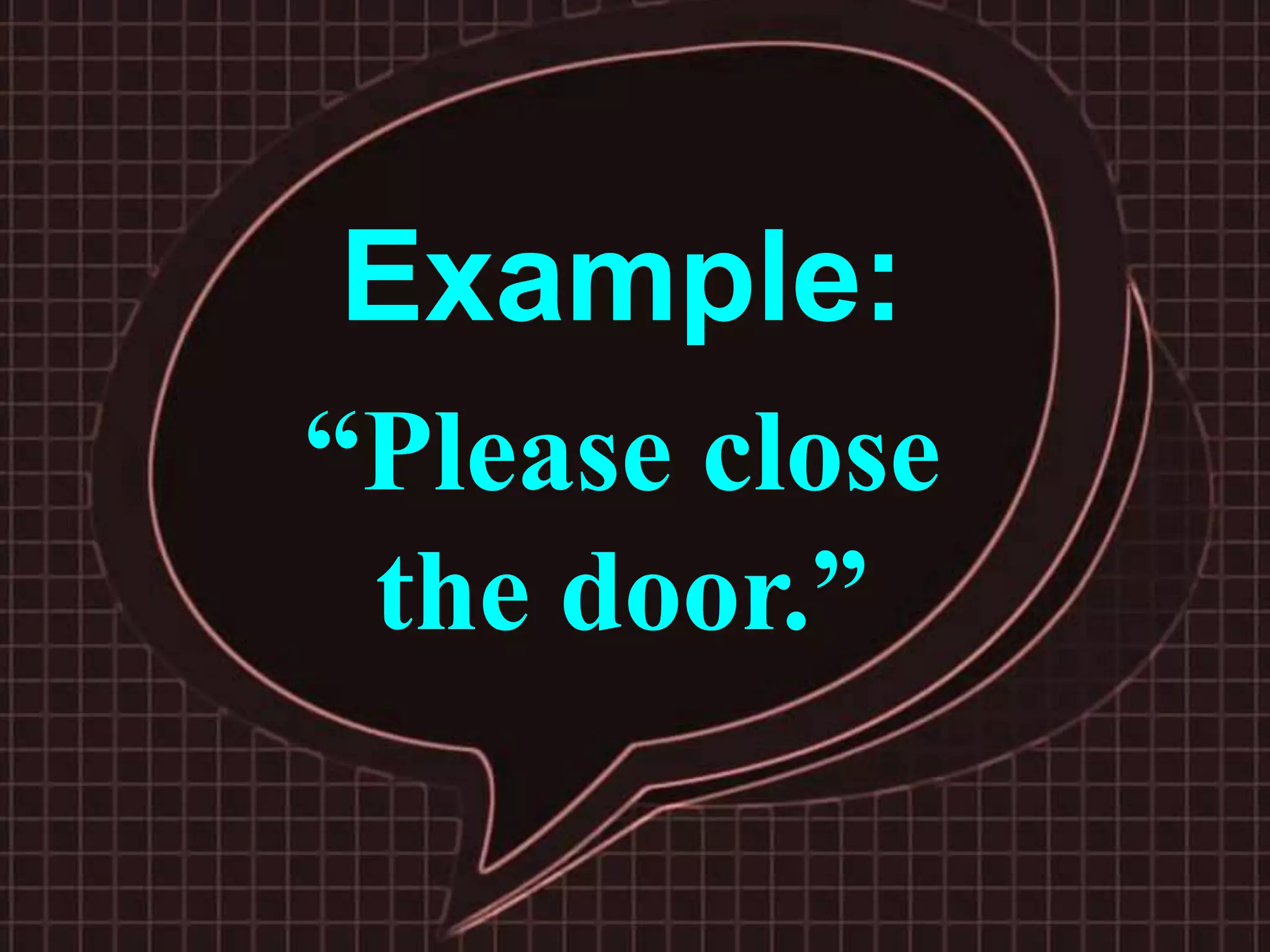
Example:
“Please close
the door.”
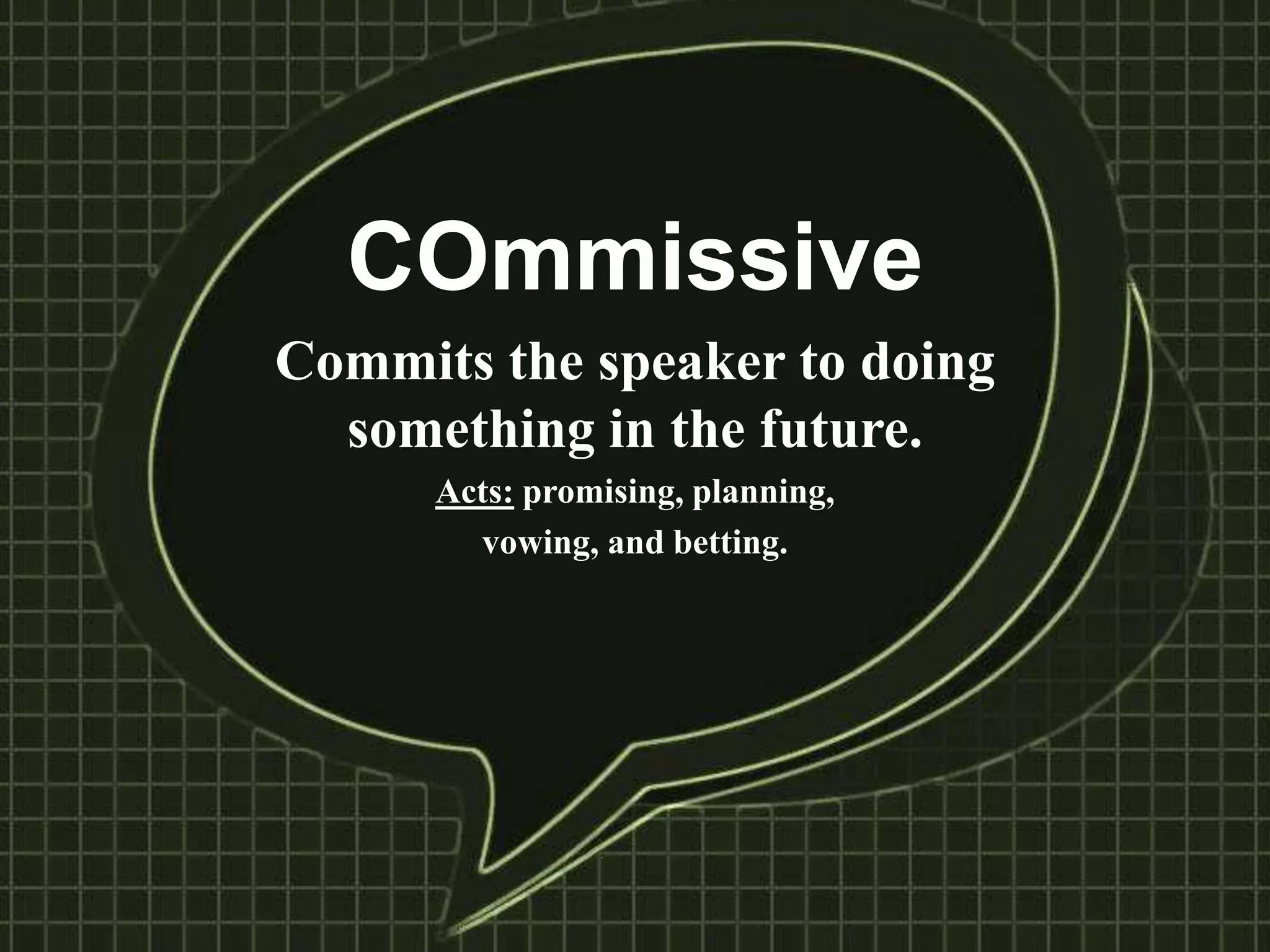
COmmissive
Commits the speaker to doing
something in the future.
Acts: promising, planning,
vowing, and betting.
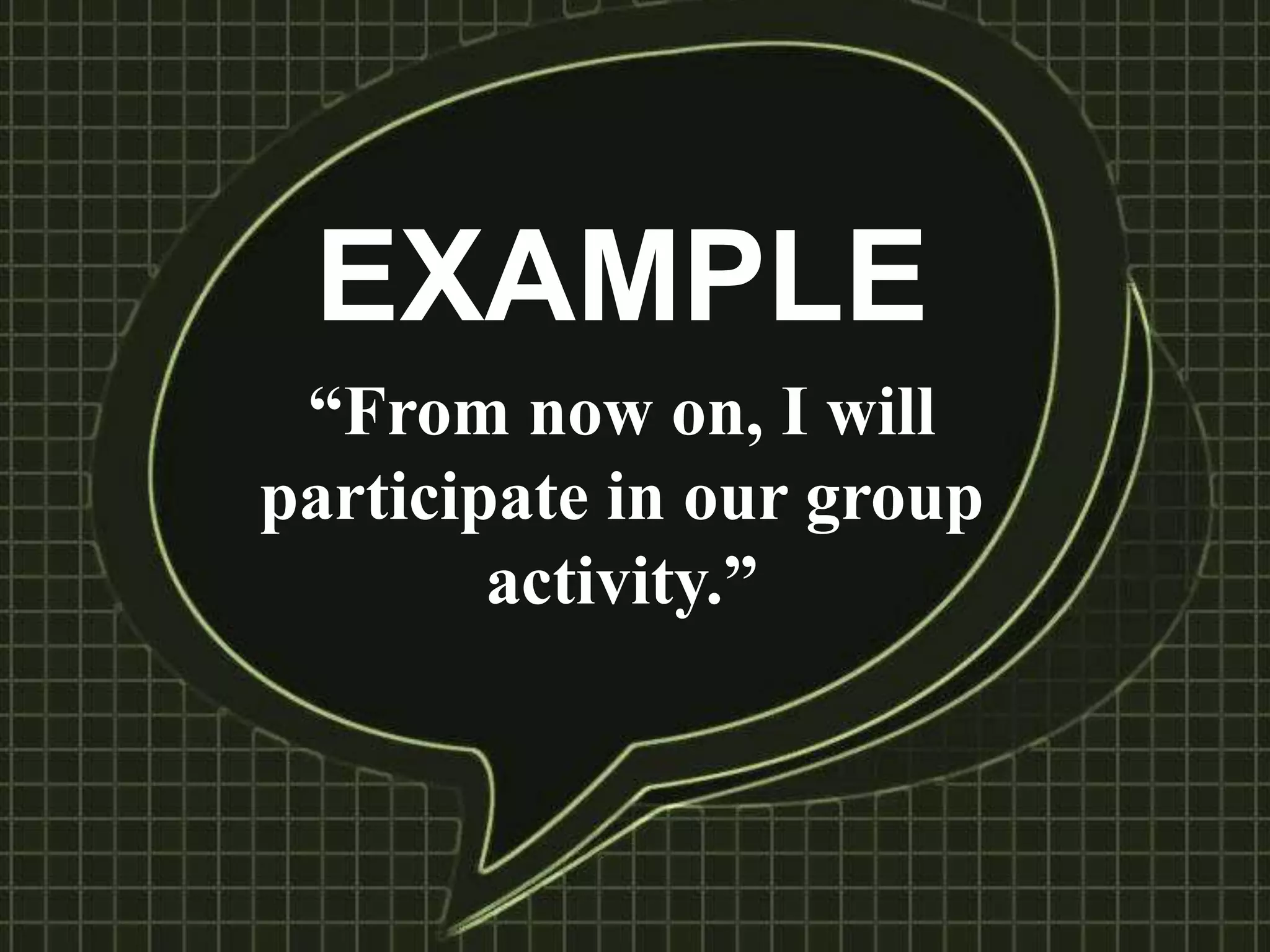
EXAMPLE
“From now on, I will
participate in our group
activity.”
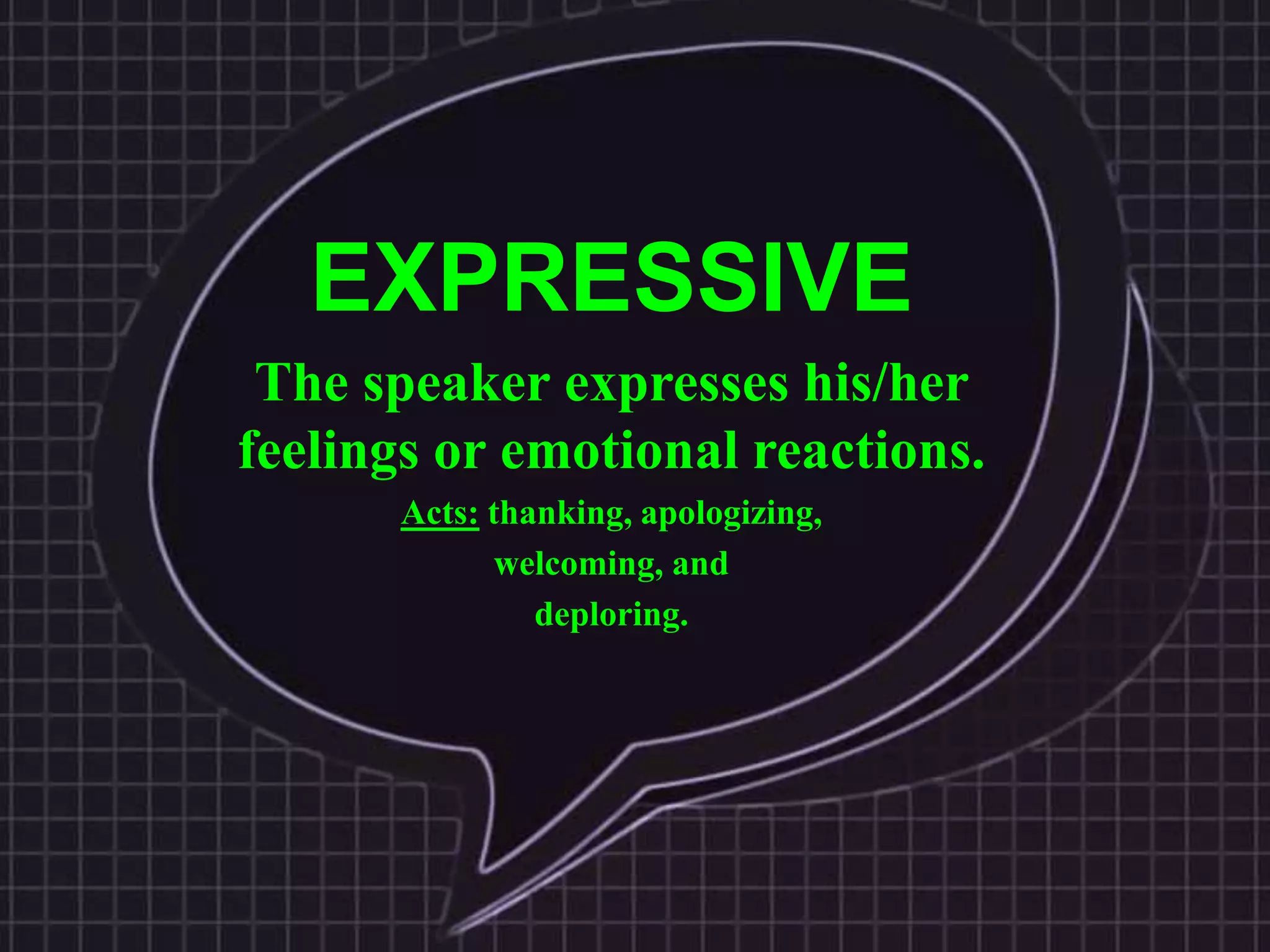
EXPRESSIVE
The speaker expresses his/her
feelings or emotional reactions.
Acts: thanking, apologizing,
welcoming, and
deploring.
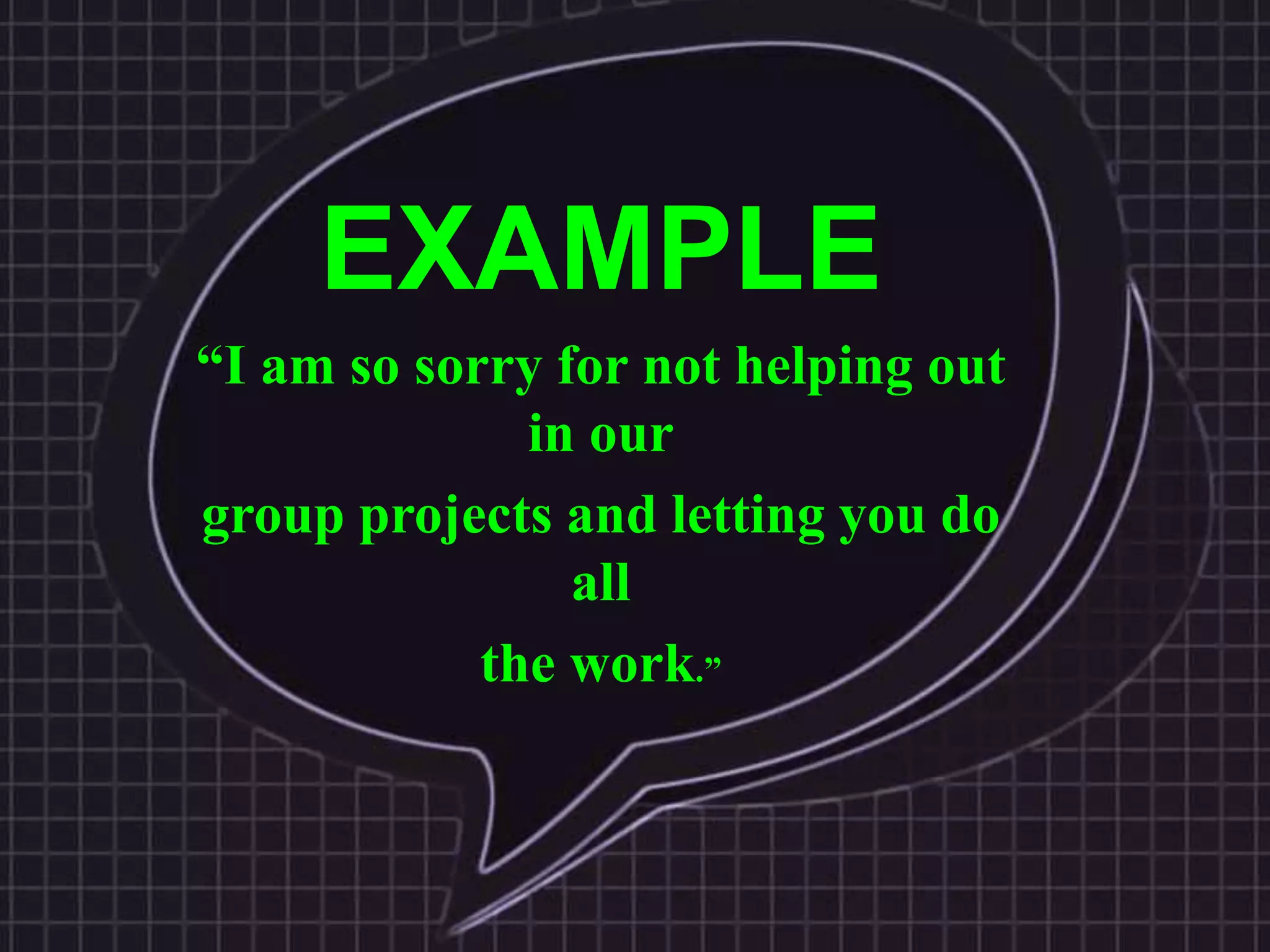
EXAMPLE
“I am so sorry for not helping out
in our
group projects and letting you do
all
the work.”
DECLARATION
A change in the external
situation.
Acts: blessing, firing, baptizing,
bidding, passing a sentence,
and excommunicating.
EXAMPLE
“You are
fired!”
By saying that
someone is fired, an
employer causes or
brings about the
person’s
unemployment, thus
changing his external
situation
• Constatives
• Constative utterances describe states of affairs which
are either true or false. They are utterances which
describe the world and in so doing ascertain or state
something. Constatives mostly (though not necessarily)
have the form of declarative sentences, they refer to
the act of saying something, and, as mentioned above,
they are truth-evaluable or at least purport to describe
reality (cf. Petrey 1990:4).
• Examples of Constatives Snow is white. (true)
• Snow is red. (false)
www.facebook.com/reimuel.bisnar.71
www.instagram.com/reimuelb24
www.youtube.com/channel/UCakHxn3NGR2IYr360Sx-A4Q
reimuelb@gmail.com or reimuel.bisnar@deped.gov.ph
FOLLOW ME IN
www.linkedin.com/in/reimuel-bisnar-23995b167/

UNIT II - Lesson 2 - Types of Speech Act

  • 1.
    REIMUEL M. BISNAR TeacherI Certified Microsoft Innovative Educator Educator Community Contributor & Influencer
  • 2.
    Let’s Warm Up Direction:Choose the letter of your answer. 1. Consider the phrase: “ I now declare Martial Law.” Who among the following can say this phrase and make martial law actually happen? a. President of the country b. My pregnant neighbor c. A retired veterinarian d. A famous rock star
  • 3.
    Let’s Warm Up Direction:Choose the letter of your answer. 2. What do you think does the speaker mean when he/she says, “Can you open the door?” a. The speaker wants to know if I have the ability to open the door. b. The speaker is requesting me to open the door. c. The speaker does not make sense. d. The speaker is asking me a question.
  • 4.
    Let’s Warm Up Direction:Choose the letter of your answer. 3. You and your friend who has a fever enter your room. She shivers and tells you, “It’s cold in here!” How would you interpret what she said? a. She feels cold. b. She wants me to increase the temperature in the room. c. She does not feel well because of the cold. d. She is complimenting the temperature in my room.
  • 5.
    Let’s Warm Up Direction:Choose the letter of your answer. 4. Based on the scenario in item number 3, what would your next action be? a. I will thank my friend. b. I will agree with her and say that the room is cold. c. I will increase the temperature to decrease the coldness. d. I will ignore my friend.
  • 6.
    Let’s Warm Up Direction:Choose the letter of your answer. 5. In which of the following statements is the speaker making a commitment? a. “I checked her Facebook profile yesterday.” b. “I’m in love and I’m happy.” c. “I promise to love you for better or for worse.” d. “I think following my suggestion will get us a high grade.”
  • 7.
    Let’s Work andLearn Video 1: https://www.youtube.com /watch?v=hpZFctBUHQ
  • 8.
    Let’s Work andLearn Video 1: https://www.youtube.com /watch?v=hpZFctBUHQ
  • 9.
    Let’s Work andLearn What greeting is used by the customer service agent?
  • 10.
    A speech actis an utterance that a speaker makes to achieve and intended effect. Some functions carried out using speech act: • offering an apology • greeting • request • complaint • invitation • compliment • refusal
  • 11.
    This was accordingto John Langshaw Austin (1962), a philosopher and the developer of the Speech Act Theory.
  • 12.
    1. LOCUTIONARY ACT isthe actual act of uttering. “UTTERANCE ” “Please do the dishes.”
  • 13.
    2. ILLOCUTIONARY ACT isthe social function of what is said. “ITENTION” By uttering the locution “Please do the dishes.” the speaker requests the addressee to wash the dishes.
  • 14.
    3. PERLOCUTIONAR Y ACTis the resulting act of what is said. This effect is based on the particular context in which the speech act was mentioned. “RESPONSE” “Please do the dishes” would lead to the addressee washing the dishes.
  • 15.
    There are alsoindirect speech acts which occur when there is no direct connection between the form of the utterance and intended meaning. TYPES OF SPEECH ACT
  • 16.
    “Can you passthe rice?” INDIRECT SPEECH ACTS Inferred speech act: Do you have the ability to hand over the rice? Indirect speech act: Please pass the rice.
  • 17.
    Austin also introducedthe concept of PERFORMATIVE UTTERANCES -statements which enable the speaker to perform something just by stating it. - said by the right person under the right circumstances results in a change in the world. - note that certain conditions have TYPES OF SPEECH ACT
  • 18.
    For example, thephrase “I now pronounce you husband and wife,” when uttered by an authorized person such as judge or priest will have the actual effect of binding a couple in marriage. PERFORMATIVE UTTERANCES
  • 19.
    a. ‘I do(sc. take this woman to be my lawful wedded wife)’ – as uttered in the course of the marriage ceremony. b. ‘I name this ship the Queen Elizabeth’ – accompanied by the smashing of a bottle against the hull of the ship. c. ‘I give and bequeath my watch to my brother’ – as occurring in a will.
  • 22.
    ASSERTIVE The speaker expressesbelief about the truth of proposition. Acts: suggesting, putting forward, swearing, boasting, and concluding
  • 23.
    Example: “No one makesbetter pancakes than I do.”
  • 24.
    DIRECTIVE The speaker triesto make the addressee perform an action. Acts: asking, ordering, requesting, inviting, advising, and begging
  • 25.
  • 26.
    COmmissive Commits the speakerto doing something in the future. Acts: promising, planning, vowing, and betting.
  • 27.
    EXAMPLE “From now on,I will participate in our group activity.”
  • 28.
    EXPRESSIVE The speaker expresseshis/her feelings or emotional reactions. Acts: thanking, apologizing, welcoming, and deploring.
  • 29.
    EXAMPLE “I am sosorry for not helping out in our group projects and letting you do all the work.”
  • 30.
    DECLARATION A change inthe external situation. Acts: blessing, firing, baptizing, bidding, passing a sentence, and excommunicating.
  • 31.
  • 32.
    By saying that someoneis fired, an employer causes or brings about the person’s unemployment, thus changing his external situation
  • 33.
    • Constatives • Constativeutterances describe states of affairs which are either true or false. They are utterances which describe the world and in so doing ascertain or state something. Constatives mostly (though not necessarily) have the form of declarative sentences, they refer to the act of saying something, and, as mentioned above, they are truth-evaluable or at least purport to describe reality (cf. Petrey 1990:4). • Examples of Constatives Snow is white. (true) • Snow is red. (false)
  • 34.