



Today’s programPart 2 of the series:Part 1: MetaphorsPart 2: Stories Meaning generating devices. Devices that create meaning. We construct realities and identitiesHow stories give meaning to experiences and mediate experienceHow stories tell us who we are (who we aren’t) and function as the binding glue for social identities
Stories are the essence of humansTelling stories is a human universal of discourseStories generate meaning. We give our world and personal/social life meaning by narrating experiences through storiesStories are binders, connecters, carriers of culture Stories or narratives are discursive accounts of factual events or fictional events that take place, have taken place or will take place at a particular time
Stories mediate experiencehttp://www.youtube.com/watch?v=h-8PBx7isoM&feature=player_embeddedIt is easy to relate to the stories of others. Stories paint an experience, they carry images and emotions.
What is your favorite story?Can you recall how the story goes?Can you recall the characters, the main event in the story? What happens in the story?What is the moral of the story?Why do you like this story so much? And what does this say about yourself?
What is a story?A narrative with a certain specific syntactic shape (e.g. beginning, middle and end or a situation, transformation and a new situation)With a subject matter which allows for or encourages the projection of human values upon this materialA story has a structure and this structure is dynamic
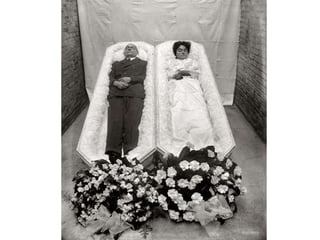
What is a story? (2)Narratives can be verbal (spoken or written)MusicalMimed or pictorialE.g. in children's picture book, a painting or a photograph can tell a story (mediate an experience)Take a look at the stories these 3 pictures tells us
What is a story? (3)Narratives sometimes have many voices in a single storytelling eventE.g. recounting a family holiday may involve several members presenting their versions of events
Functions of storytellingAmong others:Carriers of informationDevice for self-presentation (who you are)Plain entertainmentConnect people, they strengthen in-group ties and position us from others (e.g. history, gossip, ideologies)They provide therapy (healing and connecting to others in order to heal, counseling) Help with problem-solvingAct as tool for socialization (ideologies and moral agency)
Although  narratives vary greatly in their formincluding their length and function, all verbal narratives share a basic structure (Labov, 1972)Labov study the structure of oral narratives:data collected in New York City
interview question:“Were you ever in a situation where you werein a serious danger of being killed?”
Structure of narratives/stories (Labov)	Labov formulated the following structural features of narratives, although it is clear that some narratives don’t display all of the following elements:Abstract (a summary of what is to be said)E.g. ‘my brother put a knife in my head’Orientation (‘this was just a few days after my father died’)
Structure of narratives/stories (Labov)Complicating action (‘I twisted his arm up behind him…’)Evaluation (‘ain’t that a bitch?’)Result or resolution (‘after all that I gave the dude the cigarette, after all that’)Coda (‘and that was that’)
Communicative power of storiesStories are fundamental to the way we learn and the way we communicateThey are the most efficient way of storing, retrieving, and conveying informationBecause hearing a story requires active participation by the listener, stories are the most profoundly social form of human interaction and communication
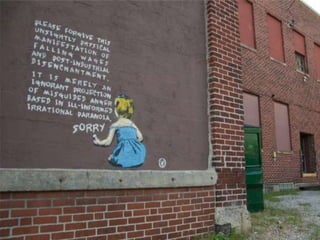
Communicative power of stories (2)Stories empower a speakerStories create an environmentStories bind and bond individualsStories engage our minds in active listeningStories negotiate differencesStories encode informationStories are tools for thinkingStories bring about healingStories serve as weapons (persuasion) (carriers of ideologies)http://www.youtube.com/watch?v=jjYnT105qjc&(the story behind a billboard)
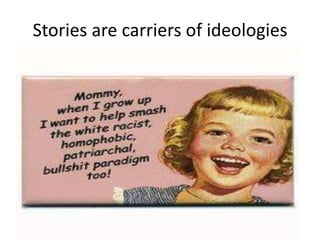
Stories as carriers of ideologieshttp://www.youtube.com/watch?v=sq7XbKd321ISystems of ideas and believes can be manifested and reproduced over and over again in the form of storiesSocialization of ideas and the moral agency Who am I in the worlds I live in?
Stories are carriers of ideologies
Stories come in many forms thanks to the evolution of media technologySpoken: In the early days of telling stories around the campfire after a day of hunting and gathering, today we do pretty much the same thing at the local bar after work.Written : As language developed, people started writing and delivering letters and writing books by hand to distribute stories to other people.Theater: Storytelling eventually turns into an art form and a new approach of live performance is developed which reaches larger audiences (e.g. Shakespeare)Printing Press: A breakthrough in communication as the ability to efficiently and cost-effectively distribute copies of stories allows everyone to get news and ideas from a newspaper or magazine. (graphic design)
Stories come in many forms thanks to the evolution of media technology (2)Radio: Transmitting news instantly and expanding live performances and the art of storytelling. And let’s not forget what it’s done for the creation and distribution of music.Movies :Live performances being filmed and shown to a wider audience at the same time taking the art form even further as technology in this area alone greatly advances. Part of which is animation which also turns into its own art form.TV: Being able to watch something in the comfort of one’s home, with more choice than ever before of what to watch. Also created a new medium of interactive storytelling, video games.Internet: the Internet is changing communication and storytelling. From easy communication through Email, to everyone being able to publish their ideas with a Blog. It’s like the printing press with limitless possibilities (all the above)
New media give storytelling new lifeThe Future of Storytelling. A few years ago this would have been a scene from a sci-fi movie, The new possibilities that a new medium (here: I-pad) can bringhttp://www.youtube.com/watch?v=1mfm9dwLzdU&feature=player_embedded
Haiku: “The meaning of Life”http://www.youtube.com/watch?v=uho0Wu4_SH0&feature=player_embedded“She asked me about The meaning of life, Didn’t Know what to say--- blank ”
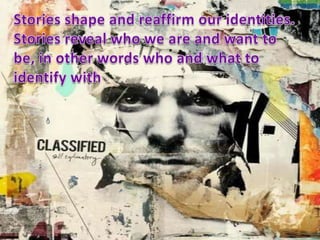
Stories shape and reaffirm our identities. Stories reveal who we are and want to be, in other words who and what to identify with
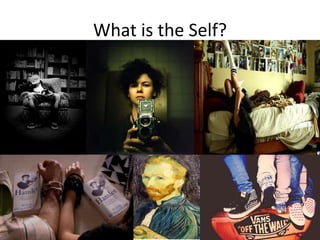
What is the Self?
WHO ARE YOU? WHO AM I?What is the different between these 2 questions?WHO ARE YOU (in the eyes of the other)WHO AM I (in my own eyes)Are these different selves?
Identities are socially producedIdentity is a contested concept in terms of definitions and approachesSocial and collective approach to the development of an identity (sociological approach to identity)The concept of identity hinges on the paradoxical combination of sameness and difference. Two modes of understanding. People are understood to be simultaneously the same and different.
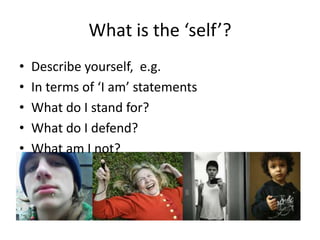
What is the ‘self’?Describe yourself,  e.g.In terms of ‘I am’ statementsWhat do I stand for?What do I defend?What am I not?
Identities are socially produced (2)Sameness:Latin idem (same): identical: not only are we identical to ourselves (that is, the same being from birth to death) but we are identical with others.We share common identities: as humans, women, men, Aruban, students etc.Difference:The uniqueness of identities: difference from others.  These boundaries makes us unique“ people work with awareness that one’s humanity is simultaneously the same and different (Jackson, 2002: 142). Within this overarching and apparently capacious category of the human, there are various forms of identity with which people identify. Identity than involves: identification.E.g. In identifying myself with a woman, I’m identifying myself with a wider category, 	‘woman’. But there are some properties of woman that I distance myself from
Multiple identities: identity is dynamicEach individual is seen to have a repertoire of ‘identities’ open to them (social and personal)Each identity informing the individual of who he is and what this identity entails. Which of these many identities is most salient for an individual at any time will vary according to the social context.
Social Self, Social identityUsually it includes social categories, group you belong to and don’t belong toE.g. Gender, ethnicity, different social group, ideologies you identify with etc.When we belong to a group, we are likely to derive our sense of identity, at least in part, from that group. We also enhance the sense of identity by making comparisons with out-groups.Social identity is different from personal identity, which is derived from personal characteristics and individual relationships.
Approaching Identity through narrativeshttp://www.youtube.com/watch?v=IQZwZVBDAHI
Stories convey identity componentsPeople feel common ground through stories (‘we share the same story’)Because stories require active listening, people are able to share a depth of experience otherwise not possible through normal chit chatStories can emphasize shades of meaning and feeling revealing who you are, where you come from and where do you belong
Let’s here some stories about who you are…The stories we tell about ourselves, about our life are rich in meaningRelationship between narratives and identity:You are engaged in processes of producing an identity through assembling various memories, experiences, episodes within a narrativeIdentities are made up through making a story out of lifeIdentities are being creatively produced through various raw materials available: MEMORIES, UNDERSTANDINGS, EXPERIENCES and INTERPRETATIONS
‘Emplotment’Narratives are composed of MEMORIES, UNDERSTANDINGS, EXPERIENCES and INTERPRETATIONSNarratives are composed of 3 main elements:CharactersActionPlotThe plot is the central feature of narrative: The plot is what makes the narrative: it brings together different episodes into a meaningful wholeEvents and episodes are not thrown together at random, but are linked together
Narrator and audience Both narrator and audience will participate in the processes of linking, this is called emplotment
Emplotment is social embeddedThere is a shared culture understanding that these events have a place in this narrativeShared symbolsE.g. “I grew-up in the working class family’, “ My father fought for the Status-Aparte, he always dreamed of an other Aruba” “ I always had to share what I had with my sisters, material stuff were scare in those times”The narrative cannot stand alone but must refer to and draw on wider cultural narratives
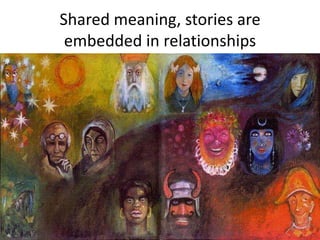
Shared meaning, stories are embedded in relationships
Memories are mere interpretationsIn narrating a story social actors organize events into episodes which make the plot, they do this based on memoriesMemories are themselves interpretations, they are social productsReconstructions. That part of the ‘mediation of experience’ that sticks…
Memory is reconstructive“Memory is not like a video record. It does not need images, and images are never enough, moreover our memories shade and patch and combine and delete [the best metaphor (analogy)to remembering is storytelling”(…)“ We constitute our souls by making up our lives, that is, by weaving stories about our past, by what we call memories. The tales we tell of ourselves are not a matter of recording what we have done and how we have felt. They must mesh with the rest of the world and with other peoples stories, at least in externals, but their real role is the creation of a life, a character.” (Hacking, 1995)
Self and otherBreaking the line between the self and the otherThe story of the self, identity:A person enmeshed in and produced within webs of social relationshipsLife stories must always incorporate the life stories of othersThey will not be the same, they will always be part of our own but others’ stories must always be part of our ownShared Social framework of meaning: both to interpret, produce our stories and to borrow stories in order to make it our own from a rich source of stories

Unit 8. Devices that generate meaning, construct reality and shape identity. Part 2. Storytelling

  • 2.
    Today’s programPart 2of the series:Part 1: MetaphorsPart 2: Stories Meaning generating devices. Devices that create meaning. We construct realities and identitiesHow stories give meaning to experiences and mediate experienceHow stories tell us who we are (who we aren’t) and function as the binding glue for social identities
  • 3.
    Stories are theessence of humansTelling stories is a human universal of discourseStories generate meaning. We give our world and personal/social life meaning by narrating experiences through storiesStories are binders, connecters, carriers of culture Stories or narratives are discursive accounts of factual events or fictional events that take place, have taken place or will take place at a particular time
  • 4.
    Stories mediate experiencehttp://www.youtube.com/watch?v=h-8PBx7isoM&feature=player_embeddedItis easy to relate to the stories of others. Stories paint an experience, they carry images and emotions.
  • 5.
    What is yourfavorite story?Can you recall how the story goes?Can you recall the characters, the main event in the story? What happens in the story?What is the moral of the story?Why do you like this story so much? And what does this say about yourself?
  • 6.
    What is astory?A narrative with a certain specific syntactic shape (e.g. beginning, middle and end or a situation, transformation and a new situation)With a subject matter which allows for or encourages the projection of human values upon this materialA story has a structure and this structure is dynamic
  • 7.
    What is astory? (2)Narratives can be verbal (spoken or written)MusicalMimed or pictorialE.g. in children's picture book, a painting or a photograph can tell a story (mediate an experience)Take a look at the stories these 3 pictures tells us
  • 11.
    What is astory? (3)Narratives sometimes have many voices in a single storytelling eventE.g. recounting a family holiday may involve several members presenting their versions of events
  • 12.
    Functions of storytellingAmongothers:Carriers of informationDevice for self-presentation (who you are)Plain entertainmentConnect people, they strengthen in-group ties and position us from others (e.g. history, gossip, ideologies)They provide therapy (healing and connecting to others in order to heal, counseling) Help with problem-solvingAct as tool for socialization (ideologies and moral agency)
  • 13.
    Although narrativesvary greatly in their formincluding their length and function, all verbal narratives share a basic structure (Labov, 1972)Labov study the structure of oral narratives:data collected in New York City
  • 14.
    interview question:“Were youever in a situation where you werein a serious danger of being killed?”
  • 15.
    Structure of narratives/stories(Labov) Labov formulated the following structural features of narratives, although it is clear that some narratives don’t display all of the following elements:Abstract (a summary of what is to be said)E.g. ‘my brother put a knife in my head’Orientation (‘this was just a few days after my father died’)
  • 16.
    Structure of narratives/stories(Labov)Complicating action (‘I twisted his arm up behind him…’)Evaluation (‘ain’t that a bitch?’)Result or resolution (‘after all that I gave the dude the cigarette, after all that’)Coda (‘and that was that’)
  • 17.
    Communicative power ofstoriesStories are fundamental to the way we learn and the way we communicateThey are the most efficient way of storing, retrieving, and conveying informationBecause hearing a story requires active participation by the listener, stories are the most profoundly social form of human interaction and communication
  • 18.
    Communicative power ofstories (2)Stories empower a speakerStories create an environmentStories bind and bond individualsStories engage our minds in active listeningStories negotiate differencesStories encode informationStories are tools for thinkingStories bring about healingStories serve as weapons (persuasion) (carriers of ideologies)http://www.youtube.com/watch?v=jjYnT105qjc&(the story behind a billboard)
  • 21.
    Stories as carriersof ideologieshttp://www.youtube.com/watch?v=sq7XbKd321ISystems of ideas and believes can be manifested and reproduced over and over again in the form of storiesSocialization of ideas and the moral agency Who am I in the worlds I live in?
  • 22.
  • 23.
    Stories come inmany forms thanks to the evolution of media technologySpoken: In the early days of telling stories around the campfire after a day of hunting and gathering, today we do pretty much the same thing at the local bar after work.Written : As language developed, people started writing and delivering letters and writing books by hand to distribute stories to other people.Theater: Storytelling eventually turns into an art form and a new approach of live performance is developed which reaches larger audiences (e.g. Shakespeare)Printing Press: A breakthrough in communication as the ability to efficiently and cost-effectively distribute copies of stories allows everyone to get news and ideas from a newspaper or magazine. (graphic design)
  • 24.
    Stories come inmany forms thanks to the evolution of media technology (2)Radio: Transmitting news instantly and expanding live performances and the art of storytelling. And let’s not forget what it’s done for the creation and distribution of music.Movies :Live performances being filmed and shown to a wider audience at the same time taking the art form even further as technology in this area alone greatly advances. Part of which is animation which also turns into its own art form.TV: Being able to watch something in the comfort of one’s home, with more choice than ever before of what to watch. Also created a new medium of interactive storytelling, video games.Internet: the Internet is changing communication and storytelling. From easy communication through Email, to everyone being able to publish their ideas with a Blog. It’s like the printing press with limitless possibilities (all the above)
  • 25.
    New media givestorytelling new lifeThe Future of Storytelling. A few years ago this would have been a scene from a sci-fi movie, The new possibilities that a new medium (here: I-pad) can bringhttp://www.youtube.com/watch?v=1mfm9dwLzdU&feature=player_embedded
  • 26.
    Haiku: “The meaningof Life”http://www.youtube.com/watch?v=uho0Wu4_SH0&feature=player_embedded“She asked me about The meaning of life, Didn’t Know what to say--- blank ”
  • 27.
    Stories shape andreaffirm our identities. Stories reveal who we are and want to be, in other words who and what to identify with
  • 28.
  • 29.
    WHO ARE YOU?WHO AM I?What is the different between these 2 questions?WHO ARE YOU (in the eyes of the other)WHO AM I (in my own eyes)Are these different selves?
  • 30.
    Identities are sociallyproducedIdentity is a contested concept in terms of definitions and approachesSocial and collective approach to the development of an identity (sociological approach to identity)The concept of identity hinges on the paradoxical combination of sameness and difference. Two modes of understanding. People are understood to be simultaneously the same and different.
  • 31.
    What is the‘self’?Describe yourself, e.g.In terms of ‘I am’ statementsWhat do I stand for?What do I defend?What am I not?
  • 32.
    Identities are sociallyproduced (2)Sameness:Latin idem (same): identical: not only are we identical to ourselves (that is, the same being from birth to death) but we are identical with others.We share common identities: as humans, women, men, Aruban, students etc.Difference:The uniqueness of identities: difference from others. These boundaries makes us unique“ people work with awareness that one’s humanity is simultaneously the same and different (Jackson, 2002: 142). Within this overarching and apparently capacious category of the human, there are various forms of identity with which people identify. Identity than involves: identification.E.g. In identifying myself with a woman, I’m identifying myself with a wider category, ‘woman’. But there are some properties of woman that I distance myself from
  • 33.
    Multiple identities: identityis dynamicEach individual is seen to have a repertoire of ‘identities’ open to them (social and personal)Each identity informing the individual of who he is and what this identity entails. Which of these many identities is most salient for an individual at any time will vary according to the social context.
  • 34.
    Social Self, SocialidentityUsually it includes social categories, group you belong to and don’t belong toE.g. Gender, ethnicity, different social group, ideologies you identify with etc.When we belong to a group, we are likely to derive our sense of identity, at least in part, from that group. We also enhance the sense of identity by making comparisons with out-groups.Social identity is different from personal identity, which is derived from personal characteristics and individual relationships.
  • 35.
    Approaching Identity throughnarrativeshttp://www.youtube.com/watch?v=IQZwZVBDAHI
  • 36.
    Stories convey identitycomponentsPeople feel common ground through stories (‘we share the same story’)Because stories require active listening, people are able to share a depth of experience otherwise not possible through normal chit chatStories can emphasize shades of meaning and feeling revealing who you are, where you come from and where do you belong
  • 37.
    Let’s here somestories about who you are…The stories we tell about ourselves, about our life are rich in meaningRelationship between narratives and identity:You are engaged in processes of producing an identity through assembling various memories, experiences, episodes within a narrativeIdentities are made up through making a story out of lifeIdentities are being creatively produced through various raw materials available: MEMORIES, UNDERSTANDINGS, EXPERIENCES and INTERPRETATIONS
  • 38.
    ‘Emplotment’Narratives are composedof MEMORIES, UNDERSTANDINGS, EXPERIENCES and INTERPRETATIONSNarratives are composed of 3 main elements:CharactersActionPlotThe plot is the central feature of narrative: The plot is what makes the narrative: it brings together different episodes into a meaningful wholeEvents and episodes are not thrown together at random, but are linked together
  • 39.
    Narrator and audienceBoth narrator and audience will participate in the processes of linking, this is called emplotment
  • 40.
    Emplotment is socialembeddedThere is a shared culture understanding that these events have a place in this narrativeShared symbolsE.g. “I grew-up in the working class family’, “ My father fought for the Status-Aparte, he always dreamed of an other Aruba” “ I always had to share what I had with my sisters, material stuff were scare in those times”The narrative cannot stand alone but must refer to and draw on wider cultural narratives
  • 41.
    Shared meaning, storiesare embedded in relationships
  • 42.
    Memories are mereinterpretationsIn narrating a story social actors organize events into episodes which make the plot, they do this based on memoriesMemories are themselves interpretations, they are social productsReconstructions. That part of the ‘mediation of experience’ that sticks…
  • 44.
    Memory is reconstructive“Memoryis not like a video record. It does not need images, and images are never enough, moreover our memories shade and patch and combine and delete [the best metaphor (analogy)to remembering is storytelling”(…)“ We constitute our souls by making up our lives, that is, by weaving stories about our past, by what we call memories. The tales we tell of ourselves are not a matter of recording what we have done and how we have felt. They must mesh with the rest of the world and with other peoples stories, at least in externals, but their real role is the creation of a life, a character.” (Hacking, 1995)
  • 45.
    Self and otherBreakingthe line between the self and the otherThe story of the self, identity:A person enmeshed in and produced within webs of social relationshipsLife stories must always incorporate the life stories of othersThey will not be the same, they will always be part of our own but others’ stories must always be part of our ownShared Social framework of meaning: both to interpret, produce our stories and to borrow stories in order to make it our own from a rich source of stories