Mr. Elsesser
Introduction to
Financial Management
 Understanding the parts of your
checkbook will allow you to
correctly manage and use your
checking account :
 You need to be able to:
 Identify parts of a check
 Write checks
 Endorse Checks
 Know how to use Overdraft
Protection
 Carry out Checkbook Reconciliation
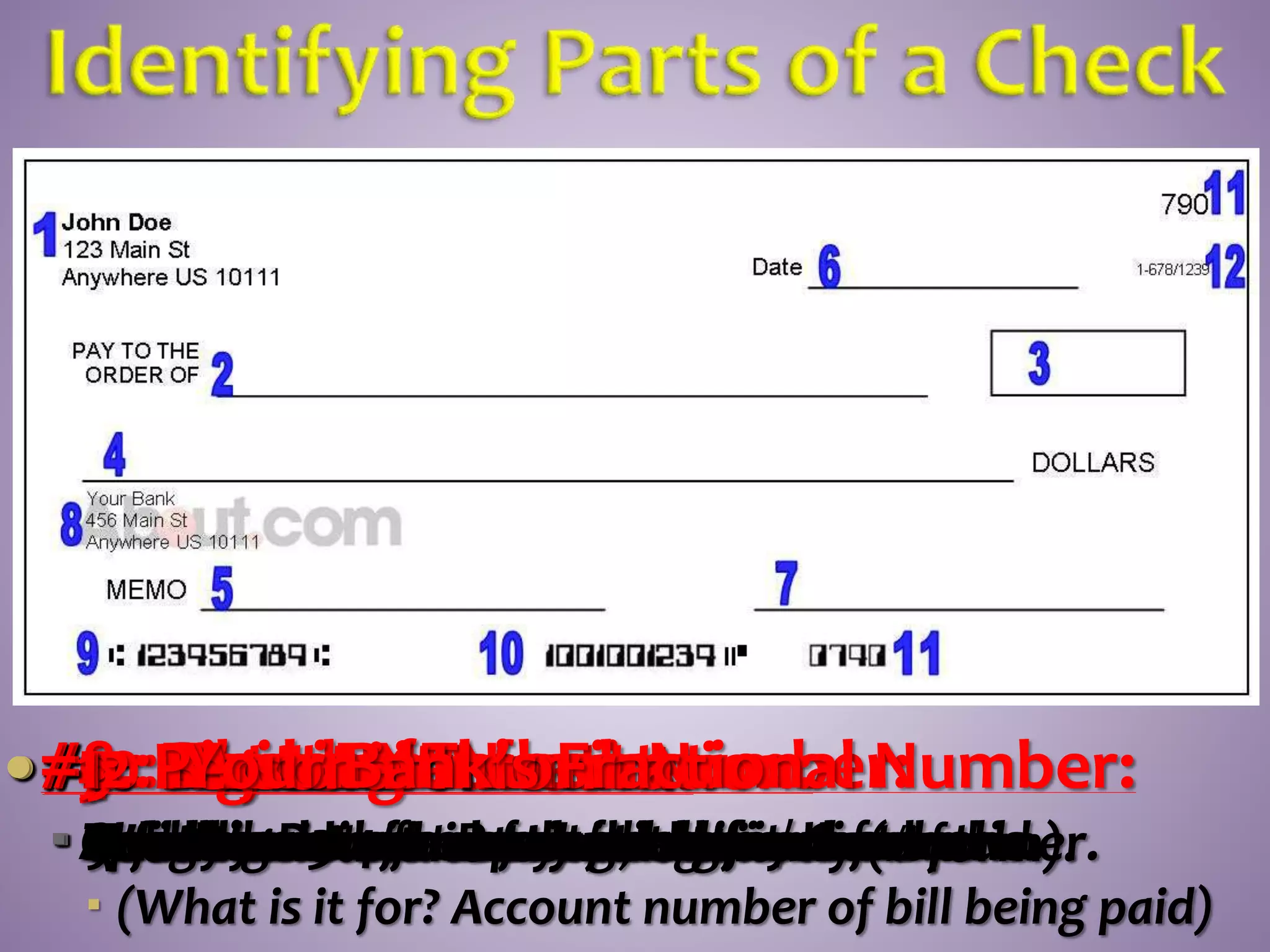
#11: Check Number:
 Usually a 3-4 for easy identification.
#2: Payee Line:
 Who the check is payable to.
#3: Numeric Amount:
 Check amount noted numerically (# form).
#4: Written Amount:
 Spelled out amount of dollars/cents paid.
#5: Memo:
 Quick comment remark about check.
 (What is it for? Account number of bill being paid)
#6: Date:
 Today’s Date—check good for 6 months.
#7: Signature:
 Your signature. Protects against fraud
#8: Bank Information:
 Your bank information.
#9: Routing Transit Number:
 9 digit number used to route your check.
#10: Account Number:
 Your bank account number.
#1: Personal Information:
 Information about you, the account owner.
#12: Your Bank’s Fractional Number:
 Another version of routing number.
 There are several things you need to know
to be able to correctly write out checks:
 Writing out Numbers:
 $523.34
 Five Hundred Twenty Three Dollars 34/100
 $30.00
 Thirty Dollars or Thirty Dollars 00/100
 12,532.50
 Twelve Thousand Five Hundred Thirty-two
Dollars 50/100
 AVOID WRITING OUT CHECKS TO
CASH:
 When you write out a check to cash,
it is treated like cash.
 Anyone can cash it!
 Harder to cancel and track!
 Some banks and businesses will not accept.
 If you don’t know who to make check
out to, leave payee field blank.
 DO NOT SIGN CHECK UNTIL YOU FILL
IN PAYEE.
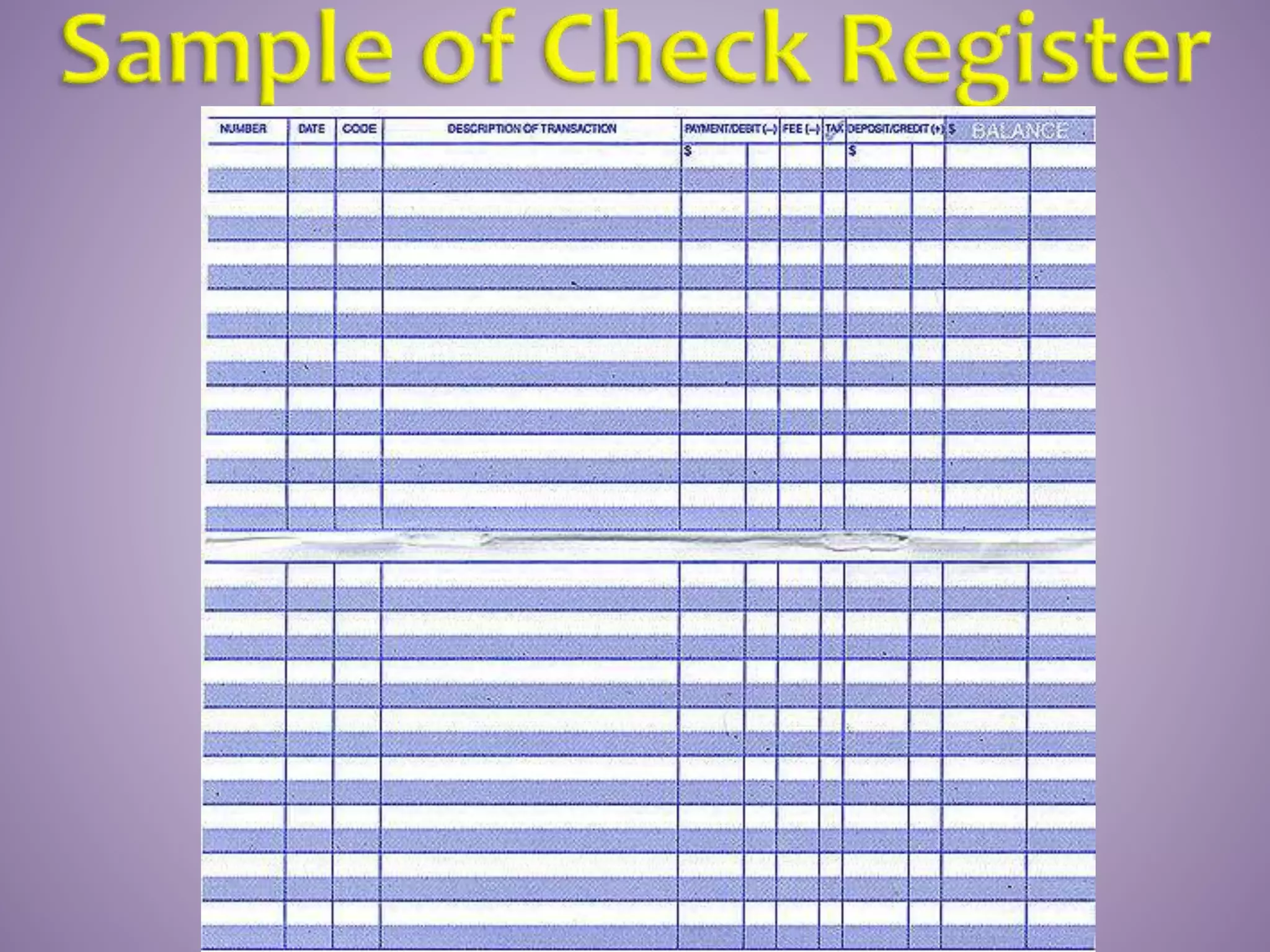
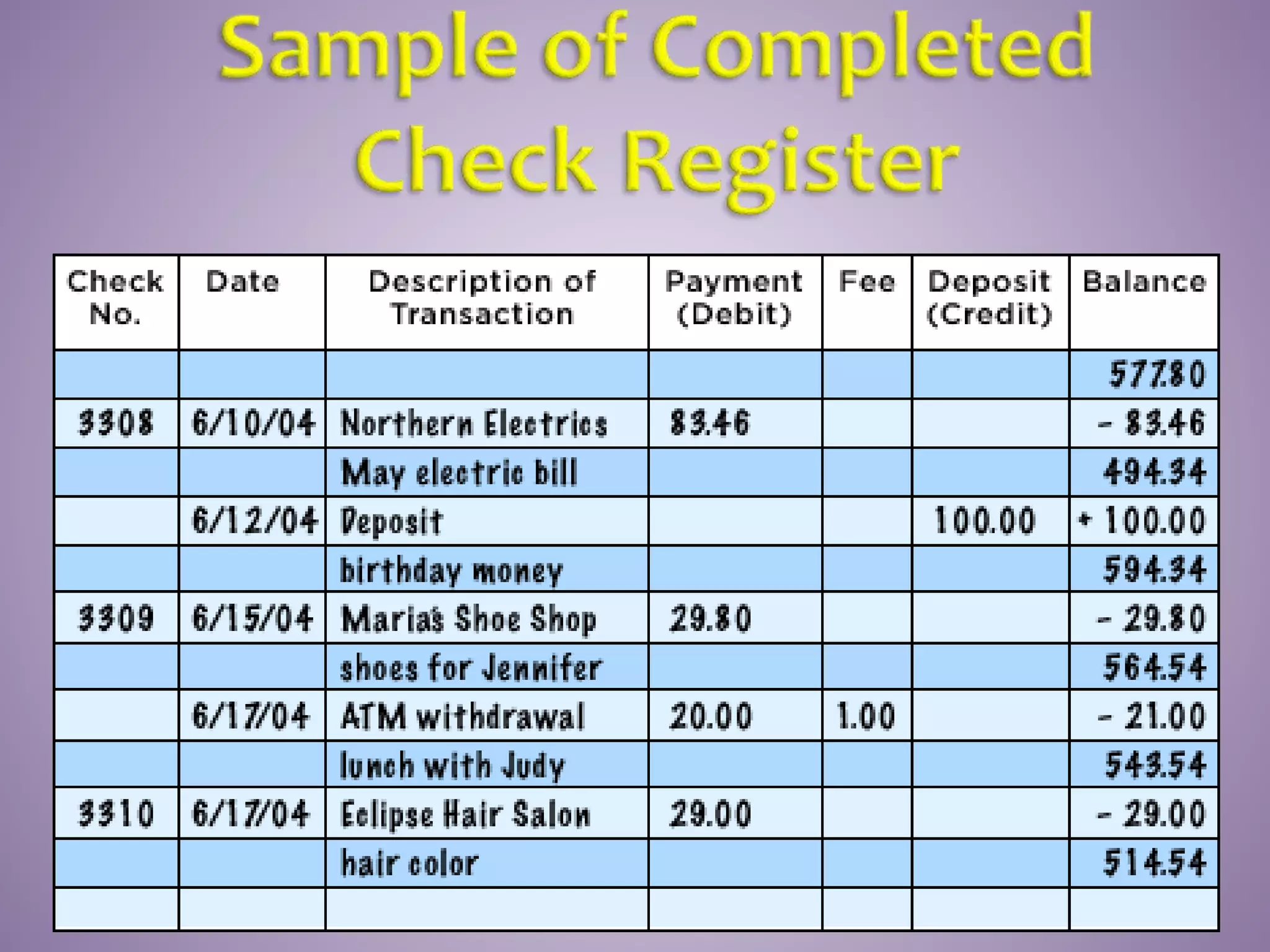
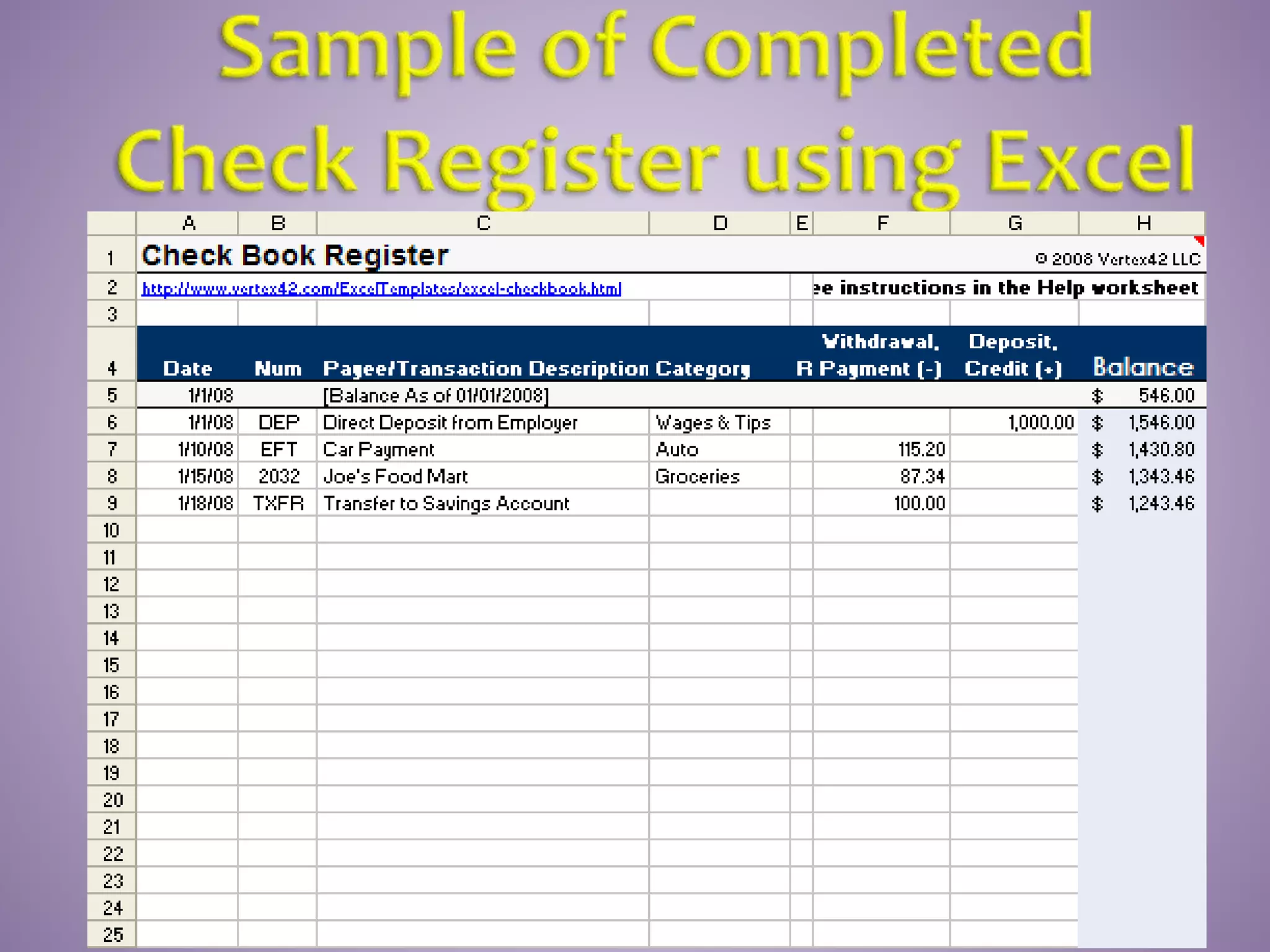
 Record Check in your
Check Register:
 Book that comes with your
check book to record deposits
and withdrawals.
 Some people do this electronically.
 Each month complete a
Checkbook Reconciliation:
 Check your register with the
monthly checking account bank
statement.
 Ensures your records of checks match up
with what the bank has recorded.
 Identifies non-deposited checks.
 As you verify each deposit/withdrawal,
check it off in register.
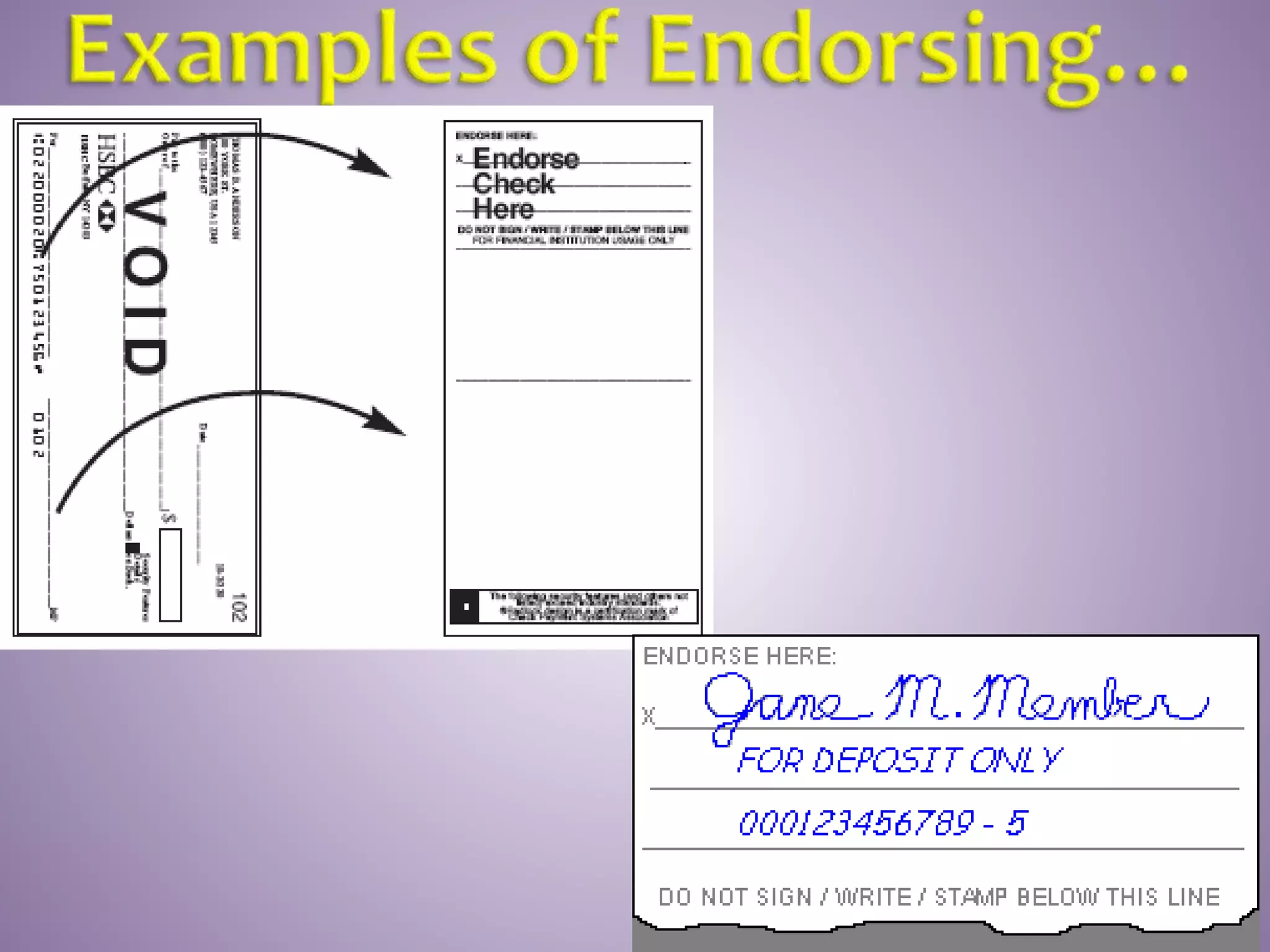
 You need to Endorse it:
 Signatures on the front and back
of check stating that both parties
agree to the amount being
transferred.
 Receiver of funds signs their name on the
back.
 Writer of check signs on front.
 Overdraft protection protects a checking account
against insufficient funds.
 Account balance could not cover written checks.
 Checks that can be cashed are called “bounced checks”
 Payee and Account holder will be assessed fees.
 This is a service you need to subscribe to—
not automatic.
 Can work 2 ways:
 1. Bank gives you a loan on the money owed
with an interest charge.
 2. You backup your checking account with a
savings account.
 Small fee will be incurred sometimes.

Unit 3B - Checks

  • 1.
  • 2.
     Understanding theparts of your checkbook will allow you to correctly manage and use your checking account :  You need to be able to:  Identify parts of a check  Write checks  Endorse Checks  Know how to use Overdraft Protection  Carry out Checkbook Reconciliation
  • 3.
    #11: Check Number: Usually a 3-4 for easy identification. #2: Payee Line:  Who the check is payable to. #3: Numeric Amount:  Check amount noted numerically (# form). #4: Written Amount:  Spelled out amount of dollars/cents paid. #5: Memo:  Quick comment remark about check.  (What is it for? Account number of bill being paid) #6: Date:  Today’s Date—check good for 6 months. #7: Signature:  Your signature. Protects against fraud #8: Bank Information:  Your bank information. #9: Routing Transit Number:  9 digit number used to route your check. #10: Account Number:  Your bank account number. #1: Personal Information:  Information about you, the account owner. #12: Your Bank’s Fractional Number:  Another version of routing number.
  • 4.
     There areseveral things you need to know to be able to correctly write out checks:  Writing out Numbers:  $523.34  Five Hundred Twenty Three Dollars 34/100  $30.00  Thirty Dollars or Thirty Dollars 00/100  12,532.50  Twelve Thousand Five Hundred Thirty-two Dollars 50/100
  • 5.
     AVOID WRITINGOUT CHECKS TO CASH:  When you write out a check to cash, it is treated like cash.  Anyone can cash it!  Harder to cancel and track!  Some banks and businesses will not accept.  If you don’t know who to make check out to, leave payee field blank.  DO NOT SIGN CHECK UNTIL YOU FILL IN PAYEE.
  • 6.
     Record Checkin your Check Register:  Book that comes with your check book to record deposits and withdrawals.  Some people do this electronically.
  • 10.
     Each monthcomplete a Checkbook Reconciliation:  Check your register with the monthly checking account bank statement.  Ensures your records of checks match up with what the bank has recorded.  Identifies non-deposited checks.  As you verify each deposit/withdrawal, check it off in register.
  • 11.
     You needto Endorse it:  Signatures on the front and back of check stating that both parties agree to the amount being transferred.  Receiver of funds signs their name on the back.  Writer of check signs on front.
  • 13.
     Overdraft protectionprotects a checking account against insufficient funds.  Account balance could not cover written checks.  Checks that can be cashed are called “bounced checks”  Payee and Account holder will be assessed fees.  This is a service you need to subscribe to— not automatic.  Can work 2 ways:  1. Bank gives you a loan on the money owed with an interest charge.  2. You backup your checking account with a savings account.  Small fee will be incurred sometimes.