Understanding Underground Cable
Locating: Methods and Significance
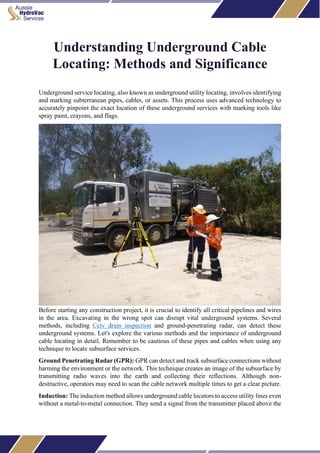
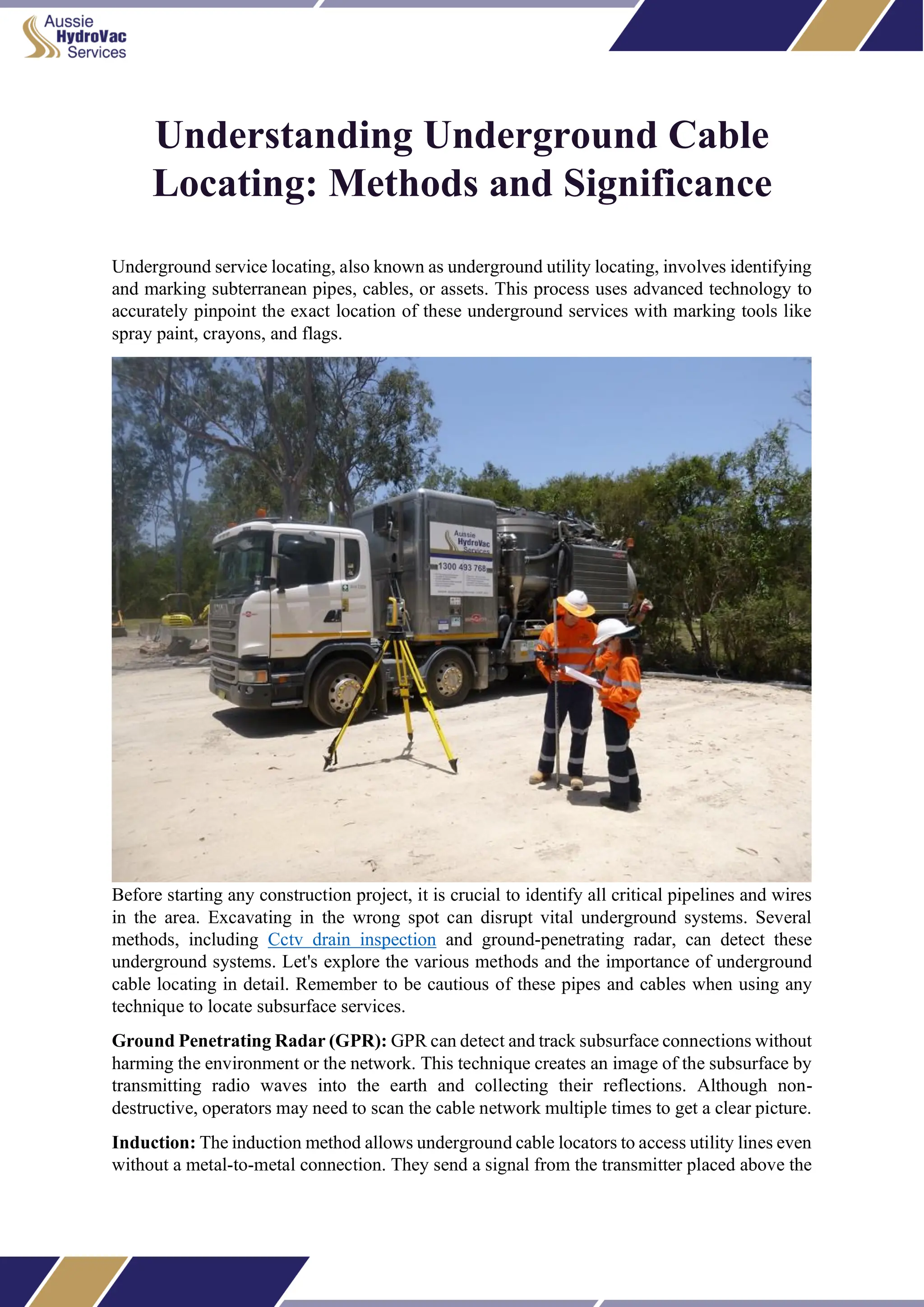
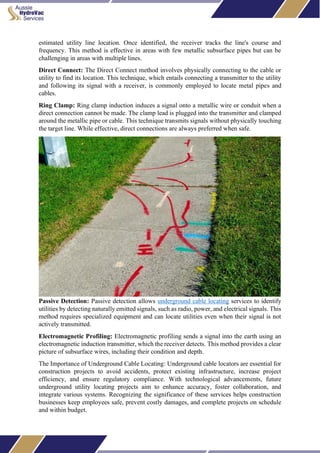
Underground service locating, also known as underground utility locating, involves identifying
and marking subterranean pipes, cables, or assets. This process uses advanced technology to
accurately pinpoint the exact location of these underground services with marking tools like
spray paint, crayons, and flags.
Before starting any construction project, it is crucial to identify all critical pipelines and wires
in the area. Excavating in the wrong spot can disrupt vital underground systems. Several
methods, including Cctv drain inspection and ground-penetrating radar, can detect these
underground systems. Let's explore the various methods and the importance of underground
cable locating in detail. Remember to be cautious of these pipes and cables when using any
technique to locate subsurface services.
Ground Penetrating Radar (GPR): GPR can detect and track subsurface connections without
harming the environment or the network. This technique creates an image of the subsurface by
transmitting radio waves into the earth and collecting their reflections. Although non-
destructive, operators may need to scan the cable network multiple times to get a clear picture.
Induction: The induction method allows underground cable locators to access utility lines even
without a metal-to-metal connection. They send a signal from the transmitter placed above the
estimated utility line location. Once identified, the receiver tracks the line's course and
frequency. This method is effective in areas with few metallic subsurface pipes but can be
challenging in areas with multiple lines.
Direct Connect: The Direct Connect method involves physically connecting to the cable or
utility to find its location. This technique, which entails connecting a transmitter to the utility
and following its signal with a receiver, is commonly employed to locate metal pipes and
cables.
Ring Clamp: Ring clamp induction induces a signal onto a metallic wire or conduit when a
direct connection cannot be made. The clamp lead is plugged into the transmitter and clamped
around the metallic pipe or cable. This technique transmits signals without physically touching
the target line. While effective, direct connections are always preferred when safe.
Passive Detection: Passive detection allows underground cable locating services to identify
utilities by detecting naturally emitted signals, such as radio, power, and electrical signals. This
method requires specialized equipment and can locate utilities even when their signal is not
actively transmitted.
Electromagnetic Profiling: Electromagnetic profiling sends a signal into the earth using an
electromagnetic induction transmitter, which the receiver detects. This method provides a clear
picture of subsurface wires, including their condition and depth.
The Importance of Underground Cable Locating: Underground cable locators are essential for
construction projects to avoid accidents, protect existing infrastructure, increase project
efficiency, and ensure regulatory compliance. With technological advancements, future
underground utility locating projects aim to enhance accuracy, foster collaboration, and
integrate various systems. Recognizing the significance of these services helps construction
businesses keep employees safe, prevent costly damages, and complete projects on schedule
and within budget.
In Conclusion: Aussie Hydro-Vac Services excels in maintaining quality, safety, and
environmental standards. Their industrial personnel are well-trained and updated on the latest
techniques and machinery. Client satisfaction is their top priority. They offer the best value for
both one-time projects and ongoing maintenance. Their managers are available around the
clock for emergencies, and their vehicle response times are unmatched. For vacuum
excavation, drain cleaning, pavement investigation, liquid waste disposal, underground
placement, CCTV drain inspection, and more, contact Aussie Hydro-Vac Services.

Understanding Underground Cable Locating: Methods and Significance

  • 1.
    Understanding Underground Cable Locating:Methods and Significance Underground service locating, also known as underground utility locating, involves identifying and marking subterranean pipes, cables, or assets. This process uses advanced technology to accurately pinpoint the exact location of these underground services with marking tools like spray paint, crayons, and flags. Before starting any construction project, it is crucial to identify all critical pipelines and wires in the area. Excavating in the wrong spot can disrupt vital underground systems. Several methods, including Cctv drain inspection and ground-penetrating radar, can detect these underground systems. Let's explore the various methods and the importance of underground cable locating in detail. Remember to be cautious of these pipes and cables when using any technique to locate subsurface services. Ground Penetrating Radar (GPR): GPR can detect and track subsurface connections without harming the environment or the network. This technique creates an image of the subsurface by transmitting radio waves into the earth and collecting their reflections. Although non- destructive, operators may need to scan the cable network multiple times to get a clear picture. Induction: The induction method allows underground cable locators to access utility lines even without a metal-to-metal connection. They send a signal from the transmitter placed above the
  • 2.
    estimated utility linelocation. Once identified, the receiver tracks the line's course and frequency. This method is effective in areas with few metallic subsurface pipes but can be challenging in areas with multiple lines. Direct Connect: The Direct Connect method involves physically connecting to the cable or utility to find its location. This technique, which entails connecting a transmitter to the utility and following its signal with a receiver, is commonly employed to locate metal pipes and cables. Ring Clamp: Ring clamp induction induces a signal onto a metallic wire or conduit when a direct connection cannot be made. The clamp lead is plugged into the transmitter and clamped around the metallic pipe or cable. This technique transmits signals without physically touching the target line. While effective, direct connections are always preferred when safe. Passive Detection: Passive detection allows underground cable locating services to identify utilities by detecting naturally emitted signals, such as radio, power, and electrical signals. This method requires specialized equipment and can locate utilities even when their signal is not actively transmitted. Electromagnetic Profiling: Electromagnetic profiling sends a signal into the earth using an electromagnetic induction transmitter, which the receiver detects. This method provides a clear picture of subsurface wires, including their condition and depth. The Importance of Underground Cable Locating: Underground cable locators are essential for construction projects to avoid accidents, protect existing infrastructure, increase project efficiency, and ensure regulatory compliance. With technological advancements, future underground utility locating projects aim to enhance accuracy, foster collaboration, and integrate various systems. Recognizing the significance of these services helps construction businesses keep employees safe, prevent costly damages, and complete projects on schedule and within budget.
  • 3.
    In Conclusion: AussieHydro-Vac Services excels in maintaining quality, safety, and environmental standards. Their industrial personnel are well-trained and updated on the latest techniques and machinery. Client satisfaction is their top priority. They offer the best value for both one-time projects and ongoing maintenance. Their managers are available around the clock for emergencies, and their vehicle response times are unmatched. For vacuum excavation, drain cleaning, pavement investigation, liquid waste disposal, underground placement, CCTV drain inspection, and more, contact Aussie Hydro-Vac Services.