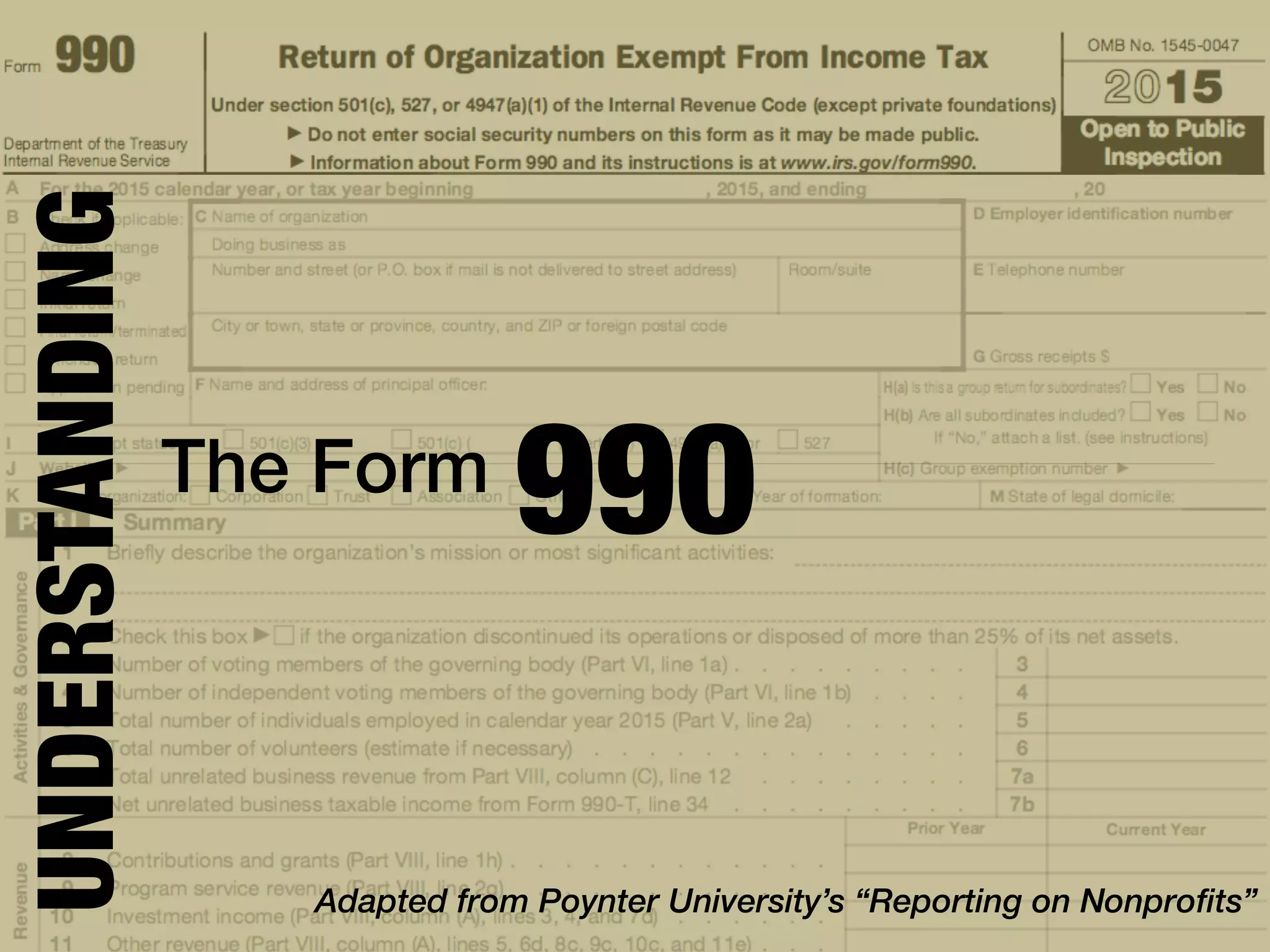
UNDERSTANDING
The Form
990
Adapted from Poynter University’s “Reporting on Nonprofits”
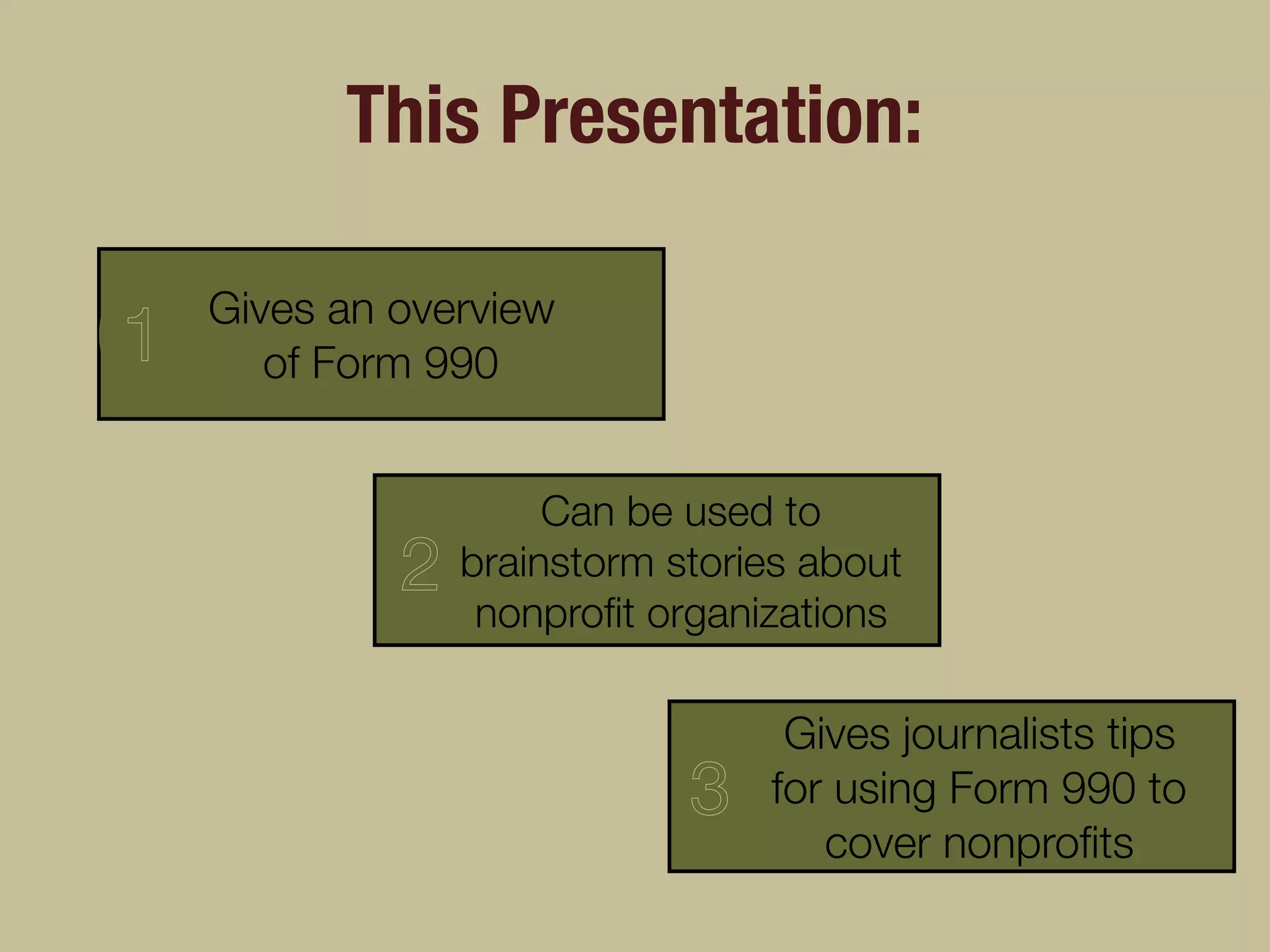
This Presentation:
Gives an overview
of Form 990
3
2
1
Can be used to
brainstorm stories about
nonprofit organizations
Gives journalists tips
for using Form 990 to
cover nonprofits
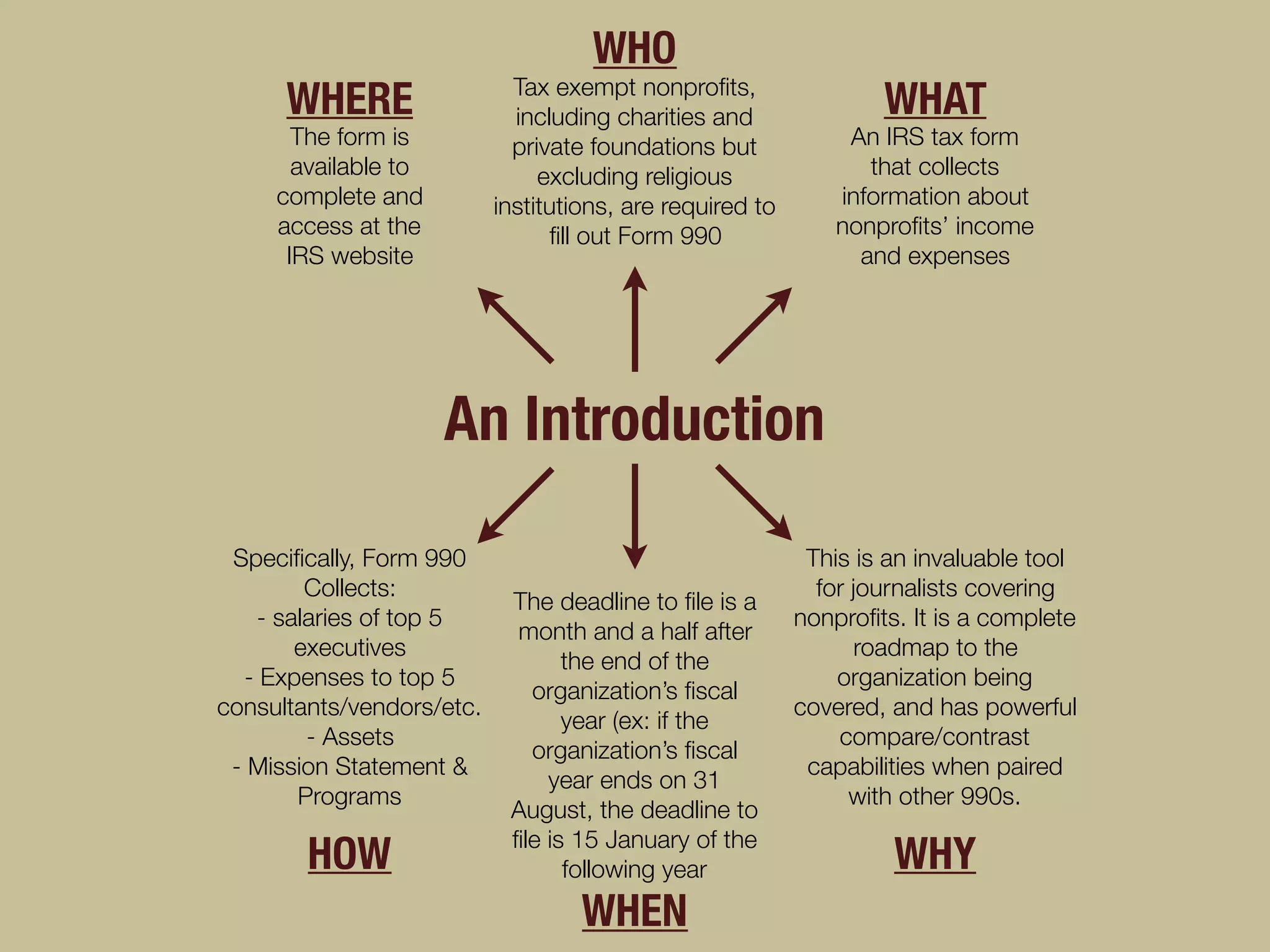
WHO
WHERE WHAT
WHEN
WHYHOW
An Introduction
Tax exempt nonprofits,
including charities and
private foundations but
excluding religious
institutions, are required to
fill out Form 990
The form is
available to
complete and
access at the
IRS website
An IRS tax form
that collects
information about
nonprofits’ income
and expenses
Specifically, Form 990
Collects:
- salaries of top 5
executives
- Expenses to top 5
consultants/vendors/etc.
- Assets
- Mission Statement &
Programs
This is an invaluable tool
for journalists covering
nonprofits. It is a complete
roadmap to the
organization being
covered, and has powerful
compare/contrast
capabilities when paired
with other 990s.
The deadline to file is a
month and a half after
the end of the
organization’s fiscal
year (ex: if the
organization’s fiscal
year ends on 31
August, the deadline to
file is 15 January of the
following year
Form 990 is the starting point for
journalistic investigations of
nonprofits
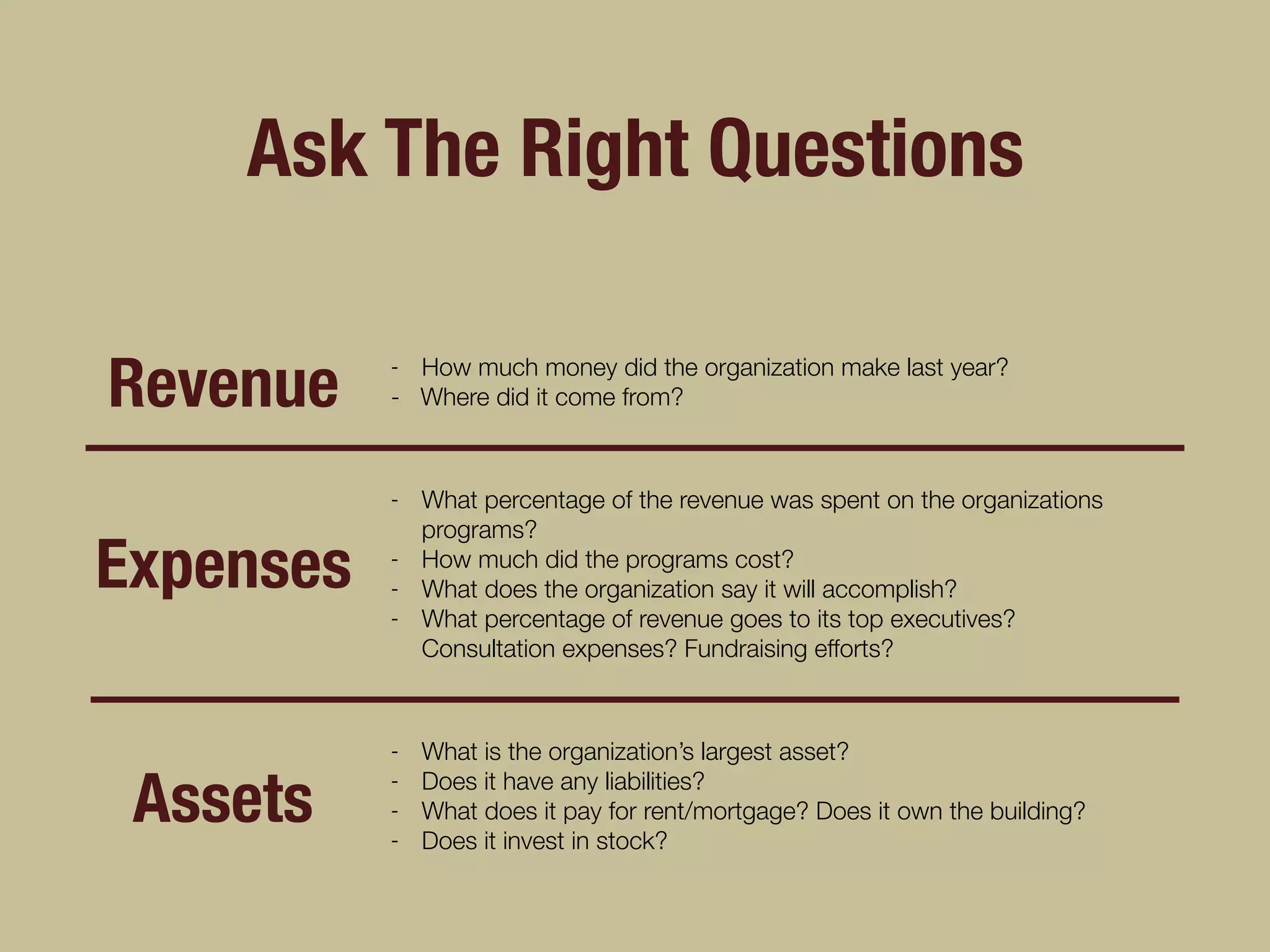
Expenses
Revenue
Assets
- How much money did the organization make last year?
- Where did it come from?
- What percentage of the revenue was spent on the organizations
programs?
- How much did the programs cost?
- What does the organization say it will accomplish?
- What percentage of revenue goes to its top executives?
Consultation expenses? Fundraising efforts?
- What is the organization’s largest asset?
- Does it have any liabilities?
- What does it pay for rent/mortgage? Does it own the building?
- Does it invest in stock?
Ask The Right Questions
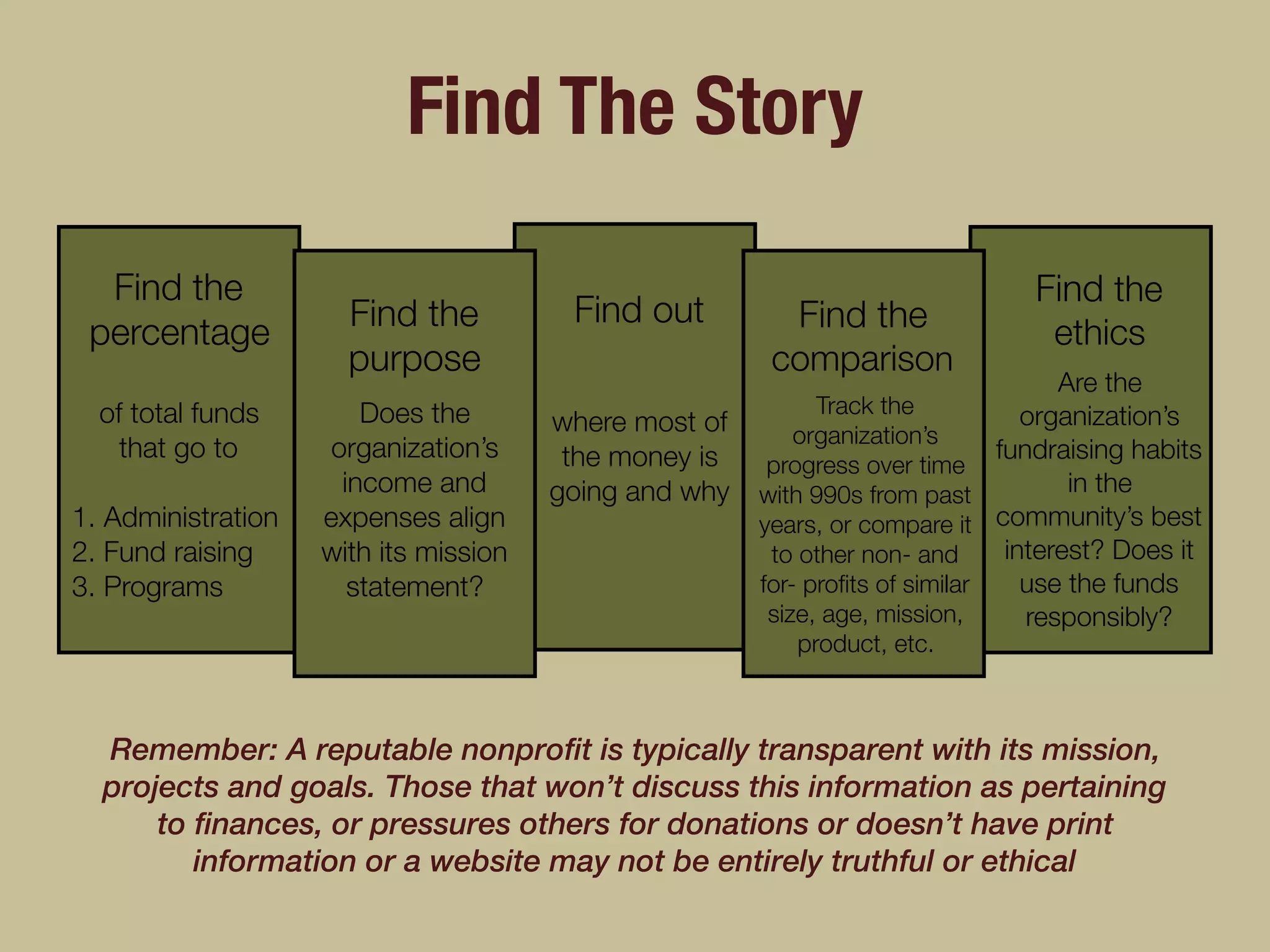
Find The Story
Find the
percentage
of total funds
that go to
1. Administration
2. Fund raising
3. Programs
Find out
where most of
the money is
going and why
Find the
purpose
Does the
organization’s
income and
expenses align
with its mission
statement?
Find the
comparison
Track the
organization’s
progress over time
with 990s from past
years, or compare it
to other non- and
for- profits of similar
size, age, mission,
product, etc.
Find the
ethics
Are the
organization’s
fundraising habits
in the
community’s best
interest? Does it
use the funds
responsibly?
Remember: A reputable nonprofit is typically transparent with its mission,
projects and goals. Those that won’t discuss this information as pertaining
to finances, or pressures others for donations or doesn’t have print
information or a website may not be entirely truthful or ethical
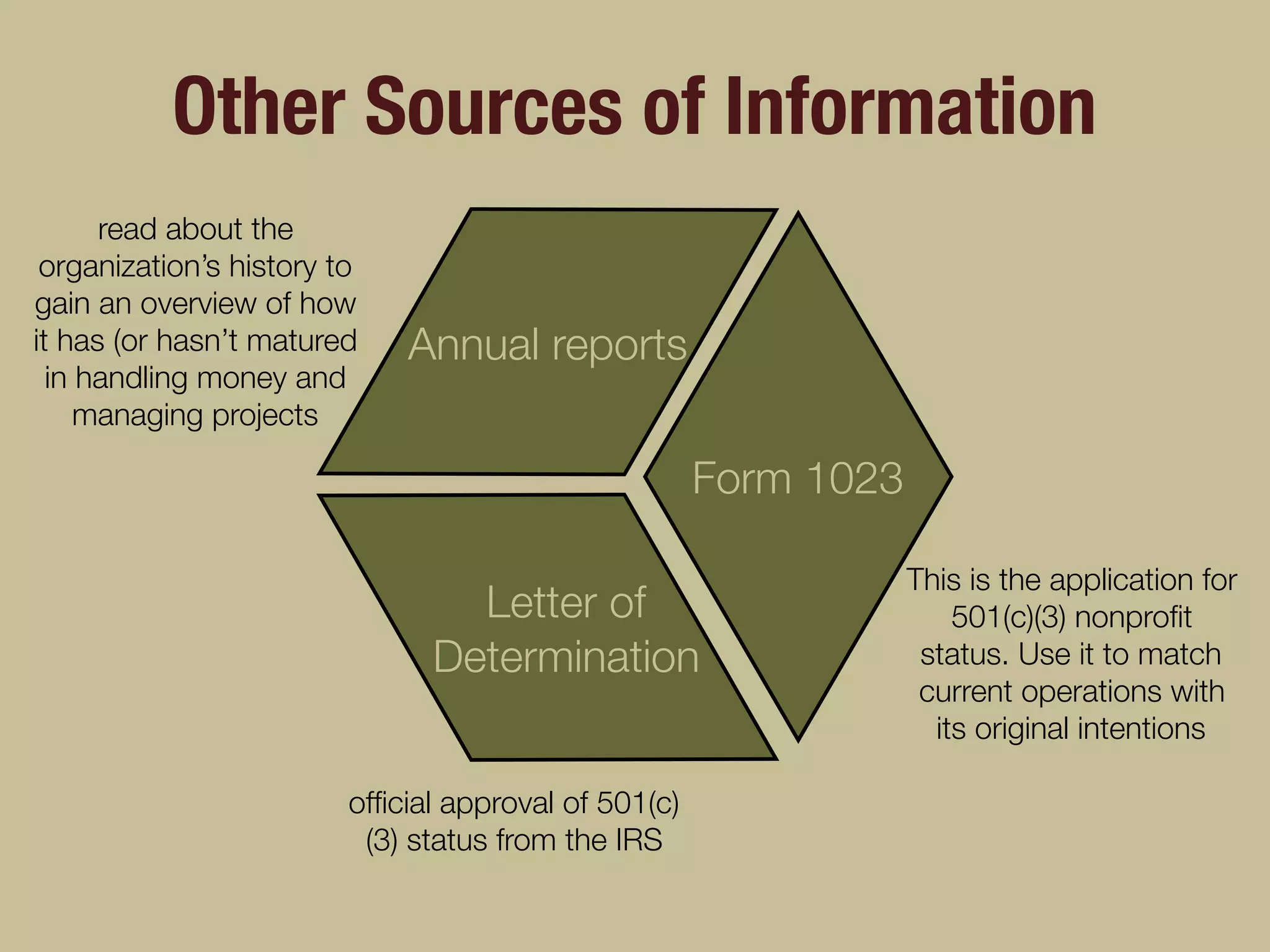
Other Sources of Information
Form 1023
Annual reports
read about the
organization’s history to
gain an overview of how
it has (or hasn’t matured
in handling money and
managing projects
This is the application for
501(c)(3) nonprofit
status. Use it to match
current operations with
its original intentions
Letter of
Determination
official approval of 501(c)
(3) status from the IRS

Understanding the Form 990

  • 1.
    UNDERSTANDING The Form 990 Adapted fromPoynter University’s “Reporting on Nonprofits”
  • 2.
    This Presentation: Gives anoverview of Form 990 3 2 1 Can be used to brainstorm stories about nonprofit organizations Gives journalists tips for using Form 990 to cover nonprofits
  • 3.
    WHO WHERE WHAT WHEN WHYHOW An Introduction Taxexempt nonprofits, including charities and private foundations but excluding religious institutions, are required to fill out Form 990 The form is available to complete and access at the IRS website An IRS tax form that collects information about nonprofits’ income and expenses Specifically, Form 990 Collects: - salaries of top 5 executives - Expenses to top 5 consultants/vendors/etc. - Assets - Mission Statement & Programs This is an invaluable tool for journalists covering nonprofits. It is a complete roadmap to the organization being covered, and has powerful compare/contrast capabilities when paired with other 990s. The deadline to file is a month and a half after the end of the organization’s fiscal year (ex: if the organization’s fiscal year ends on 31 August, the deadline to file is 15 January of the following year
  • 4.
    Form 990 isthe starting point for journalistic investigations of nonprofits
  • 5.
    Expenses Revenue Assets - How muchmoney did the organization make last year? - Where did it come from? - What percentage of the revenue was spent on the organizations programs? - How much did the programs cost? - What does the organization say it will accomplish? - What percentage of revenue goes to its top executives? Consultation expenses? Fundraising efforts? - What is the organization’s largest asset? - Does it have any liabilities? - What does it pay for rent/mortgage? Does it own the building? - Does it invest in stock? Ask The Right Questions
  • 6.
    Find The Story Findthe percentage of total funds that go to 1. Administration 2. Fund raising 3. Programs Find out where most of the money is going and why Find the purpose Does the organization’s income and expenses align with its mission statement? Find the comparison Track the organization’s progress over time with 990s from past years, or compare it to other non- and for- profits of similar size, age, mission, product, etc. Find the ethics Are the organization’s fundraising habits in the community’s best interest? Does it use the funds responsibly? Remember: A reputable nonprofit is typically transparent with its mission, projects and goals. Those that won’t discuss this information as pertaining to finances, or pressures others for donations or doesn’t have print information or a website may not be entirely truthful or ethical
  • 7.
    Other Sources ofInformation Form 1023 Annual reports read about the organization’s history to gain an overview of how it has (or hasn’t matured in handling money and managing projects This is the application for 501(c)(3) nonprofit status. Use it to match current operations with its original intentions Letter of Determination official approval of 501(c) (3) status from the IRS