‭
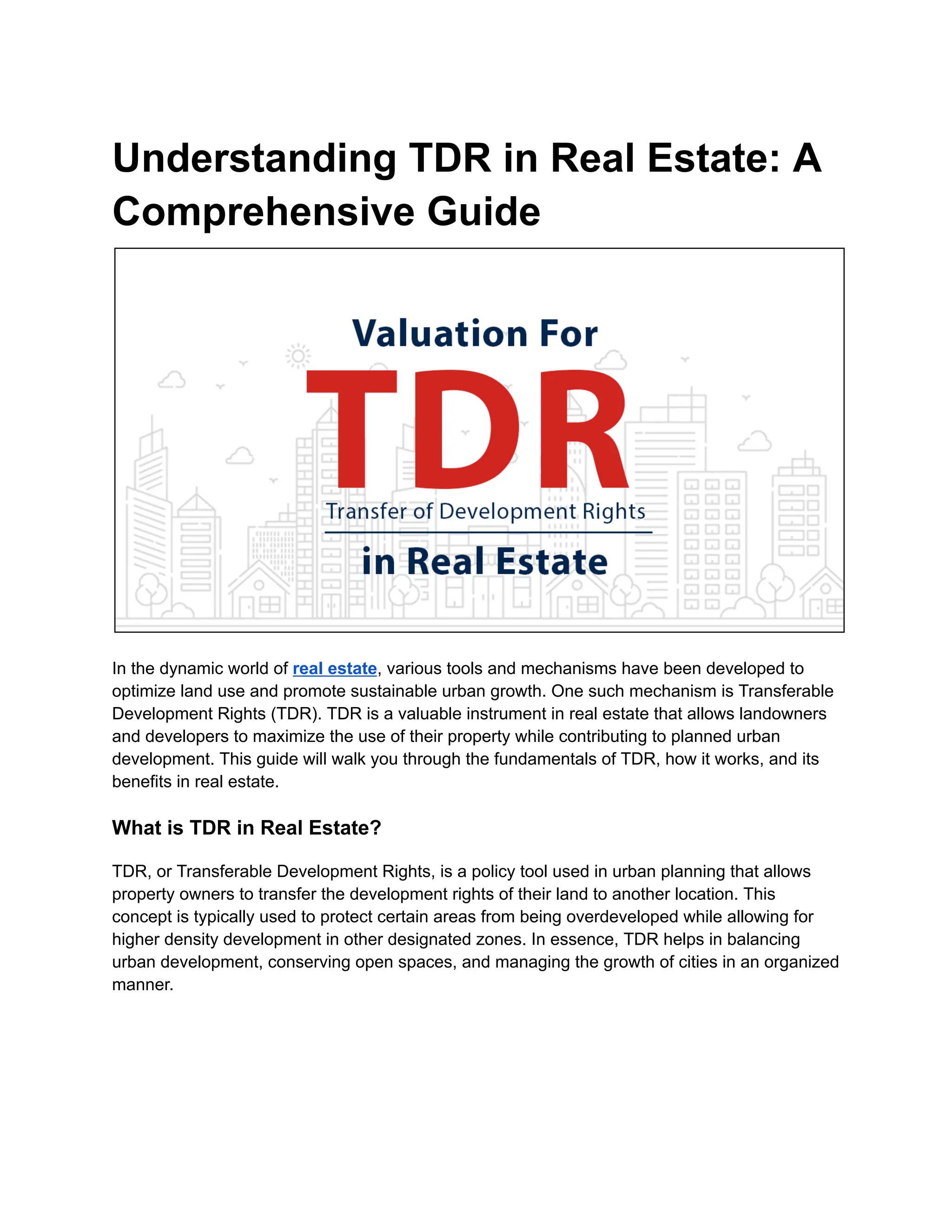
Understanding TDR in Real Estate: A‬
‭
Comprehensive Guide‬
‭
In the dynamic world of‬‭
real estate‬
‭
, various tools and mechanisms have been developed to‬
‭
optimize land use and promote sustainable urban growth. One such mechanism is Transferable‬
‭
Development Rights (TDR). TDR is a valuable instrument in real estate that allows landowners‬
‭
and developers to maximize the use of their property while contributing to planned urban‬
‭
development. This guide will walk you through the fundamentals of TDR, how it works, and its‬
‭
benefits in real estate.‬
‭
What is TDR in Real Estate?‬
‭
TDR, or Transferable Development Rights, is a policy tool used in urban planning that allows‬
‭
property owners to transfer the development rights of their land to another location. This‬
‭
concept is typically used to protect certain areas from being overdeveloped while allowing for‬
‭
higher density development in other designated zones. In essence, TDR helps in balancing‬
‭
urban development, conserving open spaces, and managing the growth of cities in an organized‬
‭
manner.‬
‭
How Does TDR Work?‬
‭
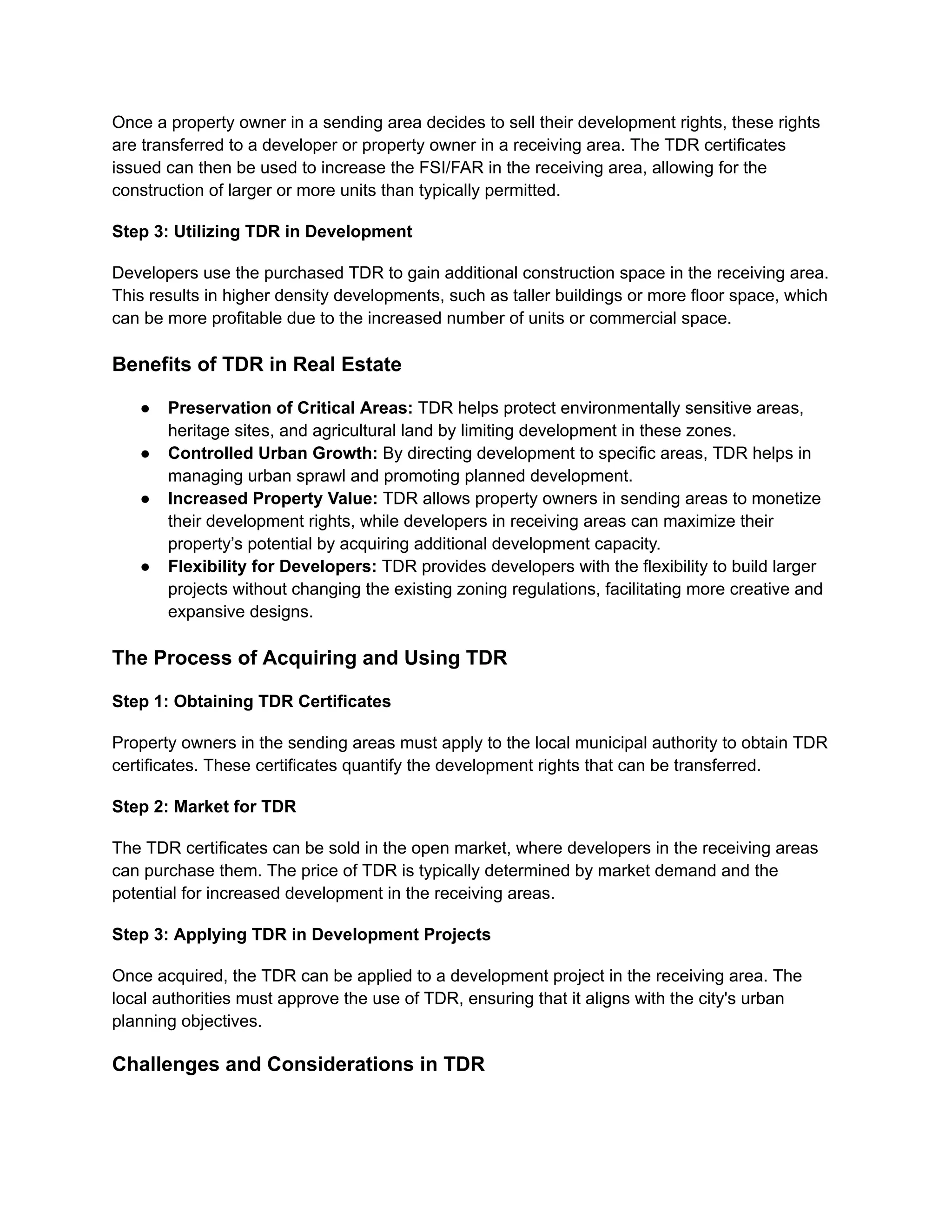
Step 1: Identifying the Sending and Receiving Areas‬
‭
●‬ ‭
Sending Areas:‬‭
These are zones where development is restricted or limited due to‬
‭
environmental concerns, heritage preservation, or other planning reasons. Property‬
‭
owners in these areas are compensated by selling their development rights.‬
‭
●‬ ‭
Receiving Areas:‬‭
These are designated zones where higher-density development is‬
‭
encouraged. Developers in these areas can purchase TDR to increase the allowable‬
‭
Floor Space Index (FSI) or Floor Area Ratio (FAR) on their projects.‬
‭
Step 2: Transferring Development Rights‬
‭
Once a property owner in a sending area decides to sell their development rights, these rights‬
‭
are transferred to a developer or property owner in a receiving area. The TDR certificates‬
‭
issued can then be used to increase the FSI/FAR in the receiving area, allowing for the‬
‭
construction of larger or more units than typically permitted.‬
‭
Step 3: Utilizing TDR in Development‬
‭
Developers use the purchased TDR to gain additional construction space in the receiving area.‬
‭
This results in higher density developments, such as taller buildings or more floor space, which‬
‭
can be more profitable due to the increased number of units or commercial space.‬
‭
Benefits of TDR in Real Estate‬
‭
●‬ ‭
Preservation of Critical Areas:‬‭
TDR helps protect environmentally sensitive areas,‬
‭
heritage sites, and agricultural land by limiting development in these zones.‬
‭
●‬ ‭
Controlled Urban Growth:‬‭
By directing development‬‭
to specific areas, TDR helps in‬
‭
managing urban sprawl and promoting planned development.‬
‭
●‬ ‭
Increased Property Value:‬‭
TDR allows property owners in sending areas to monetize‬
‭
their development rights, while developers in receiving areas can maximize their‬
‭
property’s potential by acquiring additional development capacity.‬
‭
●‬ ‭
Flexibility for Developers:‬‭
TDR provides developers with the flexibility to build larger‬
‭
projects without changing the existing zoning regulations, facilitating more creative and‬
‭
expansive designs.‬
‭
The Process of Acquiring and Using TDR‬
‭
Step 1: Obtaining TDR Certificates‬
‭
Property owners in the sending areas must apply to the local municipal authority to obtain TDR‬
‭
certificates. These certificates quantify the development rights that can be transferred.‬
‭
Step 2: Market for TDR‬
‭
The TDR certificates can be sold in the open market, where developers in the receiving areas‬
‭
can purchase them. The price of TDR is typically determined by market demand and the‬
‭
potential for increased development in the receiving areas.‬
‭
Step 3: Applying TDR in Development Projects‬
‭
Once acquired, the TDR can be applied to a development project in the receiving area. The‬
‭
local authorities must approve the use of TDR, ensuring that it aligns with the city's urban‬
‭
planning objectives.‬
‭
Challenges and Considerations in TDR‬
‭
●‬ ‭
Market Value Fluctuations:‬‭
The value of TDR certificates can fluctuate based on‬
‭
market conditions, making it a speculative investment for both sellers and buyers.‬
‭
●‬ ‭
Regulatory Compliance:‬‭
Developers must navigate complex regulatory frameworks to‬
‭
ensure that the use of TDR aligns with local zoning laws and urban planning guidelines.‬
‭
●‬ ‭
Equity Concerns:‬‭
There can be concerns about equitable development, as TDR may‬
‭
lead to higher density in certain areas, potentially straining local infrastructure and‬
‭
services.‬
‭
Conclusion‬
‭
Understanding TDR is crucial for real estate professionals, developers, and property owners‬
‭
who wish to maximize their land's potential while contributing to sustainable urban development.‬
‭
By leveraging TDR, cities can achieve a balanced growth model that preserves critical areas‬
‭
while promoting efficient use of land in urban centers. At ADX Corp, we are committed to‬
‭
guiding our clients through the complexities of real estate, including the strategic use of TDR, to‬
‭
ensure successful and sustainable developments.‬
‭
For more insights on how to utilize TDR in your real estate projects,‬‭
contact ADX Corp‬
‭
, the‬
‭
leading real estate consultancy in Gurgaon. Our team of experts is here to help you navigate the‬
‭
intricacies of TDR and other real estate strategies to maximize your investment potential.‬
‭
Contact us at:‬
‭
📞 9717181474‬
‭
🏢 Unit no-412, 4th floor, Vipul Trade Centre, Sector 48, Gurgaon, Haryana, 122018‬
Understanding TDR in Real Estate_ A Comprehensive Guide

Understanding TDR in Real Estate_ A Comprehensive Guide

  • 1.
    ‭ Understanding TDR inReal Estate: A‬ ‭ Comprehensive Guide‬ ‭ In the dynamic world of‬‭ real estate‬ ‭ , various tools and mechanisms have been developed to‬ ‭ optimize land use and promote sustainable urban growth. One such mechanism is Transferable‬ ‭ Development Rights (TDR). TDR is a valuable instrument in real estate that allows landowners‬ ‭ and developers to maximize the use of their property while contributing to planned urban‬ ‭ development. This guide will walk you through the fundamentals of TDR, how it works, and its‬ ‭ benefits in real estate.‬ ‭ What is TDR in Real Estate?‬ ‭ TDR, or Transferable Development Rights, is a policy tool used in urban planning that allows‬ ‭ property owners to transfer the development rights of their land to another location. This‬ ‭ concept is typically used to protect certain areas from being overdeveloped while allowing for‬ ‭ higher density development in other designated zones. In essence, TDR helps in balancing‬ ‭ urban development, conserving open spaces, and managing the growth of cities in an organized‬ ‭ manner.‬
  • 2.
    ‭ How Does TDRWork?‬ ‭ Step 1: Identifying the Sending and Receiving Areas‬ ‭ ●‬ ‭ Sending Areas:‬‭ These are zones where development is restricted or limited due to‬ ‭ environmental concerns, heritage preservation, or other planning reasons. Property‬ ‭ owners in these areas are compensated by selling their development rights.‬ ‭ ●‬ ‭ Receiving Areas:‬‭ These are designated zones where higher-density development is‬ ‭ encouraged. Developers in these areas can purchase TDR to increase the allowable‬ ‭ Floor Space Index (FSI) or Floor Area Ratio (FAR) on their projects.‬ ‭ Step 2: Transferring Development Rights‬
  • 3.
    ‭ Once a propertyowner in a sending area decides to sell their development rights, these rights‬ ‭ are transferred to a developer or property owner in a receiving area. The TDR certificates‬ ‭ issued can then be used to increase the FSI/FAR in the receiving area, allowing for the‬ ‭ construction of larger or more units than typically permitted.‬ ‭ Step 3: Utilizing TDR in Development‬ ‭ Developers use the purchased TDR to gain additional construction space in the receiving area.‬ ‭ This results in higher density developments, such as taller buildings or more floor space, which‬ ‭ can be more profitable due to the increased number of units or commercial space.‬ ‭ Benefits of TDR in Real Estate‬ ‭ ●‬ ‭ Preservation of Critical Areas:‬‭ TDR helps protect environmentally sensitive areas,‬ ‭ heritage sites, and agricultural land by limiting development in these zones.‬ ‭ ●‬ ‭ Controlled Urban Growth:‬‭ By directing development‬‭ to specific areas, TDR helps in‬ ‭ managing urban sprawl and promoting planned development.‬ ‭ ●‬ ‭ Increased Property Value:‬‭ TDR allows property owners in sending areas to monetize‬ ‭ their development rights, while developers in receiving areas can maximize their‬ ‭ property’s potential by acquiring additional development capacity.‬ ‭ ●‬ ‭ Flexibility for Developers:‬‭ TDR provides developers with the flexibility to build larger‬ ‭ projects without changing the existing zoning regulations, facilitating more creative and‬ ‭ expansive designs.‬ ‭ The Process of Acquiring and Using TDR‬ ‭ Step 1: Obtaining TDR Certificates‬ ‭ Property owners in the sending areas must apply to the local municipal authority to obtain TDR‬ ‭ certificates. These certificates quantify the development rights that can be transferred.‬ ‭ Step 2: Market for TDR‬ ‭ The TDR certificates can be sold in the open market, where developers in the receiving areas‬ ‭ can purchase them. The price of TDR is typically determined by market demand and the‬ ‭ potential for increased development in the receiving areas.‬ ‭ Step 3: Applying TDR in Development Projects‬ ‭ Once acquired, the TDR can be applied to a development project in the receiving area. The‬ ‭ local authorities must approve the use of TDR, ensuring that it aligns with the city's urban‬ ‭ planning objectives.‬ ‭ Challenges and Considerations in TDR‬
  • 4.
    ‭ ●‬ ‭ Market ValueFluctuations:‬‭ The value of TDR certificates can fluctuate based on‬ ‭ market conditions, making it a speculative investment for both sellers and buyers.‬ ‭ ●‬ ‭ Regulatory Compliance:‬‭ Developers must navigate complex regulatory frameworks to‬ ‭ ensure that the use of TDR aligns with local zoning laws and urban planning guidelines.‬ ‭ ●‬ ‭ Equity Concerns:‬‭ There can be concerns about equitable development, as TDR may‬ ‭ lead to higher density in certain areas, potentially straining local infrastructure and‬ ‭ services.‬ ‭ Conclusion‬ ‭ Understanding TDR is crucial for real estate professionals, developers, and property owners‬ ‭ who wish to maximize their land's potential while contributing to sustainable urban development.‬ ‭ By leveraging TDR, cities can achieve a balanced growth model that preserves critical areas‬ ‭ while promoting efficient use of land in urban centers. At ADX Corp, we are committed to‬ ‭ guiding our clients through the complexities of real estate, including the strategic use of TDR, to‬ ‭ ensure successful and sustainable developments.‬ ‭ For more insights on how to utilize TDR in your real estate projects,‬‭ contact ADX Corp‬ ‭ , the‬ ‭ leading real estate consultancy in Gurgaon. Our team of experts is here to help you navigate the‬ ‭ intricacies of TDR and other real estate strategies to maximize your investment potential.‬ ‭ Contact us at:‬ ‭ 📞 9717181474‬ ‭ 🏢 Unit no-412, 4th floor, Vipul Trade Centre, Sector 48, Gurgaon, Haryana, 122018‬