RTCompliance
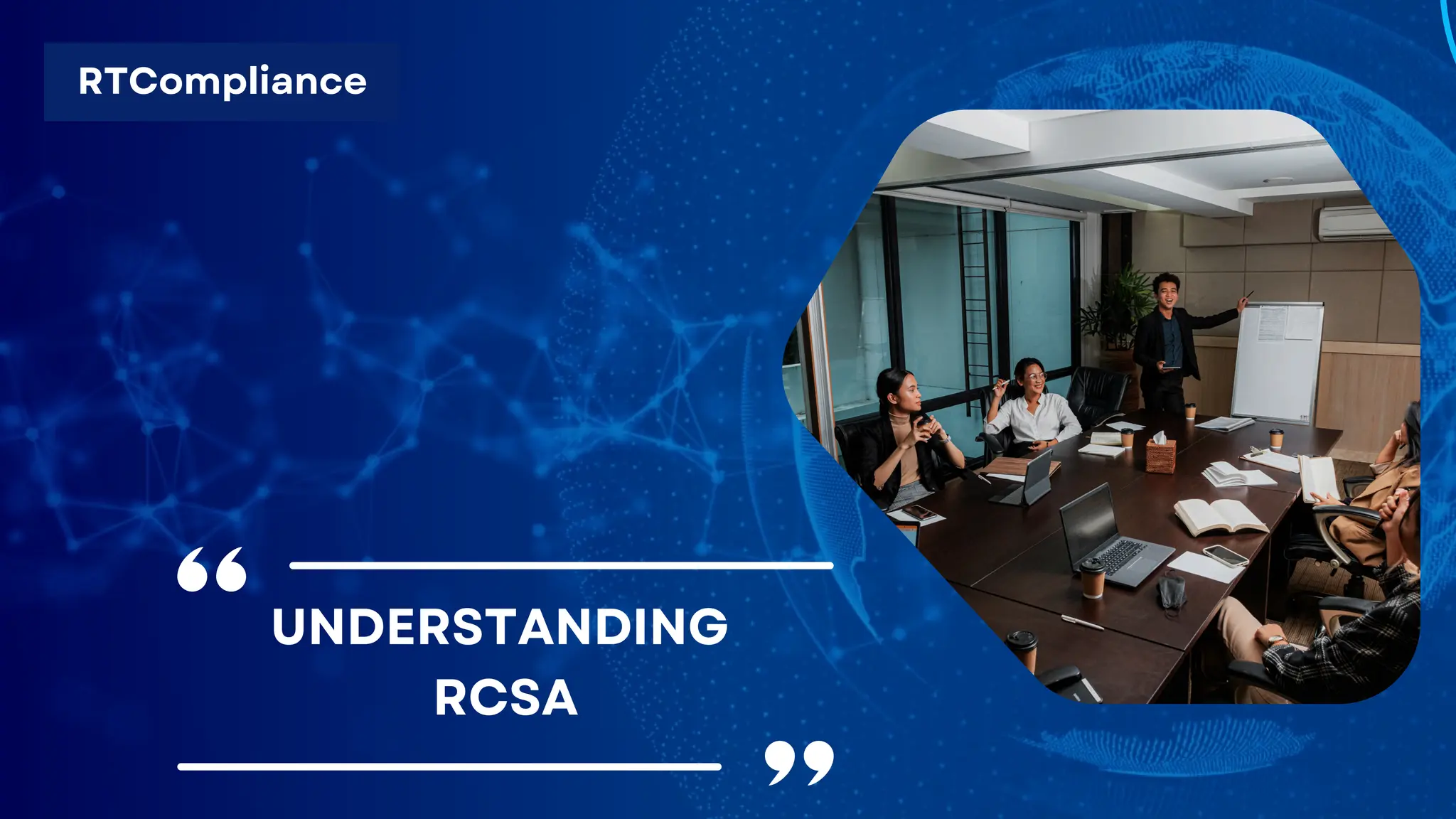
UNDERSTANDING
RCSA
Risk and Control Self-Assessment (RCSA) is a vital
component of an organization's risk management
framework, allowing for the identification and assessment
of internal risks and controls
RTCompliance
7 Key Components
01
Identify and document potential risks across
various business activities, including operational,
financial, compliance, and strategic risks
ESG
Risk Identification
02
Evaluate the effectiveness of existing controls in
mitigating identified risks and ensure alignment
with organizational objectives
Control Assessment
RTCompliance
Control Testing
04
Risk Assessment
03
Assess the severity and likelihood of
identified risks to prioritize them based
on their potential impact on the
organization's objectives and operations
Perform testing and validation of
controls to ensure they are operating
effectively and providing adequate
mitigation of identified risks
RTCompliance
05
Establish processes for ongoing
monitoring of risks and controls,
including regular reporting to
senior management
06
Risk Monitoring
Action Planning
RTCompliance
Develop action plans to address
any gaps or weaknesses
identified in control
effectiveness and risk mitigation
07
Foster a culture of continuous
improvement by regularly
reviewing and enhancing the
RCSA process based on
lessons learned
Continuous
Improvement
RTCompliance
Conclusion
By understanding these crucial elements of RCSA,
organizations can enhance their risk management
capabilities and ensure robust control over their
operational risks
RTCompliance
THANK
YOU
RTCompliance
support@rtcompliance.sg
www.rtcompliance.sg
CONTACT US :

Understanding RCSA 7 Crucial Elements Explained .pdf

  • 1.
  • 2.
    Risk and ControlSelf-Assessment (RCSA) is a vital component of an organization's risk management framework, allowing for the identification and assessment of internal risks and controls RTCompliance
  • 3.
    7 Key Components 01 Identifyand document potential risks across various business activities, including operational, financial, compliance, and strategic risks ESG Risk Identification 02 Evaluate the effectiveness of existing controls in mitigating identified risks and ensure alignment with organizational objectives Control Assessment RTCompliance
  • 4.
    Control Testing 04 Risk Assessment 03 Assessthe severity and likelihood of identified risks to prioritize them based on their potential impact on the organization's objectives and operations Perform testing and validation of controls to ensure they are operating effectively and providing adequate mitigation of identified risks RTCompliance
  • 5.
    05 Establish processes forongoing monitoring of risks and controls, including regular reporting to senior management 06 Risk Monitoring Action Planning RTCompliance Develop action plans to address any gaps or weaknesses identified in control effectiveness and risk mitigation
  • 6.
    07 Foster a cultureof continuous improvement by regularly reviewing and enhancing the RCSA process based on lessons learned Continuous Improvement RTCompliance
  • 7.
    Conclusion By understanding thesecrucial elements of RCSA, organizations can enhance their risk management capabilities and ensure robust control over their operational risks RTCompliance
  • 8.