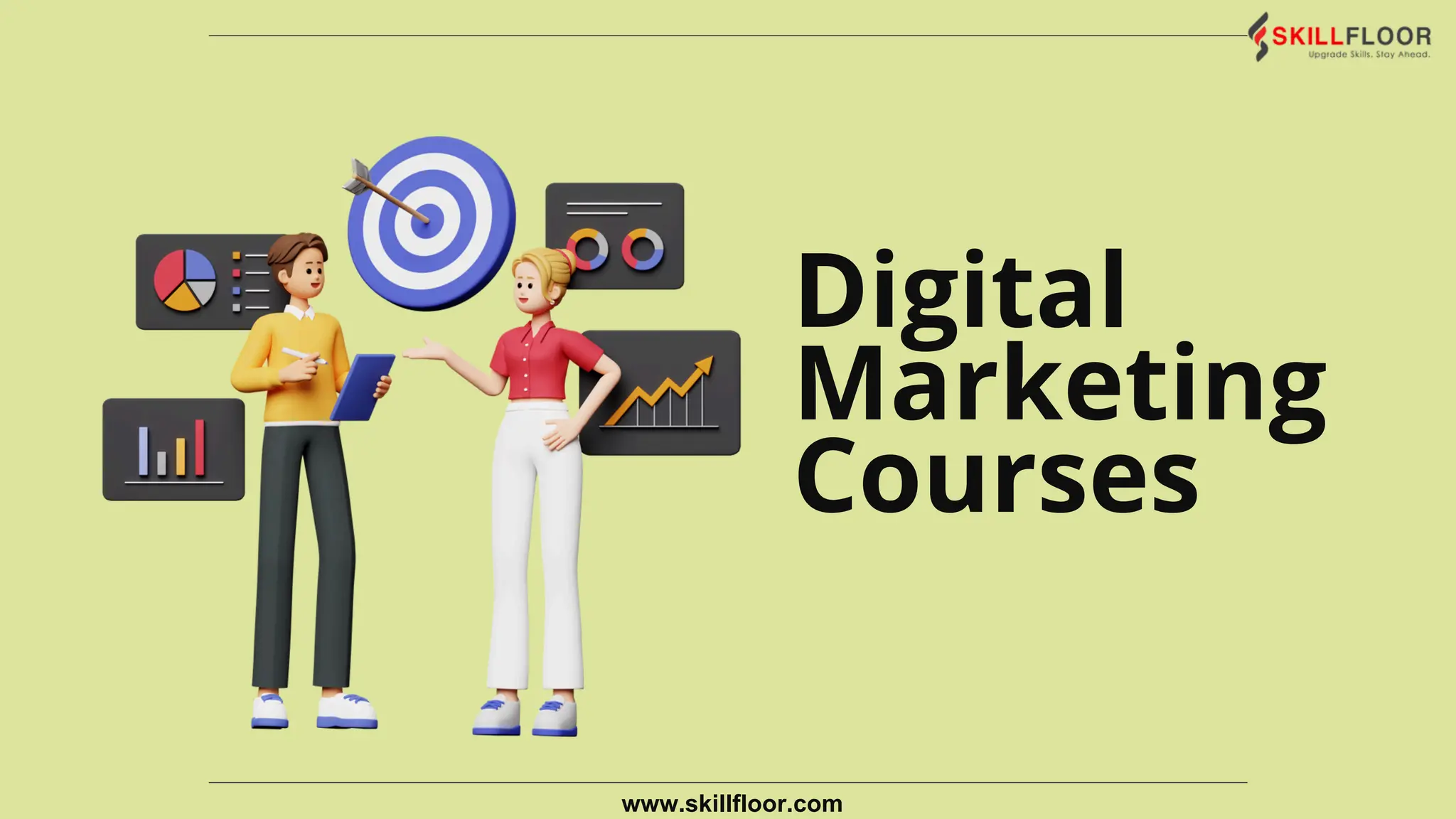
Digital
Marketing
Courses
www.skillfloor.com
Agenda
•Introduction to Digital Marketing
•Digital Marketing Strategies
•Website Optimization
•Social Media Marketing
•Email Marketing and Automation
•Analytics and Performance Measurement
www.skillfloor.com
Key Components Overview
Concept of Digital Marketing
Importance in Modern Business Digital Marketing is crucial for reaching a broader audience, targeting specific
demographics, and measuring campaign effectiveness in real-time, leading to
better ROI.
Digital Marketing encompasses all marketing efforts using digital channels to
connect with customers. This includes websites, social media, email, and search
engines.
Key components include SEO, content marketing, social media marketing, email
marketing, and analytics. Each plays a role in driving traffic, engagement, and
conversions.
Introduction to Digital Marketing
www.skillfloor.com
Search Engine
Optimization (SEO)
Content Marketing
Pay-Per-Click (PPC)
Advertising
Influencer Marketing
Involves optimizing website
content to rank higher in
search engine results pages.
Key techniques include
keyword research, on-page
optimization, and backlink
building.
Focuses on creating and
distributing valuable,
relevant content to attract
and engage a target
audience. Techniques
include blogging, video
production, and
infographics.
A model of online
marketing where
advertisers pay a fee each
time their ad is clicked.
Platforms include Google
Ads and social media ads,
offering targeted audience
reach.
Leverages individuals with
a large following to
promote products or
services. Involves
collaborations and
sponsorships to reach a
broader audience through
trusted voices.
Digital Marketing Strategies
www.skillfloor.com
Key Techniques
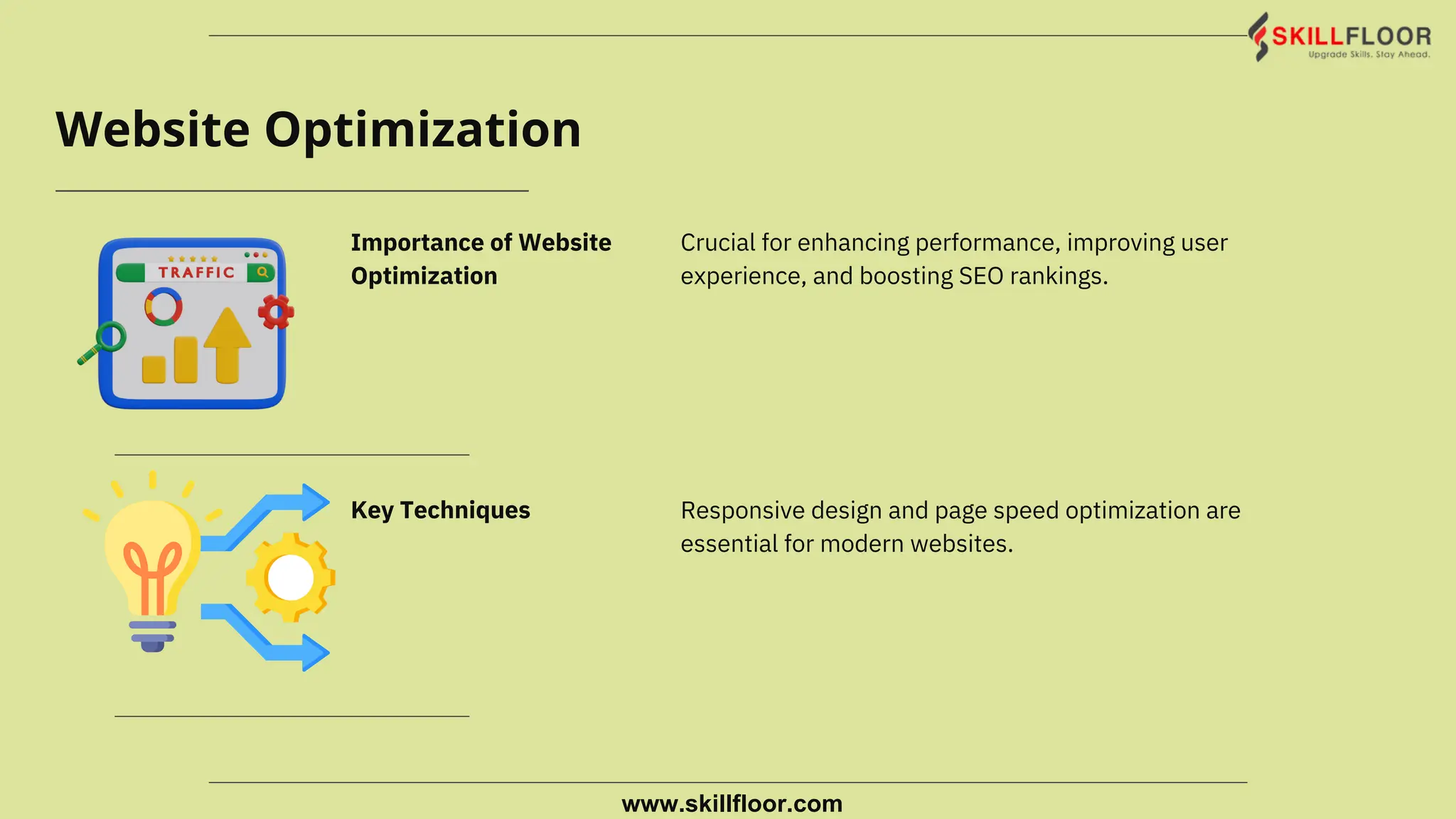
Importance of Website
Optimization
Crucial for enhancing performance, improving user
experience, and boosting SEO rankings.
Responsive design and page speed optimization are
essential for modern websites.
Website Optimization
www.skillfloor.com
●
●
●
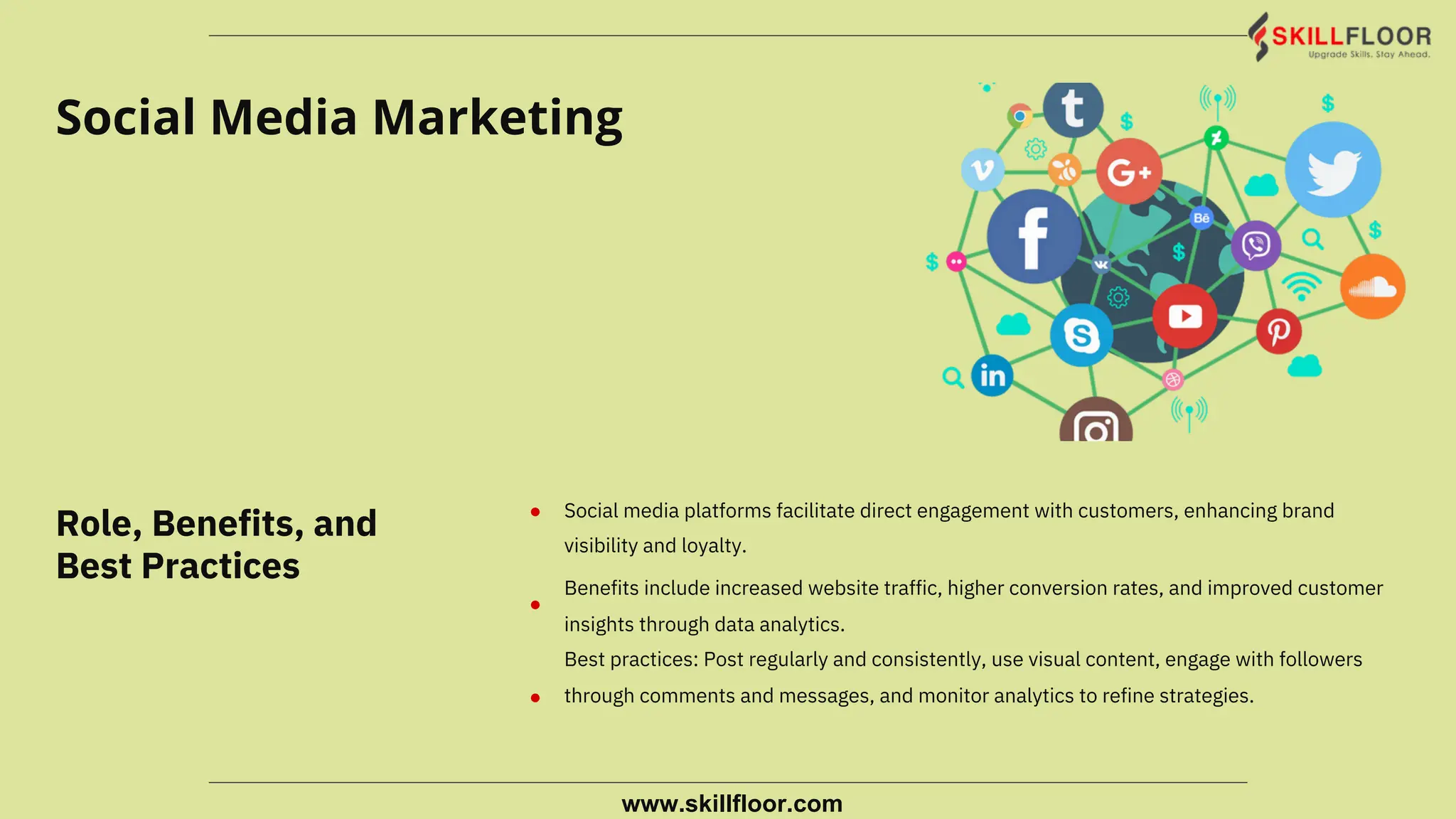
Social media platforms facilitate direct engagement with customers, enhancing brand
visibility and loyalty.
Benefits include increased website traffic, higher conversion rates, and improved customer
insights through data analytics.
Best practices: Post regularly and consistently, use visual content, engage with followers
through comments and messages, and monitor analytics to refine strategies.
Role, Benefits, and
Best Practices
Social Media Marketing
www.skillfloor.com
Planning and
Strategy
Define your goals, segment your
audience, and create tailored
content. Decide on the
frequency of your campaigns
and plan a content calendar.
Content Creation
Develop engaging and valuable
content for your emails. Use a mix
of text, images, and calls-to-
action to drive engagement.
Personalize content for different
segments.
Automation Setup
Use automation tools to
streamline your campaigns. Set
up workflows for different
triggers like welcome emails,
abandoned cart reminders, and
follow-ups.
Performance
Tracking
Monitor key metrics such as
open rates, click-through
rates, and conversion rates.
Use analytics to measure
success and make data-driven
adjustments.
Campaign goals
Audience segments
Content calendar
Email templates
Personalized content
Engaging visuals
Automated workflows
Trigger-based emails
Integration with CRM
Performance reports
Key metrics dashboard
Data-driven insights
Email Marketing and Automation
www.skillfloor.com
Thank you.
www.skillfloor.com

Understanding Digital Marketing courses in Pune

  • 1.
  • 2.
    Agenda •Introduction to DigitalMarketing •Digital Marketing Strategies •Website Optimization •Social Media Marketing •Email Marketing and Automation •Analytics and Performance Measurement www.skillfloor.com
  • 3.
    Key Components Overview Conceptof Digital Marketing Importance in Modern Business Digital Marketing is crucial for reaching a broader audience, targeting specific demographics, and measuring campaign effectiveness in real-time, leading to better ROI. Digital Marketing encompasses all marketing efforts using digital channels to connect with customers. This includes websites, social media, email, and search engines. Key components include SEO, content marketing, social media marketing, email marketing, and analytics. Each plays a role in driving traffic, engagement, and conversions. Introduction to Digital Marketing www.skillfloor.com
  • 4.
    Search Engine Optimization (SEO) ContentMarketing Pay-Per-Click (PPC) Advertising Influencer Marketing Involves optimizing website content to rank higher in search engine results pages. Key techniques include keyword research, on-page optimization, and backlink building. Focuses on creating and distributing valuable, relevant content to attract and engage a target audience. Techniques include blogging, video production, and infographics. A model of online marketing where advertisers pay a fee each time their ad is clicked. Platforms include Google Ads and social media ads, offering targeted audience reach. Leverages individuals with a large following to promote products or services. Involves collaborations and sponsorships to reach a broader audience through trusted voices. Digital Marketing Strategies www.skillfloor.com
  • 5.
    Key Techniques Importance ofWebsite Optimization Crucial for enhancing performance, improving user experience, and boosting SEO rankings. Responsive design and page speed optimization are essential for modern websites. Website Optimization www.skillfloor.com
  • 6.
    ● ● ● Social media platformsfacilitate direct engagement with customers, enhancing brand visibility and loyalty. Benefits include increased website traffic, higher conversion rates, and improved customer insights through data analytics. Best practices: Post regularly and consistently, use visual content, engage with followers through comments and messages, and monitor analytics to refine strategies. Role, Benefits, and Best Practices Social Media Marketing www.skillfloor.com
  • 7.
    Planning and Strategy Define yourgoals, segment your audience, and create tailored content. Decide on the frequency of your campaigns and plan a content calendar. Content Creation Develop engaging and valuable content for your emails. Use a mix of text, images, and calls-to- action to drive engagement. Personalize content for different segments. Automation Setup Use automation tools to streamline your campaigns. Set up workflows for different triggers like welcome emails, abandoned cart reminders, and follow-ups. Performance Tracking Monitor key metrics such as open rates, click-through rates, and conversion rates. Use analytics to measure success and make data-driven adjustments. Campaign goals Audience segments Content calendar Email templates Personalized content Engaging visuals Automated workflows Trigger-based emails Integration with CRM Performance reports Key metrics dashboard Data-driven insights Email Marketing and Automation www.skillfloor.com
  • 8.