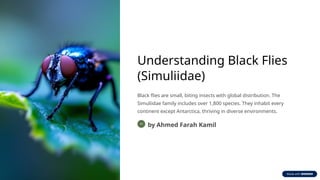
Understanding Black Flies
(Simuliidae)
Black flies are small, biting insects with global distribution. The
Simuliidae family includes over 1,800 species. They inhabit every
continent except Antarctica, thriving in diverse environments.
AK
by Ahmed Farah Kamil
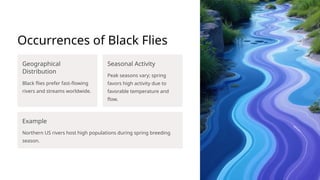
Occurrences of Black Flies
Geographical
Distribution
Black flies prefer fast-flowing
rivers and streams worldwide.
Seasonal Activity
Peak seasons vary; spring
favors high activity due to
favorable temperature and
flow.
Example
Northern US rivers host high populations during spring breeding
season.
Identification of Black Flies
Morphological Traits
Small size, dark color, humpbacked
body shape are typical.
Microscopic Features
Wing venation and piercing
mouthparts distinguish black flies.
Comparisons
Differentiated from midges by wing
and body characteristics.
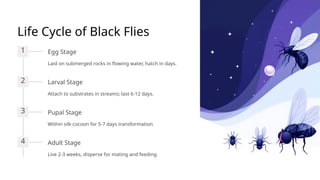
Life Cycle of Black Flies
1 Egg Stage
Laid on submerged rocks in flowing water, hatch in days.
2 Larval Stage
Attach to substrates in streams; last 6-12 days.
3 Pupal Stage
Within silk cocoon for 5-7 days transformation.
4 Adult Stage
Live 2-3 weeks, disperse for mating and feeding.
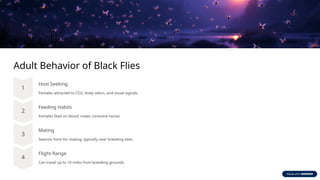
Adult Behavior of Black Flies
Host Seeking
Females attracted to CO2, body odors, and visual signals.
Feeding Habits
Females feed on blood; males consume nectar.
Mating
Swarms form for mating; typically near breeding sites.
Flight Range
Can travel up to 10 miles from breeding grounds.
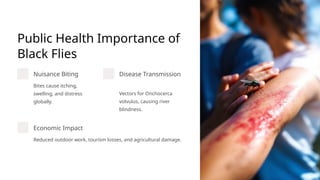
Public Health Importance of
Black Flies
Nuisance Biting
Bites cause itching,
swelling, and distress
globally.
Disease Transmission
Vectors for Onchocerca
volvulus, causing river
blindness.
Economic Impact
Reduced outdoor work, tourism losses, and agricultural damage.
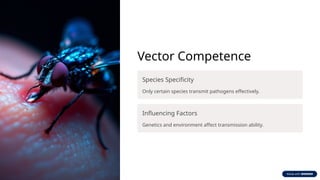
Vector Competence
Species Specificity
Only certain species transmit pathogens effectively.
Influencing Factors
Genetics and environment affect transmission ability.
Black Fly Control Strategies
Larviciding
Use biological or
chemical insecticides
in breeding waters.
Area-wide
Campaigns
Coordinated regional
efforts reduce
populations
effectively.
Personal
Protection
Repellents, protective
clothing, and habitat
avoidance help.
Control Methods in Detail
Chemical Control
Pyrethroids like permethrin are
effective but have environmental
risks.
Biological Control
Bti bacteria target larvae with >90%
field reduction rates.
Environmental Management
Modifying water flow and removing
breeding sites reduces larvae.
Future Directions and
Conclusion
Integrated Pest
Management
Combining methods for
sustainable black fly
control.
Research Needs
Enhanced surveillance,
diagnostics, and new
control tech.
Community Engagement
Education and participation key to effective programs.
Understanding-Black-Flies-Simuliidae.pptx

  • 1.
    Understanding Black Flies (Simuliidae) Blackflies are small, biting insects with global distribution. The Simuliidae family includes over 1,800 species. They inhabit every continent except Antarctica, thriving in diverse environments. AK by Ahmed Farah Kamil
  • 2.
    Occurrences of BlackFlies Geographical Distribution Black flies prefer fast-flowing rivers and streams worldwide. Seasonal Activity Peak seasons vary; spring favors high activity due to favorable temperature and flow. Example Northern US rivers host high populations during spring breeding season.
  • 3.
    Identification of BlackFlies Morphological Traits Small size, dark color, humpbacked body shape are typical. Microscopic Features Wing venation and piercing mouthparts distinguish black flies. Comparisons Differentiated from midges by wing and body characteristics.
  • 4.
    Life Cycle ofBlack Flies 1 Egg Stage Laid on submerged rocks in flowing water, hatch in days. 2 Larval Stage Attach to substrates in streams; last 6-12 days. 3 Pupal Stage Within silk cocoon for 5-7 days transformation. 4 Adult Stage Live 2-3 weeks, disperse for mating and feeding.
  • 5.
    Adult Behavior ofBlack Flies Host Seeking Females attracted to CO2, body odors, and visual signals. Feeding Habits Females feed on blood; males consume nectar. Mating Swarms form for mating; typically near breeding sites. Flight Range Can travel up to 10 miles from breeding grounds.
  • 6.
    Public Health Importanceof Black Flies Nuisance Biting Bites cause itching, swelling, and distress globally. Disease Transmission Vectors for Onchocerca volvulus, causing river blindness. Economic Impact Reduced outdoor work, tourism losses, and agricultural damage.
  • 7.
    Vector Competence Species Specificity Onlycertain species transmit pathogens effectively. Influencing Factors Genetics and environment affect transmission ability.
  • 8.
    Black Fly ControlStrategies Larviciding Use biological or chemical insecticides in breeding waters. Area-wide Campaigns Coordinated regional efforts reduce populations effectively. Personal Protection Repellents, protective clothing, and habitat avoidance help.
  • 9.
    Control Methods inDetail Chemical Control Pyrethroids like permethrin are effective but have environmental risks. Biological Control Bti bacteria target larvae with >90% field reduction rates. Environmental Management Modifying water flow and removing breeding sites reduces larvae.
  • 10.
    Future Directions and Conclusion IntegratedPest Management Combining methods for sustainable black fly control. Research Needs Enhanced surveillance, diagnostics, and new control tech. Community Engagement Education and participation key to effective programs.