ULCERATIVE COLITIS
DR BIPLAVE KARKI
INTERNAL MEDICINE
Resident
MODERATOR DR RAJESH PANDEY
Introduction
• A major disorder under the broad group of conditions termed
inflammatory bowel diseases (IBDs)
• A chronic idiopathic inflammatory disease of the gastrointestinal tract
that affects the large bowel
Epidemiology
• Incidence:
• 1.2 to 20.3 cases per 100,000 persons per year
• Prevalence:
• 7.6 to 246.0 cases per 100,000 per year
• The highest incidence and prevalence in the populations of Northern
Europe and North America and the lowest in continental Asia
• Age of onset: 15–30 & 60–80
Loftus EV Jr. Clinical epidemiology of inflammatory bowel disease: incidence, prevalence, and environmental
influences. Gastroenterology 2004;126:1504-17
Etiology and Pathogenesis
Involves a complex interaction of three elements:
• Genetic susceptibility
• Host immunity
• Environmental factors
Etiology and Pathogenesis
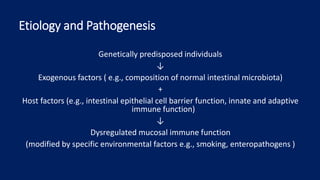
Genetically predisposed individuals
↓
Exogenous factors ( e.g., composition of normal intestinal microbiota)
+
Host factors (e.g., intestinal epithelial cell barrier function, innate and adaptive
immune function)
↓
Dysregulated mucosal immune function
(modified by specific environmental factors e.g., smoking, enteropathogens )
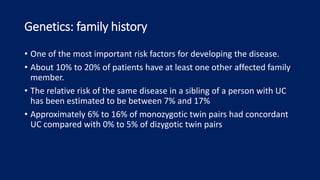
Genetics: family history
• One of the most important risk factors for developing the disease.
• About 10% to 20% of patients have at least one other affected family
member.
• The relative risk of the same disease in a sibling of a person with UC
has been estimated to be between 7% and 17%
• Approximately 6% to 16% of monozygotic twin pairs had concordant
UC compared with 0% to 5% of dizygotic twin pairs
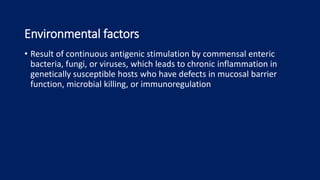
Environmental factors
• Result of continuous antigenic stimulation by commensal enteric
bacteria, fungi, or viruses, which leads to chronic inflammation in
genetically susceptible hosts who have defects in mucosal barrier
function, microbial killing, or immunoregulation
Intestinal Immune System
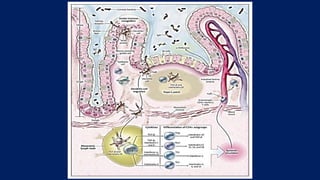
The Intestinal Immune System
Intestinal Immune System
• In the healthy state, the goblet cells secrete a layer of mucus that limits exposure of the intestinal
epithelial cells to bacteria.
• Both the secretion of antimicrobial peptides (e.g., α-defensins) by Paneth cells and the production
of immunoglobulin A (IgA) provide additional protection from luminal microbiota.
• Innate microbial sensing by epithelial cells, dendritic cells, and macrophages is mediated through
pattern-recognition receptors such as toll-like receptors and nucleotide oligomerization domain
(NOD) proteins.
• Dendritic cells present antigens to naive CD4+ T cells in secondary lymphoid organs (Peyer’s
patches and mesenteric lymph nodes), where factors such as the phenotype of the antigen-
presenting cells and the cytokine milieu (transforming growth factor β [TGF-β] and interleukin-10)
modulate differentiation of CD4+ T-cell subgroups with characteristic cytokine profiles (regulatory
T cells [e.g., Treg] and helper T cells [e.g., Th1, Th2, and Th17]), and enterotropic molecules (e.g.,
α4β7) are induced that provide for gut homing of lymphocytes from the systemic circulation.
• These activated CD4+ T cells then circulate to the intestinal lamina propria, where they carry out
effector functions.
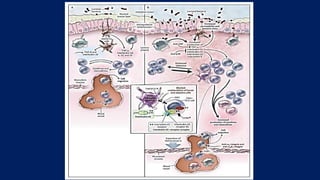
In healthy persons (Panel A)
• the lamina propria normally contains a diverse array of immune cells
and secreted cytokines.
• These include antiinflammatory mediators (transforming growth
factor β [TGF-β] and interleukin- 10) that down-regulate immune
responses, as well as proinflammatory mediators from both innate
and adaptive immune cells that limit excessive entry of intestinal
microbiota and defend against pathogens.
• Noninflammatory defenses, such as phagocytosis by macrophages,
probably assist in defending against bacteria entering the lamina
propria while minimizing tissue injury.
• A homeostatic balance is maintained between regulatory T cells (e.g.,
Treg) and effector T cells (Th1, Th2, and Th17).
In persons with intestinal inflammation (Panel
B)
• several events contribute to increased bacterial exposure, including disruption of
the mucus layer, dysregulation of epithelial tight junctions, increased intestinal
permeability, and increased bacterial adherence to epithelial cells.
• In inflammatory bowel disease, innate cells produce increased levels of tumor
necrosis factor α (TNF-α), interleukin-1β, interleukin-6, interleukin-12,
interleukin- 23, and chemokines.
• There is marked expansion of the lamina propria, with increased numbers of
CD4+ T cells, especially proinflammatory T-cell subgroups, which also secrete
increased levels of cytokines and chemokines.
• Increased production of chemokines results in recruitment of additional
leukocytes, resulting in a cycle of inflammation.
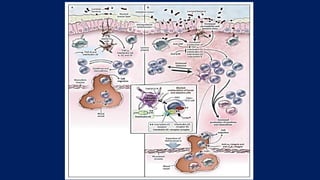
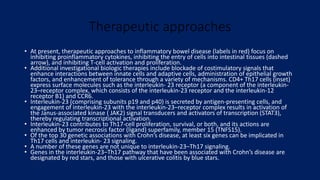
Therapeutic approaches
• At present, therapeutic approaches to inflammatory bowel disease (labels in red) focus on
inhibiting proinflammatory cytokines, inhibiting the entry of cells into intestinal tissues (dashed
arrow), and inhibiting T-cell activation and proliferation.
• Additional investigational biologic therapies include blockade of costimulatory signals that
enhance interactions between innate cells and adaptive cells, administration of epithelial growth
factors, and enhancement of tolerance through a variety of mechanisms. CD4+ Th17 cells (inset)
express surface molecules such as the interleukin- 23 receptor (a component of the interleukin-
23–receptor complex, which consists of the interleukin-23 receptor and the interleukin-12
receptor B1) and CCR6.
• Interleukin-23 (comprising subunits p19 and p40) is secreted by antigen-presenting cells, and
engagement of interleukin-23 with the interleukin-23–receptor complex results in activation of
the Janus-associated kinase ( JAK2) signal transducers and activators of transcription (STAT3),
thereby regulating transcriptional activation.
• Interleukin-23 contributes to Th17-cell proliferation, survival, or both, and its actions are
enhanced by tumor necrosis factor (ligand) superfamily, member 15 (TNFS15).
• Of the top 30 genetic associations with Crohn’s disease, at least six genes can be implicated in
Th17 cells and interleukin- 23 signaling.
• A number of these genes are not unique to interleukin-23–Th17 signaling.
• Genes in the interleukin-23–Th17 pathway that have been associated with Crohn’s disease are
designated by red stars, and those with ulcerative colitis by blue stars.
Pathology
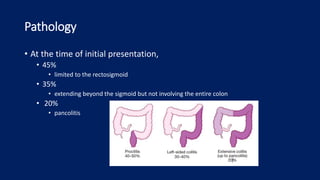
• At the time of initial presentation,
• 45%
• limited to the rectosigmoid
• 35%
• extending beyond the sigmoid but not involving the entire colon
• 20%
• pancolitis
Pathology
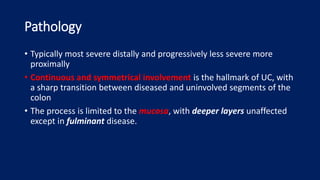
• Typically most severe distally and progressively less severe more
proximally
• Continuous and symmetrical involvement is the hallmark of UC, with
a sharp transition between diseased and uninvolved segments of the
colon
• The process is limited to the mucosa, with deeper layers unaffected
except in fulminant disease.
Pathology: Macroscopic features
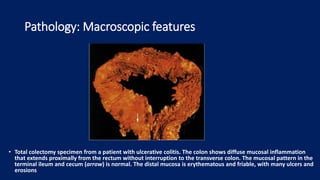
• Total colectomy specimen from a patient with ulcerative colitis. The colon shows diffuse mucosal inflammation
that extends proximally from the rectum without interruption to the transverse colon. The mucosal pattern in the
terminal ileum and cecum (arrow) is normal. The distal mucosa is erythematous and friable, with many ulcers and
erosions
Pathology: Macroscopic features
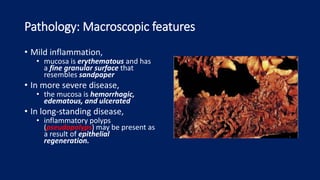
• Mild inflammation,
• mucosa is erythematous and has
a fine granular surface that
resembles sandpaper
• In more severe disease,
• the mucosa is hemorrhagic,
edematous, and ulcerated
• In long-standing disease,
• inflammatory polyps
(pseudopolyps) may be present as
a result of epithelial
regeneration.
Pathology: Macroscopic features
• Remission
• Mucosa may appear normal
• Patients with many years of disease
• Appears atrophic and featureless, and the entire colon becomes narrowed
and shortened
• Patients with fulminant disease
• a toxic colitis or megacolon where the bowel wall thins and the mucosa is
severely ulcerated; this may lead to perforation
Pathology: Microscopic Features
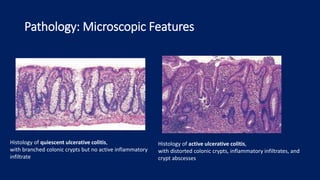
Histology of quiescent ulcerative colitis,
with branched colonic crypts but no active inflammatory
infiltrate
Histology of active ulcerative colitis,
with distorted colonic crypts, inflammatory infiltrates, and
crypt abscesses
Clinical findings
• Insidious onset rather than abrupt;
• Although the disease occasionally presents acutely after infectious
colitis or traveler’s diarrhea
• Common symptoms :
• Diarrhea
• Rectal bleeding
• Passage of mucus
• Tenesmus
• Urgency
• Abdominal pain
• In more-severe cases, fever and weight loss may be prominent
Ulcerative Proctitis: Signs and Symptoms
• Defined by
• inflammation limited to the distal 15–20 cm of rectum
• usually the mildest presenting extent of ulcerative colitis
• accounting for approximately 25%–30% of cases
• Patients with ulcerative proctitis typically present with:
• Hematochezia
• a sense of rectal urgency,
• constipated bowel movements
• Systemic manifestations are uncommon with proctitis, but skin or
joint symptoms can occur
Proctosigmoiditis or Left-sided colitis
• Accounts for about 40% of ulcerative colitis cases,
• Is an intermediate syndrome in which patients may present with:
• either constipation or diarrhea
• accompanied by tenesmus, urgency, and rectal bleeding
• Colicky left lower quadrant pain and extraintestinal symptoms (more common
than with proctitis)
Extensive colitis (pancolitis)
• Diagnosed when inflammation extends into the transverse or right
colon
• Diarrhea
• diminished absorptive capacity of the colon , accompanied by rectal
bleeding, urgency and tenesmus.
• Cramping abdominal pain
• diffuse or localized
• More likely to have weight loss, systemic or extraintestinal symptoms,
and anemia
Toxic megacolon
• Most severe manifestation of ulcerative colitis
• Diagnosed when the inflammation extends from the superficial
mucosa into the submucosal and muscular layers of the colon
• producing circular muscle paralysis and
• precipitating dilation along with a “tissue-paper” thin colonic wall
• Manifestations :
• Fever
• Severe cramps
• Abdominal distention
• Abdominal tenderness that may be localized, diffuse, or associated rebound
tenderness.
Extracolonic manifestations
• Uveitis
• Primary sclerosing cholangitis
• Pyoderma gangrenosum
• Pleuritis
• Erythema nodosum
NATURAL HISTORY AND PROGNOSIS
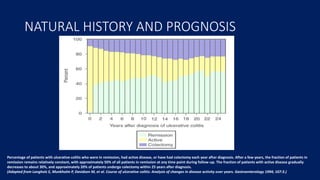
Percentage of patients with ulcerative colitis who were in remission, had active disease, or have had colectomy each year after diagnosis. After a few years, the fraction of patients in
remission remains relatively constant, with approximately 50% of all patients in remission at any time point during follow-up. The fraction of patients with active disease gradually
decreases to about 30%, and approximately 20% of patients undergo colectomy within 25 years after diagnosis.
(Adapted from Langholz E, Munkholm P, Davidsen M, et al. Course of ulcerative colitis: Analysis of changes in disease activity over years. Gastroenterology 1994; 107:3.)
PROGNOSIS
• Despite the morbidity of UC, mortality associated with the disease
has dropped dramatically since the late 1950s and 1960s
• The mortality rate for a severe attack of UC was approximately 35%
before the introduction of glucocorticoid therapy and now is less than
2%
DIAGNOSIS
• Laboratory investigations
• CBC and differential.
• Liver enzymes
• Baseline kidney function
• Microbiological testing
• Acute-phase reactants [CRP, platelet count,ESR, and a decrease in
hemoglobin.
• Fecal markers
• Fecal leukocytes
• Fecal lactoferrin
• Fecal calprotectin
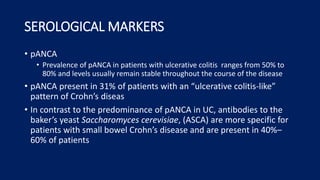
SEROLOGICAL MARKERS
• pANCA
• Prevalence of pANCA in patients with ulcerative colitis ranges from 50% to
80% and levels usually remain stable throughout the course of the disease
• pANCA present in 31% of patients with an “ulcerative colitis-like”
pattern of Crohn’s diseas
• In contrast to the predominance of pANCA in UC, antibodies to the
baker’s yeast Saccharomyces cerevisiae, (ASCA) are more specific for
patients with small bowel Crohn’s disease and are present in 40%–
60% of patients
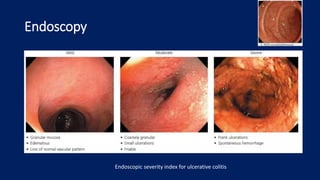
Endoscopy
Endoscopic severity index for ulcerative colitis
IMAGING STUDIES
• Conventional barium radiography has largely been supplanted by
endoscopic examination
• ABDOMINAL X-RAYS
• Assessing for perforation of the viscus and toxic megacolon
• Features of active inflammation include colonic air–fluid levels or loss of
colonic haustration
• In the presence of severe disease, the colon may exhibit an irregular, nodular
contour with mucosal islands separated by severely inflamed mucosa
• Lastly, AXRs may suggest the extent of disease, as an inflamed colon contains
less stool and absence of stool in the colon suggests pancolitis
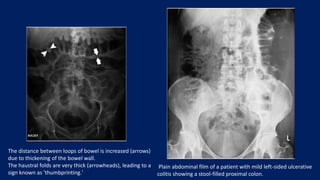
The distance between loops of bowel is increased (arrows)
due to thickening of the bowel wall.
The haustral folds are very thick (arrowheads), leading to a
sign known as 'thumbprinting.'
Plain abdominal film of a patient with mild left-sided ulcerative
colitis showing a stool-filled proximal colon.
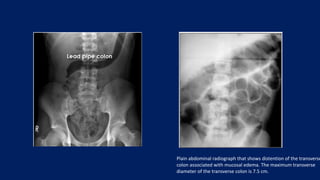
Plain abdominal radiograph that shows distention of the transverse
colon associated with mucosal edema. The maximum transverse
diameter of the transverse colon is 7.5 cm.
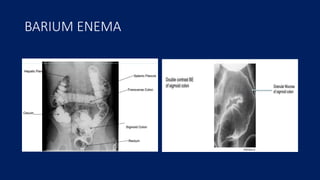
BARIUM ENEMA
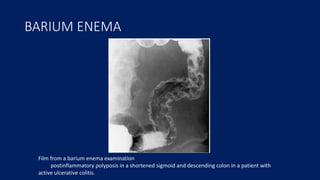
BARIUM ENEMA
Film from a barium enema examination
postinflammatory polyposis in a shortened sigmoid and descending colon in a patient with
active ulcerative colitis.
DIAGNOSIS
• Computed tomography (CT) enterography
• Magnetic resonance imaging of the colon
• Wireless capsule endoscopy
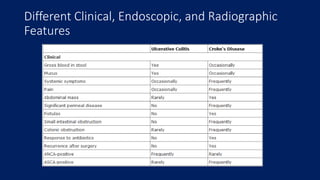
Different Clinical, Endoscopic, and Radiographic
Features
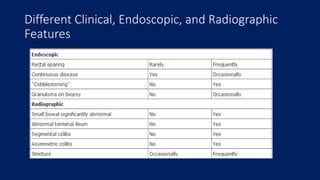
Different Clinical, Endoscopic, and Radiographic
Features
ASSESSMENT OF DISEASE ACTIVITY
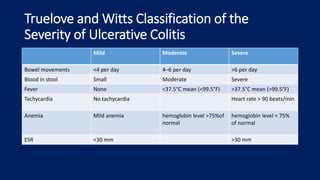
Truelove and Witts Classification of the
Severity of Ulcerative Colitis
Mild Moderate Severe
Bowel movements <4 per day 4–6 per day >6 per day
Blood in stool Small Moderate Severe
Fever None <37.5°C mean (<99.5°F) >37.5°C mean (>99.5°F)
Tachycardia No tachycardia Heart rate > 90 beats/min
Anemia Mild anemia hemoglobin level >75%of
normal
hemoglobin level < 75%
of normal
ESR <30 mm >30 mm
TREATMENT
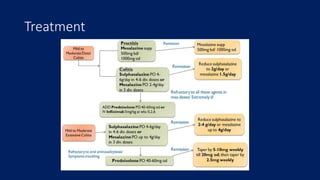
MEDICAL
• Goals of therapy of UC are to
• induce remission
• maintain remission
• maintain adequate nutrition
• minimize disease- and treatment-related complications
• improve the patient's quality of life
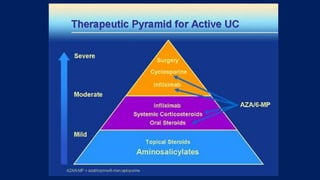
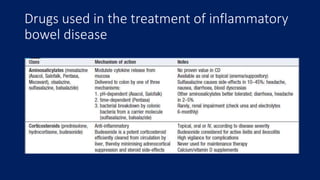
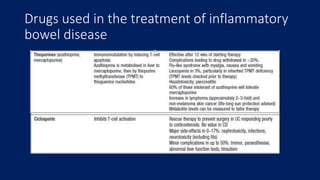
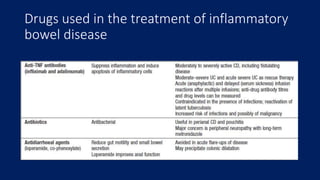
Drugs used in the treatment of inflammatory
bowel disease
Drugs used in the treatment of inflammatory
bowel disease
Drugs used in the treatment of inflammatory
bowel disease
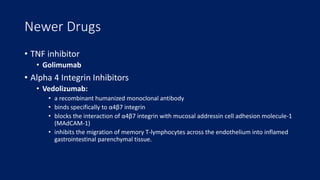
Newer Drugs
• TNF inhibitor
• Golimumab
• Alpha 4 Integrin Inhibitors
• Vedolizumab:
• a recombinant humanized monoclonal antibody
• binds specifically to α4β7 integrin
• blocks the interaction of α4β7 integrin with mucosal addressin cell adhesion molecule-1
(MAdCAM-1)
• inhibits the migration of memory T-lymphocytes across the endothelium into inflamed
gastrointestinal parenchymal tissue.
Treatment
Treatment
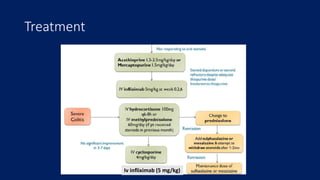
Iv infliximab (5 mg/kg)
Surgical Indications
• Colonic dysplasia or carcinoma
• Colonic hemorrhage, uncontrollable
• Colonic perforation
• Growth retardation
• Intolerable or unacceptable side effects of medical therapy
• Medically refractory disease
• Systemic complications that are recurrent or unmanageable
• Toxic megacolon
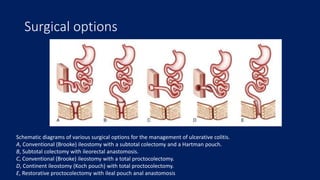
Surgical options
Schematic diagrams of various surgical options for the management of ulcerative colitis.
A, Conventional (Brooke) ileostomy with a subtotal colectomy and a Hartman pouch.
B, Subtotal colectomy with ileorectal anastomosis.
C, Conventional (Brooke) ileostomy with a total proctocolectomy.
D, Continent ileostomy (Koch pouch) with total proctocolectomy.
E, Restorative proctocolectomy with ileal pouch anal anastomosis
Complications
• Toxic megacolon
• Strictures
• Dysplasia and colorectal cancer
• Pouchitis
THANK YOU

Ulcerative collitis

  • 1.
    ULCERATIVE COLITIS DR BIPLAVEKARKI INTERNAL MEDICINE Resident MODERATOR DR RAJESH PANDEY
  • 2.
    Introduction • A majordisorder under the broad group of conditions termed inflammatory bowel diseases (IBDs) • A chronic idiopathic inflammatory disease of the gastrointestinal tract that affects the large bowel
  • 3.
    Epidemiology • Incidence: • 1.2to 20.3 cases per 100,000 persons per year • Prevalence: • 7.6 to 246.0 cases per 100,000 per year • The highest incidence and prevalence in the populations of Northern Europe and North America and the lowest in continental Asia • Age of onset: 15–30 & 60–80 Loftus EV Jr. Clinical epidemiology of inflammatory bowel disease: incidence, prevalence, and environmental influences. Gastroenterology 2004;126:1504-17
  • 4.
    Etiology and Pathogenesis Involvesa complex interaction of three elements: • Genetic susceptibility • Host immunity • Environmental factors
  • 5.
    Etiology and Pathogenesis Geneticallypredisposed individuals ↓ Exogenous factors ( e.g., composition of normal intestinal microbiota) + Host factors (e.g., intestinal epithelial cell barrier function, innate and adaptive immune function) ↓ Dysregulated mucosal immune function (modified by specific environmental factors e.g., smoking, enteropathogens )
  • 6.
    Genetics: family history •One of the most important risk factors for developing the disease. • About 10% to 20% of patients have at least one other affected family member. • The relative risk of the same disease in a sibling of a person with UC has been estimated to be between 7% and 17% • Approximately 6% to 16% of monozygotic twin pairs had concordant UC compared with 0% to 5% of dizygotic twin pairs
  • 7.
    Environmental factors • Resultof continuous antigenic stimulation by commensal enteric bacteria, fungi, or viruses, which leads to chronic inflammation in genetically susceptible hosts who have defects in mucosal barrier function, microbial killing, or immunoregulation
  • 8.
  • 9.
  • 10.
    Intestinal Immune System •In the healthy state, the goblet cells secrete a layer of mucus that limits exposure of the intestinal epithelial cells to bacteria. • Both the secretion of antimicrobial peptides (e.g., α-defensins) by Paneth cells and the production of immunoglobulin A (IgA) provide additional protection from luminal microbiota. • Innate microbial sensing by epithelial cells, dendritic cells, and macrophages is mediated through pattern-recognition receptors such as toll-like receptors and nucleotide oligomerization domain (NOD) proteins. • Dendritic cells present antigens to naive CD4+ T cells in secondary lymphoid organs (Peyer’s patches and mesenteric lymph nodes), where factors such as the phenotype of the antigen- presenting cells and the cytokine milieu (transforming growth factor β [TGF-β] and interleukin-10) modulate differentiation of CD4+ T-cell subgroups with characteristic cytokine profiles (regulatory T cells [e.g., Treg] and helper T cells [e.g., Th1, Th2, and Th17]), and enterotropic molecules (e.g., α4β7) are induced that provide for gut homing of lymphocytes from the systemic circulation. • These activated CD4+ T cells then circulate to the intestinal lamina propria, where they carry out effector functions.
  • 12.
    In healthy persons(Panel A) • the lamina propria normally contains a diverse array of immune cells and secreted cytokines. • These include antiinflammatory mediators (transforming growth factor β [TGF-β] and interleukin- 10) that down-regulate immune responses, as well as proinflammatory mediators from both innate and adaptive immune cells that limit excessive entry of intestinal microbiota and defend against pathogens. • Noninflammatory defenses, such as phagocytosis by macrophages, probably assist in defending against bacteria entering the lamina propria while minimizing tissue injury. • A homeostatic balance is maintained between regulatory T cells (e.g., Treg) and effector T cells (Th1, Th2, and Th17).
  • 14.
    In persons withintestinal inflammation (Panel B) • several events contribute to increased bacterial exposure, including disruption of the mucus layer, dysregulation of epithelial tight junctions, increased intestinal permeability, and increased bacterial adherence to epithelial cells. • In inflammatory bowel disease, innate cells produce increased levels of tumor necrosis factor α (TNF-α), interleukin-1β, interleukin-6, interleukin-12, interleukin- 23, and chemokines. • There is marked expansion of the lamina propria, with increased numbers of CD4+ T cells, especially proinflammatory T-cell subgroups, which also secrete increased levels of cytokines and chemokines. • Increased production of chemokines results in recruitment of additional leukocytes, resulting in a cycle of inflammation.
  • 15.
    Therapeutic approaches • Atpresent, therapeutic approaches to inflammatory bowel disease (labels in red) focus on inhibiting proinflammatory cytokines, inhibiting the entry of cells into intestinal tissues (dashed arrow), and inhibiting T-cell activation and proliferation. • Additional investigational biologic therapies include blockade of costimulatory signals that enhance interactions between innate cells and adaptive cells, administration of epithelial growth factors, and enhancement of tolerance through a variety of mechanisms. CD4+ Th17 cells (inset) express surface molecules such as the interleukin- 23 receptor (a component of the interleukin- 23–receptor complex, which consists of the interleukin-23 receptor and the interleukin-12 receptor B1) and CCR6. • Interleukin-23 (comprising subunits p19 and p40) is secreted by antigen-presenting cells, and engagement of interleukin-23 with the interleukin-23–receptor complex results in activation of the Janus-associated kinase ( JAK2) signal transducers and activators of transcription (STAT3), thereby regulating transcriptional activation. • Interleukin-23 contributes to Th17-cell proliferation, survival, or both, and its actions are enhanced by tumor necrosis factor (ligand) superfamily, member 15 (TNFS15). • Of the top 30 genetic associations with Crohn’s disease, at least six genes can be implicated in Th17 cells and interleukin- 23 signaling. • A number of these genes are not unique to interleukin-23–Th17 signaling. • Genes in the interleukin-23–Th17 pathway that have been associated with Crohn’s disease are designated by red stars, and those with ulcerative colitis by blue stars.
  • 16.
    Pathology • At thetime of initial presentation, • 45% • limited to the rectosigmoid • 35% • extending beyond the sigmoid but not involving the entire colon • 20% • pancolitis
  • 17.
    Pathology • Typically mostsevere distally and progressively less severe more proximally • Continuous and symmetrical involvement is the hallmark of UC, with a sharp transition between diseased and uninvolved segments of the colon • The process is limited to the mucosa, with deeper layers unaffected except in fulminant disease.
  • 18.
    Pathology: Macroscopic features •Total colectomy specimen from a patient with ulcerative colitis. The colon shows diffuse mucosal inflammation that extends proximally from the rectum without interruption to the transverse colon. The mucosal pattern in the terminal ileum and cecum (arrow) is normal. The distal mucosa is erythematous and friable, with many ulcers and erosions
  • 19.
    Pathology: Macroscopic features •Mild inflammation, • mucosa is erythematous and has a fine granular surface that resembles sandpaper • In more severe disease, • the mucosa is hemorrhagic, edematous, and ulcerated • In long-standing disease, • inflammatory polyps (pseudopolyps) may be present as a result of epithelial regeneration.
  • 20.
    Pathology: Macroscopic features •Remission • Mucosa may appear normal • Patients with many years of disease • Appears atrophic and featureless, and the entire colon becomes narrowed and shortened • Patients with fulminant disease • a toxic colitis or megacolon where the bowel wall thins and the mucosa is severely ulcerated; this may lead to perforation
  • 21.
    Pathology: Microscopic Features Histologyof quiescent ulcerative colitis, with branched colonic crypts but no active inflammatory infiltrate Histology of active ulcerative colitis, with distorted colonic crypts, inflammatory infiltrates, and crypt abscesses
  • 22.
    Clinical findings • Insidiousonset rather than abrupt; • Although the disease occasionally presents acutely after infectious colitis or traveler’s diarrhea • Common symptoms : • Diarrhea • Rectal bleeding • Passage of mucus • Tenesmus • Urgency • Abdominal pain • In more-severe cases, fever and weight loss may be prominent
  • 23.
    Ulcerative Proctitis: Signsand Symptoms • Defined by • inflammation limited to the distal 15–20 cm of rectum • usually the mildest presenting extent of ulcerative colitis • accounting for approximately 25%–30% of cases • Patients with ulcerative proctitis typically present with: • Hematochezia • a sense of rectal urgency, • constipated bowel movements • Systemic manifestations are uncommon with proctitis, but skin or joint symptoms can occur
  • 24.
    Proctosigmoiditis or Left-sidedcolitis • Accounts for about 40% of ulcerative colitis cases, • Is an intermediate syndrome in which patients may present with: • either constipation or diarrhea • accompanied by tenesmus, urgency, and rectal bleeding • Colicky left lower quadrant pain and extraintestinal symptoms (more common than with proctitis)
  • 25.
    Extensive colitis (pancolitis) •Diagnosed when inflammation extends into the transverse or right colon • Diarrhea • diminished absorptive capacity of the colon , accompanied by rectal bleeding, urgency and tenesmus. • Cramping abdominal pain • diffuse or localized • More likely to have weight loss, systemic or extraintestinal symptoms, and anemia
  • 26.
    Toxic megacolon • Mostsevere manifestation of ulcerative colitis • Diagnosed when the inflammation extends from the superficial mucosa into the submucosal and muscular layers of the colon • producing circular muscle paralysis and • precipitating dilation along with a “tissue-paper” thin colonic wall • Manifestations : • Fever • Severe cramps • Abdominal distention • Abdominal tenderness that may be localized, diffuse, or associated rebound tenderness.
  • 27.
    Extracolonic manifestations • Uveitis •Primary sclerosing cholangitis • Pyoderma gangrenosum • Pleuritis • Erythema nodosum
  • 28.
    NATURAL HISTORY ANDPROGNOSIS Percentage of patients with ulcerative colitis who were in remission, had active disease, or have had colectomy each year after diagnosis. After a few years, the fraction of patients in remission remains relatively constant, with approximately 50% of all patients in remission at any time point during follow-up. The fraction of patients with active disease gradually decreases to about 30%, and approximately 20% of patients undergo colectomy within 25 years after diagnosis. (Adapted from Langholz E, Munkholm P, Davidsen M, et al. Course of ulcerative colitis: Analysis of changes in disease activity over years. Gastroenterology 1994; 107:3.)
  • 29.
    PROGNOSIS • Despite themorbidity of UC, mortality associated with the disease has dropped dramatically since the late 1950s and 1960s • The mortality rate for a severe attack of UC was approximately 35% before the introduction of glucocorticoid therapy and now is less than 2%
  • 30.
    DIAGNOSIS • Laboratory investigations •CBC and differential. • Liver enzymes • Baseline kidney function • Microbiological testing • Acute-phase reactants [CRP, platelet count,ESR, and a decrease in hemoglobin. • Fecal markers • Fecal leukocytes • Fecal lactoferrin • Fecal calprotectin
  • 31.
    SEROLOGICAL MARKERS • pANCA •Prevalence of pANCA in patients with ulcerative colitis ranges from 50% to 80% and levels usually remain stable throughout the course of the disease • pANCA present in 31% of patients with an “ulcerative colitis-like” pattern of Crohn’s diseas • In contrast to the predominance of pANCA in UC, antibodies to the baker’s yeast Saccharomyces cerevisiae, (ASCA) are more specific for patients with small bowel Crohn’s disease and are present in 40%– 60% of patients
  • 32.
  • 33.
    IMAGING STUDIES • Conventionalbarium radiography has largely been supplanted by endoscopic examination • ABDOMINAL X-RAYS • Assessing for perforation of the viscus and toxic megacolon • Features of active inflammation include colonic air–fluid levels or loss of colonic haustration • In the presence of severe disease, the colon may exhibit an irregular, nodular contour with mucosal islands separated by severely inflamed mucosa • Lastly, AXRs may suggest the extent of disease, as an inflamed colon contains less stool and absence of stool in the colon suggests pancolitis
  • 34.
    The distance betweenloops of bowel is increased (arrows) due to thickening of the bowel wall. The haustral folds are very thick (arrowheads), leading to a sign known as 'thumbprinting.' Plain abdominal film of a patient with mild left-sided ulcerative colitis showing a stool-filled proximal colon.
  • 35.
    Plain abdominal radiographthat shows distention of the transverse colon associated with mucosal edema. The maximum transverse diameter of the transverse colon is 7.5 cm.
  • 36.
  • 37.
    BARIUM ENEMA Film froma barium enema examination postinflammatory polyposis in a shortened sigmoid and descending colon in a patient with active ulcerative colitis.
  • 38.
    DIAGNOSIS • Computed tomography(CT) enterography • Magnetic resonance imaging of the colon • Wireless capsule endoscopy
  • 39.
    Different Clinical, Endoscopic,and Radiographic Features
  • 40.
    Different Clinical, Endoscopic,and Radiographic Features
  • 41.
  • 42.
    Truelove and WittsClassification of the Severity of Ulcerative Colitis Mild Moderate Severe Bowel movements <4 per day 4–6 per day >6 per day Blood in stool Small Moderate Severe Fever None <37.5°C mean (<99.5°F) >37.5°C mean (>99.5°F) Tachycardia No tachycardia Heart rate > 90 beats/min Anemia Mild anemia hemoglobin level >75%of normal hemoglobin level < 75% of normal ESR <30 mm >30 mm
  • 43.
  • 44.
    MEDICAL • Goals oftherapy of UC are to • induce remission • maintain remission • maintain adequate nutrition • minimize disease- and treatment-related complications • improve the patient's quality of life
  • 46.
    Drugs used inthe treatment of inflammatory bowel disease
  • 47.
    Drugs used inthe treatment of inflammatory bowel disease
  • 48.
    Drugs used inthe treatment of inflammatory bowel disease
  • 49.
    Newer Drugs • TNFinhibitor • Golimumab • Alpha 4 Integrin Inhibitors • Vedolizumab: • a recombinant humanized monoclonal antibody • binds specifically to α4β7 integrin • blocks the interaction of α4β7 integrin with mucosal addressin cell adhesion molecule-1 (MAdCAM-1) • inhibits the migration of memory T-lymphocytes across the endothelium into inflamed gastrointestinal parenchymal tissue.
  • 50.
  • 51.
  • 52.
    Surgical Indications • Colonicdysplasia or carcinoma • Colonic hemorrhage, uncontrollable • Colonic perforation • Growth retardation • Intolerable or unacceptable side effects of medical therapy • Medically refractory disease • Systemic complications that are recurrent or unmanageable • Toxic megacolon
  • 53.
    Surgical options Schematic diagramsof various surgical options for the management of ulcerative colitis. A, Conventional (Brooke) ileostomy with a subtotal colectomy and a Hartman pouch. B, Subtotal colectomy with ileorectal anastomosis. C, Conventional (Brooke) ileostomy with a total proctocolectomy. D, Continent ileostomy (Koch pouch) with total proctocolectomy. E, Restorative proctocolectomy with ileal pouch anal anastomosis
  • 54.
    Complications • Toxic megacolon •Strictures • Dysplasia and colorectal cancer • Pouchitis
  • 55.

Editor's Notes

  • #4 The effects of cigarette smoking are different in UC and CD. The risk of UC in smokers is 40% that of nonsmokers. Additionally, former smokers have a 1.7-fold increased risk for UC than people who have never smoked. In contrast, smoking is associated with a twofold increased risk of CD. Oral contraceptives are also linked to CD; the odds ratio of CD for oral contraceptive users is about 1.4. Appendectomy is protective against UC but is associated with an increased risk of CD. This elevated risk in CD is observed early after an appendectomy, which is diminished thereafter, making it likely that it reflects diagnostic problems in patients with incipient CD.
  • #5 A consensus hypothesis is that in genetically predisposed individuals, both exogenous factors (e.g., composition of normal intestinal microbiota) and endogenous host factors (e.g., intestinal epithelial cell barrier function, innate and adaptive immune function) interact to cause a chronic state of dysregulated mucosal immune function that is further modified by specific environmental factors (e.g., smoking, enteropathogens It is now almost universally accepted that the pathogenesis of IBD is a result of continuous antigenic stimulation by commensal enteric bacteria, fungi, or viruses, which leads to chronic inflammation in genetically susceptible hosts who have defects in mucosal barrier function, microbial killing, or immunoregulation. Several infectious organisms, including mycobacteria and viruses, have been implicated in the pathogenesis of IBD. No specific infective organism, however, has been isolated consistently from patients with UC, and therefore it is unlikely that the disease is caused by a single common infectious agent.
  • #7 Genetic factors have been linked to the development of UC, supported largely by the observation that family history is one of the most important risk factors for developing the disease. A familial incidence of UC has been recognized for many years, and although figures vary widely in different studies, about 10% to 20% of patients have at least one other affected family member.[17] Familial associations generally occur in first-degree relatives. The relative risk of the same disease in a sibling of a person with UC has been estimated to be between 7% and 17% based on North American and European studies. Parents, offspring, and second-degree relatives appear to be at a lower risk for developing UC than are first-degree relatives. Data from the United States suggest a preponderance of parent-sibling combinations, but in the United Kingdom, the disease is shared more commonly by siblings. Indeed, the strongest evidence of a genetic influence for UC is derived from twin studies. In three large European twin pair studies, approximately 6% to 16% of monozygotic twin pairs had concordant UC compared with 0% to 5% of dizygotic twin pairs.[18-20] These concordance rates are substantially lower than those for Crohn's disease, suggesting that genetic determinants, although important, play a less-significant role for UC than for Crohn's disease. No twin pair demonstrated both UC and Crohn's disease, further supporting the genetic basis of these disorders. Familial association is greater in persons of Jewish descent, a heritage known to have a higher incidence of IBD. The lifetime risk of developing disease is three-fold higher among first-degree relatives of Jewish patients compared with relatives of non-Jewish patients.[21] A similar increase in risk also has been observed in relatives of patients who had early onset of disease. This familial association contrasts with the low incidence of UC among spouses of patients with IBD in most series. Although reports of IBD in both spouses are rare, a study of 30 conjugal instances of IBD (17 of which were concordant for Crohn's disease, 3 for UC, and 10 mixed) found that the majority of these couples developed IBD after cohabitation, thus suggesting a shared environmental exposure.[22] For all affected first-degree relatives within a family, there is a high concordance for type of disease (UC vs. Crohn's disease) and occurrence of extraintestinal manifestations.[23] In fact, epidemiologic studies in families with multiple affected members have demonstrated disease-type concordance rates of 75% to 80%, the other 20% to 25% of families being mixed (i.e., having members with both UC and Crohn's disease).[24] The overlap in inheritance patterns among the mixed families suggests that a subset of genes associated with IBD confers susceptibility to both UC and Crohn's disease, whereas others are specific to one disease or the other. Numerous studies have examined the effect of family history on disease location. In UC, no consistent correlation has been observed in the studies that examined disease extent namely, left-sided colitis versus extensive colitis and family history of UC
  • #8 It is now almost universally accepted that the pathogenesis of IBD is a result of continuous antigenic stimulation by commensal enteric bacteria, fungi, or viruses, which leads to chronic inflammation in genetically susceptible hosts who have defects in mucosal barrier function, microbial killing, or immunoregulation. Several infectious organisms, including mycobacteria and viruses, have been implicated in the pathogenesis of IBD. No specific infective organism, however, has been isolated consistently from patients with UC, and therefore it is unlikely that the disease is caused by a single common infectious agent. Numerous clinical and experimental observations have suggested involvement of intestinal bacterial microbiota in the pathogenesis of IBD. The most obvious observation perhaps is that Crohn's disease and UC preferentially occur in regions of the bowel that contain the highest concentration of bacteria, namely, the terminal ileum and the colon, where bacterial concentrations approach 1012 organisms per gram of luminal contents. Interestingly, diverting the fecal stream in patients with Crohn's disease can treat and even prevent disease, whereas reinfusion of ileostomy contents leads to new inflammatory changes within only one week.[34] Other human data have shown that antibiotics are useful in the treatment or postoperative prevention of Crohn's disease and pouchitis. Finally, probiotics (discussed later in this chapter) have been shown to have efficacy in the primary and secondary prevention of pouchitis. The most glaring evidence of the necessary role of bacteria in the pathogenesis of IBD from rodent data is that genetically susceptible mice or rats in a gnotobiotic (germ-free) environment do not have intestinal inflammation; however, these same rodents rapidly develop intestinal inflammation after bacterial colonization.[35-38] Just as in humans, rodent gut inflammation can be treated and prevented with antibiotics and probiotics.[39],[40] With respect to the human gastrointestinal microbiome, much has been learned in the last few years. Complex mathematical models have estimated that the human gastrointestinal microbiome contains at least 1800 genera and between 15,000 and 36,000 species of bacteria[41-43]; three studies have identified more than 45,000 bacterial small-subunit (SSU) rRNA genes, a technique that captures at most only 50% of the predicted species-level biodiversity.[41-43] Of the bacterial genes identified to date, almost all (more than 98%) can be grouped into four phyla: Firmicutes accounts for 64% of the total and includes the family Lachnospiraceae (e.g., Clostridium groups XIVa and IV) and the subgroup Bacillus (e.g., Streptococcaceae and Lactobacillales). Bacteroidetes account for 23% of the total, Proteobacteria account for 8% of the total and include the family Enterobacteriaceae (e.g., Escherichia coli), and Actinobacteria account for 3%.[43] Four general mechanisms have been postulated to explain how components of the normal intestinal microbiome might initiate or contribute to the development of the chronic inflammatory state.[44] First, microbes can induce intestinal inflammation, either by adhering to or invading intestinal epithelial cells, thereby causing downstream proinflammatory cytokine production or by producing enterotoxins. Second, a breakdown in the balance between protective and harmful intestinal bacteria, termed dysbiosis, can lead to disease. Most studies comparing the intestinal microbiome in IBD with that in healthy controls show biodiversity in the IBD populations is decreased by 30% to 50%. One study found that this reduction in biodiversity was due to decreased concentrations of Firmicutes (specifically Lachnospiraceae) by 300-fold and Bacteroides by 50-fold.[43] The loss of these organisms is important because they are known to produce short-chain fatty acids, such as butyrate, which nourish colonocytes. As a result of their decrease, the relative concentrations of Proteobacteria and Actinobacteria increase in IBD patients relative to controls, although quantitative PCR analysis showed that the absolute numbers of Enterobacteriaceae were not higher in IBD patients than in controls. Loss of protective bacteria, however, could set the stage for overgrowth of pathogenic bacteria. Another interesting finding in this study is that the microbiota of patients with Crohn's disease and UC were similar to each other. In addition, the study did not identify any individual species that was particularly prevalent in grossly abnormal diseased tissue, and thus no active bacterial etiologic agent was suspected of causing or propagating disease. The third and fourth ways bacteria could play a role in the pathogenesis of IBD deal with the host itself. Genetic defects in host microbial killing or impaired mucosal barrier function can lead to immune hyper-responsiveness to intestinal bacteria, as the microbes have more exposure to epithelial cells and can trigger the production of high levels of proinflammatory cytokines. Finally, genetic defects in host immunoregulation can lead to a heightened immune response to even nonpathogenic bacteria, such as abnormal antigen processing or presentation, loss of tolerance, or overly aggressive T-cell responses. In addition to infectious agents, several other environmental factors have been proposed as contributing etiologic factors of UC. The best characterized environmental factor associated with UC is cigarette smoking. Numerous studies have consistently shown that UC is more common among nonsmokers than among current smokers, with the relative risk of UC in nonsmokers ranging from two to six[45]; this association is independent of genetic background and gender. Furthermore, there may be a dose-response relationship, with the disease more common in current light smokers than in heavy smokers. This relationship is consistent with observations that clinical improvement with nicotine therapy in patients with UC appears to be limited to those treated with high doses of nicotine and not those receiving lower doses. This risk of developing UC with smoking is particularly high for former smokers, especially within the first two years of smoking cessation. The rebound effect also is higher for former heavy smokers than for former light smokers.[46] Smokers also appear to have reduced rates of hospitalization for UC and reduced rates of pouchitis following colectomy.[47] Studies on the role of passive smoking in UC have yielded conflicting results. A recent meta-analysis of 10 studies examining this issue found no association between passive smoking and future development of UC.[48] Several mechanisms have been postulated to account for the apparent protective effect of active smoking on UC. These include modulation of cellular and humoral immunity, changes in cytokine levels, increased generation of free oxygen radicals, and modification of eicosanoid-mediated inflammation. Smoking also might have an effect on mucus production by the colonic mucosa, and might alter colonic mucosal blood flow and intestinal motility. No single mechanism, however, can explain the clinical observation of the beneficial influence of smoking on UC and its adverse effect on Crohn's disease (see Chapter 111). Other environmental risk factors that have been suggested to influence the development of UC include diet (wheat, maize, cow's milk, refined sugar, fruits and vegetables, alcohol), oral contraceptives, food additives (silicon dioxide), toothpaste, and breast-feeding[7]; none, however, has been shown conclusively to be associated with UC. Studies have suggested an inverse relationship between appendectomy and the subsequent development of UC[49],[50]; the mechanisms for this protective effect of appendectomy on UC are unknown. It is possible that removal of appendiceal-associated lymphoid tissues abrogates certain pathologic alterations in mucosal immune responses and therefore prevents the onset of UC.
  • #9 Ulcerative colitis occasionally involves the terminal ileum, as a result of an incompetent ileocecal valve. In these cases, which may constitute as many as 10% of patients, the reflux of noxious inflammatory mediators from the colon results in superficial mucosal inflammation of the terminal ileum, called backwash ileitis.[8, 9]Up to about 30 cm of the terminal ileum may be affected.
  • #10 Th1 crohns Th2 ulcerative Th17 both The Intestinal Immune System. In the healthy state, the goblet cells secrete a layer of mucus that limits exposure of the intestinal epithelial cells to bacteria. Both the secretion of antimicrobial peptides (e.g., α-defensins) by Paneth cells and the production of immunoglobulin A (IgA) provide additional protection from luminal microbiota. Innate microbial sensing by epithelial cells, dendritic cells, and macrophages is mediated through pattern-recognition receptors such as toll-like receptors and nucleotide oligomerization domain (NOD) proteins. Dendritic cells present antigens to naive CD4+ T cells in secondary lymphoid organs (Peyer’s patches and mesenteric lymph nodes), where factors such as the phenotype of the antigen-presenting cells and the cytokine milieu (transforming growth factor β [TGF-β] and interleukin-10) modulate differentiation of CD4+ T-cell subgroups with characteristic cytokine profiles (regulatory T cells [e.g., Treg] and helper T cells [e.g., Th1, Th2, and Th17]), and enterotropic molecules (e.g., α4β7) are induced that provide for gut homing of lymphocytes from the systemic circulation. These activated CD4+ T cells then circulate to the intestinal lamina propria, where they carry out effector functions.
  • #12 In healthy persons (Panel A), the lamina propria normally contains a diverse array of immune cells and secreted cytokines. These include antiinflammatory mediators (transforming growth factor β [TGF-β] and interleukin- 10) that down-regulate immune responses, as well as proinflammatory mediators from both innate and adaptive immune cells that limit excessive entry of intestinal microbiota and defend against pathogens. Noninflammatory defenses, such as phagocytosis by macrophages, probably assist in defending against bacteria entering the lamina propria while minimizing tissue injury. A homeostatic balance is maintained between regulatory T cells (e.g., Treg) and effector T cells (Th1, Th2, and Th17). In persons with intestinal inflammation (Panel B), several events contribute to increased bacterial exposure, including disruption of the mucus layer, dysregulation of epithelial tight junctions, increased intestinal permeability, and increased bacterial adherence to epithelial cells. In inflammatory bowel disease, innate cells produce increased levels of tumor necrosis factor α (TNF-α), interleukin-1β, interleukin-6, interleukin-12, interleukin- 23, and chemokines. There is marked expansion of the lamina propria, with increased numbers of CD4+ T cells, especially proinflammatory T-cell subgroups, which also secrete increased levels of cytokines and chemokines. Increased production of chemokines results in recruitment of additional leukocytes, resulting in a cycle of inflammation. At present, therapeutic approaches to inflammatory bowel disease (labels in red) focus on inhibiting proinflammatory cytokines, inhibiting the entry of cells into intestinal tissues (dashed arrow), and inhibiting T-cell activation and proliferation. Additional investigational biologic therapies include blockade of costimulatory signals that enhance interactions between innate cells and adaptive cells, administration of epithelial growth factors, and enhancement of tolerance through a variety of mechanisms. CD4+ Th17 cells (inset) express surface molecules such as the interleukin- 23 receptor (a component of the interleukin-23–receptor complex, which consists of the interleukin-23 receptor and the interleukin-12 receptor B1) and CCR6. Interleukin-23 (comprising subunits p19 and p40) is secreted by antigen-presenting cells, and engagement of interleukin-23 with the interleukin-23–receptor complex results in activation of the Janus-associated kinase ( JAK2) signal transducers and activators of transcription (STAT3), thereby regulating transcriptional activation. Interleukin-23 contributes to Th17-cell proliferation, survival, or both, and its actions are enhanced by tumor necrosis factor (ligand) superfamily, member 15 (TNFS15). Of the top 30 genetic associations with Crohn’s disease, at least six genes can be implicated in Th17 cells and interleukin- 23 signaling. A number of these genes are not unique to interleukin-23–Th17 signaling. Genes in the interleukin-23–Th17 pathway that have been associated with Crohn’s disease are designated by red stars, and those with ulcerative colitis by blue stars.
  • #14 In healthy persons (Panel A), the lamina propria normally contains a diverse array of immune cells and secreted cytokines. These include antiinflammatory mediators (transforming growth factor β [TGF-β] and interleukin- 10) that down-regulate immune responses, as well as proinflammatory mediators from both innate and adaptive immune cells that limit excessive entry of intestinal microbiota and defend against pathogens. Noninflammatory defenses, such as phagocytosis by macrophages, probably assist in defending against bacteria entering the lamina propria while minimizing tissue injury. A homeostatic balance is maintained between regulatory T cells (e.g., Treg) and effector T cells (Th1, Th2, and Th17). In persons with intestinal inflammation (Panel B), several events contribute to increased bacterial exposure, including disruption of the mucus layer, dysregulation of epithelial tight junctions, increased intestinal permeability, and increased bacterial adherence to epithelial cells. In inflammatory bowel disease, innate cells produce increased levels of tumor necrosis factor α (TNF-α), interleukin-1β, interleukin-6, interleukin-12, interleukin- 23, and chemokines. There is marked expansion of the lamina propria, with increased numbers of CD4+ T cells, especially proinflammatory T-cell subgroups, which also secrete increased levels of cytokines and chemokines. Increased production of chemokines results in recruitment of additional leukocytes, resulting in a cycle of inflammation. At present, therapeutic approaches to inflammatory bowel disease (labels in red) focus on inhibiting proinflammatory cytokines, inhibiting the entry of cells into intestinal tissues (dashed arrow), and inhibiting T-cell activation and proliferation. Additional investigational biologic therapies include blockade of costimulatory signals that enhance interactions between innate cells and adaptive cells, administration of epithelial growth factors, and enhancement of tolerance through a variety of mechanisms. CD4+ Th17 cells (inset) express surface molecules such as the interleukin- 23 receptor (a component of the interleukin-23–receptor complex, which consists of the interleukin-23 receptor and the interleukin-12 receptor B1) and CCR6. Interleukin-23 (comprising subunits p19 and p40) is secreted by antigen-presenting cells, and engagement of interleukin-23 with the interleukin-23–receptor complex results in activation of the Janus-associated kinase ( JAK2) signal transducers and activators of transcription (STAT3), thereby regulating transcriptional activation. Interleukin-23 contributes to Th17-cell proliferation, survival, or both, and its actions are enhanced by tumor necrosis factor (ligand) superfamily, member 15 (TNFS15). Of the top 30 genetic associations with Crohn’s disease, at least six genes can be implicated in Th17 cells and interleukin- 23 signaling. A number of these genes are not unique to interleukin-23–Th17 signaling. Genes in the interleukin-23–Th17 pathway that have been associated with Crohn’s disease are designated by red stars, and those with ulcerative colitis by blue stars.
  • #17 In contrast to Crohn's disease, continuous and symmetrical involvement is the hallmark of UC, with a sharp transition between diseased and uninvolved segments of the colon.
  • #19 There are a few exceptions to this general rule. First, medical therapy can result in areas of sparing. For example, topical enema therapy can lead to near-complete mucosal healing in the rectum and distal sigmoid colon. Second, up to 75% of patients with left-sided UC have periappendiceal inflammation in the colon and patchy inflammation in the cecum,[99] resembling the skip pattern characteristic of Crohn's disease. These patterns of rectal sparing and skip lesions can lead to a misdiagnosis of Crohn's disease.
  • #22 The process is limited to the mucosa and superficial submucosa, with deeper layers unaffected except in fulminant disease. Ileal changes in patients with backwash ileitis include villous atrophy and crypt regeneration with increased inflammation, increased neutrophil and mononuclear inflammation in the lamina propria, and patchy cryptitis and crypt abscesses.
  • #23 The symptom complex tends to differ according to the extent of disease
  • #24 Patients with ulcerative proctitis typically present with: Hematochezia a sense of rectal urgency, and constipated bowel movements because of delayed transit of fecal material in the right colon
  • #25 Rectal bleeding is common in UC, its characteristics determined by the distribution of disease. Patients with proctitis usually complain of passing fresh blood, either separately from the stool or streaked on the surface of a normal or hard stool.[104] This symptom often is mistaken for bleeding from hemorrhoids. In contrast to hemorrhoidal bleeding, however, patients with ulcerative proctitis often pass a mixture of blood and mucus and might even be incontinent. Patients with proctitis also often complain of the frequent and urgent need to defecate, only to pass small quantities of blood and mucus without fecal matter. When the disease extends proximal to the rectum, blood usually is mixed with stool or there may be grossly bloody diarrhea. When disease activity is severe, patients typically pass liquid stool containing blood, pus, and fecal matter. This stool often is likened to anchovy sauce, and some patients with this symptom do not actually recognize that they are passing blood. Unless the patient has severe disease, passage of blood clots is unusual and suggests other diagnoses such as a tumor. Active UC that is sufficient to cause diarrhea almost always is associated with macroscopically evident blood. The diagnosis needs to be questioned if visible blood is absent. Diarrhea
  • #27 These toxic manifestations result from transmural extension of inflammation
  • #28 ankylosing spondylitis, and spondyloarthropathies. Reportedly, 6.2% of patients with inflammatory bowel disease have a major extraintestinal manifestation. Uveitis is the most common, with an incidence of 3.8%, followed by primary sclerosing cholangitis at 3%, ankylosing spondylitis at 2.7%, erythema nodosum at 1.9%, and pyoderma gangrenosum at 1.2%.[33] However, reports vary, and some have stated that the incidence of ankylosing spondylitis is as high as 10%. Arthropathies occur in as many as 39% of patients with inflammatory bowel disease. About 30% of such patients have inflammatory back pain, 10% have synovitis, and as many as 40% have radiologic findings of sacroiliitis
  • #29 Emotional stress, intercurrent infection, gastroenteritis, antibiotics or NSAID therapy may all provoke a relapse
  • #31 Liver enzymes ,regarding potential hepatic complications Baseline kidney function is necessary for any patient for whom an aminosalicylate test is planned. Microbiological testing should test for potential causes of infectious diarrhea including ova and parasites, enteric pathogens, and, inparticular, C. difficilacute-phase reactants [C-reactive protein (CRP)], platelet count, erythrocyte sedimentation rate (ESR), and a decrease in hemoglobin A hallmark of ulcerative colitis is the presence of neutrophilic infiltration into the epithelial crypts and lamina propria in conjunction with exudation of fecal leukocytes into the colonic lumen. The absence of fecal leukocytes rules out Fecal lactoferrin is a highly sensitive and specific marker for detecting intestinal inflammation. Fecal calprotectin levels correlate well with histologic inflammation, predict relapses, and detect pouchitis. In severely ill patients, the serum albumin level will fall rather quickly. Leukocytosis may be present but is not a specific indicator of disease activitythe presence of an inflammatory diarrhea and focuses subsequent diagnostic strategies toward irritable bowel or structural abnormalities of the colonIn addition to direct examination of stool for fecal leukocytes with methylene blue, several fecal tests have become available to assist with the diagnosis of inflammatory bowel disease and have the potential of contributing to quantification of disease activity
  • #32 Unfortunately, pANCA can also be identified in up to 31% of patients with an “ulcerative colitis-like” pattern of Crohn’s diseasIn contrast to the predominance of pANCA in ulcerative colitis, antibodies to the baker’s yeast Saccharomyces cerevisiae, (ASCA) are more specific for patients with small bowel Crohn’s disease [130] and are present in 40%–60% of patientsethe outer membrane of E. coli cell wall (OmpC) or an RNA-derived immunologically associated bacterial sequence of Pseudomonas fluorescens (I2 peptide) and have been associated more with Crohn’s disease than ulcerative colitis and have not been useful in discriminating between the IBD subtypes a panel of seven tests that measure autoantibodies to P-ANCA as well as antibodies to the yeast Saccharomyces cerevisiae, to the outer membrane porin C of E coli, and to the bacterial flagellin Cbir1 (Prometheus IBD Serology 7) is marketed as being 92% accurate for diagnosing inflammatory bowel disease and for distinguishing between Crohn disease and ulcerative colitis but is not used clinically by most inflammatory bowel disease experts.
  • #33 Healthy colonic mucosa is smooth and glistening, reflects light back from the endoscope, and demonstrates a branching mucosal vascular pattern
  • #34 Detection of colonic dilatation—defined as total or segmental colonic distension of >6 cm—assists in diagnosing toxic megacolon in the presence of systemic toxicity
  • #36 Lead pipe colon This patient with ulcerative colitis has a featureless segment of transverse colon with shows loss of the normal haustral markings. This 'lead pipe' appearance is associated with longstanding ulcerative colitis. The distal bowel is always involved in this disease but, as there is no air in the descending colon, this segment of colon is not evidently abnormal. Megacolon is considered to be present if the diameter of the colon is 5.5 cm or more, with apparent edema of the bowel wall on plain abdominal radiographs. Rarely, the toxic dilatation may extend to the terminal ileum.
  • #55 Pouchitis is said to occur when there is nonspecific inflammation of the ileal reservoir, resulting in variable clinical symptoms resembling those of UC. Pouchitis occurs in 7% to 51% of patients undergoing restorative proctocolectomy for UC.[385],[386] The incidence is highest during the first six months after loop ileostomy closure TOXIC MEGACOLONdefined as acute colonic dilatation with a transverse colon diameter of greater than 6 cm (on radiologic examination) and loss of haustration in a patient with a severe attack of colitis.