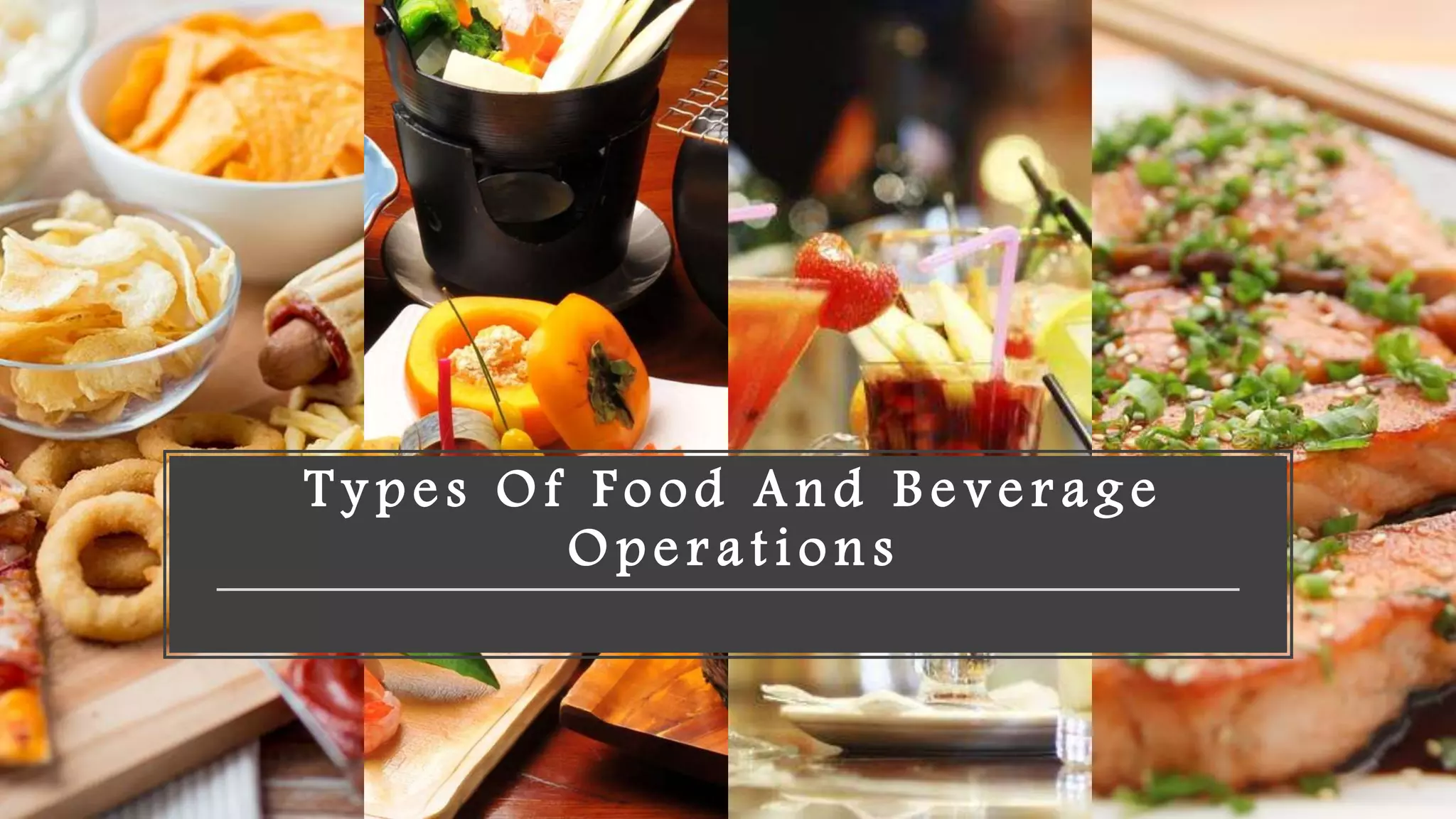
T y p e s O f F o o d A n d B e v e r a g e
O p e r a t i o n s
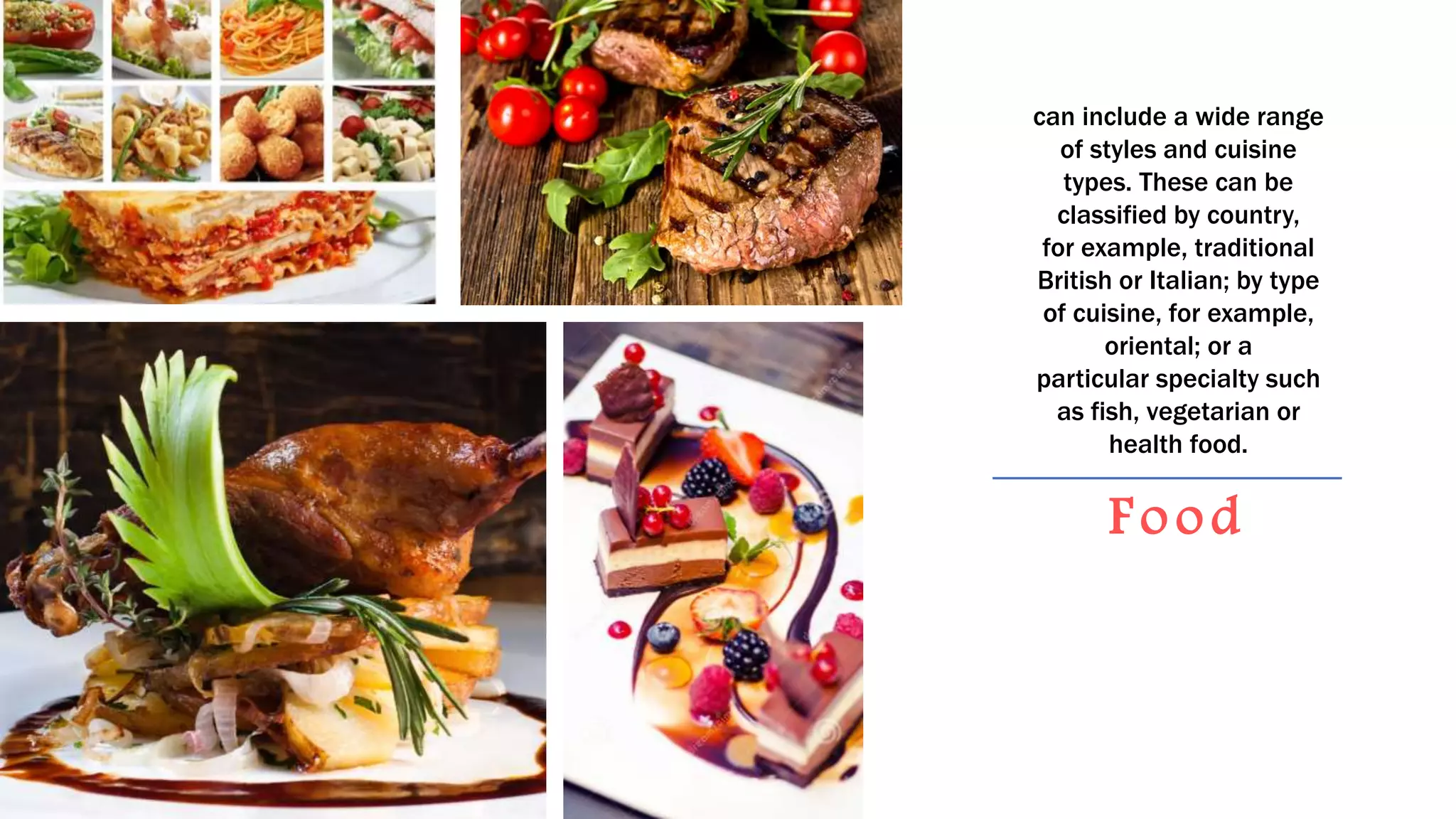
F o o d
can include a wide range
of styles and cuisine
types. These can be
classified by country,
for example, traditional
British or Italian; by type
of cuisine, for example,
oriental; or a
particular specialty such
as fish, vegetarian or
health food.
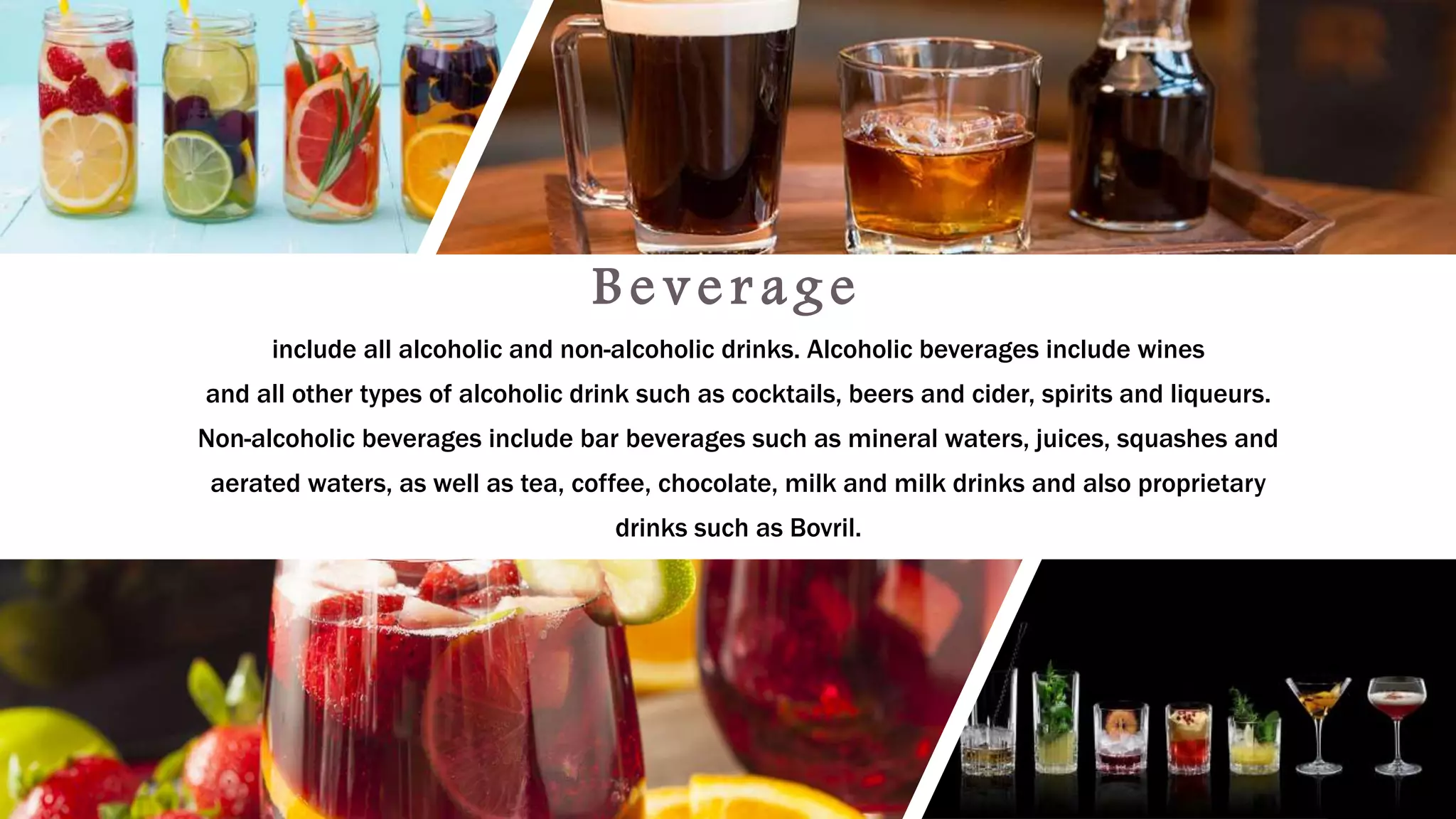
B e v e r a g e
include all alcoholic and non-alcoholic drinks. Alcoholic beverages include wines
and all other types of alcoholic drink such as cocktails, beers and cider, spirits and liqueurs.
Non-alcoholic beverages include bar beverages such as mineral waters, juices, squashes and
aerated waters, as well as tea, coffee, chocolate, milk and milk drinks and also proprietary
drinks such as Bovril.
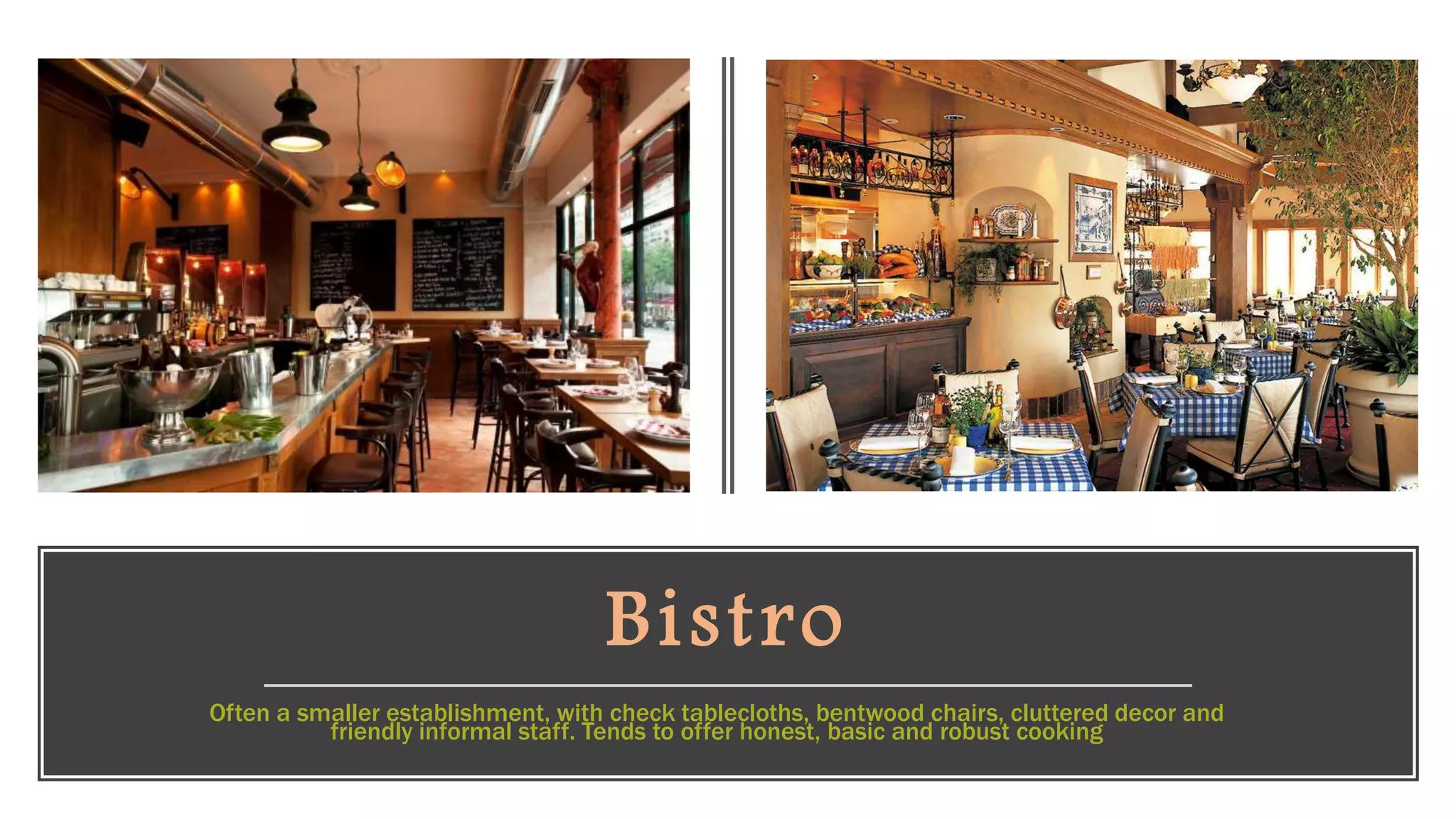
Bistro
Often a smaller establishment, with check tablecloths, bentwood chairs, cluttered decor and
friendly informal staff. Tends to offer honest, basic and robust cooking
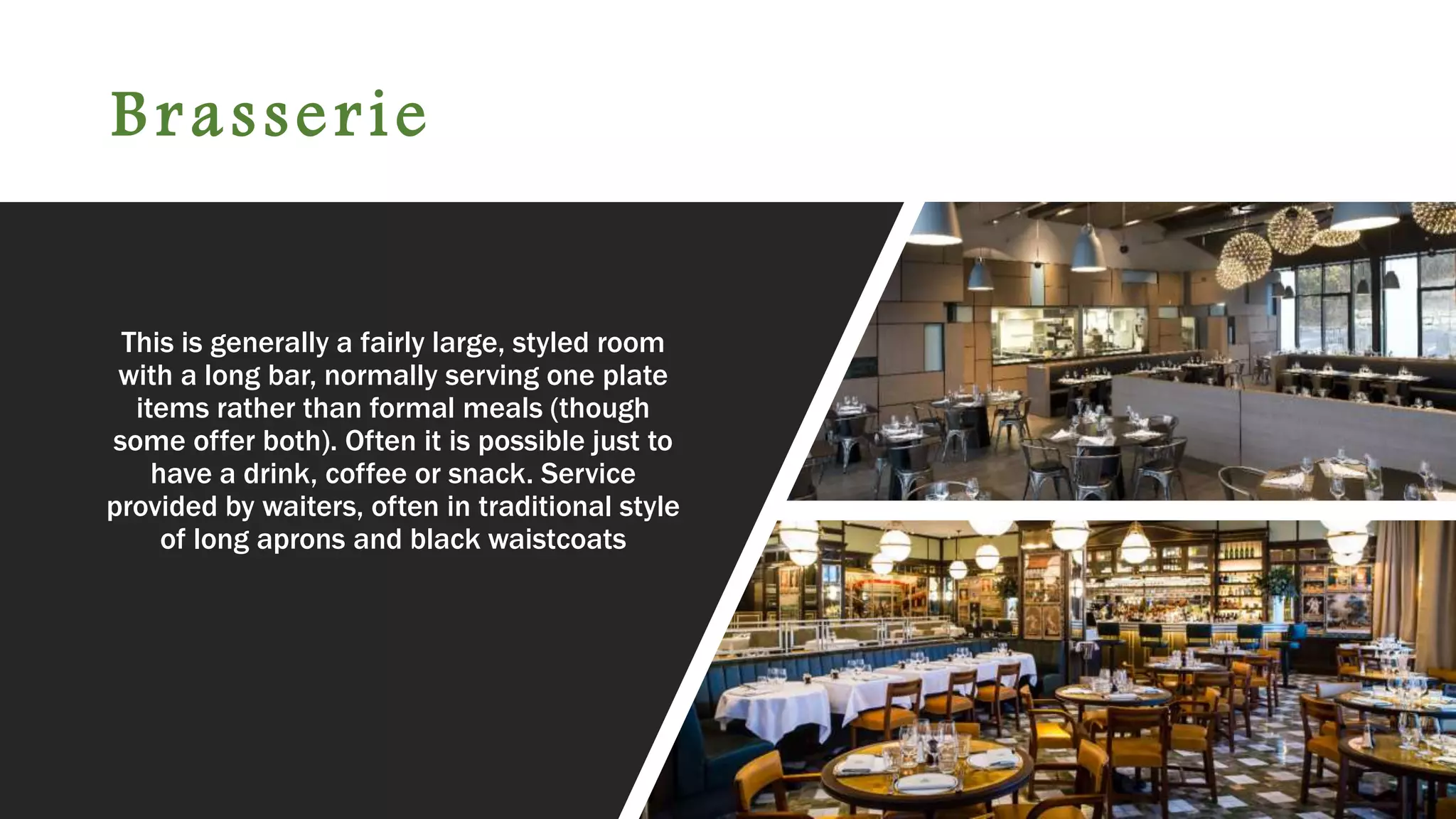
Brasserie
This is generally a fairly large, styled room
with a long bar, normally serving one plate
items rather than formal meals (though
some offer both). Often it is possible just to
have a drink, coffee or snack. Service
provided by waiters, often in traditional style
of long aprons and black waistcoats
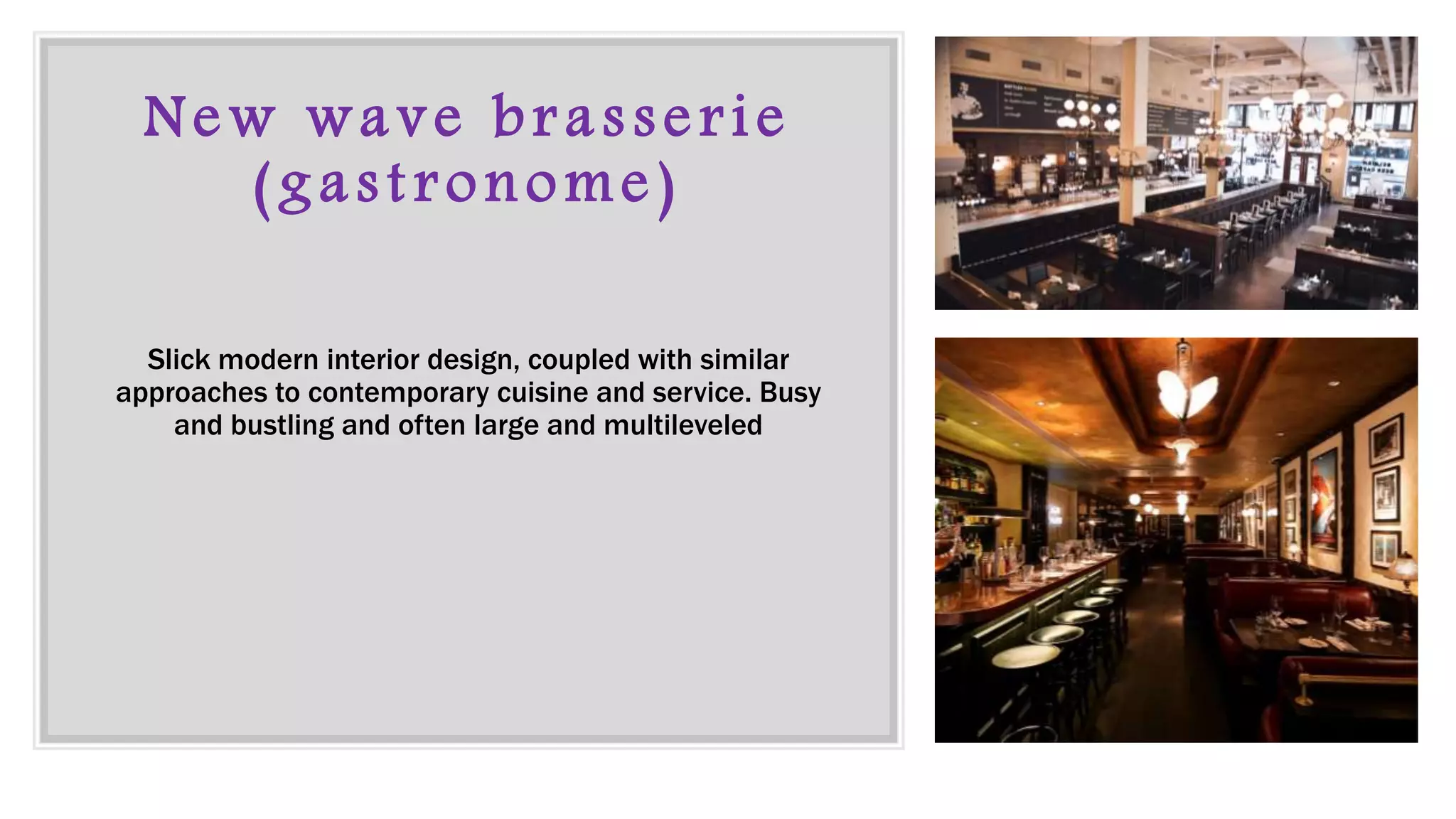
New wave brasserie
(gastronome)
Slick modern interior design, coupled with similar
approaches to contemporary cuisine and service. Busy
and bustling and often large and multileveled
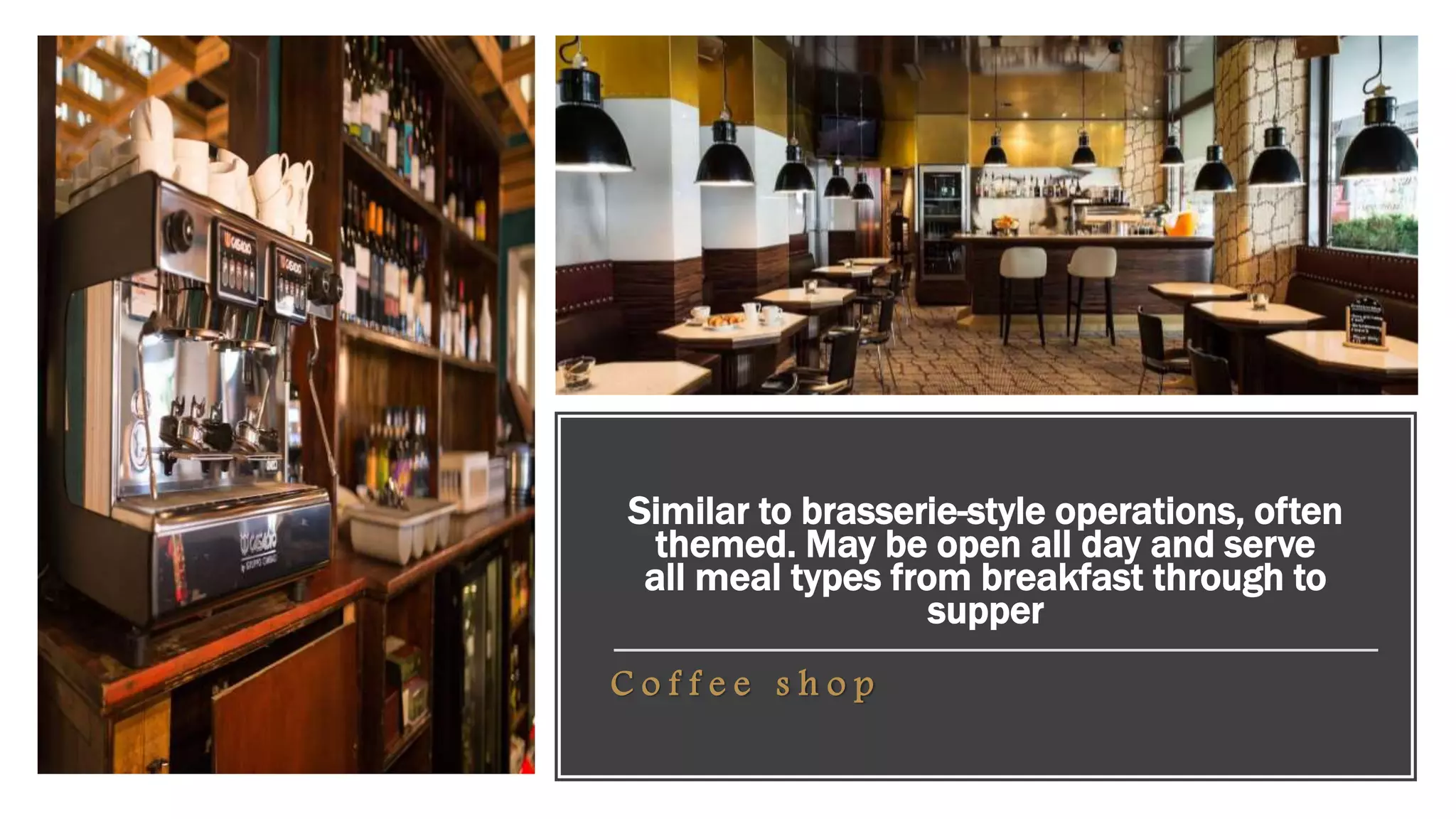
Similar to brasserie-style operations, often
themed. May be open all day and serve
all meal types from breakfast through to
supper
C o f f e e s h o p
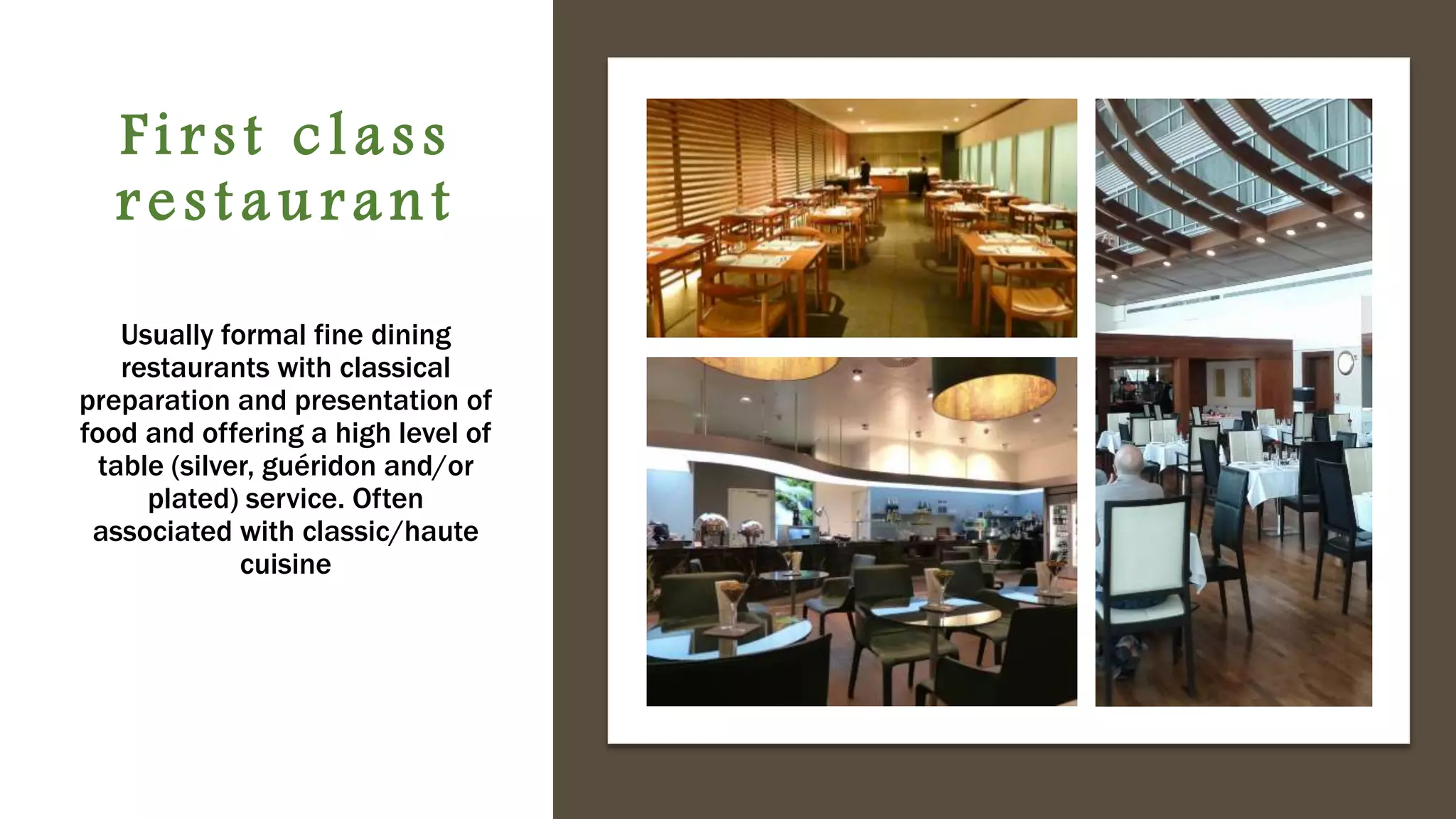
First class
restaurant
Usually formal fine dining
restaurants with classical
preparation and presentation of
food and offering a high level of
table (silver, guéridon and/or
plated) service. Often
associated with classic/haute
cuisine
Restaurant
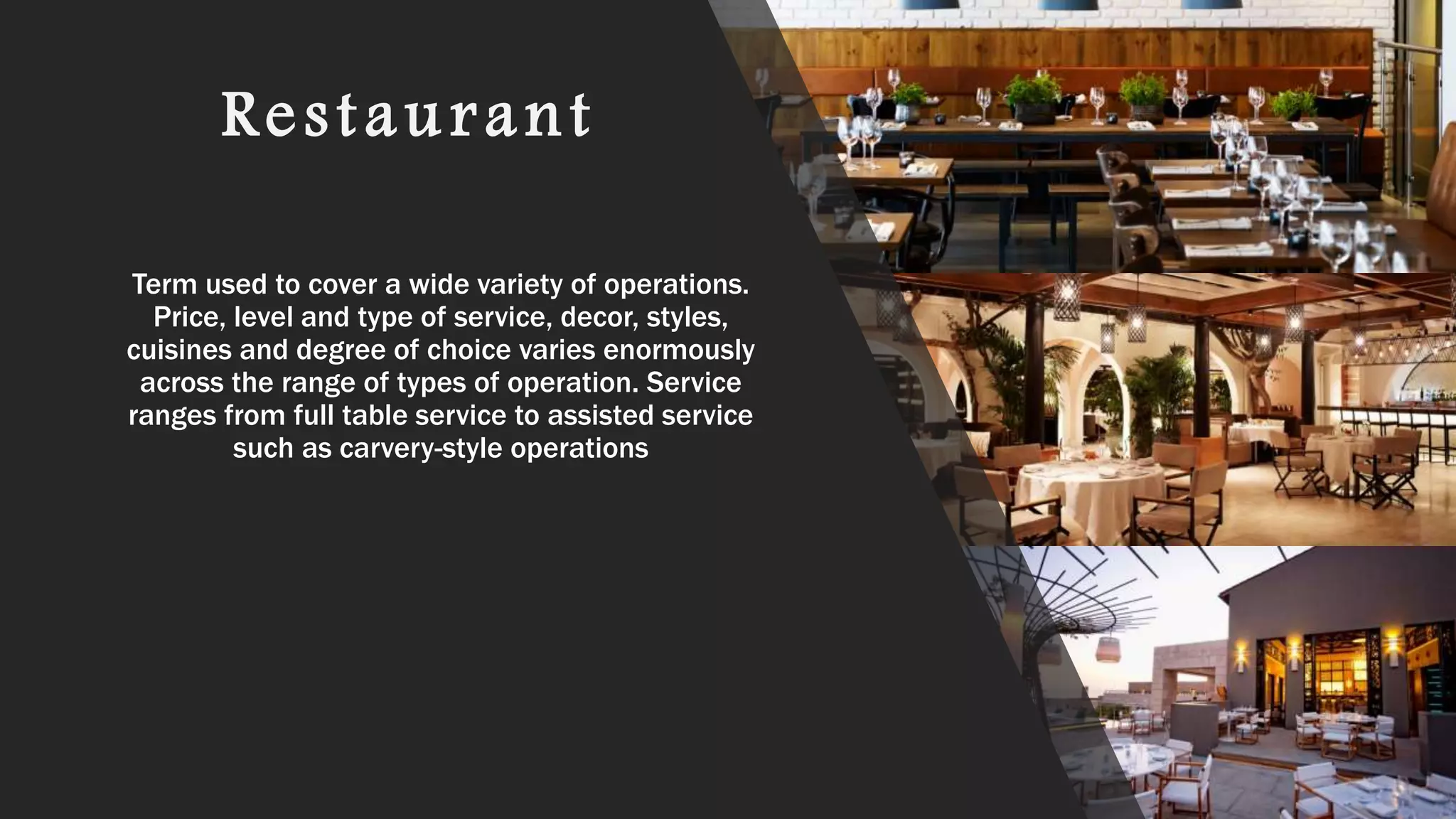
Term used to cover a wide variety of operations.
Price, level and type of service, decor, styles,
cuisines and degree of choice varies enormously
across the range of types of operation. Service
ranges from full table service to assisted service
such as carvery-style operations
I n t e r n a t i o n a l
r e s t a u r a n t
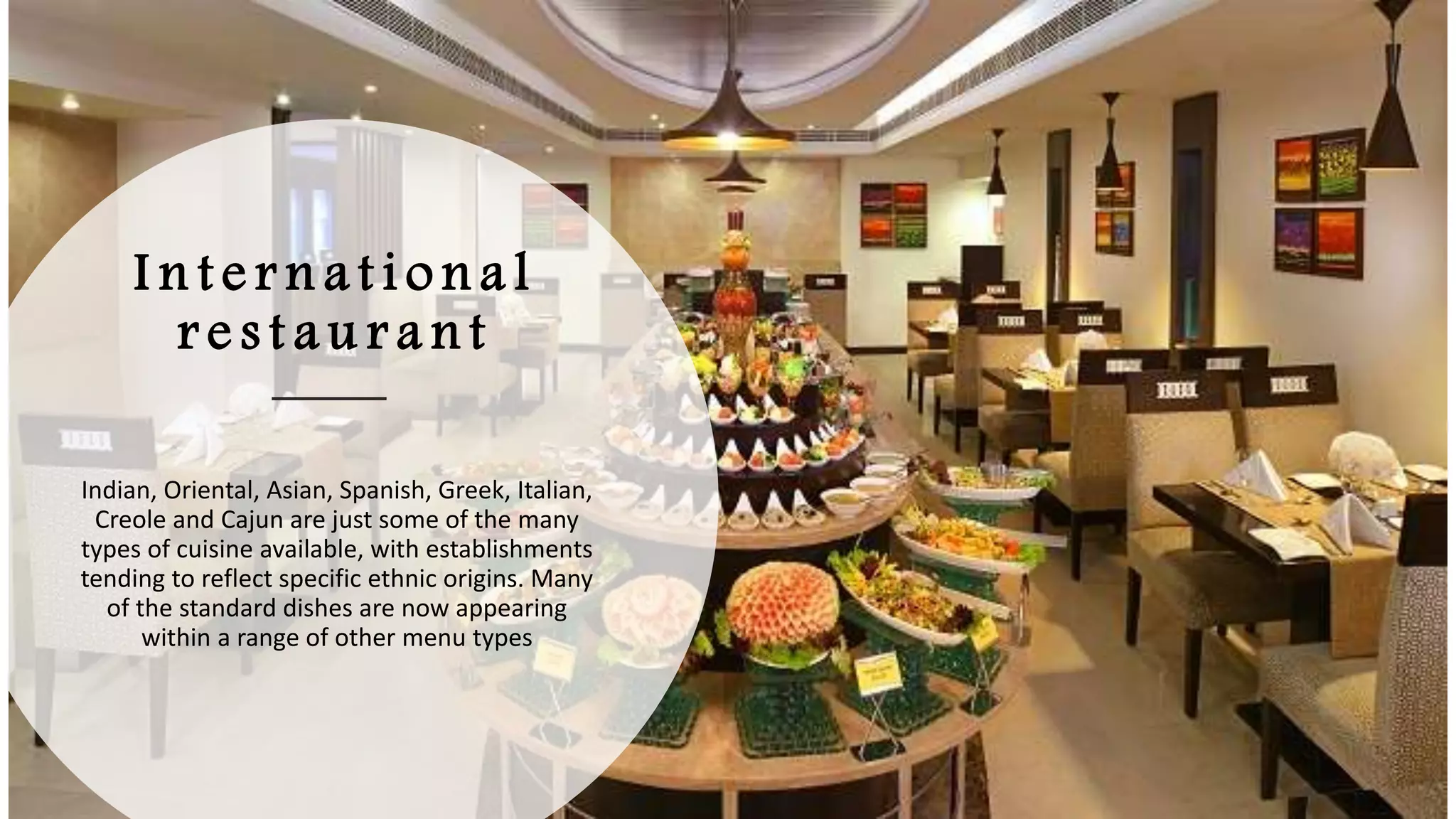
Indian, Oriental, Asian, Spanish, Greek, Italian,
Creole and Cajun are just some of the many
types of cuisine available, with establishments
tending to reflect specific ethnic origins. Many
of the standard dishes are now appearing
within a range of other menu types
T h e me d r e s t a u r a n t
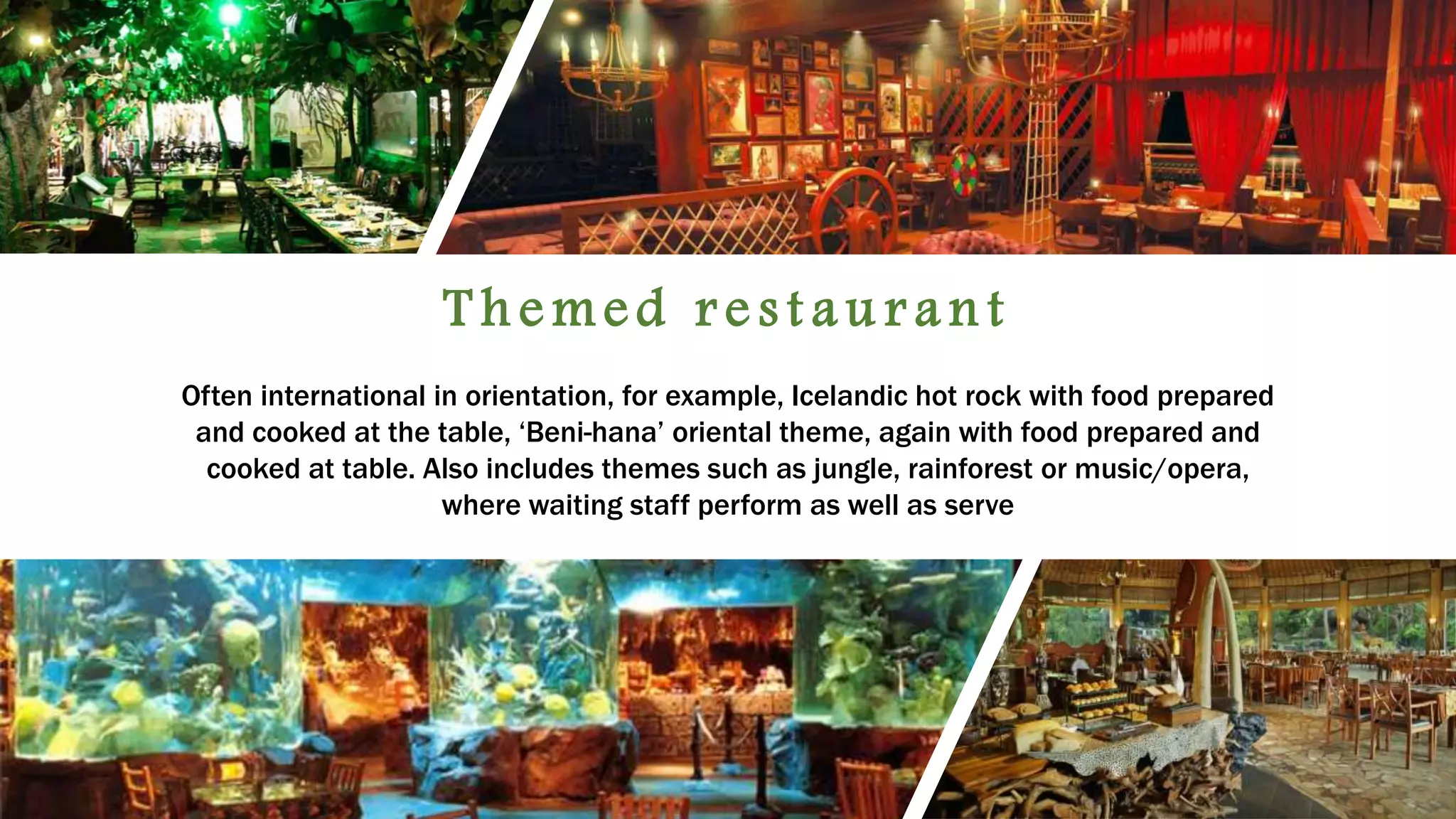
Often international in orientation, for example, Icelandic hot rock with food prepared
and cooked at the table, ‘Beni-hana’ oriental theme, again with food prepared and
cooked at table. Also includes themes such as jungle, rainforest or music/opera,
where waiting staff perform as well as serve
International
destination restaurant
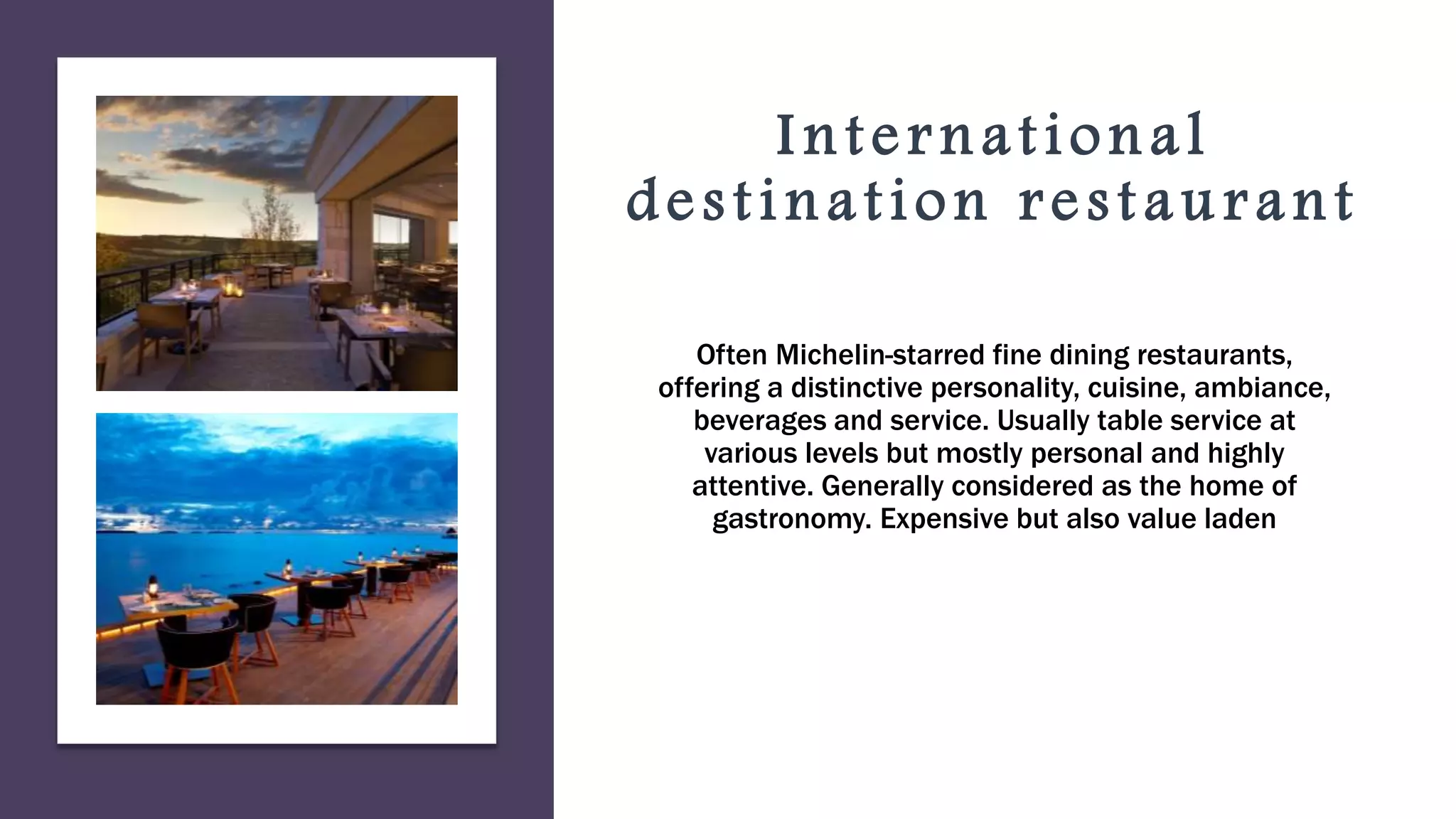
Often Michelin-starred fine dining restaurants,
offering a distinctive personality, cuisine, ambiance,
beverages and service. Usually table service at
various levels but mostly personal and highly
attentive. Generally considered as the home of
gastronomy. Expensive but also value laden
H e a l t h f o o d
a n d
v e g e t a r i a n
r e s t a u r a n t s
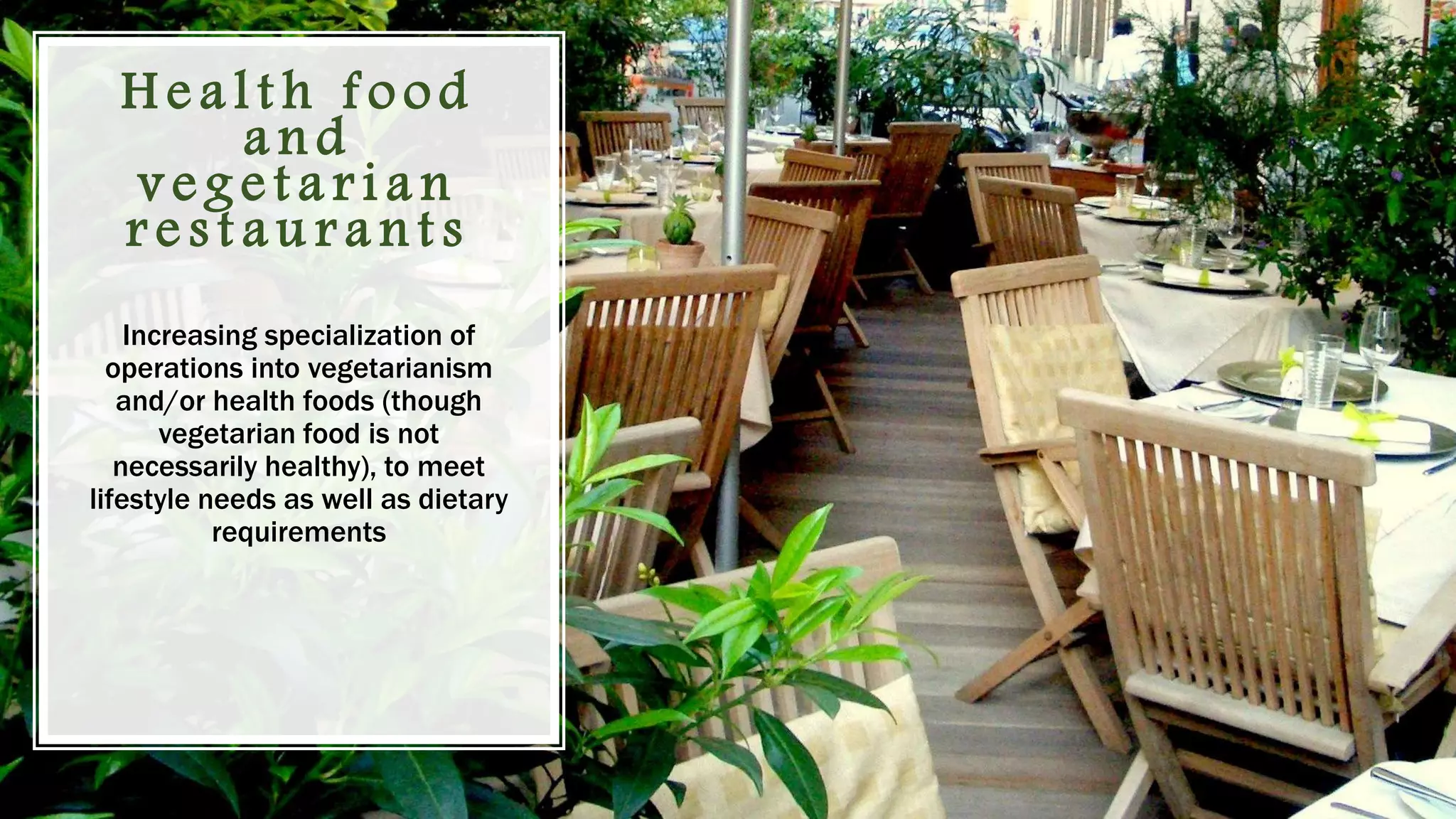
Increasing specialization of
operations into vegetarianism
and/or health foods (though
vegetarian food is not
necessarily healthy), to meet
lifestyle needs as well as dietary
requirements
Cafeteria
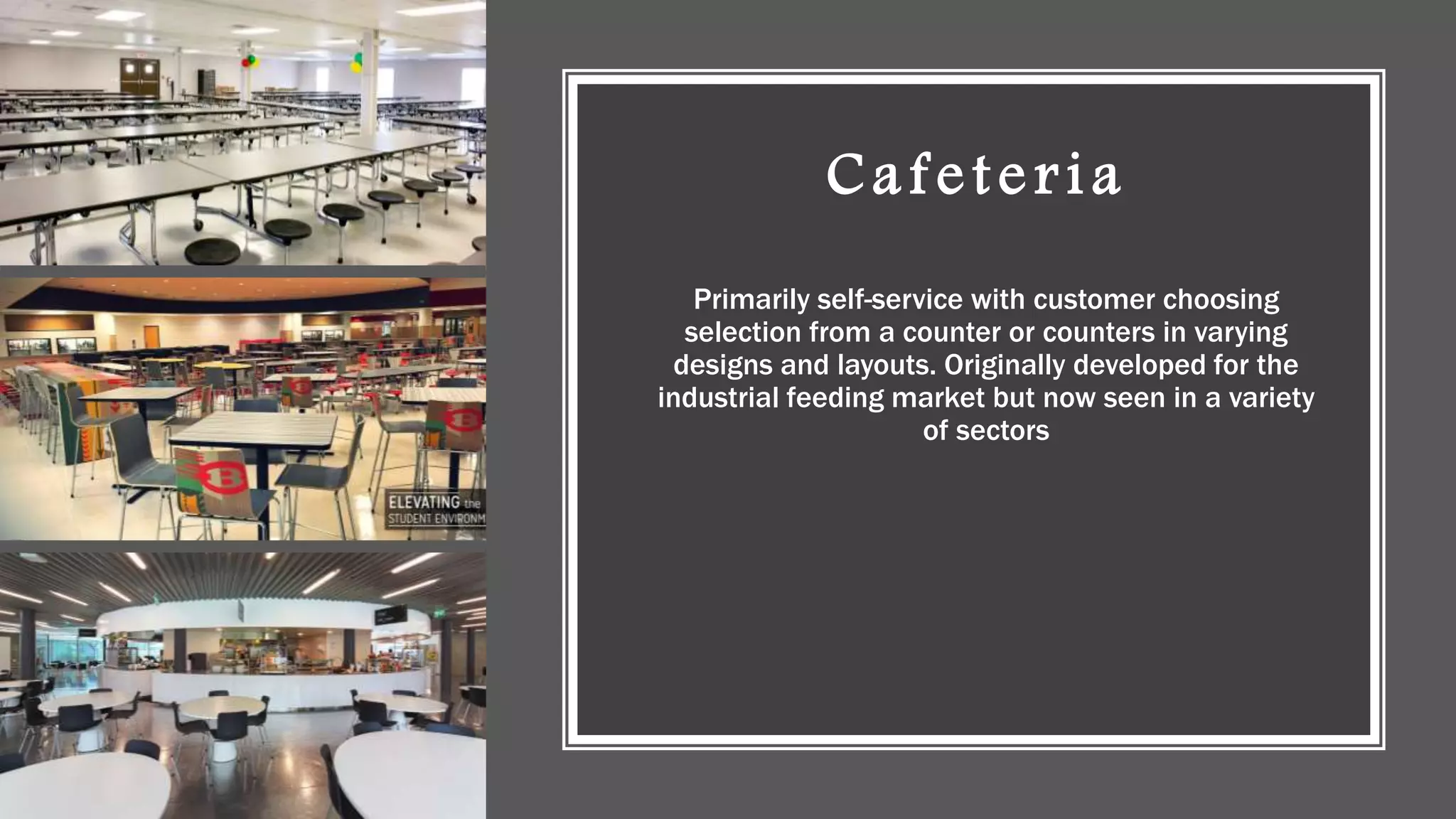
Primarily self-service with customer choosing
selection from a counter or counters in varying
designs and layouts. Originally developed for the
industrial feeding market but now seen in a variety
of sectors
Popular
catering and
fast-food
outlets
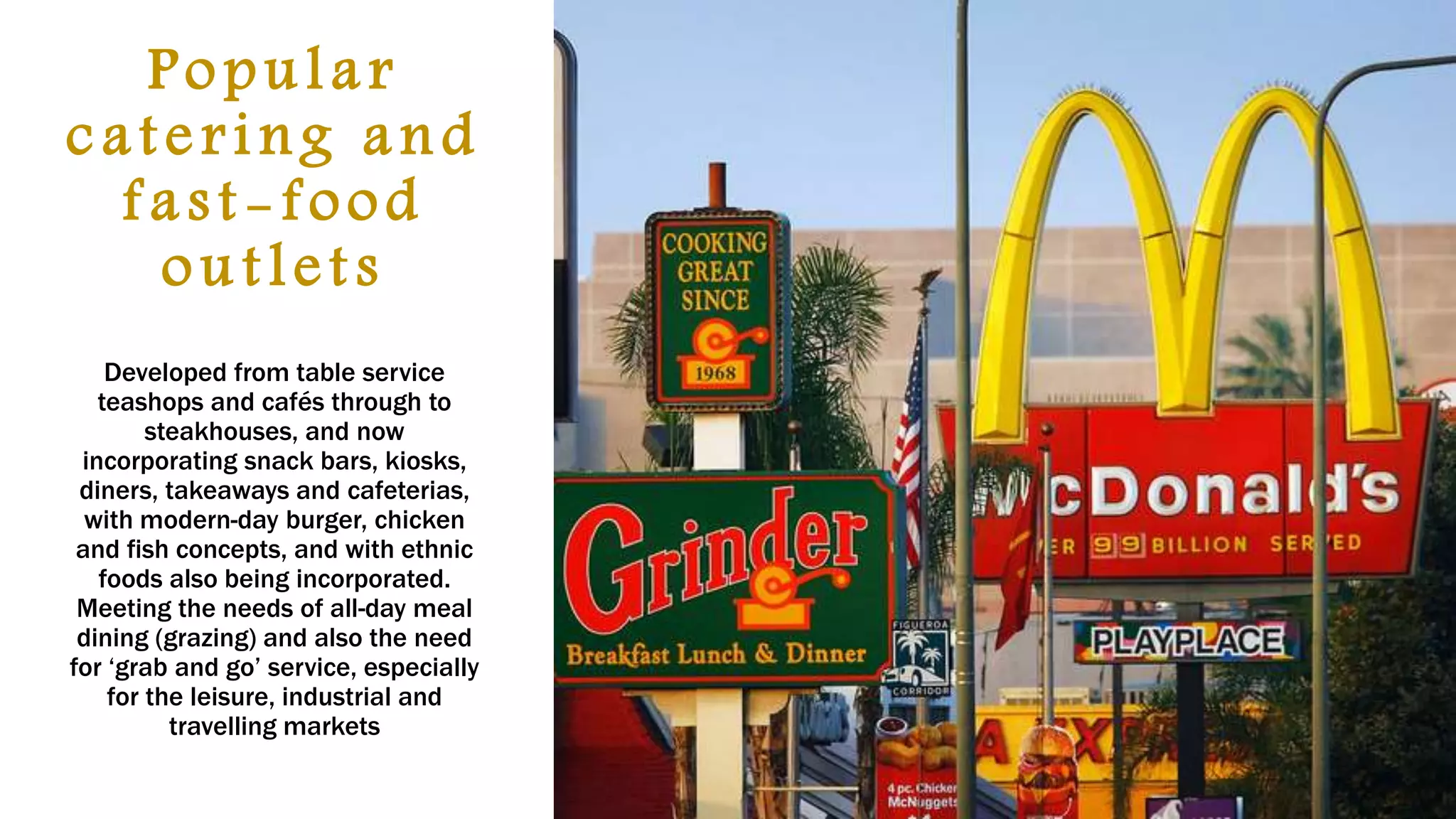
Developed from table service
teashops and cafés through to
steakhouses, and now
incorporating snack bars, kiosks,
diners, takeaways and cafeterias,
with modern-day burger, chicken
and fish concepts, and with ethnic
foods also being incorporated.
Meeting the needs of all-day meal
dining (grazing) and also the need
for ‘grab and go’ service, especially
for the leisure, industrial and
travelling markets
Public houses
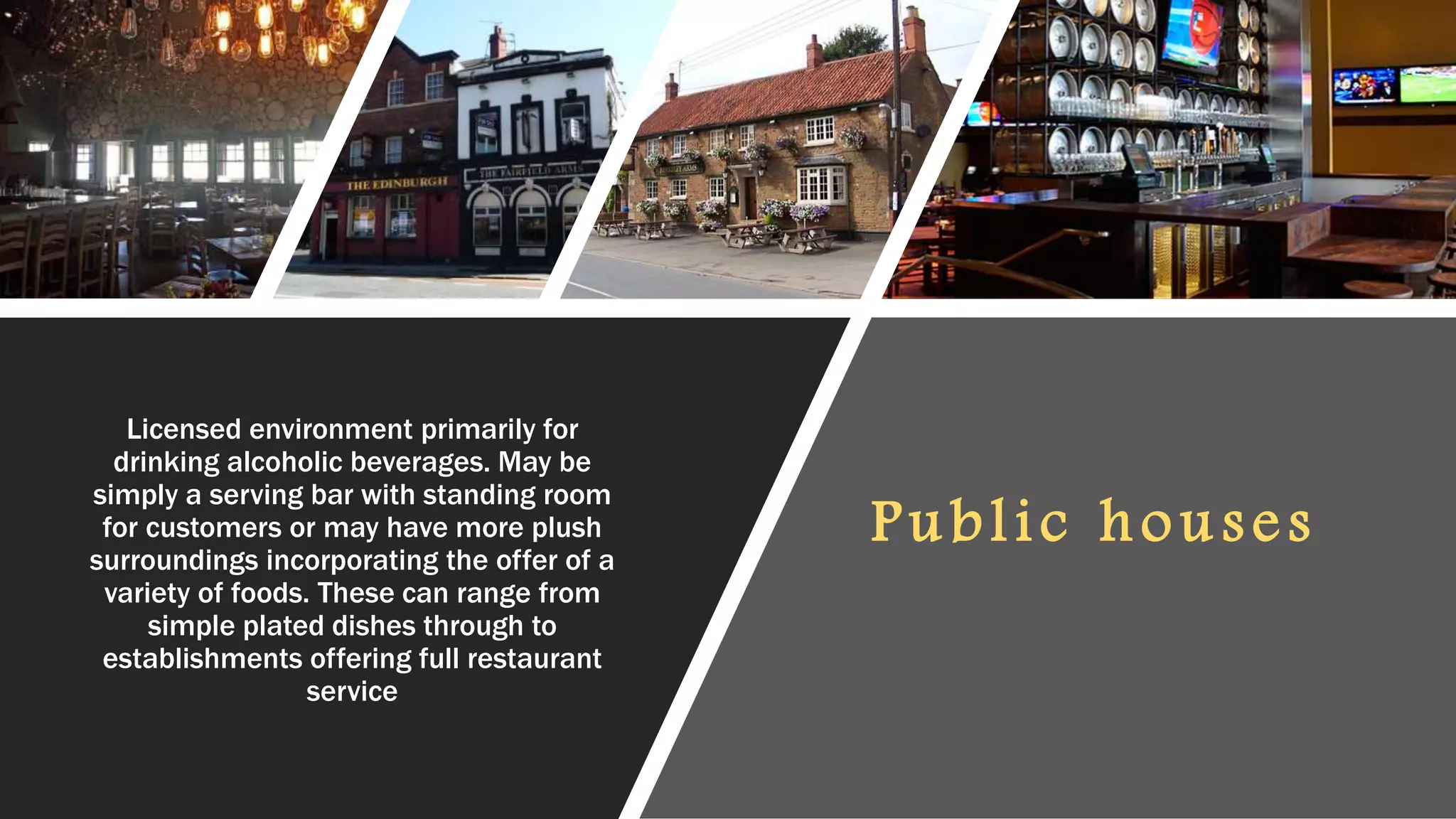
Licensed environment primarily for
drinking alcoholic beverages. May be
simply a serving bar with standing room
for customers or may have more plush
surroundings incorporating the offer of a
variety of foods. These can range from
simple plated dishes through to
establishments offering full restaurant
service
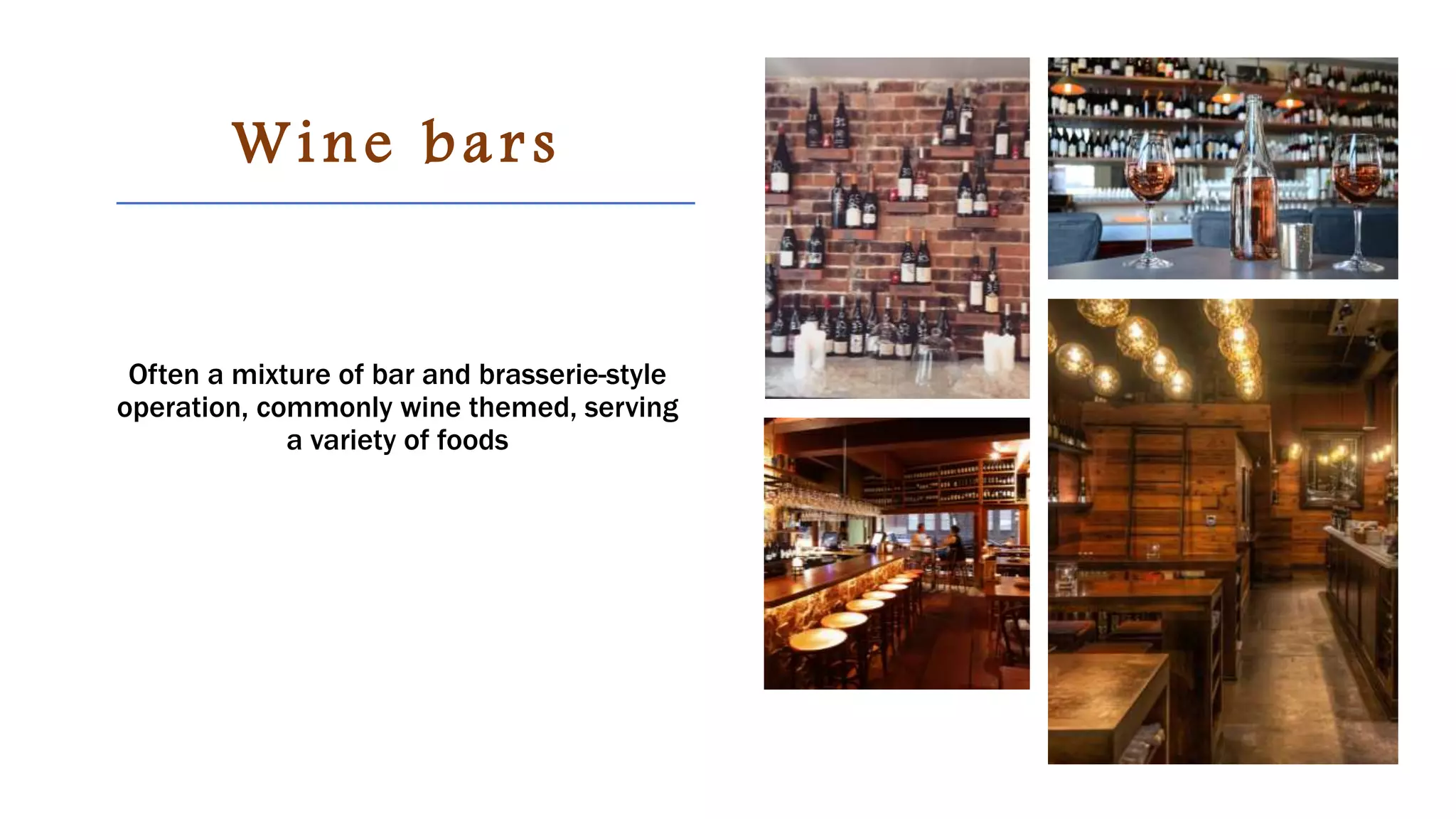
Wine bars
Often a mixture of bar and brasserie-style
operation, commonly wine themed, serving
a variety of foods
T
H
A
N
K
Y
O
U

Types of food and beverage operations

  • 1.
    T y pe s O f F o o d A n d B e v e r a g e O p e r a t i o n s
  • 2.
    F o od can include a wide range of styles and cuisine types. These can be classified by country, for example, traditional British or Italian; by type of cuisine, for example, oriental; or a particular specialty such as fish, vegetarian or health food.
  • 3.
    B e ve r a g e include all alcoholic and non-alcoholic drinks. Alcoholic beverages include wines and all other types of alcoholic drink such as cocktails, beers and cider, spirits and liqueurs. Non-alcoholic beverages include bar beverages such as mineral waters, juices, squashes and aerated waters, as well as tea, coffee, chocolate, milk and milk drinks and also proprietary drinks such as Bovril.
  • 4.
    Bistro Often a smallerestablishment, with check tablecloths, bentwood chairs, cluttered decor and friendly informal staff. Tends to offer honest, basic and robust cooking
  • 5.
    Brasserie This is generallya fairly large, styled room with a long bar, normally serving one plate items rather than formal meals (though some offer both). Often it is possible just to have a drink, coffee or snack. Service provided by waiters, often in traditional style of long aprons and black waistcoats
  • 6.
    New wave brasserie (gastronome) Slickmodern interior design, coupled with similar approaches to contemporary cuisine and service. Busy and bustling and often large and multileveled
  • 7.
    Similar to brasserie-styleoperations, often themed. May be open all day and serve all meal types from breakfast through to supper C o f f e e s h o p
  • 8.
    First class restaurant Usually formalfine dining restaurants with classical preparation and presentation of food and offering a high level of table (silver, guéridon and/or plated) service. Often associated with classic/haute cuisine
  • 9.
    Restaurant Term used tocover a wide variety of operations. Price, level and type of service, decor, styles, cuisines and degree of choice varies enormously across the range of types of operation. Service ranges from full table service to assisted service such as carvery-style operations
  • 10.
    I n te r n a t i o n a l r e s t a u r a n t Indian, Oriental, Asian, Spanish, Greek, Italian, Creole and Cajun are just some of the many types of cuisine available, with establishments tending to reflect specific ethnic origins. Many of the standard dishes are now appearing within a range of other menu types
  • 11.
    T h eme d r e s t a u r a n t Often international in orientation, for example, Icelandic hot rock with food prepared and cooked at the table, ‘Beni-hana’ oriental theme, again with food prepared and cooked at table. Also includes themes such as jungle, rainforest or music/opera, where waiting staff perform as well as serve
  • 12.
    International destination restaurant Often Michelin-starredfine dining restaurants, offering a distinctive personality, cuisine, ambiance, beverages and service. Usually table service at various levels but mostly personal and highly attentive. Generally considered as the home of gastronomy. Expensive but also value laden
  • 13.
    H e al t h f o o d a n d v e g e t a r i a n r e s t a u r a n t s Increasing specialization of operations into vegetarianism and/or health foods (though vegetarian food is not necessarily healthy), to meet lifestyle needs as well as dietary requirements
  • 14.
    Cafeteria Primarily self-service withcustomer choosing selection from a counter or counters in varying designs and layouts. Originally developed for the industrial feeding market but now seen in a variety of sectors
  • 15.
    Popular catering and fast-food outlets Developed fromtable service teashops and cafés through to steakhouses, and now incorporating snack bars, kiosks, diners, takeaways and cafeterias, with modern-day burger, chicken and fish concepts, and with ethnic foods also being incorporated. Meeting the needs of all-day meal dining (grazing) and also the need for ‘grab and go’ service, especially for the leisure, industrial and travelling markets
  • 16.
    Public houses Licensed environmentprimarily for drinking alcoholic beverages. May be simply a serving bar with standing room for customers or may have more plush surroundings incorporating the offer of a variety of foods. These can range from simple plated dishes through to establishments offering full restaurant service
  • 17.
    Wine bars Often amixture of bar and brasserie-style operation, commonly wine themed, serving a variety of foods
  • 18.