Introduction to Turbo Jet Engines,
Working Principle
And
Performance
Prepared By,
Vedprakash Arya
Contents
❖Introduction
❖Performance Parameters
❖Working Principle
❖Merits & Demerits
Introduction
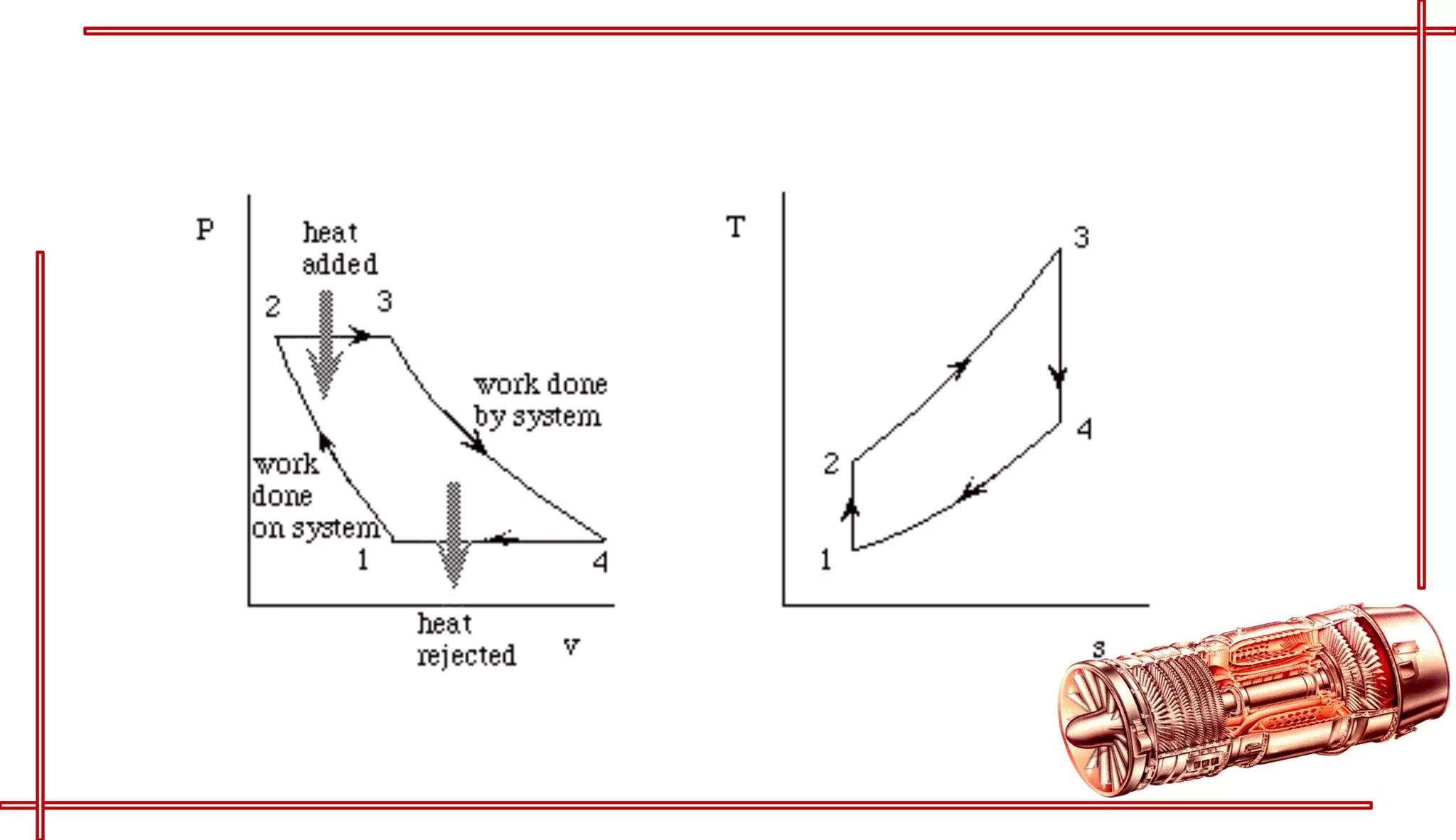
▪ Turbojets are the oldest kind of general-purpose jet
engines. Turbojets are rotary engines that extracts
energy from a flow of combustion gas.
▪ They produce thrust by increasing the velocity of
the air flowing through the engine and operate on
Newton’s third law of motion " For every action there
is an equal and opposite reaction”.
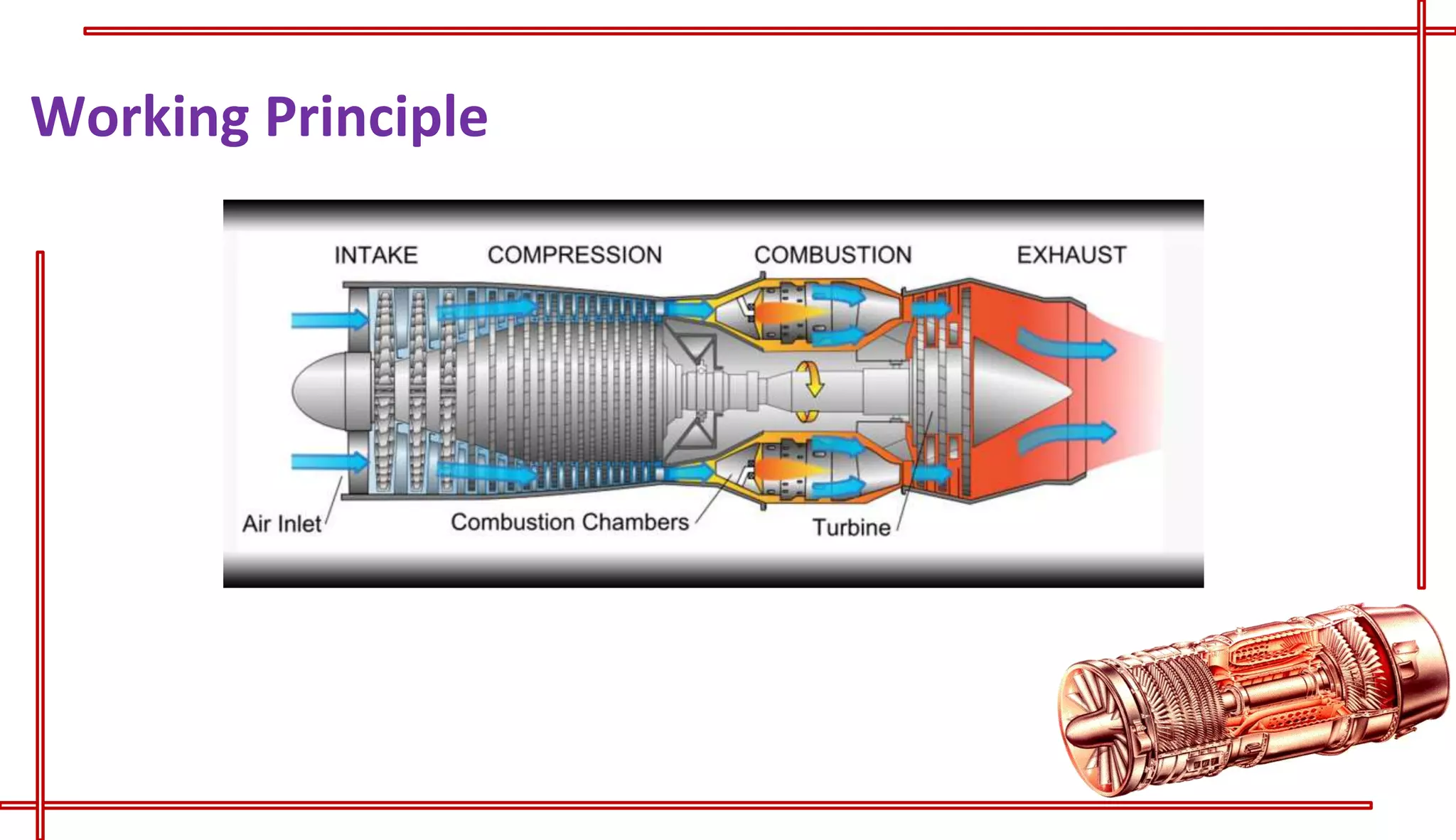
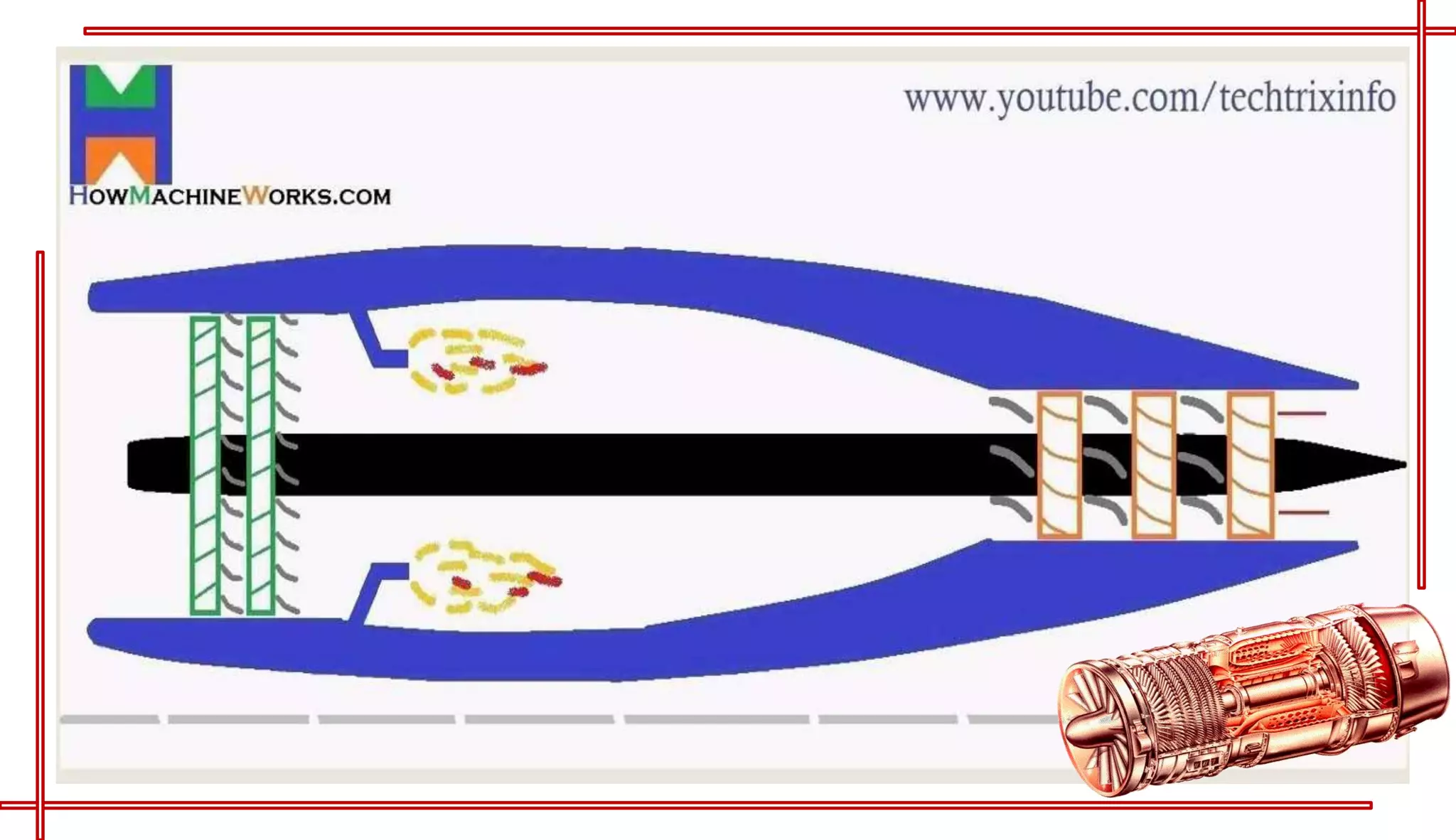
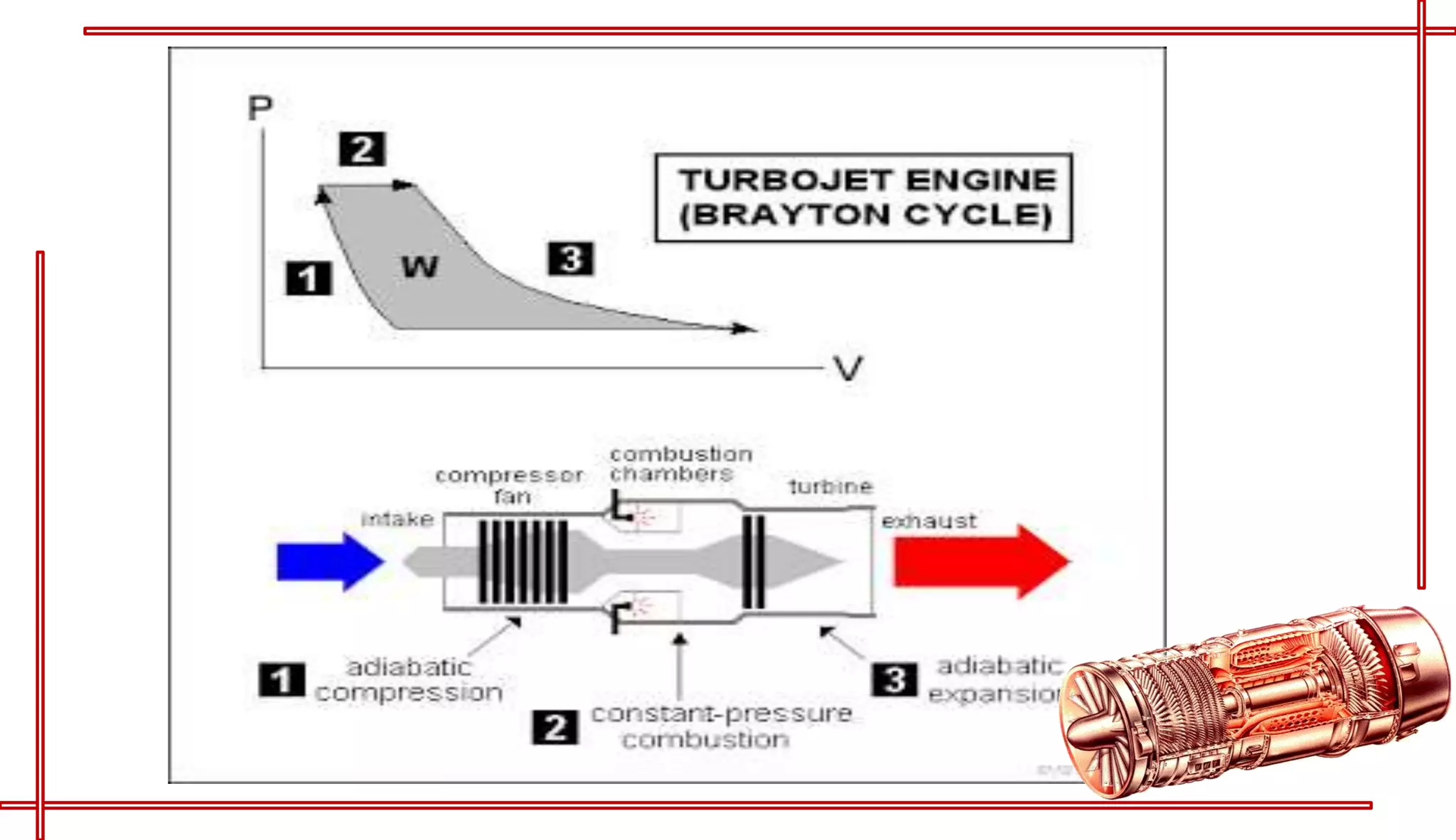
Working Principle
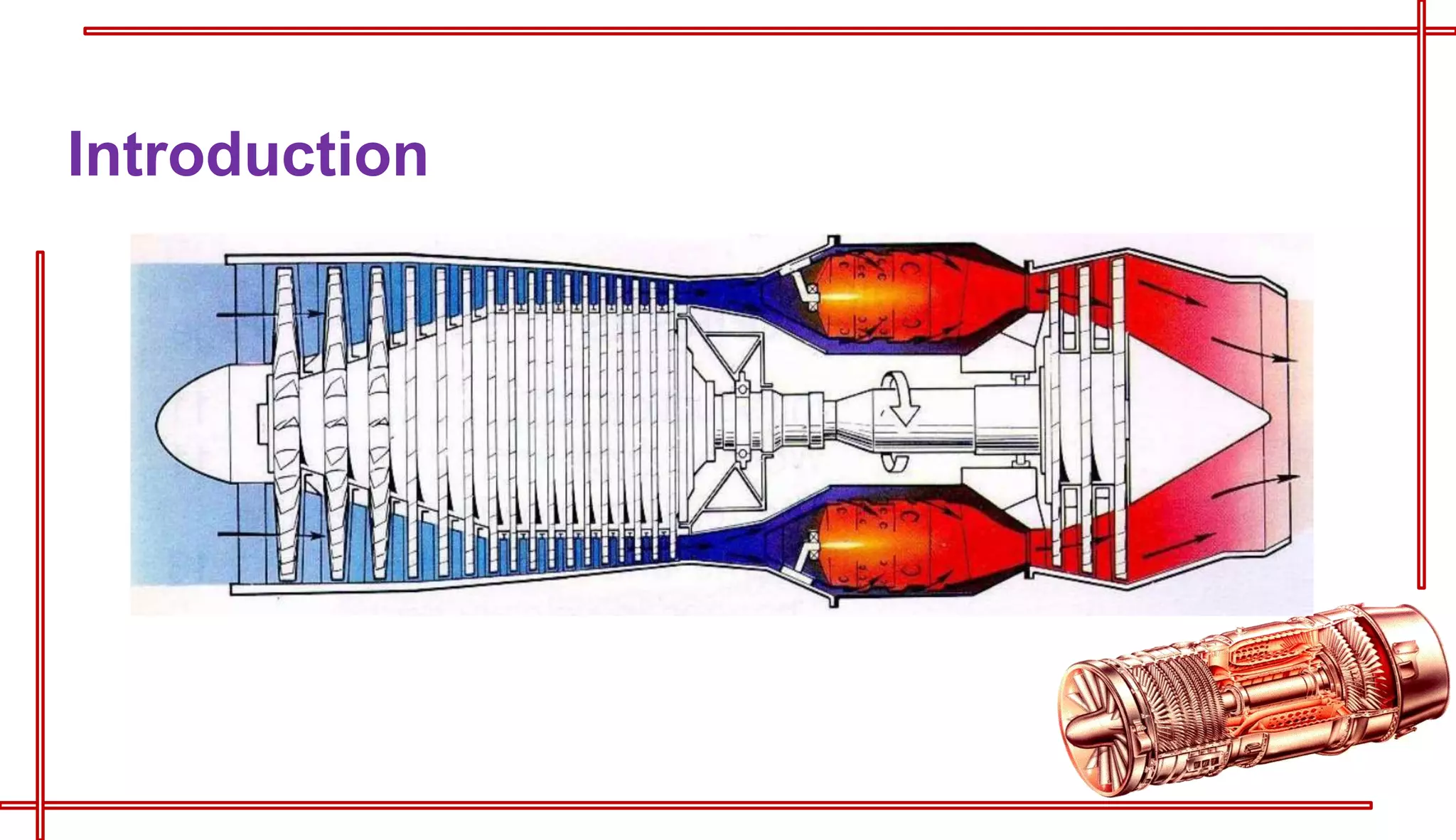
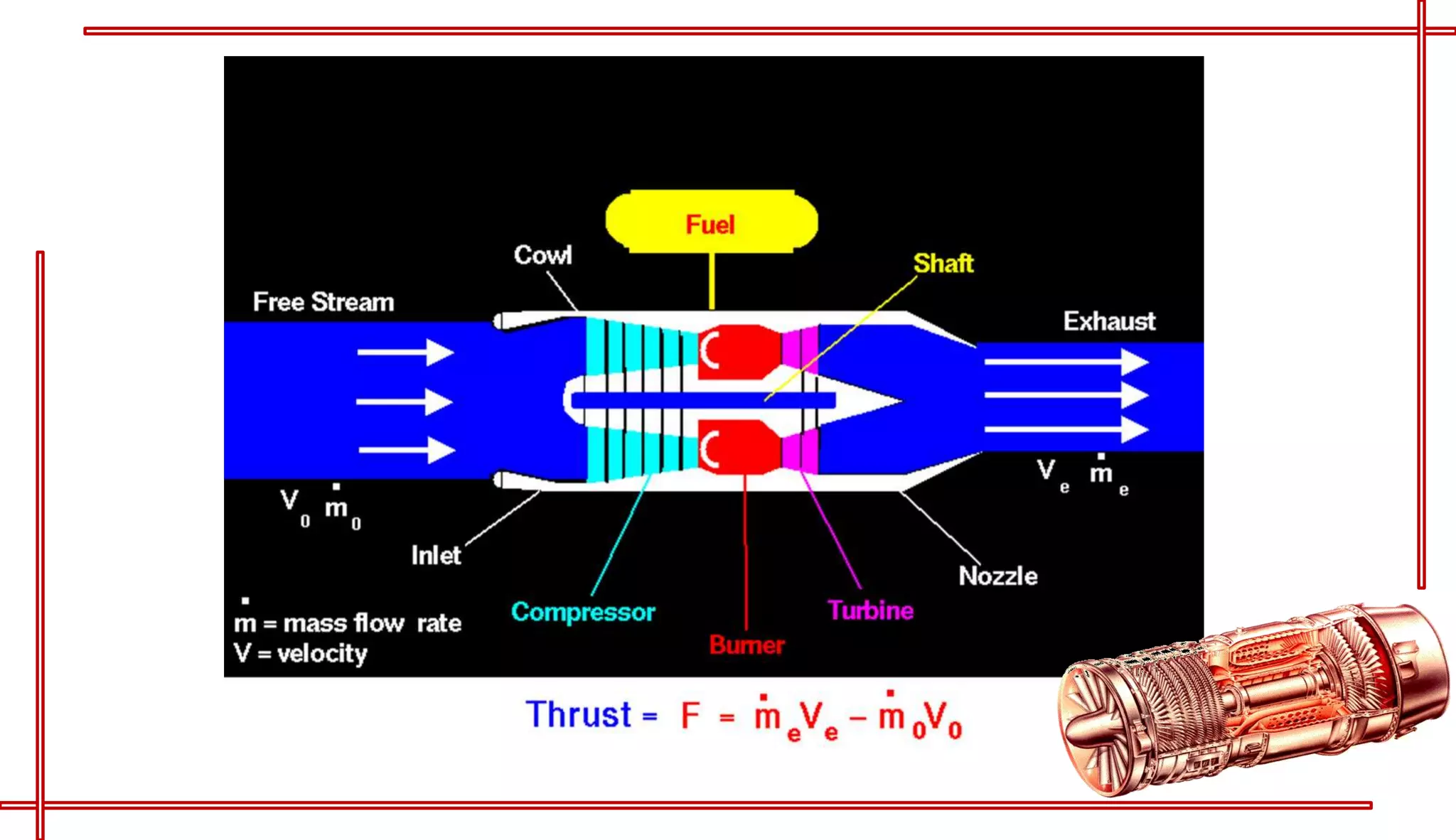
❖Air is drawn into the rotating compressor via the intake and
is compressed to a higher pressure before entering the
combustion chamber.
❖ Fuel is mixed with the compressed air and ignited by a
flame in the eddy of a flame holder.
❖Hot combustion products leaving the combustor expand
through the turbine where power is extracted to drive the
compressor.
❖The gas stream exiting the turbine expands to ambient
pressure via the propelling nozzle, producing a high velocity
jet in the exhaust plume.
(
(
Engine Performance Parameters
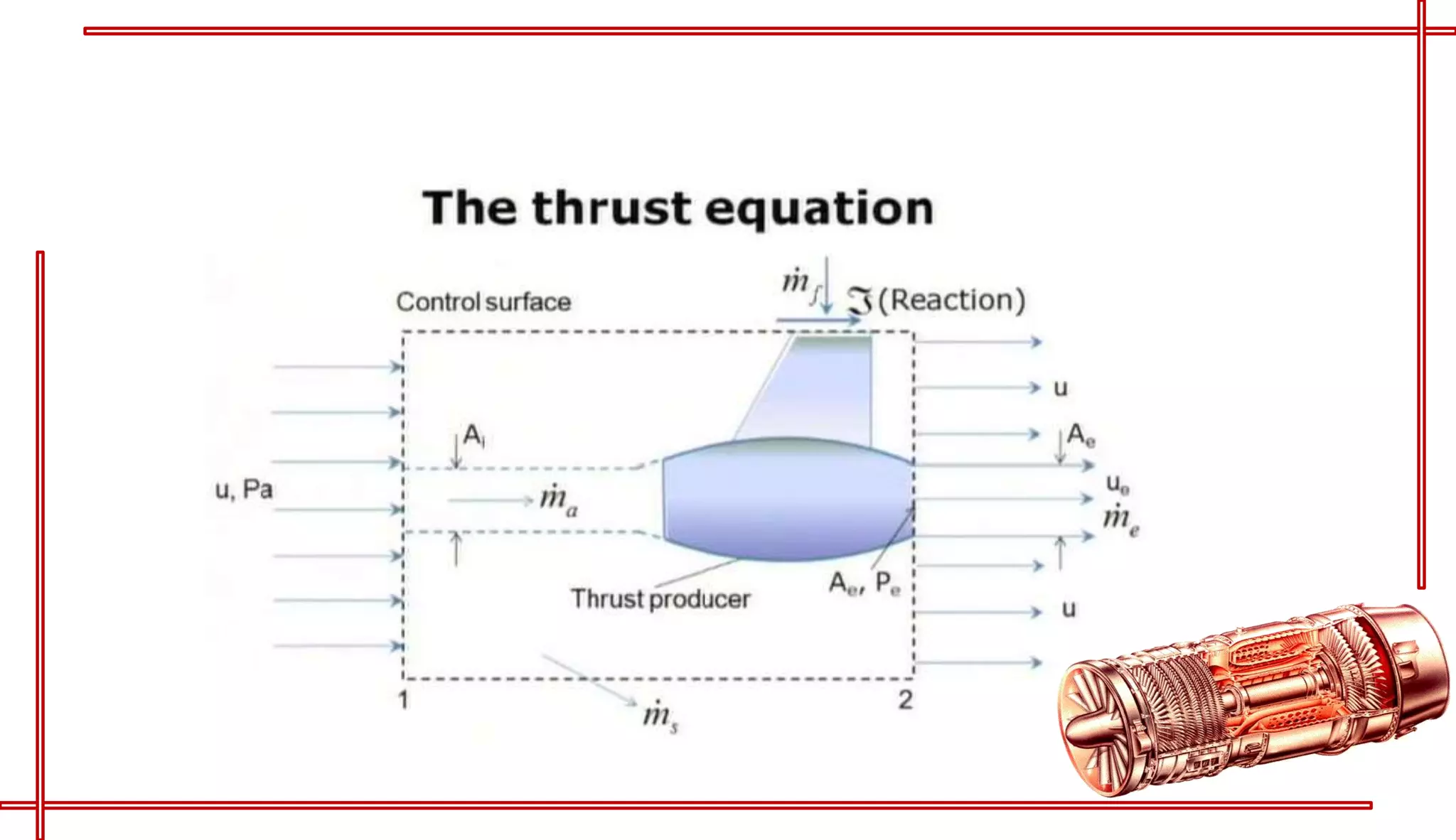
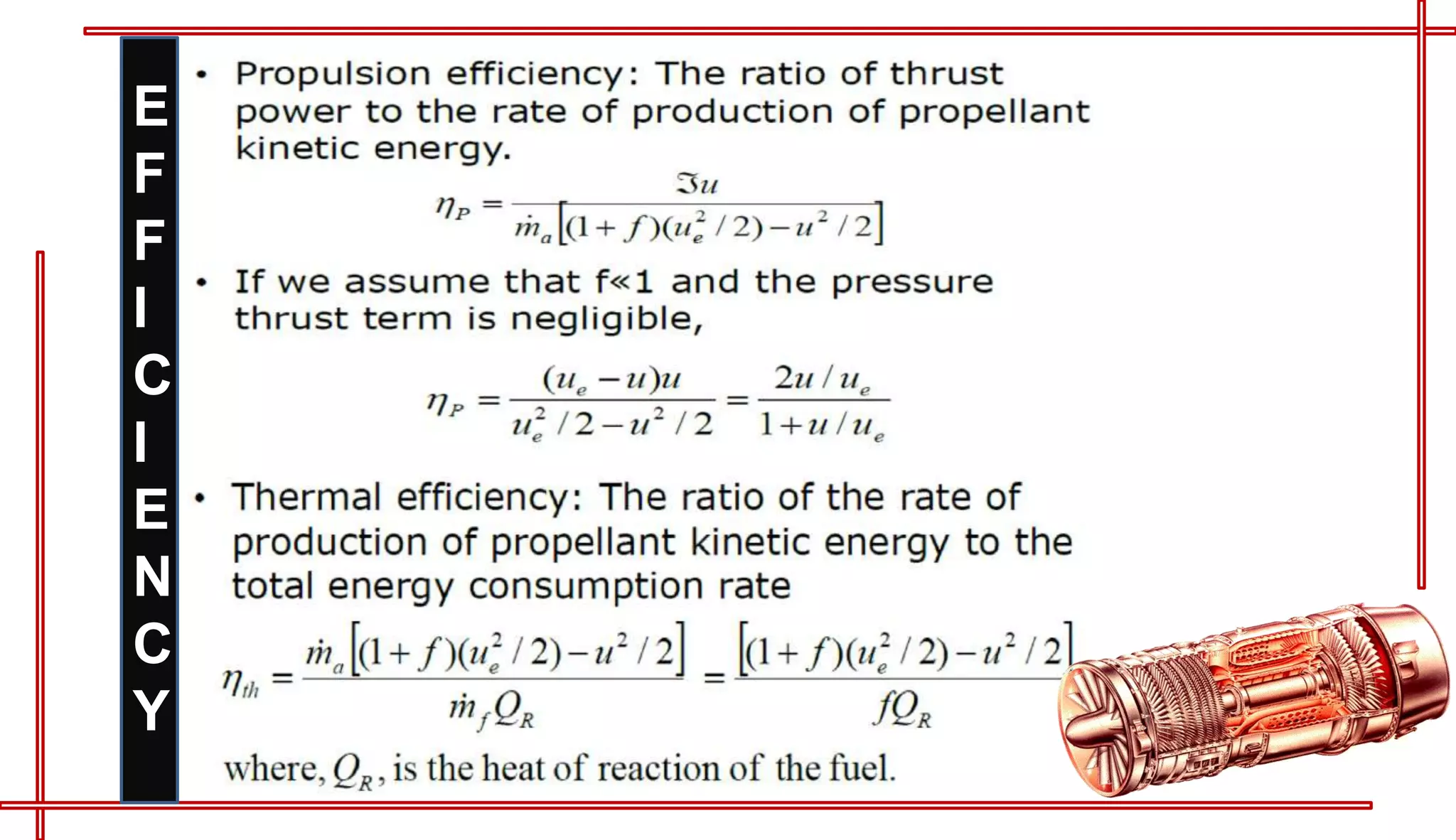
❖Thrust Equation
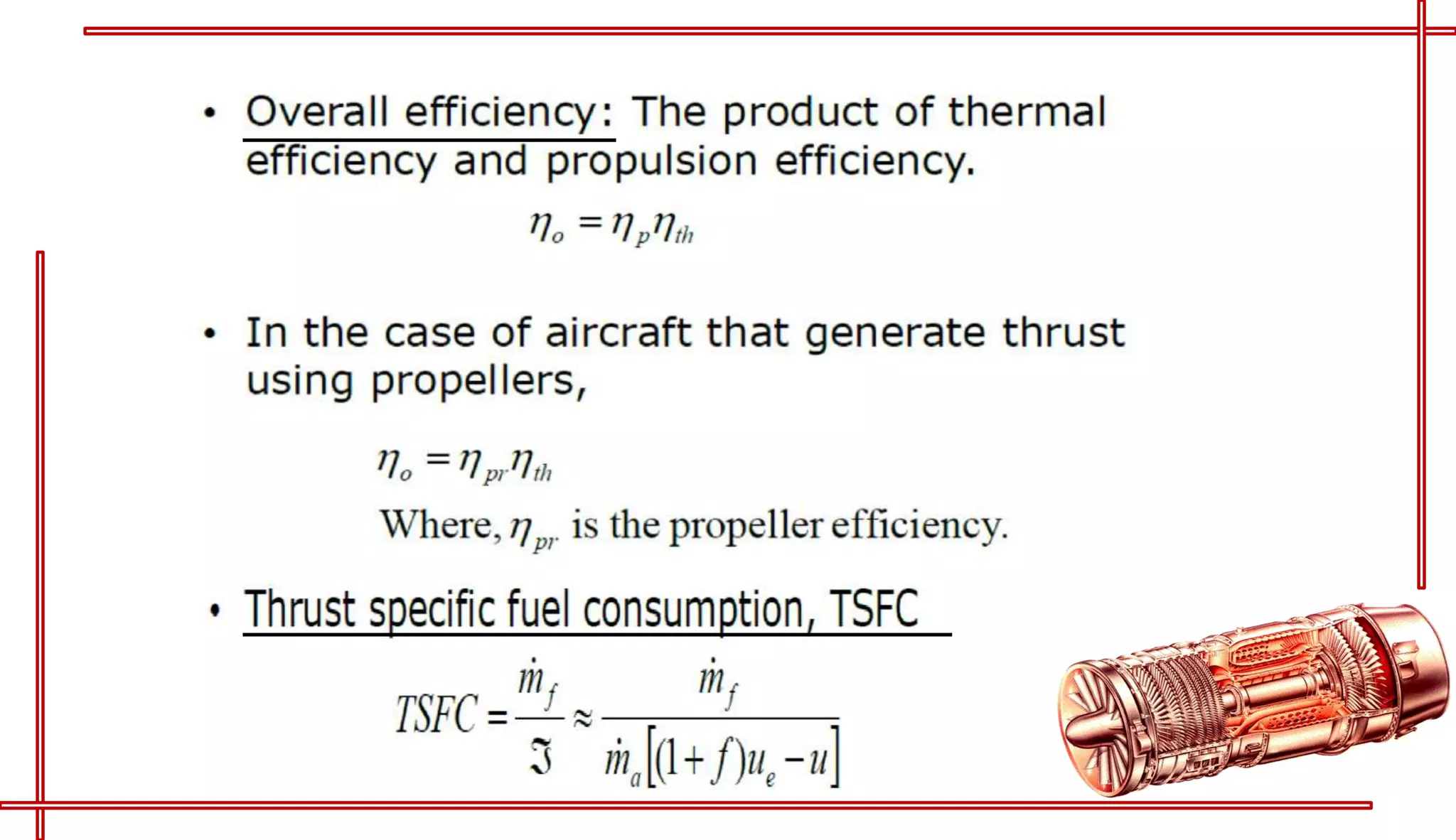
❖Efficiency
❖Specific Fuel Consumption
E
F
F
I
C
I
E
N
C
Y
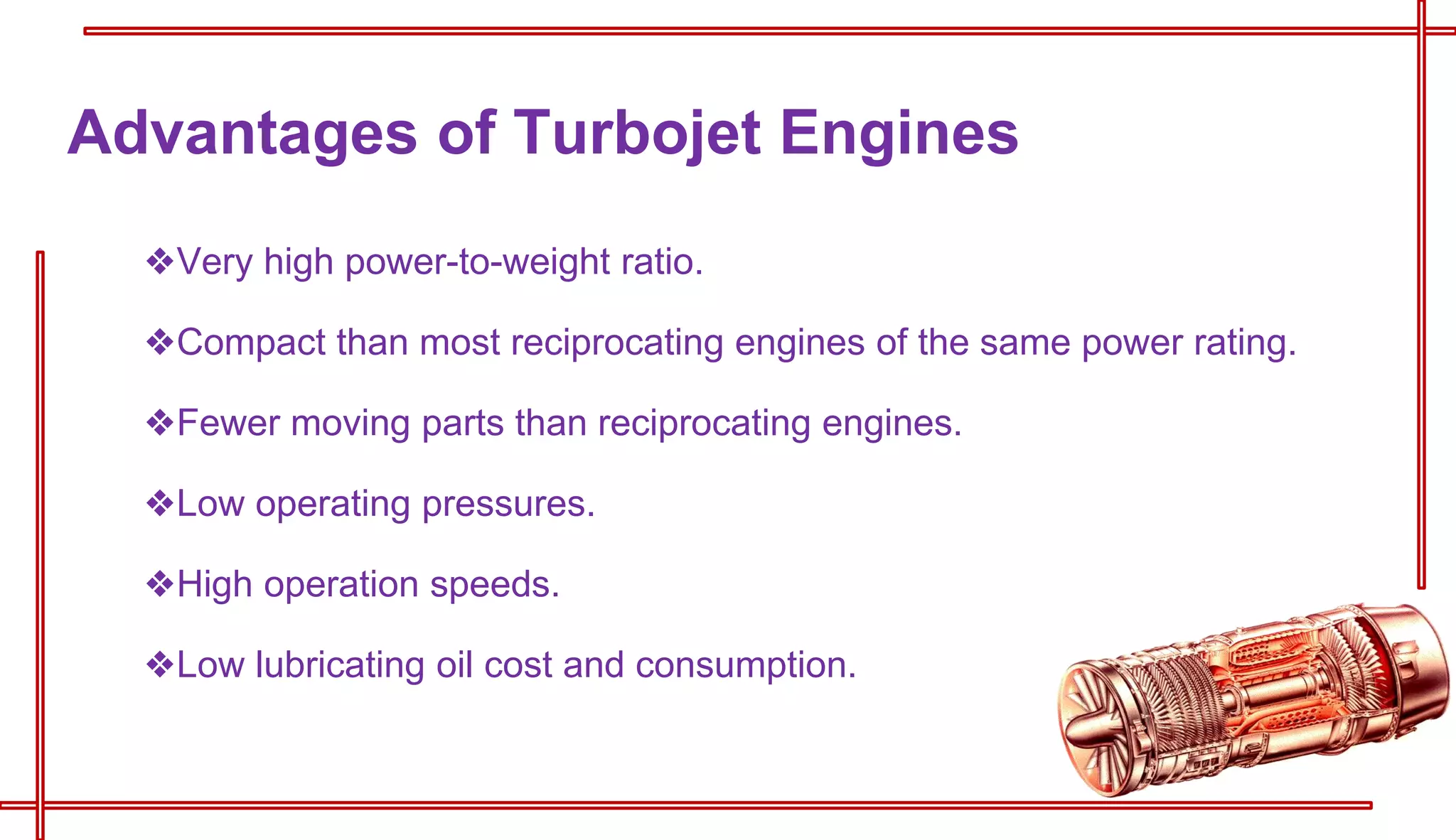
❖Very high power-to-weight ratio.
❖Compact than most reciprocating engines of the same power rating.
❖Fewer moving parts than reciprocating engines.
❖Low operating pressures.
❖High operation speeds.
❖Low lubricating oil cost and consumption.
Advantages of Turbojet Engines
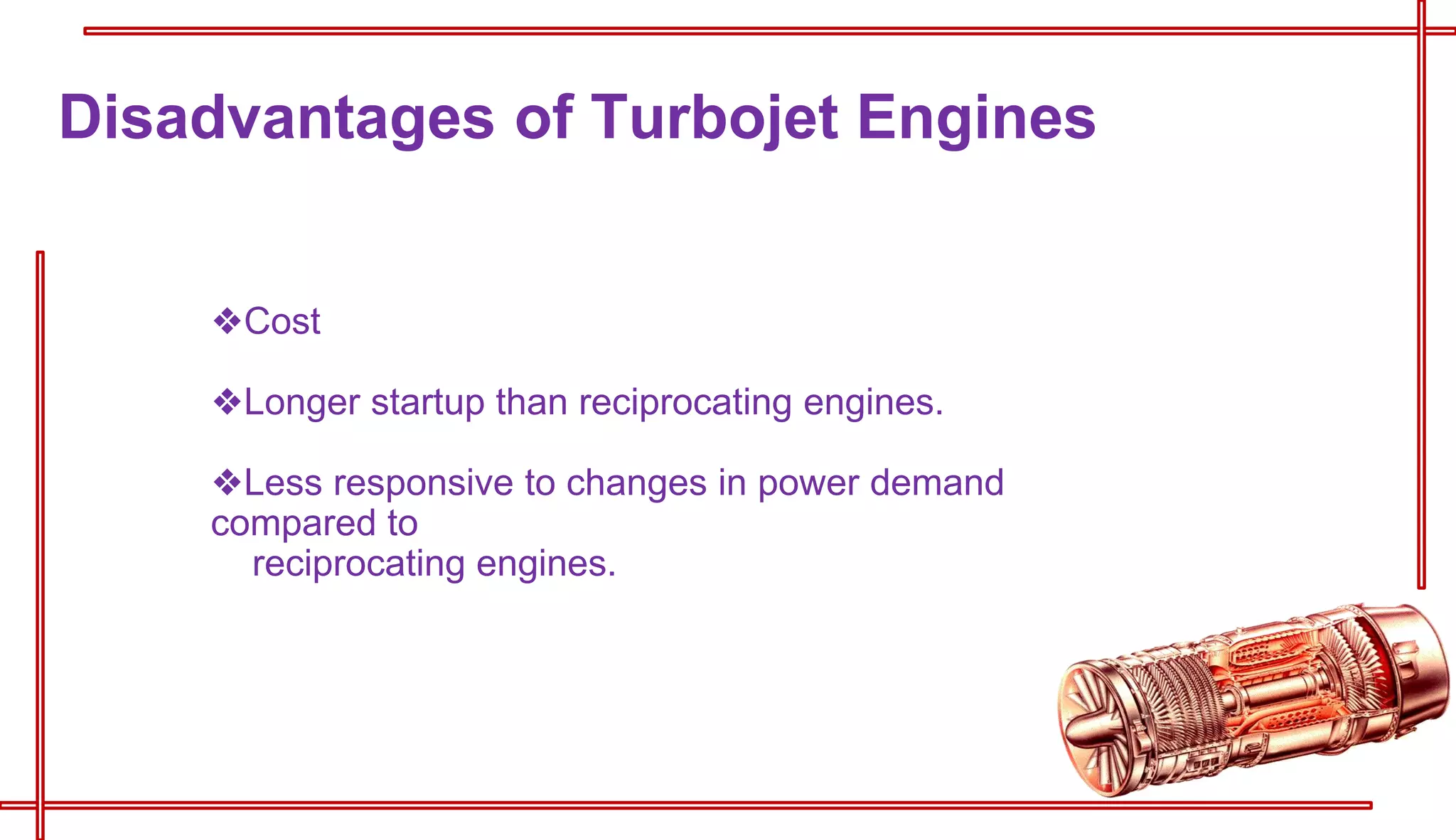
❖Cost
❖Longer startup than reciprocating engines.
❖Less responsive to changes in power demand
compared to
reciprocating engines.
Disadvantages of Turbojet Engines
Thank
You!

Turbo jet engine

  • 1.
    Introduction to TurboJet Engines, Working Principle And Performance Prepared By, Vedprakash Arya
  • 2.
  • 3.
  • 4.
    ▪ Turbojets arethe oldest kind of general-purpose jet engines. Turbojets are rotary engines that extracts energy from a flow of combustion gas. ▪ They produce thrust by increasing the velocity of the air flowing through the engine and operate on Newton’s third law of motion " For every action there is an equal and opposite reaction”.
  • 5.
  • 6.
    ❖Air is drawninto the rotating compressor via the intake and is compressed to a higher pressure before entering the combustion chamber. ❖ Fuel is mixed with the compressed air and ignited by a flame in the eddy of a flame holder. ❖Hot combustion products leaving the combustor expand through the turbine where power is extracted to drive the compressor. ❖The gas stream exiting the turbine expands to ambient pressure via the propelling nozzle, producing a high velocity jet in the exhaust plume.
  • 10.
    ( ( Engine Performance Parameters ❖ThrustEquation ❖Efficiency ❖Specific Fuel Consumption
  • 17.
  • 19.
    ❖Very high power-to-weightratio. ❖Compact than most reciprocating engines of the same power rating. ❖Fewer moving parts than reciprocating engines. ❖Low operating pressures. ❖High operation speeds. ❖Low lubricating oil cost and consumption. Advantages of Turbojet Engines
  • 20.
    ❖Cost ❖Longer startup thanreciprocating engines. ❖Less responsive to changes in power demand compared to reciprocating engines. Disadvantages of Turbojet Engines
  • 21.