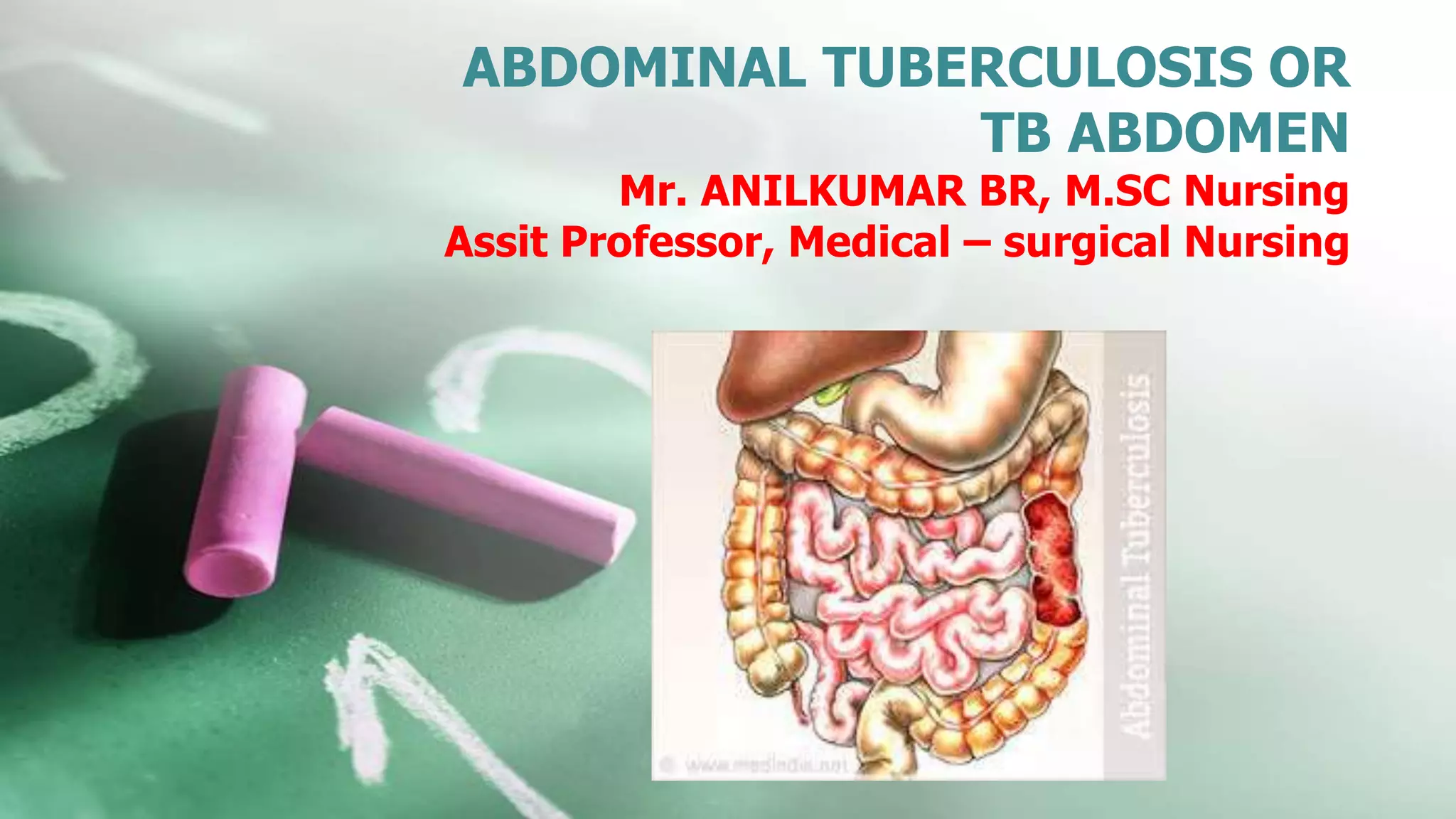

ABDOMINAL TUBERCULOSIS OR
TB ABDOMEN
Mr. ANILKUMAR BR, M.SC Nursing
Assit Professor, Medical – surgical Nursing
INTRODUCTION
• Tuberculosis (TB) is a life threatening disease
which can virtually affect any organ system.
• Abdominal tuberculosis is a most common type
of extra-pulmonary tuberculosis, comprising of
tuberculosis of gastrointestinal tract, peritoneum,
omentum, mysentery and its lymph nodes and
other abdominal organs such as liver, spleen and
pancreas.
Pathophysiology of Abdominal Tuberculosis
• Abdominal tuberculosis can occur primarily or
it can be secondary to a tubercular focus
elsewhere in the body.
• Gastrointestinal tuberculosis occurring due to
ingestion of milk or food infected with
Mycobacterium bovis can result in primary
intestinal tuberculosis, but it is now-a days rare.
• Firstly, the tubercle bacilli may enter the intestinal tract
through the ingestion of infected milk or sputum. The
mucosal layer of the GI tract can be infected with the
bacilli with formation of epithelioid tubercles in the
lymphoid tissue of the submucosa.
• After 2-4 weeks, caseous necrosis of the tubercles leads
to ulceration of the overlying mucosa which can later
spread into the deeper layers and into the adjacent
lymph nodes and into peritoneum.
Infection by Mycobacterium tuberculosis causing
abdominal tuberculosis is acquired in following ways:
1. Dissemination of primary pulmonary tuberculosis in childhood
2. Swallowing of infected sputum in active pulmonary tuberculosis
3. Hematogenous dissemination from a focus of active pulmonary
tuberculosis or military tuberculosis .
4. Mycobacteria can spread from infected adjacent organs like fallopian
tubes.
5. Intestinal infection can occur by lymphatic spread from infected
mesenteric lymph nodes.
6. Mycobacteria can also get disseminated through bile from
tubercular granulomas of the liver.
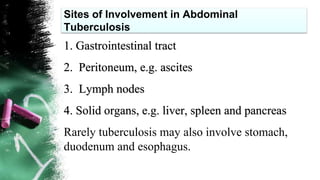
PERITONEAL
-Peritoneum
-Omentum
-Ascites
MESENTERIC
-Lymphadenopathy
INTESTINAL
-Ulcerative
-Hypertrophic
SOLID ORGANS
-liver, spleen
-other
ABDOMINALTB
Sites of Involvement in Abdominal
Tuberculosis
1. Gastrointestinal tract
2. Peritoneum, e.g. ascites
3. Lymph nodes
4. Solid organs, e.g. liver, spleen and pancreas
Rarely tuberculosis may also involve stomach,
duodenum and esophagus.
CLINICAL MANIFESTATIONS
• In order of frequency, abdominal tuberculosis manifests
as tubercular lymphadenitis, Peritonitis and
Hepatosplenic or pancreatic tuberculosis.
• The clinical manifestations depend on the site and type
of involvement.
1. Fever and malaise
2. Anemia
3. Night sweats
4. Loss of weight and weakness
CLINICAL MANIFESTATIONS
• Abdominal pain
• Loss of appetite
• Diarrhea
• Bleeding Per rectum
• Hepatomegaly and splenomegaly
ASSESSMENT & DIAGNOSIS
INVESTIGATIONS
1. Blood examination may show varying degree of
anemia, leucopenia and raised ESR
2. Serum biochemistry: Serum albumin level may be low.
3. PPD skin testing/mantoux test: (This gives supportive
evidence to the diagnosis of abdominal tuberculosis in 55
to 70% patients if positive, however, a negative tuberculin
test may also be observed in one-third of patients).
Imaging Techniques:
1. Plain X-ray abdomen and chest: Plain X-ray of abdomen
(erect and supine films) is useful simple investigation.
2. Barium Studies: Barium contrast studies are useful for
the diagnosis of intestinal tuberculosis. It has been
documented that barium studies are useful in 75%
patients with suspected intestinal tuberculosis.
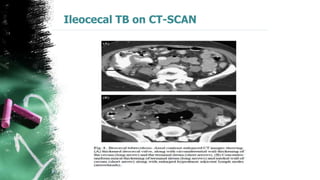
3. Computed Tomography (CT) : Abdominal CT scan is
better than ultrasound for detecting high density ascites,
lymphadenopathy with caseation.
Ileocecal TB on CT-SCAN
Imaging Techniques:
4. MRI (Magnetic Resonance Imaging) MRI when
compared to CT has no added advantage in the diagnosis
of abdominal tuberculosis, hence, its utility in abdominal
tuberculosis is limited.
5. Endoscopy: Endoscopy visualizes the tubercular
lesion directly, hence, is a useful tool in the diagnosis of
colonic and gastro-duodenal tuberculosis; and helps in
the confirmation of the diagnosis by obtaining
histopathological evidence of tuberculosis.
• Laparoscopy: Laparoscopy examination is an effective
method of diagnosing tubercular peritonitis because (i)
it directly visualizes the inflamed thickened peritoneum
studded with whitish-yellow miliary tubercles and (ii)
biopsy of the peritoneum confirms the diagnosis.
• Laparoscopy facilitates an accurate diagnosis in 80-
90% of patients.
• Soft Tissue Biopsy and Culture: Invasive diagnostic
procedures are indicated with suspected abdominal
tuberculosis.
Medical management client with TB
abdomen
• Abdominal TB is generally responsive to medical
treatment alone, so early diagnosis can prevent
unnecessary surgical intervention
• The treatment of abdominal tuberculosis is on the
same lines as for pulmonary tuberculosis.
Medical management client with TB
abdomen
• Conventional antitubercular therapy for at least
6 months including initial 2 months of HREZ
(e.g. isoniazid, rifampicin, ethambutol and
pyrazinamide) followed by 4 month HR is
recommended in all patients with abdominal
tuberculosis.
• Monitoring During Treatment of patients with
tuberculosis requires careful monitoring for adverse
effects.
• Since hepatotoxicity may be caused by INH, RIF or
PZA, patients receiving antituberculous therapy with
first-line drugs should undergo baseline measurement
of hepatic enzymes (transaminases, bilirubin and
alkaline phosphatase).
Surgical Treatment
• Surgery is usually reserved for patients who
have developed complications, including free
perforation, confined perforation with abscess
or fistula, massive bleeding, complete
obstruction, or obstruction not responding to
medical management.
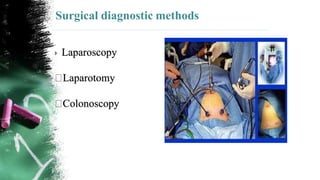
Surgical diagnostic methods
 Laparoscopy
Laparotomy
Colonoscopy
Nursing interventions
1. Maintain body temperature and implement fever
resolution measures
2. Maintain optimal nutritional intake and improved
nutritional status of the client.
3. Provide adequate knowledge and information about
importance of taking antituberculosis mediations and its
adverse side effects.
Conclusion
• Abdominal tuberculosis, a frequently recognized form
of extrapulmonary TB is increasing with increasing
incidence of HIV infection.
• Barium studies, CT scan, invasive procedures and
serological tests now can help in timely diagnosis and
early institution of treatment of such cases so as to
reduce morbidity and mortality from this curable but
potentially lethal disease.
Tuberculosis Abdomen

Tuberculosis Abdomen

  • 1.
    ABDOMINAL TUBERCULOSIS OR TBABDOMEN Mr. ANILKUMAR BR, M.SC Nursing Assit Professor, Medical – surgical Nursing
  • 2.
    INTRODUCTION • Tuberculosis (TB)is a life threatening disease which can virtually affect any organ system. • Abdominal tuberculosis is a most common type of extra-pulmonary tuberculosis, comprising of tuberculosis of gastrointestinal tract, peritoneum, omentum, mysentery and its lymph nodes and other abdominal organs such as liver, spleen and pancreas.
  • 3.
    Pathophysiology of AbdominalTuberculosis • Abdominal tuberculosis can occur primarily or it can be secondary to a tubercular focus elsewhere in the body. • Gastrointestinal tuberculosis occurring due to ingestion of milk or food infected with Mycobacterium bovis can result in primary intestinal tuberculosis, but it is now-a days rare.
  • 4.
    • Firstly, thetubercle bacilli may enter the intestinal tract through the ingestion of infected milk or sputum. The mucosal layer of the GI tract can be infected with the bacilli with formation of epithelioid tubercles in the lymphoid tissue of the submucosa. • After 2-4 weeks, caseous necrosis of the tubercles leads to ulceration of the overlying mucosa which can later spread into the deeper layers and into the adjacent lymph nodes and into peritoneum.
  • 5.
    Infection by Mycobacteriumtuberculosis causing abdominal tuberculosis is acquired in following ways: 1. Dissemination of primary pulmonary tuberculosis in childhood 2. Swallowing of infected sputum in active pulmonary tuberculosis 3. Hematogenous dissemination from a focus of active pulmonary tuberculosis or military tuberculosis . 4. Mycobacteria can spread from infected adjacent organs like fallopian tubes. 5. Intestinal infection can occur by lymphatic spread from infected mesenteric lymph nodes. 6. Mycobacteria can also get disseminated through bile from tubercular granulomas of the liver.
  • 6.
  • 7.
    Sites of Involvementin Abdominal Tuberculosis 1. Gastrointestinal tract 2. Peritoneum, e.g. ascites 3. Lymph nodes 4. Solid organs, e.g. liver, spleen and pancreas Rarely tuberculosis may also involve stomach, duodenum and esophagus.
  • 8.
    CLINICAL MANIFESTATIONS • Inorder of frequency, abdominal tuberculosis manifests as tubercular lymphadenitis, Peritonitis and Hepatosplenic or pancreatic tuberculosis. • The clinical manifestations depend on the site and type of involvement. 1. Fever and malaise 2. Anemia 3. Night sweats 4. Loss of weight and weakness
  • 9.
    CLINICAL MANIFESTATIONS • Abdominalpain • Loss of appetite • Diarrhea • Bleeding Per rectum • Hepatomegaly and splenomegaly
  • 10.
    ASSESSMENT & DIAGNOSIS INVESTIGATIONS 1.Blood examination may show varying degree of anemia, leucopenia and raised ESR 2. Serum biochemistry: Serum albumin level may be low. 3. PPD skin testing/mantoux test: (This gives supportive evidence to the diagnosis of abdominal tuberculosis in 55 to 70% patients if positive, however, a negative tuberculin test may also be observed in one-third of patients).
  • 11.
    Imaging Techniques: 1. PlainX-ray abdomen and chest: Plain X-ray of abdomen (erect and supine films) is useful simple investigation. 2. Barium Studies: Barium contrast studies are useful for the diagnosis of intestinal tuberculosis. It has been documented that barium studies are useful in 75% patients with suspected intestinal tuberculosis. 3. Computed Tomography (CT) : Abdominal CT scan is better than ultrasound for detecting high density ascites, lymphadenopathy with caseation.
  • 12.
  • 13.
    Imaging Techniques: 4. MRI(Magnetic Resonance Imaging) MRI when compared to CT has no added advantage in the diagnosis of abdominal tuberculosis, hence, its utility in abdominal tuberculosis is limited. 5. Endoscopy: Endoscopy visualizes the tubercular lesion directly, hence, is a useful tool in the diagnosis of colonic and gastro-duodenal tuberculosis; and helps in the confirmation of the diagnosis by obtaining histopathological evidence of tuberculosis.
  • 14.
    • Laparoscopy: Laparoscopyexamination is an effective method of diagnosing tubercular peritonitis because (i) it directly visualizes the inflamed thickened peritoneum studded with whitish-yellow miliary tubercles and (ii) biopsy of the peritoneum confirms the diagnosis. • Laparoscopy facilitates an accurate diagnosis in 80- 90% of patients. • Soft Tissue Biopsy and Culture: Invasive diagnostic procedures are indicated with suspected abdominal tuberculosis.
  • 15.
    Medical management clientwith TB abdomen • Abdominal TB is generally responsive to medical treatment alone, so early diagnosis can prevent unnecessary surgical intervention • The treatment of abdominal tuberculosis is on the same lines as for pulmonary tuberculosis.
  • 16.
    Medical management clientwith TB abdomen • Conventional antitubercular therapy for at least 6 months including initial 2 months of HREZ (e.g. isoniazid, rifampicin, ethambutol and pyrazinamide) followed by 4 month HR is recommended in all patients with abdominal tuberculosis.
  • 17.
    • Monitoring DuringTreatment of patients with tuberculosis requires careful monitoring for adverse effects. • Since hepatotoxicity may be caused by INH, RIF or PZA, patients receiving antituberculous therapy with first-line drugs should undergo baseline measurement of hepatic enzymes (transaminases, bilirubin and alkaline phosphatase).
  • 18.
    Surgical Treatment • Surgeryis usually reserved for patients who have developed complications, including free perforation, confined perforation with abscess or fistula, massive bleeding, complete obstruction, or obstruction not responding to medical management.
  • 19.
    Surgical diagnostic methods Laparoscopy Laparotomy Colonoscopy
  • 20.
    Nursing interventions 1. Maintainbody temperature and implement fever resolution measures 2. Maintain optimal nutritional intake and improved nutritional status of the client. 3. Provide adequate knowledge and information about importance of taking antituberculosis mediations and its adverse side effects.
  • 21.
    Conclusion • Abdominal tuberculosis,a frequently recognized form of extrapulmonary TB is increasing with increasing incidence of HIV infection. • Barium studies, CT scan, invasive procedures and serological tests now can help in timely diagnosis and early institution of treatment of such cases so as to reduce morbidity and mortality from this curable but potentially lethal disease.