Interoperability  among phylogenetic  data resources Rutger Vos University of British Columbia Recent additions to the TreeBASE2 architecture
Introducing TreeBASE3.0 … OMG already? Yes: A Web3.0, triples-aware community resource
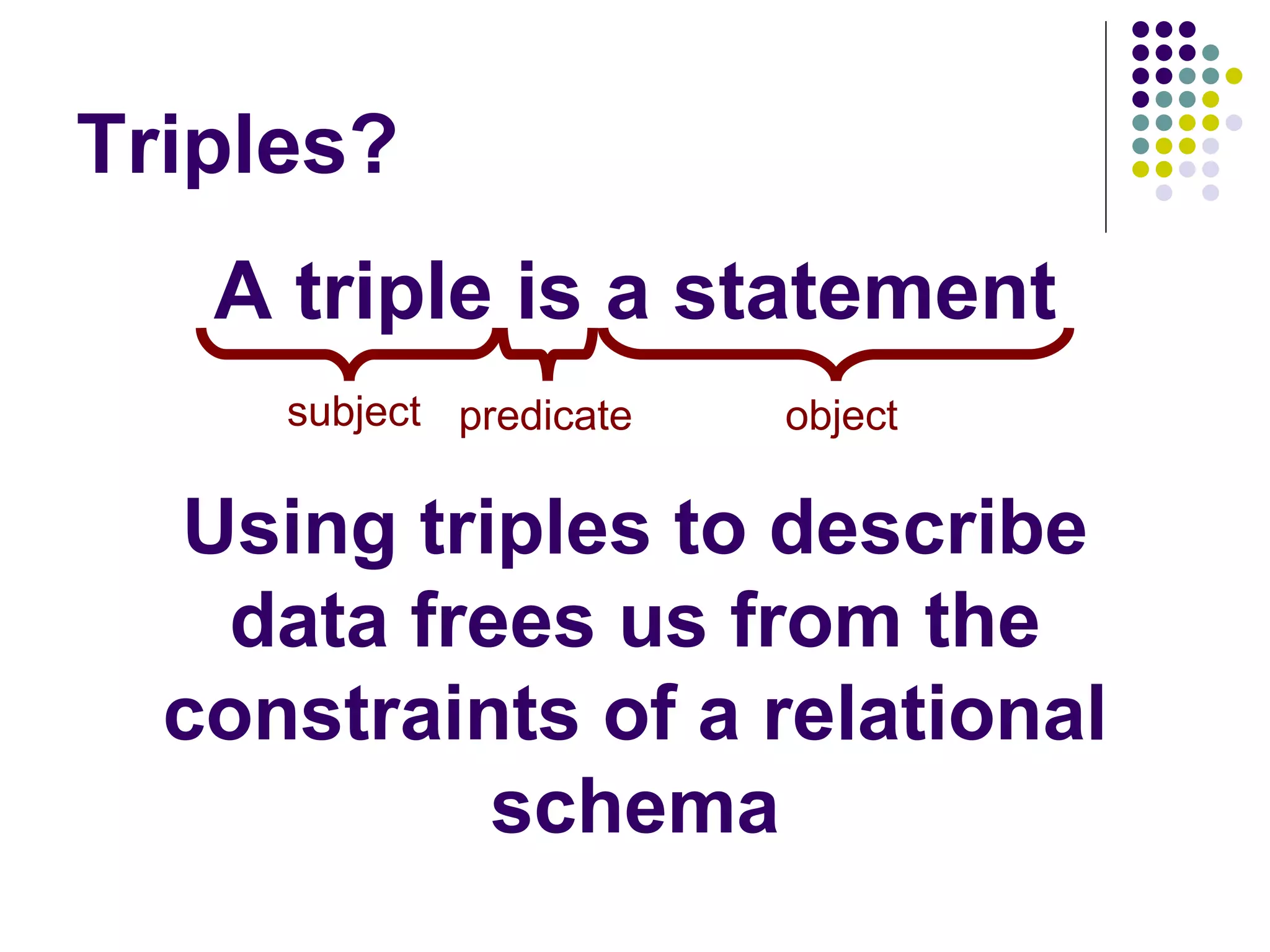
Triples? A triple is a statement subject predicate object Using triples to describe data frees us from the constraints of a relational schema
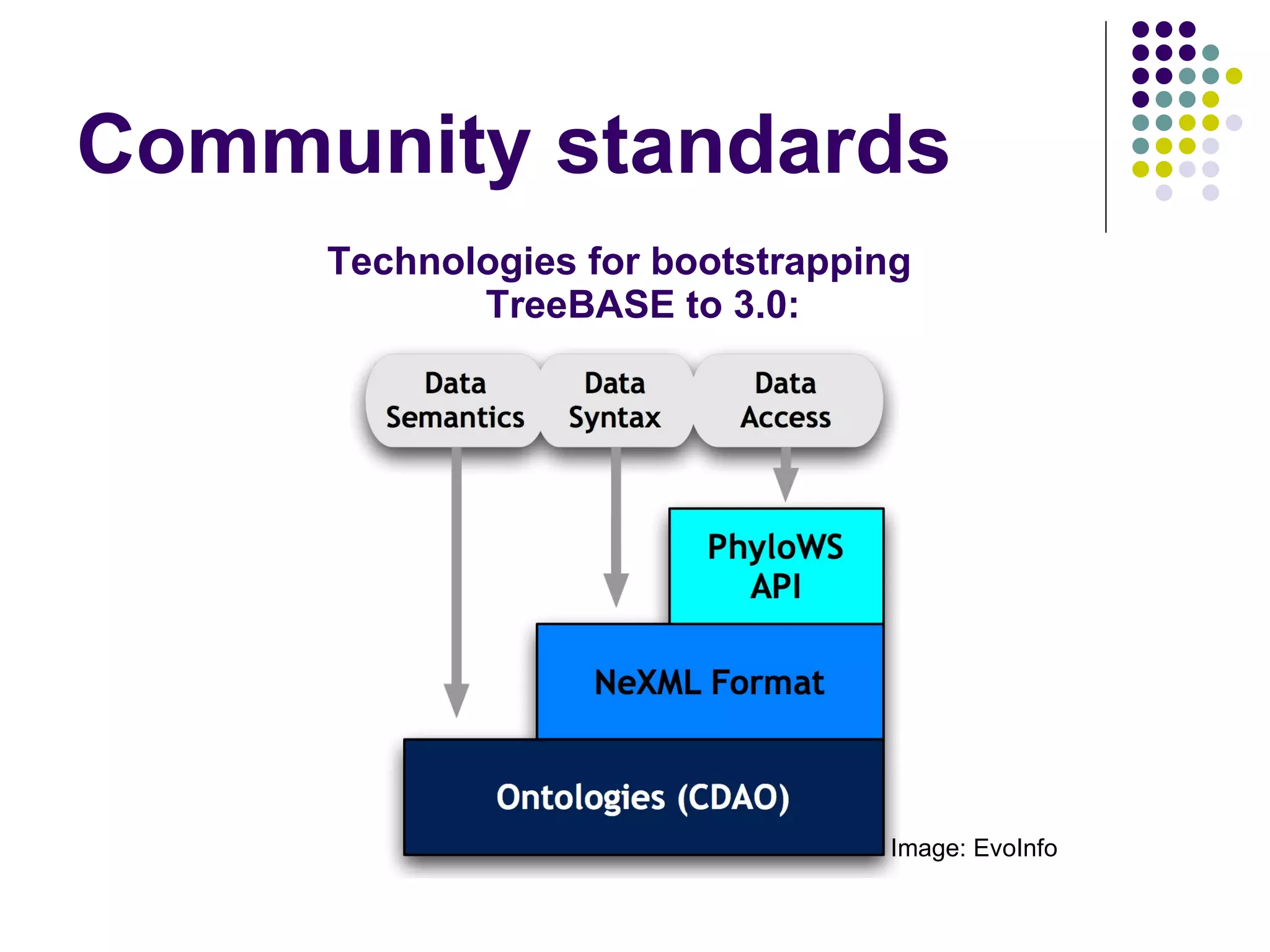
Community standards Technologies for bootstrapping TreeBASE to 3.0: Image: EvoInfo
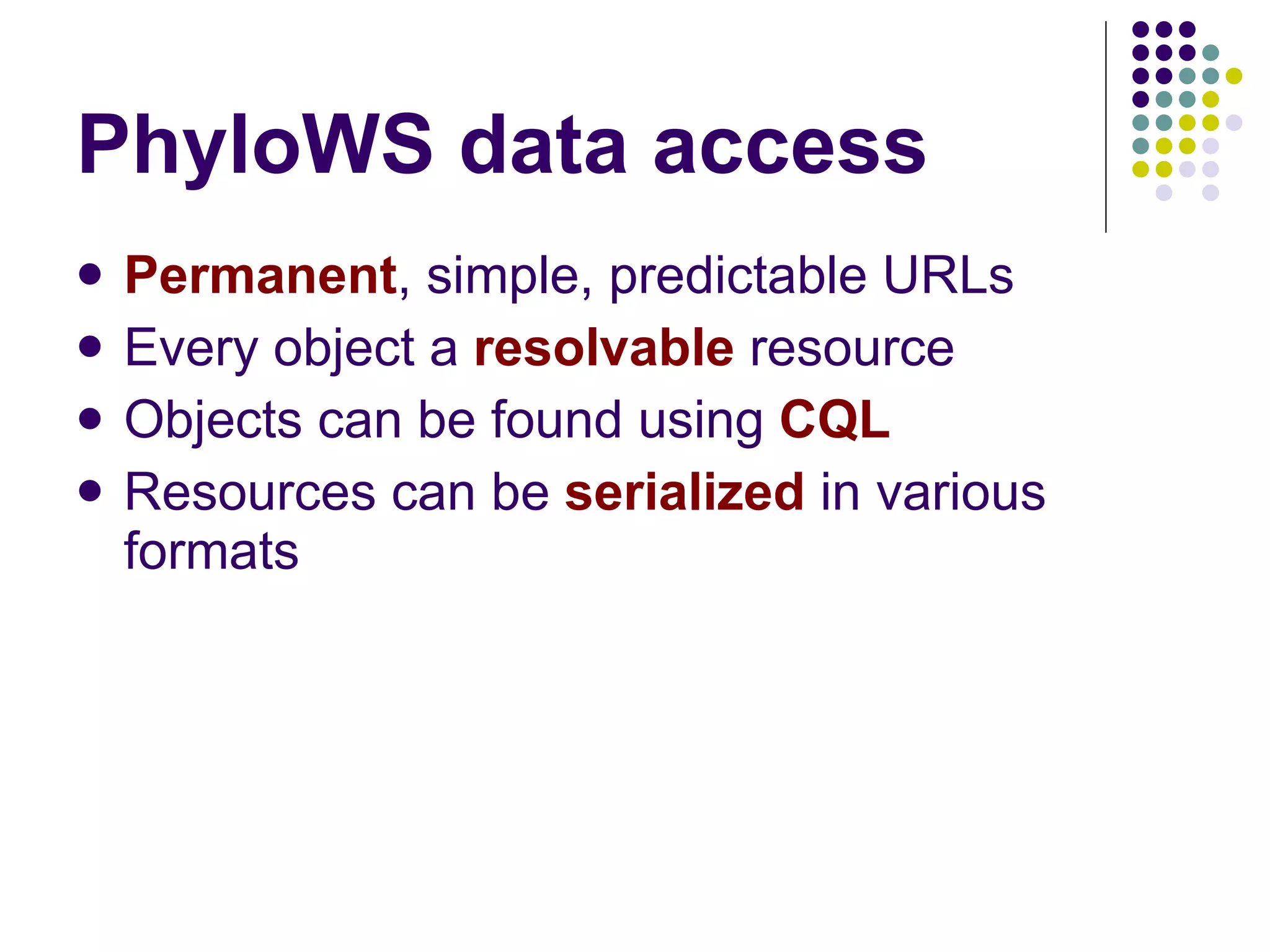
PhyloWS data access Permanent , simple, predictable URLs Every object a  resolvable  resource Objects can be found using  CQL Resources can be  serialized  in various formats
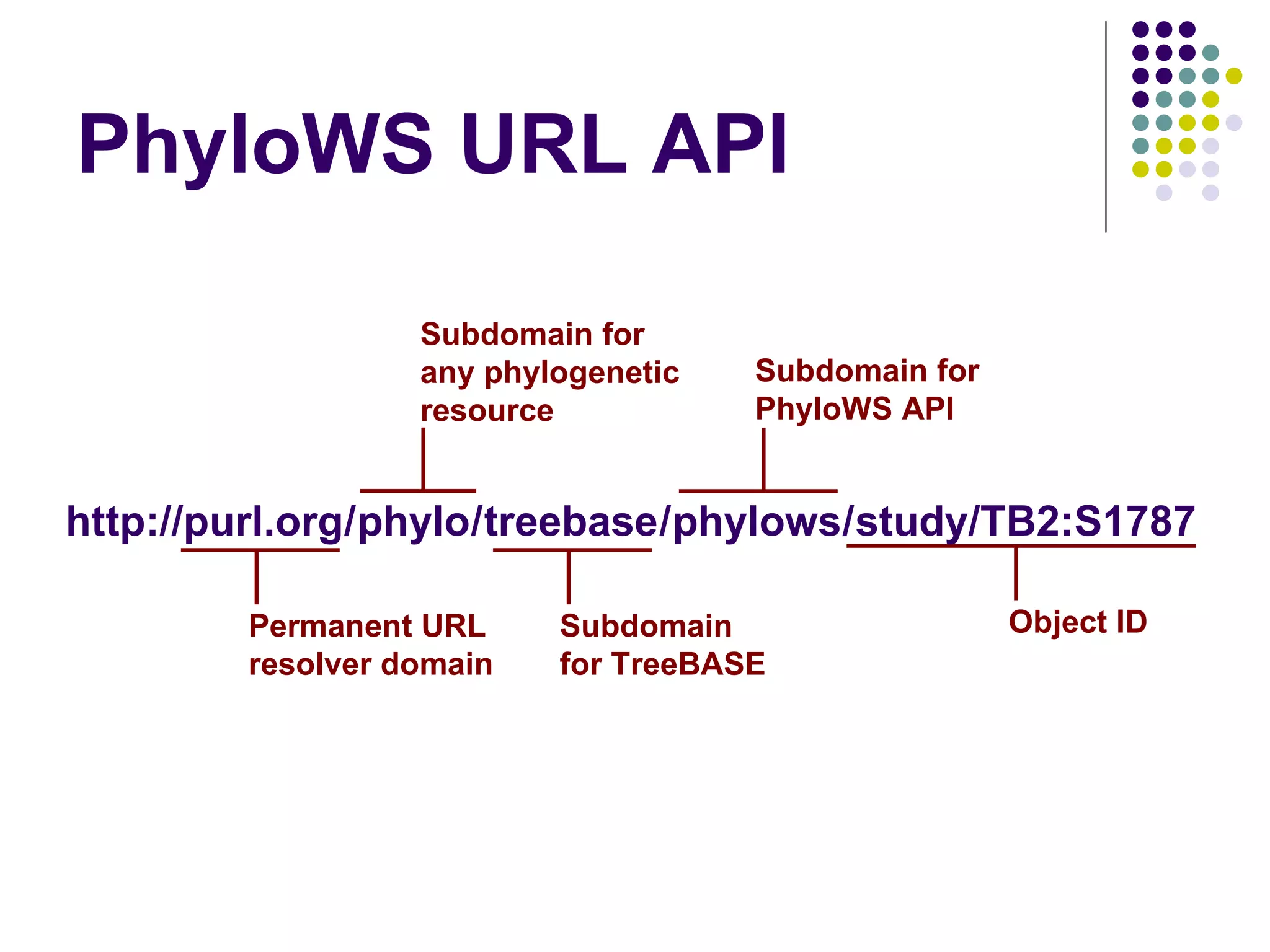
PhyloWS URL API http://purl.org phylo treebase phylows study/TB2:S1787 / / / / Permanent URL  resolver domain Subdomain for any phylogenetic resource Subdomain for TreeBASE Subdomain for PhyloWS API Object ID
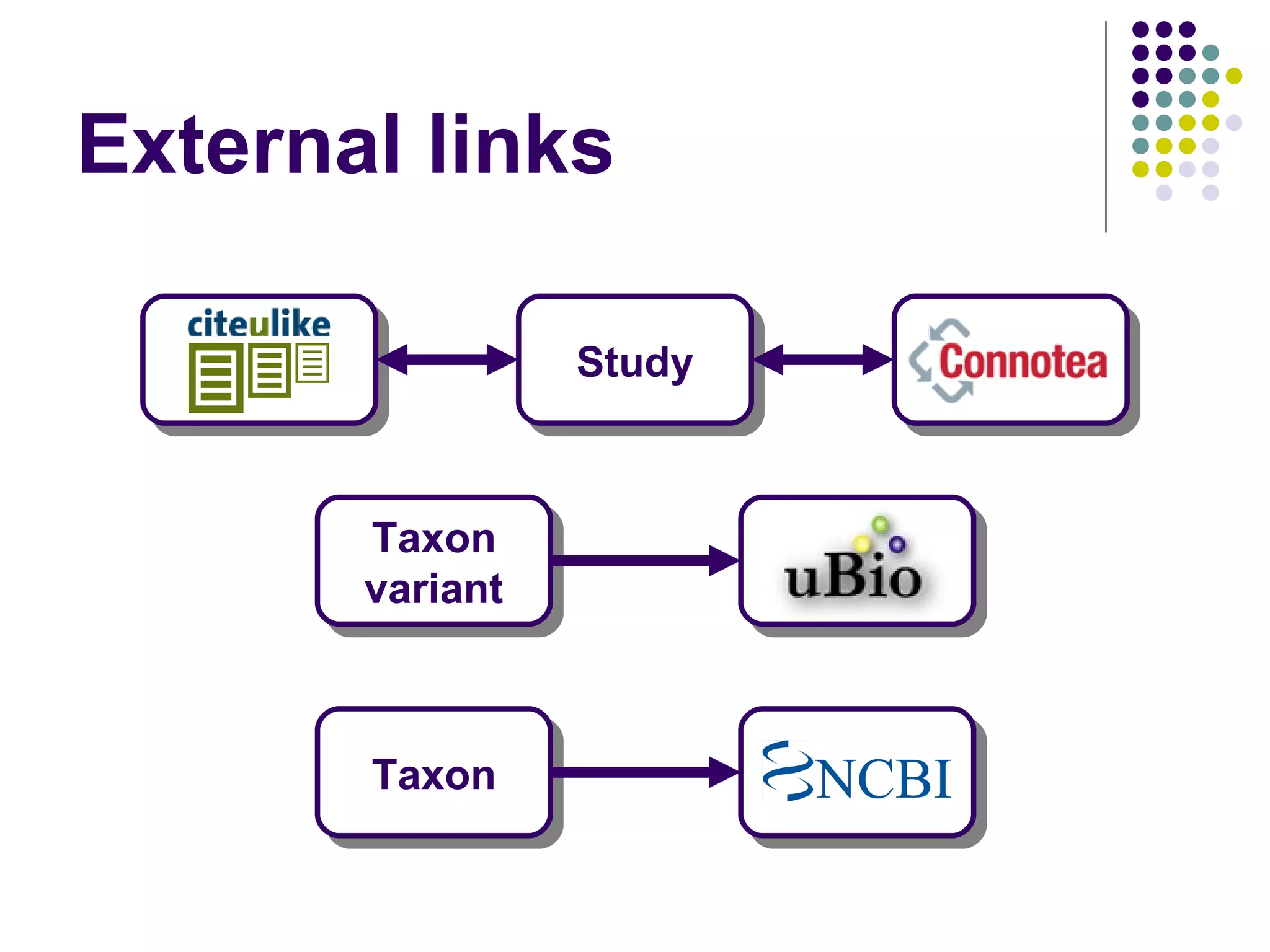
External links Taxon Taxon variant Study
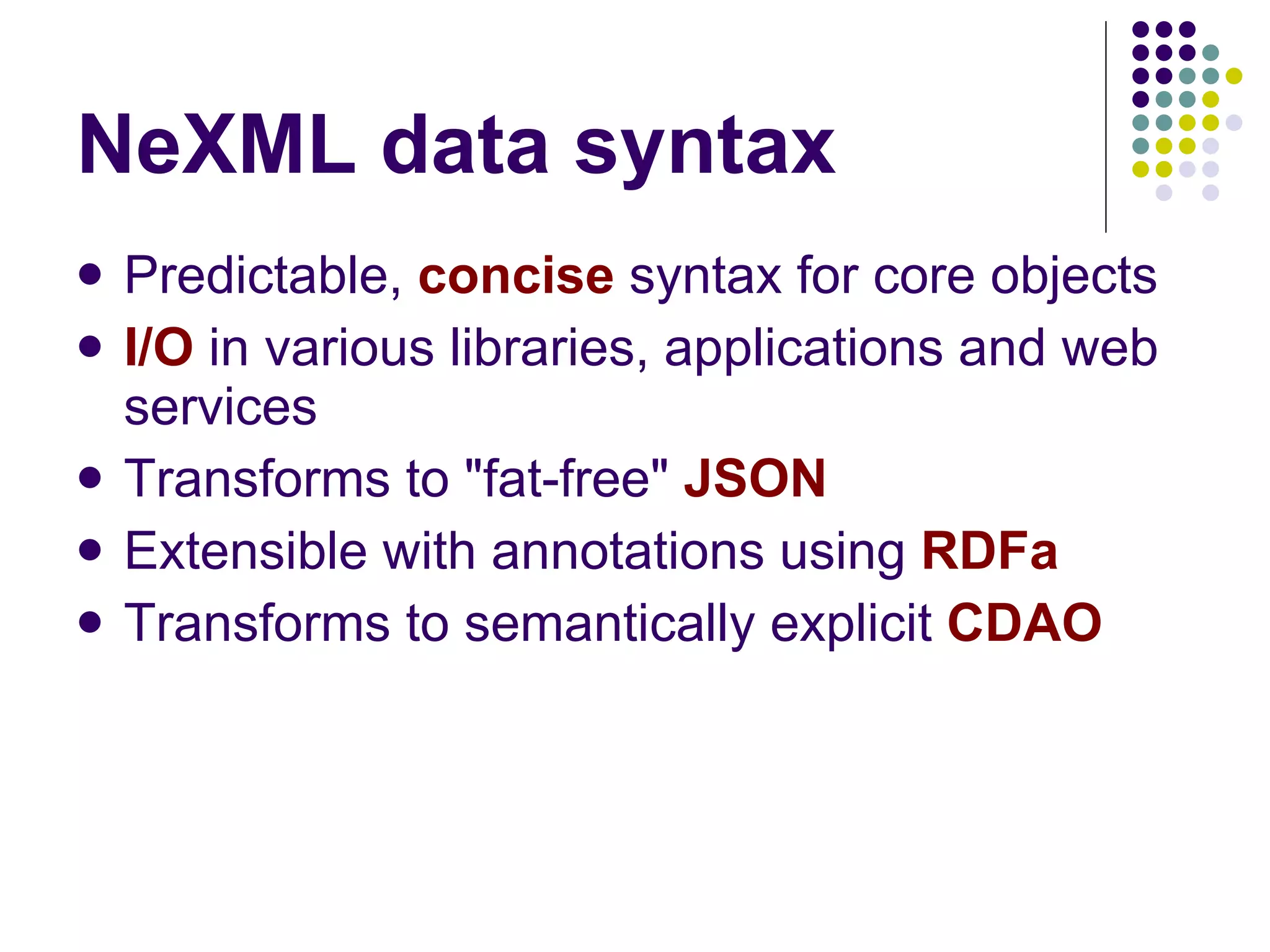
NeXML data syntax Predictable,  concise  syntax for core objects I/O  in various libraries, applications and web services Transforms to "fat-free"  JSON Extensible with annotations using  RDFa Transforms to semantically explicit  CDAO
CDAO data semantics Well-defined  semantics  of core objects and concepts Extensible  using predicates and objects from other ontologies Can be queried using  SPARQL
What's next? Add  CREATE/UPDATE  programmatic access Make TreeBASE extensible with additional annotations using  external triple store Make TreeBASE  LinkedData  compliant
Acknowledgements pPOD NESCent GSoC VDC DBCLS Hackathon attendants CIPRES

TreeBASE CIPRES

  • 1.
    Interoperability amongphylogenetic data resources Rutger Vos University of British Columbia Recent additions to the TreeBASE2 architecture
  • 2.
    Introducing TreeBASE3.0 …OMG already? Yes: A Web3.0, triples-aware community resource
  • 3.
    Triples? A tripleis a statement subject predicate object Using triples to describe data frees us from the constraints of a relational schema
  • 4.
    Community standards Technologiesfor bootstrapping TreeBASE to 3.0: Image: EvoInfo
  • 5.
    PhyloWS data accessPermanent , simple, predictable URLs Every object a resolvable resource Objects can be found using CQL Resources can be serialized in various formats
  • 6.
    PhyloWS URL APIhttp://purl.org phylo treebase phylows study/TB2:S1787 / / / / Permanent URL resolver domain Subdomain for any phylogenetic resource Subdomain for TreeBASE Subdomain for PhyloWS API Object ID
  • 7.
    External links TaxonTaxon variant Study
  • 8.
    NeXML data syntaxPredictable, concise syntax for core objects I/O in various libraries, applications and web services Transforms to "fat-free" JSON Extensible with annotations using RDFa Transforms to semantically explicit CDAO
  • 9.
    CDAO data semanticsWell-defined semantics of core objects and concepts Extensible using predicates and objects from other ontologies Can be queried using SPARQL
  • 10.
    What's next? Add CREATE/UPDATE programmatic access Make TreeBASE extensible with additional annotations using external triple store Make TreeBASE LinkedData compliant
  • 11.
    Acknowledgements pPOD NESCentGSoC VDC DBCLS Hackathon attendants CIPRES

Editor's Notes

  • #2 Phylogenetic web resources are often closed data silos, i.e.applications that do not interact with other applications or information systems. Until recently this has also been the case forTreeBASE2's development: it has been constructed such that data can only be accessed through the browser interface, and only be downloaded in NEXUS format. To make TreeBASE2 a resource that is visited more often in the research cycle then just when research results need to be deposited prior to publication, this situation has had to change. To this end, the development team has started to incorporate the tools and practices created by the EvoInfo working group( http: //evoinfo . nescent .org ) in TreeBASE2's architecture. Among these are: "cool URIs" to identify and de-reference phylogenetic data objects; a PhyloWS-compliant web service interface allowing programmatic access to TreeBASE2 data; database searching using Common Query Language constructs; data export in NeXML and RDF. I will describe what the implications of each of these are, and what additional functionality we expect to add in the near future.