Opportunities and Pathways

   Traditional Pathways in Sport
Recap

                      Applies to individuals performing at
  Participation       national and international levels


                      A more structured form of competitive
   Foundation         sport at club or county level


                      Mainly associated with introducing
  Competition         youngsters to sport and developing
                      fundamental motor skills. Also known
                      as?

                      Where sport is undertaken primarily for
Elite Performance
                      fun and enjoyment, usually at a basic
                      level. This can be the case for very
                      competent sports people, however.
Recap

                      Where sport is undertaken primarily for
  Participation       fun and enjoyment, usually at a basic
                      level. This can be the case for very
                      competent sports people, however.

   Foundation         Mainly associated with introducing
                      youngsters to sport and developing
                      fundamental motor skills. Also known
                      as?
  Competition
                      A more structured form of competitive
                      sport at club or county level


Elite Performance     Applies to individuals performing at
                      national and international levels
Traditional Pathways
• Historically in the UK there have been two main
  pathways for aspiring athletes and performers to
  follow
                       Regional
     School                            Elite Club
                        Teams


                       Education


       Local
                     Senior Club        Elite Club
    Junior Club


                         Club
Traditional Pathways
The pathway a young person took was
largely determined by the sport.

Since the funding and support managed by
the UK Sport is done largely through
governing bodies and clubs, in recent times
there has been more emphasis on the club
structure.
Traditional Pathways


Through the Physical Education School
 Sport and Club Links (PESSCL)
 strategy and Sports Colleges, the YST
 has attempted to narrow the gap.
Traditional Pathways
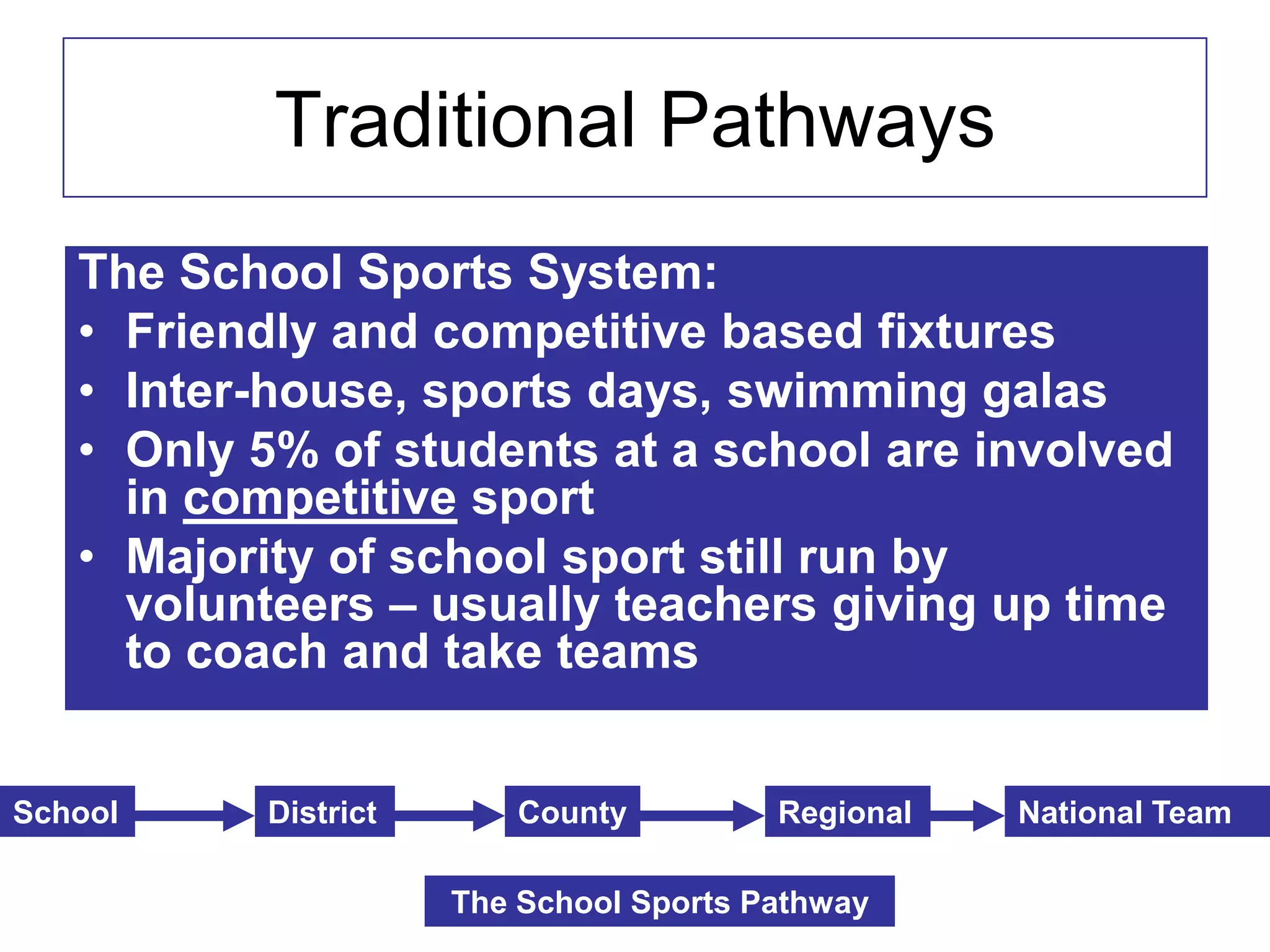
   The School Sports System:
   • Friendly and competitive based fixtures
   • Inter-house, sports days, swimming galas
   • Only 5% of students at a school are involved
     in competitive sport
   • Majority of school sport still run by
     volunteers – usually teachers giving up time
     to coach and take teams


School    District      County          Regional   National Team

                     The School Sports Pathway
Universities
Many Universities provide opportunities for participation for
all levels of performers

Most have facilities for those wishing to participate merely
for enjoyment or fitness and can use them often for
discounted fees.

Many offer high levels of competition through organised
university sports competitions.

Many also offer opportunities for elite athletes to train in
conjunction with academic courses.
National Framework for Sport
• A joint policy from the government and key
  sports agencies
• Its aim is ‘Making England an Active and
  Successful Nation – A Vision for 2020’
• Trying to change the culture of sport and
  physical activity
The Seven Key Drivers for   The Five Settings for
          Change                  Change

    Ageing Population               Home

      Time Pressure              Community

  Well Being + Obesity           Work Place


   Levels of Investment       Higher and Further
                                  Education
    Utilising Education
                                Innovation and
   Variations in access            Delivery

      Volunteers and
       professionals
The Seven Key Drivers for   The Seven main outcomes
                                   of change
         Change
     Promotion and              Increase participation
       Marketing                 in sport and activity

                                  Improve levels of
       Legislation
                                    Performance

    Accreditation and             Widening Access
      Improvement
                                Improving health and
     Structures and                  well-being
      Partnerships
                                  Creating stronger
                                  safer communities
     Innovation and
        Delivery                 Improving Education

    Strategic Planning
      and Evidence                  Benefiting the
                                      economy
National Framework for Sport
• Plans have been produced in order to
  provide clear pathways for people in sport
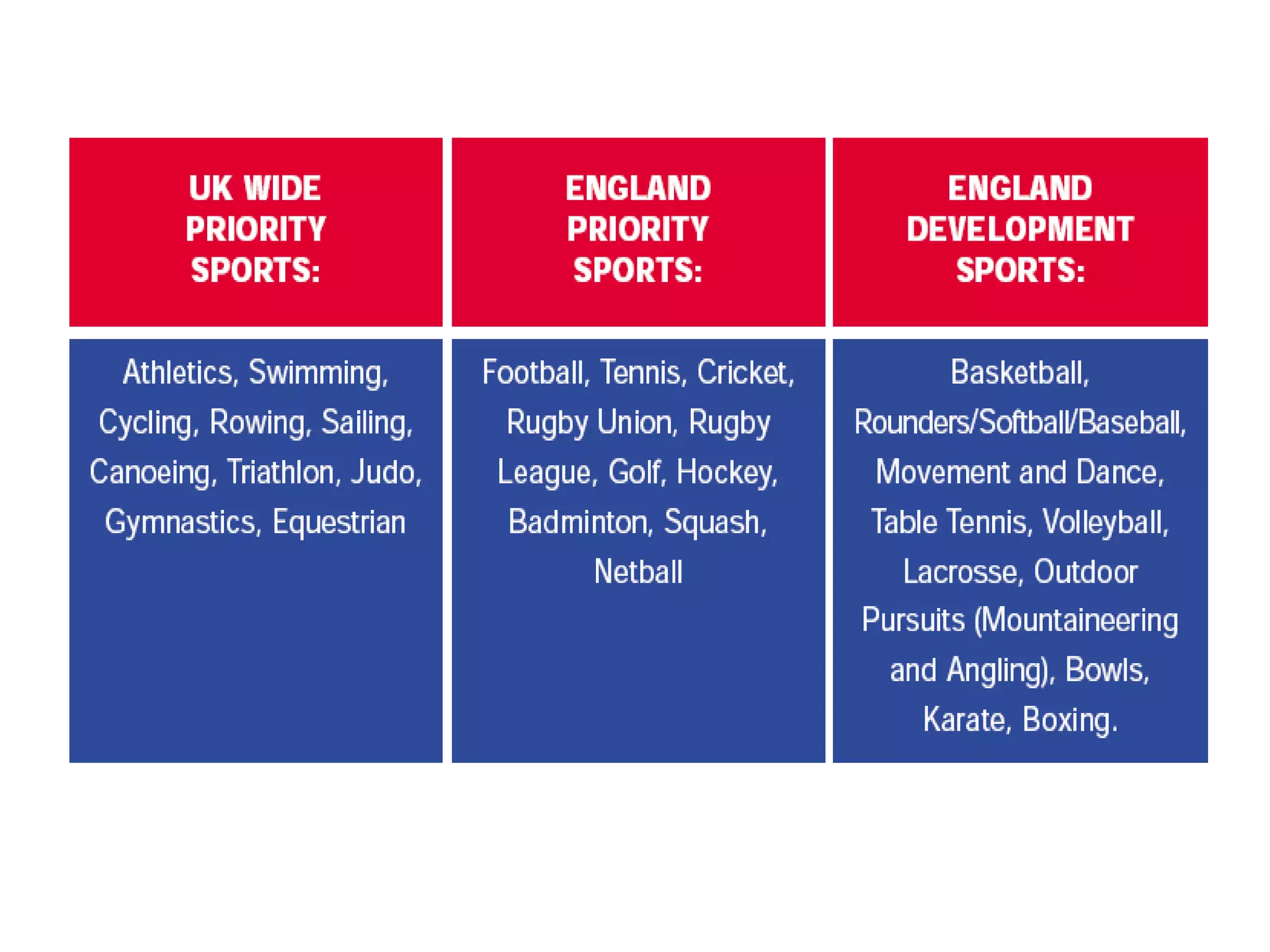
• There 20 priority sports and a further 10
  development sports
• Any guesses???
Game Plan


In 2002 the UK Government devised a
strategy called ‘Game Plan’


    Using the text book (pg 124) make notes around the
    key areas of the strategy and where the 3 main UK
    sports agencies fit into it
A Sporting Future for All
• 2000 – Document
• Highlighted governments aims to
  modernise England’s sporting
  organisations
• Set out objectives for sport within
  education, community sport and
  excellence
• Superseded by National Framework for
  Sport

Traditional pathways

  • 1.
    Opportunities and Pathways Traditional Pathways in Sport
  • 2.
    Recap Applies to individuals performing at Participation national and international levels A more structured form of competitive Foundation sport at club or county level Mainly associated with introducing Competition youngsters to sport and developing fundamental motor skills. Also known as? Where sport is undertaken primarily for Elite Performance fun and enjoyment, usually at a basic level. This can be the case for very competent sports people, however.
  • 3.
    Recap Where sport is undertaken primarily for Participation fun and enjoyment, usually at a basic level. This can be the case for very competent sports people, however. Foundation Mainly associated with introducing youngsters to sport and developing fundamental motor skills. Also known as? Competition A more structured form of competitive sport at club or county level Elite Performance Applies to individuals performing at national and international levels
  • 4.
    Traditional Pathways • Historicallyin the UK there have been two main pathways for aspiring athletes and performers to follow Regional School Elite Club Teams Education Local Senior Club Elite Club Junior Club Club
  • 5.
    Traditional Pathways The pathwaya young person took was largely determined by the sport. Since the funding and support managed by the UK Sport is done largely through governing bodies and clubs, in recent times there has been more emphasis on the club structure.
  • 6.
    Traditional Pathways Through thePhysical Education School Sport and Club Links (PESSCL) strategy and Sports Colleges, the YST has attempted to narrow the gap.
  • 7.
    Traditional Pathways The School Sports System: • Friendly and competitive based fixtures • Inter-house, sports days, swimming galas • Only 5% of students at a school are involved in competitive sport • Majority of school sport still run by volunteers – usually teachers giving up time to coach and take teams School District County Regional National Team The School Sports Pathway
  • 8.
    Universities Many Universities provideopportunities for participation for all levels of performers Most have facilities for those wishing to participate merely for enjoyment or fitness and can use them often for discounted fees. Many offer high levels of competition through organised university sports competitions. Many also offer opportunities for elite athletes to train in conjunction with academic courses.
  • 9.
    National Framework forSport • A joint policy from the government and key sports agencies • Its aim is ‘Making England an Active and Successful Nation – A Vision for 2020’ • Trying to change the culture of sport and physical activity
  • 10.
    The Seven KeyDrivers for The Five Settings for Change Change Ageing Population Home Time Pressure Community Well Being + Obesity Work Place Levels of Investment Higher and Further Education Utilising Education Innovation and Variations in access Delivery Volunteers and professionals
  • 11.
    The Seven KeyDrivers for The Seven main outcomes of change Change Promotion and Increase participation Marketing in sport and activity Improve levels of Legislation Performance Accreditation and Widening Access Improvement Improving health and Structures and well-being Partnerships Creating stronger safer communities Innovation and Delivery Improving Education Strategic Planning and Evidence Benefiting the economy
  • 12.
    National Framework forSport • Plans have been produced in order to provide clear pathways for people in sport • There 20 priority sports and a further 10 development sports • Any guesses???
  • 14.
    Game Plan In 2002the UK Government devised a strategy called ‘Game Plan’ Using the text book (pg 124) make notes around the key areas of the strategy and where the 3 main UK sports agencies fit into it
  • 15.
    A Sporting Futurefor All • 2000 – Document • Highlighted governments aims to modernise England’s sporting organisations • Set out objectives for sport within education, community sport and excellence • Superseded by National Framework for Sport