TOP 5 TIPS FOR COOKING
REAL VIETNAMESE FOOD
Melbourne chef Tracey Lister is famous in Vietnam for her knowledge of local street food. Tourists and locals
flock to her classes at theHanoi Cooking Centre, learning the secrets of Vietnam’s traditional cooking
techniques.
Now Tracey and her writer husband Andreas Pohl
(right) have put the recipes on paper in a beautiful new
book Real Vietnamese Cooking, in book stores from
May 2014. Tracey demystifies more than 60 authentic
recipes, from perfect pho stock to peanut-studded rice
balls. If you love Vietnamese food, this book is a must
– not just for the recipes, but also for the beautiful
photography. These are Tracey’s top five tips for
cooking Vietnamese food at home.
1. LESS IS MORE
The first thing I had to re-learn when I started cooking Vietnamese food
was seasoning. In the European tradition food is seasoned during the
cooking process and no further salt should be required. In Vietnam,
however, dipping sauces are an essential part of the local cuisine and most
contain a fair amount of salty fish sauce. So, the diner has the final say
when it comes to seasoning.
2. SHAKE BEFORE YOU BUY
Give the bottle of fish sauce a shake. You should see bubbles rise to top in a
slow and steady stream. If they come up large and quickly, the sauce is not
sufficiently viscous and does not contain enough fish oils.
3. KEEP ANNATTO OIL IN YOUR PANTRY
Vietnamese cuisine puts great emphasis on how food looks on the plate. The small red seeds infused in oil add
a beautiful golden colour to dishes. Use it in marinates for duck, pork or when making fried rice. A sealed
container of annatto oil will keep for months in your pantry.
4. CHICKEN FAT IS NOT BAD
In Vietnam rendered chicken fat can be purchased in bottles at local
markets and it finds its way into many dishes. A small amount rubbed into
sticky rice before steaming, for example, adds a certain creaminess to the
dish and helps keep the grains separate.
5. COOK MEAT & FISH ON THE BONE
Cooking on the bone maximizes flavor. Cooking meat and fish on the bone
also prevents the flesh drying out, particularly when char-grilling which is a
popular cooking method in Vietnam.
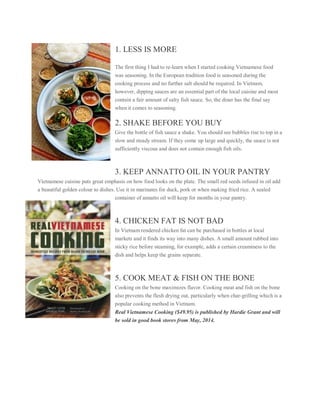
Real Vietnamese Cooking ($49.95) is published by Hardie Grant and will
be sold in good book stores from May, 2014.

Top 5 tips for cooking

  • 1.
    TOP 5 TIPSFOR COOKING REAL VIETNAMESE FOOD Melbourne chef Tracey Lister is famous in Vietnam for her knowledge of local street food. Tourists and locals flock to her classes at theHanoi Cooking Centre, learning the secrets of Vietnam’s traditional cooking techniques. Now Tracey and her writer husband Andreas Pohl (right) have put the recipes on paper in a beautiful new book Real Vietnamese Cooking, in book stores from May 2014. Tracey demystifies more than 60 authentic recipes, from perfect pho stock to peanut-studded rice balls. If you love Vietnamese food, this book is a must – not just for the recipes, but also for the beautiful photography. These are Tracey’s top five tips for cooking Vietnamese food at home.
  • 2.
    1. LESS ISMORE The first thing I had to re-learn when I started cooking Vietnamese food was seasoning. In the European tradition food is seasoned during the cooking process and no further salt should be required. In Vietnam, however, dipping sauces are an essential part of the local cuisine and most contain a fair amount of salty fish sauce. So, the diner has the final say when it comes to seasoning. 2. SHAKE BEFORE YOU BUY Give the bottle of fish sauce a shake. You should see bubbles rise to top in a slow and steady stream. If they come up large and quickly, the sauce is not sufficiently viscous and does not contain enough fish oils. 3. KEEP ANNATTO OIL IN YOUR PANTRY Vietnamese cuisine puts great emphasis on how food looks on the plate. The small red seeds infused in oil add a beautiful golden colour to dishes. Use it in marinates for duck, pork or when making fried rice. A sealed container of annatto oil will keep for months in your pantry. 4. CHICKEN FAT IS NOT BAD In Vietnam rendered chicken fat can be purchased in bottles at local markets and it finds its way into many dishes. A small amount rubbed into sticky rice before steaming, for example, adds a certain creaminess to the dish and helps keep the grains separate. 5. COOK MEAT & FISH ON THE BONE Cooking on the bone maximizes flavor. Cooking meat and fish on the bone also prevents the flesh drying out, particularly when char-grilling which is a popular cooking method in Vietnam. Real Vietnamese Cooking ($49.95) is published by Hardie Grant and will be sold in good book stores from May, 2014.